Does AI Reward Quality Content in SEO? What Google Prioritizes in 2026
Does AI Reward Quality Content in SEO? What Google Prioritizes in 2026
Last Updated:
Table of Content
Case Studies








Everyone said write better content. So you did.
Weeks of research. A clean structure. Real insights. You hit publish and waited.
Then you noticed a shorter article taking the top spot as if it owned the space.
Sound familiar? You're not alone and you're not doing it wrong. The problem runs deeper than execution. In 2026, quality content is no longer what separates the winners. It's what gets you in the room. What happens next depends on something else entirely.
So does Google's AI reward quality content? Yes. But the way most people are chasing "quality" is costing them rankings, not earning them.
Here's what's actually happening.
Google's AI Has Changed the Rules Completely
In past two years, search engines have changed more than in the last decade. With AI-driven results, semantic indexing and Google’s Gemini models integrated into its ranking systems, the rules that guided SEO in 2022 are only partially relevant today.
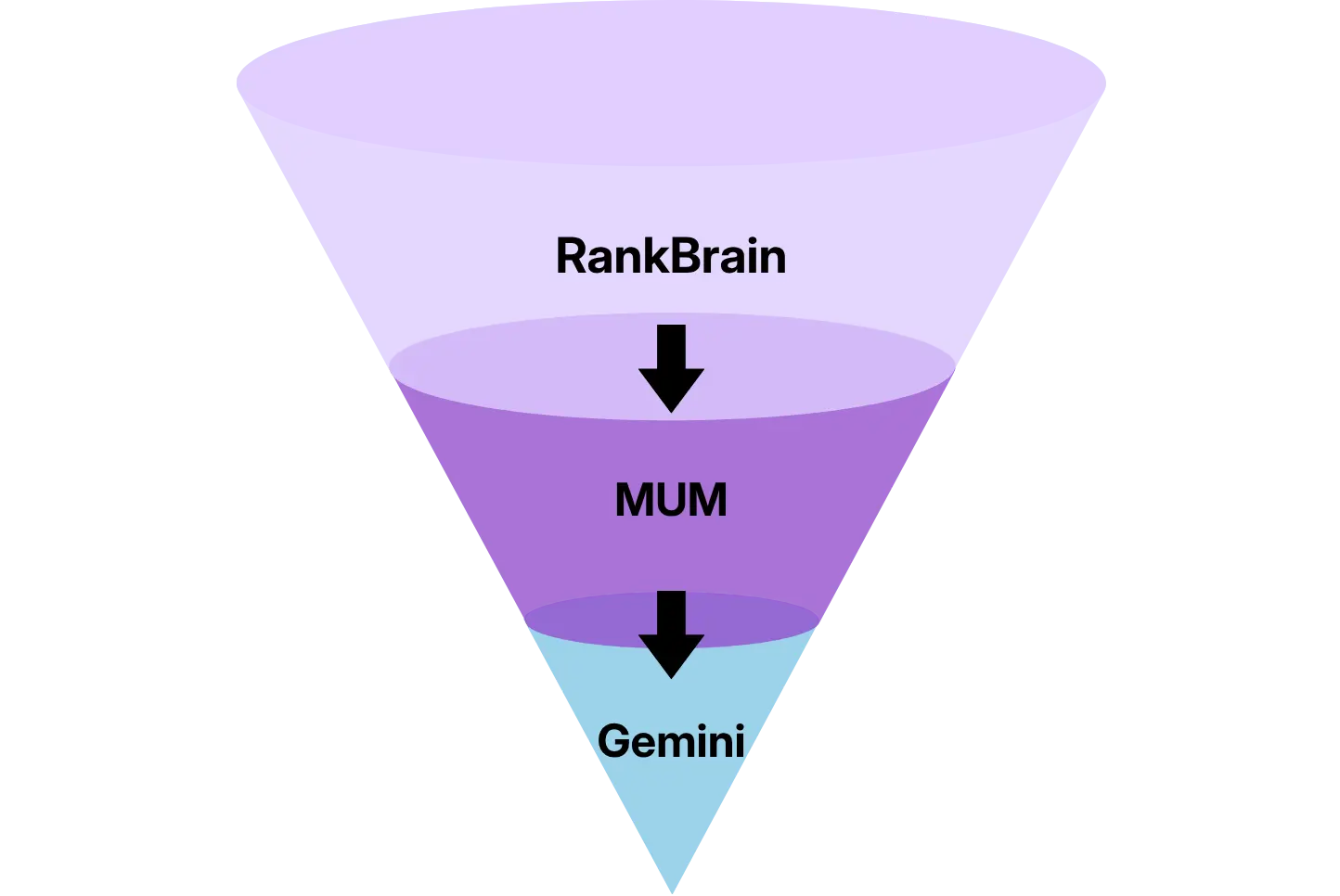
Google's ranking system has never been a single algorithm — it's a layered stack of systems. RankBrain introduced machine learning in 2015. MUM followed, offering multi-modal understanding of language and images. Now, Gemini-assisted indexing and AI overviews have fundamentally changed how content appears in search. These systems do not merely match keywords. They read for meaning, structure, intent, and trustworthiness.
What that means practically: a page loaded with the right keywords but failing to genuinely satisfy search intent will consistently lose to a plainer page that actually delivers the answer, even with fewer backlinks and shorter content.
Three things follow directly from this:
Keyword density no longer works. Semantic relevance, which means genuinely covering a topic in depth, signals authority now.
If users bounce straight back to Google after visiting your page, that dissatisfaction registers and compounds against you.
Thin content doesn't just hurt one page. The Helpful Content System evaluates quality at domain level, weak pages pull strong ones down.
What "Quality" Actually Means to Google in 2026
Ask ten marketers to define quality content and you'll get ten different answers. Longer articles. Better research. Stronger design. Original thinking. All of those things can contribute but none of them is the definition.
In 2026, Google's systems measure quality through specific, evaluable signals, not editorial feel.
Genuine helpfulness: The Helpful Content System runs continuously, assessing whether pages were built for people or built to rank. Pages engineered for algorithms score lower, and that signal applies across your entire domain, not just the individual page.
Search intent, fully satisfied: Someone searching "does AI reward quality content in SEO" wants a real, nuanced answer — not a recycled list of SEO tips. Pages that skim the surface rarely hold their rankings, even if they briefly appear.
Topical depth, not word count: Google's semantic understanding now recognises whether an article genuinely covers a topic or simply repeats itself at length. Real depth means answering the follow-up questions your reader hasn't asked yet.
Originality and unique insight: Content that re-organises what other pages already say adds nothing. Original perspective, first-hand experience, and genuine synthesis of a topic are what create real differentiation, and Google's systems have become considerably better at spotting the absence of it.
The Uncomfortable Truth: Great Content Can Still Lose
This is the part most SEO writing quietly skips over.
Picture two businesses targeting the same space. The first spends three months producing the most thorough, well-researched article on "best CRM tools for small businesses." Expert input, comparison tables, sharp writing. They publish confidently and barely move in the rankings.
The second business publishes a straightforward 1,200-word piece on "CRM tools for freelance consultants" — a narrower angle nobody had properly claimed yet. Six months later, it's sitting on page one with consistent traffic arriving every week.
The first piece was objectively better. The second piece won.
This pattern plays out constantly and it points to something the SEO industry doesn't frame honestly enough:
Quality is the baseline now, not the advantage.
When everyone around you produces content being slightly better won't make a difference. Finding the topic before anyone else does even with simpler content is where the real advantage lies.
A real-world example makes this sharper. A small startup couldn't compete with large players dominating every obvious keyword in their space. Instead of trying to outwrite them, they surveyed their audience to identify search terms that didn't exist yet but were likely to emerge as the industry matured. The phrase "API design" had almost zero search volume at that time and zero competition. They published a modest, straightforward page on it. Nothing exceptional. Around 1,500 words.
A year later, when searches materialised exactly as predicted, that simple page outranked every major competitor who arrived late to the conversation. Within two years, the keyword carried a value of roughly £200 per click. Their client paid for none of them.
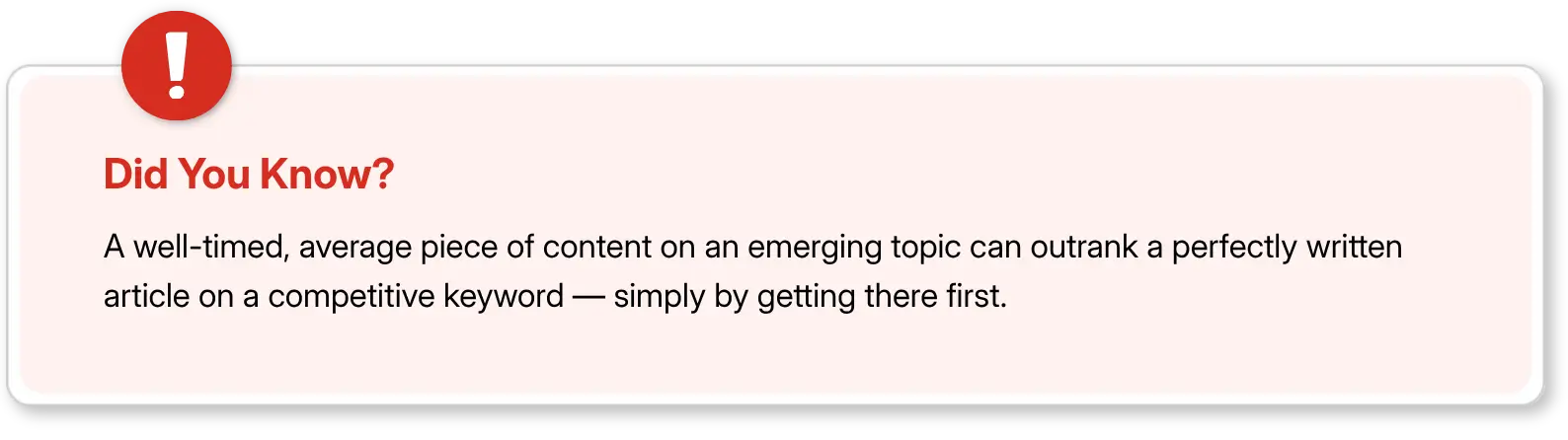
They didn't win because their content was brilliant. They won because they got there first.
Being early on the right topic consistently outperforms being polished on a saturated one. Quality matters enormously, but only once you're standing on the right ground.
E-E-A-T: The Trust Layer Everything Else Sits On
You can write the most insightful piece of content in your industry. Without trust signals, it won't go far.
E-E-A-T — Experience, Expertise, Authoritativeness, and Trustworthiness — has been part of Google's quality evaluator framework for years. In 2026, it functions less like a checklist and more like a filter that all content passes through before anything else is evaluated.
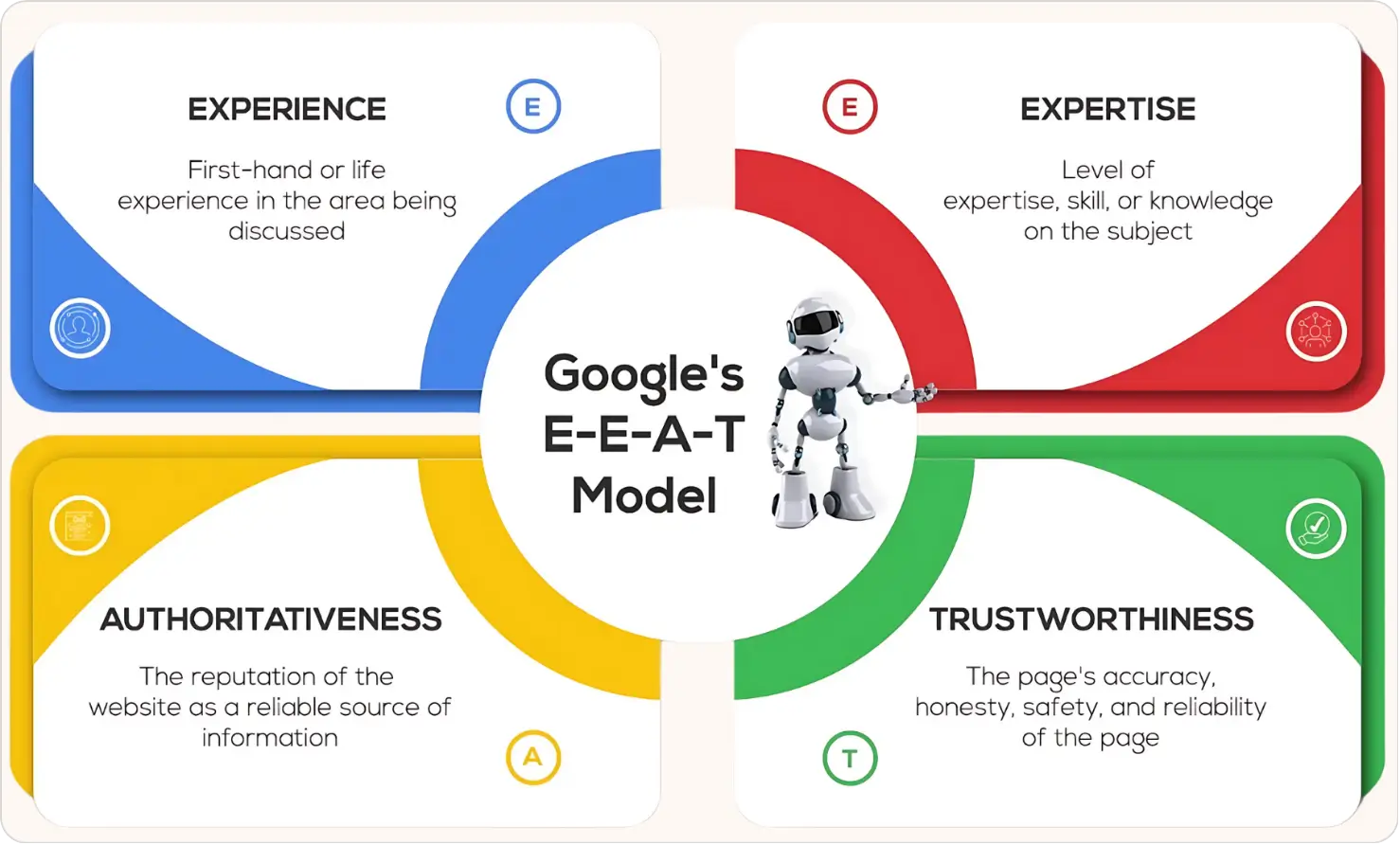
Google's AI systems are more capable than ever at assessing whether the entity behind a piece of content has earned the right to speak on a topic. This scrutiny has expanded broadly — marketing advice, technical content, product reviews, all evaluated for whether the source has genuine credibility.
Experience: Has the author actually done the thing — used the product, run the campaign, worked in the field? First-hand accounts consistently outperform compiled summaries. This "first E" is now weighted significantly in 2026.
Expertise: Vague, general claims signal low knowledge. Concrete, accurate, well-reasoned content signals the opposite.
Authority: Built externally, being cited, referenced, and linked to by credible sources in your space. Authority cannot be self-declared on an About page.
Trust: Transparency about who wrote the content, when, and how to get in touch. These are signals Google's systems evaluate directly.
One mistake worth flagging specifically: treating E-E-A-T as an author bio problem — adding a headshot and a two-line bio and considering it resolved. Google evaluates the entire domain pattern. One credible author surrounded by thin, unattributed content across the rest of the site does not shift the signal meaningfully.

AI Content vs. Human Content: The Real Answer
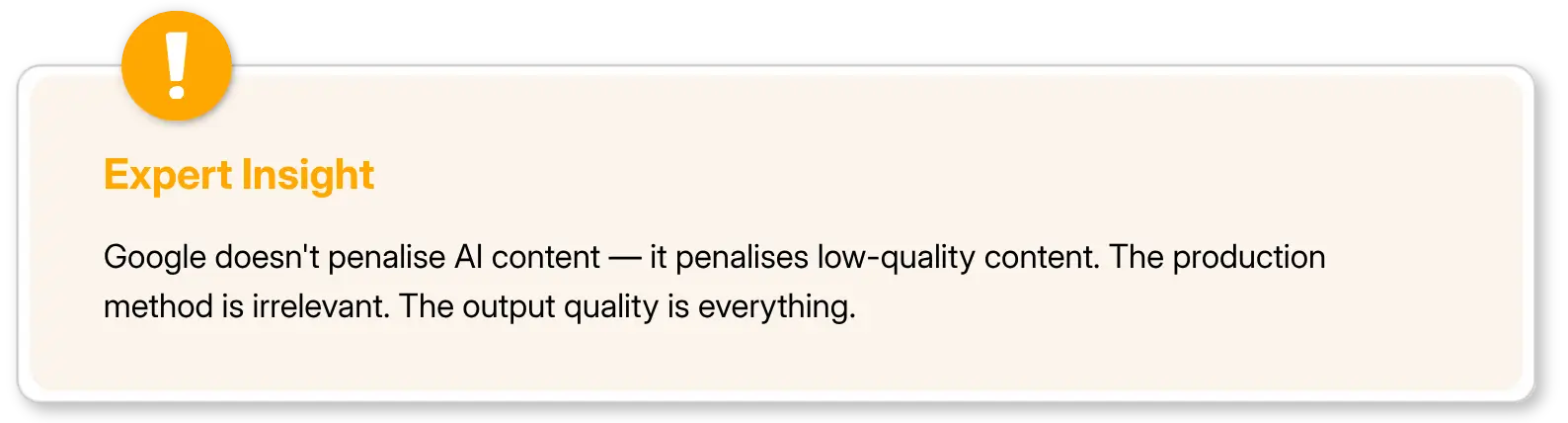
This is the question every content team is navigating right now. The honest answer: Google does not have a blanket preference for human-written content. What it evaluates is whether content meets its quality standards — regardless of how it was produced.
That said, AI-generated content at scale, with no editorial judgment, no subject-matter expertise, and no human review, consistently underperforms. Not because of its origin, but because those conditions produce content that lacks the original insight, specificity, and credibility that ranking requires.
Content Type | How Google Reads It | Ranks Well? |
|---|---|---|
Human-written, expert, original insight | High E-E-A-T, helpful, trustworthy | ✓ Yes |
AI-assisted + human-edited with expertise | Quality-dependent, often strong | ✓ Often |
AI-generated, minimal editing, no expertise | Low trust, thin, mass-produced signals | ✗ Rarely |
Complete AI-generated content, no editing | Poor intent match, low helpfulness score | ✗ No |
The formula that consistently performs in 2026: subject-matter expertise + human editorial judgment + genuine intent to inform. Production method matters far less than whether those three things are present.
Google AI Overviews: The Visibility Layer Most Brands Are Missing
AI Overviews, the AI-generated summaries appearing at the top of many Google results, represent a visibility layer that most content strategies haven't properly factored in yet.
Being cited in an AI Overview doesn't replace organic ranking. But it places your brand in front of the reader before they scroll, at the exact moment they're deciding which source to trust. For informational queries especially, this is where brand perception is formed.
What earns AI Overview citations:
Direct, clearly structured answers to questions phrased as users actually type them
Comprehensive topical coverage that gives Google enough material to summarise accurately
Strong authority signals from credible, topically relevant sources
Headers structured to mirror real search questions — not internal section labels
One practical adjustment that makes a real difference: write your H2s and H3s as questions your audience types. "How does Google's AI evaluate content quality?" is more citable than "Our Content Methodology." Write for the question, not the narrative.
User Engagement Signals Are Still Very Much in Play
Google has been careful about formally acknowledging user engagement data as a direct ranking input. But the observable pattern across algorithm updates and ranking behaviour consistently points the same direction: pages users genuinely find useful tend to rank better and hold rankings longer.
Dwell time: How long a reader stays before returning to Google, reflects whether your content delivered what the headline implied. A page read thoroughly signals relevance and value. A page abandoned in under 30 seconds signals the opposite.
Pogo-sticking: Bouncing back to results immediately after clicking, registers as a strong dissatisfaction signal that compounds over time.
Click-through rate: Whether your title and meta description actually earn the click, determines whether any of the above even gets a chance to play out.
None of these are controlled through keyword placement. They're controlled entirely by one thing: whether your content genuinely delivers on what the headline promises.
What to Actually Do With All of This
Stop starting with the keyword. Start with the reader's real concern.
"AI and SEO content quality 2026" is a search term. The real question underneath it is: "Am I approaching this wrong, and what do I need to change?" Write for the concern, not the phrase.
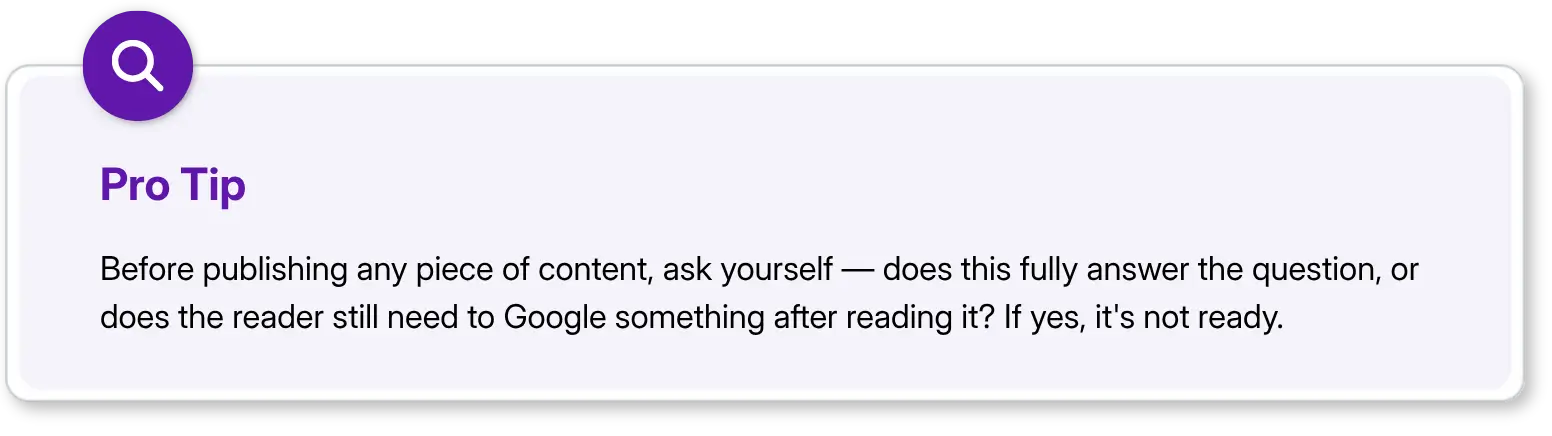
Before writing anything, ask what your piece adds that isn't already on the first page of results. If that question doesn't have a clear answer, the content has no strategic reason to exist yet.
Cover the full topic, not just the surface query. Include the questions a reader would naturally reach for after your introduction. Structure your article to answer them in logical order.
Apply genuine editorial judgment to every claim before publishing, regardless of how the draft was produced.
Build trust signals deliberately. Real author credentials, transparent sourcing, clear publication and update dates are not cosmetic, they are how AI systems assess credibility.
Revisit your existing content regularly. A strong article from 2023 that hasn't been reviewed will lose ground to a thoughtful 2026 update. Freshness matters for any topic where the answer changes over time.
Final Thoughts: Quality Matters — But It Can't Work Alone
The high-volume, publish-and-pray approach is finished. Google is smarter. Readers are more selective. Attention is genuinely scarce.
But the real lesson here isn't simply "write better content." It's more pointed than that.
Quality is the entry fee. Not the winning strategy.
The websites gaining real ground in 2026 are combining genuine content quality with smarter topic selection, earlier positioning on emerging searches, and consistent trust-building across everything they publish, not just the headline pieces.
Start with the question nobody else has properly answered yet. Get there before the competition realises it's worth answering. Then bring depth, credibility, and original perspective to that space.
That's what compounds. That's what holds.
FAQs
Does Google's AI reward quality content in SEO?

Yes, but quality is now the baseline, not the advantage. With generative search and AI-powered results changing how people discover information, Google evaluates content based on genuine helpfulness, topical depth, and how well it satisfies search intent — not just word count or keyword density. Pages that clearly answer real questions tend to outperform longer content that says more but delivers less.
What does Google's E-E-A-T mean for content rankings?
E-E-A-T (Experience, Expertise, Authoritativeness, Trustworthiness) is Google's credibility filter that every page passes through before other ranking signals apply. It rewards first-hand experience, accurate depth, external citations, and transparent authorship. Google evaluates E-E-A-T at the domain level not just individual pages.
Does AI-generated content rank on Google in 2026?
Google doesn’t penalize AI-generated content based on how it’s created, it penalizes low-quality content. If you’re wondering, “Why Isn’t My Website Ranking on Google?”, the issue is usually weak content, poor search intent alignment, or lack of expertise, not AI itself. Content with real insight and human editing can rank well, while mass-produced, unedited AI content often underperforms.
How do I get my content featured in Google AI Overviews?
Structure your content with clear, direct answers and write H2/H3 headings as actual user questions. Google AI Overviews favor pages with strong E-E-A-T signals, comprehensive topical coverage, and answers phrased the way users naturally search. Credible sourcing and factual accuracy significantly improve citation chances.
Why does better content sometimes rank lower than weaker articles?
Because topic positioning beats content quality on saturated keywords. A shorter article targeting a specific, low-competition angle often outranks a thorough piece chasing a crowded term. Google's AI prioritizes how precisely content matches search intent, the right topic at the right time wins over the "best" version of an already-answered question.
Everyone said write better content. So you did.
Weeks of research. A clean structure. Real insights. You hit publish and waited.
Then you noticed a shorter article taking the top spot as if it owned the space.
Sound familiar? You're not alone and you're not doing it wrong. The problem runs deeper than execution. In 2026, quality content is no longer what separates the winners. It's what gets you in the room. What happens next depends on something else entirely.
So does Google's AI reward quality content? Yes. But the way most people are chasing "quality" is costing them rankings, not earning them.
Here's what's actually happening.
Google's AI Has Changed the Rules Completely
In past two years, search engines have changed more than in the last decade. With AI-driven results, semantic indexing and Google’s Gemini models integrated into its ranking systems, the rules that guided SEO in 2022 are only partially relevant today.
Google's ranking system has never been a single algorithm — it's a layered stack of systems. RankBrain introduced machine learning in 2015. MUM followed, offering multi-modal understanding of language and images. Now, Gemini-assisted indexing and AI overviews have fundamentally changed how content appears in search. These systems do not merely match keywords. They read for meaning, structure, intent, and trustworthiness.
What that means practically: a page loaded with the right keywords but failing to genuinely satisfy search intent will consistently lose to a plainer page that actually delivers the answer, even with fewer backlinks and shorter content.
Three things follow directly from this:
Keyword density no longer works. Semantic relevance, which means genuinely covering a topic in depth, signals authority now.
If users bounce straight back to Google after visiting your page, that dissatisfaction registers and compounds against you.
Thin content doesn't just hurt one page. The Helpful Content System evaluates quality at domain level, weak pages pull strong ones down.
What "Quality" Actually Means to Google in 2026
Ask ten marketers to define quality content and you'll get ten different answers. Longer articles. Better research. Stronger design. Original thinking. All of those things can contribute but none of them is the definition.
In 2026, Google's systems measure quality through specific, evaluable signals, not editorial feel.
Genuine helpfulness: The Helpful Content System runs continuously, assessing whether pages were built for people or built to rank. Pages engineered for algorithms score lower, and that signal applies across your entire domain, not just the individual page.
Search intent, fully satisfied: Someone searching "does AI reward quality content in SEO" wants a real, nuanced answer — not a recycled list of SEO tips. Pages that skim the surface rarely hold their rankings, even if they briefly appear.
Topical depth, not word count: Google's semantic understanding now recognises whether an article genuinely covers a topic or simply repeats itself at length. Real depth means answering the follow-up questions your reader hasn't asked yet.
Originality and unique insight: Content that re-organises what other pages already say adds nothing. Original perspective, first-hand experience, and genuine synthesis of a topic are what create real differentiation, and Google's systems have become considerably better at spotting the absence of it.
The Uncomfortable Truth: Great Content Can Still Lose
This is the part most SEO writing quietly skips over.
Picture two businesses targeting the same space. The first spends three months producing the most thorough, well-researched article on "best CRM tools for small businesses." Expert input, comparison tables, sharp writing. They publish confidently and barely move in the rankings.
The second business publishes a straightforward 1,200-word piece on "CRM tools for freelance consultants" — a narrower angle nobody had properly claimed yet. Six months later, it's sitting on page one with consistent traffic arriving every week.
The first piece was objectively better. The second piece won.
This pattern plays out constantly and it points to something the SEO industry doesn't frame honestly enough:
Quality is the baseline now, not the advantage.
When everyone around you produces content being slightly better won't make a difference. Finding the topic before anyone else does even with simpler content is where the real advantage lies.
A real-world example makes this sharper. A small startup couldn't compete with large players dominating every obvious keyword in their space. Instead of trying to outwrite them, they surveyed their audience to identify search terms that didn't exist yet but were likely to emerge as the industry matured. The phrase "API design" had almost zero search volume at that time and zero competition. They published a modest, straightforward page on it. Nothing exceptional. Around 1,500 words.
A year later, when searches materialised exactly as predicted, that simple page outranked every major competitor who arrived late to the conversation. Within two years, the keyword carried a value of roughly £200 per click. Their client paid for none of them.
They didn't win because their content was brilliant. They won because they got there first.
Being early on the right topic consistently outperforms being polished on a saturated one. Quality matters enormously, but only once you're standing on the right ground.
E-E-A-T: The Trust Layer Everything Else Sits On
You can write the most insightful piece of content in your industry. Without trust signals, it won't go far.
E-E-A-T — Experience, Expertise, Authoritativeness, and Trustworthiness — has been part of Google's quality evaluator framework for years. In 2026, it functions less like a checklist and more like a filter that all content passes through before anything else is evaluated.
Google's AI systems are more capable than ever at assessing whether the entity behind a piece of content has earned the right to speak on a topic. This scrutiny has expanded broadly — marketing advice, technical content, product reviews, all evaluated for whether the source has genuine credibility.
Experience: Has the author actually done the thing — used the product, run the campaign, worked in the field? First-hand accounts consistently outperform compiled summaries. This "first E" is now weighted significantly in 2026.
Expertise: Vague, general claims signal low knowledge. Concrete, accurate, well-reasoned content signals the opposite.
Authority: Built externally, being cited, referenced, and linked to by credible sources in your space. Authority cannot be self-declared on an About page.
Trust: Transparency about who wrote the content, when, and how to get in touch. These are signals Google's systems evaluate directly.
One mistake worth flagging specifically: treating E-E-A-T as an author bio problem — adding a headshot and a two-line bio and considering it resolved. Google evaluates the entire domain pattern. One credible author surrounded by thin, unattributed content across the rest of the site does not shift the signal meaningfully.
AI Content vs. Human Content: The Real Answer
This is the question every content team is navigating right now. The honest answer: Google does not have a blanket preference for human-written content. What it evaluates is whether content meets its quality standards — regardless of how it was produced.
That said, AI-generated content at scale, with no editorial judgment, no subject-matter expertise, and no human review, consistently underperforms. Not because of its origin, but because those conditions produce content that lacks the original insight, specificity, and credibility that ranking requires.
Content Type | How Google Reads It | Ranks Well? |
|---|---|---|
Human-written, expert, original insight | High E-E-A-T, helpful, trustworthy | ✓ Yes |
AI-assisted + human-edited with expertise | Quality-dependent, often strong | ✓ Often |
AI-generated, minimal editing, no expertise | Low trust, thin, mass-produced signals | ✗ Rarely |
Complete AI-generated content, no editing | Poor intent match, low helpfulness score | ✗ No |
The formula that consistently performs in 2026: subject-matter expertise + human editorial judgment + genuine intent to inform. Production method matters far less than whether those three things are present.
Google AI Overviews: The Visibility Layer Most Brands Are Missing
AI Overviews, the AI-generated summaries appearing at the top of many Google results, represent a visibility layer that most content strategies haven't properly factored in yet.
Being cited in an AI Overview doesn't replace organic ranking. But it places your brand in front of the reader before they scroll, at the exact moment they're deciding which source to trust. For informational queries especially, this is where brand perception is formed.
What earns AI Overview citations:
Direct, clearly structured answers to questions phrased as users actually type them
Comprehensive topical coverage that gives Google enough material to summarise accurately
Strong authority signals from credible, topically relevant sources
Headers structured to mirror real search questions — not internal section labels
One practical adjustment that makes a real difference: write your H2s and H3s as questions your audience types. "How does Google's AI evaluate content quality?" is more citable than "Our Content Methodology." Write for the question, not the narrative.
User Engagement Signals Are Still Very Much in Play
Google has been careful about formally acknowledging user engagement data as a direct ranking input. But the observable pattern across algorithm updates and ranking behaviour consistently points the same direction: pages users genuinely find useful tend to rank better and hold rankings longer.
Dwell time: How long a reader stays before returning to Google, reflects whether your content delivered what the headline implied. A page read thoroughly signals relevance and value. A page abandoned in under 30 seconds signals the opposite.
Pogo-sticking: Bouncing back to results immediately after clicking, registers as a strong dissatisfaction signal that compounds over time.
Click-through rate: Whether your title and meta description actually earn the click, determines whether any of the above even gets a chance to play out.
None of these are controlled through keyword placement. They're controlled entirely by one thing: whether your content genuinely delivers on what the headline promises.
What to Actually Do With All of This
Stop starting with the keyword. Start with the reader's real concern.
"AI and SEO content quality 2026" is a search term. The real question underneath it is: "Am I approaching this wrong, and what do I need to change?" Write for the concern, not the phrase.
Before writing anything, ask what your piece adds that isn't already on the first page of results. If that question doesn't have a clear answer, the content has no strategic reason to exist yet.
Cover the full topic, not just the surface query. Include the questions a reader would naturally reach for after your introduction. Structure your article to answer them in logical order.
Apply genuine editorial judgment to every claim before publishing, regardless of how the draft was produced.
Build trust signals deliberately. Real author credentials, transparent sourcing, clear publication and update dates are not cosmetic, they are how AI systems assess credibility.
Revisit your existing content regularly. A strong article from 2023 that hasn't been reviewed will lose ground to a thoughtful 2026 update. Freshness matters for any topic where the answer changes over time.
Final Thoughts: Quality Matters — But It Can't Work Alone
The high-volume, publish-and-pray approach is finished. Google is smarter. Readers are more selective. Attention is genuinely scarce.
But the real lesson here isn't simply "write better content." It's more pointed than that.
Quality is the entry fee. Not the winning strategy.
The websites gaining real ground in 2026 are combining genuine content quality with smarter topic selection, earlier positioning on emerging searches, and consistent trust-building across everything they publish, not just the headline pieces.
Start with the question nobody else has properly answered yet. Get there before the competition realises it's worth answering. Then bring depth, credibility, and original perspective to that space.
That's what compounds. That's what holds.
FAQs
Does Google's AI reward quality content in SEO?
Yes, but quality is now the baseline, not the advantage. With generative search and AI-powered results changing how people discover information, Google evaluates content based on genuine helpfulness, topical depth, and how well it satisfies search intent — not just word count or keyword density. Pages that clearly answer real questions tend to outperform longer content that says more but delivers less.
What does Google's E-E-A-T mean for content rankings?
E-E-A-T (Experience, Expertise, Authoritativeness, Trustworthiness) is Google's credibility filter that every page passes through before other ranking signals apply. It rewards first-hand experience, accurate depth, external citations, and transparent authorship. Google evaluates E-E-A-T at the domain level not just individual pages.
Does AI-generated content rank on Google in 2026?
Google doesn’t penalize AI-generated content based on how it’s created, it penalizes low-quality content. If you’re wondering, “Why Isn’t My Website Ranking on Google?”, the issue is usually weak content, poor search intent alignment, or lack of expertise, not AI itself. Content with real insight and human editing can rank well, while mass-produced, unedited AI content often underperforms.
How do I get my content featured in Google AI Overviews?
Structure your content with clear, direct answers and write H2/H3 headings as actual user questions. Google AI Overviews favor pages with strong E-E-A-T signals, comprehensive topical coverage, and answers phrased the way users naturally search. Credible sourcing and factual accuracy significantly improve citation chances.
Why does better content sometimes rank lower than weaker articles?
Because topic positioning beats content quality on saturated keywords. A shorter article targeting a specific, low-competition angle often outranks a thorough piece chasing a crowded term. Google's AI prioritizes how precisely content matches search intent, the right topic at the right time wins over the "best" version of an already-answered question.



Summarize with AI


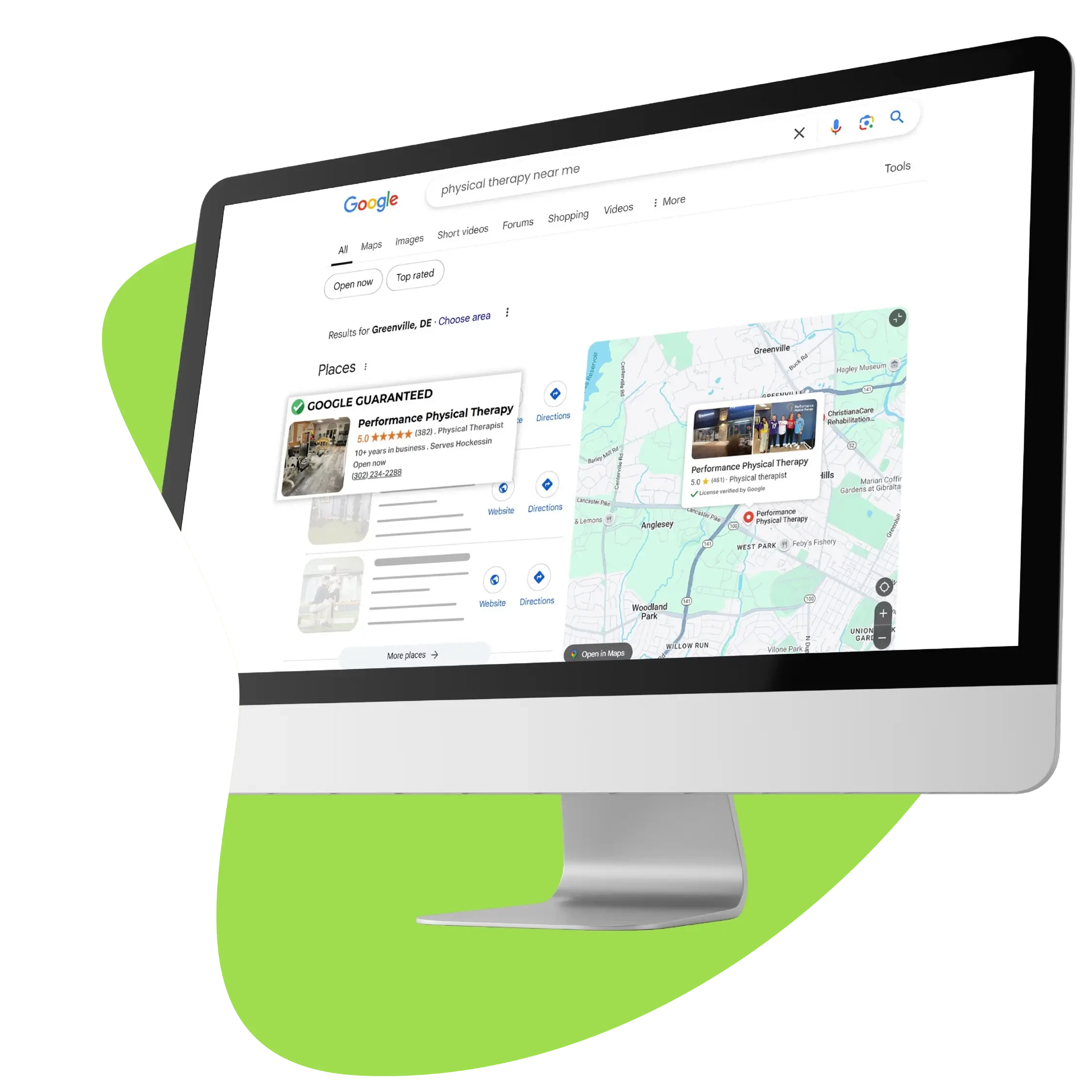

Want to be seen everywhere?
Get a free AI-search audit Today!



4.9/5 Ratings!


Don’t miss our revenue growth tips!
Get expert marketing tips—straight to your inbox, like thousands of happy clients.
Don’t miss our revenue growth tips!
Get expert marketing tips—straight to your inbox, like thousands of happy clients.
Don’t miss our revenue growth tips!
Don’t miss our revenue growth tips!
Get expert marketing tips—straight to your inbox, like thousands of happy clients.
Relevant Blogs on Generative AI SEO
Relevant Blogs on Generative AI SEO
Unlock data-driven insights in AI-powered SEO—explore our featured blogs and skyrocket your revenue before your competitors do.
Unlock data-driven insights in AI-powered SEO—explore our featured blogs and skyrocket your revenue before your competitors do.

GEO
Sep 22, 2026
15 Min Read
AI Search Runs on More SEO Than You Think
GEO
Sep 22, 2026
15 Min Read
AI Search Runs on More SEO Than You Think
GEO
Sep 22, 2026
15 Min Read
AI Search Runs on More SEO Than You Think

GEO
Sep 7, 2026
8 Min Read
How to Optimize Content for AI Search Engines: Best Practices
GEO
Sep 7, 2026
8 Min Read
How to Optimize Content for AI Search Engines: Best Practices
GEO
Sep 7, 2026
8 Min Read
How to Optimize Content for AI Search Engines: Best Practices

GEO
Sep 4, 2026
12 Min Read
How Ecommerce Brands Can Advertise in Google AI Mode?
GEO
Sep 4, 2026
12 Min Read
How Ecommerce Brands Can Advertise in Google AI Mode?
GEO
Sep 4, 2026
12 Min Read
How Ecommerce Brands Can Advertise in Google AI Mode?

































Ready to speak with an expert?
Data-Driven Marketing Agency That Elevates ROI
1100+
Websites Designed & Optimized to Convert
$280M+
Client Revenue Driven & Growing Strong
Discover how to skyrocket
your revenue today!
Trusted by 1000+ Owners!
Ready to speak with an expert?
Data-Driven Marketing Agency That Elevates ROI
1100+
Websites Designed & Optimized to Convert
$280M+
Client Revenue Driven & Growing Strong
Discover how to skyrocket
your revenue today!
Trusted by 1000+ Owners!
Want to skyrocket revenue?
4.9/5 Ratings!
Ready to speak with an expert?
Data-Driven Marketing Agency That Elevates ROI
1100+
Websites Designed & Optimized to Convert
$280M+
Client Revenue Driven & Growing Strong
Discover how to skyrocket
your revenue today!
Trusted by 1000+ Owners!
Call
Meet