How AI Searches (and AI Agents) Are Changing Google Rankings
How AI Searches (and AI Agents) Are Changing Google Rankings
Last Updated:
Table of Content
Case Studies




Let's be honest, if you haven't updated your search engine optimization (SEO) strategy in the last 18 months, you're probably not getting the results you used to. Not because your content is bad, but because the search engine you've been optimizing for has quietly, fundamentally changed.
In May 2024, Google launched AI Overviews across the US. By early 2026, these AI-generated answer blocks appear at the top of nearly half of all searches. Add to that a wave of AI agents - ChatGPT's browsing mode, Perplexity, Google AI Mode that independently search the web on users' behalf, and you've got a genuinely new environment.
The old formula was simple: rank high, earn clicks. That formula still exists, but it now has a second half: get cited inside the AI response. And those two goals don't always point to the same strategy.
This post breaks down what's actually changed, what the numbers show, and most importantly what you can do about it right now.
What Are AI Overviews, and Why Do They Matter?
If you've searched anything informational on Google lately like "how does X work," "best way to do Y," "what's the difference between A and B" — you've almost certainly seen one.
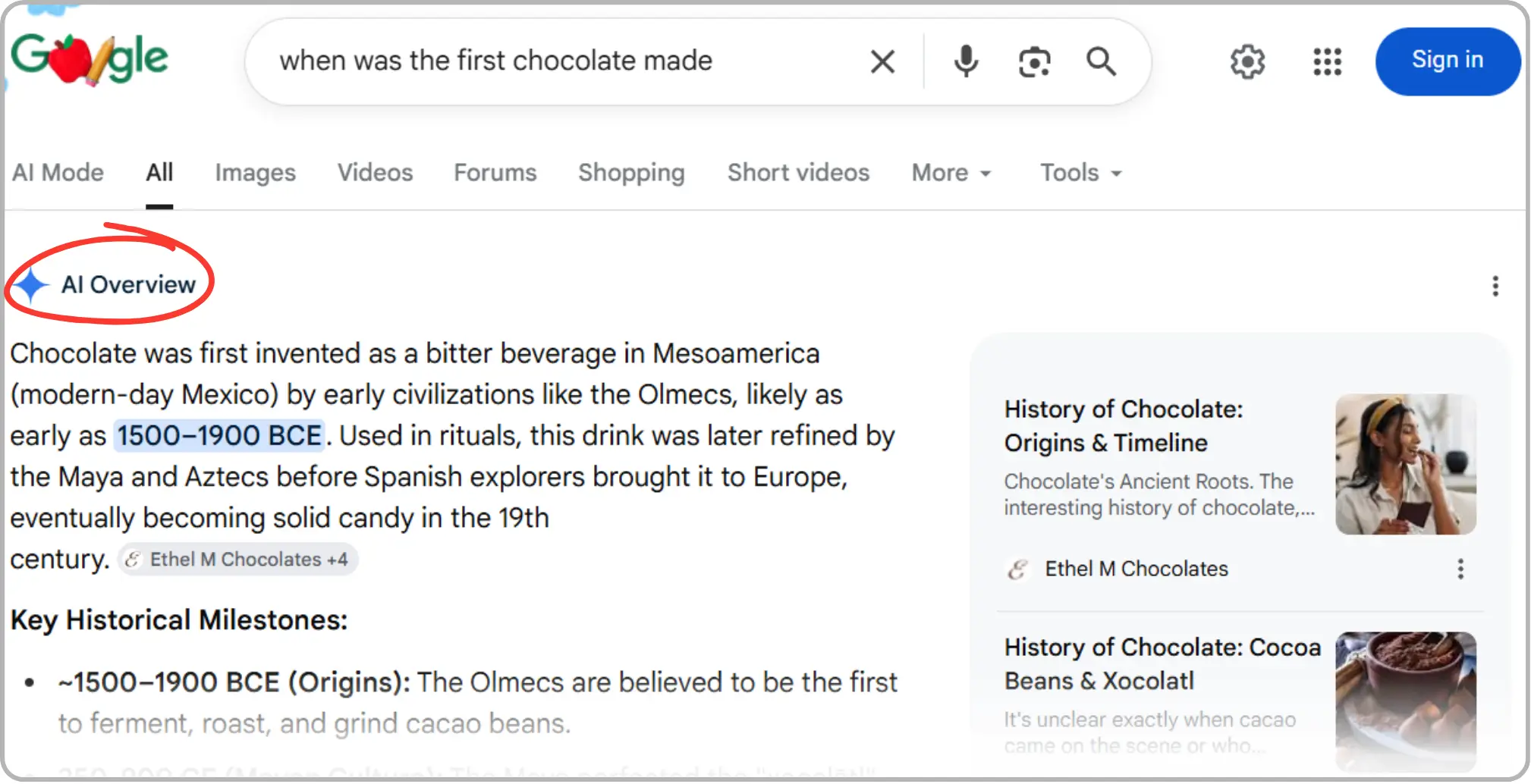
AI Overviews are those AI-generated summaries that sit above the traditional blue links. Google pulls information from multiple sources, synthesizes a direct answer, and presents it with inline citations. Useful for the searcher. A little complicated for everyone who publishes content on the web.
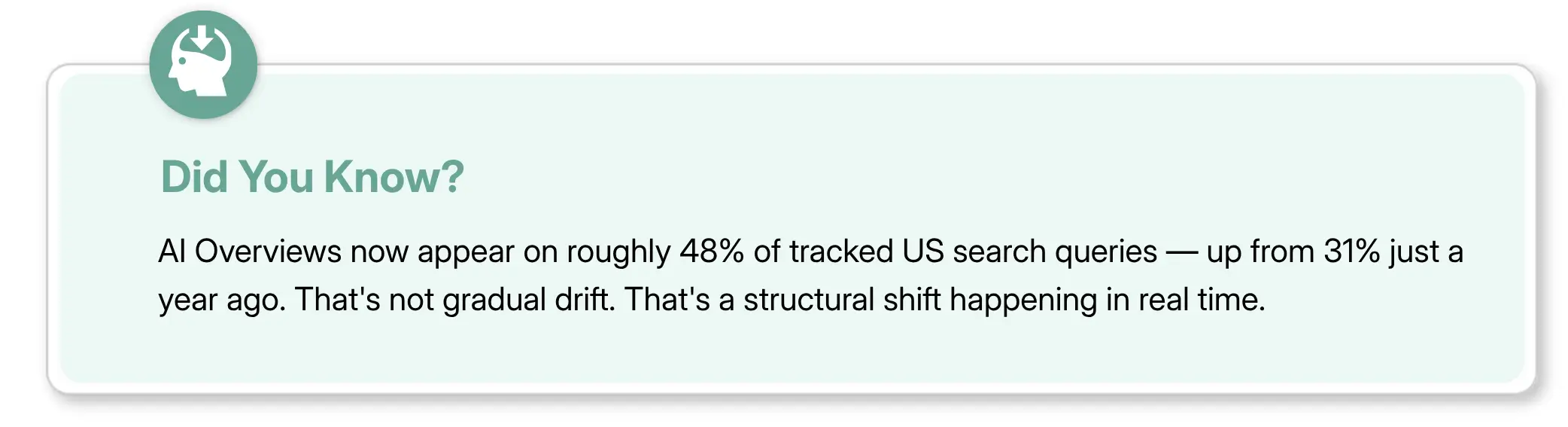
Here's the thing: nearly 90% of queries that trigger an AI Overview are informational in nature — how-tos, explanations, comparisons, definitions. If your content is built to educate readers, you're sitting right in the epicentre of this change.
The Click-Through Rate Problem
Here's the number that should get your attention: when an AI Overview is present in search results, organic click-through rates drop. Significantly.
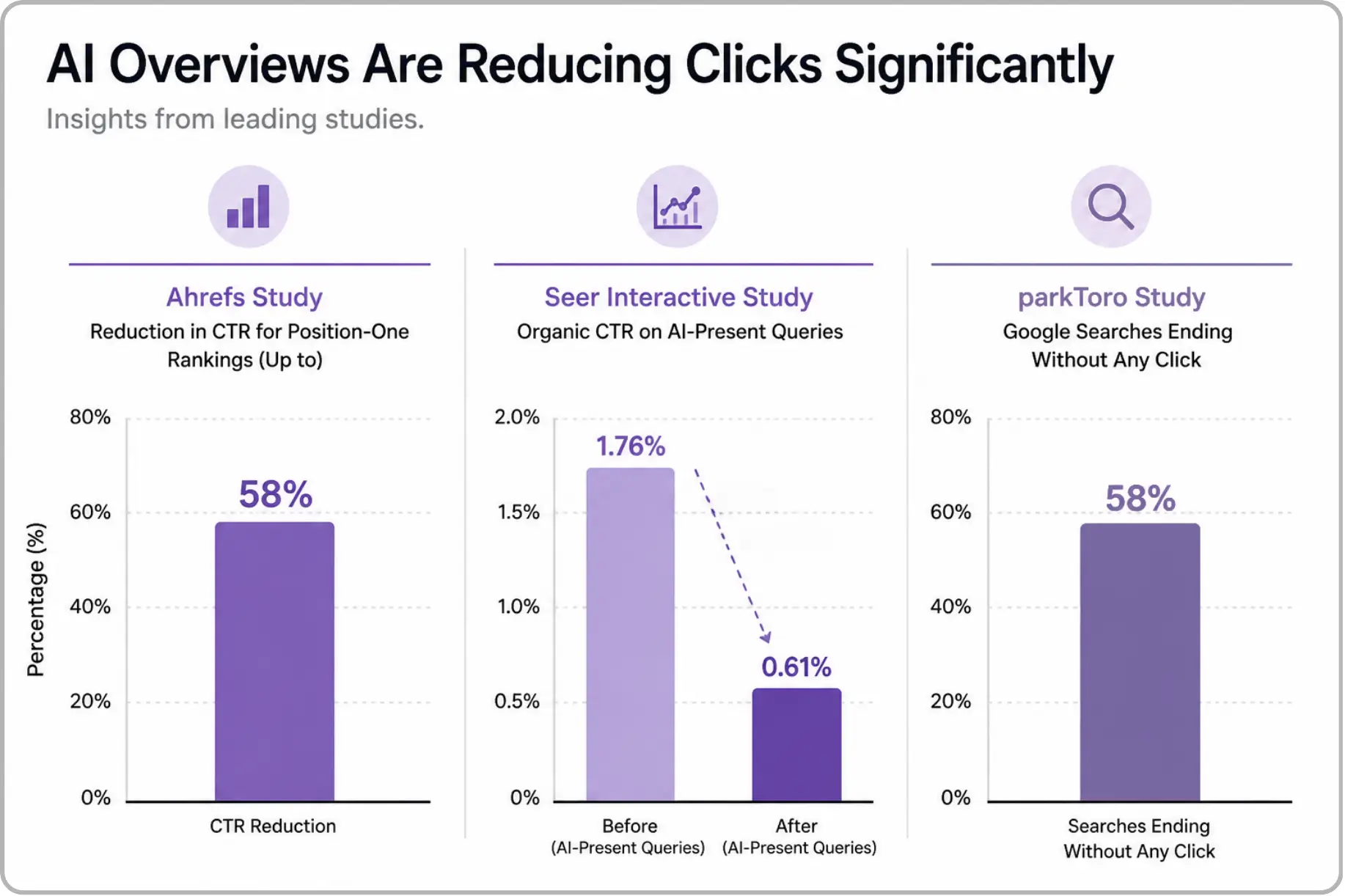
Ahrefs found that AI Overviews reduce CTR for position-one rankings by up to 58%. Seer Interactive's longitudinal study tracking 2.43 billion impressions across 53 brands saw organic CTR on AI-present queries fall from 1.76% to as low as 0.61%.
SparkToro's research puts it plainly: nearly 58% of all Google searches now end without any click at all. Users get their answer on the results page and move on. Google is becoming the destination, not just the directory. So, does this mean SEO is dead? No. But it does mean the metric you've been optimizing for click-through rate is only half the story now.
Being Cited Changes Everything
Being cited inside an AI Overview actually reverses the penalty. Sites referenced within AI summaries earn 35% more organic clicks and 91% more paid clicks than competitors showing up only in traditional results.
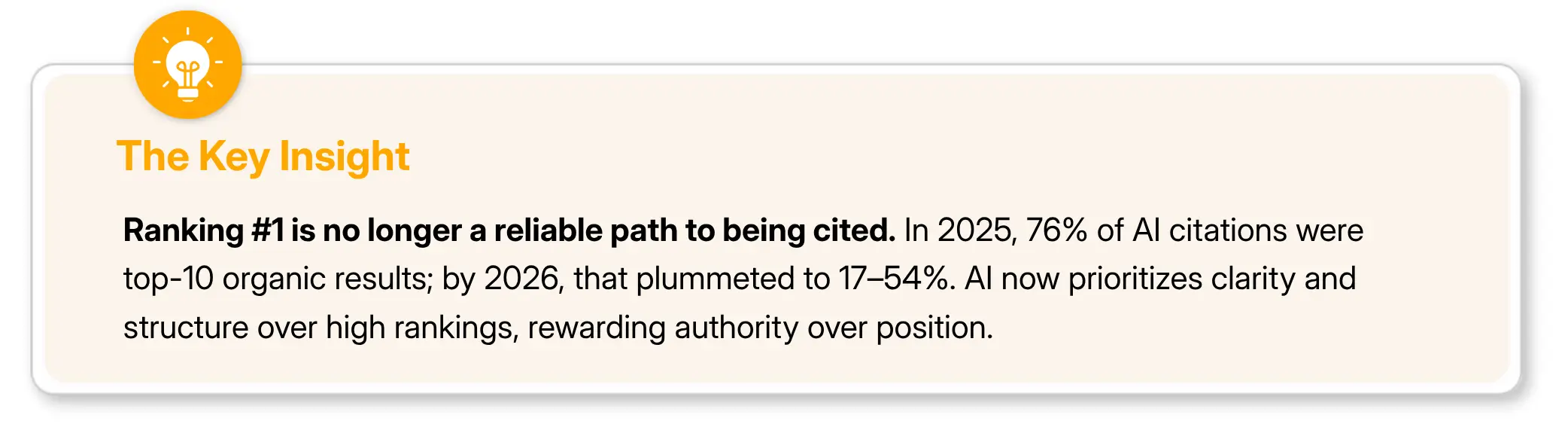
Which means there's a real opportunity here for brands that get this right before their competitors do.
Traditional SEO vs. AI Search Era: What's Changed?
Signal | Traditional SEO (Pre-2024) | AI Search Era (2025–2026) |
|---|---|---|
Primary ranking goal | Rank #1 in organic results | Rank #1 and get cited in AI Overviews |
Click-through rate | ~15% for position 1 | ~8% when AI Overview is present |
Content format | Keyword-dense, long-form | Structured, citable answer blocks |
Key trust signal | Backlink profile | E-E-A-T + entity authority |
Zero-click searches | ~49% of queries | ~58–65% of queries |
Success metric | Rankings + organic traffic | Rankings + AI citations + brand visibility |
Most affected query type | Commercial / transactional | Informational (89%+ of AI Overviews) |
AI agents impact | Minimal | Agents browse & transact autonomously |
The Rise of AI Agents: A Different Kind of Search
AI Overviews are changing how people read search results. AI agents are changing whether people search at all.
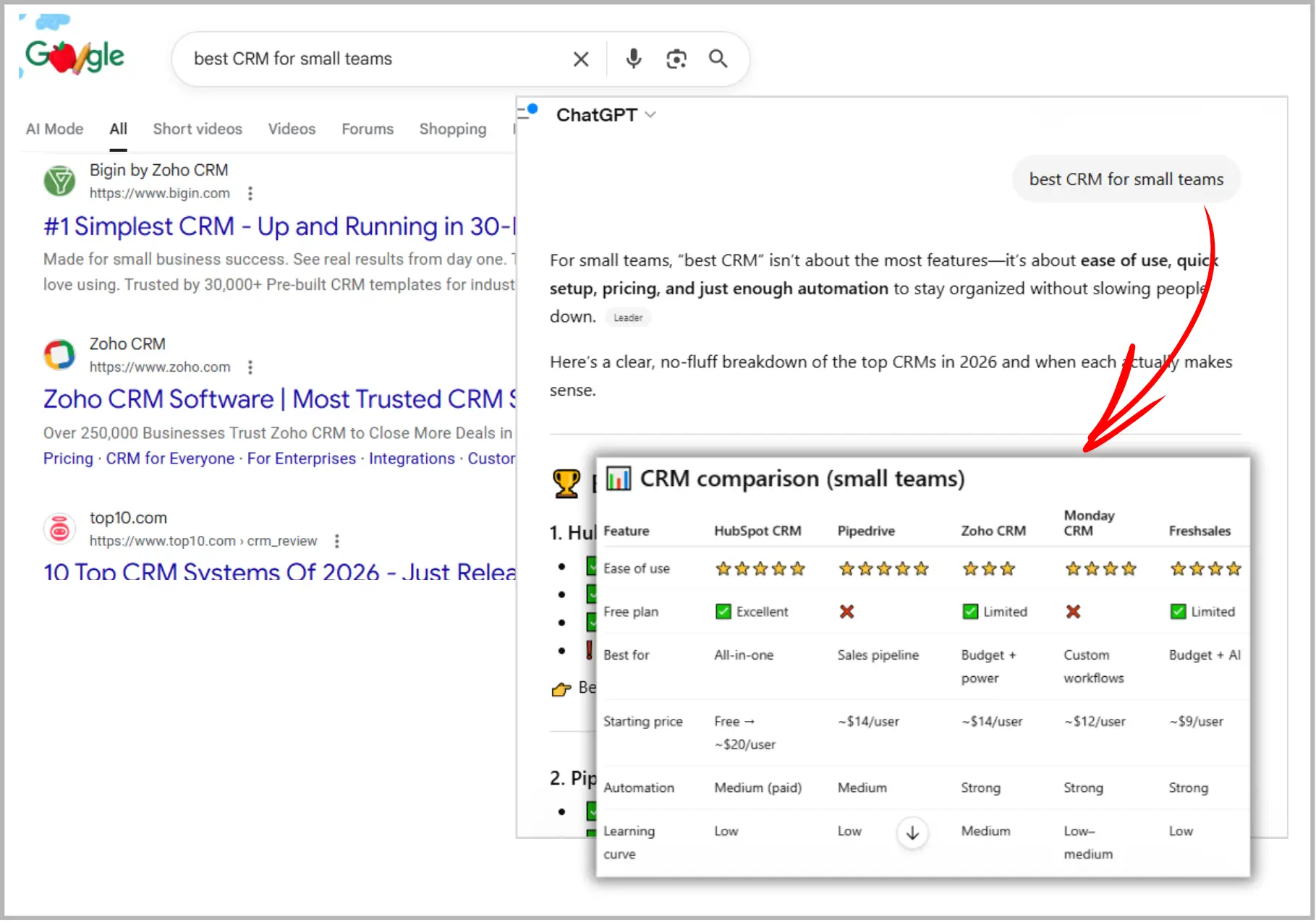
Think about it this way: someone used to Google "best CRM for small teams," click four or five links, compare tabs, and eventually make a decision. Today, they might ask ChatGPT or Perplexity to just figure it out for them. The agent searches independently, reads the relevant pages, compares options, and surfaces a recommendation — no second query required, and often no site visit at all.
What Does an AI Agent Actually Want From Your Website?
Here's where it gets practical. When an AI agent crawls your page, it's not reading like a human. It's not going to appreciate your storytelling arc or your carefully crafted intro. It's looking for structured, machine-readable information it can extract and use.
Pages that bury key facts deep in long paragraphs, require multiple clicks to reach pricing, or load slowly due to heavy JavaScript? Skipped. Clean, well-structured pages with direct answers and accurate metadata? Cited.
The sites that will benefit from agentic traffic are the ones that treat clarity as a design principle, not an afterthought.
What Signals Actually Drive AI Citations?
Understanding how AI Overviews select sources is now one of the most practical questions in SEO. Several patterns have emerged from ongoing research:
Content Depth and Structure
Articles over 2,900 words average more citations than shorter pieces, but length alone isn't the driver — it's the density of useful information. Pages that use 120–180 words between headings receive significantly more AI citations than pages with very short or very long sections. The structure signals to the AI where discrete answers live.
Freshness Matters More Than Before
Content updated in the past three months averages roughly 6 citations in AI-generated answers, compared to 3.6 for older pages. Regular updating isn't just good practice for human readers — it's a meaningful signal for AI systems that increasingly weight content recency.
E-E-A-T Has Become an AI Filter
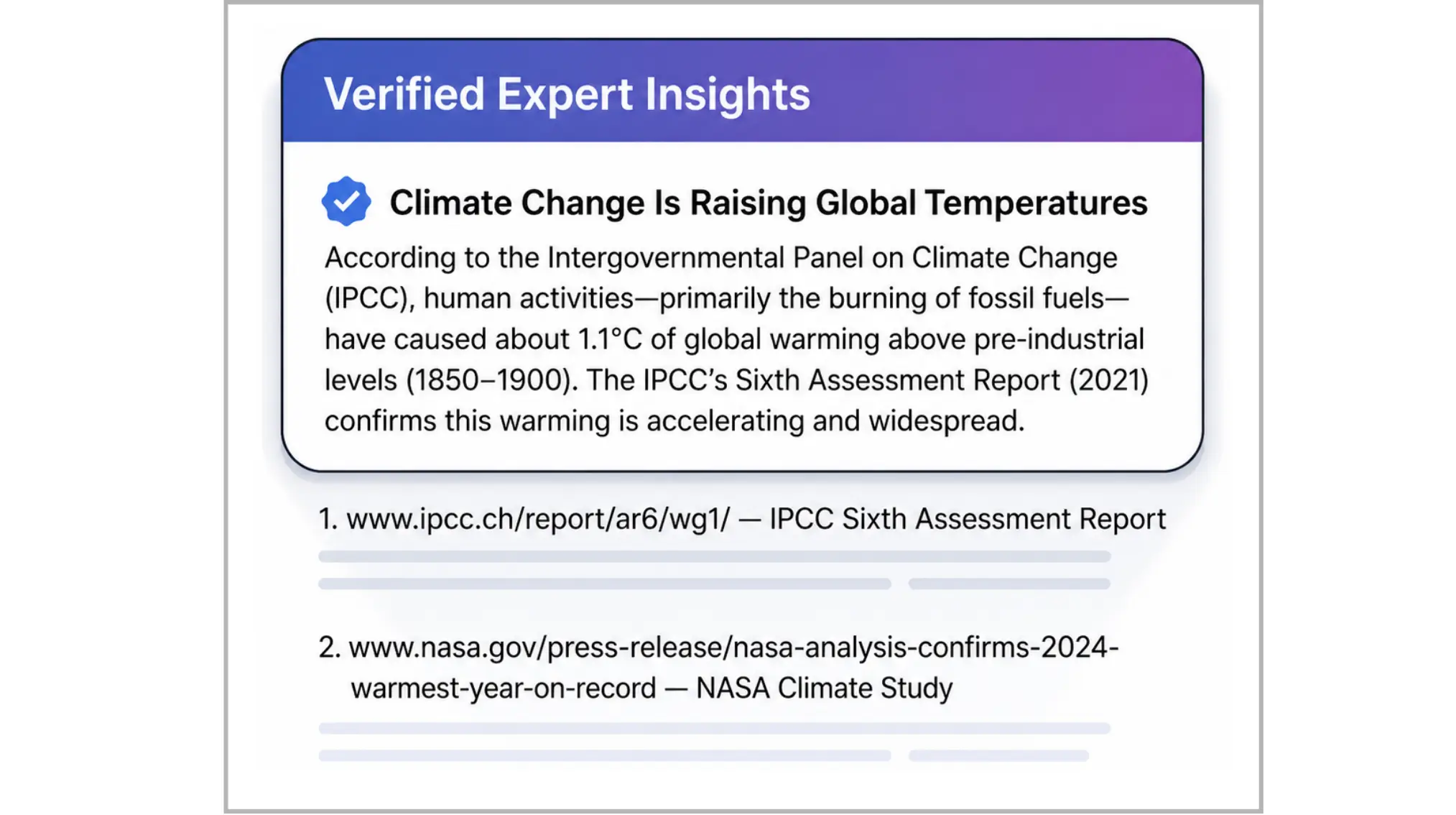
Google's E-E-A-T framework (Experience, Expertise, Authoritativeness, Trustworthiness) was always a quality signal, but in the AI era it functions as a citation filter. AI systems favor sources with clear entity signals: consistent author attribution, organization schema markup, well-defined topical focus, and traceable claims backed by original data or credible citations.
This is why Wikipedia, Reddit, YouTube, and established news organizations dominate AI citation lists. Reddit holds around 21% of Google AI Overview citations — a figure that reflects both its volume and the AI's appetite for authentic human perspectives and community-sourced answers. If your site has strong E-E-A-T signals, you're competing for the same tier.
Practical SEO Adjustments You Can Do Now
The good news is that the fundamentals of good content (accurate, well-organized, genuinely useful) still matter. What's changed is the format and the measurement, not the underlying principle.
1. Optimize for Answers, Not Just Keywords
For every key topic you cover, ensure the page leads with a clear, direct answer in the first 100 words of the relevant section. Don't make the AI (or the reader) hunt for the main point. Think of each section as a citable claim that needs to stand on its own.
2. Use Structured Data Markup
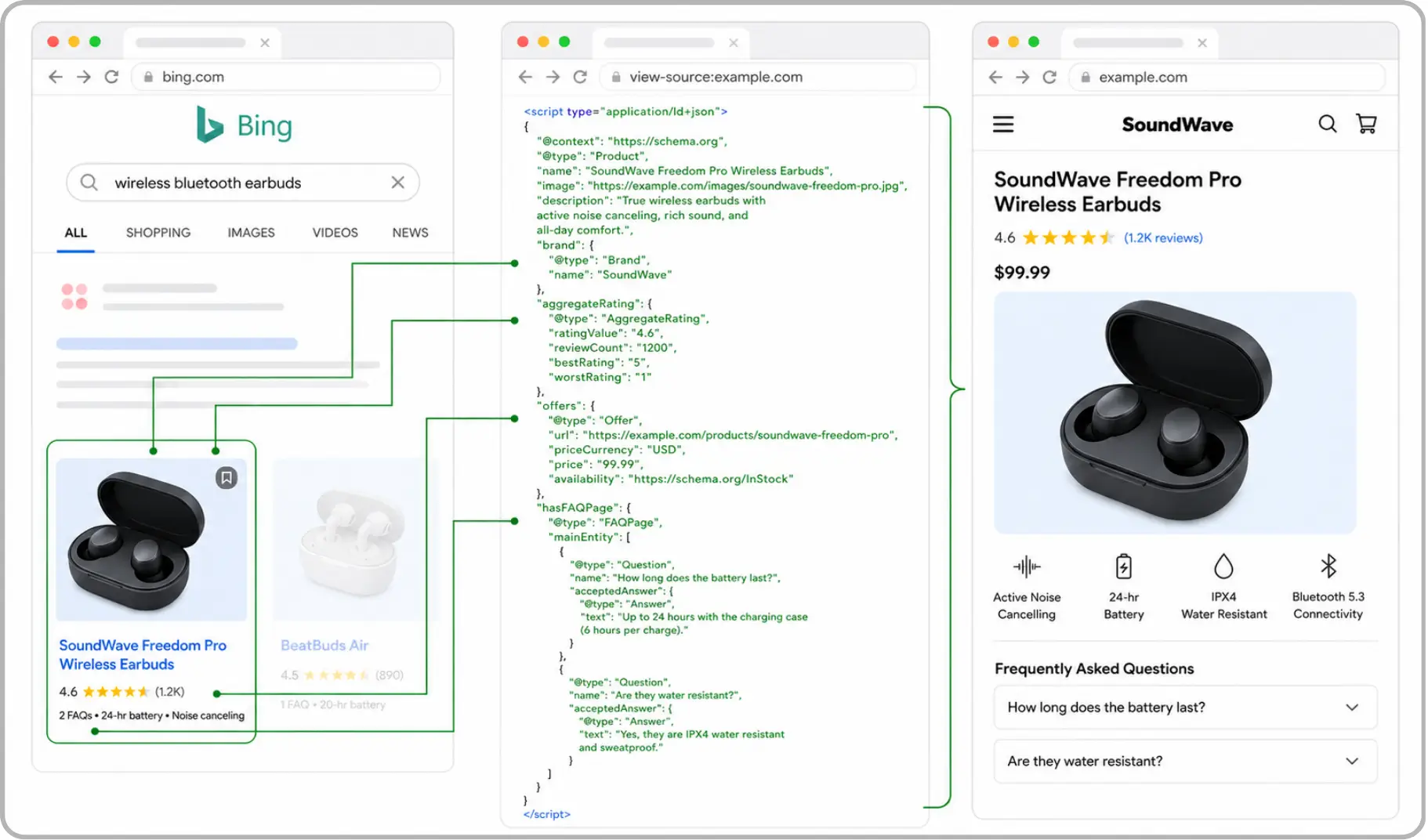
Implement schema markup — Article, FAQ, HowTo, and Organization schemas — to make your content machine-readable. Google's John Mueller has confirmed that clean HTML is sufficient for AI systems to read, but structured data markup makes your content easier to identify, attribute, and cite accurately.
3. Start Tracking AI Citations, Not Just Rankings
Your current SEO dashboard tells an incomplete story. Start monitoring whether your pages appear as cited sources in AI Overviews for your target queries. Tools like Ahrefs and Semrush now offer this. A page that earns AI citations without ranking first can still deliver substantial brand visibility.
4. Build Entity Authority
Make sure your brand, authors, and subject areas have consistent, well-defined signals across the web — author bios linked to social profiles, consistent business information, clear topical focus. AI systems use entity understanding to evaluate whether a source genuinely knows what it's talking about.
5. Don't Neglect Commercial-Intent Content
Worth saying clearly: AI Overviews rarely appear on commercial and transactional queries — only about 2–9% of product-comparison or purchase-intent searches trigger them. If you're in e-commerce or B2B sales, traditional ranking still drives direct traffic. The AI disruption is concentrated in informational content, not content close to a conversion.
The Bigger Picture: Two Search Surfaces, Not One
Here's the reframe that matters most: you're no longer optimizing for one surface. You're optimizing for two.
Surface one: Traditional organic search --> rankings, CTR, blue links. Still critical for commercial and navigational queries. Not going anywhere.
Surface two: AI-generated visibility --> citations in Overviews, inclusion in agent-synthesized answers, brand mentions across ChatGPT, Perplexity, and Google AI Mode. Growing faster than surface one. Increasingly where informational queries get resolved.
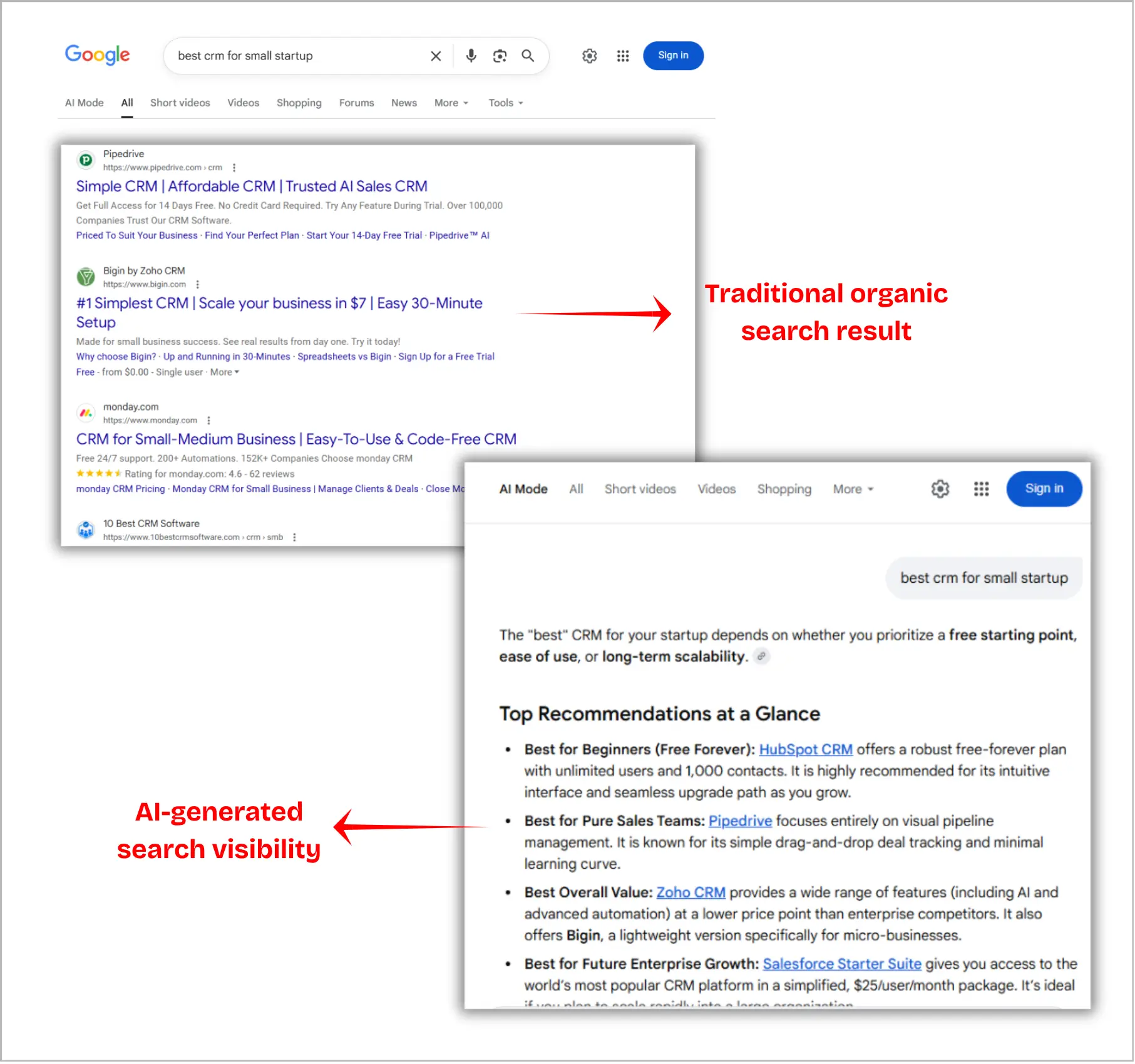
The sites that are struggling right now are treating these as the same optimization problem. They're not. You can rank first organically and never appear in an AI Overview. You can earn consistent AI citations without sitting in position one. Both surfaces reward slightly different things — and both deserve deliberate attention.
Final Thoughts
AI search isn't a phase Google is testing. It's a product direction the company is fully committed to and it's expanding. More query types, more markets, more capability. The AI agents browsing your site today are far less sophisticated than the ones that will be doing so in 12 months.
The right response isn't to wait and see. It's to build content that works equally well for a human reader and an AI system extracting a citable answer: clear, accurate, well-structured, credibly attributed, and genuinely useful.
FAQs
How AI Overviews are changing Google search results?

AI Overviews appear at the top of nearly 50% of Google searches and give users a direct answer before they even see a single blue link. This means less traffic goes to websites, and getting cited inside the AI panel has become just as important as ranking on page one.
Do AI Overviews hurt organic click-through rates?
Yes, significantly. When an AI Overview is present, click-through rates for the top organic result can drop by up to 58%. Nearly 58% of all Google searches now end without any click at all, as users get their answer directly from the results page.
What are AI agents and how do they affect SEO?
AI agents like ChatGPT's browsing mode and Perplexity independently search the web on a user's behalf reading pages, comparing options, and delivering a recommendation without the user visiting any site. For SEO or to be ranked in organic search, your page needs to be clear and structured enough for a machine to extract and use your content, not just a human to read it.
What does it take to get cited in a Google AI Overview?
Google favors pages that lead with direct answers, use clear headings, stay up to date, and carry strong E-E-A-T signals like consistent authorship and credible sourcing. Content updated within the last three months gets cited nearly twice as often as older pages.
Is traditional SEO still worth doing in 2026?
Absolutely, but it's no longer the whole picture. Traditional rankings still drive traffic for commercial and transactional queries, where AI Overviews rarely appear. The shift is that you now need to optimize for two surfaces: organic rankings and AI citation visibility, because they reward slightly different things.
Let's be honest, if you haven't updated your search engine optimization (SEO) strategy in the last 18 months, you're probably not getting the results you used to. Not because your content is bad, but because the search engine you've been optimizing for has quietly, fundamentally changed.
In May 2024, Google launched AI Overviews across the US. By early 2026, these AI-generated answer blocks appear at the top of nearly half of all searches. Add to that a wave of AI agents - ChatGPT's browsing mode, Perplexity, Google AI Mode that independently search the web on users' behalf, and you've got a genuinely new environment.
The old formula was simple: rank high, earn clicks. That formula still exists, but it now has a second half: get cited inside the AI response. And those two goals don't always point to the same strategy.
This post breaks down what's actually changed, what the numbers show, and most importantly what you can do about it right now.
What Are AI Overviews, and Why Do They Matter?
If you've searched anything informational on Google lately like "how does X work," "best way to do Y," "what's the difference between A and B" — you've almost certainly seen one.
AI Overviews are those AI-generated summaries that sit above the traditional blue links. Google pulls information from multiple sources, synthesizes a direct answer, and presents it with inline citations. Useful for the searcher. A little complicated for everyone who publishes content on the web.
Here's the thing: nearly 90% of queries that trigger an AI Overview are informational in nature — how-tos, explanations, comparisons, definitions. If your content is built to educate readers, you're sitting right in the epicentre of this change.
The Click-Through Rate Problem
Here's the number that should get your attention: when an AI Overview is present in search results, organic click-through rates drop. Significantly.
Ahrefs found that AI Overviews reduce CTR for position-one rankings by up to 58%. Seer Interactive's longitudinal study tracking 2.43 billion impressions across 53 brands saw organic CTR on AI-present queries fall from 1.76% to as low as 0.61%.
SparkToro's research puts it plainly: nearly 58% of all Google searches now end without any click at all. Users get their answer on the results page and move on. Google is becoming the destination, not just the directory. So, does this mean SEO is dead? No. But it does mean the metric you've been optimizing for click-through rate is only half the story now.
Being Cited Changes Everything
Being cited inside an AI Overview actually reverses the penalty. Sites referenced within AI summaries earn 35% more organic clicks and 91% more paid clicks than competitors showing up only in traditional results.
Which means there's a real opportunity here for brands that get this right before their competitors do.
Traditional SEO vs. AI Search Era: What's Changed?
Signal | Traditional SEO (Pre-2024) | AI Search Era (2025–2026) |
|---|---|---|
Primary ranking goal | Rank #1 in organic results | Rank #1 and get cited in AI Overviews |
Click-through rate | ~15% for position 1 | ~8% when AI Overview is present |
Content format | Keyword-dense, long-form | Structured, citable answer blocks |
Key trust signal | Backlink profile | E-E-A-T + entity authority |
Zero-click searches | ~49% of queries | ~58–65% of queries |
Success metric | Rankings + organic traffic | Rankings + AI citations + brand visibility |
Most affected query type | Commercial / transactional | Informational (89%+ of AI Overviews) |
AI agents impact | Minimal | Agents browse & transact autonomously |
The Rise of AI Agents: A Different Kind of Search
AI Overviews are changing how people read search results. AI agents are changing whether people search at all.
Think about it this way: someone used to Google "best CRM for small teams," click four or five links, compare tabs, and eventually make a decision. Today, they might ask ChatGPT or Perplexity to just figure it out for them. The agent searches independently, reads the relevant pages, compares options, and surfaces a recommendation — no second query required, and often no site visit at all.
What Does an AI Agent Actually Want From Your Website?
Here's where it gets practical. When an AI agent crawls your page, it's not reading like a human. It's not going to appreciate your storytelling arc or your carefully crafted intro. It's looking for structured, machine-readable information it can extract and use.
Pages that bury key facts deep in long paragraphs, require multiple clicks to reach pricing, or load slowly due to heavy JavaScript? Skipped. Clean, well-structured pages with direct answers and accurate metadata? Cited.
The sites that will benefit from agentic traffic are the ones that treat clarity as a design principle, not an afterthought.
What Signals Actually Drive AI Citations?
Understanding how AI Overviews select sources is now one of the most practical questions in SEO. Several patterns have emerged from ongoing research:
Content Depth and Structure
Articles over 2,900 words average more citations than shorter pieces, but length alone isn't the driver — it's the density of useful information. Pages that use 120–180 words between headings receive significantly more AI citations than pages with very short or very long sections. The structure signals to the AI where discrete answers live.
Freshness Matters More Than Before
Content updated in the past three months averages roughly 6 citations in AI-generated answers, compared to 3.6 for older pages. Regular updating isn't just good practice for human readers — it's a meaningful signal for AI systems that increasingly weight content recency.
E-E-A-T Has Become an AI Filter
Google's E-E-A-T framework (Experience, Expertise, Authoritativeness, Trustworthiness) was always a quality signal, but in the AI era it functions as a citation filter. AI systems favor sources with clear entity signals: consistent author attribution, organization schema markup, well-defined topical focus, and traceable claims backed by original data or credible citations.
This is why Wikipedia, Reddit, YouTube, and established news organizations dominate AI citation lists. Reddit holds around 21% of Google AI Overview citations — a figure that reflects both its volume and the AI's appetite for authentic human perspectives and community-sourced answers. If your site has strong E-E-A-T signals, you're competing for the same tier.
Practical SEO Adjustments You Can Do Now
The good news is that the fundamentals of good content (accurate, well-organized, genuinely useful) still matter. What's changed is the format and the measurement, not the underlying principle.
1. Optimize for Answers, Not Just Keywords
For every key topic you cover, ensure the page leads with a clear, direct answer in the first 100 words of the relevant section. Don't make the AI (or the reader) hunt for the main point. Think of each section as a citable claim that needs to stand on its own.
2. Use Structured Data Markup
Implement schema markup — Article, FAQ, HowTo, and Organization schemas — to make your content machine-readable. Google's John Mueller has confirmed that clean HTML is sufficient for AI systems to read, but structured data markup makes your content easier to identify, attribute, and cite accurately.
3. Start Tracking AI Citations, Not Just Rankings
Your current SEO dashboard tells an incomplete story. Start monitoring whether your pages appear as cited sources in AI Overviews for your target queries. Tools like Ahrefs and Semrush now offer this. A page that earns AI citations without ranking first can still deliver substantial brand visibility.
4. Build Entity Authority
Make sure your brand, authors, and subject areas have consistent, well-defined signals across the web — author bios linked to social profiles, consistent business information, clear topical focus. AI systems use entity understanding to evaluate whether a source genuinely knows what it's talking about.
5. Don't Neglect Commercial-Intent Content
Worth saying clearly: AI Overviews rarely appear on commercial and transactional queries — only about 2–9% of product-comparison or purchase-intent searches trigger them. If you're in e-commerce or B2B sales, traditional ranking still drives direct traffic. The AI disruption is concentrated in informational content, not content close to a conversion.
The Bigger Picture: Two Search Surfaces, Not One
Here's the reframe that matters most: you're no longer optimizing for one surface. You're optimizing for two.
Surface one: Traditional organic search --> rankings, CTR, blue links. Still critical for commercial and navigational queries. Not going anywhere.
Surface two: AI-generated visibility --> citations in Overviews, inclusion in agent-synthesized answers, brand mentions across ChatGPT, Perplexity, and Google AI Mode. Growing faster than surface one. Increasingly where informational queries get resolved.
The sites that are struggling right now are treating these as the same optimization problem. They're not. You can rank first organically and never appear in an AI Overview. You can earn consistent AI citations without sitting in position one. Both surfaces reward slightly different things — and both deserve deliberate attention.
Final Thoughts
AI search isn't a phase Google is testing. It's a product direction the company is fully committed to and it's expanding. More query types, more markets, more capability. The AI agents browsing your site today are far less sophisticated than the ones that will be doing so in 12 months.
The right response isn't to wait and see. It's to build content that works equally well for a human reader and an AI system extracting a citable answer: clear, accurate, well-structured, credibly attributed, and genuinely useful.
FAQs
How AI Overviews are changing Google search results?
AI Overviews appear at the top of nearly 50% of Google searches and give users a direct answer before they even see a single blue link. This means less traffic goes to websites, and getting cited inside the AI panel has become just as important as ranking on page one.
Do AI Overviews hurt organic click-through rates?
Yes, significantly. When an AI Overview is present, click-through rates for the top organic result can drop by up to 58%. Nearly 58% of all Google searches now end without any click at all, as users get their answer directly from the results page.
What are AI agents and how do they affect SEO?
AI agents like ChatGPT's browsing mode and Perplexity independently search the web on a user's behalf reading pages, comparing options, and delivering a recommendation without the user visiting any site. For SEO or to be ranked in organic search, your page needs to be clear and structured enough for a machine to extract and use your content, not just a human to read it.
What does it take to get cited in a Google AI Overview?
Google favors pages that lead with direct answers, use clear headings, stay up to date, and carry strong E-E-A-T signals like consistent authorship and credible sourcing. Content updated within the last three months gets cited nearly twice as often as older pages.
Is traditional SEO still worth doing in 2026?
Absolutely, but it's no longer the whole picture. Traditional rankings still drive traffic for commercial and transactional queries, where AI Overviews rarely appear. The shift is that you now need to optimize for two surfaces: organic rankings and AI citation visibility, because they reward slightly different things.



Summarize with AI


Want to be seen everywhere?
Get a free AI-search audit Today!



4.9/5 Ratings!


Don’t miss our revenue growth tips!
Get expert marketing tips—straight to your inbox, like thousands of happy clients.
Don’t miss our revenue growth tips!
Get expert marketing tips—straight to your inbox, like thousands of happy clients.
Don’t miss our revenue growth tips!
Don’t miss our revenue growth tips!
Get expert marketing tips—straight to your inbox, like thousands of happy clients.
Relevant Blogs on Generative AI SEO
Relevant Blogs on Generative AI SEO
Unlock data-driven insights in AI-powered SEO—explore our featured blogs and skyrocket your revenue before your competitors do.
Unlock data-driven insights in AI-powered SEO—explore our featured blogs and skyrocket your revenue before your competitors do.

GEO
Sep 22, 2026
15 Min Read
AI Search Runs on More SEO Than You Think
GEO
Sep 22, 2026
15 Min Read
AI Search Runs on More SEO Than You Think
GEO
Sep 22, 2026
15 Min Read
AI Search Runs on More SEO Than You Think

GEO
Sep 7, 2026
8 Min Read
How to Optimize Content for AI Search Engines: Best Practices
GEO
Sep 7, 2026
8 Min Read
How to Optimize Content for AI Search Engines: Best Practices
GEO
Sep 7, 2026
8 Min Read
How to Optimize Content for AI Search Engines: Best Practices

GEO
Sep 4, 2026
12 Min Read
How Ecommerce Brands Can Advertise in Google AI Mode?
GEO
Sep 4, 2026
12 Min Read
How Ecommerce Brands Can Advertise in Google AI Mode?
GEO
Sep 4, 2026
12 Min Read
How Ecommerce Brands Can Advertise in Google AI Mode?









Ready to speak with an expert?
Data-Driven Marketing Agency That Elevates ROI
1100+
Websites Designed & Optimized to Convert
$280M+
Client Revenue Driven & Growing Strong
Discover how to skyrocket
your revenue today!
Trusted by 1000+ Owners!
Ready to speak with an expert?
Data-Driven Marketing Agency That Elevates ROI
1100+
Websites Designed & Optimized to Convert
$280M+
Client Revenue Driven & Growing Strong
Discover how to skyrocket
your revenue today!
Trusted by 1000+ Owners!
Want to skyrocket revenue?
4.9/5 Ratings!
Ready to speak with an expert?
Data-Driven Marketing Agency That Elevates ROI
1100+
Websites Designed & Optimized to Convert
$280M+
Client Revenue Driven & Growing Strong
Discover how to skyrocket
your revenue today!
Trusted by 1000+ Owners!
Call
Meet