What Inbox Providers Really Prioritize (And Most Marketers Get Wrong)
What Inbox Providers Really Prioritize (And Most Marketers Get Wrong)
Last Updated:
Table of Content

















Deepak Prajapat
Deepak Prajapat
Deepak Prajapat
Email & SMS
Email & SMS
Email & SMS
8 Min Read
12 Min
8 Min Read
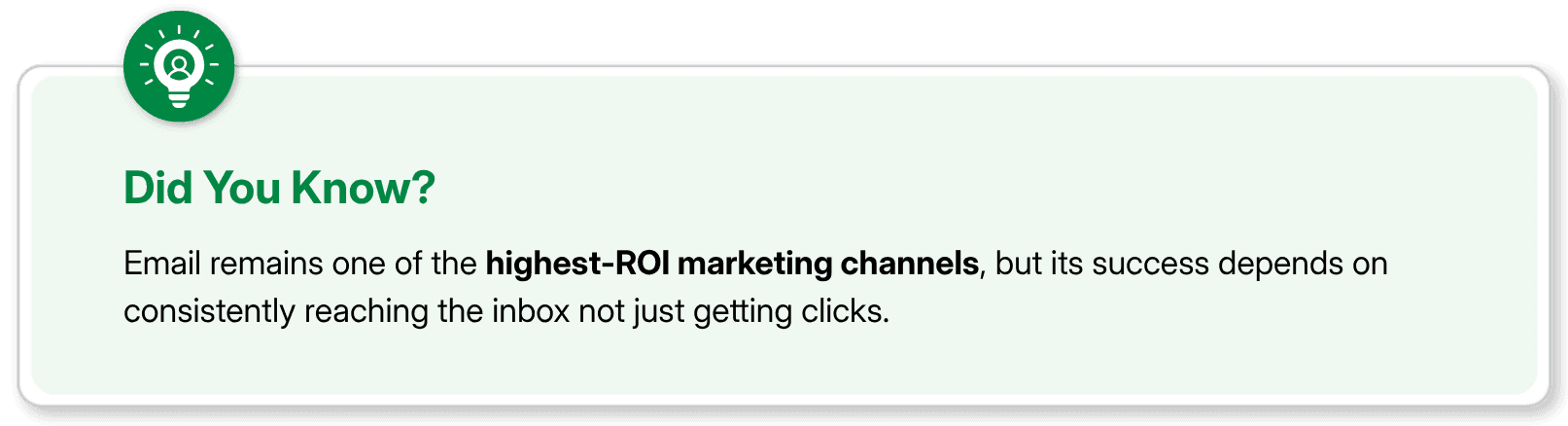
Your open rate looks great, but still your emails are landing in spam.
That's the gap at the center of email deliverability today. Most teams still treat it like a content problem write a sharper subject line, personalize the copy, keep the clicks coming & the inbox will follow. Inbox providers don't see it that way & honestly, they never really did. What's changed is how far marketer assumptions have drifted from what providers actually check, especially now that privacy tools like Apple's Mail Privacy Protection have made open rates almost meaningless.
A new analysis from various industry sources puts real numbers behind that gap. Researchers reviewed 193 companies and surveyed 820 marketers, then compared what marketers think matters against what inbox providers actually use to decide inbox placement. The results aren't close. Providers rank sender reputation as their top signal. Marketers rank it near the middle, while putting their highest trust in open rates a metric providers barely look at anymore.
Here's what this article covers:
Why sender reputation outranks everything else
Why marketers keep misreading spam complaints and list quality
How authentication became table stakes rather than an edge
What to change in your sending strategy this month, not next quarter
This is also the kind of infrastructure work our email & SMS marketing team handles for clients directly, so if you'd rather have someone audit your sending setup than fix it yourself, that option exists too.
Why Sender Reputation Outweighs Everything Else
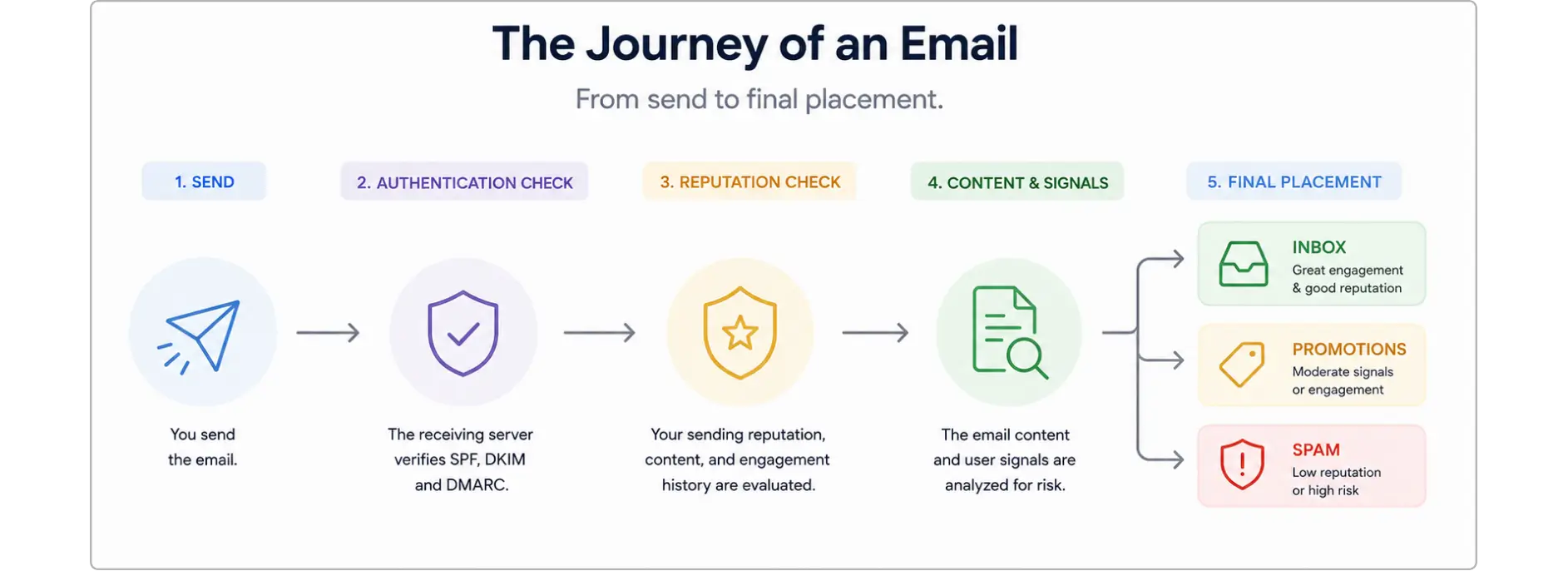
Think of sender reputation as a credit score for your domain and IP address. Inbox providers like Gmail, Outlook & Yahoo build it from your sending history, how recipients treat your mail over time, how consistent your volume is & how clean your list stays.
In the researched data, providers put sender and domain reputation right at the top of their priority list. Marketers rated it roughly half as important.
That gap makes sense once you see it from the provider's side:
Marketers see the subject lines, opens & clicks of their own campaigns.
Providers see millions of senders at once, with no idea who's a good brand and who isn't.
Reputation is the fastest way for a provider to decide, in milliseconds, whether to trust a message it's never seen before.
And reputation isn't static. It's rebuilt or damaged with every send.
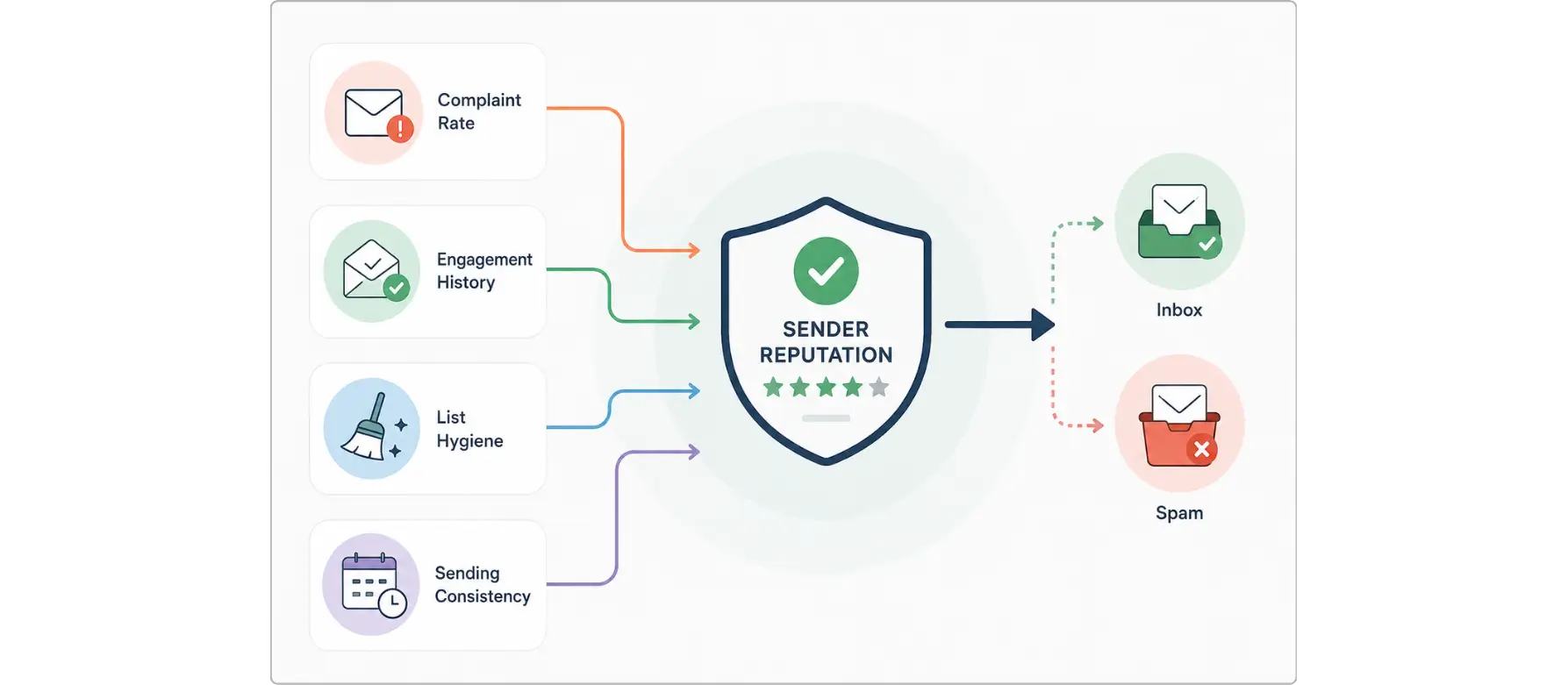
The takeaway: a brand can write excellent emails and still lose the inbox if its domain reputation is weak. Reputation isn't a bonus layered on top of good marketing. It's the gate that decides whether the marketing gets seen at all.
What to do about it:
Set up Google Postmaster Tools and Microsoft SNDS before deliverability drops, not after.
Check your reputation tier weekly. Both tools show you exactly how Gmail and Outlook see your domain right now.
Treat a reputation dip as more urgent than any single campaign's performance.
Spam Complaints: The Signal Marketers Chronically Underrate
Signal | Inbox Provider Priority | Marketer Perception | Gap |
|---|---|---|---|
Sender & Domain Reputation | 100 | 58 | 42 pts |
Spam Complaints | 96 | 63 | 33 pts |
Authentication | 92 | 91 | 1 pts |
List Quality & Permission | 90 | 55 | 35 pts |
Sending Volume & Consistency | 84 | 38 | 46 pts |
Open Rates | 35 | 79 | -44 pts |
The table above is worth sitting with for a second. Every signal provider cares about most; marketers underrate it except for open rates, which marketers wildly overrate.
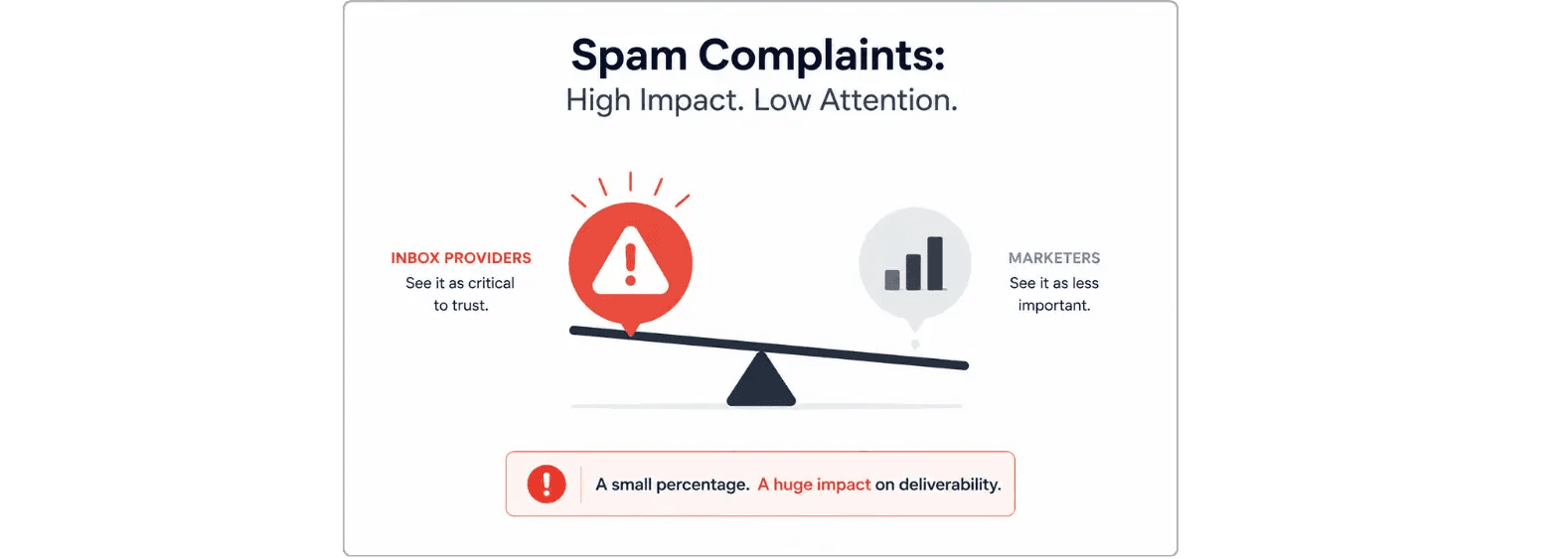
Spam complaints are a good example of why that under rating is costly. A complaint isn't just negative feedback sitting in a report. It's a real person telling their inbox provider, directly, that they didn't want that email. No engagement metric carries that same weight.
Marketers tend to shrug this off because complaint rates are usually tiny a fraction of a percent, next to a click-through rate in the double digits. But providers don't compare complaints to clicks. They compare your complaint rate to a threshold & once you're over it, filtering tightens fast often before opens even dip.
A quick example: An online retailer sends a re-engagement blast to a list that hasn't been cleaned in a year. Complaint rate creeps up to 0.3%. Clicks still look okay on the surface. Two weeks later, campaigns to the engaged segment start landing in spam too, because the whole domain absorbed the damage.
What to do about it:
Keep complaints under 0.1%.
Check this number weekly in Postmaster Tools, not monthly.
Treat any upward trend as more urgent than a dip in opens.
Authentication: The One Area Marketers Get Right
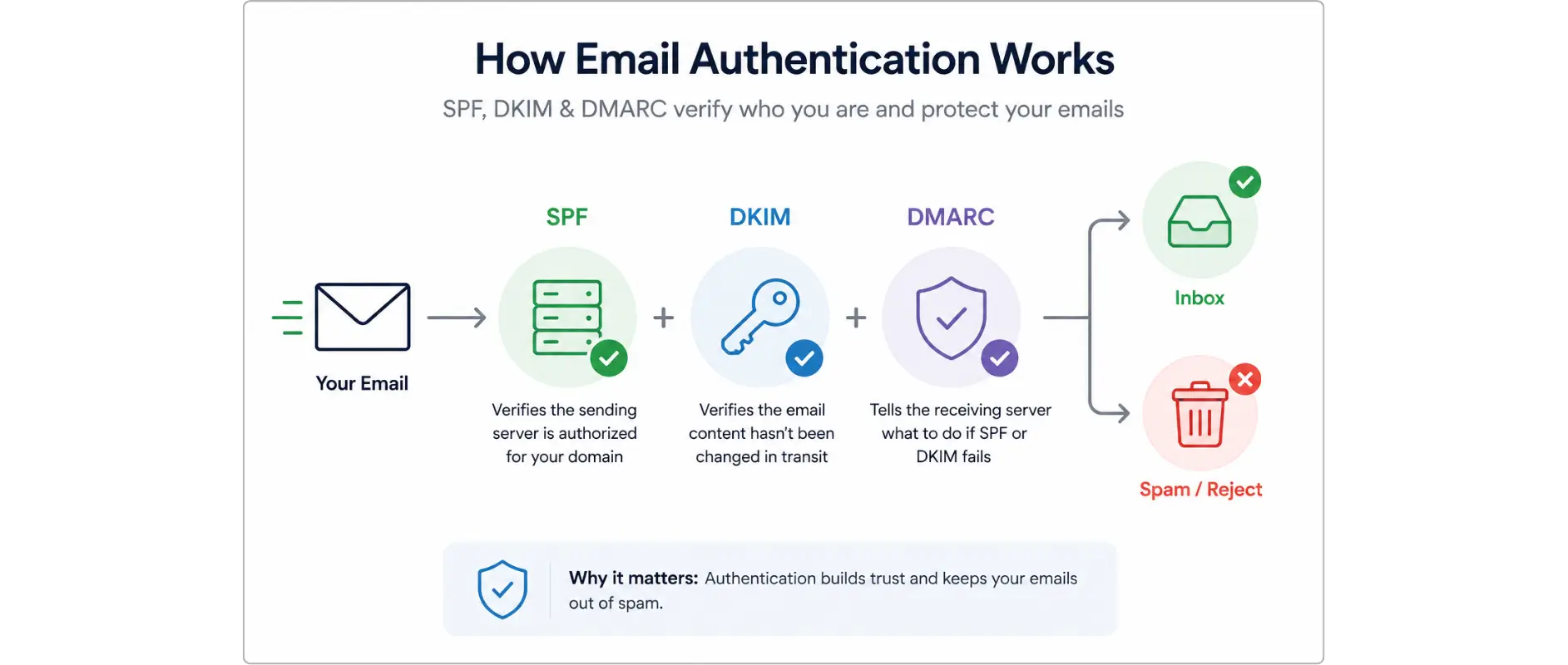
This is the exception in the data marketers and providers actually agree here, both ranking authentication near the top. That's because SPF, DKIM & DMARC stopped being optional. After Gmail and Yahoo's 2024 bulk sender rules, authentication became a baseline requirement rather than something that sets you apart.
Where teams still slip up is treating it as a one-time setup instead of ongoing maintenance:
SPF records break silently when a new marketing tool gets added and the DNS record isn't updated.
DMARC is often left on "none," which only monitors failures without blocking anything.
Nobody revisits either after the initial setup.
What to do about it:
Move DMARC from monitoring toward enforcement (quarantine or reject) once you've confirmed every legitimate sender is properly authenticated.
Re-check SPF and DKIM records any time you add a new sending platform.
List Quality and Permission: The Foundation Marketers Treat as Optional
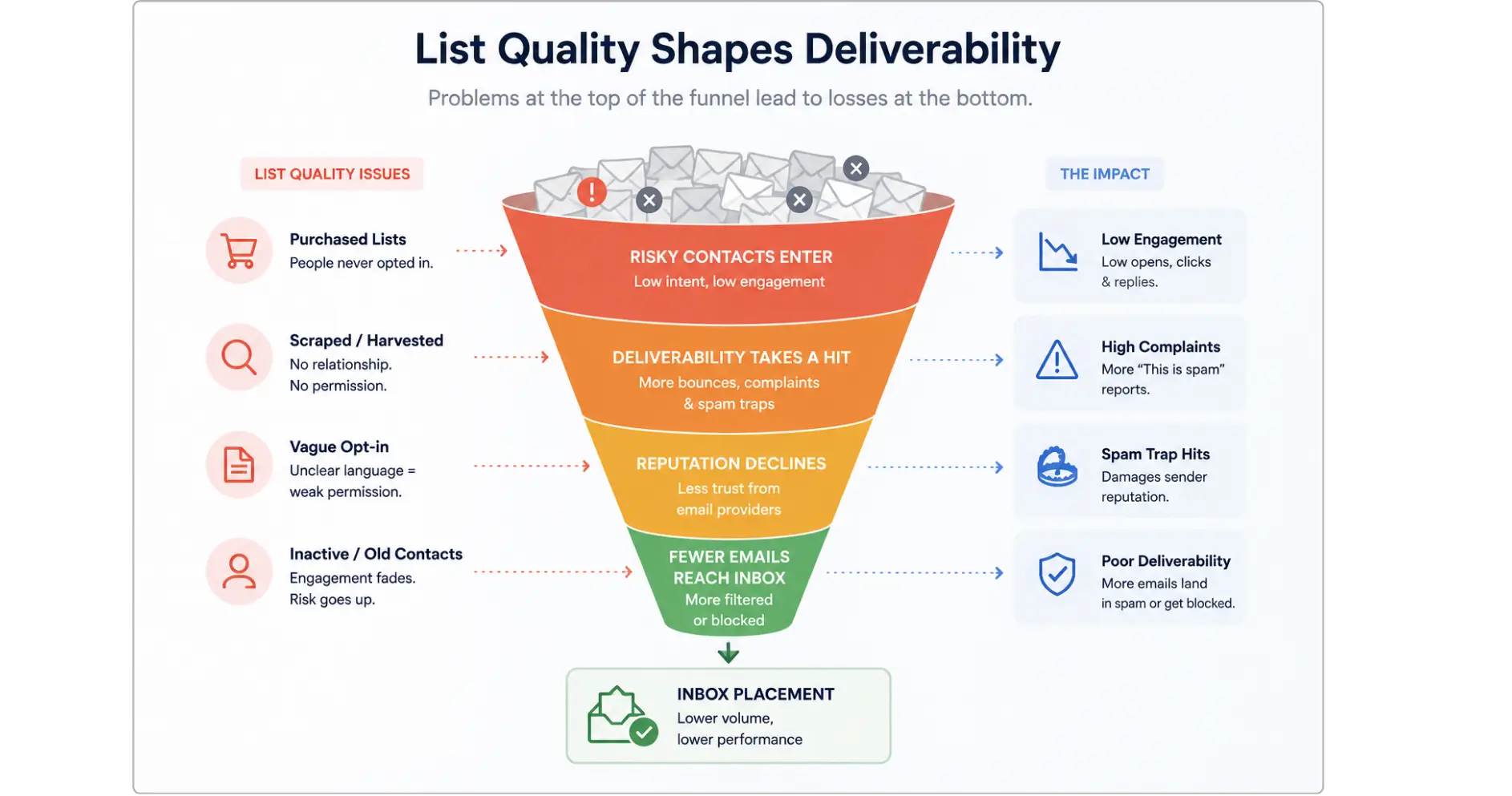
Providers rated list quality and permission far higher than marketers did & a 35-point gap, one of the widest in the whole study. This is usually where the trouble starts, because list growth gets treated as a marketing win no matter how those addresses were collected.
Providers see it differently. A purchased list, a scraped list, or vague opt-in language all lead to the same place: low engagement, high complaints & spam-trap hits. Spam traps are addresses providers plant specifically to catch senders with poor list hygiene & one hit can hurt your reputation for weeks.
A quick example: A B2B company merges two customer databases after an acquisition without reconfirming consent. Opens look fine at first, propped up by a smaller engaged segment. But bounce and complaint rates from the unconfirmed portion slowly drag the reputation down. Six weeks later, delivery to the entire list even the previously engaged customers & starts to slip.
What to do about it:
Run a re-permission or sunset campaign for anyone inactive 90–180 days.
Remove hard bounces immediately, not at the next cleanup cycle.
Treat list size as a vanity number and list quality as the real asset.
If list hygiene has been on the back burner, our team recently put together a practical guide to building an email list without annoying subscribers worth a read alongside this one.
Sending Volume and Consistency: The Quietest High-Impact Signal
This is the largest perception gap in the whole dataset a 46-point difference. Providers rank sending consistency near the top of their list. Marketers rank it near the bottom, almost an afterthought.
That's easy to understand: consistency isn't something you A/B test or drop into a campaign recap. But providers use sending patterns as a proxy for legitimacy. A domain that goes quiet for two months, then blasts a huge volume all at once, looks statistically similar to a compromised account or a spammer testing a fresh list. Providers respond by throttling delivery or routing part of that volume straight to spam regardless of how good the content is.
What to do about it:
Warm up a new (or restarted) domain gradually build volume over 2–4 weeks instead of sending your full list on day one.
Keep a predictable sending cadence, even during slower business periods.
Why Open Rates Are Actively Misleading You
Marketers rated open rates as their top-priority metric. Providers barely use them. This isn't a matter of opinion it's a data integrity problem. Apple's Mail Privacy Protection pre-fetches images for a large share of iOS and Mac Mail users, which registers an "open" whether or not a human ever saw the email.
Depending on your audience's device mix, a meaningful chunk of your reported opens may not reflect real engagement at all. And treating open rate as a health metric means you're optimizing toward a number that's partly artificial one that can mask declining deliverability for months while still looking fine on a dashboard.
What to do about it:
Shift your primary reporting to Inbox Placement Rate and Spam Complaint Rate.
Use click-through rate and conversions as secondary signals both require a real human action, not a background image fetch.
Final Thoughts
Every signal in this research points to the same conclusion: email deliverability is mostly an infrastructure problem, not a content problem. You can write the sharpest subject line in your industry and still lose the inbox if your domain reputation, list hygiene, or sending consistency are working against you.
The practical shift is simple stop treating deliverability as something you check only when campaigns underperform. Treat it like site uptime or page speed: something you monitor constantly, not occasionally.
Here's where to start this week:
Set up Postmaster Tools and SNDS if you haven't already.
Pull your spam complaint rate today, not at the next quarterly review.
Audit your list for anyone inactive in the last six months.
Check whether your DMARC policy is actually enforcing anything, or just watching.
None of these require new content or a redesigned template. They require attention to the infrastructure sitting underneath every email you send. If that audit sounds like more than your team has bandwidth for, a free website and email marketing evaluation is a reasonable next step before your next campaign.
Ready to get started? Pick a platform, craft your first message & hit send. Need help? Contact us today. We're here to support you every step of the way.
FAQs
What is email deliverability?

Email deliverability is the ability of an email to reach a recipient's inbox rather than being filtered to spam or blocked entirely. It's shaped by sender reputation, authentication, list quality & recipient engagement.
What affects email deliverability the most?
Sender and domain reputation has the biggest impact, followed closely by spam complaint rates. Both outweigh content-level factors like subject lines or send time.
Why do my emails go to spam even with a good open rate?
Open rates are unreliable because of privacy features like Apple's Mail Privacy Protection, which can register opens without any human interaction. Inbox placement depends on reputation and complaint data, not opens.
How do I check my sender reputation?
Use Google Postmaster Tools for Gmail recipients and Microsoft SNDS for Outlook and Hotmail recipients. Both give you direct reputation and spam-rate data straight from the providers.
What is a good spam complaint rate?
Keep it below 0.1%. Rates above this threshold typically trigger tighter filtering from major inbox providers.
Your open rate looks great, but still your emails are landing in spam.
That's the gap at the center of email deliverability today. Most teams still treat it like a content problem write a sharper subject line, personalize the copy, keep the clicks coming & the inbox will follow. Inbox providers don't see it that way & honestly, they never really did. What's changed is how far marketer assumptions have drifted from what providers actually check, especially now that privacy tools like Apple's Mail Privacy Protection have made open rates almost meaningless.
A new analysis from various industry sources puts real numbers behind that gap. Researchers reviewed 193 companies and surveyed 820 marketers, then compared what marketers think matters against what inbox providers actually use to decide inbox placement. The results aren't close. Providers rank sender reputation as their top signal. Marketers rank it near the middle, while putting their highest trust in open rates a metric providers barely look at anymore.
Here's what this article covers:
Why sender reputation outranks everything else
Why marketers keep misreading spam complaints and list quality
How authentication became table stakes rather than an edge
What to change in your sending strategy this month, not next quarter
This is also the kind of infrastructure work our email & SMS marketing team handles for clients directly, so if you'd rather have someone audit your sending setup than fix it yourself, that option exists too.
Why Sender Reputation Outweighs Everything Else
Think of sender reputation as a credit score for your domain and IP address. Inbox providers like Gmail, Outlook & Yahoo build it from your sending history, how recipients treat your mail over time, how consistent your volume is & how clean your list stays.
In the researched data, providers put sender and domain reputation right at the top of their priority list. Marketers rated it roughly half as important.
That gap makes sense once you see it from the provider's side:
Marketers see the subject lines, opens & clicks of their own campaigns.
Providers see millions of senders at once, with no idea who's a good brand and who isn't.
Reputation is the fastest way for a provider to decide, in milliseconds, whether to trust a message it's never seen before.
And reputation isn't static. It's rebuilt or damaged with every send.
The takeaway: a brand can write excellent emails and still lose the inbox if its domain reputation is weak. Reputation isn't a bonus layered on top of good marketing. It's the gate that decides whether the marketing gets seen at all.
What to do about it:
Set up Google Postmaster Tools and Microsoft SNDS before deliverability drops, not after.
Check your reputation tier weekly. Both tools show you exactly how Gmail and Outlook see your domain right now.
Treat a reputation dip as more urgent than any single campaign's performance.
Spam Complaints: The Signal Marketers Chronically Underrate
Signal | Inbox Provider Priority | Marketer Perception | Gap |
|---|---|---|---|
Sender & Domain Reputation | 100 | 58 | 42 pts |
Spam Complaints | 96 | 63 | 33 pts |
Authentication | 92 | 91 | 1 pts |
List Quality & Permission | 90 | 55 | 35 pts |
Sending Volume & Consistency | 84 | 38 | 46 pts |
Open Rates | 35 | 79 | -44 pts |
The table above is worth sitting with for a second. Every signal provider cares about most; marketers underrate it except for open rates, which marketers wildly overrate.
Spam complaints are a good example of why that under rating is costly. A complaint isn't just negative feedback sitting in a report. It's a real person telling their inbox provider, directly, that they didn't want that email. No engagement metric carries that same weight.
Marketers tend to shrug this off because complaint rates are usually tiny a fraction of a percent, next to a click-through rate in the double digits. But providers don't compare complaints to clicks. They compare your complaint rate to a threshold & once you're over it, filtering tightens fast often before opens even dip.
A quick example: An online retailer sends a re-engagement blast to a list that hasn't been cleaned in a year. Complaint rate creeps up to 0.3%. Clicks still look okay on the surface. Two weeks later, campaigns to the engaged segment start landing in spam too, because the whole domain absorbed the damage.
What to do about it:
Keep complaints under 0.1%.
Check this number weekly in Postmaster Tools, not monthly.
Treat any upward trend as more urgent than a dip in opens.
Authentication: The One Area Marketers Get Right
This is the exception in the data marketers and providers actually agree here, both ranking authentication near the top. That's because SPF, DKIM & DMARC stopped being optional. After Gmail and Yahoo's 2024 bulk sender rules, authentication became a baseline requirement rather than something that sets you apart.
Where teams still slip up is treating it as a one-time setup instead of ongoing maintenance:
SPF records break silently when a new marketing tool gets added and the DNS record isn't updated.
DMARC is often left on "none," which only monitors failures without blocking anything.
Nobody revisits either after the initial setup.
What to do about it:
Move DMARC from monitoring toward enforcement (quarantine or reject) once you've confirmed every legitimate sender is properly authenticated.
Re-check SPF and DKIM records any time you add a new sending platform.
List Quality and Permission: The Foundation Marketers Treat as Optional
Providers rated list quality and permission far higher than marketers did & a 35-point gap, one of the widest in the whole study. This is usually where the trouble starts, because list growth gets treated as a marketing win no matter how those addresses were collected.
Providers see it differently. A purchased list, a scraped list, or vague opt-in language all lead to the same place: low engagement, high complaints & spam-trap hits. Spam traps are addresses providers plant specifically to catch senders with poor list hygiene & one hit can hurt your reputation for weeks.
A quick example: A B2B company merges two customer databases after an acquisition without reconfirming consent. Opens look fine at first, propped up by a smaller engaged segment. But bounce and complaint rates from the unconfirmed portion slowly drag the reputation down. Six weeks later, delivery to the entire list even the previously engaged customers & starts to slip.
What to do about it:
Run a re-permission or sunset campaign for anyone inactive 90–180 days.
Remove hard bounces immediately, not at the next cleanup cycle.
Treat list size as a vanity number and list quality as the real asset.
If list hygiene has been on the back burner, our team recently put together a practical guide to building an email list without annoying subscribers worth a read alongside this one.
Sending Volume and Consistency: The Quietest High-Impact Signal
This is the largest perception gap in the whole dataset a 46-point difference. Providers rank sending consistency near the top of their list. Marketers rank it near the bottom, almost an afterthought.
That's easy to understand: consistency isn't something you A/B test or drop into a campaign recap. But providers use sending patterns as a proxy for legitimacy. A domain that goes quiet for two months, then blasts a huge volume all at once, looks statistically similar to a compromised account or a spammer testing a fresh list. Providers respond by throttling delivery or routing part of that volume straight to spam regardless of how good the content is.
What to do about it:
Warm up a new (or restarted) domain gradually build volume over 2–4 weeks instead of sending your full list on day one.
Keep a predictable sending cadence, even during slower business periods.
Why Open Rates Are Actively Misleading You
Marketers rated open rates as their top-priority metric. Providers barely use them. This isn't a matter of opinion it's a data integrity problem. Apple's Mail Privacy Protection pre-fetches images for a large share of iOS and Mac Mail users, which registers an "open" whether or not a human ever saw the email.
Depending on your audience's device mix, a meaningful chunk of your reported opens may not reflect real engagement at all. And treating open rate as a health metric means you're optimizing toward a number that's partly artificial one that can mask declining deliverability for months while still looking fine on a dashboard.
What to do about it:
Shift your primary reporting to Inbox Placement Rate and Spam Complaint Rate.
Use click-through rate and conversions as secondary signals both require a real human action, not a background image fetch.
Final Thoughts
Every signal in this research points to the same conclusion: email deliverability is mostly an infrastructure problem, not a content problem. You can write the sharpest subject line in your industry and still lose the inbox if your domain reputation, list hygiene, or sending consistency are working against you.
The practical shift is simple stop treating deliverability as something you check only when campaigns underperform. Treat it like site uptime or page speed: something you monitor constantly, not occasionally.
Here's where to start this week:
Set up Postmaster Tools and SNDS if you haven't already.
Pull your spam complaint rate today, not at the next quarterly review.
Audit your list for anyone inactive in the last six months.
Check whether your DMARC policy is actually enforcing anything, or just watching.
None of these require new content or a redesigned template. They require attention to the infrastructure sitting underneath every email you send. If that audit sounds like more than your team has bandwidth for, a free website and email marketing evaluation is a reasonable next step before your next campaign.
Ready to get started? Pick a platform, craft your first message & hit send. Need help? Contact us today. We're here to support you every step of the way.
FAQs
What is email deliverability?
Email deliverability is the ability of an email to reach a recipient's inbox rather than being filtered to spam or blocked entirely. It's shaped by sender reputation, authentication, list quality & recipient engagement.
What affects email deliverability the most?
Sender and domain reputation has the biggest impact, followed closely by spam complaint rates. Both outweigh content-level factors like subject lines or send time.
Why do my emails go to spam even with a good open rate?
Open rates are unreliable because of privacy features like Apple's Mail Privacy Protection, which can register opens without any human interaction. Inbox placement depends on reputation and complaint data, not opens.
How do I check my sender reputation?
Use Google Postmaster Tools for Gmail recipients and Microsoft SNDS for Outlook and Hotmail recipients. Both give you direct reputation and spam-rate data straight from the providers.
What is a good spam complaint rate?
Keep it below 0.1%. Rates above this threshold typically trigger tighter filtering from major inbox providers.


Summarize with AI









Don’t miss our revenue growth tips!
Get expert marketing tips—straight to your inbox, like thousands of happy clients.
Don’t miss our revenue growth tips!
Don’t miss our revenue growth tips!
Get expert marketing tips—straight to your inbox, like thousands of happy clients.
Don’t miss our revenue growth tips!
Get expert marketing tips—straight to your inbox, like thousands of happy clients.
Relevant Blogs on Email & SMS Marketing
Relevant Blogs on Email & SMS Marketing
Unlock data-driven insights in Email & SMS marketing—explore our featured blogs and skyrocket your revenue before your competitors do.
Unlock data-driven insights in Email & SMS marketing—explore our featured blogs and skyrocket your revenue before your competitors do.

Email & SMS
Jan 19, 2026
12 Min Read
Building Your Email List the Right Way: Strategies That Won’t Annoy Users
Email & SMS
Jan 19, 2026
12 Min Read
Building Your Email List the Right Way: Strategies That Won’t Annoy Users
Email & SMS
Jan 19, 2026
12 Min Read
Building Your Email List the Right Way: Strategies That Won’t Annoy Users

Email & SMS
Jan 6, 2026
10 Min Read
How to Use SMS Marketing to Boost Customer Engagement
Email & SMS
Jan 6, 2026
10 Min Read
How to Use SMS Marketing to Boost Customer Engagement
Email & SMS
Jan 6, 2026
10 Min Read
How to Use SMS Marketing to Boost Customer Engagement
Email & SMS
Dec 9, 2025
10 Min Read
The Best Time to Send Emails for Higher Opens & Engagement
Email & SMS
Dec 9, 2025
10 Min Read
The Best Time to Send Emails for Higher Opens & Engagement
Email & SMS
Dec 9, 2025
10 Min Read
The Best Time to Send Emails for Higher Opens & Engagement




































Ready to speak with an expert?
Data-Driven Marketing Agency That Elevates ROI
1100+
Websites Designed & Optimized to Convert
$280M+
Client Revenue Driven & Growing Strong
Discover how to skyrocket
your revenue today!



Trusted by 1000+ Owners!
Ready to speak with an expert?
Data-Driven Marketing Agency That Elevates ROI
1100+
Websites Designed & Optimized to Convert
$280M+
Client Revenue Driven & Growing Strong
Discover how to skyrocket
your revenue today!
Trusted by 1000+ Owners!
Want to skyrocket revenue?
4.9/5 Ratings!
Ready to speak with an expert?
Data-Driven Marketing Agency That Elevates ROI
1100+
Websites Designed & Optimized to Convert
$280M+
Client Revenue Driven & Growing Strong
Discover how to skyrocket
your revenue today!
Trusted by 1000+ Owners!
Call
Meet