The Best Time to Send Emails for Higher Opens & Engagement
The Best Time to Send Emails for Higher Opens & Engagement
Last Updated:
Table of Content















Kamlesh Deora
Kamlesh Deora
Kamlesh Deora
Email & SMS
Email & SMS
Email & SMS
10 Min Read
12 Min
10 Min Read
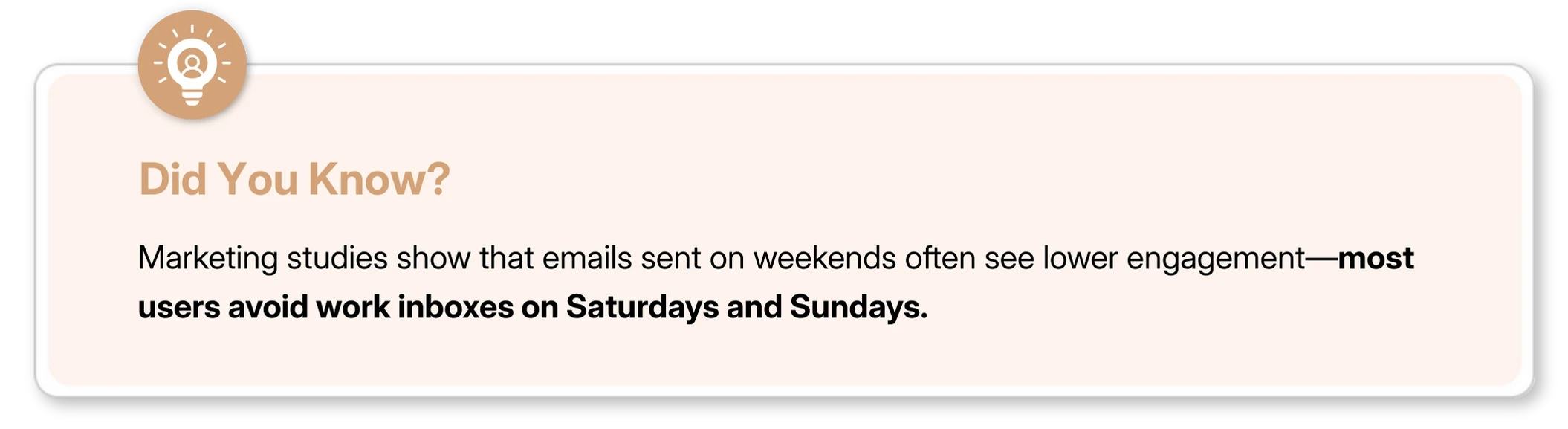
Timing can make or break your email performance. Even the most valuable message gets ignored if it lands at the wrong moment — buried under dozens of other emails. But when your email arrives at the right time, when people are alert and checking their inbox, engagement increases automatically.
In this guide, you’ll learn the best time to send emails, why timing matters, and how to test what works best for your audience.
Why Email Timing Matters More Than You Think?
Every inbox has small “attention windows” throughout the day. When your emails land inside those windows, they perform better.
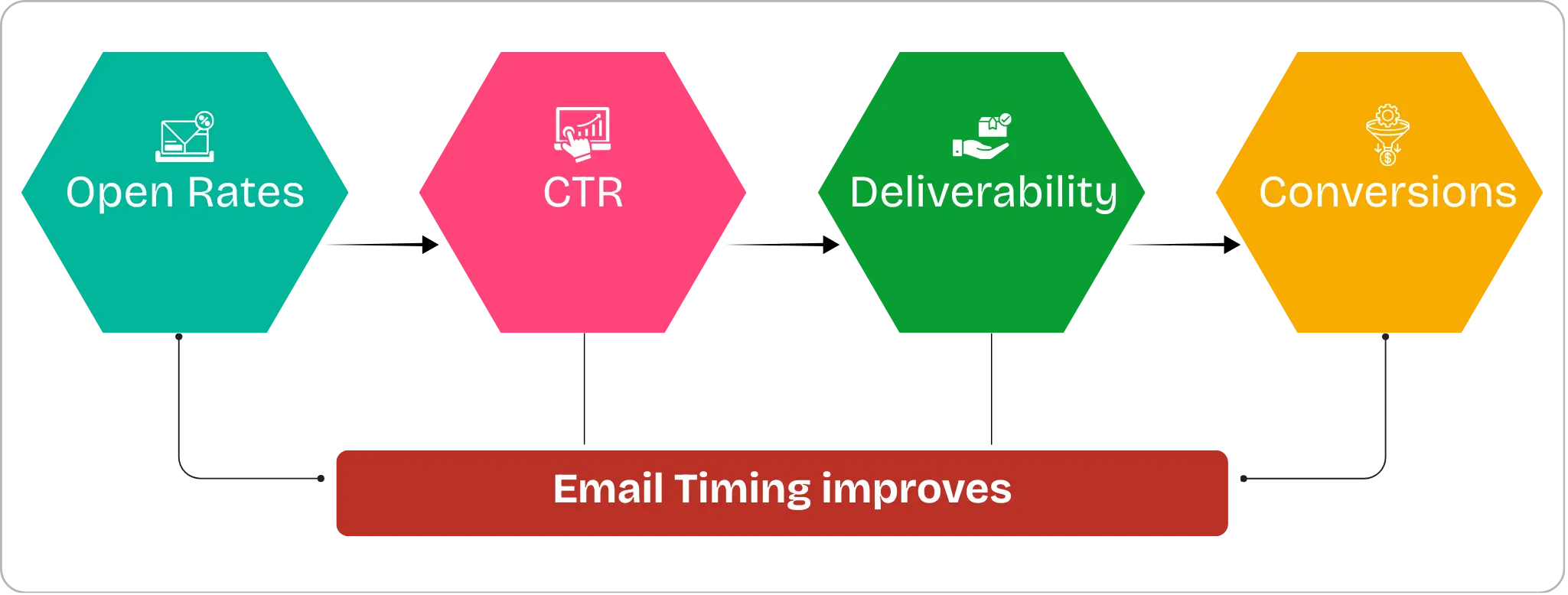
Good timing improves:
Open rates (your email shows up when the reader is active)
Click-through rates (the reader isn’t overwhelmed or distracted)
Deliverability (engagement signals help placement)
Conversions (timing aligns with energy and intent)
Leading platforms like Mailchimp, in their Email Marketing Benchmarks report, highlight how engagement patterns directly change based on send time.
This isn’t guesswork — timing truly affects results.
The Best Time to Send Emails (Based on Consistent Industry Insights)
Different studies show slightly different peaks, but nearly all major email platforms agree on three strong windows.
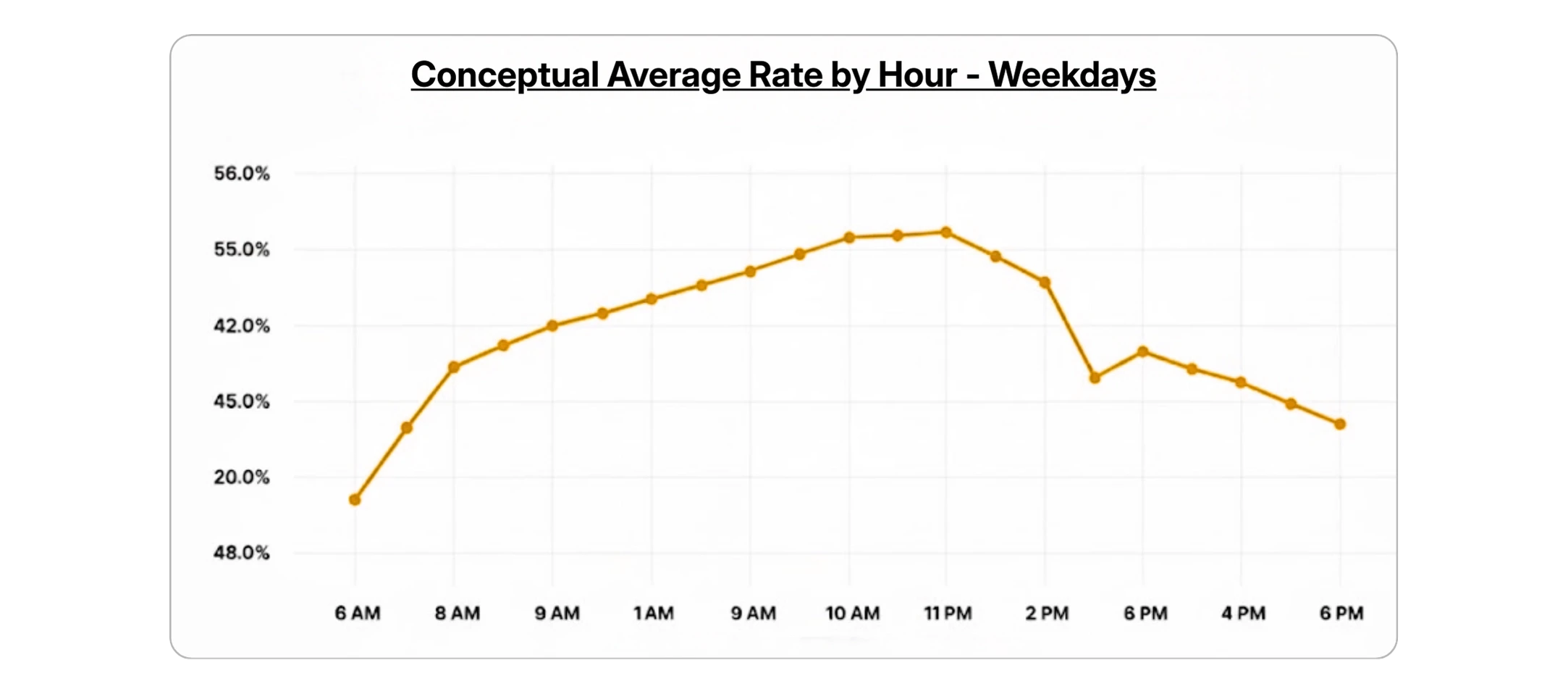
1. Weekday Mornings: 9 AM to 11 AM
This is the most reliable time across industries.
People check messages as part of their morning routine.
Your email appears near the top of a relatively fresh inbox.
Both HubSpot and Campaign Monitor confirm morning sends consistently drive higher open rates in their benchmark studies:
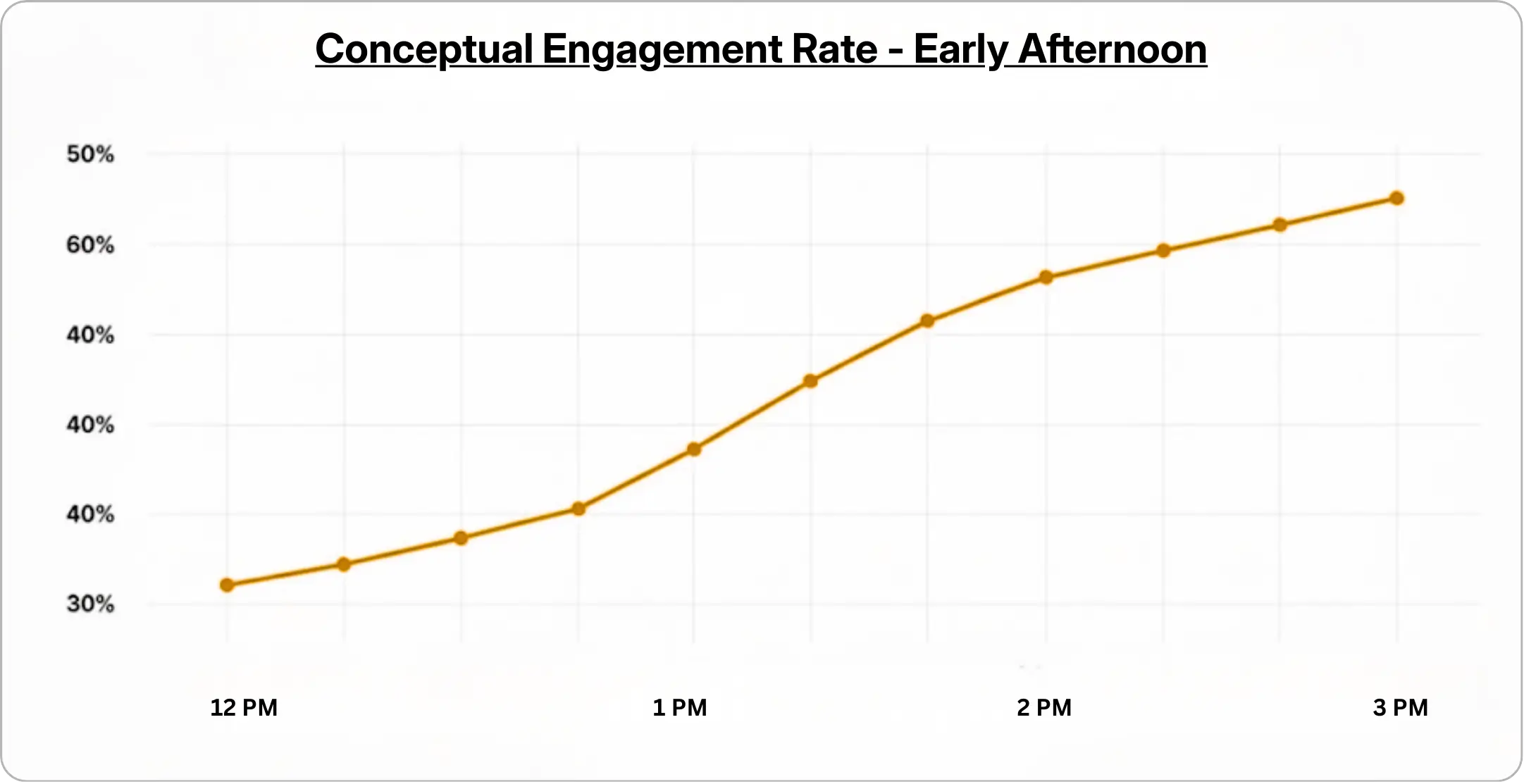
2. Early Afternoon: 1 PM to 3 PM
After lunch, people resume work and clear tasks at a steady pace—including inbox cleanups.
This slot works well for:
education emails
promotional campaigns
e-commerce offers
updates and reminders
It doesn’t always generate the highest opens, but it gives consistent engagement.
3. Midweek Days: Tuesday, Wednesday, Thursday
Inbox behavior follows a weekly rhythm.
Monday = chaotic
Friday = low focus
Weekends = unpredictable
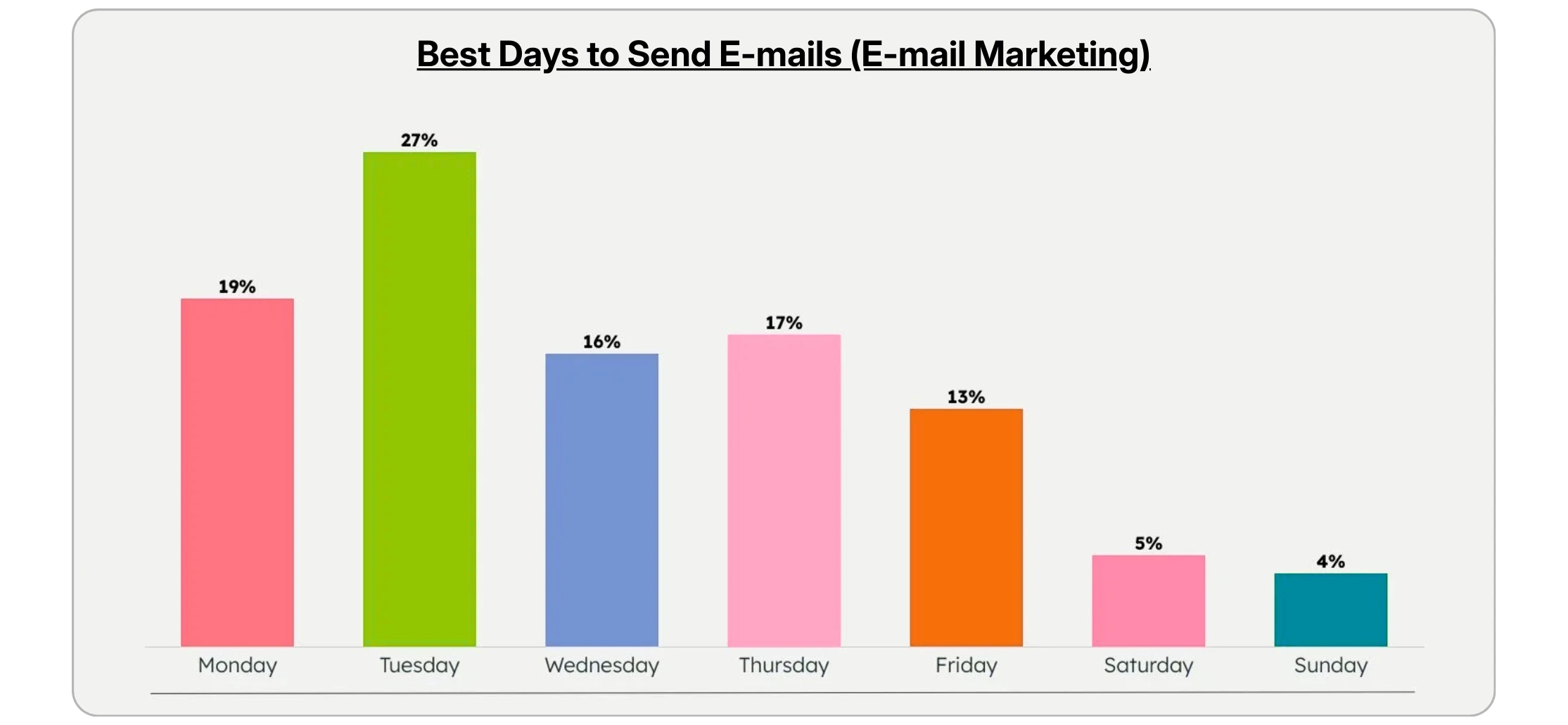
That makes Tuesday–Thursday the most stable choices for newsletters, lead nurture emails, and B2B communication.
Constant Contact also emphasizes midweek sends in their engagement insights.
Times You Should Avoid Sending Emails
Some timing windows almost always underperform. Avoid:
Late nights — gets buried by morning
Weekends (unless retail/entertainment audience)
Monday mornings — inbox overwhelm
Friday evenings — low motivation and low attention
Even the best content won’t perform well during low-focus hours.
How to Find Your Audience’s Best Email Timing?
Industry data is a helpful starting point, but your audience’s behavior will tell you the truth.
A simple 5-step timing test:
Pick two send times (example: 10 AM vs. 2 PM)
Send the same email
Track opens, clicks, and conversions
Repeat this test for 4–6 campaigns
Patterns will emerge quickly.
The team at Litmus often highlights how audience segmentation and A/B testing help fine-tune send times based on real subscriber habits:
Factors That Influence the Best Time to Send Emails
Timing isn’t one-size-fits-all. Consider these variables:
1. Industry
E-commerce → afternoons, evenings, and weekends
Health & fitness → early morning or late evening
2. Geography
Always send according to local time zones, especially if you have global subscribers.
3. Email Type
Newsletters → mornings
Promotions → afternoons
Reminders → evenings
Flash sales → aligned with browsing hours
4. Audience Lifestyle
Parents, freelancers, shift workers, and students all behave differently.
Understanding their day helps predict their inbox activity.
The Secret That Most Marketers Ignore: Consistency
The best send time won’t help if your sending pattern is random.
Send emails:
on consistent days
at consistent times
with predictable frequency
When readers know what to expect, engagement increases naturally.
Consistency builds trust, and trust builds long-term results.
Final Thoughts
The best time to send emails isn’t a guess — it’s a strategy.
Use proven engagement patterns as your foundation, then test what your audience responds to. When your timing aligns with your reader’s daily rhythm, your emails stay at the top of their inbox and your results improve effortlessly.
With the right timing, even simple emails can outperform complicated campaigns. Contact us today for the perfect email marketing strategy.
FAQs
What is the best day to send marketing emails?

Tuesday, Wednesday, and Thursday kinda always end up delivering the strongest open and click rates across most industries. Tuesday usually wins for overall engagement, Wednesday sits right behind it, and Thursday often climbs to the top for revenue per recipient. Try to dodge Monday mornings, because it gets hit with inbox overload, and also skip Friday evenings since attention tends to drop. These timing trends match the broader email marketing benchmarks that point to midweek sends as the safest kind of default. And if you're wondering why this is meaningful, check the note on how email marketing still manages the best ROI.
What time of day should I send emails for higher open rates?
The two strongest windows are 9 AM to 11 AM (morning inbox check) and 1 PM to 3 PM (post-lunch engagement). Morning sends tend to work best for newsletters, and B2B outreach. Afternoon sends, are better for suit promotional campaigns and those quick reminders. Opens and clicks often peak at diff times, so track your click through rate alongside open rates, to see what really drives action. Use the CTR calculator to measure and compare engagement across various send times.
Is it better to send emails in the morning or afternoon?
It depends on what kind of email you're sending. Newsletters and transactional messages usually do better in the morning (8 to 10 AM), when people are kind of clearing their inbox as part of their daily routine. Promotions and action oriented emails often get stronger engagement late in the afternoon or early evening, when recipients are browsing more loosely, not really focused. With email automation you can schedule the different kinds of messages at their better moments, no manual dragging around required. For one smooth strategy, consider email and SMS marketing services.
Should I send emails on weekends?
Weekdays tend to beat weekends for total opens and clicks in most industries. Saturday and Sunday usually show the lowest engagement, at least in a bunch of benchmark studies. The main exception is B2C and entertainment audiences where weekend sends can actually reach people while they're in that leisure browsing mood. Still, if your weekend send feels weak or too late, it can also nudge up bounce rates and unsubscribes, since some recipients might feel like they're being interrupted, without the right timing. For more on turning the subscribers you do reach into real results, see the Convert and Conquer ebook.
How do I find the best time to send emails for my audience?
Run an A/B testing schedule, choose two send times, then split your list evenly and send the same email. Track opens, clicks and conversions—maybe even by device, if that helps. Do it again across 4 to 6 campaigns, repeating the whole thing until a clear pattern starts showing up. Use industry benchmarks as a kind of starting point, but your own performance data is the only reliable answer, in the end. AI-powered tools can speed this up a lot, as discussed in AI-powered segmentation and personalization for email marketing.
Timing can make or break your email performance. Even the most valuable message gets ignored if it lands at the wrong moment — buried under dozens of other emails. But when your email arrives at the right time, when people are alert and checking their inbox, engagement increases automatically.
In this guide, you’ll learn the best time to send emails, why timing matters, and how to test what works best for your audience.
Why Email Timing Matters More Than You Think?
Every inbox has small “attention windows” throughout the day. When your emails land inside those windows, they perform better.
Good timing improves:
Open rates (your email shows up when the reader is active)
Click-through rates (the reader isn’t overwhelmed or distracted)
Deliverability (engagement signals help placement)
Conversions (timing aligns with energy and intent)
Leading platforms like Mailchimp, in their Email Marketing Benchmarks report, highlight how engagement patterns directly change based on send time.
This isn’t guesswork — timing truly affects results.
The Best Time to Send Emails (Based on Consistent Industry Insights)
Different studies show slightly different peaks, but nearly all major email platforms agree on three strong windows.
1. Weekday Mornings: 9 AM to 11 AM
This is the most reliable time across industries.
People check messages as part of their morning routine.
Your email appears near the top of a relatively fresh inbox.
Both HubSpot and Campaign Monitor confirm morning sends consistently drive higher open rates in their benchmark studies:
2. Early Afternoon: 1 PM to 3 PM
After lunch, people resume work and clear tasks at a steady pace—including inbox cleanups.
This slot works well for:
education emails
promotional campaigns
e-commerce offers
updates and reminders
It doesn’t always generate the highest opens, but it gives consistent engagement.
3. Midweek Days: Tuesday, Wednesday, Thursday
Inbox behavior follows a weekly rhythm.
Monday = chaotic
Friday = low focus
Weekends = unpredictable
That makes Tuesday–Thursday the most stable choices for newsletters, lead nurture emails, and B2B communication.
Constant Contact also emphasizes midweek sends in their engagement insights.
Times You Should Avoid Sending Emails
Some timing windows almost always underperform. Avoid:
Late nights — gets buried by morning
Weekends (unless retail/entertainment audience)
Monday mornings — inbox overwhelm
Friday evenings — low motivation and low attention
Even the best content won’t perform well during low-focus hours.
How to Find Your Audience’s Best Email Timing?
Industry data is a helpful starting point, but your audience’s behavior will tell you the truth.
A simple 5-step timing test:
Pick two send times (example: 10 AM vs. 2 PM)
Send the same email
Track opens, clicks, and conversions
Repeat this test for 4–6 campaigns
Patterns will emerge quickly.
The team at Litmus often highlights how audience segmentation and A/B testing help fine-tune send times based on real subscriber habits:
Factors That Influence the Best Time to Send Emails
Timing isn’t one-size-fits-all. Consider these variables:
1. Industry
E-commerce → afternoons, evenings, and weekends
Health & fitness → early morning or late evening
2. Geography
Always send according to local time zones, especially if you have global subscribers.
3. Email Type
Newsletters → mornings
Promotions → afternoons
Reminders → evenings
Flash sales → aligned with browsing hours
4. Audience Lifestyle
Parents, freelancers, shift workers, and students all behave differently.
Understanding their day helps predict their inbox activity.
The Secret That Most Marketers Ignore: Consistency
The best send time won’t help if your sending pattern is random.
Send emails:
on consistent days
at consistent times
with predictable frequency
When readers know what to expect, engagement increases naturally.
Consistency builds trust, and trust builds long-term results.
Final Thoughts
The best time to send emails isn’t a guess — it’s a strategy.
Use proven engagement patterns as your foundation, then test what your audience responds to. When your timing aligns with your reader’s daily rhythm, your emails stay at the top of their inbox and your results improve effortlessly.
With the right timing, even simple emails can outperform complicated campaigns. Contact us today for the perfect email marketing strategy.
FAQs
What is the best day to send marketing emails?
Tuesday, Wednesday, and Thursday kinda always end up delivering the strongest open and click rates across most industries. Tuesday usually wins for overall engagement, Wednesday sits right behind it, and Thursday often climbs to the top for revenue per recipient. Try to dodge Monday mornings, because it gets hit with inbox overload, and also skip Friday evenings since attention tends to drop. These timing trends match the broader email marketing benchmarks that point to midweek sends as the safest kind of default. And if you're wondering why this is meaningful, check the note on how email marketing still manages the best ROI.
What time of day should I send emails for higher open rates?
The two strongest windows are 9 AM to 11 AM (morning inbox check) and 1 PM to 3 PM (post-lunch engagement). Morning sends tend to work best for newsletters, and B2B outreach. Afternoon sends, are better for suit promotional campaigns and those quick reminders. Opens and clicks often peak at diff times, so track your click through rate alongside open rates, to see what really drives action. Use the CTR calculator to measure and compare engagement across various send times.
Is it better to send emails in the morning or afternoon?
It depends on what kind of email you're sending. Newsletters and transactional messages usually do better in the morning (8 to 10 AM), when people are kind of clearing their inbox as part of their daily routine. Promotions and action oriented emails often get stronger engagement late in the afternoon or early evening, when recipients are browsing more loosely, not really focused. With email automation you can schedule the different kinds of messages at their better moments, no manual dragging around required. For one smooth strategy, consider email and SMS marketing services.
Should I send emails on weekends?
Weekdays tend to beat weekends for total opens and clicks in most industries. Saturday and Sunday usually show the lowest engagement, at least in a bunch of benchmark studies. The main exception is B2C and entertainment audiences where weekend sends can actually reach people while they're in that leisure browsing mood. Still, if your weekend send feels weak or too late, it can also nudge up bounce rates and unsubscribes, since some recipients might feel like they're being interrupted, without the right timing. For more on turning the subscribers you do reach into real results, see the Convert and Conquer ebook.
How do I find the best time to send emails for my audience?
Run an A/B testing schedule, choose two send times, then split your list evenly and send the same email. Track opens, clicks and conversions—maybe even by device, if that helps. Do it again across 4 to 6 campaigns, repeating the whole thing until a clear pattern starts showing up. Use industry benchmarks as a kind of starting point, but your own performance data is the only reliable answer, in the end. AI-powered tools can speed this up a lot, as discussed in AI-powered segmentation and personalization for email marketing.



Summarize with AI









Don’t miss our revenue growth tips!
Get expert marketing tips—straight to your inbox, like thousands of happy clients.
Don’t miss our revenue growth tips!
Don’t miss our revenue growth tips!
Get expert marketing tips—straight to your inbox, like thousands of happy clients.
Don’t miss our revenue growth tips!
Get expert marketing tips—straight to your inbox, like thousands of happy clients.
Relevant Blogs on Email & SMS Marketing
Relevant Blogs on Email & SMS Marketing
Unlock data-driven insights in Email & SMS marketing—explore our featured blogs and skyrocket your revenue before your competitors do.
Unlock data-driven insights in Email & SMS marketing—explore our featured blogs and skyrocket your revenue before your competitors do.
Email & SMS
Aug 8, 2026
8 Min Read
What Inbox Providers Really Prioritize (And Most Marketers Get Wrong)
Email & SMS
Aug 8, 2026
8 Min Read
What Inbox Providers Really Prioritize (And Most Marketers Get Wrong)
Email & SMS
Aug 8, 2026
8 Min Read
What Inbox Providers Really Prioritize (And Most Marketers Get Wrong)

Email & SMS
Jan 19, 2026
12 Min Read
Building Your Email List the Right Way: Strategies That Won’t Annoy Users
Email & SMS
Jan 19, 2026
12 Min Read
Building Your Email List the Right Way: Strategies That Won’t Annoy Users
Email & SMS
Jan 19, 2026
12 Min Read
Building Your Email List the Right Way: Strategies That Won’t Annoy Users

Email & SMS
Jan 6, 2026
10 Min Read
How to Use SMS Marketing to Boost Customer Engagement
Email & SMS
Jan 6, 2026
10 Min Read
How to Use SMS Marketing to Boost Customer Engagement
Email & SMS
Jan 6, 2026
10 Min Read
How to Use SMS Marketing to Boost Customer Engagement



































Ready to speak with an expert?
Data-Driven Marketing Agency That Elevates ROI
1100+
Websites Designed & Optimized to Convert
$280M+
Client Revenue Driven & Growing Strong
Discover how to skyrocket
your revenue today!



Trusted by 1000+ Owners!
Ready to speak with an expert?
Data-Driven Marketing Agency That Elevates ROI
1100+
Websites Designed & Optimized to Convert
$280M+
Client Revenue Driven & Growing Strong
Discover how to skyrocket
your revenue today!
Trusted by 1000+ Owners!
Want to skyrocket revenue?
4.9/5 Ratings!
Ready to speak with an expert?
Data-Driven Marketing Agency That Elevates ROI
1100+
Websites Designed & Optimized to Convert
$280M+
Client Revenue Driven & Growing Strong
Discover how to skyrocket
your revenue today!
Trusted by 1000+ Owners!
Call
Meet