OpenAI Begins Testing Ads in ChatGPT: What This Means for Users, Businesses, and the Future of Search
OpenAI Begins Testing Ads in ChatGPT: What This Means for Users, Businesses, and the Future of Search
Last Updated:
Table of Content
Case Studies






In a major shift that signals how rapidly the AI landscape is evolving, OpenAI has officially begun testing advertisements inside ChatGPT for Free and Go-tier users. This is the first time ads have appeared within the world’s most widely used AI assistant — a tool relied upon by hundreds of millions globally for everything from content creation to troubleshooting code to planning meals.
This move marks a new era for AI monetization, user experience design, and — perhaps most importantly — the future of search. Here’s a deep dive into what’s changing, how the ad experience works, what controls users have, and why this may reshape how people search for information online.
Why Ads Are Coming to ChatGPT
Running an AI system at ChatGPT’s scale is massively expensive. While subscription plans like Plus and Pro help offset costs, many users rely on the Free plan, and OpenAI has long insisted that keeping an accessible free tier is a priority.
The introduction of ads aims to:
Create a sustainable revenue model that keeps ChatGPT’s Free option available.
Offset the enormous computational costs of running advanced models like GPT-5.
Allow OpenAI to continue innovating without shifting the entire platform to a paid-only experience.
In short, ads are being introduced not as a downgrade, but as a way to ensure ongoing availability.
Who Will See Ads
OpenAI is deliberately limiting the rollout:
Ads will appear only for logged-in adults in the United States using the Free or Go plans.
Users under 18 will not see ads.
Users on premium tiers — Plus, Pro, Teams, Business, Enterprise, and Education — will continue to enjoy an ad-free experience.
This phased rollout ensures that OpenAI can learn from early user feedback before expanding the ad model internationally.
How Ads Appear in ChatGPT
Unlike traditional ads on search engines or social platforms, these ads are designed specifically for conversational AI. OpenAI emphasizes three principles:
1. Ads Are Clearly Labeled
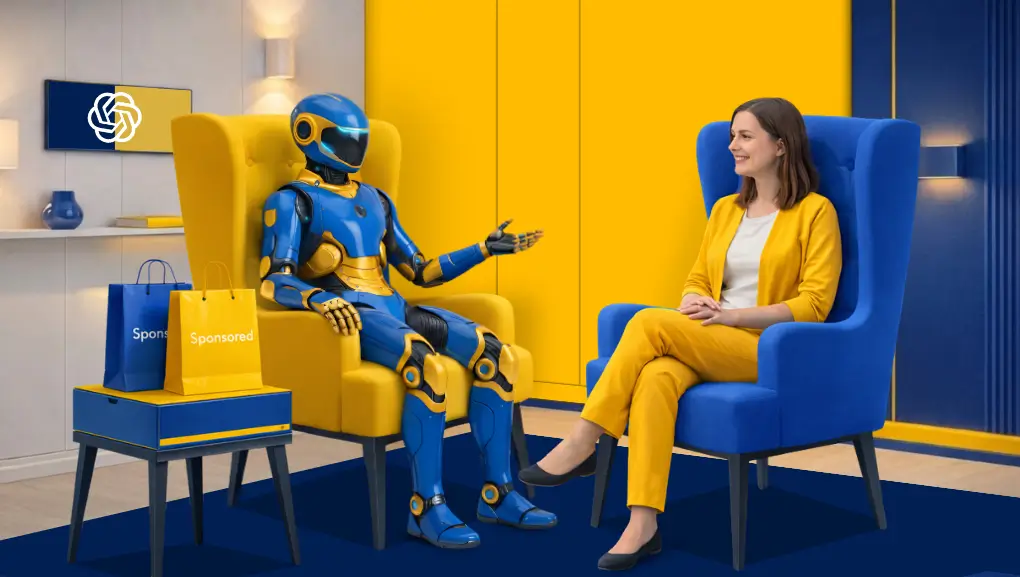
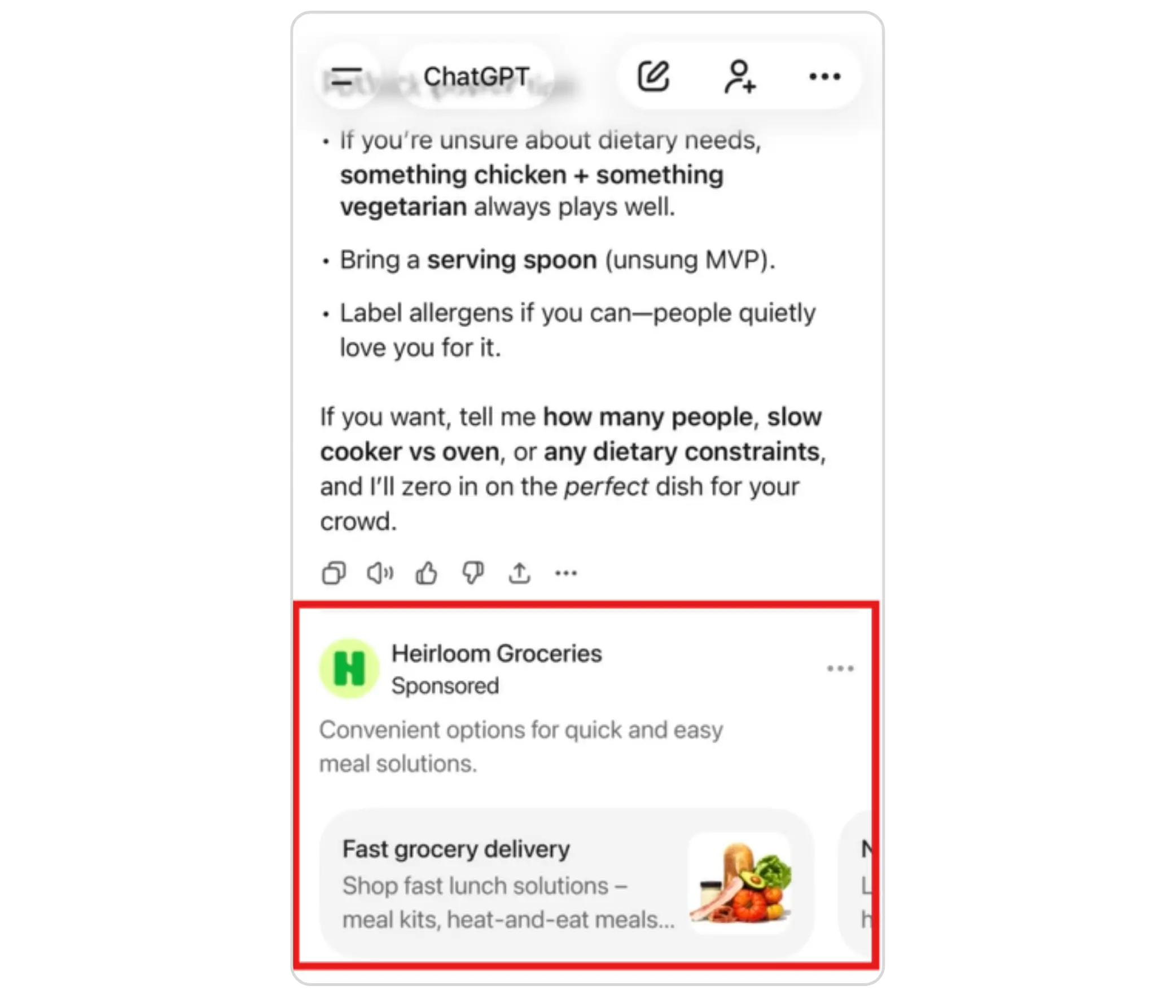
Every ad is marked “Sponsored” so users instantly know it’s paid placement.
2. Ads Do Not Alter ChatGPT’s Answers
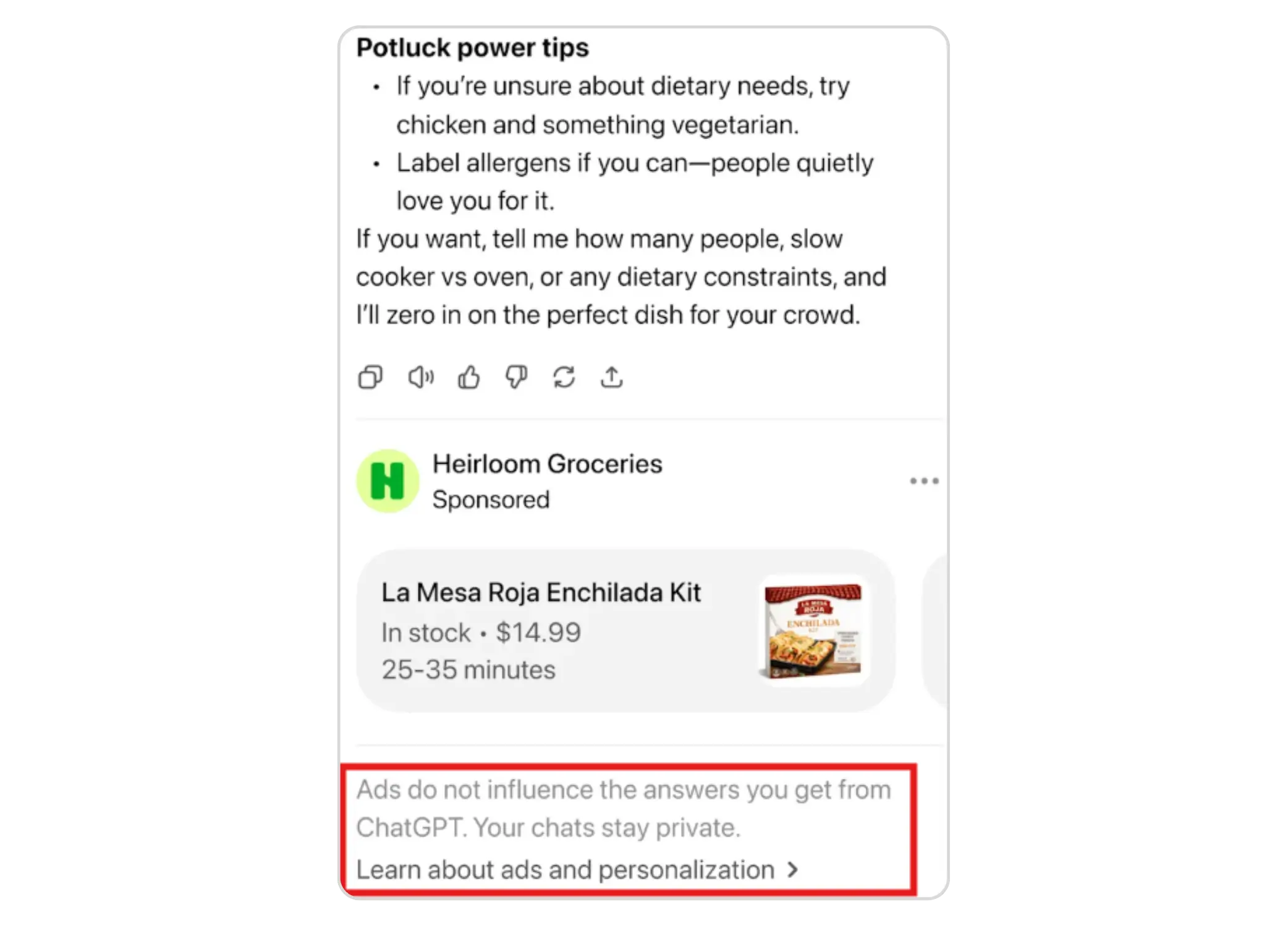
Sponsored content appears below ChatGPT’s response — never blended into the answer.
No advertiser can influence what ChatGPT says or suppress certain information.
3. Ads Are Contextually Relevant
Ads match the topic of the conversation, making them feel more like recommendations than interruptions. For example, if you ask:
“What’s the best way to organize my workspace?”
You might receive:
ChatGPT’s full answer
A sponsored card from a desk organizer brand appearing after the response
This is fundamentally different from search engine ads that appear at the top of results and sometimes resemble organic listings.
Source: OpenAI, “Testing ads in ChatGPT”
Personalization — With User Control
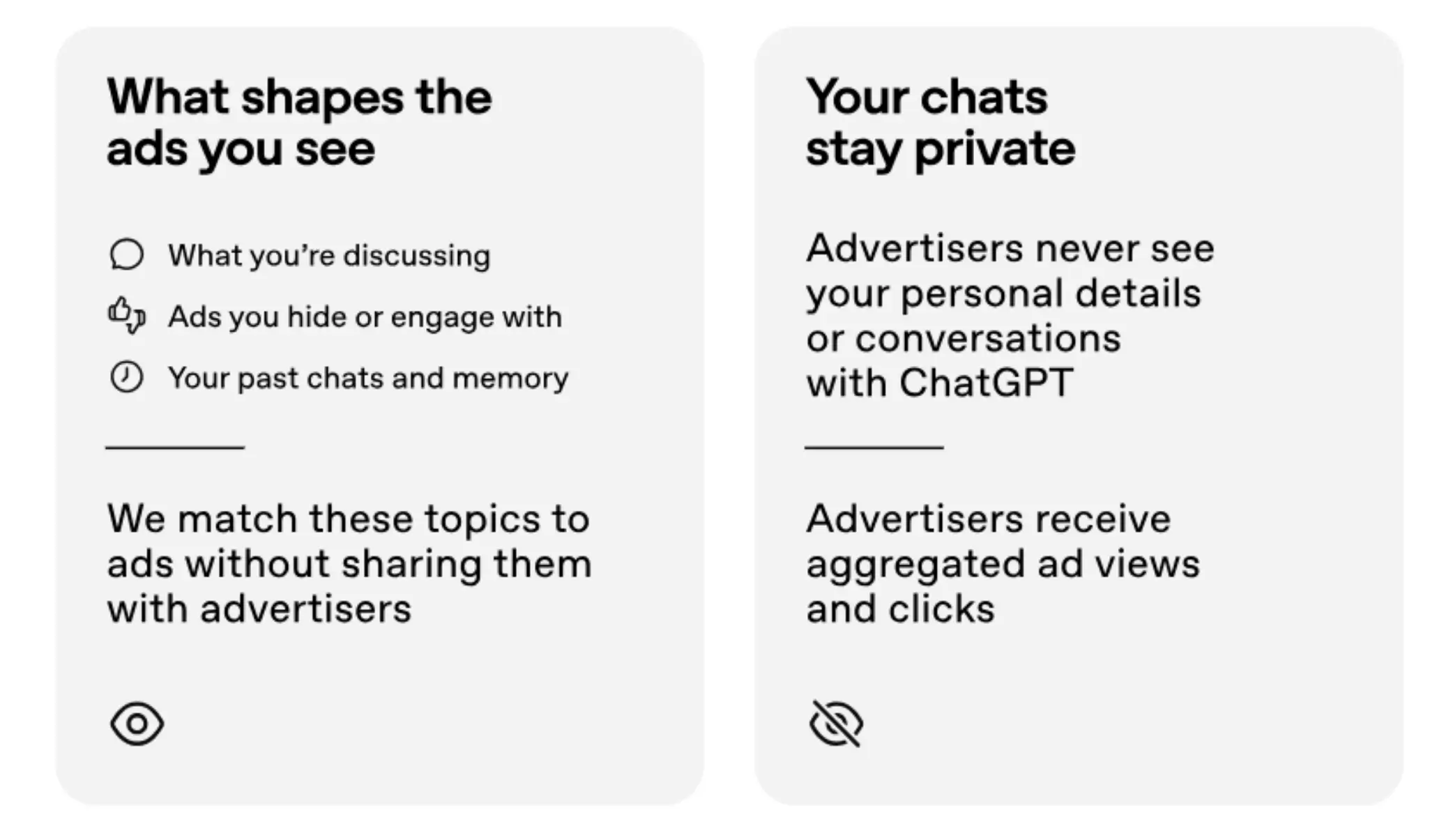
OpenAI has built a privacy-first approach to ad personalization. Users can:
Turn off personalization
Hide an individual ad
Provide feedback
Clear ad-related data
Opt for an ad-free experience by upgrading to a premium plan
Importantly, advertisers do not receive chat transcripts, messages, personal identifiers, or memory data. Ad targeting occurs within ChatGPT’s system, not through the sale or sharing of user information.
How Ads in ChatGPT Could Change the Future of Search
The real story behind this update isn’t just about ads — it’s about the future of search itself.
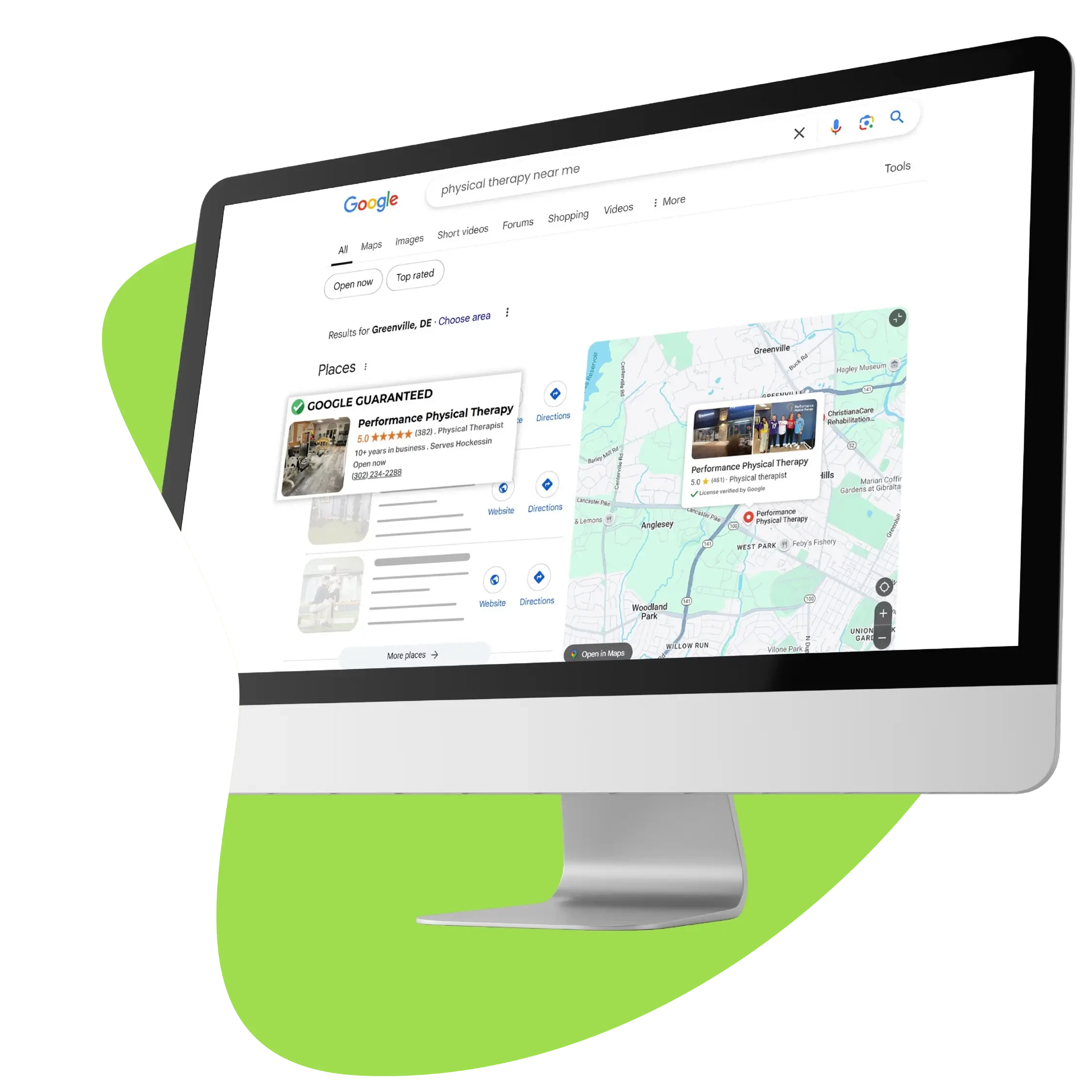
For the past two decades, Google has dominated how people discover information online. But conversational AI has already begun shifting user behavior, with more and more people turning to ChatGPT instead of traditional search engines for:
Research
Troubleshooting
Product recommendations
Explanations and summaries
Complex problem-solving
Introducing ads accelerates this shift by creating a new kind of in-conversation advertising model.
Here’s how it could reshape the search ecosystem.
1. AI Becomes the New Search “Homepage”
For many users, ChatGPT has already replaced Google as the starting point for information. The addition of ads means brands now have a new incentive to treat conversational AI as a primary discovery channel.
Instead of chasing keyword rankings on Google, companies may begin optimizing for:
AI relevance
Conversational prompts
Recommendation-based triggers
Product fit within natural language queries
This shift could mark the start of a new industry: AI conversation optimization (AICO), similar to SEO today.
2. Paid Placement in AI May Become More Influential Than Search Ads
Traditional search requires effort:
Scrolling
Comparing links
Clicking back and forth
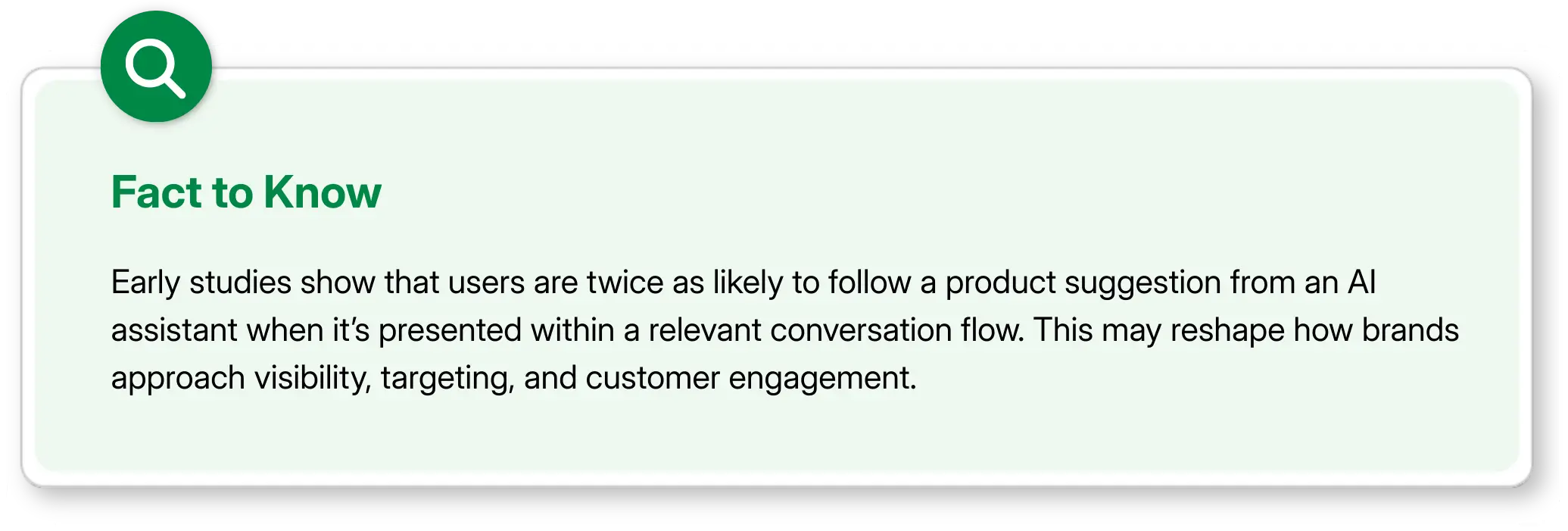
ChatGPT ads, however, may appear exactly when the user is making a decision, inside a conversation they are actively engaged in. This could dramatically increase relevance and conversion rates.
Imagine asking ChatGPT:
“What are the best noise-canceling headphones for travel?”
ChatGPT gives its expert response. Then, below the answer, a high-quality sponsored option appears. This unobtrusive, context-aligned integration could outperform traditional search ads because:
It’s timely
It’s precise
It’s embedded within problem-solving
It reduces friction
That’s a powerful formula.
3. Discovery Moves From Links to Recommendations
Search engines rely on:
AI relies on:
Understanding
Personal preference
Real-time problem-solving
When ads appear inside conversational AI, brands may no longer fight over keyword rankings — they may compete for recommendation visibility. Over time, AI assistants may become the dominant channel for:
Product discovery
Service matching
Content recommendations
Travel planning
Shopping assistance
This could reduce dependence on traditional search engines.
4. Smaller Brands Could Compete More Easily
SEO has long favored large, established websites. But contextual AI ads may level the playing field. A small brand with a niche offering could appear at the precise moment a user expresses a need — without requiring years of SEO investment.
If ChatGPT ads evolve like social media ads, where relevance matters more than brand size, smaller businesses could gain enormous growth opportunities.
5. Users May Shift From Browsing to Decisive Actions
Search engines create browsing behavior:
Open tabs
Compare options
Check reviews
AI creates decisive behavior:
Direct recommendations
Personalized suggestions
Clear explanations
Streamlined answers
Ads that appear within this environment may influence faster purchase decisions, outpacing the traditional search funnel.
Is This the Beginning of a New Search Era?
Very likely — yes. Ads in ChatGPT are more than a revenue tactic. They signal a transition from: link-based search to conversation-based discovery.
Google, Microsoft, and multiple AI companies are already racing to redefine the next generation of search — one that feels less like browsing the internet and more like talking to an intelligent assistant.
OpenAI’s ad rollout is the clearest indication yet that AI assistants are evolving into new search engines, complete with:
Organic “answers”
Paid placements
Personalized recommendations
User-controlled ad experiences
This is not the end of traditional search, but it’s a major turning point in how we interact with information, businesses, and the digital world at large.
Final Thoughts
OpenAI’s introduction of ads in ChatGPT marks a major milestone. While some users may have concerns about advertising entering conversational AI, OpenAI appears to be prioritizing:
Transparency
User control
Privacy
Separation between answers and ads
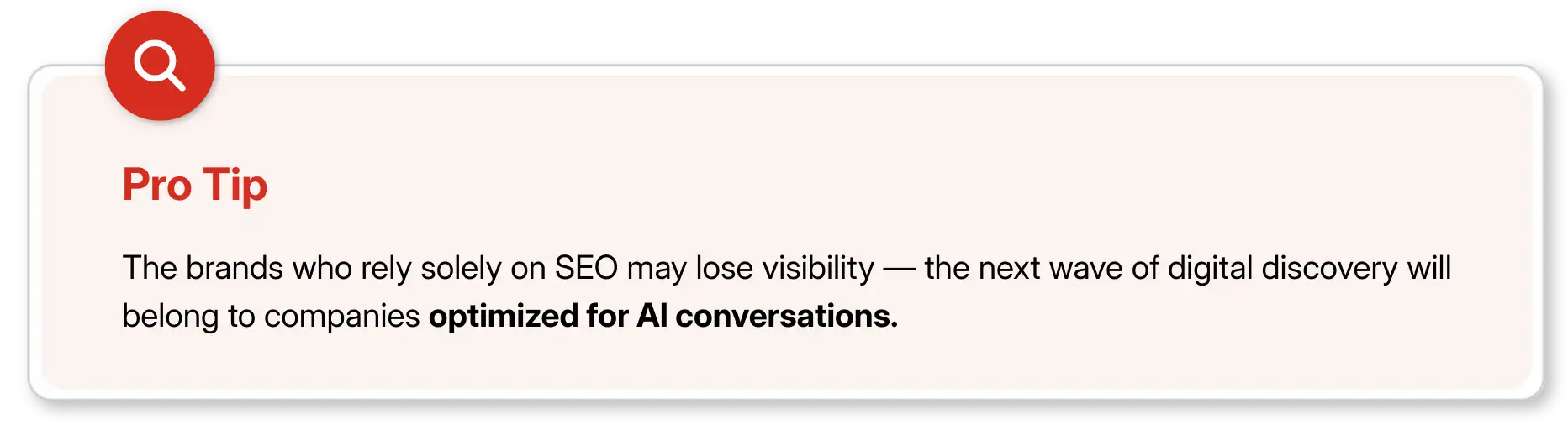
More importantly, this change signals a profound transformation in how people search for information and discover brands. Conversational AI is becoming the new gateway to the internet — and ads within these conversations may shape the next generation of digital marketing.
One thing is clear: The future of search is conversational — and it’s arriving faster than anyone expected.
FAQs
How do ChatGPT ads compare to Meta ads and Google ads?

Google ads catch people mid-search, competing for clicks among a list of results. Meta ads interrupt browsing, built around scroll-stopping visuals and audience targeting based on interests and behavior. ChatGPT ads are different again, they show up after a direct answer, inside a conversation the user's actively engaged in to solve a real problem. Google captures intent, Meta captures attention, ChatGPT captures intent and context at the same time, which is why early data suggests higher relevance even at this early stage.
Does ChatGPT share my chat history with advertisers?
No. Targeting happens inside ChatGPT's own system, and advertisers never get transcripts, messages, or personal identifiers. Users can also turn off personalization entirely, hide specific ads, or upgrade to a paid plan to skip ads altogether.
How do ChatGPT ads help businesses?
They put a brand in front of someone at the exact moment they're solving a problem, not scrolling past an interruption or scanning a list of blue links. A sponsored card shows up right after ChatGPT's answer, contextually matched to what the user asked, which tends to convert better than a traditional search ad competing for attention among ten other results.
Could this help smaller brands compete with bigger ones?
Possibly, yeah. SEO has always rewarded sites with years of authority behind them. Contextual ads inside a conversation work more like relevance-based social ads, so a niche brand could show up at exactly the right moment without needing a decade of backlinks to get there.
Why is this a big deal for search and SEO?
Because it signals ChatGPT is becoming a real discovery channel, not just a chatbot. Instead of chasing keyword rankings, brands may start optimizing for how they show up inside a conversation, what's being called conversational AI optimization. That's a genuinely different game than traditional SEO.
In a major shift that signals how rapidly the AI landscape is evolving, OpenAI has officially begun testing advertisements inside ChatGPT for Free and Go-tier users. This is the first time ads have appeared within the world’s most widely used AI assistant — a tool relied upon by hundreds of millions globally for everything from content creation to troubleshooting code to planning meals.
This move marks a new era for AI monetization, user experience design, and — perhaps most importantly — the future of search. Here’s a deep dive into what’s changing, how the ad experience works, what controls users have, and why this may reshape how people search for information online.
Why Ads Are Coming to ChatGPT
Running an AI system at ChatGPT’s scale is massively expensive. While subscription plans like Plus and Pro help offset costs, many users rely on the Free plan, and OpenAI has long insisted that keeping an accessible free tier is a priority.
The introduction of ads aims to:
Create a sustainable revenue model that keeps ChatGPT’s Free option available.
Offset the enormous computational costs of running advanced models like GPT-5.
Allow OpenAI to continue innovating without shifting the entire platform to a paid-only experience.
In short, ads are being introduced not as a downgrade, but as a way to ensure ongoing availability.
Who Will See Ads
OpenAI is deliberately limiting the rollout:
Ads will appear only for logged-in adults in the United States using the Free or Go plans.
Users under 18 will not see ads.
Users on premium tiers — Plus, Pro, Teams, Business, Enterprise, and Education — will continue to enjoy an ad-free experience.
This phased rollout ensures that OpenAI can learn from early user feedback before expanding the ad model internationally.
How Ads Appear in ChatGPT
Unlike traditional ads on search engines or social platforms, these ads are designed specifically for conversational AI. OpenAI emphasizes three principles:
1. Ads Are Clearly Labeled
Every ad is marked “Sponsored” so users instantly know it’s paid placement.
2. Ads Do Not Alter ChatGPT’s Answers
Sponsored content appears below ChatGPT’s response — never blended into the answer.
No advertiser can influence what ChatGPT says or suppress certain information.
3. Ads Are Contextually Relevant
Ads match the topic of the conversation, making them feel more like recommendations than interruptions. For example, if you ask:
“What’s the best way to organize my workspace?”
You might receive:
ChatGPT’s full answer
A sponsored card from a desk organizer brand appearing after the response
This is fundamentally different from search engine ads that appear at the top of results and sometimes resemble organic listings.
Source: OpenAI, “Testing ads in ChatGPT”
Personalization — With User Control
OpenAI has built a privacy-first approach to ad personalization. Users can:
Turn off personalization
Hide an individual ad
Provide feedback
Clear ad-related data
Opt for an ad-free experience by upgrading to a premium plan
Importantly, advertisers do not receive chat transcripts, messages, personal identifiers, or memory data. Ad targeting occurs within ChatGPT’s system, not through the sale or sharing of user information.
How Ads in ChatGPT Could Change the Future of Search
The real story behind this update isn’t just about ads — it’s about the future of search itself.
For the past two decades, Google has dominated how people discover information online. But conversational AI has already begun shifting user behavior, with more and more people turning to ChatGPT instead of traditional search engines for:
Research
Troubleshooting
Product recommendations
Explanations and summaries
Complex problem-solving
Introducing ads accelerates this shift by creating a new kind of in-conversation advertising model.
Here’s how it could reshape the search ecosystem.
1. AI Becomes the New Search “Homepage”
For many users, ChatGPT has already replaced Google as the starting point for information. The addition of ads means brands now have a new incentive to treat conversational AI as a primary discovery channel.
Instead of chasing keyword rankings on Google, companies may begin optimizing for:
AI relevance
Conversational prompts
Recommendation-based triggers
Product fit within natural language queries
This shift could mark the start of a new industry: AI conversation optimization (AICO), similar to SEO today.
2. Paid Placement in AI May Become More Influential Than Search Ads
Traditional search requires effort:
Scrolling
Comparing links
Clicking back and forth
ChatGPT ads, however, may appear exactly when the user is making a decision, inside a conversation they are actively engaged in. This could dramatically increase relevance and conversion rates.
Imagine asking ChatGPT:
“What are the best noise-canceling headphones for travel?”
ChatGPT gives its expert response. Then, below the answer, a high-quality sponsored option appears. This unobtrusive, context-aligned integration could outperform traditional search ads because:
It’s timely
It’s precise
It’s embedded within problem-solving
It reduces friction
That’s a powerful formula.
3. Discovery Moves From Links to Recommendations
Search engines rely on:
AI relies on:
Understanding
Personal preference
Real-time problem-solving
When ads appear inside conversational AI, brands may no longer fight over keyword rankings — they may compete for recommendation visibility. Over time, AI assistants may become the dominant channel for:
Product discovery
Service matching
Content recommendations
Travel planning
Shopping assistance
This could reduce dependence on traditional search engines.
4. Smaller Brands Could Compete More Easily
SEO has long favored large, established websites. But contextual AI ads may level the playing field. A small brand with a niche offering could appear at the precise moment a user expresses a need — without requiring years of SEO investment.
If ChatGPT ads evolve like social media ads, where relevance matters more than brand size, smaller businesses could gain enormous growth opportunities.
5. Users May Shift From Browsing to Decisive Actions
Search engines create browsing behavior:
Open tabs
Compare options
Check reviews
AI creates decisive behavior:
Direct recommendations
Personalized suggestions
Clear explanations
Streamlined answers
Ads that appear within this environment may influence faster purchase decisions, outpacing the traditional search funnel.
Is This the Beginning of a New Search Era?
Very likely — yes. Ads in ChatGPT are more than a revenue tactic. They signal a transition from: link-based search to conversation-based discovery.
Google, Microsoft, and multiple AI companies are already racing to redefine the next generation of search — one that feels less like browsing the internet and more like talking to an intelligent assistant.
OpenAI’s ad rollout is the clearest indication yet that AI assistants are evolving into new search engines, complete with:
Organic “answers”
Paid placements
Personalized recommendations
User-controlled ad experiences
This is not the end of traditional search, but it’s a major turning point in how we interact with information, businesses, and the digital world at large.
Final Thoughts
OpenAI’s introduction of ads in ChatGPT marks a major milestone. While some users may have concerns about advertising entering conversational AI, OpenAI appears to be prioritizing:
Transparency
User control
Privacy
Separation between answers and ads
More importantly, this change signals a profound transformation in how people search for information and discover brands. Conversational AI is becoming the new gateway to the internet — and ads within these conversations may shape the next generation of digital marketing.
One thing is clear: The future of search is conversational — and it’s arriving faster than anyone expected.
FAQs
How do ChatGPT ads compare to Meta ads and Google ads?
Google ads catch people mid-search, competing for clicks among a list of results. Meta ads interrupt browsing, built around scroll-stopping visuals and audience targeting based on interests and behavior. ChatGPT ads are different again, they show up after a direct answer, inside a conversation the user's actively engaged in to solve a real problem. Google captures intent, Meta captures attention, ChatGPT captures intent and context at the same time, which is why early data suggests higher relevance even at this early stage.
Does ChatGPT share my chat history with advertisers?
No. Targeting happens inside ChatGPT's own system, and advertisers never get transcripts, messages, or personal identifiers. Users can also turn off personalization entirely, hide specific ads, or upgrade to a paid plan to skip ads altogether.
How do ChatGPT ads help businesses?
They put a brand in front of someone at the exact moment they're solving a problem, not scrolling past an interruption or scanning a list of blue links. A sponsored card shows up right after ChatGPT's answer, contextually matched to what the user asked, which tends to convert better than a traditional search ad competing for attention among ten other results.
Could this help smaller brands compete with bigger ones?
Possibly, yeah. SEO has always rewarded sites with years of authority behind them. Contextual ads inside a conversation work more like relevance-based social ads, so a niche brand could show up at exactly the right moment without needing a decade of backlinks to get there.
Why is this a big deal for search and SEO?
Because it signals ChatGPT is becoming a real discovery channel, not just a chatbot. Instead of chasing keyword rankings, brands may start optimizing for how they show up inside a conversation, what's being called conversational AI optimization. That's a genuinely different game than traditional SEO.



Summarize with AI



Want to be seen everywhere?
Get a free AI-search audit Today!



4.9/5 Ratings!


Don’t miss our revenue growth tips!
Get expert marketing tips—straight to your inbox, like thousands of happy clients.
Don’t miss our revenue growth tips!
Get expert marketing tips—straight to your inbox, like thousands of happy clients.
Don’t miss our revenue growth tips!
Don’t miss our revenue growth tips!
Get expert marketing tips—straight to your inbox, like thousands of happy clients.
Relevant Blogs on Generative AI SEO
Relevant Blogs on Generative AI SEO
Unlock data-driven insights in AI-powered SEO—explore our featured blogs and skyrocket your revenue before your competitors do.
Unlock data-driven insights in AI-powered SEO—explore our featured blogs and skyrocket your revenue before your competitors do.

GEO
Sep 22, 2026
15 Min Read
AI Search Runs on More SEO Than You Think
GEO
Sep 22, 2026
15 Min Read
AI Search Runs on More SEO Than You Think
GEO
Sep 22, 2026
15 Min Read
AI Search Runs on More SEO Than You Think

GEO
Sep 7, 2026
8 Min Read
How to Optimize Content for AI Search Engines: Best Practices
GEO
Sep 7, 2026
8 Min Read
How to Optimize Content for AI Search Engines: Best Practices
GEO
Sep 7, 2026
8 Min Read
How to Optimize Content for AI Search Engines: Best Practices
GEO
Sep 4, 2026
12 Min Read
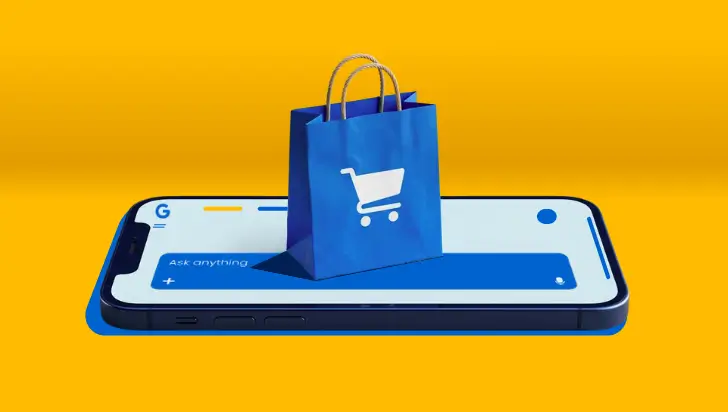
How Ecommerce Brands Can Advertise in Google AI Mode?
GEO
Sep 4, 2026
12 Min Read
How Ecommerce Brands Can Advertise in Google AI Mode?
GEO
Sep 4, 2026
12 Min Read
How Ecommerce Brands Can Advertise in Google AI Mode?



















Ready to speak with an expert?
Data-Driven Marketing Agency That Elevates ROI
1100+
Websites Designed & Optimized to Convert
$280M+
Client Revenue Driven & Growing Strong
Discover how to skyrocket
your revenue today!
Trusted by 1000+ Owners!
Ready to speak with an expert?
Data-Driven Marketing Agency That Elevates ROI
1100+
Websites Designed & Optimized to Convert
$280M+
Client Revenue Driven & Growing Strong
Discover how to skyrocket
your revenue today!
Trusted by 1000+ Owners!
Want to skyrocket revenue?
4.9/5 Ratings!
Ready to speak with an expert?
Data-Driven Marketing Agency That Elevates ROI
1100+
Websites Designed & Optimized to Convert
$280M+
Client Revenue Driven & Growing Strong
Discover how to skyrocket
your revenue today!
Trusted by 1000+ Owners!
Call
Meet