How Conversational AI Redefines Digital Marketing Success?
How Conversational AI Redefines Digital Marketing Success?
Conversational AI
Conversational AI
Conversational AI
Conversational AI uses artificial intelligence to boost conversion rates by enabling human-like interactions through chatbots, voice assistants, and smart tools. It’s also widely known for creating AI-powered marketing content.
Conversational AI uses artificial intelligence to boost conversion rates by enabling human-like interactions through chatbots, voice assistants, and smart tools. It’s also widely known for creating AI-powered marketing content.


Table of Content
Case Studies







Transform Customer Interactions with Conversational AI
Transform Customer Interactions with Conversational AI


4.9/5 Ratings!

Harsh J.
Harsh J.
5 Min Read
5 Min
Oct 9, 2025
Oct 9, 2025
What Conversational AI Means?
Conversational AI means a system that talks or chats with people using text or voice. It is not one single tool but a group of smart tools that work together. It listens, understands your words, and gives the right reply.
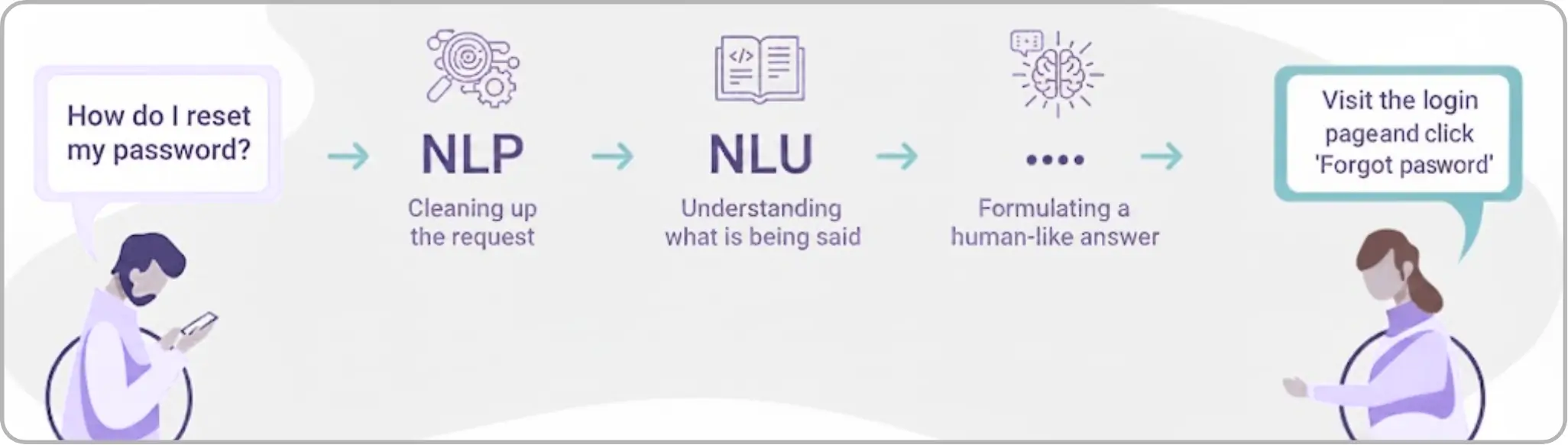
It uses Natural Language Processing (NLP) to understand human speech. NLP and Natural Language Understanding (NLU) work together to turn a user’s question into a meaningful response. It also uses Machine Learning (ML) to learn from old chats. Together, they make the AI sound natural and smart.
The newest conversational AI tools use Large Language Models (LLMs). These are massive computer programs trained on huge amounts of text from books, websites, and conversations. LLMs, like GPT, help AI understand meaning and context better. They make the conversation smoother and more human-like.
LLMs changed the quality of conversational AI. Before, systems gave short, fixed replies. Now, with LLMs, they talk freely and remember earlier messages in a chat. This makes the talk feel more natural.
Conversational AI means a system that talks or chats with people using text or voice. It is not one single tool but a group of smart tools that work together. It listens, understands your words, and gives the right reply.
It uses Natural Language Processing (NLP) to understand human speech. NLP and Natural Language Understanding (NLU) work together to turn a user’s question into a meaningful response. It also uses Machine Learning (ML) to learn from old chats. Together, they make the AI sound natural and smart.
The newest conversational AI tools use Large Language Models (LLMs). These are massive computer programs trained on huge amounts of text from books, websites, and conversations. LLMs, like GPT, help AI understand meaning and context better. They make the conversation smoother and more human-like.
LLMs changed the quality of conversational AI. Before, systems gave short, fixed replies. Now, with LLMs, they talk freely and remember earlier messages in a chat. This makes the talk feel more natural.
How Conversational AI Works?
When you speak or type, conversational AI breaks your words into parts. Then it checks what you want. It uses NLP to find meaning and ML to learn patterns. The system matches your question with past examples and finds the best answer.
When you speak or type, conversational AI breaks your words into parts. Then it checks what you want. It uses NLP to find meaning and ML to learn patterns. The system matches your question with past examples and finds the best answer.
Steps in a simple form:
You ask a question or give a command.
AI listens or reads your message.
It changes your words into data.
It checks its database or the web for answers.
It gives a reply by text or speech.
The process is quick. Most of the time it takes only a few seconds. It also improves the more you talk to it. With every new chat, it learns tone, common words, and user habits.
LLMs make this process smarter. They help AI understand long questions, remember earlier parts of the talk, and give answers that make sense in context. This makes modern conversational AI much more useful than older chat bots.
Steps in a simple form:
You ask a question or give a command.
AI listens or reads your message.
It changes your words into data.
It checks its database or the web for answers.
It gives a reply by text or speech.
The process is quick. Most of the time it takes only a few seconds. It also improves the more you talk to it. With every new chat, it learns tone, common words, and user habits.
LLMs make this process smarter. They help AI understand long questions, remember earlier parts of the talk, and give answers that make sense in context. This makes modern conversational AI much more useful than older chat bots.
Common Uses
You use conversational AI more than you think. It works behind many of your daily tools.
When you say, “Hey Google,” you trigger a conversational AI system. When you ask your bank app for your balance, a chatbot answers you. When you talk to your car to play music or call someone, that is conversational AI too.
Here are a few popular uses:
Smart assistants like Alexa, Siri, and Google Assistant.
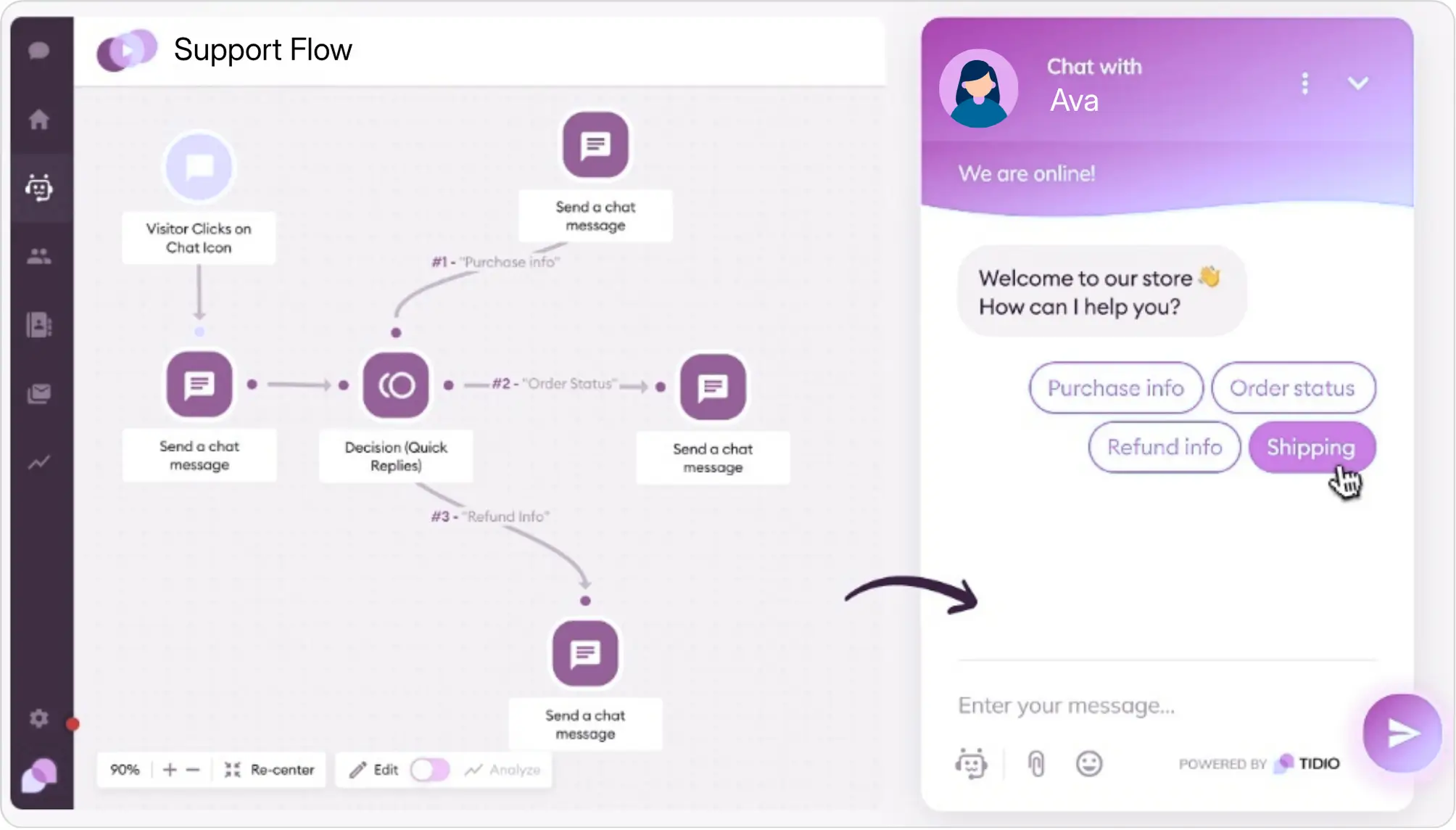
Customer support bots that help you track orders or reset passwords.
Online stores that chat with you about products.
Healthcare apps that remind you to take medicine.
Cars that take spoken directions.
Smart homes where your voice controls lights and devices.
Businesses also depend on conversational AI. It helps them serve more people without hiring more staff. A chatbot can answer hundreds of questions at once. This saves time and cost.
You use conversational AI more than you think. It works behind many of your daily tools.
When you say, “Hey Google,” you trigger a conversational AI system. When you ask your bank app for your balance, a chatbot answers you. When you talk to your car to play music or call someone, that is conversational AI too.
Here are a few popular uses:
Smart assistants like Alexa, Siri, and Google Assistant.
Customer support bots that help you track orders or reset passwords.
Online stores that chat with you about products.
Healthcare apps that remind you to take medicine.
Cars that take spoken directions.
Smart homes where your voice controls lights and devices.
Businesses also depend on conversational AI. It helps them serve more people without hiring more staff. A chatbot can answer hundreds of questions at once. This saves time and cost.
Why Conversational AI Matters?
Conversational AI matters because it changes how people use technology. You do not need to type or click much. You speak like you talk to a friend. The computer understands and replies.
It gives quick help, day and night. You do not wait in a long phone queue or send many emails. It also helps people who find typing or reading hard. Voice input makes life easier for them.
For companies, conversational AI improves customer experience. It handles simple issues so human workers can focus on harder ones. It also collects useful feedback from users, helping improve products or services.
For you, it saves time and makes daily life smoother. It helps find answers, set alarms, play songs, or manage schedules in seconds.
Some key benefits include:
Fast, human-like interaction.
Always ready to help, 24 hours a day.
Learns from every chat and improves accuracy.
Easy to use by voice or text.
Helps users with disabilities or language barriers.
Conversational AI matters because it changes how people use technology. You do not need to type or click much. You speak like you talk to a friend. The computer understands and replies.
It gives quick help, day and night. You do not wait in a long phone queue or send many emails. It also helps people who find typing or reading hard. Voice input makes life easier for them.
For companies, conversational AI improves customer experience. It handles simple issues so human workers can focus on harder ones. It also collects useful feedback from users, helping improve products or services.
For you, it saves time and makes daily life smoother. It helps find answers, set alarms, play songs, or manage schedules in seconds.
Some key benefits include:
Fast, human-like interaction.
Always ready to help, 24 hours a day.
Learns from every chat and improves accuracy.
Easy to use by voice or text.
Helps users with disabilities or language barriers.
LLMs and the Future of Conversational AI
Aspect
Aspect
Aspect
Aspect
Description
Description
Description
Description
Definition
Definition
Definition
Large Language Models (LLMs) are advanced AI systems trained on massive datasets to understand and generate human-like language.
Large Language Models (LLMs) are advanced AI systems trained on massive datasets to understand and generate human-like language.
Large Language Models (LLMs) are advanced AI systems trained on massive datasets to understand and generate human-like language.
Role in Conversational AI
Role in Conversational AI
Role in Conversational AI
LLMs power chatbots, virtual assistants, and other tools that enable natural, context-aware communication with users.
LLMs power chatbots, virtual assistants, and other tools that enable natural, context-aware communication with users.
LLMs power chatbots, virtual assistants, and other tools that enable natural, context-aware communication with users.
Advancements
Advancements
Advancements
Continuous improvements in training data, architecture, and fine-tuning make LLMs more accurate, personalized, and efficient.
Continuous improvements in training data, architecture, and fine-tuning make LLMs more accurate, personalized, and efficient.
Continuous improvements in training data, architecture, and fine-tuning make LLMs more accurate, personalized, and efficient.
Business Impact
Business Impact
Business Impact
They enhance customer support, automate communication, and deliver personalized experiences at scale.
They enhance customer support, automate communication, and deliver personalized experiences at scale.
They enhance customer support, automate communication, and deliver personalized experiences at scale.
Future Potential
Future Potential
Future Potential
The future lies in integrating LLMs with multimodal AI—combining text, voice, and visuals for seamless human-computer interaction.
The future lies in integrating LLMs with multimodal AI—combining text, voice, and visuals for seamless human-computer interaction.
The future lies in integrating LLMs with multimodal AI—combining text, voice, and visuals for seamless human-computer interaction.
Ethical Considerations
Ethical Considerations
Ethical Considerations
Responsible use, data privacy, and bias reduction are key to building trustworthy conversational AI systems.
Responsible use, data privacy, and bias reduction are key to building trustworthy conversational AI systems.
Responsible use, data privacy, and bias reduction are key to building trustworthy conversational AI systems.
LLMs are reshaping the way we interact with technology, making conversations with AI more natural and efficient. Understanding their potential helps businesses leverage smarter, more personalized customer experiences.
LLMs are reshaping the way we interact with technology, making conversations with AI more natural and efficient. Understanding their potential helps businesses leverage smarter, more personalized customer experiences.
Challenges
Even with progress, conversational AI faces problems. It sometimes gives wrong or unclear answers. It may misunderstand slang or accents. If many people speak at once, it can get confused.
Privacy is another issue. AI systems listen and record data to learn. Users should check how their voice or chat data is stored and used. Most big companies try to keep this safe, but being careful is smart.
Some AIs sound robotic or lack emotion. Others struggle when a question needs human judgment or creativity. Still, as models and systems grow better, these issues reduce over time.
Even with progress, conversational AI faces problems. It sometimes gives wrong or unclear answers. It may misunderstand slang or accents. If many people speak at once, it can get confused.
Privacy is another issue. AI systems listen and record data to learn. Users should check how their voice or chat data is stored and used. Most big companies try to keep this safe, but being careful is smart.
Some AIs sound robotic or lack emotion. Others struggle when a question needs human judgment or creativity. Still, as models and systems grow better, these issues reduce over time.
What Lies Ahead?
The future of conversational AI is bright. Soon, every digital device will talk to you. Your car, fridge, and even washing machine might have a small voice assistant.
As LLMs expand, conversational AI will understand more languages and cultural differences. It will make communication smoother for everyone, everywhere.
Today, many AI systems can already analyze and understand images and videos. For example, you can show an AI a picture, and it can describe what it sees in simple words. As this technology continues to improve, the combination of vision and conversation will create a more natural and intuitive technology experience.
The future of conversational AI is bright. Soon, every digital device will talk to you. Your car, fridge, and even washing machine might have a small voice assistant.
As LLMs expand, conversational AI will understand more languages and cultural differences. It will make communication smoother for everyone, everywhere.
Today, many AI systems can already analyze and understand images and videos. For example, you can show an AI a picture, and it can describe what it sees in simple words. As this technology continues to improve, the combination of vision and conversation will create a more natural and intuitive technology experience.
Final Thoughts
Conversational AI lets you talk to machines like you talk to people. It listens, understands, and replies in a friendly way. It makes daily life easier, faster, and more comfortable. It works in phones, websites, cars, and smart homes.
Large Language Models made conversational AI smarter than ever before. They help it learn faster and talk more naturally. The result is a smoother, more human-like chat experience.
You already use conversational AI many times a day. Each time you say “Hey Siri,” “Ok Google,” or type into a chatbot, you are part of this growing change.
Conversational AI is no longer science fiction. It is part of your daily routine, helping you talk, learn, and live in a smarter way.
Conversational AI lets you talk to machines like you talk to people. It listens, understands, and replies in a friendly way. It makes daily life easier, faster, and more comfortable. It works in phones, websites, cars, and smart homes.
Large Language Models made conversational AI smarter than ever before. They help it learn faster and talk more naturally. The result is a smoother, more human-like chat experience.
You already use conversational AI many times a day. Each time you say “Hey Siri,” “Ok Google,” or type into a chatbot, you are part of this growing change.
Conversational AI is no longer science fiction. It is part of your daily routine, helping you talk, learn, and live in a smarter way.
Frequently Asked Questions (FAQs)
Frequently Asked Questions
What’s the difference between a chatbot and a conversational AI system?

Chatbots usually operate with fixed scripts and can only respond to pre-defined questions, which makes their interactions limited. Conversational AI, on the other hand, uses natural language processing (NLP) and machine learning to understand context, handle open-ended questions, and engage in dynamic, human-like conversations. It can learn from past interactions to improve over time.
Are voice assistants like Siri and Alexa considered conversational AI?
Yes. Voice assistants are a type of conversational AI that understands spoken commands, processes them, and responds in real-time. They combine NLP, speech recognition, and AI algorithms to answer questions, set reminders, or control smart devices, making daily interactions with technology easier and more intuitive.
How do businesses measure the effectiveness of conversational AI?
Key performance indicators include response accuracy, resolution time, user satisfaction, engagement rates, and conversion metrics. Analytics tools track how well AI handles queries and whether it improves efficiency and customer experience.
Will conversational AI replace human customer service agents?
Not entirely. AI is designed to handle repetitive or straightforward tasks efficiently, freeing human agents to manage more complex issues. Instead of replacement, AI acts as a support tool, improving response times, reducing workload, and enhancing overall customer service quality.
How does conversational AI help in e-commerce?
Conversational AI can assist online shoppers by answering product questions, recommending items based on preferences, and guiding them through checkout. It improves user experience, increases engagement, and can boost sales by providing instant, personalized assistance.
Can conversational AI be integrated into existing apps or websites?
Yes, most conversational AI platforms offer APIs and SDKs that allow integration into websites, mobile apps, or customer service portals. This enables businesses to add chatbots, voice assistants, or virtual agents without building AI from scratch.
Do I need technical skills to implement conversational AI on my website?
Most modern platforms provide easy-to-use interfaces, templates, and drag-and-drop tools, so minimal technical knowledge is needed. However, for advanced customization or integration with internal systems, some technical expertise may be required.
What’s the difference between a chatbot and a conversational AI system?
Chatbots usually operate with fixed scripts and can only respond to pre-defined questions, which makes their interactions limited. Conversational AI, on the other hand, uses natural language processing (NLP) and machine learning to understand context, handle open-ended questions, and engage in dynamic, human-like conversations. It can learn from past interactions to improve over time.
Are voice assistants like Siri and Alexa considered conversational AI?
Yes. Voice assistants are a type of conversational AI that understands spoken commands, processes them, and responds in real-time. They combine NLP, speech recognition, and AI algorithms to answer questions, set reminders, or control smart devices, making daily interactions with technology easier and more intuitive.
How do businesses measure the effectiveness of conversational AI?
Key performance indicators include response accuracy, resolution time, user satisfaction, engagement rates, and conversion metrics. Analytics tools track how well AI handles queries and whether it improves efficiency and customer experience.
Will conversational AI replace human customer service agents?
Not entirely. AI is designed to handle repetitive or straightforward tasks efficiently, freeing human agents to manage more complex issues. Instead of replacement, AI acts as a support tool, improving response times, reducing workload, and enhancing overall customer service quality.
How does conversational AI help in e-commerce?
Conversational AI can assist online shoppers by answering product questions, recommending items based on preferences, and guiding them through checkout. It improves user experience, increases engagement, and can boost sales by providing instant, personalized assistance.
Can conversational AI be integrated into existing apps or websites?
Yes, most conversational AI platforms offer APIs and SDKs that allow integration into websites, mobile apps, or customer service portals. This enables businesses to add chatbots, voice assistants, or virtual agents without building AI from scratch.
Do I need technical skills to implement conversational AI on my website?
Most modern platforms provide easy-to-use interfaces, templates, and drag-and-drop tools, so minimal technical knowledge is needed. However, for advanced customization or integration with internal systems, some technical expertise may be required.
Transform Customer Interactions with Conversational AI
Transform Customer Interactions with Conversational AI
See how AI-powered chat experiences boost engagement, speed up assistance, and deliver better user satisfaction overall.
See how AI-powered chat experiences boost engagement, speed up assistance, and deliver better user satisfaction overall.
4.9/5 Ratings!
Share this article

Related Resources






Don’t miss our revenue growth tips!
Don’t miss our revenue growth tips!
Get expert marketing tips—straight to your inbox, like thousands of happy clients.
Get expert marketing tips—straight to your inbox, like thousands of happy clients.




































Ready to speak with an expert?
Data-Driven Marketing Agency That Elevates ROI
1100+
Websites Designed & Optimized to Convert
$280M+
Client Revenue Driven & Growing Strong
Discover how to skyrocket
your revenue today!



Trusted by 1000+ Owners!
Ready to speak with an expert?
Data-Driven Marketing Agency That Elevates ROI
1100+
Websites Designed & Optimized to Convert
$280M+
Client Revenue Driven & Growing Strong
Discover how to skyrocket
your revenue today!
Trusted by 1000+ Owners!
Want to skyrocket revenue?
4.9/5 Ratings!
Ready to speak with an expert?
Data-Driven Marketing Agency That Elevates ROI
1100+
Websites Designed & Optimized to Convert
$280M+
Client Revenue Driven & Growing Strong
Discover how to skyrocket
your revenue today!
Trusted by 1000+ Owners!
Call
Meet