
What is Search Volume in SEO? Meaning, Types & Benefits.
What is Search Volume in SEO? Meaning, Types & Benefits.
Search Volume
Search Volume
Search Volume
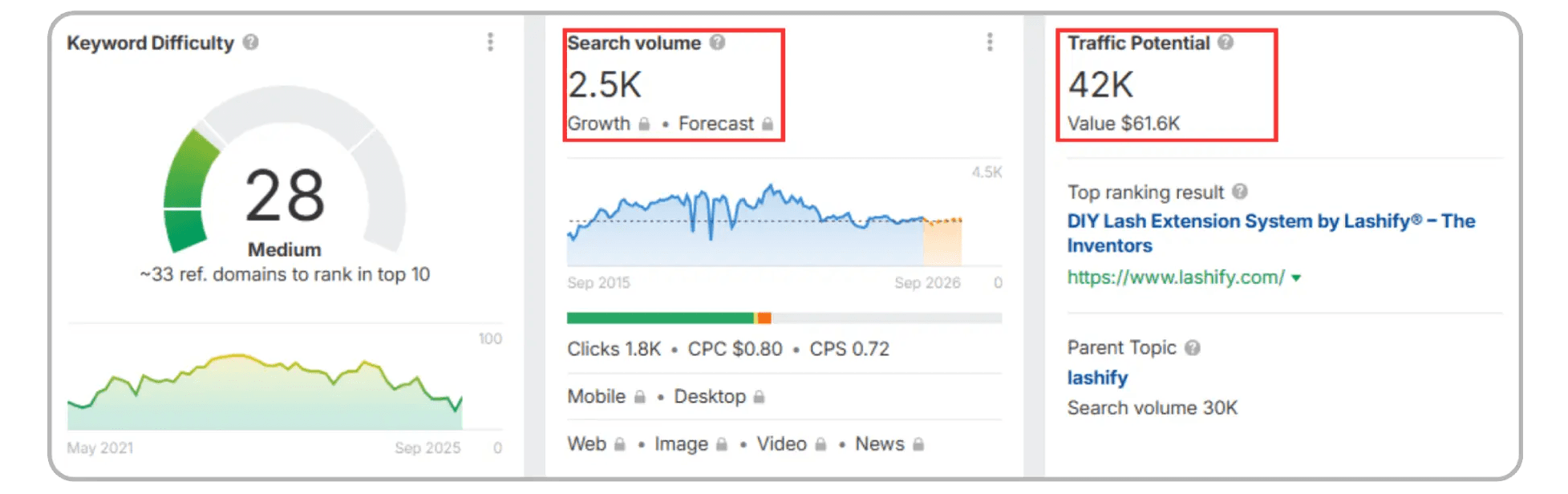
Search volume is the average number of times a keyword or phrase is searched on a search engine each month. It’s an important SEO metric that helps businesses and website owners to know the popularity of a keyword or topic.
Search volume is the average number of times a keyword or phrase is searched on a search engine each month. It’s an important SEO metric that helps businesses and website owners to know the popularity of a keyword or topic.

Table of Content


Find High-Volume Keywords That Drive Consistent Organic Traffic



Trusted by 1k+ Owners!

Tanya Singh
Tanya Singh
6 Min Read
6 Min Read
Sep 25, 2025
Sep 25, 2025
What is Search Volume and Why it's Important?
Search volume is a key metric that shows how many times a keyword gets searched on leading search engines like Google within a month. In several cases, a number will give you an idea about the keyword's popularity.
If for instance, "digital marketing tools" as a keyword has a search volume of 12,000, approximately 12,000 people are searching for it monthly. Knowing this helps businesses and website owners understand which keywords can bring visitors to their site.
Search volume is a key metric that shows how many times a keyword gets searched on leading search engines like Google within a month. In several cases, a number will give you an idea about the keyword's popularity.
If for instance, "digital marketing tools" as a keyword has a search volume of 12,000, approximately 12,000 people are searching for it monthly. Knowing this helps businesses and website owners understand which keywords can bring visitors to their site.
Importance of Search Volume
Search volume is very essential in SEO and online advertising. Here's why:
Search volume is very essential in SEO and online advertising. Here's why:
•
•
Shows traffic potential: The higher the search volume of a keyword, the greater the number of visitors.
Shows traffic potential: The higher the search volume of a keyword, the greater the number of visitors.
•
•
Helps with targeting: Keywords with even less search volume could be profitable if they target to the right audience.
Helps with targeting: Keywords with even less search volume could be profitable if they target to the right audience.
•
•
Guides campaigns: Gives you insight into which keywords you should be focusing on for SEO or paid ads.
Guides campaigns: Gives you insight into which keywords you should be focusing on for SEO or paid ads.
•
•
Tells competition: Keywords with huge search volume generally have many competitors.
Tells competition: Keywords with huge search volume generally have many competitors.
Factors Affecting Search Volume
Factors
What it Means
Example
Seasonality
Keyword popularity changes at set times of the year
“Halloween costumes” peaks in October
Trends
Appear at the very top of Google search results
“World Cup 2026 schedule”
Marketing Campaigns
Pay only when a customer contacts you (per lead)
New iPhone launch increasing related searches
User Behavior
Based on location, services offered, and proximity
“Remote jobs” became popular after the pandemic
Market Competition
Requires Google screening and background checks
New fitness apps increasing searches for “home workouts”
Content Availability
Shows business name, reviews, hours, and phone number
Many guides available for “email marketing tips”
These are the reasons why search volume fluctuates over time and why they should be taken into consideration when developing your SEO strategy.
These are the reasons why search volume fluctuates over time and why they should be taken into consideration when developing your SEO strategy.
How to Measure Search Volume?
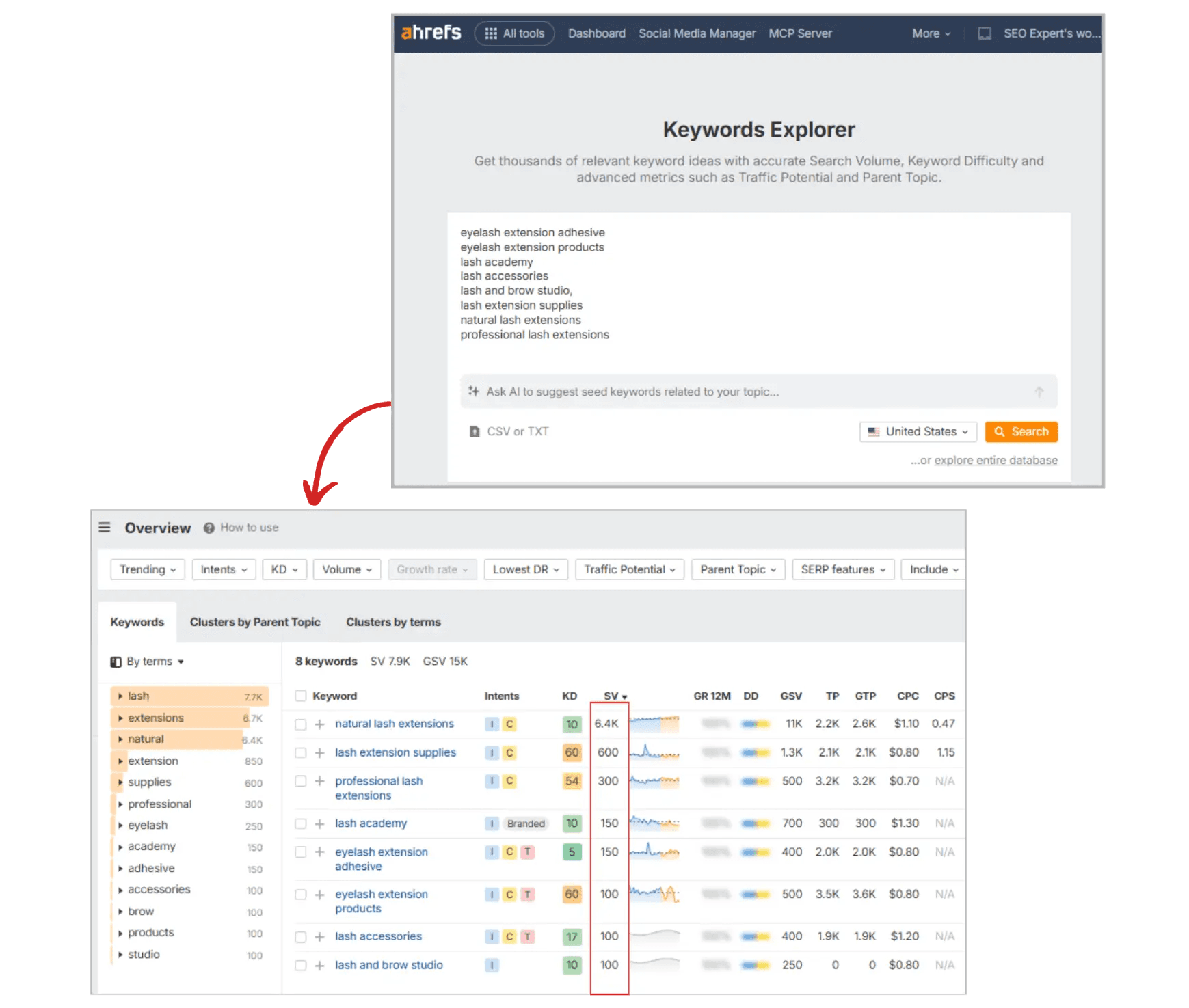
You can use keyword research tools to find out the search volume:
You can use keyword research tools to find out the search volume:
•
•
Ahrefs: Shows monthly search estimates and how hard it is to rank for a keyword.
Ahrefs: Shows monthly search estimates and how hard it is to rank for a keyword.
•
•
•
•
Google Keyword Planner: This tool is absolutely free; it helps in checking the keyword demand.
Google Keyword Planner: This tool is absolutely free; it helps in checking the keyword demand.
What to Do When Checking the Search Volume for Certain Keywords?
•
•
Enter the keyword in the tool.
Enter the keyword in the tool.
•
•
Choose the country or region you want to analyze.
Choose the country or region you want to analyze.
•
•
Go ahead and look at the searches for the month and see the trends.
Go ahead and look at the searches for the month and see the trends.
Incorporating Search Volume in Your Strategy
Though search volume is actually useful, don't just rely on it and combine it with other factors like:
Though search volume is actually useful, don't just rely on it and combine it with other factors like:
•
•
Keyword difficulty: How difficult it will be to rank for the keyword.
Keyword difficulty: How difficult it will be to rank for the keyword.
•
•
Search intent: Are people searching to learn, compare, or buy?
Search intent: Are people searching to learn, compare, or buy?
•
•
CPC - Cost Per Click: For paid campaigns, it matters. A high CPC often means a greater commercial value.
CPC - Cost Per Click: For paid campaigns, it matters. A high CPC often means a greater commercial value.
•
•
Local vs. global volume: For a local business, it will be better to target keywords relevant to your area.
Local vs. global volume: For a local business, it will be better to target keywords relevant to your area.
SEO Best Practices Related to Search Volume
Below are some simple-to-follow best practices:
Below are some simple-to-follow best practices:
•
•
Don't give search volume all the attention: A keyword with hundreds or thousands of searches will not necessarily bring you traffic. Instead, take competition, user intent, and zest of the keyword to give results into consideration. On search engines, the higher the Traffic Potential, the more practically measurable a potential is.
Don't give search volume all the attention: A keyword with hundreds or thousands of searches will not necessarily bring you traffic. Instead, take competition, user intent, and zest of the keyword to give results into consideration. On search engines, the higher the Traffic Potential, the more practically measurable a potential is.

•
•
Chase not keywords based on high search volumes: Big keywords usually boast bigger competitors. Target long-tail or lower competition keywords that fit your audience.
Chase not keywords based on high search volumes: Big keywords usually boast bigger competitors. Target long-tail or lower competition keywords that fit your audience.
•
•
Do check trends: Average monthly searches may not reflect present interest. If your keyword is on the rise or dipping, or goes up and down every season, accordingly plan your content with Google Trends.
Do check trends: Average monthly searches may not reflect present interest. If your keyword is on the rise or dipping, or goes up and down every season, accordingly plan your content with Google Trends.
Thus, adhering to these will steer your SEO towards getting hold of the right keywords and welcomed traffic.
Thus, adhering to these will steer your SEO towards getting hold of the right keywords and welcomed traffic.
Final Thoughts
If you want to rank on the first page of search engines such as Google, SEO should be at the top of your priorities. SEO helps certain websites grow online, and conversely, it helps certain websites only from being discovered. If properly used, SEO can increase website traffic; otherwise, it can kill traffic altogether. Search volume is an essential SEO metric for selecting appropriate keywords with respect to your website. Search volume is therefore considered the number of times a keyword is searched in Google. By considering a few important factors like search volume, difficulty rating, search intent, popularity trend, and competition, one can devise a strategy that draws the right kind of customer and optimizes interaction and conversion.
If you want to rank on the first page of search engines such as Google, SEO should be at the top of your priorities. SEO helps certain websites grow online, and conversely, it helps certain websites only from being discovered. If properly used, SEO can increase website traffic; otherwise, it can kill traffic altogether. Search volume is an essential SEO metric for selecting appropriate keywords with respect to your website. Search volume is therefore considered the number of times a keyword is searched in Google. By considering a few important factors like search volume, difficulty rating, search intent, popularity trend, and competition, one can devise a strategy that draws the right kind of customer and optimizes interaction and conversion.
Frequently Asked Questions (FAQs)
Frequently Asked Questions
What is the difference between search volume and website traffic?

Search volume shows how many people search for a keyword, while traffic is the number of visitors your site receives. High search volume doesn’t always mean high traffic unless your content ranks well.
Do high search volume keywords always bring more conversions?
Not necessarily. High search volume may attract clicks but could be too broad or competitive. Focus on intent-driven, long-tail keywords that match what your audience wants.
Why do different tools show different search volumes for the same keyword?
Different tools use their own databases and methods to estimate search volume, so numbers can vary. For example, Google Keyword Planner shows ranges while tools like Ahrefs or SEMrush use statistical models — all are useful as directional guides rather than exact counts.
Does high search volume mean my website will rank easily?
Not always. High search volume shows interest but ranking depends on competition, content quality, and SEO authority. Use search volume as a guide, not a guarantee of rankings.
Can search volume change over time?
Yes. Search volume fluctuates based on seasonality, trends, marketing campaigns, news events, and changes in user behavior. It’s important to check trends regularly rather than rely on one snapshot of data.
Should I pick keywords solely based on high search volume?
No. High search volume matters, but relevance, competition, and user intent are equally important because they determine whether actual traffic and conversions follow.
How should I balance search volume with keyword difficulty?
Look at both: a high search volume term may be very competitive, while a medium or lower volume keyword with lower difficulty might be easier to rank for and still bring valuable traffic.
What is the difference between search volume and website traffic?
Search volume shows how many people search for a keyword, while traffic is the number of visitors your site receives. High search volume doesn’t always mean high traffic unless your content ranks well.
Do high search volume keywords always bring more conversions?
Not necessarily. High search volume may attract clicks but could be too broad or competitive. Focus on intent-driven, long-tail keywords that match what your audience wants.
Why do different tools show different search volumes for the same keyword?
Different tools use their own databases and methods to estimate search volume, so numbers can vary. For example, Google Keyword Planner shows ranges while tools like Ahrefs or SEMrush use statistical models — all are useful as directional guides rather than exact counts.
Does high search volume mean my website will rank easily?
Not always. High search volume shows interest but ranking depends on competition, content quality, and SEO authority. Use search volume as a guide, not a guarantee of rankings.
Can search volume change over time?
Yes. Search volume fluctuates based on seasonality, trends, marketing campaigns, news events, and changes in user behavior. It’s important to check trends regularly rather than rely on one snapshot of data.
Should I pick keywords solely based on high search volume?
No. High search volume matters, but relevance, competition, and user intent are equally important because they determine whether actual traffic and conversions follow.
How should I balance search volume with keyword difficulty?
Look at both: a high search volume term may be very competitive, while a medium or lower volume keyword with lower difficulty might be easier to rank for and still bring valuable traffic.




Find High-Volume Keywords That Drive Consistent Organic Traffic
Find High-Volume Keywords That Drive Consistent Organic Traffic
Analyze search volume to find valuable terms, plan content strategically, and attract consistent organic traffic.
Analyze search volume to find valuable terms, plan content strategically, and attract consistent organic traffic.
Trusted by 1000+ Owners!
4.9/5 Ratings!
Share this article
Share this article

Related Resources






Don’t miss our revenue growth tips!
Don’t miss our revenue growth tips!
Don’t miss our revenue growth tips!
Get expert marketing tips—straight to your inbox, like thousands of happy clients.
Get expert marketing tips—straight to your inbox, like thousands of happy clients.




































Ready to speak with an expert?
Data-Driven Marketing Agency That Elevates ROI
1100+
Websites Designed & Optimized to Convert
$280M+
Client Revenue Driven & Growing Strong
Discover how to skyrocket
your revenue today!
Trusted by 1000+ Owners!
Ready to speak with an expert?
Data-Driven Marketing Agency That Elevates ROI
1100+
Websites Designed & Optimized to Convert
$280M+
Client Revenue Driven & Growing Strong
Discover how to skyrocket
your revenue today!
Trusted by 1000+ Owners!
Want to skyrocket revenue?
4.9/5 Ratings!
Ready to speak with an expert?
Data-Driven Marketing Agency That Elevates ROI
1100+
Websites Designed & Optimized to Convert
$280M+
Client Revenue Driven & Growing Strong
Discover how to skyrocket
your revenue today!
Trusted by 1000+ Owners!
Call
Meet