
Long-Tail Keywords: How Targeted Phrases Boost SEO
Long-Tail Keywords: How Targeted Phrases Boost SEO
Long-Tail Keyword
Long-Tail Keyword
Long-Tail Keyword
Long-tail keywords are specific, multi-word search phrases that may have low individual search volume but together can attract a large amount of highly targeted traffic to your website.
Long-tail keywords are specific, multi-word search phrases that may have low individual search volume but together can attract a large amount of highly targeted traffic to your website.


Table of Content

Attract High-Converting Visitors with the Right Long-Tail Keywords



4.9/5 Ratings!

Aashi Katariya
Aashi Katariya
6 Min Read
6 Min Read
Oct 7, 2025
Oct 7, 2025
What is Long-Tail Keyword?
People often don't pay attention to long-tail keywords when they do SEO, but they can have a big effect on how many people see your site and how many people buy from it. Long-tail keywords are more specific search terms, like "best vegan running shoes for flat feet" or "small espresso machine for small kitchens." On the other hand, broad keywords are very competitive. These phrases might not get as many searches, but they are more specific and easier to rank for.
People often don't pay attention to long-tail keywords when they do SEO, but they can have a big effect on how many people see your site and how many people buy from it. Long-tail keywords are more specific search terms, like "best vegan running shoes for flat feet" or "small espresso machine for small kitchens." On the other hand, broad keywords are very competitive. These phrases might not get as many searches, but they are more specific and easier to rank for.

Why Long-Tail Keywords are Important?
•
•
Less Competition: When you focus on very specific questions, your content doesn't have to compete with thousands of other sites for a spot on Google.
Less Competition: When you focus on very specific questions, your content doesn't have to compete with thousands of other sites for a spot on Google.
•
•
More likely to convert: People who look for long-tail keywords usually know what they want. This means that people who go to businesses are more likely to do something, like sign up, call, or buy something.
More likely to convert: People who look for long-tail keywords usually know what they want. This means that people who go to businesses are more likely to do something, like sign up, call, or buy something.
•
•
SEO wins that are easier: Content that directly answers user questions gets higher rankings from search engines. A page that is well-optimized for a long-tail keyword can get a higher ranking faster than one that is targeting a broad term.
SEO wins that are easier: Content that directly answers user questions gets higher rankings from search engines. A page that is well-optimized for a long-tail keyword can get a higher ranking faster than one that is targeting a broad term.
How to Look for Long-Tail Keywords?
Finding good long-tail keywords doesn't have to be hard. There are a number of tools and methods that make the process easier:
Finding good long-tail keywords doesn't have to be hard. There are a number of tools and methods that make the process easier:
•
•
Google Search Console shows real search data from people who have already been to your site. A great place to start is to look for searches that may not get many impressions but are very relevant.
Google Search Console shows real search data from people who have already been to your site. A great place to start is to look for searches that may not get many impressions but are very relevant.
•
•
•
•
If you're new to keyword research and want to come up with new ideas, Ubersuggest is a good tool to use.
If you're new to keyword research and want to come up with new ideas, Ubersuggest is a good tool to use.
When looking for long-tail keywords, think about what your readers might want to know. Consider "who, what, where, when, and why." For example, "Where can I find gluten-free pizza near me?" or "What is the best ergonomic chair for a home office that doesn't cost too much?" These long-tail questions show what people want and let content solve problems right away.
When looking for long-tail keywords, think about what your readers might want to know. Consider "who, what, where, when, and why." For example, "Where can I find gluten-free pizza near me?" or "What is the best ergonomic chair for a home office that doesn't cost too much?" These long-tail questions show what people want and let content solve problems right away.

Short-Term and Long-Term Keywords
It's important to know the difference between short-term and long-term keyword strategies:
It's important to know the difference between short-term and long-term keyword strategies:
•
•
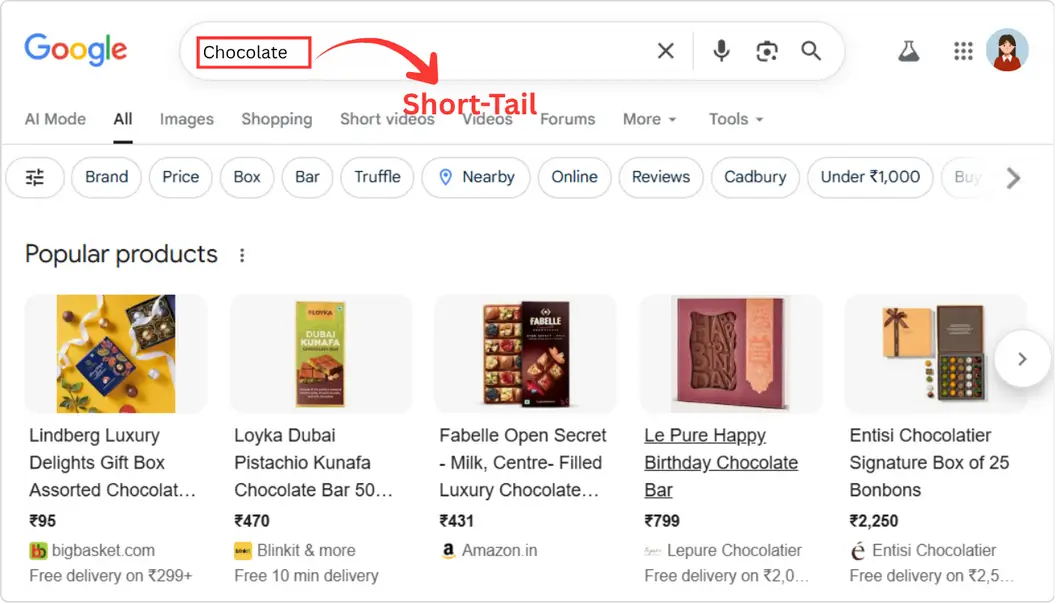
Short-term keywords can get you traffic quickly, but there is a lot of competition and conversions are often lower.
Short-term keywords can get you traffic quickly, but there is a lot of competition and conversions are often lower.
•
•
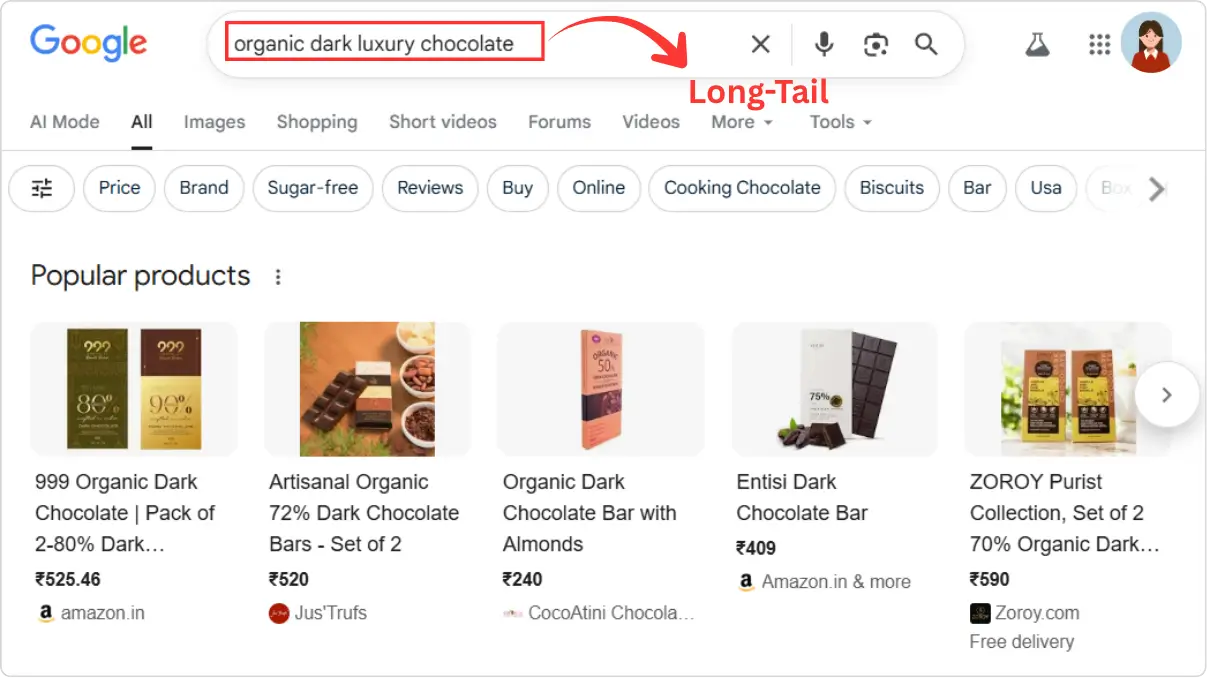
Long-tail keywords might not bring in as much traffic right away, but the people who do come are more likely to buy something, so they are a good long-term SEO investment.
Long-tail keywords might not bring in as much traffic right away, but the people who do come are more likely to buy something, so they are a good long-term SEO investment.
Helpful Tips for Using Long-Tail Keywords
Tip
Tip
Tip
Tip
Description
Description
Description
Description
Understand User Intent
Understand User Intent
Understand User Intent
Focus on what users are actually searching for — informational, navigational, or transactional — to choose keywords that align with their goals.
Focus on what users are actually searching for — informational, navigational, or transactional — to choose keywords that align with their goals.
Focus on what users are actually searching for — informational, navigational, or transactional — to choose keywords that align with their goals.
Use Keyword Research Tools
Use Keyword Research Tools
Use Keyword Research Tools
Leverage tools like Google Keyword Planner, Ahrefs, or SEMrush to find long-tail keywords with good search potential and low competition.
Leverage tools like Google Keyword Planner, Ahrefs, or SEMrush to find long-tail keywords with good search potential and low competition.
Leverage tools like Google Keyword Planner, Ahrefs, or SEMrush to find long-tail keywords with good search potential and low competition.
Focus on Relevance
Focus on Relevance
Focus on Relevance
Select long-tail keywords that closely match your content topic and audience needs for better engagement and ranking potential.
Select long-tail keywords that closely match your content topic and audience needs for better engagement and ranking potential.
Select long-tail keywords that closely match your content topic and audience needs for better engagement and ranking potential.
Incorporate Naturally
Incorporate Naturally
Incorporate Naturally
Blend long-tail keywords smoothly into your content to maintain readability and avoid keyword stuffing.
Blend long-tail keywords smoothly into your content to maintain readability and avoid keyword stuffing.
Blend long-tail keywords smoothly into your content to maintain readability and avoid keyword stuffing.
Target Conversational Phrases
Target Conversational Phrases
Target Conversational Phrases
Optimize for phrases that reflect how people speak or search using voice assistants like Siri or Google Assistant.
Optimize for phrases that reflect how people speak or search using voice assistants like Siri or Google Assistant.
Optimize for phrases that reflect how people speak or search using voice assistants like Siri or Google Assistant.
Create Specific Content
Create Specific Content
Create Specific Content
Build blog posts, guides, or FAQs that directly address the detailed queries behind your long-tail keywords.
Build blog posts, guides, or FAQs that directly address the detailed queries behind your long-tail keywords.
Build blog posts, guides, or FAQs that directly address the detailed queries behind your long-tail keywords.
Monitor and Optimize
Monitor and Optimize
Monitor and Optimize
Track keyword performance regularly and refine your content based on search trends and analytics.
Track keyword performance regularly and refine your content based on search trends and analytics.
Track keyword performance regularly and refine your content based on search trends and analytics.
Using long-tail keywords effectively helps you connect with the right audience and boost your search visibility. Focus on intent, create valuable content, and watch your organic traffic grow steadily.
Using long-tail keywords effectively helps you connect with the right audience and boost your search visibility. Focus on intent, create valuable content, and watch your organic traffic grow steadily.
Final Thoughts
Long-tail keywords are easier to rank for, bring in more visitors, and are what people are looking for. You can get the most out of your SEO by mapping your content to real questions that people are asking and focusing on specifics instead of volume, instead of going up against big, general keywords.
Long-tail keywords are easier to rank for, bring in more visitors, and are what people are looking for. You can get the most out of your SEO by mapping your content to real questions that people are asking and focusing on specifics instead of volume, instead of going up against big, general keywords.
Frequently Asked Questions (FAQs)
Frequently Asked Questions
Do long-tail keywords have lower search volume?

Yes, individually they have fewer searches. However, the visitors they attract are highly relevant and often ready to convert. A website optimized for multiple long-tail keywords can cumulatively drive significant, high-quality traffic.
How do long-tail keywords improve conversion rates?
Users searching with detailed phrases know what they want. For example, someone searching “affordable ergonomic chair for home office” is likely ready to buy, making them more likely to complete a purchase compared to someone searching “chair.”
How can I find long-tail keywords for my website?
Start with tools like Google Search Console, Ahrefs, SEMrush, Ubersuggest, and AnswerThePublic. Look for specific questions, queries with low competition, and phrases your target audience uses. Use autocomplete suggestions in Google or Bing for inspiration.
How many words usually make up a long-tail keyword?
Long-tail keywords typically have 3–6 words, but they can be longer if needed to capture specific intent. The goal is to answer a detailed query, not just extend a phrase unnecessarily.
How does competition differ for long-tail vs short-tail keywords?
Long-tail keywords have lower competition, allowing smaller websites to rank quickly. Short-tail keywords are dominated by high-authority domains, large brands, and expensive paid campaigns, making them harder for new sites to rank for.
Can long-tail keywords improve overall domain authority?
Indirectly. By attracting relevant traffic, generating backlinks, and increasing engagement, long-tail keyword optimization helps boost user satisfaction signals, which can contribute to higher domain authority over time.
What is the biggest mistake businesses make with long-tail keywords?
The most common mistake is ignoring user intent or overstuffing keywords. Content should provide real value and answer specific queries naturally. Forcing keywords disrupts readability and can hurt rankings instead of helping them.
Do long-tail keywords have lower search volume?
Yes, individually they have fewer searches. However, the visitors they attract are highly relevant and often ready to convert. A website optimized for multiple long-tail keywords can cumulatively drive significant, high-quality traffic.
How do long-tail keywords improve conversion rates?
Users searching with detailed phrases know what they want. For example, someone searching “affordable ergonomic chair for home office” is likely ready to buy, making them more likely to complete a purchase compared to someone searching “chair.”
How can I find long-tail keywords for my website?
Start with tools like Google Search Console, Ahrefs, SEMrush, Ubersuggest, and AnswerThePublic. Look for specific questions, queries with low competition, and phrases your target audience uses. Use autocomplete suggestions in Google or Bing for inspiration.
How many words usually make up a long-tail keyword?
Long-tail keywords typically have 3–6 words, but they can be longer if needed to capture specific intent. The goal is to answer a detailed query, not just extend a phrase unnecessarily.
How does competition differ for long-tail vs short-tail keywords?
Long-tail keywords have lower competition, allowing smaller websites to rank quickly. Short-tail keywords are dominated by high-authority domains, large brands, and expensive paid campaigns, making them harder for new sites to rank for.
Can long-tail keywords improve overall domain authority?
Indirectly. By attracting relevant traffic, generating backlinks, and increasing engagement, long-tail keyword optimization helps boost user satisfaction signals, which can contribute to higher domain authority over time.
What is the biggest mistake businesses make with long-tail keywords?
The most common mistake is ignoring user intent or overstuffing keywords. Content should provide real value and answer specific queries naturally. Forcing keywords disrupts readability and can hurt rankings instead of helping them.
Attract High-Converting Visitors with the Right Long-Tail Keywords
Attract High-Converting Visitors with the Right Long-Tail Keywords
Focus on specific keyword phrases to reduce competition, boost relevance, and drive qualified traffic.
Focus on specific keyword phrases to reduce competition, boost relevance, and drive qualified traffic.
Focus on specific keyword phrases to reduce competition, boost relevance, and drive qualified traffic.
4.9/5 Ratings!
Share this article

Related Resources






Don’t miss our revenue growth tips!
Don’t miss our revenue growth tips!
Don’t miss our revenue growth tips!
Get expert marketing tips—straight to your inbox, like thousands of happy clients.
Get expert marketing tips—straight to your inbox, like thousands of happy clients.




































Ready to speak with an expert?
Data-Driven Marketing Agency That Elevates ROI
1100+
Websites Designed & Optimized to Convert
$280M+
Client Revenue Driven & Growing Strong
Discover how to skyrocket
your revenue today!
Trusted by 1000+ Owners!
Ready to speak with an expert?
Data-Driven Marketing Agency That Elevates ROI
1100+
Websites Designed & Optimized to Convert
$280M+
Client Revenue Driven & Growing Strong
Discover how to skyrocket
your revenue today!
Trusted by 1000+ Owners!
Want to skyrocket revenue?
4.9/5 Ratings!
Ready to speak with an expert?
Data-Driven Marketing Agency That Elevates ROI
1100+
Websites Designed & Optimized to Convert
$280M+
Client Revenue Driven & Growing Strong
Discover how to skyrocket
your revenue today!
Trusted by 1000+ Owners!
Call
Meet