What is Paid Search, How it Works & Why it Matters?
What is Paid Search, How it Works & Why it Matters?
Paid Search
Paid Search
Paid Search
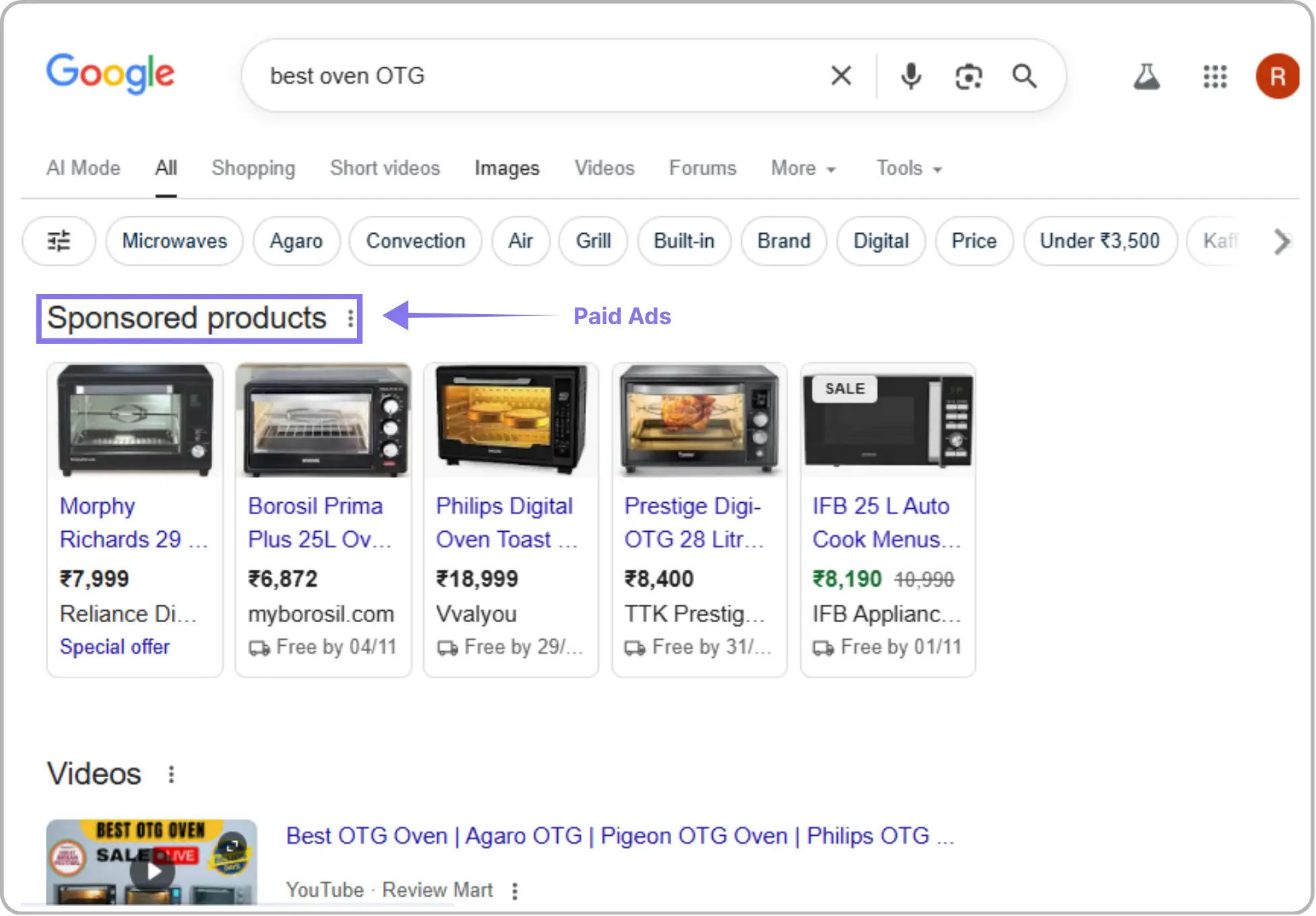
Paid search is a digital marketing method where businesses pay to display ads on search engine results pages (SERPs). Known as pay-per-click (PPC) advertising, advertisers are charged each time a user clicks their ad.
Paid search is a digital marketing method where businesses pay to display ads on search engine results pages (SERPs). Known as pay-per-click (PPC) advertising, advertisers are charged each time a user clicks their ad.

Table of Content
Case Studies



Drive High-Intent Traffic to Your Site with Paid Search Ads



4.9/5 Ratings!

Ravi K.
Ravi K.
5 Min Read
5 Min
Oct 27, 2025
Oct 27, 2025
What is Paid Search?
Have you seen that there are some businesses that always be at the top when you look for things on Google? This does not just happen. It is called paid search. You can see it as your business getting a top spot on Google or Bing. With paid search, you do not have to wait for a long time for your website to go up in the search list. It puts you right at the top so people can see your business fast.
Your business can reach people when they are searching for what you offer. This is the best time to be seen.
Have you seen that there are some businesses that always be at the top when you look for things on Google? This does not just happen. It is called paid search. You can see it as your business getting a top spot on Google or Bing. With paid search, you do not have to wait for a long time for your website to go up in the search list. It puts you right at the top so people can see your business fast.
Your business can reach people when they are searching for what you offer. This is the best time to be seen.
How Paid Search Works?
Paid search is frequently referred to as Pay-Per-Click (PPC). This occurs every time a person enters a search, such as "gourmet coffee beans." The highest paying company does not always receive top placement.
Here's the best part: Search engines take advantage of something called a Quality Score. This score indicates to the engine how useful and beneficial your ad is to those looking for it. So, if you have an ad for specialty coffee beans that is what people are looking for, and your site is user-friendly, you can get listed at the top of the page. You might even outrank another business, even if you do not pay as much.
That is how the search engine provides better ad places with good content and tries to ensure people enjoy themselves on the site.
Paid search is frequently referred to as Pay-Per-Click (PPC). This occurs every time a person enters a search, such as "gourmet coffee beans." The highest paying company does not always receive top placement.
Here's the best part: Search engines take advantage of something called a Quality Score. This score indicates to the engine how useful and beneficial your ad is to those looking for it. So, if you have an ad for specialty coffee beans that is what people are looking for, and your site is user-friendly, you can get listed at the top of the page. You might even outrank another business, even if you do not pay as much.
That is how the search engine provides better ad places with good content and tries to ensure people enjoy themselves on the site.
Top Benefits of Using Paid Search for Your Business
Paid search can provide your business with a significant boost. Here's why it works so well:
Paid search can provide your business with a significant boost. Here's why it works so well:
•
•
Get Noticed Immediately: Want individuals to come to your site immediately? Paid search can do it in a hurry. You create an ad, and you watch individuals visit your site within a matter of hours.
Get Noticed Immediately: Want individuals to come to your site immediately? Paid search can do it in a hurry. You create an ad, and you watch individuals visit your site within a matter of hours.
•
•
Reach the Right People: When you use paid search, you have the ability to choose who will see your advertising. You can pick individuals based on what they search for. You can also select individuals based on where they live, the time of day, or the device they have. This allows you to invest your ad money in those who will want what you have most.
Reach the Right People: When you use paid search, you have the ability to choose who will see your advertising. You can pick individuals based on what they search for. You can also select individuals based on where they live, the time of day, or the device they have. This allows you to invest your ad money in those who will want what you have most.
•
•
See Your Progress: Marketers like to see what works. You will monitor every click, every view, and every sale. You know what you pay and what you get in return.
See Your Progress: Marketers like to see what works. You will monitor every click, every view, and every sale. You know what you pay and what you get in return.
How Paid Search Supports Your SEO Strategy?
Paid search and SEO can assist when done simultaneously. While your website is waiting to rank higher in search results, paid search exposes your name to individuals. In addition, data from paid search identifies keywords that perform well.
When you use both SEO and PPC together, your company appears more frequently, allowing you to have more opportunities to receive clicks. Additionally, the information in your paid advertising - such as which keywords are converting - can assist you in directing your SEO content and keyword plan.
Paid search and SEO can assist when done simultaneously. While your website is waiting to rank higher in search results, paid search exposes your name to individuals. In addition, data from paid search identifies keywords that perform well.
When you use both SEO and PPC together, your company appears more frequently, allowing you to have more opportunities to receive clicks. Additionally, the information in your paid advertising - such as which keywords are converting - can assist you in directing your SEO content and keyword plan.
Difference Between SEO vs. PPC
Aspect
SEO (Search Engine Optimization)
PPC (Pay-Per-Click Advertising)
Definition
Improves website visibility through organic optimization.
Drives traffic by paying for ad placements on search engines.
Cost
Free clicks; investment in content and optimization.
Paid clicks; cost incurred every time someone clicks your ad.
Time to Results
Takes time to show results (usually months).
Delivers immediate visibility and traffic.
Longevity
Long-term and sustainable with consistent effort.
Short-term; ends when the ad budget runs out.
Traffic Source
Organic search results.
Paid search ads on SERPs.
Click-Through Rate (CTR)
Generally higher for top organic results.
Can be high initially but depends on ad relevance and spend.
Trust & Credibility
Builds higher trust with users over time.
Perceived as ads, so may have lower trust.
Best For
Long-term brand growth and authority.
Quick results, promotions, and targeting specific keywords.
Both SEO and PPC play vital roles in a successful digital marketing strategy. The best approach often combines long-term SEO growth with the instant visibility of PPC.
Both SEO and PPC play vital roles in a successful digital marketing strategy. The best approach often combines long-term SEO growth with the instant visibility of PPC.
Getting Started: Your First Steps to a Winning Paid Search Campaign
Are you ready to employ paid search? Prioritize these key things to begin:
Are you ready to employ paid search? Prioritize these key things to begin:
•
•
Find Your Keywords: Consider what your buyer would search for on Google to locate your product. Ask yourself, what are they looking for?
Find Your Keywords: Consider what your buyer would search for on Google to locate your product. Ask yourself, what are they looking for?
•
•
Write a Good Ad: Your ad text must catch people quickly. Always include a clear call to action (CTA), such as "Shop Now" or "Book a time."
Write a Good Ad: Your ad text must catch people quickly. Always include a clear call to action (CTA), such as "Shop Now" or "Book a time."
•
•
Make a Good Landing Page: The site visitors click on from your ad should be what you described in your ad.
Make a Good Landing Page: The site visitors click on from your ad should be what you described in your ad.
•
•
Check and review your anchor text profile: Use SEO tools to identify which anchor texts are directing to your site (backlinks) and what internal links you're using. Look for patterns of overuse or generic anchors that can be improved.
Check and review your anchor text profile: Use SEO tools to identify which anchor texts are directing to your site (backlinks) and what internal links you're using. Look for patterns of overuse or generic anchors that can be improved.
Final Thoughts
Paid search is a great fit if:
You want results quickly
You are launching something new
You are in a competitive industry
You want to test what works before investing long-term
You need traffic during a short promotion or sale
It is not just for big companies. Even small and local businesses can benefit from paid search when it’s set up the right way.
Paid search is a great fit if:
You want results quickly
You are launching something new
You are in a competitive industry
You want to test what works before investing long-term
You need traffic during a short promotion or sale
It is not just for big companies. Even small and local businesses can benefit from paid search when it’s set up the right way.
Frequently Asked Questions (FAQs)
Frequently Asked Questions
How does the PPC auction process actually work?

PPC doesn’t work like a traditional auction where the highest bidder always wins. Each time a user searches for a keyword, Google runs a lightning-fast auction that evaluates:
Your bid (how much you're willing to pay per click)
Your Quality Score (ad relevance, expected CTR, landing page quality)
Ad Rank (bid × Quality Score)
Even if you bid less than a competitor, you can still win top positions if your ad is more useful and relevant.
Can small businesses realistically compete with big brands in PPC?
Yes. PPC levels the playing field because Google values relevance more than budget. A small business with a high-quality ad and landing page can outrank larger competitors and pay less per click.
How does PPC support and strengthen my SEO strategy?
PPC and SEO work best when used together. PPC gives immediate visibility and helps you identify keywords that convert. Those insights can then shape your SEO strategy.
While you're building SEO rankings, PPC ensures your business doesn’t wait months to get traffic.
Can I run PPC without doing any SEO?
Yes, but it's not ideal long-term. PPC is fast but stops working once you stop paying. SEO requires time but increases visibility even without ongoing ad spend. Ideally, run both for balanced short-term and long-term growth.
What is ad relevance and how does Google measure it?
Ad relevance measures how closely your ad matches the user’s search. Google evaluates this by analyzing:
Keyword usage in the ad
The alignment between ad copy and landing page
User behavior (clicks and interactions)
Higher relevance leads to better ad placement and lower costs.
Why is mobile optimization essential for PPC campaigns?
Most search users browse on mobile devices. If your landing page loads slowly or looks cluttered on mobile, users may leave instantly, wasting your clicks and your budget. Mobile-friendly pages have significantly higher conversion rates.
What are the most common PPC mistakes businesses should avoid?
Common mistakes include:
Not using negative keywords
Sending all traffic to the homepage
Writing vague or generic ads
Not tracking conversions
Targeting too broad an audience
Ignoring mobile performance
Avoiding these mistakes can dramatically improve campaign profitability.
How does the PPC auction process actually work?
PPC doesn’t work like a traditional auction where the highest bidder always wins. Each time a user searches for a keyword, Google runs a lightning-fast auction that evaluates:
Your bid (how much you're willing to pay per click)
Your Quality Score (ad relevance, expected CTR, landing page quality)
Ad Rank (bid × Quality Score)
Even if you bid less than a competitor, you can still win top positions if your ad is more useful and relevant.
Can small businesses realistically compete with big brands in PPC?
Yes. PPC levels the playing field because Google values relevance more than budget. A small business with a high-quality ad and landing page can outrank larger competitors and pay less per click.
How does PPC support and strengthen my SEO strategy?
PPC and SEO work best when used together. PPC gives immediate visibility and helps you identify keywords that convert. Those insights can then shape your SEO strategy.
While you're building SEO rankings, PPC ensures your business doesn’t wait months to get traffic.
Can I run PPC without doing any SEO?
Yes, but it's not ideal long-term. PPC is fast but stops working once you stop paying. SEO requires time but increases visibility even without ongoing ad spend. Ideally, run both for balanced short-term and long-term growth.
What is ad relevance and how does Google measure it?
Ad relevance measures how closely your ad matches the user’s search. Google evaluates this by analyzing:
Keyword usage in the ad
The alignment between ad copy and landing page
User behavior (clicks and interactions)
Higher relevance leads to better ad placement and lower costs.
Why is mobile optimization essential for PPC campaigns?
Most search users browse on mobile devices. If your landing page loads slowly or looks cluttered on mobile, users may leave instantly, wasting your clicks and your budget. Mobile-friendly pages have significantly higher conversion rates.
What are the most common PPC mistakes businesses should avoid?
Common mistakes include:
Not using negative keywords
Sending all traffic to the homepage
Writing vague or generic ads
Not tracking conversions
Targeting too broad an audience
Ignoring mobile performance
Avoiding these mistakes can dramatically improve campaign profitability.
Drive High-Intent Traffic to Your Site with Paid Search Ads
Drive High-Intent Traffic to Your Site with Paid Search Ads
Use paid search advertising to gain visibility, attract leads, and drive measurable, high-intent traffic to your site.
Use paid search advertising to gain visibility, attract leads, and drive measurable, high-intent traffic to your site.
4.9/5 Ratings!
Share this article
Share this article

Related Resources
Latest Blogs






Don’t miss our revenue growth tips!
Don’t miss our revenue growth tips!
Get expert marketing tips—straight to your inbox, like thousands of happy clients.
Get expert marketing tips—straight to your inbox, like thousands of happy clients.
Latest Blogs












Ready to speak with an expert?
Data-Driven Marketing Agency That Elevates ROI
1100+
Websites Designed & Optimized to Convert
$280M+
Client Revenue Driven & Growing Strong
Discover how to skyrocket
your revenue today!
Trusted by 1000+ Owners!
Ready to speak with an expert?
Data-Driven Marketing Agency That Elevates ROI
1100+
Websites Designed & Optimized to Convert
$280M+
Client Revenue Driven & Growing Strong
Discover how to skyrocket
your revenue today!
Trusted by 1000+ Owners!
Want to skyrocket revenue?
4.9/5 Ratings!
Ready to speak with an expert?
Data-Driven Marketing Agency That Elevates ROI
1100+
Websites Designed & Optimized to Convert
$280M+
Client Revenue Driven & Growing Strong
Discover how to skyrocket
your revenue today!
Trusted by 1000+ Owners!
Call
Meet