How an Optimized Ad Schedule Can Transform Your Marketing Results?
How an Optimized Ad Schedule Can Transform Your Marketing Results?
Ad Schedule
Ad Schedule
Ad Schedule
Ad Schedule
Ad scheduling is a digital marketing tactic that sets the days and times your ads appear. By analyzing audience behavior, advertisers can target peak engagement periods to boost campaign performance and ROI.
Ad scheduling is a digital marketing tactic that sets the days and times your ads appear. By analyzing audience behavior, advertisers can target peak engagement periods to boost campaign performance and ROI.

Table of Content


Scheduling Ads at Right Times Improves Engagement & Outcomes.



4.9/5 Ratings!


Pritam R.
Pritam R.
6 Min Read
6 Min Read
OCT 08, 2025
OCT 08, 2025
What is Ad Scheduling?
Ad scheduling is a tool in Google Ads, Meta, and LinkedIn that lets you run ads only at certain times of day or on certain days of the week. This lets you sync ad delivery with when your audience is most likely to respond, instead of keeping campaigns going all the time.
For example:
A restaurant puts ads on TV during lunch and dinner, when people are thinking about food.
A B2B, SaaS company runs ads on weekdays and during business hours, when people who make decisions are online.
When people have more time on the weekends, they spend more money at an online store.
This small change makes sure that your ads show up when people are most likely to click on them, not when they are least likely to do so.
Ad scheduling is a tool in Google Ads, Meta, and LinkedIn that lets you run ads only at certain times of day or on certain days of the week. This lets you sync ad delivery with when your audience is most likely to respond, instead of keeping campaigns going all the time.
For example:
A restaurant puts ads on TV during lunch and dinner, when people are thinking about food.
A B2B, SaaS company runs ads on weekdays and during business hours, when people who make decisions are online.
When people have more time on the weekends, they spend more money at an online store.
This small change makes sure that your ads show up when people are most likely to click on them, not when they are least likely to do so.
Why Ad Scheduling is Important?
The goal of advertising is always to get more money back, and the timing of the ads has a direct effect on that. If you don't schedule your ads, they might show up at bad times. With it, you can focus your efforts when they are most effective.
Better relevance: Showing ads when people are actually looking for them.
Alignment with operations: Ads can only push calls when stores are open.
Budget efficiency: By focusing on time slots that convert well, you can get more out of your money.
In short, ad scheduling helps you reach the right person at the right time.
The goal of advertising is always to get more money back, and the timing of the ads has a direct effect on that. If you don't schedule your ads, they might show up at bad times. With it, you can focus your efforts when they are most effective.
Better relevance: Showing ads when people are actually looking for them.
Alignment with operations: Ads can only push calls when stores are open.
Budget efficiency: By focusing on time slots that convert well, you can get more out of your money.
In short, ad scheduling helps you reach the right person at the right time.
How to Set Up Ad Scheduling?
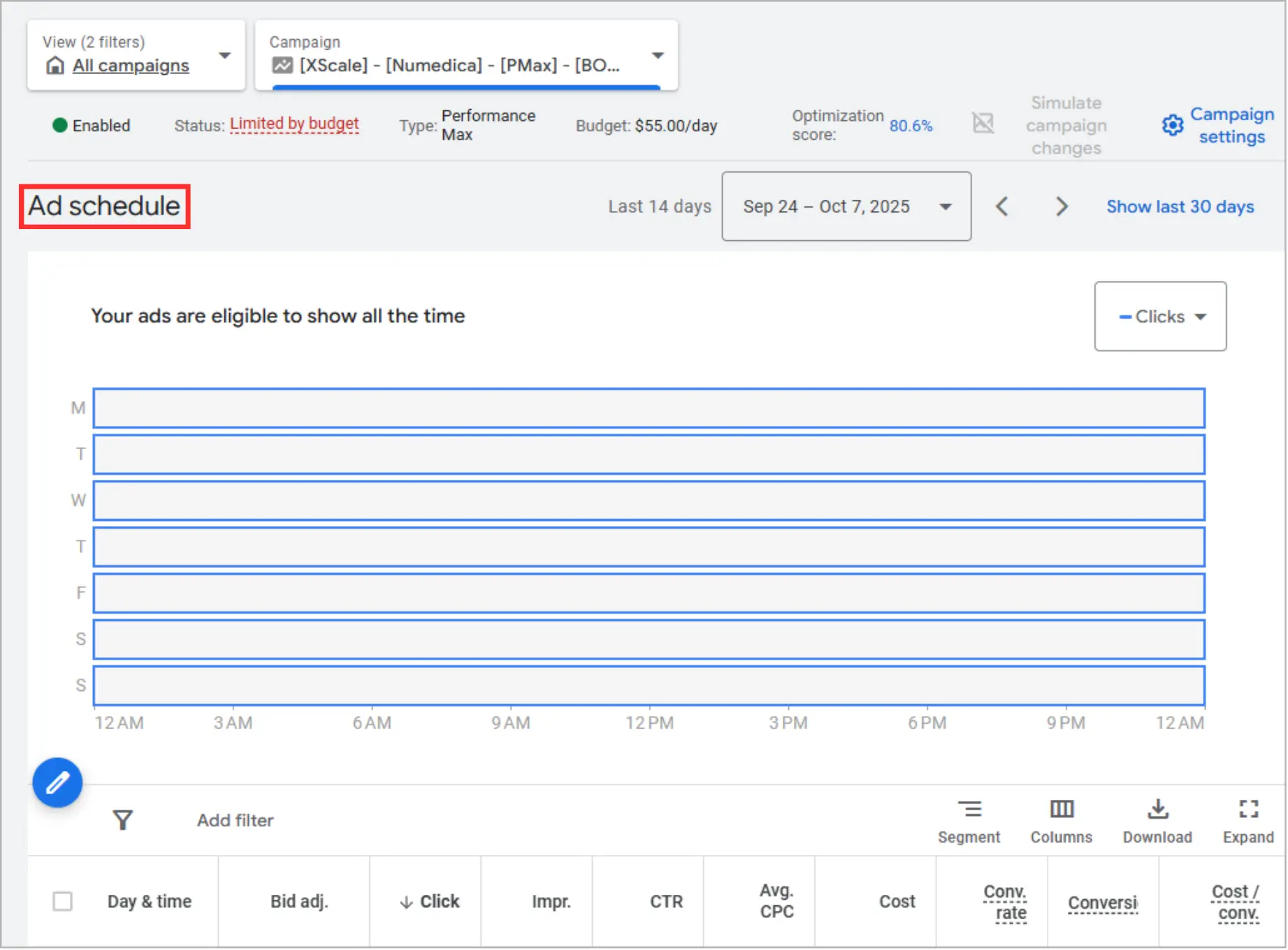
It's easy to set up ad scheduling, but you need to look at your data carefully to be successful.
1. Analyze performance data: Look at how well you've done in the past by checking conversions by time of day and day of the week.
2. Determine hot spots in engagement: Know the time that your audience is most active. Find out when your campaign is at its best.
3. Adjust bids or show times: Run ads during peak hours and raise your bids. Spend less during slow times.
4. Test and refine: People's buying habits change, so keep trying new things and making changes.
It's easy to set up ad scheduling, but you need to look at your data carefully to be successful.
1. Analyze performance data: Look at how well you've done in the past by checking conversions by time of day and day of the week.
2. Determine hot spots in engagement: Know the time that your audience is most active. Find out when your campaign is at its best.
3. Adjust bids or show times: Run ads during peak hours and raise your bids. Spend less during slow times.
4. Test and refine: People's buying habits change, so keep trying new things and making changes.
Tips for Optimizing Ad Scheduling
Tip
Tip
Tip
Tip
Description
Description
Description
Description
Analyze Audience Behavior
Analyze Audience Behavior
Analyze Audience Behavior
Study when your target audience is most active to schedule ads during peak engagement times.
Study when your target audience is most active to schedule ads during peak engagement times.
Study when your target audience is most active to schedule ads during peak engagement times.
Consider Time Zones
Consider Time Zones
Consider Time Zones
Adjust ad schedules based on the geographical locations of your audience.
Adjust ad schedules based on the geographical locations of your audience.
Adjust ad schedules based on the geographical locations of your audience.
Use Performance Data
Use Performance Data
Use Performance Data
Review past campaign metrics to identify which days and times generate the best results.
Review past campaign metrics to identify which days and times generate the best results.
Review past campaign metrics to identify which days and times generate the best results.
Test Different Schedules
Test Different Schedules
Test Different Schedules
Experiment with various ad timings to find the most effective slots.
Experiment with various ad timings to find the most effective slots.
Experiment with various ad timings to find the most effective slots.
Avoid Off-Peak Hours
Avoid Off-Peak Hours
Avoid Off-Peak Hours
Minimize ad spend during low-traffic periods to improve ROI.
Minimize ad spend during low-traffic periods to improve ROI.
Minimize ad spend during low-traffic periods to improve ROI.
Leverage Automation Tools
Leverage Automation Tools
Leverage Automation Tools
Use platform features like Google Ads or Facebook Ads scheduling to automate timing.
Use platform features like Google Ads or Facebook Ads scheduling to automate timing.
Use platform features like Google Ads or Facebook Ads scheduling to automate timing.
Segment Campaigns
Segment Campaigns
Segment Campaigns
Run separate campaigns for different audience segments with customized schedules.
Run separate campaigns for different audience segments with customized schedules.
Run separate campaigns for different audience segments with customized schedules.
Monitor & Adjust
Monitor & Adjust
Monitor & Adjust
Continuously track performance and tweak schedules based on results.
Continuously track performance and tweak schedules based on results.
Continuously track performance and tweak schedules based on results.
Common Mistakes to Avoid
When balanced, ad scheduling works best. Stay away from:-
Being too strict: Cutting too much too soon makes it harder to reach people.
Not Accounting for Local Time Zones: Not remembering that ads at 9 AM in one area might show at 6 AM in another area.
Not updating schedules: People change how they buy things over time.
When balanced, ad scheduling works best. Stay away from:-
Being too strict: Cutting too much too soon makes it harder to reach people.
Not Accounting for Local Time Zones: Not remembering that ads at 9 AM in one area might show at 6 AM in another area.
Not updating schedules: People change how they buy things over time.
How AI Automates and Optimizes Ad Scheduling?
Setting schedules by hand is useful but not very helpful. Artificial intelligence tools go even further by optimizing in real time.
Google's Smart Bidding analyzes behavior, device, location, and timing in real time to decide when to bid higher or show your ad.
AI uses predictive analytics to find patterns, such as conversions going up on Fridays, and then it changes automatically to get the best results.
Setting schedules by hand is useful but not very helpful. Artificial intelligence tools go even further by optimizing in real time.
Google's Smart Bidding analyzes behavior, device, location, and timing in real time to decide when to bid higher or show your ad.
AI uses predictive analytics to find patterns, such as conversions going up on Fridays, and then it changes automatically to get the best results.
Examples of AI-Powered Tools:-
Scheduling and optimization of ads made use of AI by many advertising platforms, as well as third-party tools. Some of the notable ones are:
Google Ads: Google Ads Smart Bidding and Performance Max automatically optimize timing and spending.
Advantage+ Campaigns by Meta: Meta Advantage+ Campaigns use AI to make targeting, creatives, and budget use even better.
Third-Party Tools: Tools from other companies, like Albert.ai, Adzooma, and RevealBot, offer advanced automation and predictive analytics.
Scheduling and optimization of ads made use of AI by many advertising platforms, as well as third-party tools. Some of the notable ones are:
Google Ads: Google Ads Smart Bidding and Performance Max automatically optimize timing and spending.
Advantage+ Campaigns by Meta: Meta Advantage+ Campaigns use AI to make targeting, creatives, and budget use even better.
Third-Party Tools: Tools from other companies, like Albert.ai, Adzooma, and RevealBot, offer advanced automation and predictive analytics.
Final Thoughts
Ad scheduling is often ignored, yet it’s a simple way to get more value from your ad budget. Instead of wasting spend during low-activity hours, you ensure your campaigns reach people in the exact moments they’re most ready to act. Add AI to the mix, and scheduling becomes even smarter—adjusting bids and optimizing impressions continuously.
Advertising success isn’t just about who you reach but when. Focus on timing, and you’ll see improvements in ROI, conversions, and overall campaign performance.
Ad scheduling is often ignored, yet it’s a simple way to get more value from your ad budget. Instead of wasting spend during low-activity hours, you ensure your campaigns reach people in the exact moments they’re most ready to act. Add AI to the mix, and scheduling becomes even smarter—adjusting bids and optimizing impressions continuously.
Advertising success isn’t just about who you reach but when. Focus on timing, and you’ll see improvements in ROI, conversions, and overall campaign performance.
Frequently Asked Questions (FAQs)
Frequently Asked Questions
Why is ad scheduling important for ROI?

Ad scheduling reduces wasted impressions and focuses your budget on the time slots that drive conversions. When your ads run during peak performance hours, you get more clicks, better relevance, and stronger ROI. It also improves cost efficiency by preventing spend during low-intent hours, such as late nights or early mornings when sales rarely happen.
How do I know the best time to run my ads?
Analyze your historical data inside Google Ads and Google Analytics. Review metrics like conversions, CTR, CPA, and ROAS by hour and day. Identify patterns—such as higher conversion rates in the afternoon or stronger engagement on weekdays. This data helps establish your “high-intent windows,” which you can then prioritize in your ad schedule.
Can ad scheduling improve lead quality?
Yes. Running ads during peak engagement hours ensures you reach people when they’re most attentive and ready to act. For example, B2B leads are typically more qualified during business hours, while B2C leads often convert better in the evenings. Aligning your ad times with your audience’s behavior helps increase lead quality and reduce junk traffic.
Should I run ads 24/7 before setting a schedule?
Yes. Running ads broadly at the start gives you clean baseline data. Once you have enough clicks and conversions, you can accurately identify the best-performing times and gradually narrow down the schedule. Cutting too early may limit deliverability and skew results.
Do time zones affect ad scheduling?
Absolutely. If you target multiple regions, a 9 AM schedule in one location may show at 6 AM in another. Always double-check your campaign’s time zone settings and create separate campaigns for regions with major time differences. This prevents wasted impressions and ensures accurate optimization.
How does AI improve ad scheduling?
AI tools like Google Smart Bidding, Performance Max, and Meta Advantage+ analyze thousands of signals in real time—device, behavior, buying patterns, time of day, location, and intent. Instead of manually choosing hours, AI automatically adjusts bids and delivery based on when conversions are most likely. This results in smarter spend allocation and higher ROI.
What mistakes should I avoid with ad scheduling?
Common mistakes include:
Being too restrictive before gathering enough data
Forgetting time zone differences
Not updating schedules as behavior changes
Ignoring cross-device patterns (e.g., mobile peaks at night, desktop peaks during work hours)
Avoiding these ensures accurate optimization and better ROI.
Why is ad scheduling important for ROI?
Ad scheduling reduces wasted impressions and focuses your budget on the time slots that drive conversions. When your ads run during peak performance hours, you get more clicks, better relevance, and stronger ROI. It also improves cost efficiency by preventing spend during low-intent hours, such as late nights or early mornings when sales rarely happen.
How do I know the best time to run my ads?
Analyze your historical data inside Google Ads and Google Analytics. Review metrics like conversions, CTR, CPA, and ROAS by hour and day. Identify patterns—such as higher conversion rates in the afternoon or stronger engagement on weekdays. This data helps establish your “high-intent windows,” which you can then prioritize in your ad schedule.
Can ad scheduling improve lead quality?
Yes. Running ads during peak engagement hours ensures you reach people when they’re most attentive and ready to act. For example, B2B leads are typically more qualified during business hours, while B2C leads often convert better in the evenings. Aligning your ad times with your audience’s behavior helps increase lead quality and reduce junk traffic.
Should I run ads 24/7 before setting a schedule?
Yes. Running ads broadly at the start gives you clean baseline data. Once you have enough clicks and conversions, you can accurately identify the best-performing times and gradually narrow down the schedule. Cutting too early may limit deliverability and skew results.
Do time zones affect ad scheduling?
Absolutely. If you target multiple regions, a 9 AM schedule in one location may show at 6 AM in another. Always double-check your campaign’s time zone settings and create separate campaigns for regions with major time differences. This prevents wasted impressions and ensures accurate optimization.
How does AI improve ad scheduling?
AI tools like Google Smart Bidding, Performance Max, and Meta Advantage+ analyze thousands of signals in real time—device, behavior, buying patterns, time of day, location, and intent. Instead of manually choosing hours, AI automatically adjusts bids and delivery based on when conversions are most likely. This results in smarter spend allocation and higher ROI.
What mistakes should I avoid with ad scheduling?
Common mistakes include:
Being too restrictive before gathering enough data
Forgetting time zone differences
Not updating schedules as behavior changes
Ignoring cross-device patterns (e.g., mobile peaks at night, desktop peaks during work hours)
Avoiding these ensures accurate optimization and better ROI.



Scheduling Ads at Right Times Improves Engagement & Outcomes.
Scheduling Ads at Right Times Improves Engagement & Outcomes.
Find the best times to run your ads so you reach customers when they are most active and ready to buy.
Find the best times to run your ads so you reach customers when they are most active and ready to buy.
4.9/5 Ratings!
Share this article

Related Resources




Don’t miss our revenue growth tips!
Don’t miss our revenue growth tips!
Get expert marketing tips—straight to your inbox, like thousands of happy clients.
Get expert marketing tips—straight to your inbox, like thousands of happy clients.