Bounce Rate vs. Engagement Rate – Why this Matters?
Bounce Rate vs. Engagement Rate – Why this Matters?
Bounce Rate Vs Engagement Rate
Bounce Rate Vs Engagement Rate
Bounce Rate Vs Engagement Rate
Bounce rate shows how many visitors leave after one page, while engagement rate measures how actively they interact with your content. In Google Analytics 4 (GA4), these related metrics give different views of user behavior on your site or app.
Bounce rate shows how many visitors leave after one page, while engagement rate measures how actively they interact with your content. In Google Analytics 4 (GA4), these related metrics give different views of user behavior on your site or app.


Table of Content

Make Every Visitor Stay Longer and Engage More



Trusted by 1k+ Owners!
Trusted by 1k+ Owners!

Preeti Chordia
Preeti Chordia
5 Min Read
5 Min Read
Sep 24, 2025
Sep 24, 2025
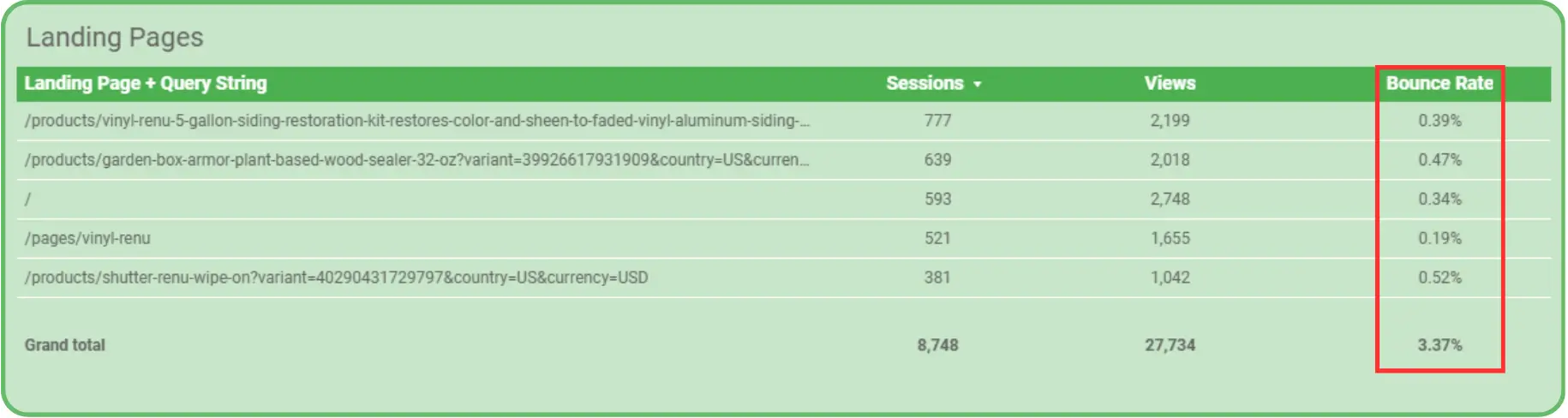
What is Bounce Rate?
The bounce rate is the percentage of visitors who arrive at a website and then leave without visiting any other pages. Or, in other terms, it happens when somebody immediately "bounces away" from the website.
The bounce rate is the percentage of visitors who arrive at a website and then leave without visiting any other pages. Or, in other terms, it happens when somebody immediately "bounces away" from the website.
•
•
High Bounce Rate: Most visitors leave right away. This may indicate irrelevant traffic, slow loading, or poor content.
High Bounce Rate: Most visitors leave right away. This may indicate irrelevant traffic, slow loading, or poor content.
•
•
Low Bounce Rate: Most visitors view multiple pages. This is generally seen as a sign of good, interesting, and relevant content.
Low Bounce Rate: Most visitors view multiple pages. This is generally seen as a sign of good, interesting, and relevant content.
How to Calculate Bounce Rate:
Bounce rate = (Single-page sessions ÷ Total sessions) × 100
Example: If 100 people land on your website and 50 exit after viewing one single page, your bounce rate stands at 50%.
Bounce rate = (Single-page sessions ÷ Total sessions) × 100
Example: If 100 people land on your website and 50 exit after viewing one single page, your bounce rate stands at 50%.
What is Engagement Rate?
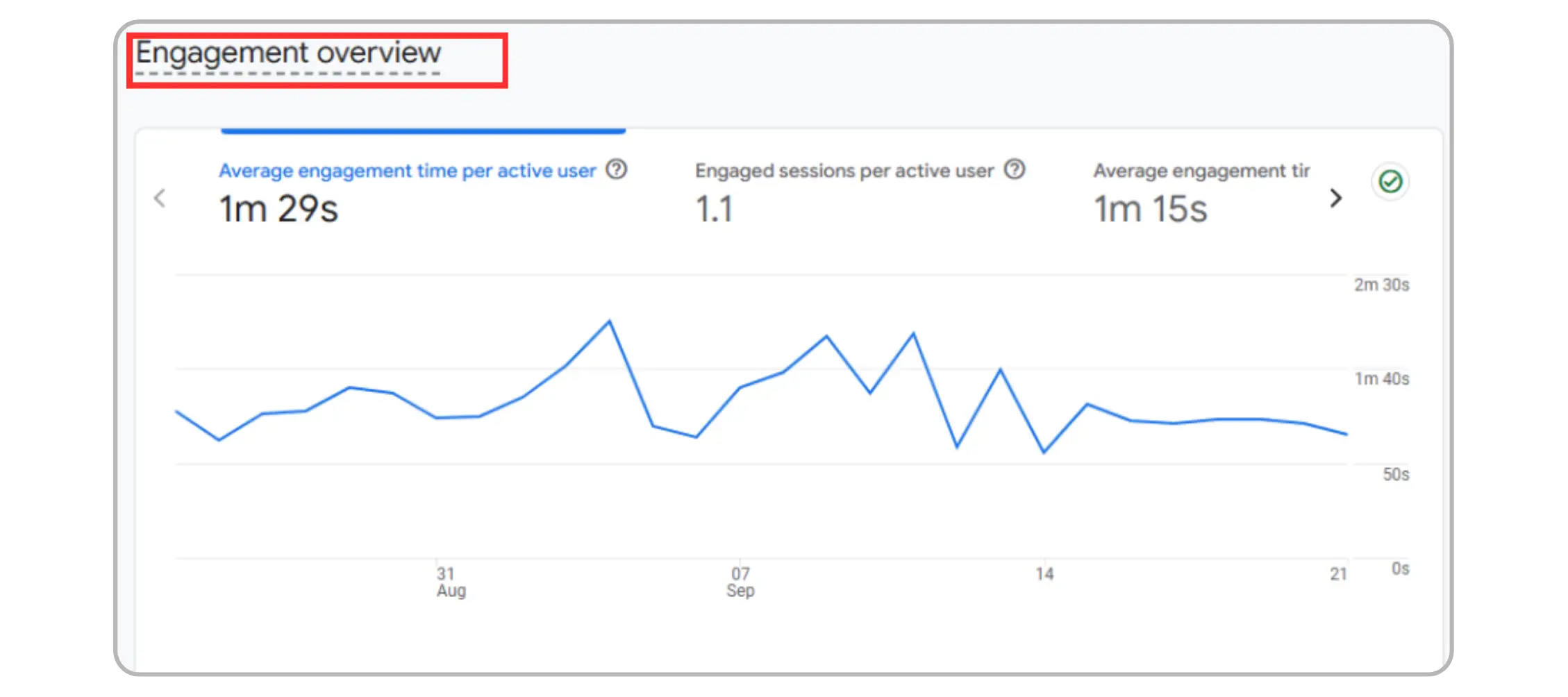
Engagement rate measures user interaction with the website. Where page visits are observed, it tracks other actions like:
Clicking on links
Watching videos
Filling out forms
Commenting or sharing content
Higher engagement means the audience finds value in your content and wants to search for more.
Engagement rate measures user interaction with the website. Where page visits are observed, it tracks other actions like:
Clicking on links
Watching videos
Filling out forms
Commenting or sharing content
Higher engagement means the audience finds value in your content and wants to search for more.
How to Calculate Engagement Rate:
Engagement Rate = (Number of Interactions / Number of Visitors) × 100
Engagement Rate = (Number of Interactions / Number of Visitors) × 100
Why Bounce Rate and Engagement Rate Matter?
Bounce and engagement rates monitoring can help you:
Bounce and engagement rates monitoring can help you:
•
•
User Experience: If bounce rates are high, your users might be able to find their way through site, or the site might be too slow, or that particular site could just be uninteresting to them. Engagement metrics will show you which types of content are able to hold visitors' interest.
User Experience: If bounce rates are high, your users might be able to find their way through site, or the site might be too slow, or that particular site could just be uninteresting to them. Engagement metrics will show you which types of content are able to hold visitors' interest.
•
•
Conversion: More engagement leads to more conversions, be it a product purchase or a newsletter sign-up.
Conversion: More engagement leads to more conversions, be it a product purchase or a newsletter sign-up.
•
•
Content: Recognizing strong pages and pages that require work.
Content: Recognizing strong pages and pages that require work.
•
•
SEO: Search engines rank sites higher that engage users. So, higher bounce and lower engagement will work against them.
SEO: Search engines rank sites higher that engage users. So, higher bounce and lower engagement will work against them.
Bounce Rate vs. Engagement Rate: Key Factors & How to Improve
Aspect
Aspect
Aspect
Aspect
Bounce Rate
Bounce Rate
Bounce Rate
Bounce Rate
Engagement Rate
Engagement Rate
Engagement Rate
Engagement Rate
What It Shows
What It Shows
What It Shows
% of visitors leaving after viewing only one page
% of visitors leaving after viewing only one page
% of visitors leaving after viewing only one page
How actively users interact with your content
How actively users interact with your content
How actively users interact with your content
Key Factors
Key Factors
Key Factors
Page load time (slow = higher bounce)
Content relevance (mismatch = exit)
Mobile optimization (poor = exit)
Navigation (confusing or broken links = exit)
Call-to-action placement (weak CTAs reduce engagement)
Page load time (slow = higher bounce)
Content relevance (mismatch = exit)
Mobile optimization (poor = exit)
Navigation (confusing or broken links = exit)
Call-to-action placement (weak CTAs reduce engagement)
Page load time (slow = higher bounce)
Content relevance (mismatch = exit)
Mobile optimization (poor = exit)
Navigation (confusing or broken links = exit)
Call-to-action placement (weak CTAs reduce engagement)
Content quality (informative, entertaining, visually appealing)
Website design (clean, easy to navigate)
Interactive elements (polls, quizzes, videos, comments)
Page speed (fast keeps visitors longer)
Internal linking (drives further exploration)
Content quality (informative, entertaining, visually appealing)
Website design (clean, easy to navigate)
Interactive elements (polls, quizzes, videos, comments)
Page speed (fast keeps visitors longer)
Internal linking (drives further exploration)
Content quality (informative, entertaining, visually appealing)
Website design (clean, easy to navigate)
Interactive elements (polls, quizzes, videos, comments)
Page speed (fast keeps visitors longer)
Internal linking (drives further exploration)
How to Improve
How to Improve
How to Improve
Increase page load speed (compress images, cache content, optimize CSS/JS)
Create clear, value-added information
Enhance mobile reliability
Simplify menus and buttons
Use clear CTAs to invite further action
Increase page load speed (compress images, cache content, optimize CSS/JS)
Create clear, value-added information
Enhance mobile reliability
Simplify menus and buttons
Use clear CTAs to invite further action
Increase page load speed (compress images, cache content, optimize CSS/JS)
Create clear, value-added information
Enhance mobile reliability
Simplify menus and buttons
Use clear CTAs to invite further action
Include multimedia content (infographics, GIFs, videos)
Add interactive features (polls, live chat, quizzes)
Strengthen internal linking
Personalize recommendations
Encourage sharing and comments
Include multimedia content (infographics, GIFs, videos)
Add interactive features (polls, live chat, quizzes)
Strengthen internal linking
Personalize recommendations
Encourage sharing and comments
Include multimedia content (infographics, GIFs, videos)
Add interactive features (polls, live chat, quizzes)
Strengthen internal linking
Personalize recommendations
Encourage sharing and comments
Tools to Monitor Bounce and Engagement Rates
•
•
Google Analytics: Tracks session duration, bounce rate, and page views.
Google Analytics: Tracks session duration, bounce rate, and page views.
•
•
Hotjar: Visualizes how visitors interact and heatmaps.
Hotjar: Visualizes how visitors interact and heatmaps.
•
•
HubSpot: Generates marketing reports and tracks activity and engagement.
HubSpot: Generates marketing reports and tracks activity and engagement.
Final Thoughts
Bounce rate and engagement rate are critical metrics that show how users interact with your website. High bounce rates or low engagement often indicate issues with page speed, navigation, or content relevance, which can negatively affect conversions and SEO.
By focusing on fast-loading, mobile-friendly websites, valuable and interactive content, clear calls-to-action, and internal linking, you can keep visitors engaged longer. Leveraging AI tools can help analyze behavior, personalize experiences, and optimize for better engagement and conversions.
Bounce rate and engagement rate are critical metrics that show how users interact with your website. High bounce rates or low engagement often indicate issues with page speed, navigation, or content relevance, which can negatively affect conversions and SEO.
By focusing on fast-loading, mobile-friendly websites, valuable and interactive content, clear calls-to-action, and internal linking, you can keep visitors engaged longer. Leveraging AI tools can help analyze behavior, personalize experiences, and optimize for better engagement and conversions.
Frequently Asked Questions (FAQs)
Frequently Asked Questions
What tools track bounce rate and engagement rate?

Google Analytics 4 (GA4), Google Search Console, Hotjar (heatmaps), and tools like Ahrefs/SEMrush track both. GA4 engagement reports are most comprehensive for modern analytics.
What causes a high bounce rate on a website?
A high bounce rate is usually caused by slow page speed, irrelevant content, poor mobile experience, confusing navigation, or too many pop-ups and ads that disrupt the user experience.
How is bounce rate different from engagement rate?
Bounce rate measures users who leave after viewing only one page, while engagement rate tracks how users interact with your site through clicks, scrolling, video views, form submissions, and other actions.
Does bounce rate directly affect SEO rankings?
Bounce rate itself is not a direct Google ranking factor, but it reflects user behavior. If users leave quickly without engagement, it can signal poor content quality or user experience, which may indirectly hurt rankings.
How can I reduce my website’s bounce rate?
You can reduce bounce rate by improving page speed, matching content with search intent, making your site mobile-friendly, using clear calls-to-action, and improving internal linking to guide users deeper into your site.
How can I increase website engagement?
Engagement improves with high-quality content, interactive elements like videos and quizzes, better design, strong CTAs, internal links, and personalized user experiences based on visitor behavior.
How does AI help improve engagement and conversions?
AI improves engagement by personalizing content, recommending products or articles, using chatbots for instant support, testing layouts through automated A/B testing, and predicting user behavior to optimize conversions.
What tools track bounce rate and engagement rate?
Google Analytics 4 (GA4), Google Search Console, Hotjar (heatmaps), and tools like Ahrefs/SEMrush track both. GA4 engagement reports are most comprehensive for modern analytics.
What causes a high bounce rate on a website?
A high bounce rate is usually caused by slow page speed, irrelevant content, poor mobile experience, confusing navigation, or too many pop-ups and ads that disrupt the user experience.
How is bounce rate different from engagement rate?
Bounce rate measures users who leave after viewing only one page, while engagement rate tracks how users interact with your site through clicks, scrolling, video views, form submissions, and other actions.
Does bounce rate directly affect SEO rankings?
Bounce rate itself is not a direct Google ranking factor, but it reflects user behavior. If users leave quickly without engagement, it can signal poor content quality or user experience, which may indirectly hurt rankings.
How can I reduce my website’s bounce rate?
You can reduce bounce rate by improving page speed, matching content with search intent, making your site mobile-friendly, using clear calls-to-action, and improving internal linking to guide users deeper into your site.
How can I increase website engagement?
Engagement improves with high-quality content, interactive elements like videos and quizzes, better design, strong CTAs, internal links, and personalized user experiences based on visitor behavior.
How does AI help improve engagement and conversions?
AI improves engagement by personalizing content, recommending products or articles, using chatbots for instant support, testing layouts through automated A/B testing, and predicting user behavior to optimize conversions.




Make Every Visitor Stay Longer and Engage More
Make Every Visitor Stay Longer and Engage More
Explore ways to improve engagement, reduce user drop-off, and create a better on-site experience that keeps visitors active.
Explore ways to improve engagement, reduce user drop-off, and create a better on-site experience that keeps visitors active.
Trusted by 1000+ Owners!
4.9/5 Ratings!
Share this article

Related Resources
Latest Blogs






Don’t miss our revenue growth tips!
Don’t miss our revenue growth tips!
Get expert marketing tips—straight to your inbox, like thousands of happy clients.
Get expert marketing tips—straight to your inbox, like thousands of happy clients.
Latest Blogs


































Ready to speak with an expert?
Data-Driven Marketing Agency That Elevates ROI
1100+
Websites Designed & Optimized to Convert
$280M+
Client Revenue Driven & Growing Strong
Discover how to skyrocket
your revenue today!
Trusted by 1000+ Owners!
Ready to speak with an expert?
Data-Driven Marketing Agency That Elevates ROI
1100+
Websites Designed & Optimized to Convert
$280M+
Client Revenue Driven & Growing Strong
Discover how to skyrocket
your revenue today!
Trusted by 1000+ Owners!
Want to skyrocket revenue?
4.9/5 Ratings!
Ready to speak with an expert?
Data-Driven Marketing Agency That Elevates ROI
1100+
Websites Designed & Optimized to Convert
$280M+
Client Revenue Driven & Growing Strong
Discover how to skyrocket
your revenue today!
Trusted by 1000+ Owners!
Call
Meet