How to Build Entity Authority for Your Brand: A Step-by-Step Guide for 2026
How to Build Entity Authority for Your Brand: A Step-by-Step Guide for 2026
Last Updated:
Table of Content
Case Studies



Indra Singh
Indra Singh
Indra Singh
SEO
SEO
SEO
8 Min Read
10 Min
8 Min Read
Entity authority is how clearly Google and AI systems understand your brand as a real, verified entity, not just a website with backlinks. To build it, you need a clean entity home page, a complete schema, Wikidata presence, a knowledge graph, consistent third-party citations, and entity-first content. Done right, this gets you cited in Google AI Overviews, ChatGPT answers, and Perplexity results, where most traditional SEO stops working.
That's just the overview. Now let's actually build it.
The "ten blue links" aren't disappearing, but they're shrinking. Google AI Overviews now dominate above-the-fold. ChatGPT has over 850 million active users weekly. Perplexity is pulling citations from sources most SEOs have never optimized for.
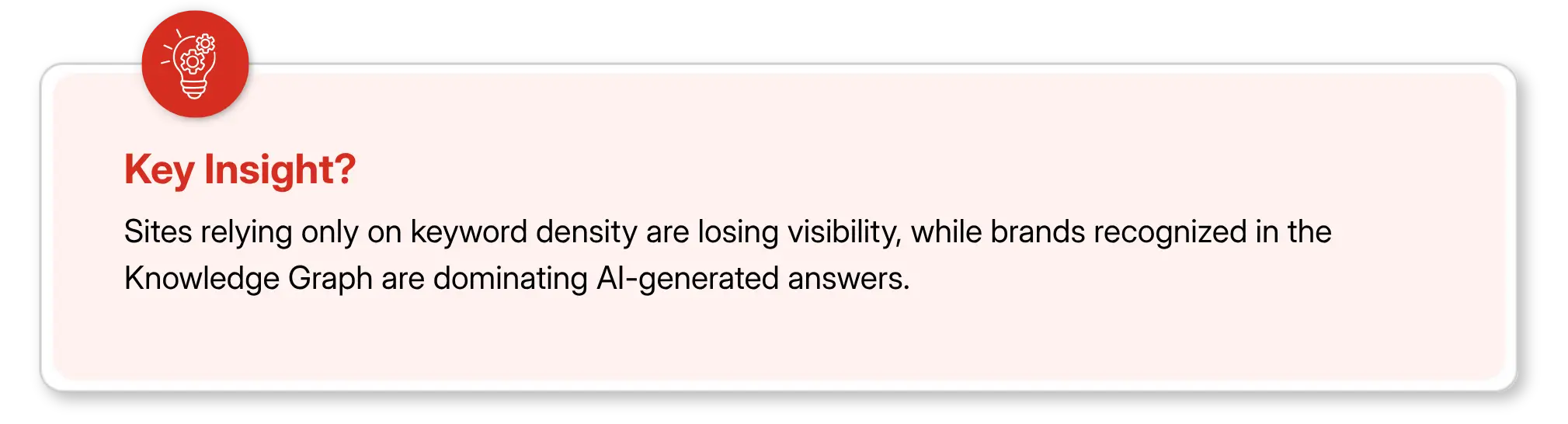
What drives those citations? Not backlinks. Not keyword density. Entity authority.
If AI systems don't have a coherent, verified picture of who your brand is and what it does, you simply won't appear in those answers, no matter how many pages you've published.
Here's how to change that.
What Is Entity Authority (and Why It's Not the Same as Domain Authority)
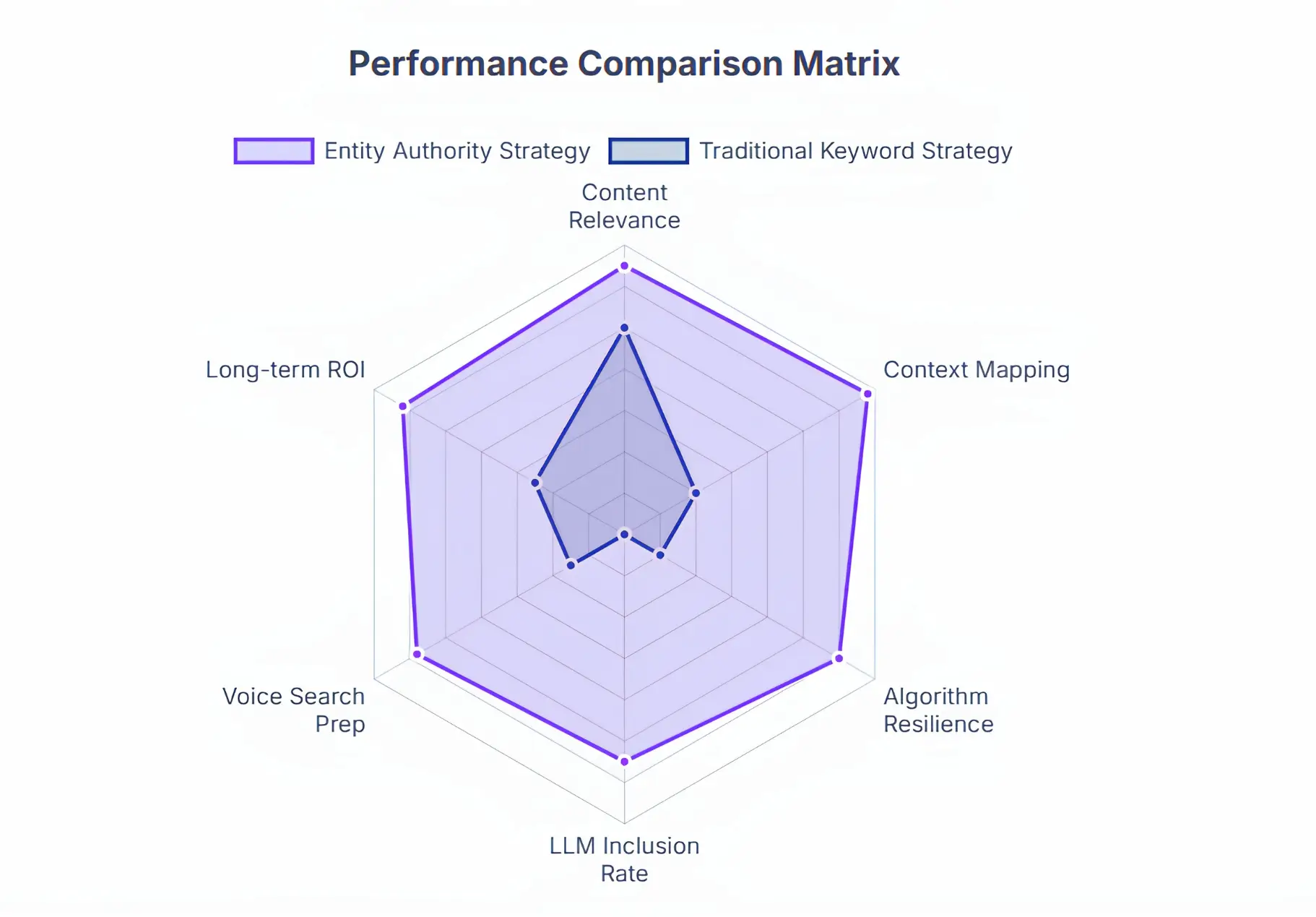
Domain authority measures link equity. Entity authority measures something different: how clearly a machine can understand your brand's identity, relationships, and relevance to a given query.
Think of it this way. When someone asks ChatGPT, "what's the best CRM for small businesses?" that answer doesn't come from keyword density. It comes from entity relationships, verified attributes, and corroborated authority signals. Google AI Overviews work the same way.
A brand can have modest domain authority but strong entity signals (a Wikidata entry, consistent sameAs markup, and citations from trusted sources) and outperform high-DA competitors in AI-generated summaries.
That gap exists. And most brands aren't closing it.
Step 1: Audit Your Brand's Current Entity Footprint
Before building anything, understand what search engines currently know (or don't know) about your brand.
Your entity audit should cover:
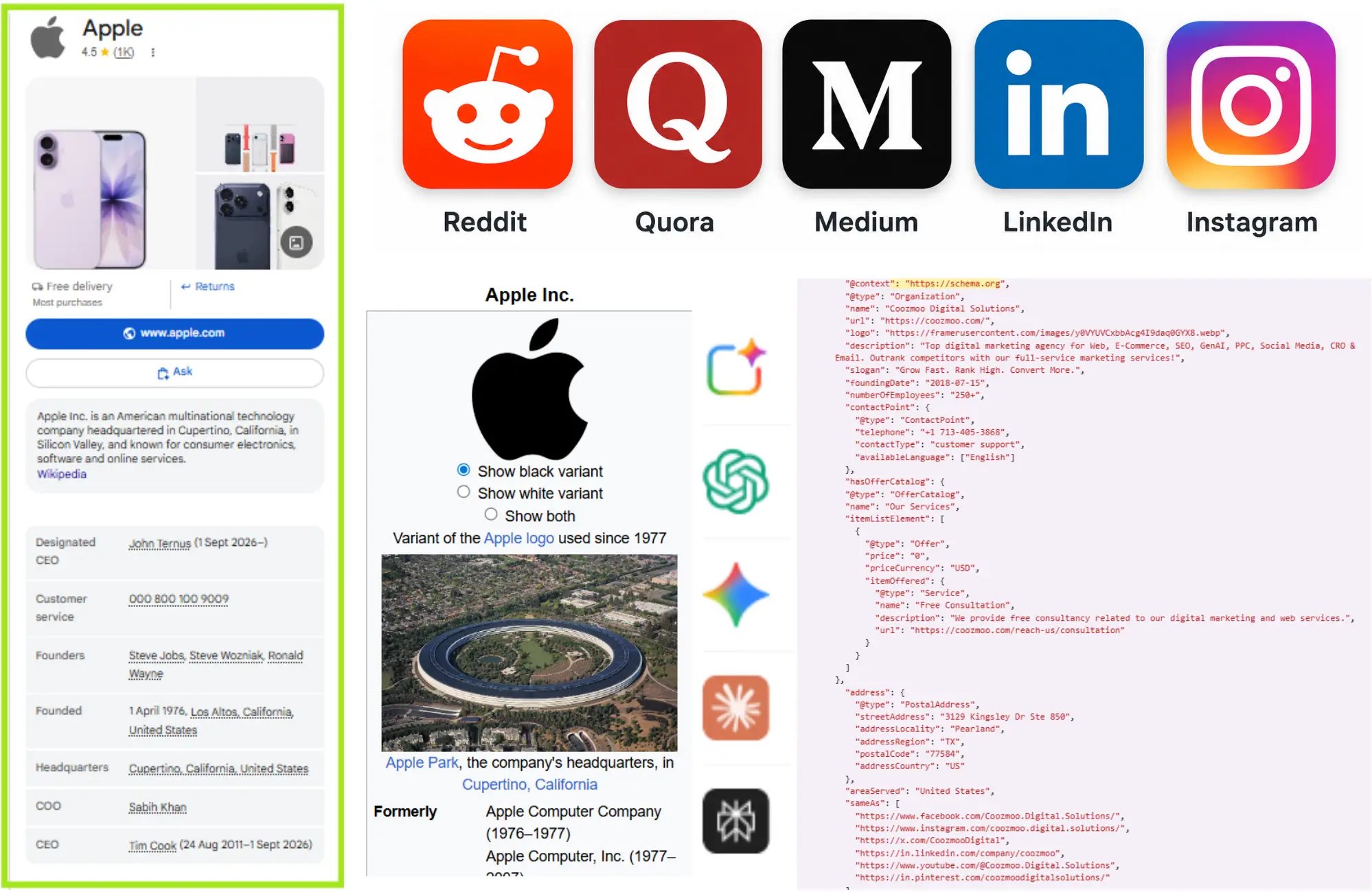
Knowledge Panel status: Does your brand have a Google Knowledge Panel? If yes, what information is populated? If not, that's your baseline problem.
Wikidata / Wikipedia presence: Is your brand referenced in any structured knowledge base? This is one of the strongest entity corroboration signals that exist.
Schema.org implementation: Open your homepage source code. Is there an Organization or LocalBusiness schema markup? Is it complete or skeletal?
Social and directory consistency: Search your brand name across LinkedIn, Crunchbase, industry directories, and press coverage. Is your name, description, and founding details consistent everywhere?
AI citation check - Ask ChatGPT, Perplexity, and Google's AI Overview about your brand or your category. Are you mentioned? Are competitors being cited instead?
This audit tells you exactly where the gaps are. Most brands find that their schema is either missing or incomplete, their third-party mentions are inconsistent, and AI systems have fragmented or no understanding of who they are.
Step 2: Build Your Entity Home Page
Your About page isn't a marketing page. In 2026, it's your entity home: the single authoritative source that defines your brand for search engines and AI systems.
It needs to do three things clearly:
Define who you are (brand name, what you do, who you serve, where you operate)
Establish what you're known for (core offering, industry, areas of expertise)
Point to corroborating sources (social profiles, press mentions, third-party listings)
What Your Entity Home Page Must Include
Declarative, structured language: Don't write it like a brochure. Write it like a knowledge graph entry. Not this: "We're passionate about transforming businesses through innovative solutions." This: "Acme Corp, is a B2B SaaS company founded in 2015, headquartered in Austin, Texas, specializing in inventory management software for e-commerce retailers. "The second version gives a machine everything it needs to index your brand correctly. Founding year, industry, location, offering, customer type. These become the attributes that knowledge graphs use.
Explicit entity attributes: Founding year, industry, founders, headquarters, core products/services. Don't assume these are obvious. Spell them out clearly on the page.
Outbound links to authoritative corroborators: Link to your LinkedIn, Crunchbase profile, Wikidata entry, industry body memberships, and major press mentions. This teaches search systems where to verify your existence independently.
Pillar page connections: Your entity home should link out to your core topic cluster pages. If you're a cybersecurity company, that means deep pages on endpoint security, threat detection, and compliance frameworks, not just a blog archive.
Step 3: Implement Advanced Schema Markup
Most brands either skip schema entirely or set up a basic version and forget it. Both approaches leave real entity authority on the table.
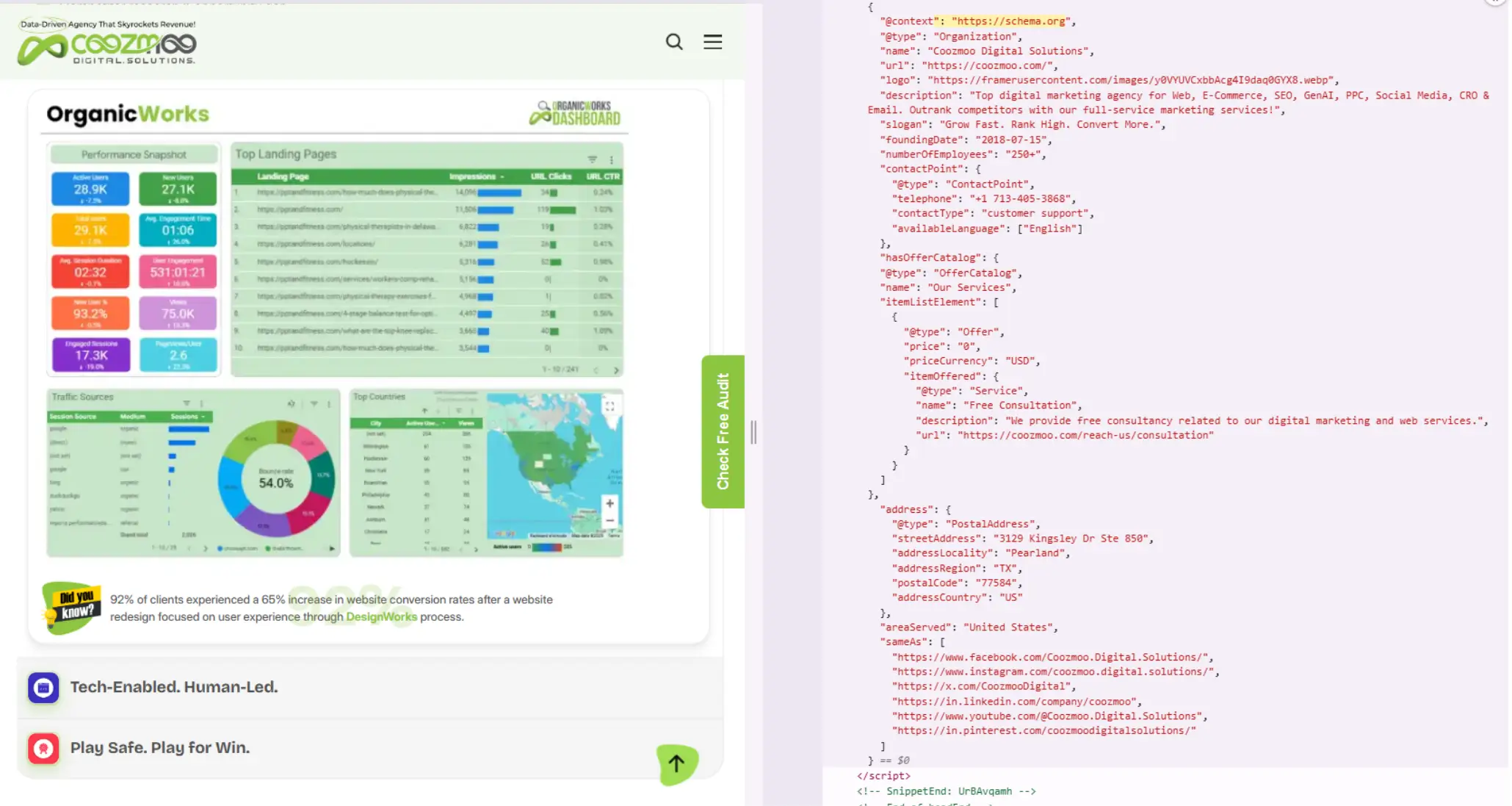
Organization schema: It acts like a digital business card, providing clear information about your brand's identity, contact details, and social presence. It gives search systems a structured declaration of who you are.
The key fields: @type, name, url, logo, description, foundingDate, and sameAs.
The “sameAs” Property Is Your Most Powerful Signal
Seriously. This is where most brands underinvest.
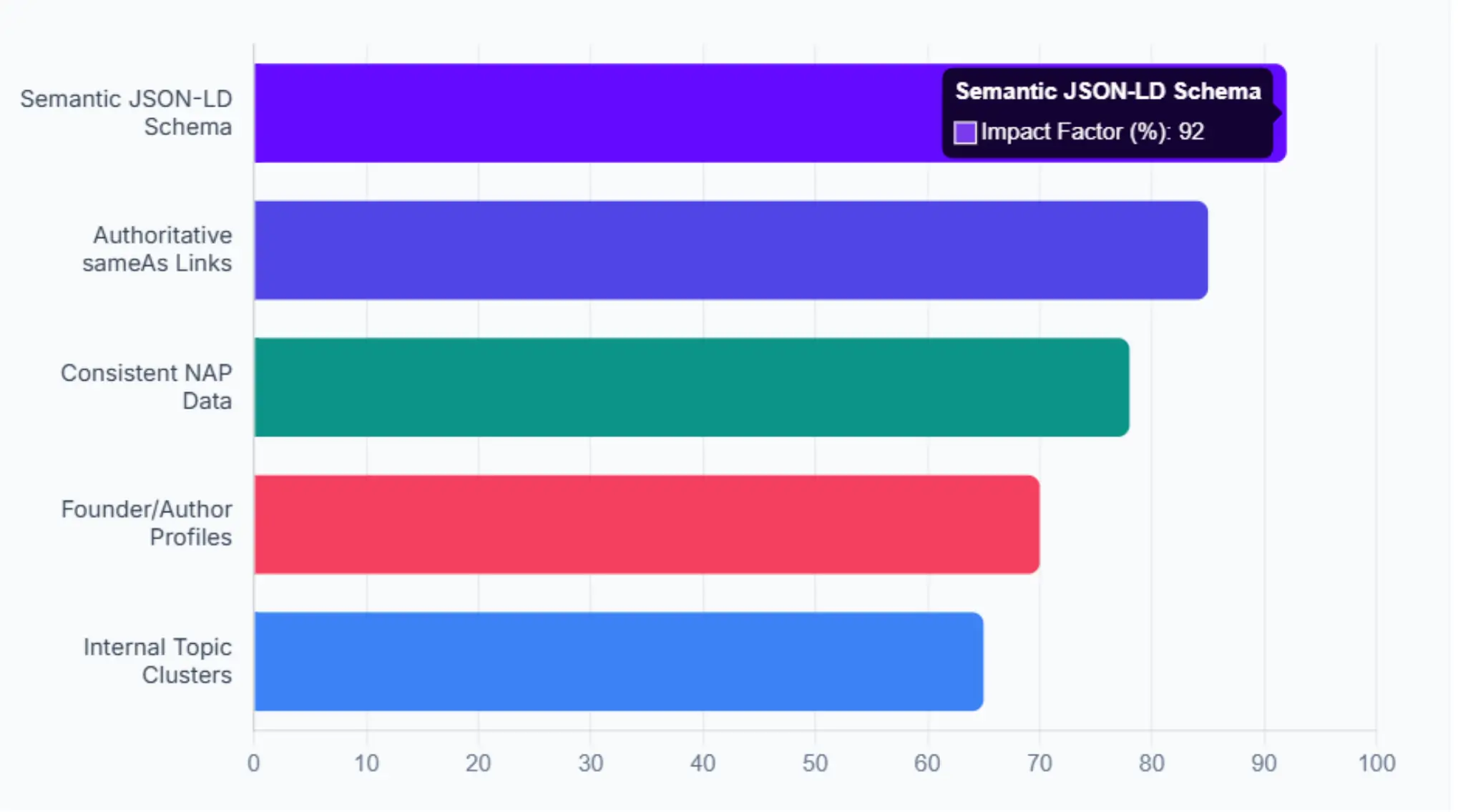
The “sameAs” property tells knowledge graphs: "This entity at this URL is the same entity as on LinkedIn, Wikidata, and Crunchbase." It's how search systems merge fragmented information about your brand into a coherent profile.
Every major profile your brand has (LinkedIn, Twitter/X, YouTube, Crunchbase, G2, Trustpilot, industry directories) should appear in your “sameAs” array. And critically, the name, description, and founding details on each of those platforms must match what's in your schema and on your entity home page.
Contradictions are red flags to knowledge graph systems. Consistent signals build trust.
Person Schema for Founders and Key Voices
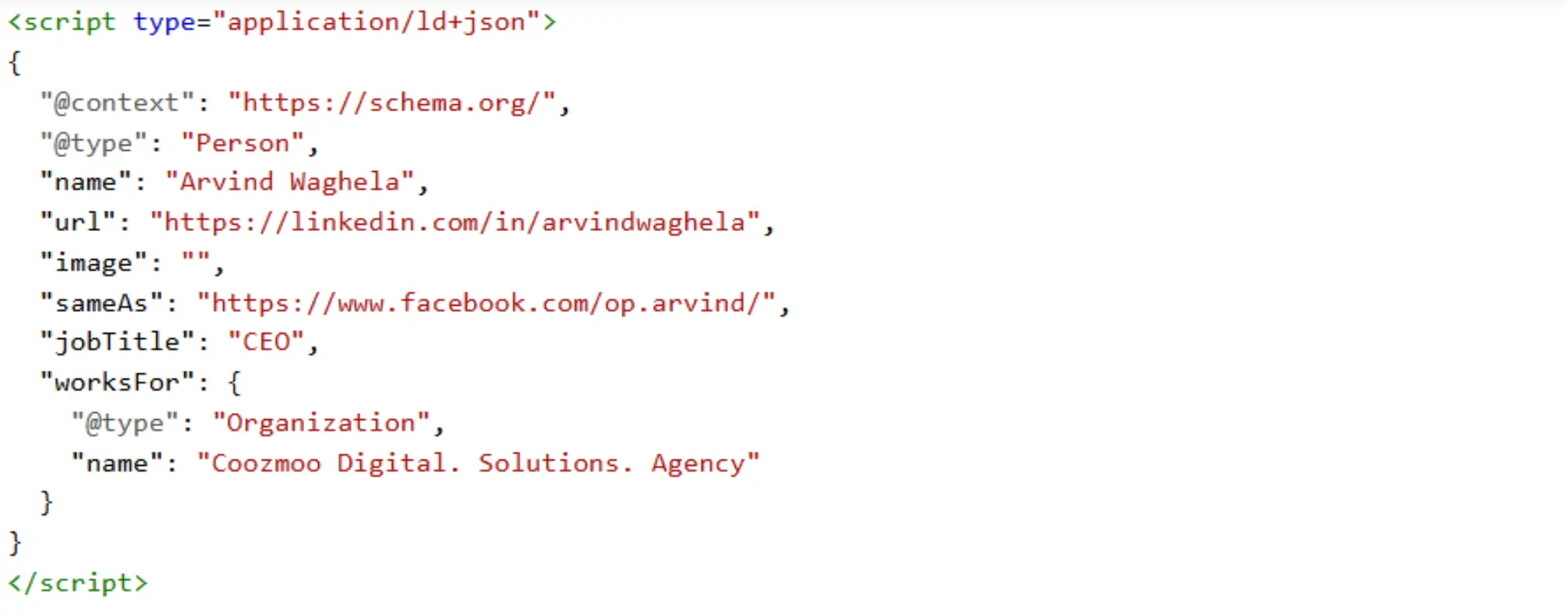
Don't skip your leadership team. If your CEO publishes thought leadership, implement the Person schema on their author pages, linking their name, job title, organization, and LinkedIn URL. This connects individual expertise to your brand entity and strengthens your overall E-E-A-T profile.
Step 4: Get Verified Across Authoritative External Sources
Schema tells search engines what you claim about yourself. Third-party verification tells them what independent sources confirm about you.
The gap between those two things is the trust gap. Closing it is what actually builds entity authority.
Priority Verification Sources for Brand Entity
Wikidata: The single most powerful entity verification source that feeds directly into Google's Knowledge Graph. If your brand qualifies (generally, established companies with documented third-party coverage), create or claim a Wikidata entry and ensure it's complete and consistent with your schema.
Industry-specific directories: Depending on your sector, G2 or Capterra (SaaS), Healthgrades (healthcare), Avvo (legal), and Houzz (home services). These authoritative vertical directories signal domain-specific entity legitimacy.
Press and earned media: Coverage in recognized publications (not just press releases on wire services) with your brand name, consistent description, and, ideally, links back to your entity home. This is digital PR functioning as entity corroboration, not just link building.
Google Business Profile: For any brand with a physical location, this is non-negotiable. It's one of Google's most important direct entity verification inputs.
ISBN, ISNI, and professional registries: For personal brands, academics, or authors, ISNI (International Standard Name Identifier) registration provides structured identity verification that feeds into knowledge graphs.
Step 5: Build Entity-First Content for the Answer Economy (GEO & AEO)
Your content strategy needs to shift from keyword-first to entity-first. That doesn't mean abandoning keywords. It means building content that establishes your brand's entity relationships, not just its keyword relevance.
What Entity-First Content Actually Does
Every piece of content you publish should do one or more of these:
Reinforce your brand's core entity attributes: Every article should consistently describe who you are in the same terms your schema uses.
Establish semantic relationships: Connect your brand entity to adjacent entities (industry terms, processes, partners, use cases) that belong in your knowledge space.
Answer entity-level questions: “What is [your brand]?", "Who founded [your brand]?", "What does [your brand] specialize in?" These seem obvious, but many brands don't have clear, crawlable answers to these anywhere on their site.
Attribute Mapping: The Practical Framework
For each topic cluster you publish in, build an attribute map. Then ensure your content, schema, and external profiles all reinforce the same attribute-value pairs.
Entity | Attribute | Value |
|---|---|---|
Your Brand | Industry | B2B SaaS |
Your Brand | Founded | 2015 |
Your Brand | Core Offering | Inventory management software |
Your Brand | Target Customer | E-commerce retailers |
Your Product | Category | Warehouse management |
Your Product | Integrations | Shopify, WooCommerce, Amazon |
AI systems extract exactly this kind of structured information when building their understanding of what your brand represents.
2. Structuring for Extractability and Citation
AI engines don't just rank pages. They extract from them. That means your content needs to be machine-readable, not just human-readable.
Content Attribute | Optimization Strategy | Reasoning for AI Retrieval |
|---|---|---|
Answer Placement | Front-load direct answers (top 40-60 words) | Increases the probability of being cited as a snippet |
Fact Density | Include a data point or statistic every 150 words | LLMs favor quantifiable specifics over generic prose |
Information Gain | Use proprietary data and firsthand insights. | Novelty math impacts brand inclusion in AI outputs |
Structure | Use HowTo, and Table formats | Facilitates structured data extraction for RAG |
Recency | Update content monthly | AI systems weight freshness as a trust signal |
Step 6: Strengthen E-E-A-T Through Digital PR and Thought Leadership
Google E-E-A-T (Experience, Expertise, Authoritativeness, Trustworthiness) has always been about more than content quality. In the entity era, E-E-A-T signals feed directly into how authoritative search systems believe your brand entity to be.
Practical E-E-A-T Actions for Entity Building
Author bylines with structured bios: every piece of content attributed to a named author should include a bio page with Person schema, linking their LinkedIn, any published works, and credentials. Named authors with verified expertise boost the entity authority of the organization they write for.
Digital PR for entity corroboration: Earned coverage in industry publications, podcast appearances, and speaking engagements documented online, these aren't just links. They're entity mentions that teach AI systems your brand is recognized as an authority within a specific domain.
Case studies with named outcomes: Documented, specific results attributed to your brand create verifiable expertise claims that support your entity's authority in a topic space.
Consistency across all content: The worst thing for entity authority is brand inconsistency: different descriptions of what you do, different target markets described in different pieces, different brand names (abbreviations, legal name vs. trading name) used interchangeably without markup to connect them.
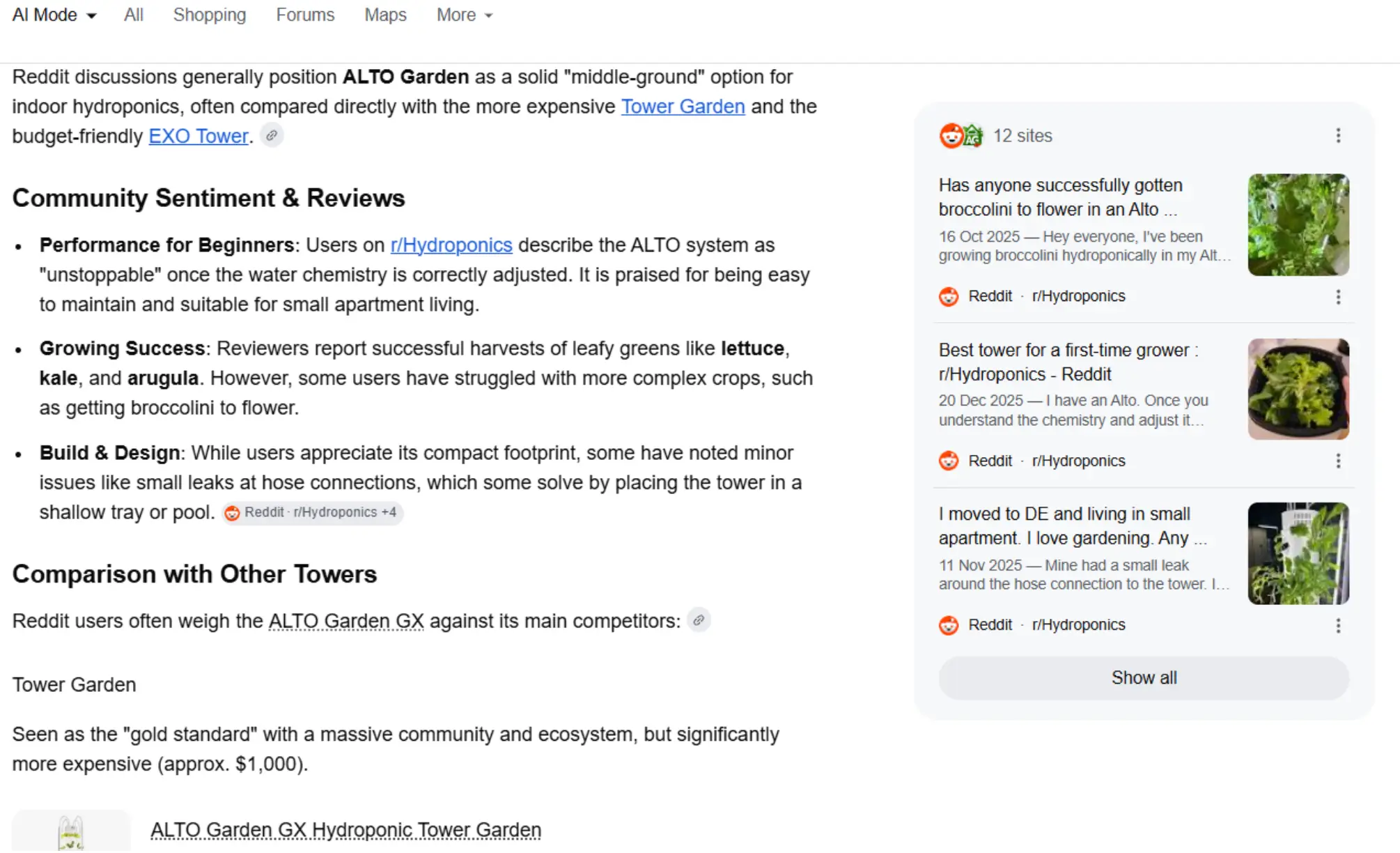
Reddit and Community Mentions: Reddit has emerged as one of the most influential platforms for AI search visibility. Google and other AI engines frequently cite Reddit threads because they represent authentic, community-driven opinions. Reddit accounts for approximately 21% of citations in Google AI summaries.
An effective Reddit strategy involves:
Audit Existing Threads: Identify Reddit threads that already rank in Google or feed into AI responses.
Value-Driven Engagement: Participate in discussions as a helpful expert rather than a direct marketer.
Transparent Brand Profiles: Use official accounts with a history of natural participation to avoid bans and build trust.
Step 7: Monitor and Maintain Your Entity Authority
Entity authority isn't a one-time setup. It requires active governance.
Ongoing Monitoring Checklist
Monthly AI citation audit: Ask the major AI engines about your brand and your category. Are you being cited? Is the information accurate? AI systems can perpetuate outdated or incorrect brand information if you don't actively correct it.
Schema validation: Use Google's Rich Results Test and Schema.org validator quarterly. Schema errors silently kill your entity signals.
Knowledge Panel monitoring: Watch your Google Knowledge Panel for incorrect information. You can suggest corrections, and the cleaner your entity home and schema, the more control you have.
sameAs link health: Broken links in your sameAs array are a hidden problem. If your Crunchbase URL changes or a social profile moves, your entity connections break.
Competitor entity benchmarking: Periodically check whether competitors are appearing in AI answers for your core category terms. If they are and you're not, that's your signal to diagnose and close the authority gap.
Entity Brand Authority Is the New SEO Foundation
Here's the honest summary: keyword rankings still matter for click-based organic traffic. But appearing in AI Overviews, being cited by ChatGPT, and showing up in Perplexity's sourced answers are driven almost entirely by entity authority.
Fewer than 25% of the most-mentioned brands in AI answers are also the most-sourced. That gap exists because most brands are still optimizing for last decade's search model.
The brands closing that gap are the ones with a properly built entity home, comprehensive schema, verified external presence, and entity-first content. Not necessarily the ones with the highest DA or the most backlinks.
Start with the audit. Fix the schema. Build the Entity Home. Get verified externally. Entity SEO. Let your content do the relationship-building work that compounds over time.
That's not a complicated strategy. It's just one most brands haven't executed yet.
FAQs
What's the difference between entity authority and domain authority?

Domain authority measures backlink quantity and quality. Entity authority measures how clearly search engines and AI systems understand your brand as a distinct, verified entity with defined attributes and relationships. A brand can have modest domain authority and strong entity authority, and in AI-driven search, entity authority increasingly determines who gets cited.
Do I need a Wikipedia page to build entity authority?
Not necessarily. Wikipedia is a strong signal, but Wikidata is more important and has a much lower barrier to entry. Combined with solid schema markup, consistent third-party profiles, and authoritative press coverage, brands can build meaningful entity authority without a Wikipedia article.
How long does it take to build entity authority?
Technical setup schema and entity home page takes days to weeks. Recognition by knowledge graphs and AI systems typically takes 3 to 6 months of consistent signals. Third-party corroboration through press and directories accumulates over time. Realistically, expect 6 to 12 months for meaningful AI visibility impact.
What schema type should I use for my brand?
For most businesses, Organization is the correct base type. Use LocalBusiness (or a more specific subtype like Medical Organization or Legal Service) if you serve customers at a physical location. Use Person for personal brands. Always include sameAs regardless of schema type it's the most critical property for entity connection.
Can entity authority help with Google's AI Overviews specifically?
Yes. Google AI Overviews pull from sources the system has identified as authoritative entities on a topic. Brands with clear entity definitions corroborated by schema, knowledge graph presence, and third-party mentions are more likely to be selected as cited sources in AI Overviews for relevant queries.
Entity authority is how clearly Google and AI systems understand your brand as a real, verified entity, not just a website with backlinks. To build it, you need a clean entity home page, a complete schema, Wikidata presence, a knowledge graph, consistent third-party citations, and entity-first content. Done right, this gets you cited in Google AI Overviews, ChatGPT answers, and Perplexity results, where most traditional SEO stops working.
That's just the overview. Now let's actually build it.
The "ten blue links" aren't disappearing, but they're shrinking. Google AI Overviews now dominate above-the-fold. ChatGPT has over 850 million active users weekly. Perplexity is pulling citations from sources most SEOs have never optimized for.
What drives those citations? Not backlinks. Not keyword density. Entity authority.
If AI systems don't have a coherent, verified picture of who your brand is and what it does, you simply won't appear in those answers, no matter how many pages you've published.
Here's how to change that.
What Is Entity Authority (and Why It's Not the Same as Domain Authority)
Domain authority measures link equity. Entity authority measures something different: how clearly a machine can understand your brand's identity, relationships, and relevance to a given query.
Think of it this way. When someone asks ChatGPT, "what's the best CRM for small businesses?" that answer doesn't come from keyword density. It comes from entity relationships, verified attributes, and corroborated authority signals. Google AI Overviews work the same way.
A brand can have modest domain authority but strong entity signals (a Wikidata entry, consistent sameAs markup, and citations from trusted sources) and outperform high-DA competitors in AI-generated summaries.
That gap exists. And most brands aren't closing it.
Step 1: Audit Your Brand's Current Entity Footprint
Before building anything, understand what search engines currently know (or don't know) about your brand.
Your entity audit should cover:
Knowledge Panel status: Does your brand have a Google Knowledge Panel? If yes, what information is populated? If not, that's your baseline problem.
Wikidata / Wikipedia presence: Is your brand referenced in any structured knowledge base? This is one of the strongest entity corroboration signals that exist.
Schema.org implementation: Open your homepage source code. Is there an Organization or LocalBusiness schema markup? Is it complete or skeletal?
Social and directory consistency: Search your brand name across LinkedIn, Crunchbase, industry directories, and press coverage. Is your name, description, and founding details consistent everywhere?
AI citation check - Ask ChatGPT, Perplexity, and Google's AI Overview about your brand or your category. Are you mentioned? Are competitors being cited instead?
This audit tells you exactly where the gaps are. Most brands find that their schema is either missing or incomplete, their third-party mentions are inconsistent, and AI systems have fragmented or no understanding of who they are.
Step 2: Build Your Entity Home Page
Your About page isn't a marketing page. In 2026, it's your entity home: the single authoritative source that defines your brand for search engines and AI systems.
It needs to do three things clearly:
Define who you are (brand name, what you do, who you serve, where you operate)
Establish what you're known for (core offering, industry, areas of expertise)
Point to corroborating sources (social profiles, press mentions, third-party listings)
What Your Entity Home Page Must Include
Declarative, structured language: Don't write it like a brochure. Write it like a knowledge graph entry. Not this: "We're passionate about transforming businesses through innovative solutions." This: "Acme Corp, is a B2B SaaS company founded in 2015, headquartered in Austin, Texas, specializing in inventory management software for e-commerce retailers. "The second version gives a machine everything it needs to index your brand correctly. Founding year, industry, location, offering, customer type. These become the attributes that knowledge graphs use.
Explicit entity attributes: Founding year, industry, founders, headquarters, core products/services. Don't assume these are obvious. Spell them out clearly on the page.
Outbound links to authoritative corroborators: Link to your LinkedIn, Crunchbase profile, Wikidata entry, industry body memberships, and major press mentions. This teaches search systems where to verify your existence independently.
Pillar page connections: Your entity home should link out to your core topic cluster pages. If you're a cybersecurity company, that means deep pages on endpoint security, threat detection, and compliance frameworks, not just a blog archive.
Step 3: Implement Advanced Schema Markup
Most brands either skip schema entirely or set up a basic version and forget it. Both approaches leave real entity authority on the table.
Organization schema: It acts like a digital business card, providing clear information about your brand's identity, contact details, and social presence. It gives search systems a structured declaration of who you are.
The key fields: @type, name, url, logo, description, foundingDate, and sameAs.
The “sameAs” Property Is Your Most Powerful Signal
Seriously. This is where most brands underinvest.
The “sameAs” property tells knowledge graphs: "This entity at this URL is the same entity as on LinkedIn, Wikidata, and Crunchbase." It's how search systems merge fragmented information about your brand into a coherent profile.
Every major profile your brand has (LinkedIn, Twitter/X, YouTube, Crunchbase, G2, Trustpilot, industry directories) should appear in your “sameAs” array. And critically, the name, description, and founding details on each of those platforms must match what's in your schema and on your entity home page.
Contradictions are red flags to knowledge graph systems. Consistent signals build trust.
Person Schema for Founders and Key Voices
Don't skip your leadership team. If your CEO publishes thought leadership, implement the Person schema on their author pages, linking their name, job title, organization, and LinkedIn URL. This connects individual expertise to your brand entity and strengthens your overall E-E-A-T profile.
Step 4: Get Verified Across Authoritative External Sources
Schema tells search engines what you claim about yourself. Third-party verification tells them what independent sources confirm about you.
The gap between those two things is the trust gap. Closing it is what actually builds entity authority.
Priority Verification Sources for Brand Entity
Wikidata: The single most powerful entity verification source that feeds directly into Google's Knowledge Graph. If your brand qualifies (generally, established companies with documented third-party coverage), create or claim a Wikidata entry and ensure it's complete and consistent with your schema.
Industry-specific directories: Depending on your sector, G2 or Capterra (SaaS), Healthgrades (healthcare), Avvo (legal), and Houzz (home services). These authoritative vertical directories signal domain-specific entity legitimacy.
Press and earned media: Coverage in recognized publications (not just press releases on wire services) with your brand name, consistent description, and, ideally, links back to your entity home. This is digital PR functioning as entity corroboration, not just link building.
Google Business Profile: For any brand with a physical location, this is non-negotiable. It's one of Google's most important direct entity verification inputs.
ISBN, ISNI, and professional registries: For personal brands, academics, or authors, ISNI (International Standard Name Identifier) registration provides structured identity verification that feeds into knowledge graphs.
Step 5: Build Entity-First Content for the Answer Economy (GEO & AEO)
Your content strategy needs to shift from keyword-first to entity-first. That doesn't mean abandoning keywords. It means building content that establishes your brand's entity relationships, not just its keyword relevance.
What Entity-First Content Actually Does
Every piece of content you publish should do one or more of these:
Reinforce your brand's core entity attributes: Every article should consistently describe who you are in the same terms your schema uses.
Establish semantic relationships: Connect your brand entity to adjacent entities (industry terms, processes, partners, use cases) that belong in your knowledge space.
Answer entity-level questions: “What is [your brand]?", "Who founded [your brand]?", "What does [your brand] specialize in?" These seem obvious, but many brands don't have clear, crawlable answers to these anywhere on their site.
Attribute Mapping: The Practical Framework
For each topic cluster you publish in, build an attribute map. Then ensure your content, schema, and external profiles all reinforce the same attribute-value pairs.
Entity | Attribute | Value |
|---|---|---|
Your Brand | Industry | B2B SaaS |
Your Brand | Founded | 2015 |
Your Brand | Core Offering | Inventory management software |
Your Brand | Target Customer | E-commerce retailers |
Your Product | Category | Warehouse management |
Your Product | Integrations | Shopify, WooCommerce, Amazon |
AI systems extract exactly this kind of structured information when building their understanding of what your brand represents.
2. Structuring for Extractability and Citation
AI engines don't just rank pages. They extract from them. That means your content needs to be machine-readable, not just human-readable.
Content Attribute | Optimization Strategy | Reasoning for AI Retrieval |
|---|---|---|
Answer Placement | Front-load direct answers (top 40-60 words) | Increases the probability of being cited as a snippet |
Fact Density | Include a data point or statistic every 150 words | LLMs favor quantifiable specifics over generic prose |
Information Gain | Use proprietary data and firsthand insights. | Novelty math impacts brand inclusion in AI outputs |
Structure | Use HowTo, and Table formats | Facilitates structured data extraction for RAG |
Recency | Update content monthly | AI systems weight freshness as a trust signal |
Step 6: Strengthen E-E-A-T Through Digital PR and Thought Leadership
Google E-E-A-T (Experience, Expertise, Authoritativeness, Trustworthiness) has always been about more than content quality. In the entity era, E-E-A-T signals feed directly into how authoritative search systems believe your brand entity to be.
Practical E-E-A-T Actions for Entity Building
Author bylines with structured bios: every piece of content attributed to a named author should include a bio page with Person schema, linking their LinkedIn, any published works, and credentials. Named authors with verified expertise boost the entity authority of the organization they write for.
Digital PR for entity corroboration: Earned coverage in industry publications, podcast appearances, and speaking engagements documented online, these aren't just links. They're entity mentions that teach AI systems your brand is recognized as an authority within a specific domain.
Case studies with named outcomes: Documented, specific results attributed to your brand create verifiable expertise claims that support your entity's authority in a topic space.
Consistency across all content: The worst thing for entity authority is brand inconsistency: different descriptions of what you do, different target markets described in different pieces, different brand names (abbreviations, legal name vs. trading name) used interchangeably without markup to connect them.
Reddit and Community Mentions: Reddit has emerged as one of the most influential platforms for AI search visibility. Google and other AI engines frequently cite Reddit threads because they represent authentic, community-driven opinions. Reddit accounts for approximately 21% of citations in Google AI summaries.
An effective Reddit strategy involves:
Audit Existing Threads: Identify Reddit threads that already rank in Google or feed into AI responses.
Value-Driven Engagement: Participate in discussions as a helpful expert rather than a direct marketer.
Transparent Brand Profiles: Use official accounts with a history of natural participation to avoid bans and build trust.
Step 7: Monitor and Maintain Your Entity Authority
Entity authority isn't a one-time setup. It requires active governance.
Ongoing Monitoring Checklist
Monthly AI citation audit: Ask the major AI engines about your brand and your category. Are you being cited? Is the information accurate? AI systems can perpetuate outdated or incorrect brand information if you don't actively correct it.
Schema validation: Use Google's Rich Results Test and Schema.org validator quarterly. Schema errors silently kill your entity signals.
Knowledge Panel monitoring: Watch your Google Knowledge Panel for incorrect information. You can suggest corrections, and the cleaner your entity home and schema, the more control you have.
sameAs link health: Broken links in your sameAs array are a hidden problem. If your Crunchbase URL changes or a social profile moves, your entity connections break.
Competitor entity benchmarking: Periodically check whether competitors are appearing in AI answers for your core category terms. If they are and you're not, that's your signal to diagnose and close the authority gap.
Entity Brand Authority Is the New SEO Foundation
Here's the honest summary: keyword rankings still matter for click-based organic traffic. But appearing in AI Overviews, being cited by ChatGPT, and showing up in Perplexity's sourced answers are driven almost entirely by entity authority.
Fewer than 25% of the most-mentioned brands in AI answers are also the most-sourced. That gap exists because most brands are still optimizing for last decade's search model.
The brands closing that gap are the ones with a properly built entity home, comprehensive schema, verified external presence, and entity-first content. Not necessarily the ones with the highest DA or the most backlinks.
Start with the audit. Fix the schema. Build the Entity Home. Get verified externally. Entity SEO. Let your content do the relationship-building work that compounds over time.
That's not a complicated strategy. It's just one most brands haven't executed yet.
FAQs
What's the difference between entity authority and domain authority?
Domain authority measures backlink quantity and quality. Entity authority measures how clearly search engines and AI systems understand your brand as a distinct, verified entity with defined attributes and relationships. A brand can have modest domain authority and strong entity authority, and in AI-driven search, entity authority increasingly determines who gets cited.
Do I need a Wikipedia page to build entity authority?
Not necessarily. Wikipedia is a strong signal, but Wikidata is more important and has a much lower barrier to entry. Combined with solid schema markup, consistent third-party profiles, and authoritative press coverage, brands can build meaningful entity authority without a Wikipedia article.
How long does it take to build entity authority?
Technical setup schema and entity home page takes days to weeks. Recognition by knowledge graphs and AI systems typically takes 3 to 6 months of consistent signals. Third-party corroboration through press and directories accumulates over time. Realistically, expect 6 to 12 months for meaningful AI visibility impact.
What schema type should I use for my brand?
For most businesses, Organization is the correct base type. Use LocalBusiness (or a more specific subtype like Medical Organization or Legal Service) if you serve customers at a physical location. Use Person for personal brands. Always include sameAs regardless of schema type it's the most critical property for entity connection.
Can entity authority help with Google's AI Overviews specifically?
Yes. Google AI Overviews pull from sources the system has identified as authoritative entities on a topic. Brands with clear entity definitions corroborated by schema, knowledge graph presence, and third-party mentions are more likely to be selected as cited sources in AI Overviews for relevant queries.



Summarize with AI


Want to Skyrocket Revenue? Get a Free Audit Today!
Want to Skyrocket Revenue? Get a Free Audit Today!



4.9/5 Ratings!


Don’t miss our revenue growth tips!
Get expert marketing tips—straight to your inbox, like thousands of happy clients.
Don’t miss our revenue growth tips!
Get expert marketing tips—straight to your inbox, like thousands of happy clients.
Don’t miss our revenue growth tips!
Don’t miss our revenue growth tips!
Get expert marketing tips—straight to your inbox, like thousands of happy clients.
Relevant Blogs on Organic SEO
Relevant Blogs on Organic SEO
Unlock data-driven insights in Organic SEO—explore our featured blogs and skyrocket your revenue before your competitors do.
Unlock data-driven insights in Organic SEO—explore our featured blogs and skyrocket your revenue before your competitors do.

SEO
Sep 21, 2026
5 Min Read
Audience-First SEO: How to Rank by Putting Readers First
SEO
Sep 21, 2026
5 Min Read
Audience-First SEO: How to Rank by Putting Readers First
SEO
Sep 21, 2026
5 Min Read
Audience-First SEO: How to Rank by Putting Readers First

SEO
Sep 19, 2026
5 Min Read
How to Add SEO Keywords to Your Website: Where and How
SEO
Sep 19, 2026
5 Min Read
How to Add SEO Keywords to Your Website: Where and How
SEO
Sep 19, 2026
5 Min Read
How to Add SEO Keywords to Your Website: Where and How

SEO
Sep 18, 2026
5 Min Read
How XML Sitemaps Help Search Engines Discover New Pages
SEO
Sep 18, 2026
5 Min Read
How XML Sitemaps Help Search Engines Discover New Pages
SEO
Sep 18, 2026
5 Min Read
How XML Sitemaps Help Search Engines Discover New Pages









Ready to speak with an expert?
Data-Driven Marketing Agency That Elevates ROI
1100+
Websites Designed & Optimized to Convert
$280M+
Client Revenue Driven & Growing Strong
Discover how to skyrocket
your revenue today!
Trusted by 1000+ Owners!
Ready to speak with an expert?
Data-Driven Marketing Agency That Elevates ROI
1100+
Websites Designed & Optimized to Convert
$280M+
Client Revenue Driven & Growing Strong
Discover how to skyrocket
your revenue today!
Trusted by 1000+ Owners!
Want to skyrocket revenue?
4.9/5 Ratings!
Ready to speak with an expert?
Data-Driven Marketing Agency That Elevates ROI
1100+
Websites Designed & Optimized to Convert
$280M+
Client Revenue Driven & Growing Strong
Discover how to skyrocket
your revenue today!
Trusted by 1000+ Owners!
Call
Meet