Which Industries Are Seeing the Biggest AI Search Disruption?
Which Industries Are Seeing the Biggest AI Search Disruption?
Last Updated:
Table of Content
Case Studies
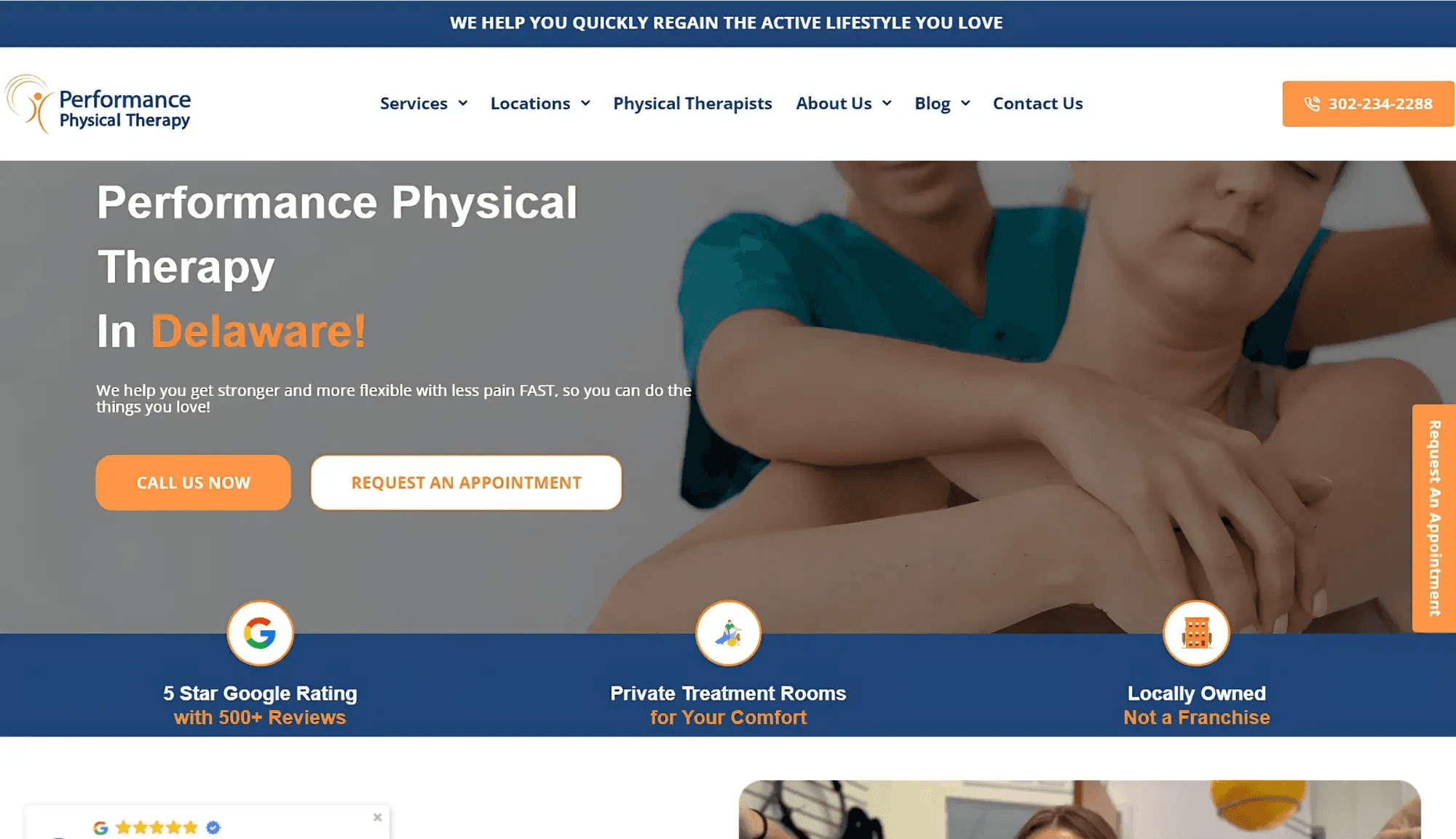


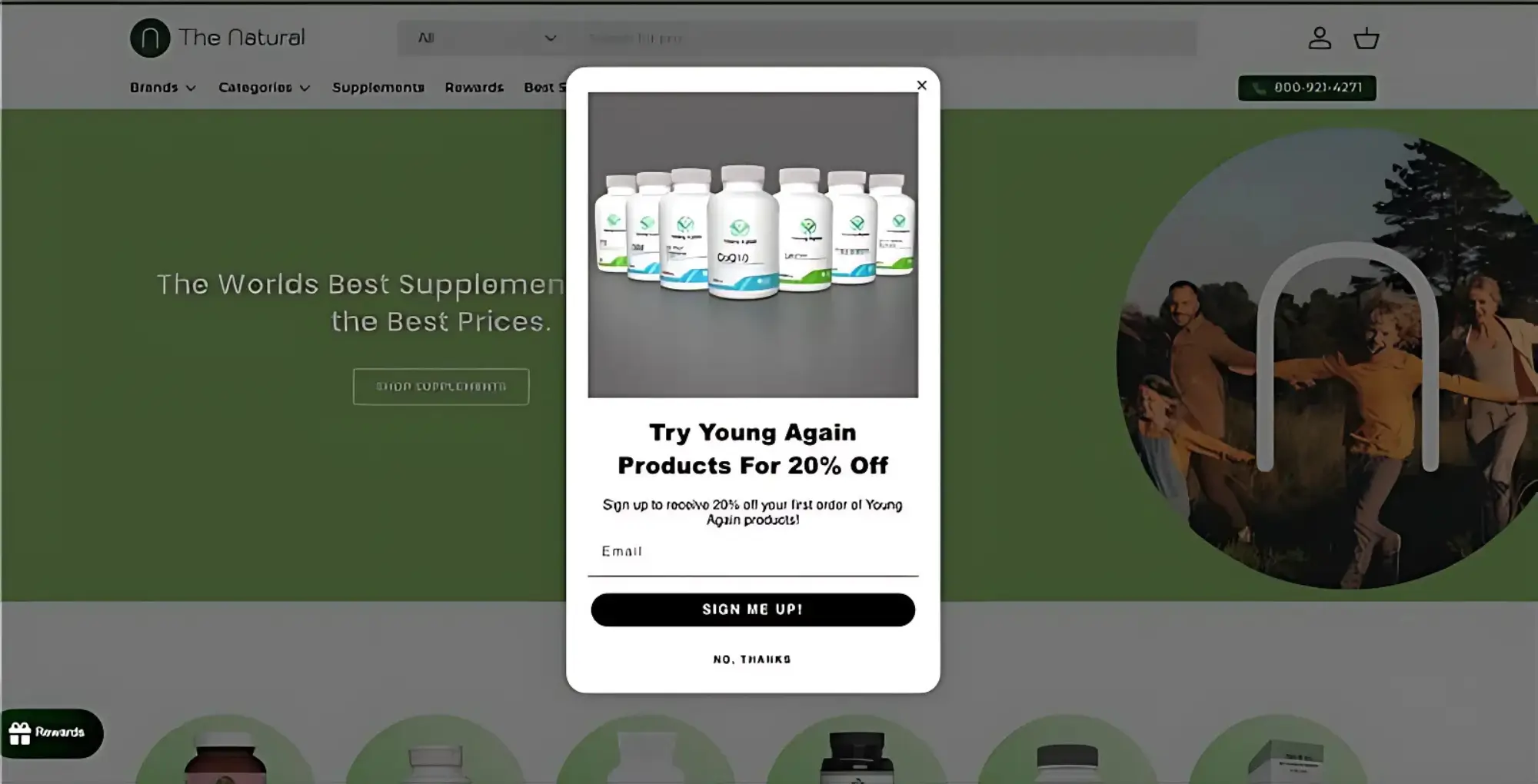
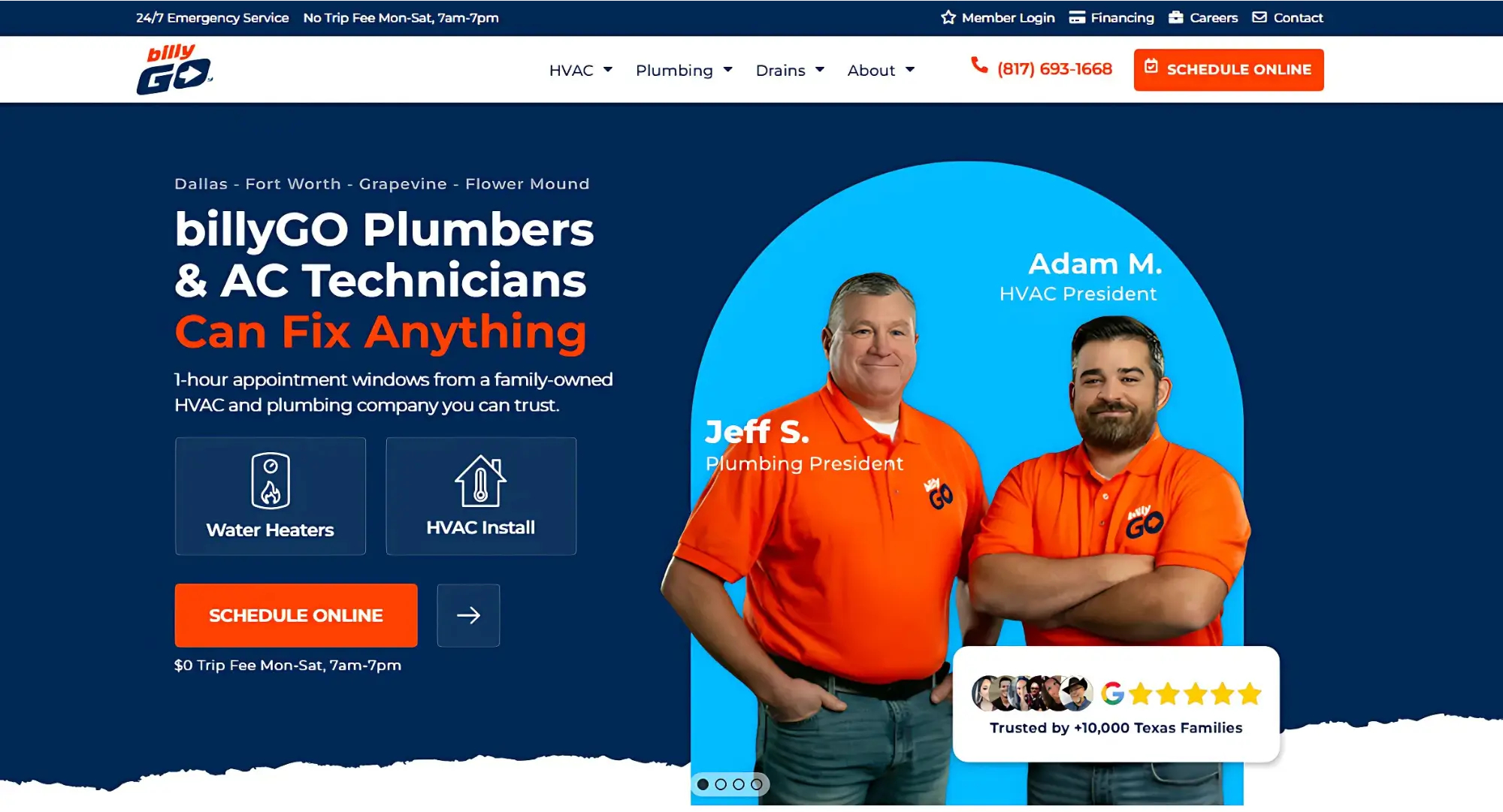
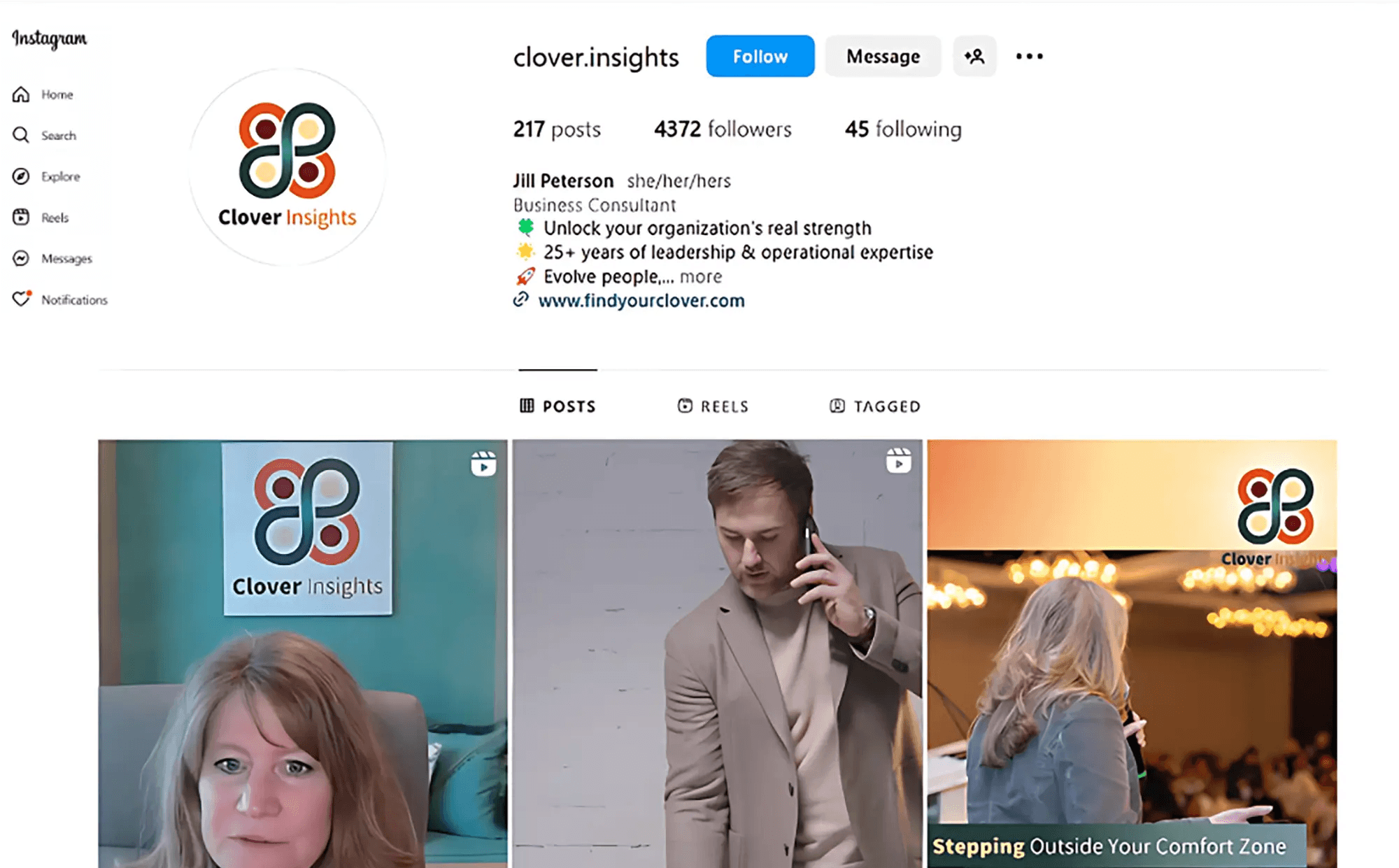




A hospital system ranks number one on Google for "knee replacement surgery near me." A learning platform dominates the top three spots for every major study-help query. A financial services firm has built a content library that has driven consistent leads for six years. Then AI Overviews arrive, answer those questions directly inside the search results, and organic click-through rates drop by more than half. This is what AI search disruption looks like in practice, and it is not hitting every industry equally.
AI search disruption is the measurable shift in how patients, students, shoppers, and professionals find information on the web, driven by AI-generated answers that replace the need to click through to a website. Understanding which industries are taking the hardest hits and why is the first step to building a search strategy that holds up.
The data from 2025-26 makes the picture unusually clear.
The AI Search Disruption Rankings: Industry by Industry
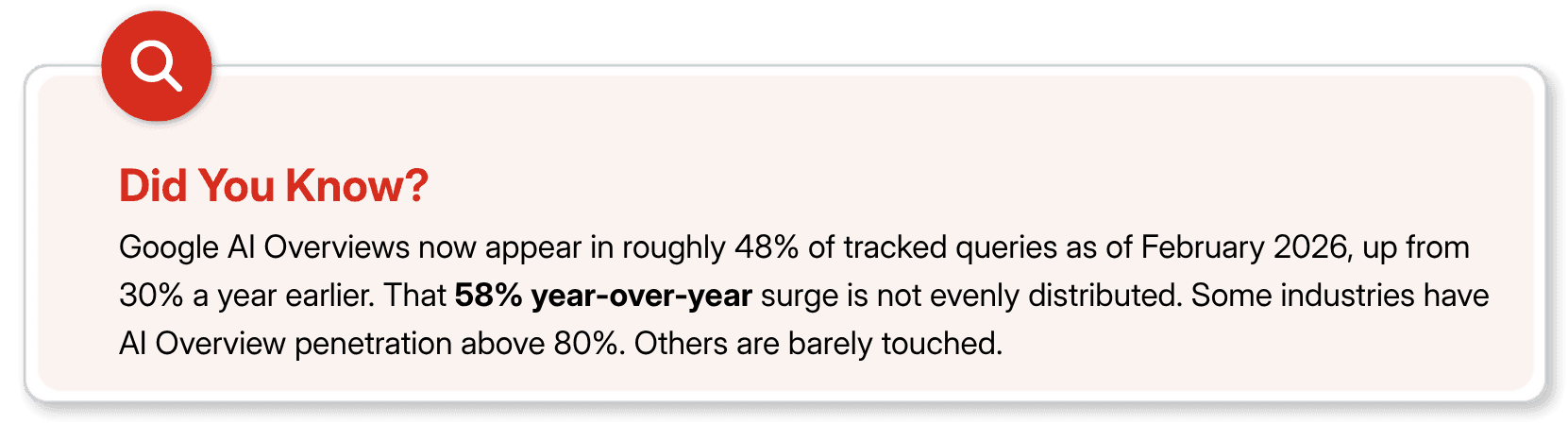
AI search disruption is not evenly distributed. Healthcare is experiencing the most significant shift at 51.6%, followed by Education and Media and Publishing at 39% each. Finance at 32.1%, SaaS and Technology at 30%, B2B Services at 18%, and Ecommerce at 14% round out the dataset.
BrightEdge's Q1 2026 tracking adds another layer: Healthcare leads at 88% AI Overview prevalence on medical queries, up from 72% a year earlier. Education and B2B technology both crossed 80% in the last twelve months, climbing from 18% and 36% respectively.
The pattern is consistent. Industries built on informational queries, research-heavy audiences, and high-trust content are the ones AI search is rewriting fastest.
Healthcare: The Most Disrupted Vertical
Healthcare is ground zero for the AI search shift. Healthcare and education content faced nearly 90% AI overview penetration on relevant queries in 2025. Patients researching symptoms, comparing providers, and evaluating treatment options are increasingly getting their answers without ever landing on a hospital website.
This matters because healthcare search has always been high-stakes and high-intent. Someone searching "best cardiologist for heart failure in Dallas" is not doing casual research. They are making a real decision. When AI absorbs that query and returns a synthesized answer, the organic click that used to generate a patient inquiry simply does not happen.
Google's emphasis on E-E-A-T in medical content has intensified, as AI systems preferentially cite credentialed, authoritative sources. Hospitals, insurance providers, pharmaceutical companies, and telehealth platforms must ensure their content is structured for AI citation, with clear authorship, clinical citations, and schema markup, or lose patient acquisition to AI-generated health summaries.
Education: The Fastest-Growing Disruption Zone
The education sector experienced the strongest expansion in AI search disruption, from 18% of queries triggering AI search results in May 2025 to 83% by December 2025. That is not gradual erosion. That is a cliff.
Learning platform Chegg reported a 49% decline in non-subscriber traffic between January 2024 and January 2025, attributing the drop directly to AI Overviews answering study questions. The company filed an antitrust lawsuit against Google in February 2025. Whether or not that case succeeds, the traffic loss is real and is not coming back through conventional SEO tactics.
For publishers, tutoring platforms, and educational institutions, the Google AI search shift is an existential question about what kind of content earns a citation versus what kind earns a click. The answer increasingly is that generic study guides and definition pages earn neither.

Finance: High Stakes, Tightening Margins
Finance sits at 32.1% AI search disruption, lower than healthcare and education but carrying its own complexity. Financial queries span from purely informational ("what is a Roth IRA") to highly transactional ("best high-yield savings account right now"). The informational layer is being absorbed by AI. The transactional layer is more protected.
Consumer electronics, travel, financial services, wellness, apparel, and beauty are among the sectors where AI-assisted purchasing decisions are most common, with 40-55% of buyers using AI search to inform choices. For financial services brands, this means the consideration phase, where a consumer evaluates providers, compares rates, and assesses trust, is now happening increasingly inside AI tools rather than on comparison pages and brand websites.
Financial firms are under pressure to make their models explainable under the audit, and the SEC and FTC are both increasing scrutiny of AI-based decision-making in lending, hiring, and trading. Compliance-aware financial content, clearly attributed and thoroughly sourced, is both a regulatory necessity and a GEO strategy advantage.

B2B Technology and SaaS: The Invisible Buyer Problem
B2B technology queries experienced a massive expansion, growing from 36-82% of queries triggering AI search results over the same 12-month period.
For B2B brands, the shift is visible in how buyers research vendors, evaluate software, and compare service providers. Complex, high-consideration purchases are increasingly being pre-researched through AI platforms that synthesize reviews, feature comparisons, and pricing context in a single response. B2B brands whose differentiation lives primarily in their own website content, without a strong presence in review platforms like G2, Capterra, or industry publications, may be invisible to AI systems when those systems compose an answer.
This is the invisible buyer problem. The prospect forms an opinion about your product before ever visiting your website, based entirely on what AI synthesized from third-party sources. Your website's ranking is irrelevant to that process. Your presence in the sources AI trusts is everything.
Restaurants and Local Services: The Surprise Mover
Restaurants saw one of the most dramatic growth curves, from 10% of queries triggering AI search results to 78%. This caught many local businesses off-guard because restaurant and local service queries were assumed to be inherently click-dependent. Directions, menus, operating hours; surely someone still needs to tap through?
The reality is more nuanced. AI tools are now synthesizing recommendations, cuisine comparisons, neighborhood guides, and dietary-specific suggestions directly in the response. A restaurant that exists only as a Google Business Profile listing with minimal structured content and sparse reviews is increasingly being passed over in favor of establishments with richer entity profiles and more detailed review language.
For local businesses, optimizing for AI search means the same things it always meant for local SEO, but with higher stakes: complete and consistent business listings, specific and detailed review language, and content that clearly connects the business to its specialties, neighborhood, and the customer profile.
Retail and Ecommerce: Protected but Shifting
Ecommerce sits at 14% AI search disruption, the lowest of all tracked verticals, and there is a structural reason for that. Only about 13-14% of transactional shopping queries trigger an AI overview, and that number has been roughly stable year over year. Google appears to protect the shopping experience in favor of product carousels, shopping ads, and Merchant Listings.
But the informational layer of retail search is a different story. Retail traffic from generative AI tools grew 693.4% year over year during the 2025 holiday season. AI referrals converted 31% more than other traffic sources, with AI-driven revenue per visit up 254% year over year.
That is not disruption in the traditional sense. It is a new traffic source, and it rewards brands that have structured product content, strong review presence, and clear entity signals across the web.
How to Optimize for AI Search Across Any Industry
The specifics vary by vertical, but the underlying logic of how to optimize for AI search is consistent:
Build entity authority, not just page rankings. AI systems identify your brand as an entity and evaluate it against confirming sources. Consistent NAP data verified directory listings, schema markup, and third-party citations all feeds the process.
Structure content for citation, not just traffic. Answer-first content, FAQ schema, clear authorship with credentials, and medical or financial review disclosures all make it easier for AI to extract and cite your content with accuracy.
Invest in third-party presence. Review platforms, industry publications, analyst coverage, and community mentions are the confirmation points AI uses to verify entity trust. Your own website is necessary but not sufficient enough.
Build topic clusters, not standalone pages. A network of deeply interlinked pages on a specific topic signals topical authority across your entire domain. AI systems assess depth across a site, not just the strength of a single/particular page.
Treat GEO as a separate but parallel strategy. Generative Engine Optimization, the practice of optimizing specifically for AI-generated citations, shares roots with traditional SEO but has its own logic. The overlap is meaningful; well-structured, credentialed content benefits both; but the divergences matter, especially for industries above 50% AI Overview penetration.

Final Thoughts
The AI search disruption data is not speculative anymore. Healthcare is above 88% AI Overview penetration. Education crossed 80% in under a year. B2B technology followed the same path. Finance and retail are further behind, but the direction is clear and the pace is accelerating.
What changes between industries is the timeline and the mechanism. What stays constant is the underlying logic: AI systems cite sources they can verify, trust, and clearly understand. Brands that have structured their digital presence around entity clarity, topical authority, and third-party confirmation are already better positioned than those that have optimized purely for keyword rankings.
The AI search shift rewards the same things that have always made a brand credibility: specificity, consistency, and demonstrable expertise. The difference now is that those signals need to be machine-readable, not just for human-readability.
FAQs
Which industry has the highest AI search disruption?

Healthcare leads at 51.6% disruption by one measure and 88% AI Overview penetration by any other, depending on the metric used. Education is a close second and growing faster. Both verticals are effectively saturated for informational queries in AI-generated search results.
Does ranking number one on Google protects you from AI search disruption?
No. BrightEdge data shows only about 17% of sources cited in AI Overviews also rank in the organic top 10 for the same query. High organic rankings and AI citations are operating on different logic. Entity authority and content structure matter more for citation than keyword rankings.
What is a GEO strategy and why does it matter?
GEO stands for Generative Engine Optimization. It is the practice of structuring your content, schema, and digital presence so that AI tools cite and recommend your brand in generated answers. It overlaps with traditional SEO but places more weight on entity signals, third-party confirmation, and answer-first content structure.
How do I know or confirm if my content is being cited in AI search results?
Tools like Semrush One, BrightEdge, and dedicated GEO monitoring platforms are beginning to track AI citation rates. For a quick manual check, run your most important queries through ChatGPT, Perplexity, and Google AI Overviews and see whether your brand or the content appears in the generated answers.
Is ecommerce specifically protected from AI search disruption?
Yes, largely for transactional queries. Roughly 13-14% of shopping queries trigger AI Overviews, and Google appears to protect the shopping experience with product carousels and ads. But AI-driven referral traffic to retail websites is growing fast, and brands with strong entity presence are capturing higher-quality visitors from AI tools.
A hospital system ranks number one on Google for "knee replacement surgery near me." A learning platform dominates the top three spots for every major study-help query. A financial services firm has built a content library that has driven consistent leads for six years. Then AI Overviews arrive, answer those questions directly inside the search results, and organic click-through rates drop by more than half. This is what AI search disruption looks like in practice, and it is not hitting every industry equally.
AI search disruption is the measurable shift in how patients, students, shoppers, and professionals find information on the web, driven by AI-generated answers that replace the need to click through to a website. Understanding which industries are taking the hardest hits and why is the first step to building a search strategy that holds up.
The data from 2025-26 makes the picture unusually clear.
The AI Search Disruption Rankings: Industry by Industry
AI search disruption is not evenly distributed. Healthcare is experiencing the most significant shift at 51.6%, followed by Education and Media and Publishing at 39% each. Finance at 32.1%, SaaS and Technology at 30%, B2B Services at 18%, and Ecommerce at 14% round out the dataset.
BrightEdge's Q1 2026 tracking adds another layer: Healthcare leads at 88% AI Overview prevalence on medical queries, up from 72% a year earlier. Education and B2B technology both crossed 80% in the last twelve months, climbing from 18% and 36% respectively.
The pattern is consistent. Industries built on informational queries, research-heavy audiences, and high-trust content are the ones AI search is rewriting fastest.
Healthcare: The Most Disrupted Vertical
Healthcare is ground zero for the AI search shift. Healthcare and education content faced nearly 90% AI overview penetration on relevant queries in 2025. Patients researching symptoms, comparing providers, and evaluating treatment options are increasingly getting their answers without ever landing on a hospital website.
This matters because healthcare search has always been high-stakes and high-intent. Someone searching "best cardiologist for heart failure in Dallas" is not doing casual research. They are making a real decision. When AI absorbs that query and returns a synthesized answer, the organic click that used to generate a patient inquiry simply does not happen.
Google's emphasis on E-E-A-T in medical content has intensified, as AI systems preferentially cite credentialed, authoritative sources. Hospitals, insurance providers, pharmaceutical companies, and telehealth platforms must ensure their content is structured for AI citation, with clear authorship, clinical citations, and schema markup, or lose patient acquisition to AI-generated health summaries.
Education: The Fastest-Growing Disruption Zone
The education sector experienced the strongest expansion in AI search disruption, from 18% of queries triggering AI search results in May 2025 to 83% by December 2025. That is not gradual erosion. That is a cliff.
Learning platform Chegg reported a 49% decline in non-subscriber traffic between January 2024 and January 2025, attributing the drop directly to AI Overviews answering study questions. The company filed an antitrust lawsuit against Google in February 2025. Whether or not that case succeeds, the traffic loss is real and is not coming back through conventional SEO tactics.
For publishers, tutoring platforms, and educational institutions, the Google AI search shift is an existential question about what kind of content earns a citation versus what kind earns a click. The answer increasingly is that generic study guides and definition pages earn neither.
Finance: High Stakes, Tightening Margins
Finance sits at 32.1% AI search disruption, lower than healthcare and education but carrying its own complexity. Financial queries span from purely informational ("what is a Roth IRA") to highly transactional ("best high-yield savings account right now"). The informational layer is being absorbed by AI. The transactional layer is more protected.
Consumer electronics, travel, financial services, wellness, apparel, and beauty are among the sectors where AI-assisted purchasing decisions are most common, with 40-55% of buyers using AI search to inform choices. For financial services brands, this means the consideration phase, where a consumer evaluates providers, compares rates, and assesses trust, is now happening increasingly inside AI tools rather than on comparison pages and brand websites.
Financial firms are under pressure to make their models explainable under the audit, and the SEC and FTC are both increasing scrutiny of AI-based decision-making in lending, hiring, and trading. Compliance-aware financial content, clearly attributed and thoroughly sourced, is both a regulatory necessity and a GEO strategy advantage.
B2B Technology and SaaS: The Invisible Buyer Problem
B2B technology queries experienced a massive expansion, growing from 36-82% of queries triggering AI search results over the same 12-month period.
For B2B brands, the shift is visible in how buyers research vendors, evaluate software, and compare service providers. Complex, high-consideration purchases are increasingly being pre-researched through AI platforms that synthesize reviews, feature comparisons, and pricing context in a single response. B2B brands whose differentiation lives primarily in their own website content, without a strong presence in review platforms like G2, Capterra, or industry publications, may be invisible to AI systems when those systems compose an answer.
This is the invisible buyer problem. The prospect forms an opinion about your product before ever visiting your website, based entirely on what AI synthesized from third-party sources. Your website's ranking is irrelevant to that process. Your presence in the sources AI trusts is everything.
Restaurants and Local Services: The Surprise Mover
Restaurants saw one of the most dramatic growth curves, from 10% of queries triggering AI search results to 78%. This caught many local businesses off-guard because restaurant and local service queries were assumed to be inherently click-dependent. Directions, menus, operating hours; surely someone still needs to tap through?
The reality is more nuanced. AI tools are now synthesizing recommendations, cuisine comparisons, neighborhood guides, and dietary-specific suggestions directly in the response. A restaurant that exists only as a Google Business Profile listing with minimal structured content and sparse reviews is increasingly being passed over in favor of establishments with richer entity profiles and more detailed review language.
For local businesses, optimizing for AI search means the same things it always meant for local SEO, but with higher stakes: complete and consistent business listings, specific and detailed review language, and content that clearly connects the business to its specialties, neighborhood, and the customer profile.
Retail and Ecommerce: Protected but Shifting
Ecommerce sits at 14% AI search disruption, the lowest of all tracked verticals, and there is a structural reason for that. Only about 13-14% of transactional shopping queries trigger an AI overview, and that number has been roughly stable year over year. Google appears to protect the shopping experience in favor of product carousels, shopping ads, and Merchant Listings.
But the informational layer of retail search is a different story. Retail traffic from generative AI tools grew 693.4% year over year during the 2025 holiday season. AI referrals converted 31% more than other traffic sources, with AI-driven revenue per visit up 254% year over year.
That is not disruption in the traditional sense. It is a new traffic source, and it rewards brands that have structured product content, strong review presence, and clear entity signals across the web.
How to Optimize for AI Search Across Any Industry
The specifics vary by vertical, but the underlying logic of how to optimize for AI search is consistent:
Build entity authority, not just page rankings. AI systems identify your brand as an entity and evaluate it against confirming sources. Consistent NAP data verified directory listings, schema markup, and third-party citations all feeds the process.
Structure content for citation, not just traffic. Answer-first content, FAQ schema, clear authorship with credentials, and medical or financial review disclosures all make it easier for AI to extract and cite your content with accuracy.
Invest in third-party presence. Review platforms, industry publications, analyst coverage, and community mentions are the confirmation points AI uses to verify entity trust. Your own website is necessary but not sufficient enough.
Build topic clusters, not standalone pages. A network of deeply interlinked pages on a specific topic signals topical authority across your entire domain. AI systems assess depth across a site, not just the strength of a single/particular page.
Treat GEO as a separate but parallel strategy. Generative Engine Optimization, the practice of optimizing specifically for AI-generated citations, shares roots with traditional SEO but has its own logic. The overlap is meaningful; well-structured, credentialed content benefits both; but the divergences matter, especially for industries above 50% AI Overview penetration.
Final Thoughts
The AI search disruption data is not speculative anymore. Healthcare is above 88% AI Overview penetration. Education crossed 80% in under a year. B2B technology followed the same path. Finance and retail are further behind, but the direction is clear and the pace is accelerating.
What changes between industries is the timeline and the mechanism. What stays constant is the underlying logic: AI systems cite sources they can verify, trust, and clearly understand. Brands that have structured their digital presence around entity clarity, topical authority, and third-party confirmation are already better positioned than those that have optimized purely for keyword rankings.
The AI search shift rewards the same things that have always made a brand credibility: specificity, consistency, and demonstrable expertise. The difference now is that those signals need to be machine-readable, not just for human-readability.
FAQs
Which industry has the highest AI search disruption?
Healthcare leads at 51.6% disruption by one measure and 88% AI Overview penetration by any other, depending on the metric used. Education is a close second and growing faster. Both verticals are effectively saturated for informational queries in AI-generated search results.
Does ranking number one on Google protects you from AI search disruption?
No. BrightEdge data shows only about 17% of sources cited in AI Overviews also rank in the organic top 10 for the same query. High organic rankings and AI citations are operating on different logic. Entity authority and content structure matter more for citation than keyword rankings.
What is a GEO strategy and why does it matter?
GEO stands for Generative Engine Optimization. It is the practice of structuring your content, schema, and digital presence so that AI tools cite and recommend your brand in generated answers. It overlaps with traditional SEO but places more weight on entity signals, third-party confirmation, and answer-first content structure.
How do I know or confirm if my content is being cited in AI search results?
Tools like Semrush One, BrightEdge, and dedicated GEO monitoring platforms are beginning to track AI citation rates. For a quick manual check, run your most important queries through ChatGPT, Perplexity, and Google AI Overviews and see whether your brand or the content appears in the generated answers.
Is ecommerce specifically protected from AI search disruption?
Yes, largely for transactional queries. Roughly 13-14% of shopping queries trigger AI Overviews, and Google appears to protect the shopping experience with product carousels and ads. But AI-driven referral traffic to retail websites is growing fast, and brands with strong entity presence are capturing higher-quality visitors from AI tools.



Summarize with AI



Want to be seen everywhere?
Get a free AI-search audit Today!



4.9/5 Ratings!


Don’t miss our revenue growth tips!
Get expert marketing tips—straight to your inbox, like thousands of happy clients.
Don’t miss our revenue growth tips!
Get expert marketing tips—straight to your inbox, like thousands of happy clients.
Don’t miss our revenue growth tips!
Don’t miss our revenue growth tips!
Get expert marketing tips—straight to your inbox, like thousands of happy clients.
Relevant Blogs on Generative AI SEO
Relevant Blogs on Generative AI SEO
Unlock data-driven insights in AI-powered SEO—explore our featured blogs and skyrocket your revenue before your competitors do.
Unlock data-driven insights in AI-powered SEO—explore our featured blogs and skyrocket your revenue before your competitors do.

GEO
Sep 22, 2026
15 Min Read
AI Search Runs on More SEO Than You Think
GEO
Sep 22, 2026
15 Min Read
AI Search Runs on More SEO Than You Think
GEO
Sep 22, 2026
15 Min Read
AI Search Runs on More SEO Than You Think

GEO
Sep 7, 2026
8 Min Read
How to Optimize Content for AI Search Engines: Best Practices
GEO
Sep 7, 2026
8 Min Read
How to Optimize Content for AI Search Engines: Best Practices
GEO
Sep 7, 2026
8 Min Read
How to Optimize Content for AI Search Engines: Best Practices

GEO
Sep 4, 2026
12 Min Read
How Ecommerce Brands Can Advertise in Google AI Mode?
GEO
Sep 4, 2026
12 Min Read
How Ecommerce Brands Can Advertise in Google AI Mode?
GEO
Sep 4, 2026
12 Min Read
How Ecommerce Brands Can Advertise in Google AI Mode?

















Ready to speak with an expert?
Data-Driven Marketing Agency That Elevates ROI
1100+
Websites Designed & Optimized to Convert
$280M+
Client Revenue Driven & Growing Strong
Discover how to skyrocket
your revenue today!
Trusted by 1000+ Owners!
Ready to speak with an expert?
Data-Driven Marketing Agency That Elevates ROI
1100+
Websites Designed & Optimized to Convert
$280M+
Client Revenue Driven & Growing Strong
Discover how to skyrocket
your revenue today!
Trusted by 1000+ Owners!
Want to skyrocket revenue?
4.9/5 Ratings!
Ready to speak with an expert?
Data-Driven Marketing Agency That Elevates ROI
1100+
Websites Designed & Optimized to Convert
$280M+
Client Revenue Driven & Growing Strong
Discover how to skyrocket
your revenue today!
Trusted by 1000+ Owners!
Call
Meet