What Does YMYL Mean in SEO? Everything You Need to Know.
What Does YMYL Mean in SEO? Everything You Need to Know.
Last Updated:
Table of Content
Case Studies






Tanya Singh
Tanya Singh
Tanya Singh
SEO
SEO
SEO
10 Min Read
12 Min
10 Min Read
YMYL SEO is the practice of optimizing content that can meaningfully affect a person's health, finances, safety, or well-being, held to a stricter standard than ordinary content because Google's own quality raters are trained to judge it more harshly. If you write about medical advice, personal finance, legal guidance, or major life decisions, ranking well takes more than good keywords, it takes real, demonstrable expertise. This same trust bar now extends into generative search and AI overviews too, not just the traditional results page. Here's what that actually means and how to meet the bar.
What Is YMYL in SEO?
YMYL, short for Your Money or Your Life, is a classification Google's Search Quality Rater Guidelines use to flag content that could cause real harm if it's inaccurate, misleading, or written by someone with no genuine authority on the subject. It isn't a ranking factor you can toggle on your site. It's a lens raters use to judge whether a page deserves to be trusted, and that judgment feeds the training data behind Google's ranking algorithms.
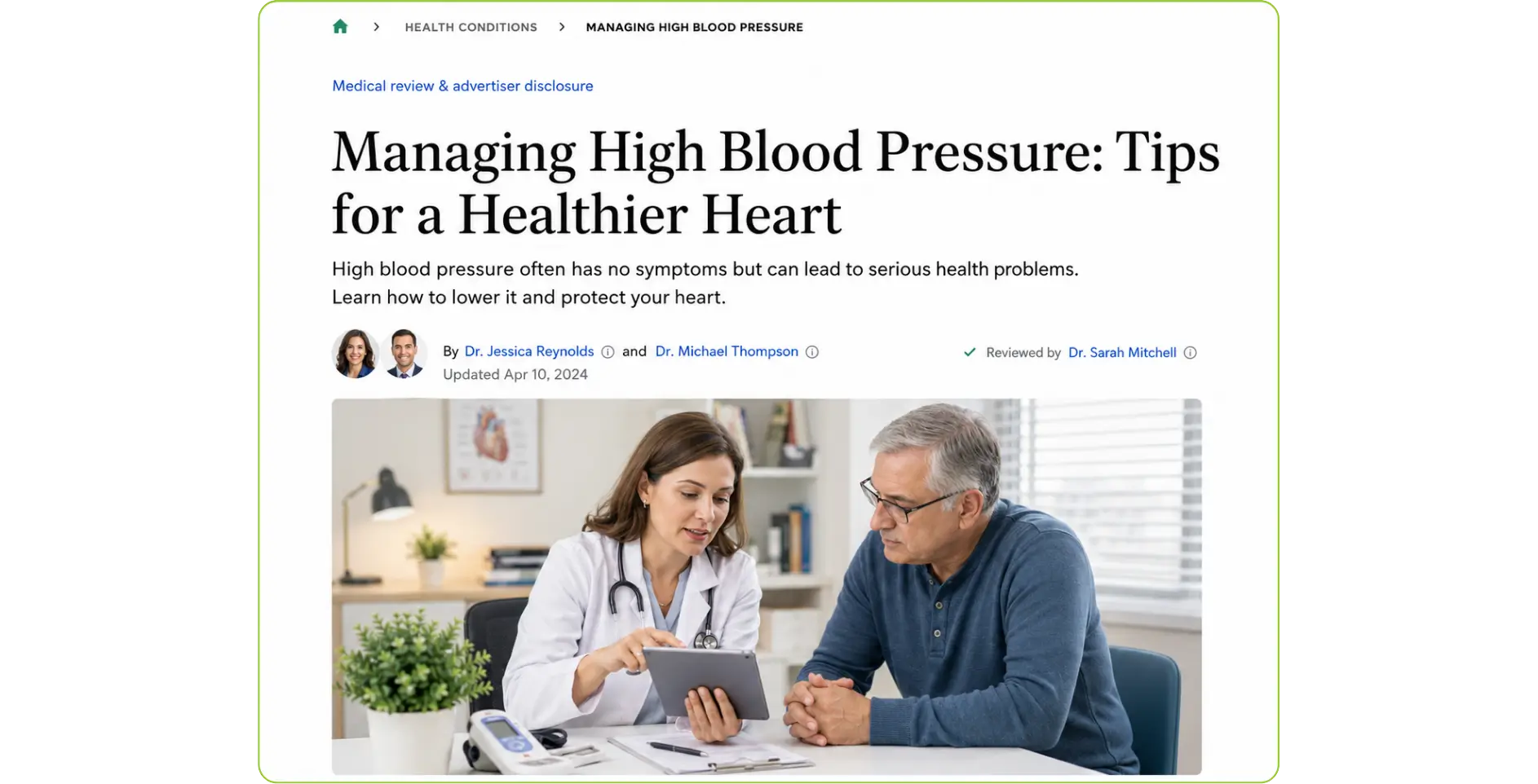
The term comes directly from Google's own guidelines, which explain that pages in this category are held to a page quality standard described as very high, because a bad recommendation on a medical or financial topic doesn't just annoy a reader, it can genuinely damage their life.
What Is YMYL Content, and Which Industries Does It Cover?
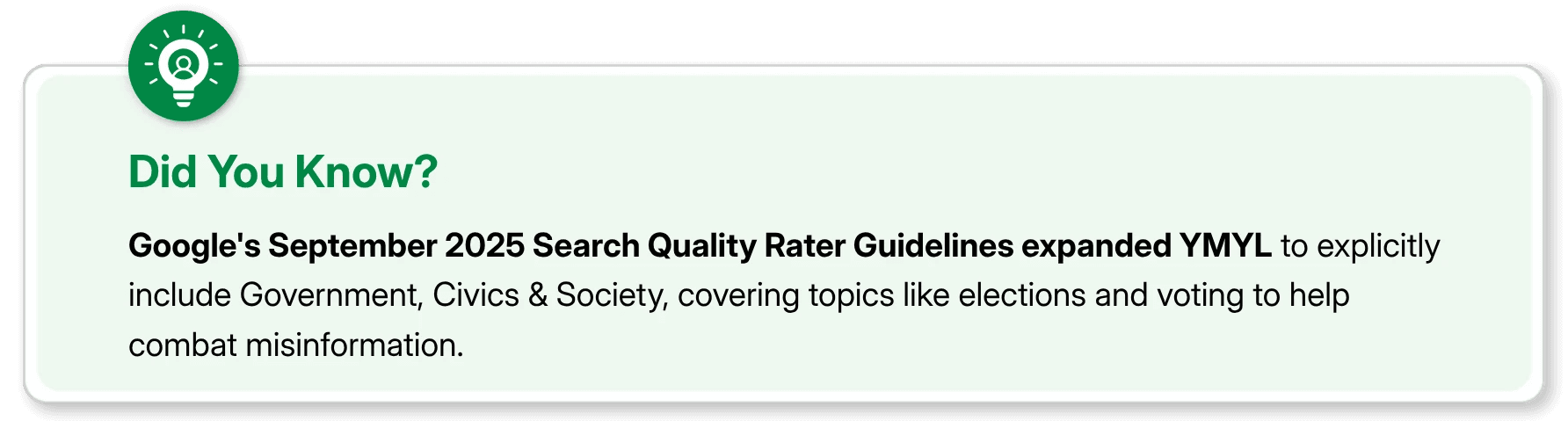
YMYL content covers any page whose subject matter could influence a person's health, financial stability, safety, or legal standing, and Google's September 2025 guidelines update organized it into four official categories. Understanding which bucket your content falls into is the first step before you worry about optimization.
Category | What It Covers | Example Industries |
|---|---|---|
Health or Safety | Medical advice, mental health, physical safety, emergency information | Healthcare, wellness, insurance |
Financial Security | Investing, taxes, loans, insurance, retirement planning | Banking, fintech, financial advisory |
Government, Civics & Society | Voting, elections, public institutions, civic participation | Government, legal, nonprofit |
Other | Content affecting groups of people or broader societal wellbeing | News, demographics, social issues |
Beyond these four official buckets, Google has also historically flagged shopping pages that accept payment, legal advice, and major life decisions like choosing a college or a housing option as YMYL adjacent, since the financial or personal stakes are similarly high. Health and wellness sites carry some of the strictest requirements of any category, since the margin for error is smallest.
Has YMYL Content Ever Actually Caused Real Harm?
Yes, and the consequences are documented, not theoretical, which is exactly why Google treats this category so seriously.
In 2023, the National Eating Disorders Association replaced its longtime human staffed helpline with an AI chatbot called Tessa, only to pull it offline days later after it was found to be giving users weight loss advice that directly contradicted safe eating disorder guidance.
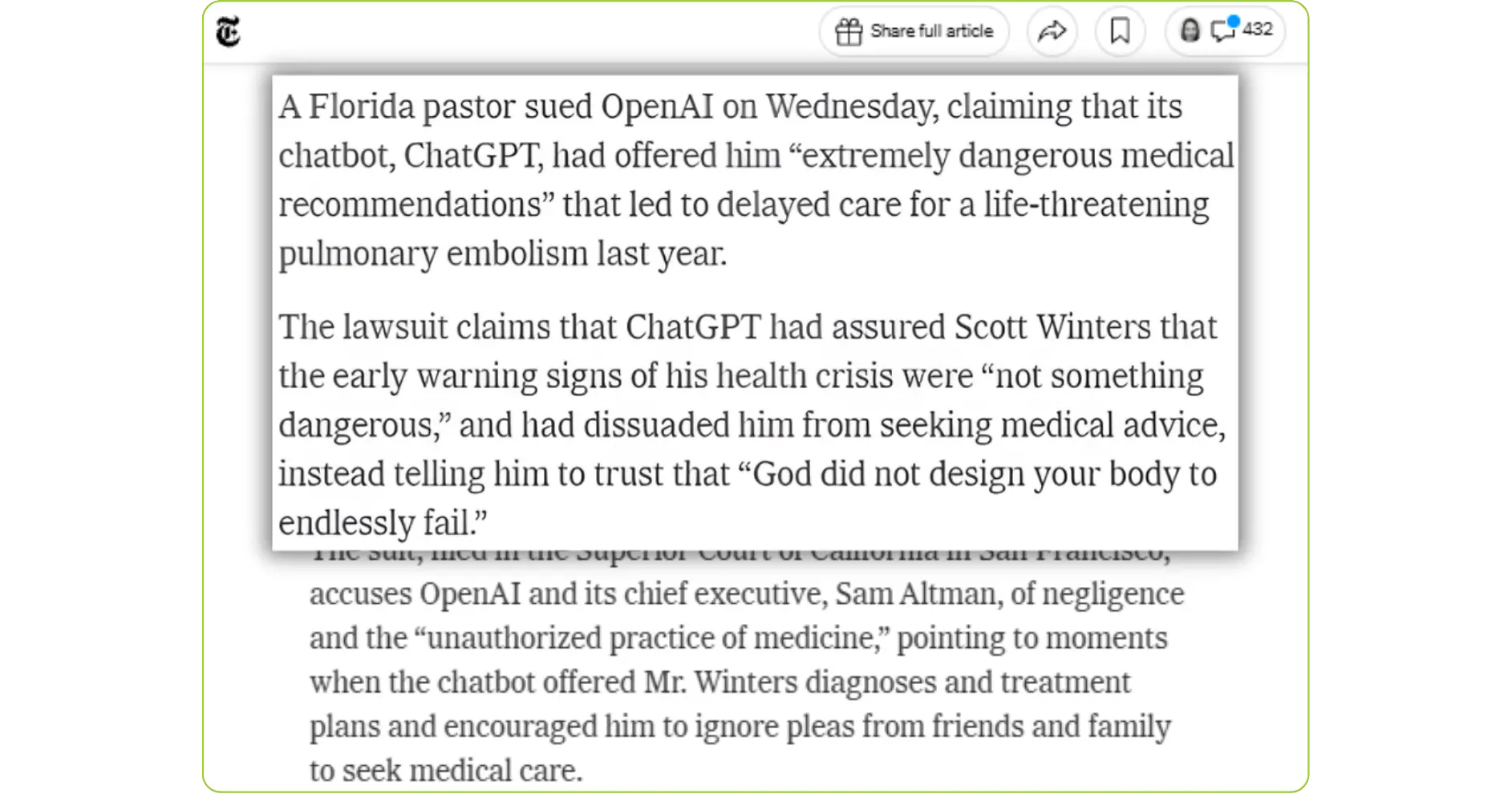
A more recent case shows how far this risk now extends. In 2026, a Florida pastor filed a lawsuit against OpenAI alleging that ChatGPT misattributed his symptoms for six weeks, discouraged him from seeking emergency care, and gradually positioned itself as a trusted medical advisor instead of directing him to a doctor, a delay he says nearly cost him his life from an undiagnosed pulmonary embolism.
These are not edge cases confined to chatbots. They're a preview of exactly what Google's YMYL standards were built to prevent: confident sounding, poorly sourced guidance reaching people at their most vulnerable. We've written a deeper look at this exact problem in healthcare specifically, including how patients are already turning to AI for medical advice and what that means for providers and platforms alike.
Why Does YMYL SEO Matter More Than Standard SEO?
YMYL SEO matters more because Google applies a fundamentally stricter quality bar to these pages, meaning the same content strategy that ranks a recipe blog will often fail a financial advice page outright.
A recipe with a small factual error rarely hurts anyone. A retirement planning article with a small factual error can cost someone real money, and Google's ranking systems are built to reflect that difference in stakes.
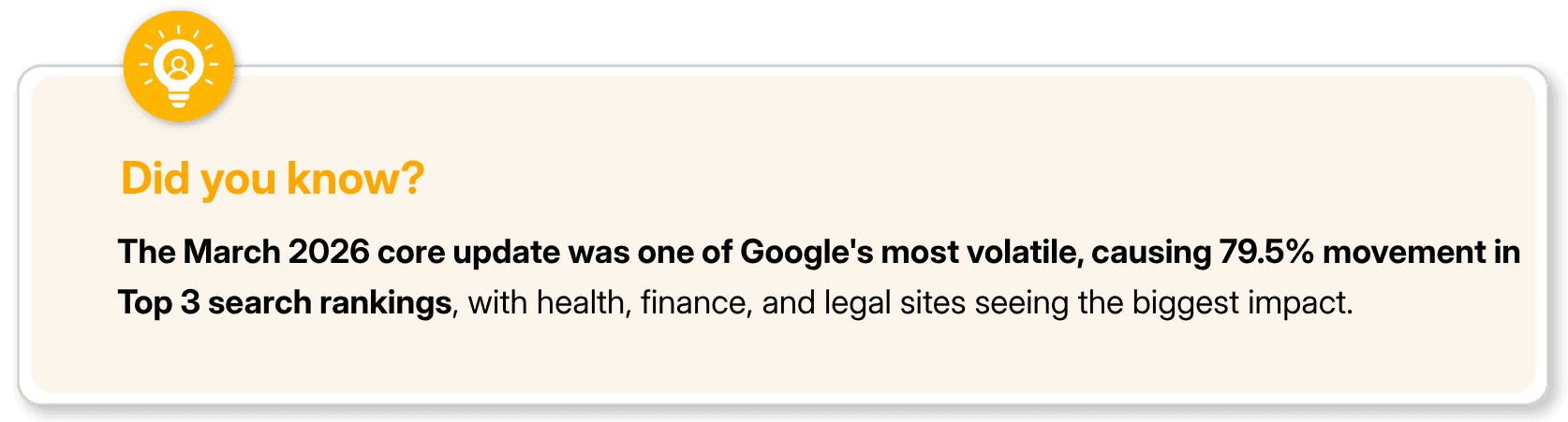
This is also why volatility hits YMYL sectors harder during core algorithm updates. Google has openly stated that core updates aim to better reward genuinely helpful, trustworthy content, and YMYL pages sit at the center of that evaluation because the cost of getting it wrong is so much higher.
How Do You Know If Your Website Falls Under YMYL?
Your website likely falls under YMYL if a wrong answer on any given page could cost a reader money, put their health at risk, affect a legal decision, or shape how they participate in society, and most site owners underestimate how broadly that net gets cast. It isn't limited to hospitals and banks. A local insurance broker's blog, a parenting site covering vaccination schedules, a real estate agent's mortgage calculator, and a nonprofit's voter registration guide all qualify.
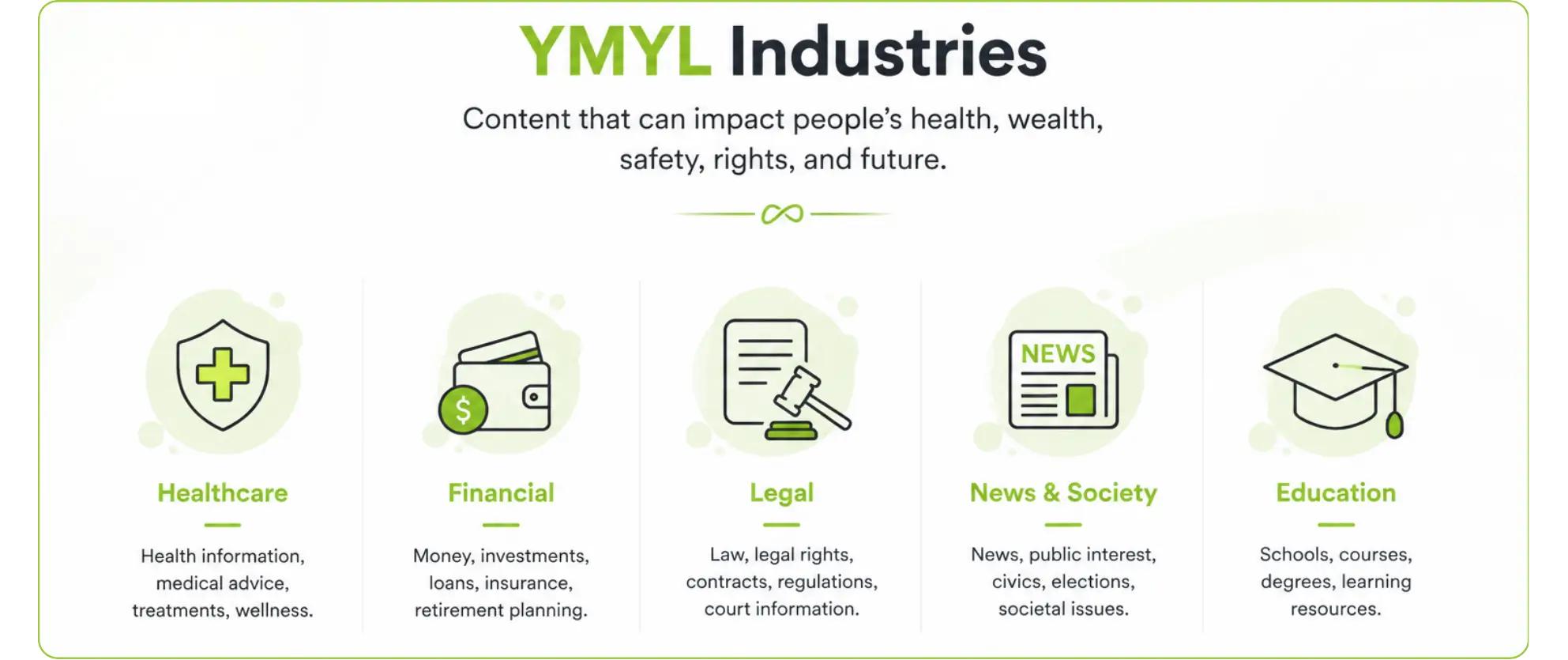
A simple gut check helps: ask whether a reader could plausibly make a decision, financial, medical, legal, or civic, based on what your page tells them. If the answer is yes, treat it as YMYL, even if your site doesn't look like a traditional finance or health publication.
Does the page offer advice someone might act on financially?
Could inaccurate information here affect someone's physical or mental health?
Does the content touch legal rights, safety procedures, or civic participation?
Would a reader reasonably assume the author has relevant expertise?
If two or more of these apply, your content sits squarely inside YMYL territory, and it's worth auditing accordingly.
How Does E-E-A-T Relate to YMYL SEO?
E-E-A-T, which stands for Experience, Expertise, Authoritativeness, and Trustworthiness, is the framework Google's quality raters use to judge whether a page meets the bar YMYL content requires, and it becomes far more demanding once a topic touches money, health, or safety. On a hobby blog, a well-written post from an enthusiastic amateur can score well. On a page about mortgage refinancing, the same tone from someone with no financial background will not.
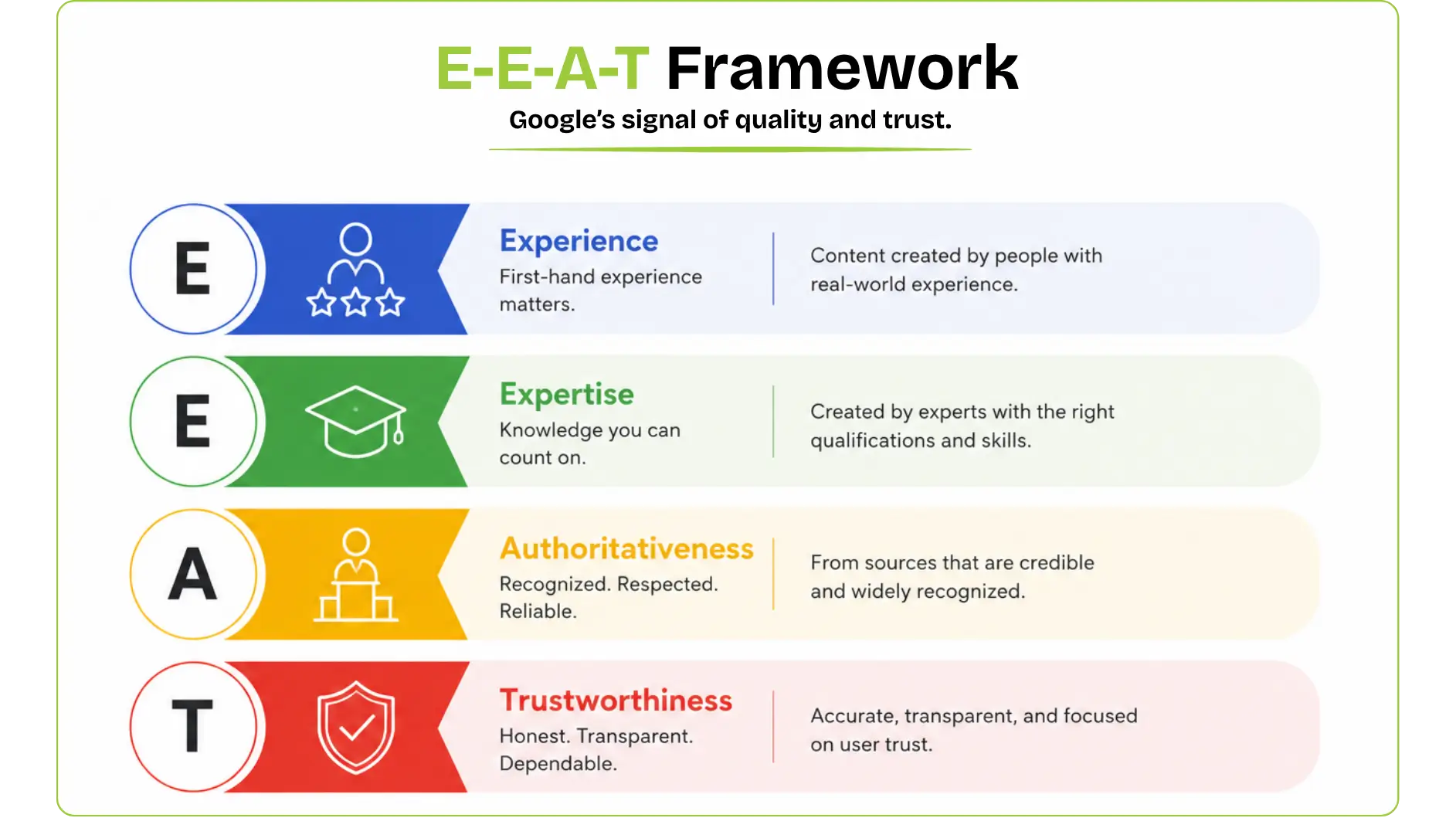
Google's own guidelines state that trustworthiness is the most important element of the four, and a page with low trust cannot be rated highly no matter how experienced or expert the author appears elsewhere. For YMYL content, that trust has to be visible on the page itself, not just implied, and increasingly it has to be visible to AI systems generating recommendations too, not just human readers.
Here's what raters are specifically trained to look for on YMYL pages:
A named, identifiable author with relevant credentials or professional background
Clear sourcing and citations for factual or statistical claims
Regular review and updates, especially for medical, legal, or financial guidance
Transparent information about the website or organization publishing the content
Contact information and clear ownership, not an anonymous or unverifiable source
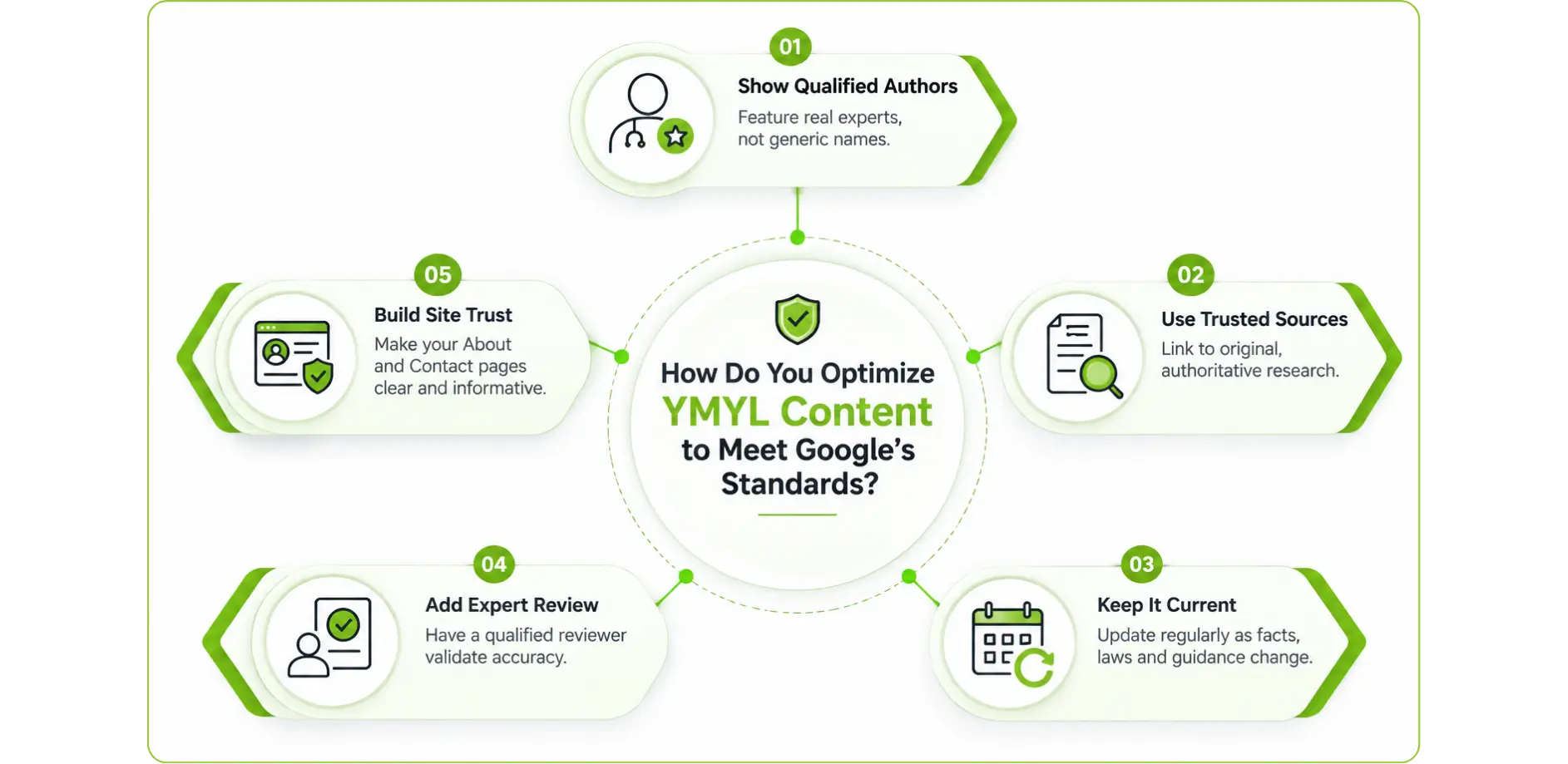
How Do You Optimize YMYL Content to Meet Google's Standards?
You optimize what is YMYL content by pairing solid keyword research with visible proof of expertise, meaning the writing itself is only half the job. The other half is building the trust infrastructure around it, author bios, credentials, editorial review, and transparent sourcing that gives both readers and Google's raters a reason to believe what they're reading.
A few practical steps that consistently move the needle:
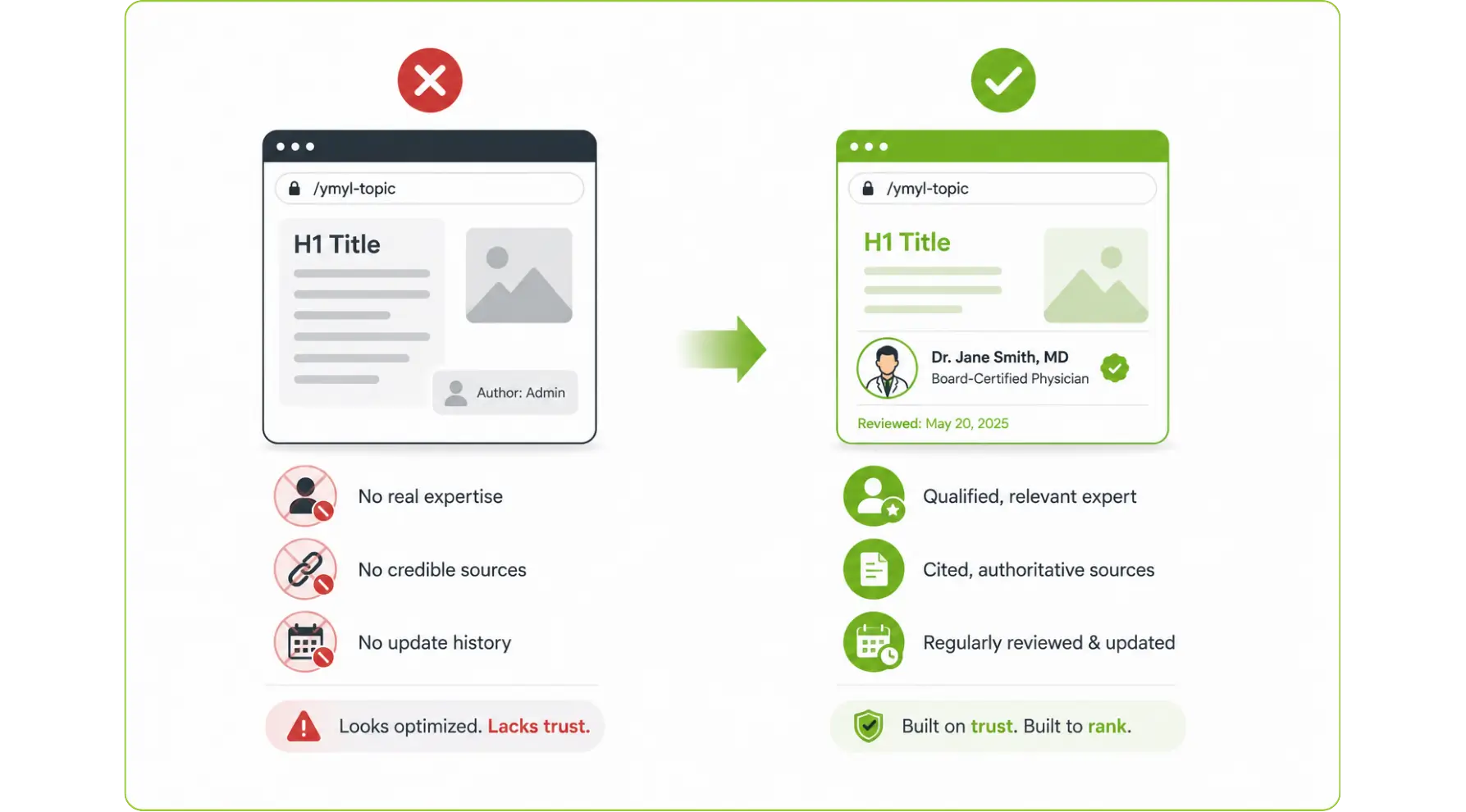
Attribute content to a real, credentialed author. A doctor, licensed financial advisor, or attorney byline carries weight that "Admin" or a generic staff name never will.
Cite primary sources, not other blog posts, especially for statistics, medical claims, or legal statements.
Keep YMYL pages updated. Financial thresholds change, medical guidance evolves, and laws get amended, so a stale page is a trust liability.
Add an editorial or medical review process where a qualified second person checks accuracy before publishing.
Make your "About" and contact pages genuinely informative, since raters are trained to check them when assessing site level trust.
This same trust building work also determines whether AI tools or search engine recommend your business at all, since generative search platforms lean on the same credibility signals raters do. RankRabbit is built for exactly this shift, helping businesses get discovered across AI search platforms, build consistent trust signals, and manage their presence across multiple locations, all of which feed directly into how confidently an AI system can vouch for you.
Where Do Most Websites Get YMYL SEO Wrong?
Most websites get YMYL SEO wrong by treating it as a keyword and structure problem instead of a trust problem, publishing well optimized pages with no visible author expertise, no sourcing, and no update history behind them. This is especially common with content produced quickly at scale, where speed gets prioritized over the credibility signals YMYL topics actually require.
Another frequent mistake is assuming that because a page technically has an author name, the trust requirement is satisfied. Google's guidelines are specific about this: the author needs demonstrable, relevant expertise for the topic at hand, not just a name attached to the byline. A general lifestyle writer covering tax law without any financial background is exactly the gap raters are trained to catch.
A third mistake shows up with AI assisted content. Google has said plainly that using generative AI doesn't automatically lower a page's quality score, but unedited, unreviewed AI output on a YMYL topic almost always reads as low effort, and low effort content is rated at the bottom of the scale regardless of who or what produced it. The fix isn't avoiding AI tools entirely, it's making sure a qualified human reviews, fact checks, and adds genuine insight before anything YMYL related goes live. For a closer look at how this plays out specifically in healthcare, our breakdown of AI generated medical recommendations is worth the extra read.
Final Thoughts
YMYL SEO isn't a trick to learn, it's a standard to actually meet, and that's precisely why it rewards the businesses and creators willing to do the real work. The sites that treat expertise and sourcing as a checkbox will keep losing ground to the ones that treat it as the whole point. Earn the trust first, and the rankings tend to follow.
When the stakes are someone's money or their life, good enough content isn't good enough.
FAQs
What is YMYL in SEO?

YMYL stands for Your Money Or Your Life, a classification that Google’s quality raters use to evaluate content that could affect someone’s health, finances, safety or legal standing. It isn't a ranking factor itself, but it triggers stricter quality evaluation.
What is an example of YMYL content?
Including a retirement planning guide, a healthcare page on medication dosages, a mortgage calculator and a voter registration walkthrough. Each covers a topic where inaccurate information could realistically cost someone money, harm their health, or affect a legal or civic decision.
Does YMYL content need a named author to rank well?
Yes, effectively. Google's Search Quality Rater Guidelines specifically instruct raters to check for an identifiable author with relevant, verifiable expertise on YMYL pages, and pages without one are far harder to rate as trustworthy, regardless of how well written they are.
How important is EEAT?
EEAT is central to how Google's raters judge YMYL content specifically, with trustworthiness described as the most important of the four elements. A page can be experienced and expert sounding and still fail if it doesn't come across as trustworthy.
Why is YMYL SEO more strict than regular SEO?
Because the cost of being wrong is much higher. A factual error on a recipe blog rarely hurts anyone, while the same error on a financial or medical page can cause real, lasting harm, so Google holds that content to a stricter standard, one that now extends into generative search and AI Overviews just as much as traditional rankings.
YMYL SEO is the practice of optimizing content that can meaningfully affect a person's health, finances, safety, or well-being, held to a stricter standard than ordinary content because Google's own quality raters are trained to judge it more harshly. If you write about medical advice, personal finance, legal guidance, or major life decisions, ranking well takes more than good keywords, it takes real, demonstrable expertise. This same trust bar now extends into generative search and AI overviews too, not just the traditional results page. Here's what that actually means and how to meet the bar.
What Is YMYL in SEO?
YMYL, short for Your Money or Your Life, is a classification Google's Search Quality Rater Guidelines use to flag content that could cause real harm if it's inaccurate, misleading, or written by someone with no genuine authority on the subject. It isn't a ranking factor you can toggle on your site. It's a lens raters use to judge whether a page deserves to be trusted, and that judgment feeds the training data behind Google's ranking algorithms.
The term comes directly from Google's own guidelines, which explain that pages in this category are held to a page quality standard described as very high, because a bad recommendation on a medical or financial topic doesn't just annoy a reader, it can genuinely damage their life.
What Is YMYL Content, and Which Industries Does It Cover?
YMYL content covers any page whose subject matter could influence a person's health, financial stability, safety, or legal standing, and Google's September 2025 guidelines update organized it into four official categories. Understanding which bucket your content falls into is the first step before you worry about optimization.
Category | What It Covers | Example Industries |
|---|---|---|
Health or Safety | Medical advice, mental health, physical safety, emergency information | Healthcare, wellness, insurance |
Financial Security | Investing, taxes, loans, insurance, retirement planning | Banking, fintech, financial advisory |
Government, Civics & Society | Voting, elections, public institutions, civic participation | Government, legal, nonprofit |
Other | Content affecting groups of people or broader societal wellbeing | News, demographics, social issues |
Beyond these four official buckets, Google has also historically flagged shopping pages that accept payment, legal advice, and major life decisions like choosing a college or a housing option as YMYL adjacent, since the financial or personal stakes are similarly high. Health and wellness sites carry some of the strictest requirements of any category, since the margin for error is smallest.
Has YMYL Content Ever Actually Caused Real Harm?
Yes, and the consequences are documented, not theoretical, which is exactly why Google treats this category so seriously.
In 2023, the National Eating Disorders Association replaced its longtime human staffed helpline with an AI chatbot called Tessa, only to pull it offline days later after it was found to be giving users weight loss advice that directly contradicted safe eating disorder guidance.
A more recent case shows how far this risk now extends. In 2026, a Florida pastor filed a lawsuit against OpenAI alleging that ChatGPT misattributed his symptoms for six weeks, discouraged him from seeking emergency care, and gradually positioned itself as a trusted medical advisor instead of directing him to a doctor, a delay he says nearly cost him his life from an undiagnosed pulmonary embolism.
These are not edge cases confined to chatbots. They're a preview of exactly what Google's YMYL standards were built to prevent: confident sounding, poorly sourced guidance reaching people at their most vulnerable. We've written a deeper look at this exact problem in healthcare specifically, including how patients are already turning to AI for medical advice and what that means for providers and platforms alike.
Why Does YMYL SEO Matter More Than Standard SEO?
YMYL SEO matters more because Google applies a fundamentally stricter quality bar to these pages, meaning the same content strategy that ranks a recipe blog will often fail a financial advice page outright.
A recipe with a small factual error rarely hurts anyone. A retirement planning article with a small factual error can cost someone real money, and Google's ranking systems are built to reflect that difference in stakes.
This is also why volatility hits YMYL sectors harder during core algorithm updates. Google has openly stated that core updates aim to better reward genuinely helpful, trustworthy content, and YMYL pages sit at the center of that evaluation because the cost of getting it wrong is so much higher.
How Do You Know If Your Website Falls Under YMYL?
Your website likely falls under YMYL if a wrong answer on any given page could cost a reader money, put their health at risk, affect a legal decision, or shape how they participate in society, and most site owners underestimate how broadly that net gets cast. It isn't limited to hospitals and banks. A local insurance broker's blog, a parenting site covering vaccination schedules, a real estate agent's mortgage calculator, and a nonprofit's voter registration guide all qualify.
A simple gut check helps: ask whether a reader could plausibly make a decision, financial, medical, legal, or civic, based on what your page tells them. If the answer is yes, treat it as YMYL, even if your site doesn't look like a traditional finance or health publication.
Does the page offer advice someone might act on financially?
Could inaccurate information here affect someone's physical or mental health?
Does the content touch legal rights, safety procedures, or civic participation?
Would a reader reasonably assume the author has relevant expertise?
If two or more of these apply, your content sits squarely inside YMYL territory, and it's worth auditing accordingly.
How Does E-E-A-T Relate to YMYL SEO?
E-E-A-T, which stands for Experience, Expertise, Authoritativeness, and Trustworthiness, is the framework Google's quality raters use to judge whether a page meets the bar YMYL content requires, and it becomes far more demanding once a topic touches money, health, or safety. On a hobby blog, a well-written post from an enthusiastic amateur can score well. On a page about mortgage refinancing, the same tone from someone with no financial background will not.
Google's own guidelines state that trustworthiness is the most important element of the four, and a page with low trust cannot be rated highly no matter how experienced or expert the author appears elsewhere. For YMYL content, that trust has to be visible on the page itself, not just implied, and increasingly it has to be visible to AI systems generating recommendations too, not just human readers.
Here's what raters are specifically trained to look for on YMYL pages:
A named, identifiable author with relevant credentials or professional background
Clear sourcing and citations for factual or statistical claims
Regular review and updates, especially for medical, legal, or financial guidance
Transparent information about the website or organization publishing the content
Contact information and clear ownership, not an anonymous or unverifiable source
How Do You Optimize YMYL Content to Meet Google's Standards?
You optimize what is YMYL content by pairing solid keyword research with visible proof of expertise, meaning the writing itself is only half the job. The other half is building the trust infrastructure around it, author bios, credentials, editorial review, and transparent sourcing that gives both readers and Google's raters a reason to believe what they're reading.
A few practical steps that consistently move the needle:
Attribute content to a real, credentialed author. A doctor, licensed financial advisor, or attorney byline carries weight that "Admin" or a generic staff name never will.
Cite primary sources, not other blog posts, especially for statistics, medical claims, or legal statements.
Keep YMYL pages updated. Financial thresholds change, medical guidance evolves, and laws get amended, so a stale page is a trust liability.
Add an editorial or medical review process where a qualified second person checks accuracy before publishing.
Make your "About" and contact pages genuinely informative, since raters are trained to check them when assessing site level trust.
This same trust building work also determines whether AI tools or search engine recommend your business at all, since generative search platforms lean on the same credibility signals raters do. RankRabbit is built for exactly this shift, helping businesses get discovered across AI search platforms, build consistent trust signals, and manage their presence across multiple locations, all of which feed directly into how confidently an AI system can vouch for you.
Where Do Most Websites Get YMYL SEO Wrong?
Most websites get YMYL SEO wrong by treating it as a keyword and structure problem instead of a trust problem, publishing well optimized pages with no visible author expertise, no sourcing, and no update history behind them. This is especially common with content produced quickly at scale, where speed gets prioritized over the credibility signals YMYL topics actually require.
Another frequent mistake is assuming that because a page technically has an author name, the trust requirement is satisfied. Google's guidelines are specific about this: the author needs demonstrable, relevant expertise for the topic at hand, not just a name attached to the byline. A general lifestyle writer covering tax law without any financial background is exactly the gap raters are trained to catch.
A third mistake shows up with AI assisted content. Google has said plainly that using generative AI doesn't automatically lower a page's quality score, but unedited, unreviewed AI output on a YMYL topic almost always reads as low effort, and low effort content is rated at the bottom of the scale regardless of who or what produced it. The fix isn't avoiding AI tools entirely, it's making sure a qualified human reviews, fact checks, and adds genuine insight before anything YMYL related goes live. For a closer look at how this plays out specifically in healthcare, our breakdown of AI generated medical recommendations is worth the extra read.
Final Thoughts
YMYL SEO isn't a trick to learn, it's a standard to actually meet, and that's precisely why it rewards the businesses and creators willing to do the real work. The sites that treat expertise and sourcing as a checkbox will keep losing ground to the ones that treat it as the whole point. Earn the trust first, and the rankings tend to follow.
When the stakes are someone's money or their life, good enough content isn't good enough.
FAQs
What is YMYL in SEO?
YMYL stands for Your Money Or Your Life, a classification that Google’s quality raters use to evaluate content that could affect someone’s health, finances, safety or legal standing. It isn't a ranking factor itself, but it triggers stricter quality evaluation.
What is an example of YMYL content?
Including a retirement planning guide, a healthcare page on medication dosages, a mortgage calculator and a voter registration walkthrough. Each covers a topic where inaccurate information could realistically cost someone money, harm their health, or affect a legal or civic decision.
Does YMYL content need a named author to rank well?
Yes, effectively. Google's Search Quality Rater Guidelines specifically instruct raters to check for an identifiable author with relevant, verifiable expertise on YMYL pages, and pages without one are far harder to rate as trustworthy, regardless of how well written they are.
How important is EEAT?
EEAT is central to how Google's raters judge YMYL content specifically, with trustworthiness described as the most important of the four elements. A page can be experienced and expert sounding and still fail if it doesn't come across as trustworthy.
Why is YMYL SEO more strict than regular SEO?
Because the cost of being wrong is much higher. A factual error on a recipe blog rarely hurts anyone, while the same error on a financial or medical page can cause real, lasting harm, so Google holds that content to a stricter standard, one that now extends into generative search and AI Overviews just as much as traditional rankings.



Summarize with AI



Want to Skyrocket Revenue? Get a Free Audit Today!
Want to Skyrocket Revenue? Get a Free Audit Today!



4.9/5 Ratings!


Don’t miss our revenue growth tips!
Get expert marketing tips—straight to your inbox, like thousands of happy clients.
Don’t miss our revenue growth tips!
Get expert marketing tips—straight to your inbox, like thousands of happy clients.
Don’t miss our revenue growth tips!
Don’t miss our revenue growth tips!
Get expert marketing tips—straight to your inbox, like thousands of happy clients.
Relevant Blogs on Organic SEO
Relevant Blogs on Organic SEO
Unlock data-driven insights in Organic SEO—explore our featured blogs and skyrocket your revenue before your competitors do.
Unlock data-driven insights in Organic SEO—explore our featured blogs and skyrocket your revenue before your competitors do.

SEO
Sep 21, 2026
5 Min Read
Audience-First SEO: How to Rank by Putting Readers First
SEO
Sep 21, 2026
5 Min Read
Audience-First SEO: How to Rank by Putting Readers First
SEO
Sep 21, 2026
5 Min Read
Audience-First SEO: How to Rank by Putting Readers First

SEO
Sep 19, 2026
5 Min Read
How to Add SEO Keywords to Your Website: Where and How
SEO
Sep 19, 2026
5 Min Read
How to Add SEO Keywords to Your Website: Where and How
SEO
Sep 19, 2026
5 Min Read
How to Add SEO Keywords to Your Website: Where and How

SEO
Sep 18, 2026
5 Min Read
How XML Sitemaps Help Search Engines Discover New Pages
SEO
Sep 18, 2026
5 Min Read
How XML Sitemaps Help Search Engines Discover New Pages
SEO
Sep 18, 2026
5 Min Read
How XML Sitemaps Help Search Engines Discover New Pages


























Ready to speak with an expert?
Data-Driven Marketing Agency That Elevates ROI
1100+
Websites Designed & Optimized to Convert
$280M+
Client Revenue Driven & Growing Strong
Discover how to skyrocket
your revenue today!
Trusted by 1000+ Owners!
Ready to speak with an expert?
Data-Driven Marketing Agency That Elevates ROI
1100+
Websites Designed & Optimized to Convert
$280M+
Client Revenue Driven & Growing Strong
Discover how to skyrocket
your revenue today!
Trusted by 1000+ Owners!
Want to skyrocket revenue?
4.9/5 Ratings!
Ready to speak with an expert?
Data-Driven Marketing Agency That Elevates ROI
1100+
Websites Designed & Optimized to Convert
$280M+
Client Revenue Driven & Growing Strong
Discover how to skyrocket
your revenue today!
Trusted by 1000+ Owners!
Call
Meet