200+ SEO Statistics You Need to Know in 2026
200+ SEO Statistics You Need to Know in 2026
Last Updated:
Table of Content
Case Studies







Deepak Prajapat
Deepak Prajapat
Deepak Prajapat
SEO
SEO
SEO
12 Min Read
10 Min
12 Min Read
SEO statistics and facts in 2026 shape how websites earn rankings, how content reaches real users, and how businesses compete for visibility inside search engines. The SEO statistics gathered here reflect current search engine behavior, not guesswork, covering how Google weighs E-E-A-T signals, how ranking factors have shifted, and how technical and content performance drive results across industries in 2026.
This collection brings together platform data, industry surveys, and verified benchmarks across every major SEO domain marketers care about: local SEO, keyword research, mobile usability, technical performance, AI-driven search, video SEO, international SEO, e-commerce visibility, ROI, and SEO software adoption. Below are 200+ SEO statistics for 2026, organized by category so you can jump straight to what matters for your work, with a plain-language "key fact" takeaway after every section.
Why SEO Statistics Matter More Than Ever in 2026
SEO has entered a new era. Users no longer rely solely on Google's traditional blue links. AI-generated answers, conversational search engines, voice assistants, and platform-based discovery are reshaping how people find information online.
At the same time, businesses are investing more heavily in SEO because organic visibility continues to generate one of the highest long-term returns among digital marketing channels.
Understanding the latest SEO statistics allows marketers to:
Validate SEO investments with real-world data.
Stay ahead of evolving search trends.
Prioritize strategies that drive measurable results.
Adapt to AI-powered search experiences.
Benchmark performance against industry standards.
200+ SEO Statistics
General SEO Statistics for 2026
These statistics highlight the overall impact of SEO on digital marketing, business growth, and customer acquisition.
Google processes around 16.4 billion searches a day. With trillions of searches performed each year, businesses have tremendous opportunities to engage with potential customers through organic search.
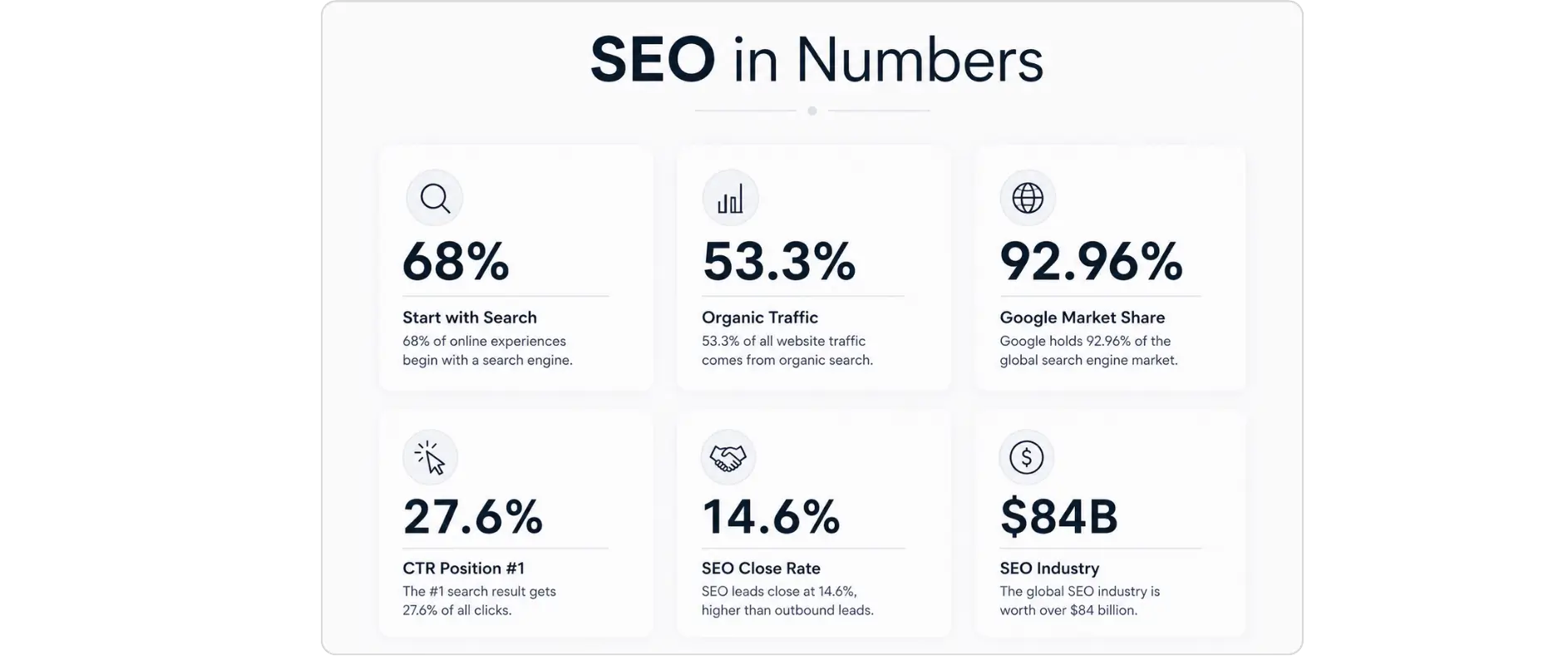
According to BrightEdge, nearly 68% of all online experiences start with a search engine. Whether consumers are looking for answers, comparing brands or researching products, search engines are the number one portal to find information, products and services online.
The first organic result on Google earns an average click-through rate of 27.6%, according to Advanced Web Ranking. Securing the top position significantly increases visibility and drives substantially more traffic than lower-ranking search results.
Organic search contributes nearly 58% of overall website traffic, according to SparkToro. For many organizations, it consistently outperforms paid advertising and social media as the largest and most sustainable source of website visitors.
Only 5.7% of newly published pages reach Google's top 10 search results within their first year, according to Ahrefs. Achieving strong rankings typically requires consistent optimization, authoritative content, and a long-term SEO strategy rather than immediate results.
Google Search, Google Images, and Google Maps account for 92.96% of global search activity, according to SparkToro. This overwhelming market share reinforces Google's position as the most influential platform for businesses investing in SEO.
SEO-generated leads close at an average rate of 14.6%, compared to just 1.7% for outbound marketing, according to Doyen Digital. Users arriving through search engines typically have stronger purchase intent, resulting in higher-quality leads and better conversion rates.
More than half of all Google clicks go to the top three organic search results, according to Backlinko. Websites ranking in these positions enjoy the greatest share of search visibility, making top-three rankings a critical SEO objective.
Nearly two-thirds of global web traffic now comes from mobile devices, according to DemandSage. As mobile usage continues to grow, optimizing websites for speed, usability, and responsiveness is essential for both search rankings and user experience.
Mordor Intelligence projects the global SEO industry to reach $83.98 billion by 2026. This sustained investment by businesses globally underscores the growing importance of organic search in the competitive digital arena of today.
Around three out of four users never scroll beyond Google's first page of search results. Earning a first-page ranking remains one of the most important factors for maximizing organic traffic and brand exposure.
SEO generates over 1,000% more traffic than organic social media, according to BrightEdge. Organic search accounts for the largest share of website traffic, making it one of the most effective long-term channels for attracting and retaining visitors.
Google continues to command roughly 90% of the global search engine market, according to StatCounter. Despite the emergence of AI-powered search experiences, Google remains the dominant platform for online discovery and organic visibility.
Only 0.63% of users click on results displayed on Google's second page, according to Backlinko. This highlights why businesses prioritize first-page rankings, where nearly all organic search traffic is concentrated.
Nearly 90% of marketers say SEO has improved their website's overall performance, according to Conductor's 2025 State of SEO Survey. From increasing search visibility to driving qualified traffic, SEO continues to be one of the most impactful digital marketing strategies.
Google Search Statistics
Google continues to shape how people discover information, products, and businesses online. While AI-powered search experiences are changing user behavior, Google's search ecosystem still processes billions of queries every day and remains the benchmark for SEO success.
The following Google Search statistics highlight the scale of Google's dominance, evolving search habits, and why optimizing for Google continues to be essential in 2026.
Google processes approximately 16.4 billion searches every day, according to DemandSage. That's more than 189,000 searches every second and over 6 trillion searches annually, making Google the world's largest platform for online information discovery.
Around 5.01 billion people actively use Google, according to DemandSage. Billions of users rely on Google every day to research products, compare services, find local businesses, and answer everyday questions.
The average internet user performs between three and four Google searches daily, according to DemandSage. Search has become an integral part of everyday life, influencing everything from purchasing decisions to finding instant answers.
Google Organic Search contributes nearly 58% of overall web traffic, according to SparkToro. For many businesses, organic search remains the single largest source of qualified visitors and long-term website growth.
Top-ranking pages typically rank for nearly 1,000 additional keywords, according to Ahrefs. Instead of driving traffic from a single keyword, authoritative pages often attract visitors through hundreds of related search queries.
Long-tail keywords generate approximately 1.76 times more clicks than broader search terms, according to Backlinko. More specific queries usually reflect stronger user intent, leading to higher engagement and conversion rates.
Only 5.7% of newly published pages rank in Google's top 10 search results within their first year, according to Ahrefs. Achieving first-page rankings usually requires consistent optimization, authoritative content, and long-term SEO efforts.
Google holds approximately 90.02% of the global search engine market, according to StatCounter. Despite growing competition from AI-powered assistants and alternative search platforms, Google continues to dominate global search.
Google commands nearly 94% of the global mobile search market, according to StatCounter. Mobile search remains overwhelmingly Google-centric, making mobile optimization a critical component of every SEO strategy.
Google controls around 84.2% of the U.S. search market, according to StatCounter. Even in one of the world's most competitive digital markets, Google remains the preferred search engine for the vast majority of users.
Desktop and mobile rankings don't always match, with around 89% of URLs showing ranking differences across devices, according to Semrush. Optimizing for both desktop and mobile experiences has become increasingly important in a mobile-first search landscape.
An average Google search session lasts about one minute, according to Backlinko. Users often expect immediate answers, making content relevance, page experience, and search intent more important than ever.
More than half of marketers believe AI-powered search experiences have increased overall search activity, according to HubSpot. Conversational AI is encouraging users to perform longer, more detailed, and increasingly complex searches.
Over 40% of marketers report increased website traffic since AI-powered search became mainstream, according to HubSpot. Businesses publishing authoritative, user-focused content continue to benefit as search behavior evolves through AI.
Google SERP Statistics
Google's search results pages have evolved well beyond the traditional list of ten blue links. Today's SERPs include AI Overviews, Featured Snippets, People Also Ask boxes, Local Packs, Shopping results, videos, images, and other rich features that compete for user attention.
These statistics show how Google's SERPs continue to reshape organic visibility and click behavior.
SERP features now appear in approximately 97% of Google searches, according to Moz. From Featured Snippets and Local Packs to AI Overviews and shopping results, Google's search pages have evolved far beyond the traditional list of blue links.
Featured Snippets appear in roughly 19% of Google search results, according to My Codeless Website. Often referred to as "Position Zero," these prominent results can increase brand visibility by providing direct answers before standard organic listings.
People Also Ask (PAA) boxes appear in nearly 75% of Google searches, according to Briskon. By surfacing related questions and expandable answers, PAA results encourage users to explore topics in greater depth while creating additional opportunities for content visibility.
AI Overviews have significantly reduced click-through rates for many informational searches, according to Ahrefs. As Google's AI-generated summaries answer more queries directly within search results, users are increasingly finding what they need without visiting external websites
Keywords ranking outside Google's top three positions experienced an average click-through rate decline of more than 27%, according to Ahrefs. With users concentrating their attention on the most visible results, earning a top-three ranking has become more valuable than ever.
The top organic result on Google earns an average click-through rate of 39.8%, according to FirstPageSage. Securing the number one position gives websites a significant competitive advantage by attracting a disproportionately larger share of search traffic.
Key Takeaways
Google continues to dominate the search landscape in 2026, processing billions of searches every day while maintaining the largest share of global search traffic. At the same time, Google's search results are becoming increasingly dynamic, with AI Overviews, Featured Snippets, and People Also Ask boxes changing how users interact with search.
For SEO professionals, success is no longer measured solely by ranking #1. Maximizing visibility across Google's expanding ecosystem of SERP features has become equally important for driving brand awareness, organic traffic, and long-term growth.
AI SEO Statistics
Artificial intelligence has fundamentally changed how search works. From Google's AI Overviews to ChatGPT, Perplexity, and other AI-powered search experiences, users are increasingly receiving direct answers instead of clicking traditional search results.
For marketers, this shift means SEO is no longer just about ranking higher it’s about earning visibility across AI-generated responses, building topical authority, and creating content that both users and AI models trust.
The following AI SEO statistics highlight how businesses are adopting AI, how search behavior is evolving, and what these changes mean for the future of SEO.
Around 86% of SEO professionals have already integrated AI into their SEO strategies, according to SEOClarity. From keyword research and content optimization to technical audits, AI has become an essential tool for improving productivity and scaling SEO efforts.
Approximately 82% of enterprise SEO teams plan to increase their investment in AI, according to SEOClarity. As websites become larger and more complex, organizations are leveraging AI to automate workflows and make data-driven decisions faster.
Nearly 58% of SEO professionals are actively exploring AI-powered tools for their daily workflows, according to BrightEdge. Growing confidence in generative AI is encouraging marketers to experiment with smarter ways to research, analyze, and optimize content.
About 61% of marketers now consider AI a core component of their overall marketing strategy, according to Semrush. What began as an emerging technology has quickly evolved into a key driver of modern digital marketing and SEO operations.
Nearly four in ten businesses have yet to adopt AI because they don't fully understand how it works, according to Semrush. Knowledge gaps and uncertainty remain some of the biggest barriers preventing wider AI implementation.
Around 67% of SEO professionals say AI's greatest benefit is automating repetitive SEO tasks, according to SEOClarity. From generating metadata and clustering keywords to streamlining reporting, AI enables marketers to spend more time on strategy and less on manual work.
Around 75% of marketers use AI to accelerate keyword research and on-page optimization, according to HubSpot. By automating repetitive SEO tasks, AI enables teams to spend more time refining strategy and improving overall search performance.
AI-powered tools can reduce data analysis time by as much as 50%, according to Bureau Works. Faster access to insights helps marketers identify trends, monitor performance, and make informed optimization decisions more efficiently.
Approximately 60% of businesses use AI to generate keyword ideas and support keyword research, according to Flying Cat Marketing. AI is becoming an indispensable tool for uncovering new search opportunities and building data-driven content strategies.
Around 63% of businesses rely on AI to create content outlines, according to Flying Cat Marketing. Well-structured outlines help streamline content production while ensuring better topical coverage and search relevance.
Nearly 73% of businesses now use AI to assist with content creation, according to McKinsey's State of AI Report. From drafting blog posts to generating marketing copy, AI has become one of the most widely adopted applications of generative technology.
About 67% of marketers say AI-assisted writing tools help them produce higher-quality content, according to Semrush. When combined with human expertise, AI can improve both content quality and production efficiency.
An overwhelming 93% of marketers review AI-generated content before publishing, according to Semrush. Human oversight remains essential for maintaining accuracy, originality, brand voice, and factual reliability.
AI-generated headlines outperformed human-written headlines in 46% of A/B tests, according to SEO.AI. Data-driven headline optimization demonstrates AI's growing ability to improve click-through rates and content engagement.
Approximately 84% of marketers believe AI is highly effective at matching content with user search intent, according to Statista. By analyzing context and query patterns, AI helps create content that better aligns with what users are actually searching for.
Around 70% of businesses say ChatGPT helps them create content more efficiently, according to Forbes Advisor. Faster content production enables marketing teams to publish consistently while reducing the time required for drafting and ideation.
Nearly 65% of businesses report improved SEO performance after adopting AI-powered tools, according to Semrush. From stronger rankings to increased organic visibility, AI continues to deliver measurable improvements across SEO campaigns.
More than half of SEO professionals have experienced measurable improvements in on-page SEO through AI, according to SEOClarity. AI assists with optimizing headings, metadata, internal linking, and overall content structure, making on-page optimization faster and more effective.
Around two-thirds of AI-enabled businesses report revenue growth of at least 25%, according to IBM. Beyond improving efficiency, AI is delivering measurable business outcomes by helping organizations increase productivity, optimize operations, and drive higher revenue.
Approximately 40% of marketers experienced revenue growth between 6% and 10% after implementing AI in their SEO efforts, according to SEO.AI. Even modest AI adoption can improve marketing performance by enhancing content quality, search visibility, and campaign efficiency.
Nearly 60% of citations in Google's AI Overviews come from pages that don't rank in the traditional top 10 organic search results, according to RankRabbit.ai. This indicates that AI Overviews prioritize content relevance, authority, and contextual value over conventional search rankings, creating new visibility opportunities for well-optimized content.
AI Search & Zero-Click Statistics
AI-powered search experiences are changing how users interact with search engines. Instead of clicking through to websites, users increasingly receive answers directly within search results.
These statistics illustrate why businesses must optimize for visibility not just clicks.
58.5% of Google searches in the U.S. now end without a click, according to SparkToro. Users increasingly find the information they need directly on the search results page.
Organic click-through rates declined by 61% for searches displaying AI Overviews, according to Seer Interactive. AI-generated summaries are significantly reducing clicks to traditional organic listings.
Informational queries are the most likely to trigger Google's AI Overviews, according to Datos and SparkToro. Educational content is increasingly competing with AI-generated summaries for user attention.
The click-through rate for Google's top organic result drops from 7.3% to 1.6% on searches featuring AI Overviews, according to Ahrefs. As AI-generated answers satisfy more queries directly within search results, websites are seeing significantly fewer clicks even when they hold the number one ranking.
ChatGPT now processes approximately 2.5 billion prompts every day, according to OpenAI. While Google remains the dominant search platform, the rapid growth of conversational AI highlights a major shift in how people discover information and seek answers online.
Around 21% of U.S. internet users visited ChatGPT every month in late 2024, according to SparkToro and Similarweb. The steady rise in AI assistant usage suggests that conversational search is becoming an important complement to traditional search engines.
More than half of all ChatGPT prompts are informational, according to Break The Web. Users increasingly turn to AI assistants for research, learning, brainstorming, and problem-solving rather than purely transactional or navigational queries.
Many brands are reporting higher revenue despite declining blog traffic, according to HubSpot and Break The Web. As AI-powered search changes how users discover content, brand visibility, authority, and conversions are becoming more meaningful performance indicators than pageviews alone.
Local SEO Statistics
Local search continues to play a critical role in how consumers discover nearby businesses. Whether someone is searching for a restaurant, law firm, dentist, or home service provider, Google prioritizes results that are relevant to the user's location and intent.
The following statistics highlight how local search behavior continues to evolve and why optimizing your local presence is essential in 2026.
Nearly 46% of all Google searches have local intent, according to Search Engine Roundtable. Almost half of Google's daily searches are driven by users looking for nearby businesses, services, or locations.
Searches containing "near me" have increased by more than 500% over the last five years, according to Think with Google. Consumers increasingly rely on location-based searches when making immediate purchasing decisions.
97% of consumers use online search to find local businesses, according to Central Street Digital. For most customers, search engines have replaced traditional business directories.
Around 64% of small businesses actively invest in Local SEO, according to Miromind. More businesses are recognizing local search as an important driver of visibility and customer acquisition.
Businesses with a complete Google Business Profile are 2.7 times more likely to be viewed as trustworthy, according to Google. A fully optimized profile helps build credibility before customers even visit your website.
Verified Google Business Profiles receive an average of 21,643 views each year, according to Birdeye. An optimized listing can generate consistent visibility across Google Search and Google Maps.
Businesses with complete Google Business Profiles are 70% more likely to attract location visits, according to Google's internal data. Keeping business information accurate and up to date directly impacts customer engagement.
Verified Google Business Profiles generate roughly 200 customer interactions every month, according to Birdeye. These interactions include website visits, phone calls, direction requests, and other valuable customer actions.
Google Business Profile listings drive approximately 105 website visits per month on average, according to Birdeye. Local listings often become a significant source of qualified referral traffic.
More than half of consumers contact businesses directly through their Google Business Profile, according to RedLocalSEO. Features like click-to-call and messaging help convert local searches into real customer inquiries.
Verified business listings receive around 595 phone calls annually, according to Birdeye. Local search continues to generate meaningful offline conversions for businesses.
75% of marketers believe Google Business Profile features influence local rankings, according to Moz. Photos, services, posts, Q&A, and business attributes all contribute to stronger local visibility.
Businesses that regularly upload photos receive 42% more direction requests and 35% more website clicks, according to Google. Visual content helps improve engagement with local listings.
Google Business Profile management is the most valuable Local SEO service for businesses, according to BrightLocal. It ranks ahead of content creation and website design as the highest-priority local marketing investment.
76% of smartphone users who perform a nearby search visit a business within 24 hours, according to Google. Local searches often lead to immediate offline actions.
Approximately 28% of local searches result in a purchase, according to Google. This highlights the strong commercial intent behind location-based search queries.
97% of consumers learn more about local businesses online before making a decision, according to SEO.com. Your online presence often forms a customer's first impression.
Nearly 30% of all mobile searches are location-related, according to Google. Mobile devices continue to dominate local discovery and navigation.
Around 80% of local mobile searches convert into meaningful customer actions, according to LocaliQ. Whether it's visiting a website, requesting directions, or calling a business, local search users typically have high intent.
78% of local mobile searches lead to an offline purchase, according to Search Engine Land. Local SEO continues to bridge the gap between online discovery and in-store sales.
Four out of every ten Local SEO campaigns generate an ROI of 500% or more, according to Finances Online. For many businesses, Local SEO remains one of the highest-return marketing investments.
Google Maps is the preferred navigation platform for 88% of consumers searching for local businesses, according to BrightLocal. Apple Maps and other navigation apps account for a much smaller share of local business discovery.
Around 40% of consumers search for a business's opening hours multiple times each month, according to BrightLocal. Keeping business hours updated helps reduce customer frustration and missed opportunities.
Nearly 39% of consumers regularly check business attributes such as accessibility, pet-friendliness, or child-friendly facilities, according to BrightLocal. Additional profile information can influence purchasing decisions.
Google's Local Map Pack captures around 42% of all local search clicks, according to Backlinko. Appearing in the map results significantly improves local visibility.
Approximately 68% of users prefer clicking businesses listed in Google's Local 3-Pack, according to RedLocalSEO. Securing one of these top positions provides a considerable competitive advantage.
Businesses appearing in Google's Local 3-Pack receive 126% more traffic than listings ranked below them, according to RedLocalSEO. Higher local rankings translate directly into greater exposure and customer engagement.
Proximity accounts for nearly 48% of Google's Local Pack ranking influence, according to the Search Atlas Ranking Correlation Study (2025). Physical distance remains the strongest ranking factor for local search.
Business category contributes approximately 21% to Local Pack ranking performance, according to the Search Atlas Ranking Correlation Study. Choosing the most accurate primary business category helps improve visibility.
Review keywords contribute around 11% to local ranking performance, according to the Search Atlas Ranking Correlation Study. Reviews containing relevant services or products provide stronger local relevance.
The number of customer reviews influences roughly 8% of Local Pack rankings, according to the Search Atlas Ranking Correlation Study. Consistently earning authentic reviews remains an important local SEO strategy.
Business names that naturally include relevant service keywords may gain additional local ranking advantages, according to the Search Atlas Ranking Correlation Study. Clear business naming helps Google better understand relevance.
Approximately 72% of consumers use voice assistants to search for local businesses, according to SynUp. Voice search continues to influence how people discover nearby services.
About 76% of voice searches contain local intent phrases such as "near me," according to SynUp. Conversational searches increasingly focus on nearby businesses and immediate needs.
58% of users rely on voice search while traveling or on the go, according to BrightLocal. Mobile convenience continues to drive voice-based local discovery.
Three out of four consumers regularly read online reviews before choosing a local business, according to BrightLocal. Reviews have become one of the strongest trust signals in local search.
89% of consumers are more likely to choose businesses that respond to every review, according to Capital One Shopping. Active engagement demonstrates reliability and improves customer confidence.
63% of consumers lose trust in businesses with consistently negative reviews, according to BrightLocal. Managing online reputation is just as important as improving rankings.
Nearly half of consumers trust online reviews as much as personal recommendations, according to BrightLocal. Positive customer feedback continues to influence buying decisions across every industry.

Content Marketing, Keyword Research & Technical SEO Statistics
A successful SEO strategy starts long before a page is published. It begins with understanding how people search, creating content that satisfies search intent, and ensuring your website meets Google's technical requirements.
From keyword research and content quality to page speed, Core Web Vitals, and technical optimization, these statistics reveal the factors that consistently influence search visibility and organic performance.
Keyword Research Statistics
68% of all online experiences begin with a search engine, according to BrightEdge. Understanding what users search for is the foundation of every successful SEO strategy.
Long-tail keywords account for over 70% of all search queries, according to Semrush. More specific searches often have lower competition and higher conversion potential.
Around 94.74% of keywords receive fewer than 10 monthly searches, according to Ahrefs. Individually they may have low volume, but together they represent a significant share of search demand.
Only 0.0008% of keywords receive more than 100,000 monthly searches, according to Ahrefs. High-volume keywords are exceptionally competitive and make up only a tiny fraction of total searches.
Pages ranking #1 typically rank for hundreds or even thousands of related keywords, according to Ahrefs. Strong topical coverage helps increase visibility beyond a single target keyword.
Search intent is considered the most important ranking factor by SEO professionals, according to Semrush. Matching user expectations is essential for earning and maintaining rankings.
Question-based keywords continue to grow as conversational search expands, according to Semrush. Users increasingly search using natural language instead of short keyword phrases.
Commercial intent keywords typically produce higher conversion rates than informational keywords, according to Backlinko. Users searching to compare or buy are generally closer to making a purchase.
Keyword clustering improves topical relevance and internal linking opportunities, according to Surfer SEO. Organizing related keywords helps build stronger content hubs.
Businesses that publish blogs generate 55% more website visitors, according to HubSpot. Consistent publishing creates more opportunities to rank in search results.
Companies with blogs produce 67% more leads than those without one, according to Demand Metric. Valuable content continues to attract qualified prospects organically.
Content Marketing Statistics
Long-form content generally earns more backlinks than shorter articles, according to Backlinko. Comprehensive resources are more likely to be referenced by other websites.
The average first-page Google result contains approximately 1,447 words, according to Backlinko. High-ranking content tends to cover topics in greater depth.
Content updated regularly is more likely to maintain or improve rankings, according to HubSpot. Refreshing existing pages helps preserve relevance and accuracy.
Original research consistently attracts more backlinks than opinion-based content, according to BuzzSumo. Unique data encourages citations from publishers and journalists.
Visual content increases user engagement and time on page, according to Venngage. Images, charts, and infographics make complex information easier to understand.
Nearly 60% of marketers consider content creation their most effective SEO tactic, according to HubSpot. High-quality content remains the core of organic growth.
Pages covering a topic comprehensively tend to outperform thin content, according to Clearscope. Topical depth helps search engines better understand content relevance.
Internal links help distribute authority and improve content discoverability, according to Google's SEO documentation. A strong internal linking structure benefits both users and crawlers.
Page speed is a confirmed Google ranking factor, according to Google. Faster websites provide a better user experience and support stronger search performance.
A one-second delay in page load time can reduce conversions by up to 7%, according to Akamai. Speed directly impacts both SEO and revenue.
Core Web Vitals are part of Google's page experience signals, according to Google. They measure loading speed, responsiveness, and visual stability.
Technical SEO Statistics
Mobile-first indexing now applies to the vast majority of websites, according to Google. Google primarily evaluates the mobile version of a page for indexing and ranking.
HTTPS is used by over 95% of pages appearing on Google's first page, according to Moz. Secure websites have become the industry standard.
Broken links negatively impact user experience and crawl efficiency, according to Google Search Central. Regular technical audits help prevent indexing issues.
XML sitemaps help search engines discover and crawl important pages more efficiently, according to Google Search Central. They are especially valuable for large or frequently updated websites.
Structured data increases the likelihood of earning rich search results, according to Google. Schema markup helps search engines better interpret page content.
Duplicate content can dilute ranking signals when not properly managed, according to Google Search Central. Canonical tags help consolidate authority across similar pages.
Regular technical SEO audits help identify crawl, indexing, and performance issues before they affect rankings, according to Semrush. Proactive maintenance keeps websites search-friendly.
Only around 33% of websites pass Google's Core Web Vitals assessment on mobile, according to HTTP Archive. This highlights that page experience remains a widespread technical SEO challenge, especially on mobile devices where performance expectations are highest.
More than 61% of webpages have duplicate title tags or duplicate meta descriptions, according to Semrush Site Audit data. Duplicate metadata can make it harder for search engines to understand page uniqueness and may reduce overall search visibility if left unresolved.

Mobile, Video, Voice Search & Link Building Statistics
The way people search continues to evolve beyond traditional desktop queries. Mobile devices now dominate search traffic, video has become one of the largest search channels, voice assistants influence local discovery, and backlinks remain one of Google's strongest ranking signals.
The following statistics highlight how these four areas continue to shape modern SEO strategies and where businesses should focus their optimization efforts.
Mobile SEO Statistics
Nearly 53% of mobile users abandon a website that takes longer than three seconds to load, according to Google. Slow-loading mobile pages increase bounce rates, reduce user engagement, and can negatively affect both search rankings and conversions.
More than 63% of Google searches now come from mobile devices, according to Statcounter. Mobile optimization is essential for reaching the majority of search users.
Google uses mobile-first indexing for nearly all websites, according to Google. Your mobile experience now plays a major role in rankings.
Over 58% of global website traffic comes from mobile devices, according to Statista. Responsive websites are no longer optional.
53% of mobile users abandon pages that take longer than three seconds to load, according to Google. Faster loading pages improve both rankings and conversions.
Mobile-friendly websites consistently outperform non-responsive sites in search visibility, according to Google Search Central. Usability remains a key ranking consideration.
Nearly 70% of smartphone users are more likely to buy from businesses whose websites answer their questions quickly, according to Google. Helpful mobile experiences directly influence purchase decisions.
More than 80% of consumers use smartphones to research products before buying, according to Think with Google. Mobile search plays a significant role throughout the buying journey.
Local searches performed on mobile devices frequently result in same-day business visits, according to Google. Mobile users often have immediate purchase intent.
Improving mobile page speed can significantly increase user engagement and reduce bounce rates, according to Google. Performance optimization benefits both SEO and user experience.
Responsive design remains Google's recommended approach for mobile SEO, according to Google Search Central. Maintaining a single, adaptable website simplifies crawling and indexing.
Video SEO Statistics
YouTube is the world's second-largest search engine, according to Google. Millions of users search for information through video every day.
Video results appear in a growing number of Google search queries, according to Semrush. Optimized videos can increase visibility beyond YouTube itself.
Pages containing video generally achieve higher user engagement than text-only pages, according to Wyzowl. Multimedia content encourages visitors to stay longer.
Adding videos to landing pages can increase conversion rates by up to 80%, according to Unbounce. Video helps explain products and services more effectively.
Nearly 90% of marketers report positive ROI from video marketing, according to Wyzowl. Video continues to be one of the highest-performing content formats.
Educational videos are among the most searched content categories on YouTube, according to Google. Informative content aligns closely with SEO objectives.
Optimized video titles, descriptions, and transcripts improve discoverability, according to YouTube Creator Academy. Metadata helps search engines understand video content.
Google increasingly features video carousels for informational searches, according to Semrush. Video optimization creates additional opportunities to appear in SERPs.
Voice Search Statistics
Around 20% of people worldwide regularly use voice search, according to Google. Voice-enabled devices continue to influence search behavior.
Most voice searches are conversational and longer than traditional text queries, according to Backlinko. Natural language optimization is becoming increasingly important.
Voice searches frequently include question-based keywords such as "how," "what," and "where," according to Semrush. FAQ-style content helps address these queries effectively.
Local businesses benefit the most from voice search optimization, according to BrightLocal. Many voice queries involve nearby products or services.
Featured Snippets are commonly used as answers for voice assistants, according to Backlinko. Ranking for snippets increases the likelihood of being selected as a spoken response.
Backlink Statistics
Backlinks remain one of Google's strongest ranking signals, according to Google's original PageRank research and multiple industry correlation studies. High-quality links continue to influence search visibility.
The top-ranking Google result typically has significantly more backlinks than lower-ranking pages, according to Backlinko. Authority remains closely tied to link quality and quantity.
Over 66% of web pages have no backlinks at all, according to Ahrefs. Earning even a few authoritative links can provide a competitive advantage.
Around 94% of online content receives zero external backlinks, according to Ahrefs. Link-worthy content remains relatively rare.
Original research and data-driven content attract the highest number of backlinks, according to BuzzSumo. Unique insights encourage natural citations.
Long-form content generally earns more backlinks than shorter articles, according to Backlinko. Comprehensive resources are more likely to be referenced by other websites.
Digital PR has become one of the fastest-growing link-building strategies, according to Semrush. Brand mentions and editorial coverage often generate high-authority backlinks.
Internal links help search engines understand site structure and distribute page authority, according to Google Search Central. Strategic internal linking strengthens overall SEO performance.
Broken link building continues to be an effective white-hat outreach strategy, according to Ahrefs. Replacing outdated resources creates value for both website owners and users.
Quality consistently outweighs quantity when it comes to backlinks, according to Google Search Central. A handful of authoritative links often provides more value than hundreds of low-quality ones.
SEO ROI, E-commerce, Enterprise & Industry Statistics
SEO has evolved from a marketing tactic into a long-term business investment. Companies across industries are increasing their SEO budgets because organic search consistently delivers qualified traffic, lower acquisition costs, and measurable returns.
From e-commerce brands and enterprise organizations to small businesses, these statistics demonstrate why SEO continues to outperform many other digital marketing channels in terms of growth, revenue, and long-term ROI.
SEO ROI Statistics
SEO generates over 1,000% more traffic than organic social media, according to BrightEdge. Organic search remains the largest driver of website traffic for most businesses.
SEO leads have an average close rate of 14.6%, compared to just 1.7% for outbound marketing, according to Search Engine Journal. Search users often have stronger purchase intent than audiences reached through traditional outreach.
Around 49% of marketers say organic search delivers the highest ROI of any digital marketing channel, according to Search Engine Journal. SEO continues to outperform many paid acquisition strategies over the long term.
Businesses earn an average return of more than 5X on their SEO investment over time, according to First Page Sage. Sustainable rankings continue generating traffic long after content is published.
Over 60% of marketers consider SEO their highest-quality source of leads, according to HubSpot. Organic visitors are often further along in the buying journey.
SEO drives more than 53% of all trackable website traffic, according to BrightEdge. Organic search remains the single largest source of website visitors.
Nearly 70% of marketers actively invest in SEO because of its long-term value, according to HubSpot. Unlike paid advertising, SEO continues delivering results after campaigns end.
Content marketing combined with SEO costs significantly less per lead than traditional outbound marketing, according to Demand Metric. Organic acquisition improves marketing efficiency over time.
E-commerce SEO Statistics
Around 44% of online shoppers begin their buying journey with a search engine, according to Intergrowth. Search remains one of the first touchpoints in online purchasing.
Organic search is responsible for roughly one-third of all e-commerce website traffic, according to Wolfgang Digital. SEO continues to be a major revenue driver for online stores.
Product pages optimized for search generate significantly higher organic conversions than unoptimized pages, according to Shopify. Better visibility leads to more qualified shoppers.
Search traffic often produces higher average order values than many paid channels, according to Adobe Digital Insights. Users arriving through organic search tend to make more informed purchasing decisions.
More than 80% of consumers research products online before making a purchase, according to Think with Google. Strong organic visibility influences buying decisions throughout the customer journey.
Customer reviews play a major role in both local and e-commerce purchasing decisions, according to BrightLocal. Trust signals continue to impact conversion rates.
Enterprise SEO Statistics
More than 80% of enterprise organizations have dedicated SEO teams or specialists, according to Conductor. Large businesses increasingly treat SEO as a core business function.
Enterprise websites commonly manage thousands of indexed pages simultaneously, according to BrightEdge. Scalable SEO processes are essential for maintaining visibility.
Automation and AI are becoming standard components of enterprise SEO workflows, according to seoClarity. Large organizations use automation to improve efficiency across technical SEO, reporting, and content optimization.
Technical SEO is consistently ranked among the highest priorities for enterprise websites, according to Conductor. Large websites require continuous optimization to maintain crawlability and performance.
Cross-functional collaboration between SEO, content, development, and analytics teams improves enterprise SEO success, according to BrightEdge. Long-term growth depends on coordinated execution.
SEO Industry & Market Statistics
The global SEO industry is valued at more than $84 billion and continues to grow, according to Research and Markets. Businesses worldwide continue increasing investment in organic search.
The SEO software market is projected to exceed $140 billion by the early 2030s, according to multiple market research reports. Growing demand reflects the increasing complexity of search optimization.
More than half of businesses plan to increase their SEO budgets over the next year, according to HubSpot. Organic growth remains a strategic priority.
SEO is one of the fastest-growing digital marketing services worldwide, according to Grand View Research. Demand continues rising across nearly every industry.
Small businesses increasingly prioritize SEO over traditional advertising, according to BrightLocal. Organic visibility provides long-term value without recurring ad spend.
SEO Software Statistics
Google Search Console remains the most widely used free SEO platform, according to Search Engine Journal. It provides essential insights into indexing, performance, and search visibility.
Google Analytics is used by the majority of marketers to measure SEO performance, according to W3Techs. Analytics continues to play a central role in tracking user behavior.
Semrush and Ahrefs are among the most widely adopted professional SEO platforms, according to G2 industry reports. Both tools support keyword research, competitor analysis, and backlink monitoring.
Rank tracking remains one of the most commonly used SEO reporting metrics, according to Databox. Businesses continue monitoring keyword performance as a key success indicator.
Technical site audits are performed regularly by most SEO professionals, according to Semrush. Routine audits help identify issues before they impact rankings.
Global SEO Statistics
Google holds approximately 93% of the global search engine market, according to Statcounter. It remains the dominant search platform worldwide.
Bing is the second-largest search engine globally, followed by Yahoo and Yandex, according to Statcounter. While smaller than Google, these platforms still generate valuable traffic.
Internet users perform billions of searches every day across major search engines, according to Google. Search continues to be one of the internet's most common activities.
English remains the most competitive language for SEO globally, according to Semrush. Businesses targeting English-speaking markets often face greater competition.
Final Thoughts
The throughline across these 200+ SEO statistics for 2026 is consistent: search is changing shape, not shrinking in importance. Fewer searches end in a click, but the ones that do convert are worth more, and the businesses showing up in organic results, local packs, and AI-generated answers alike capture outsized value relative to everyone who isn't. Treat these statistics as a planning tool: each one should shift what you prioritize this quarter, not just what you cite in a deck.
Numbers alone don't move rankings applying them correctly does. That's the work Coozmoo Digital Solutions does for clients every day: turning statistics like these into prioritized, executed SEO strategy rather than another slide nobody acts on.
FAQs
What is the most important SEO statistic for 2026?

The rise of zero-click search roughly 60–65% of all Google searches, and 80%+ on AI Overview queries is arguably the single most strategically important 2026 SEO statistic, since it redefines what "success" looks like for organic content.
Does Google still dominate the search engine market in 2026?
You should expect a structured process that includes onboarding, goal setting, strategy development, regular communication, execution of campaigns, and performance reporting. A good agency will act as a partner collaborating with you to understand your business, crafting a custom plan, and keeping you informed about progress and results.
How much traffic do AI Overviews actually take from websites?
Studies converge on a meaningful reduction, commonly cited between roughly 35% and 60% lower click-through on the top organic position when an AI Overview appears, though figures vary by study and query type.
Is SEO still a good ROI compared to paid ads?
Generally yes. Median SEO ROI is commonly cited around 700–750%, and organic conversion rates typically run higher than paid or display advertising, though SEO takes longer usually 6–12 months to reach that return.
How important is local SEO for small businesses?
Very. Roughly 46% of all Google searches carry local intent, and a large share of mobile local searches lead to an in-person visit within 24 hours, making local SEO one of the highest-converting channels available.
SEO statistics and facts in 2026 shape how websites earn rankings, how content reaches real users, and how businesses compete for visibility inside search engines. The SEO statistics gathered here reflect current search engine behavior, not guesswork, covering how Google weighs E-E-A-T signals, how ranking factors have shifted, and how technical and content performance drive results across industries in 2026.
This collection brings together platform data, industry surveys, and verified benchmarks across every major SEO domain marketers care about: local SEO, keyword research, mobile usability, technical performance, AI-driven search, video SEO, international SEO, e-commerce visibility, ROI, and SEO software adoption. Below are 200+ SEO statistics for 2026, organized by category so you can jump straight to what matters for your work, with a plain-language "key fact" takeaway after every section.
Why SEO Statistics Matter More Than Ever in 2026
SEO has entered a new era. Users no longer rely solely on Google's traditional blue links. AI-generated answers, conversational search engines, voice assistants, and platform-based discovery are reshaping how people find information online.
At the same time, businesses are investing more heavily in SEO because organic visibility continues to generate one of the highest long-term returns among digital marketing channels.
Understanding the latest SEO statistics allows marketers to:
Validate SEO investments with real-world data.
Stay ahead of evolving search trends.
Prioritize strategies that drive measurable results.
Adapt to AI-powered search experiences.
Benchmark performance against industry standards.
200+ SEO Statistics
General SEO Statistics for 2026
These statistics highlight the overall impact of SEO on digital marketing, business growth, and customer acquisition.
Google processes around 16.4 billion searches a day. With trillions of searches performed each year, businesses have tremendous opportunities to engage with potential customers through organic search.
According to BrightEdge, nearly 68% of all online experiences start with a search engine. Whether consumers are looking for answers, comparing brands or researching products, search engines are the number one portal to find information, products and services online.
The first organic result on Google earns an average click-through rate of 27.6%, according to Advanced Web Ranking. Securing the top position significantly increases visibility and drives substantially more traffic than lower-ranking search results.
Organic search contributes nearly 58% of overall website traffic, according to SparkToro. For many organizations, it consistently outperforms paid advertising and social media as the largest and most sustainable source of website visitors.
Only 5.7% of newly published pages reach Google's top 10 search results within their first year, according to Ahrefs. Achieving strong rankings typically requires consistent optimization, authoritative content, and a long-term SEO strategy rather than immediate results.
Google Search, Google Images, and Google Maps account for 92.96% of global search activity, according to SparkToro. This overwhelming market share reinforces Google's position as the most influential platform for businesses investing in SEO.
SEO-generated leads close at an average rate of 14.6%, compared to just 1.7% for outbound marketing, according to Doyen Digital. Users arriving through search engines typically have stronger purchase intent, resulting in higher-quality leads and better conversion rates.
More than half of all Google clicks go to the top three organic search results, according to Backlinko. Websites ranking in these positions enjoy the greatest share of search visibility, making top-three rankings a critical SEO objective.
Nearly two-thirds of global web traffic now comes from mobile devices, according to DemandSage. As mobile usage continues to grow, optimizing websites for speed, usability, and responsiveness is essential for both search rankings and user experience.
Mordor Intelligence projects the global SEO industry to reach $83.98 billion by 2026. This sustained investment by businesses globally underscores the growing importance of organic search in the competitive digital arena of today.
Around three out of four users never scroll beyond Google's first page of search results. Earning a first-page ranking remains one of the most important factors for maximizing organic traffic and brand exposure.
SEO generates over 1,000% more traffic than organic social media, according to BrightEdge. Organic search accounts for the largest share of website traffic, making it one of the most effective long-term channels for attracting and retaining visitors.
Google continues to command roughly 90% of the global search engine market, according to StatCounter. Despite the emergence of AI-powered search experiences, Google remains the dominant platform for online discovery and organic visibility.
Only 0.63% of users click on results displayed on Google's second page, according to Backlinko. This highlights why businesses prioritize first-page rankings, where nearly all organic search traffic is concentrated.
Nearly 90% of marketers say SEO has improved their website's overall performance, according to Conductor's 2025 State of SEO Survey. From increasing search visibility to driving qualified traffic, SEO continues to be one of the most impactful digital marketing strategies.
Google Search Statistics
Google continues to shape how people discover information, products, and businesses online. While AI-powered search experiences are changing user behavior, Google's search ecosystem still processes billions of queries every day and remains the benchmark for SEO success.
The following Google Search statistics highlight the scale of Google's dominance, evolving search habits, and why optimizing for Google continues to be essential in 2026.
Google processes approximately 16.4 billion searches every day, according to DemandSage. That's more than 189,000 searches every second and over 6 trillion searches annually, making Google the world's largest platform for online information discovery.
Around 5.01 billion people actively use Google, according to DemandSage. Billions of users rely on Google every day to research products, compare services, find local businesses, and answer everyday questions.
The average internet user performs between three and four Google searches daily, according to DemandSage. Search has become an integral part of everyday life, influencing everything from purchasing decisions to finding instant answers.
Google Organic Search contributes nearly 58% of overall web traffic, according to SparkToro. For many businesses, organic search remains the single largest source of qualified visitors and long-term website growth.
Top-ranking pages typically rank for nearly 1,000 additional keywords, according to Ahrefs. Instead of driving traffic from a single keyword, authoritative pages often attract visitors through hundreds of related search queries.
Long-tail keywords generate approximately 1.76 times more clicks than broader search terms, according to Backlinko. More specific queries usually reflect stronger user intent, leading to higher engagement and conversion rates.
Only 5.7% of newly published pages rank in Google's top 10 search results within their first year, according to Ahrefs. Achieving first-page rankings usually requires consistent optimization, authoritative content, and long-term SEO efforts.
Google holds approximately 90.02% of the global search engine market, according to StatCounter. Despite growing competition from AI-powered assistants and alternative search platforms, Google continues to dominate global search.
Google commands nearly 94% of the global mobile search market, according to StatCounter. Mobile search remains overwhelmingly Google-centric, making mobile optimization a critical component of every SEO strategy.
Google controls around 84.2% of the U.S. search market, according to StatCounter. Even in one of the world's most competitive digital markets, Google remains the preferred search engine for the vast majority of users.
Desktop and mobile rankings don't always match, with around 89% of URLs showing ranking differences across devices, according to Semrush. Optimizing for both desktop and mobile experiences has become increasingly important in a mobile-first search landscape.
An average Google search session lasts about one minute, according to Backlinko. Users often expect immediate answers, making content relevance, page experience, and search intent more important than ever.
More than half of marketers believe AI-powered search experiences have increased overall search activity, according to HubSpot. Conversational AI is encouraging users to perform longer, more detailed, and increasingly complex searches.
Over 40% of marketers report increased website traffic since AI-powered search became mainstream, according to HubSpot. Businesses publishing authoritative, user-focused content continue to benefit as search behavior evolves through AI.
Google SERP Statistics
Google's search results pages have evolved well beyond the traditional list of ten blue links. Today's SERPs include AI Overviews, Featured Snippets, People Also Ask boxes, Local Packs, Shopping results, videos, images, and other rich features that compete for user attention.
These statistics show how Google's SERPs continue to reshape organic visibility and click behavior.
SERP features now appear in approximately 97% of Google searches, according to Moz. From Featured Snippets and Local Packs to AI Overviews and shopping results, Google's search pages have evolved far beyond the traditional list of blue links.
Featured Snippets appear in roughly 19% of Google search results, according to My Codeless Website. Often referred to as "Position Zero," these prominent results can increase brand visibility by providing direct answers before standard organic listings.
People Also Ask (PAA) boxes appear in nearly 75% of Google searches, according to Briskon. By surfacing related questions and expandable answers, PAA results encourage users to explore topics in greater depth while creating additional opportunities for content visibility.
AI Overviews have significantly reduced click-through rates for many informational searches, according to Ahrefs. As Google's AI-generated summaries answer more queries directly within search results, users are increasingly finding what they need without visiting external websites
Keywords ranking outside Google's top three positions experienced an average click-through rate decline of more than 27%, according to Ahrefs. With users concentrating their attention on the most visible results, earning a top-three ranking has become more valuable than ever.
The top organic result on Google earns an average click-through rate of 39.8%, according to FirstPageSage. Securing the number one position gives websites a significant competitive advantage by attracting a disproportionately larger share of search traffic.
Key Takeaways
Google continues to dominate the search landscape in 2026, processing billions of searches every day while maintaining the largest share of global search traffic. At the same time, Google's search results are becoming increasingly dynamic, with AI Overviews, Featured Snippets, and People Also Ask boxes changing how users interact with search.
For SEO professionals, success is no longer measured solely by ranking #1. Maximizing visibility across Google's expanding ecosystem of SERP features has become equally important for driving brand awareness, organic traffic, and long-term growth.
AI SEO Statistics
Artificial intelligence has fundamentally changed how search works. From Google's AI Overviews to ChatGPT, Perplexity, and other AI-powered search experiences, users are increasingly receiving direct answers instead of clicking traditional search results.
For marketers, this shift means SEO is no longer just about ranking higher it’s about earning visibility across AI-generated responses, building topical authority, and creating content that both users and AI models trust.
The following AI SEO statistics highlight how businesses are adopting AI, how search behavior is evolving, and what these changes mean for the future of SEO.
Around 86% of SEO professionals have already integrated AI into their SEO strategies, according to SEOClarity. From keyword research and content optimization to technical audits, AI has become an essential tool for improving productivity and scaling SEO efforts.
Approximately 82% of enterprise SEO teams plan to increase their investment in AI, according to SEOClarity. As websites become larger and more complex, organizations are leveraging AI to automate workflows and make data-driven decisions faster.
Nearly 58% of SEO professionals are actively exploring AI-powered tools for their daily workflows, according to BrightEdge. Growing confidence in generative AI is encouraging marketers to experiment with smarter ways to research, analyze, and optimize content.
About 61% of marketers now consider AI a core component of their overall marketing strategy, according to Semrush. What began as an emerging technology has quickly evolved into a key driver of modern digital marketing and SEO operations.
Nearly four in ten businesses have yet to adopt AI because they don't fully understand how it works, according to Semrush. Knowledge gaps and uncertainty remain some of the biggest barriers preventing wider AI implementation.
Around 67% of SEO professionals say AI's greatest benefit is automating repetitive SEO tasks, according to SEOClarity. From generating metadata and clustering keywords to streamlining reporting, AI enables marketers to spend more time on strategy and less on manual work.
Around 75% of marketers use AI to accelerate keyword research and on-page optimization, according to HubSpot. By automating repetitive SEO tasks, AI enables teams to spend more time refining strategy and improving overall search performance.
AI-powered tools can reduce data analysis time by as much as 50%, according to Bureau Works. Faster access to insights helps marketers identify trends, monitor performance, and make informed optimization decisions more efficiently.
Approximately 60% of businesses use AI to generate keyword ideas and support keyword research, according to Flying Cat Marketing. AI is becoming an indispensable tool for uncovering new search opportunities and building data-driven content strategies.
Around 63% of businesses rely on AI to create content outlines, according to Flying Cat Marketing. Well-structured outlines help streamline content production while ensuring better topical coverage and search relevance.
Nearly 73% of businesses now use AI to assist with content creation, according to McKinsey's State of AI Report. From drafting blog posts to generating marketing copy, AI has become one of the most widely adopted applications of generative technology.
About 67% of marketers say AI-assisted writing tools help them produce higher-quality content, according to Semrush. When combined with human expertise, AI can improve both content quality and production efficiency.
An overwhelming 93% of marketers review AI-generated content before publishing, according to Semrush. Human oversight remains essential for maintaining accuracy, originality, brand voice, and factual reliability.
AI-generated headlines outperformed human-written headlines in 46% of A/B tests, according to SEO.AI. Data-driven headline optimization demonstrates AI's growing ability to improve click-through rates and content engagement.
Approximately 84% of marketers believe AI is highly effective at matching content with user search intent, according to Statista. By analyzing context and query patterns, AI helps create content that better aligns with what users are actually searching for.
Around 70% of businesses say ChatGPT helps them create content more efficiently, according to Forbes Advisor. Faster content production enables marketing teams to publish consistently while reducing the time required for drafting and ideation.
Nearly 65% of businesses report improved SEO performance after adopting AI-powered tools, according to Semrush. From stronger rankings to increased organic visibility, AI continues to deliver measurable improvements across SEO campaigns.
More than half of SEO professionals have experienced measurable improvements in on-page SEO through AI, according to SEOClarity. AI assists with optimizing headings, metadata, internal linking, and overall content structure, making on-page optimization faster and more effective.
Around two-thirds of AI-enabled businesses report revenue growth of at least 25%, according to IBM. Beyond improving efficiency, AI is delivering measurable business outcomes by helping organizations increase productivity, optimize operations, and drive higher revenue.
Approximately 40% of marketers experienced revenue growth between 6% and 10% after implementing AI in their SEO efforts, according to SEO.AI. Even modest AI adoption can improve marketing performance by enhancing content quality, search visibility, and campaign efficiency.
Nearly 60% of citations in Google's AI Overviews come from pages that don't rank in the traditional top 10 organic search results, according to RankRabbit.ai. This indicates that AI Overviews prioritize content relevance, authority, and contextual value over conventional search rankings, creating new visibility opportunities for well-optimized content.
AI Search & Zero-Click Statistics
AI-powered search experiences are changing how users interact with search engines. Instead of clicking through to websites, users increasingly receive answers directly within search results.
These statistics illustrate why businesses must optimize for visibility not just clicks.
58.5% of Google searches in the U.S. now end without a click, according to SparkToro. Users increasingly find the information they need directly on the search results page.
Organic click-through rates declined by 61% for searches displaying AI Overviews, according to Seer Interactive. AI-generated summaries are significantly reducing clicks to traditional organic listings.
Informational queries are the most likely to trigger Google's AI Overviews, according to Datos and SparkToro. Educational content is increasingly competing with AI-generated summaries for user attention.
The click-through rate for Google's top organic result drops from 7.3% to 1.6% on searches featuring AI Overviews, according to Ahrefs. As AI-generated answers satisfy more queries directly within search results, websites are seeing significantly fewer clicks even when they hold the number one ranking.
ChatGPT now processes approximately 2.5 billion prompts every day, according to OpenAI. While Google remains the dominant search platform, the rapid growth of conversational AI highlights a major shift in how people discover information and seek answers online.
Around 21% of U.S. internet users visited ChatGPT every month in late 2024, according to SparkToro and Similarweb. The steady rise in AI assistant usage suggests that conversational search is becoming an important complement to traditional search engines.
More than half of all ChatGPT prompts are informational, according to Break The Web. Users increasingly turn to AI assistants for research, learning, brainstorming, and problem-solving rather than purely transactional or navigational queries.
Many brands are reporting higher revenue despite declining blog traffic, according to HubSpot and Break The Web. As AI-powered search changes how users discover content, brand visibility, authority, and conversions are becoming more meaningful performance indicators than pageviews alone.
Local SEO Statistics
Local search continues to play a critical role in how consumers discover nearby businesses. Whether someone is searching for a restaurant, law firm, dentist, or home service provider, Google prioritizes results that are relevant to the user's location and intent.
The following statistics highlight how local search behavior continues to evolve and why optimizing your local presence is essential in 2026.
Nearly 46% of all Google searches have local intent, according to Search Engine Roundtable. Almost half of Google's daily searches are driven by users looking for nearby businesses, services, or locations.
Searches containing "near me" have increased by more than 500% over the last five years, according to Think with Google. Consumers increasingly rely on location-based searches when making immediate purchasing decisions.
97% of consumers use online search to find local businesses, according to Central Street Digital. For most customers, search engines have replaced traditional business directories.
Around 64% of small businesses actively invest in Local SEO, according to Miromind. More businesses are recognizing local search as an important driver of visibility and customer acquisition.
Businesses with a complete Google Business Profile are 2.7 times more likely to be viewed as trustworthy, according to Google. A fully optimized profile helps build credibility before customers even visit your website.
Verified Google Business Profiles receive an average of 21,643 views each year, according to Birdeye. An optimized listing can generate consistent visibility across Google Search and Google Maps.
Businesses with complete Google Business Profiles are 70% more likely to attract location visits, according to Google's internal data. Keeping business information accurate and up to date directly impacts customer engagement.
Verified Google Business Profiles generate roughly 200 customer interactions every month, according to Birdeye. These interactions include website visits, phone calls, direction requests, and other valuable customer actions.
Google Business Profile listings drive approximately 105 website visits per month on average, according to Birdeye. Local listings often become a significant source of qualified referral traffic.
More than half of consumers contact businesses directly through their Google Business Profile, according to RedLocalSEO. Features like click-to-call and messaging help convert local searches into real customer inquiries.
Verified business listings receive around 595 phone calls annually, according to Birdeye. Local search continues to generate meaningful offline conversions for businesses.
75% of marketers believe Google Business Profile features influence local rankings, according to Moz. Photos, services, posts, Q&A, and business attributes all contribute to stronger local visibility.
Businesses that regularly upload photos receive 42% more direction requests and 35% more website clicks, according to Google. Visual content helps improve engagement with local listings.
Google Business Profile management is the most valuable Local SEO service for businesses, according to BrightLocal. It ranks ahead of content creation and website design as the highest-priority local marketing investment.
76% of smartphone users who perform a nearby search visit a business within 24 hours, according to Google. Local searches often lead to immediate offline actions.
Approximately 28% of local searches result in a purchase, according to Google. This highlights the strong commercial intent behind location-based search queries.
97% of consumers learn more about local businesses online before making a decision, according to SEO.com. Your online presence often forms a customer's first impression.
Nearly 30% of all mobile searches are location-related, according to Google. Mobile devices continue to dominate local discovery and navigation.
Around 80% of local mobile searches convert into meaningful customer actions, according to LocaliQ. Whether it's visiting a website, requesting directions, or calling a business, local search users typically have high intent.
78% of local mobile searches lead to an offline purchase, according to Search Engine Land. Local SEO continues to bridge the gap between online discovery and in-store sales.
Four out of every ten Local SEO campaigns generate an ROI of 500% or more, according to Finances Online. For many businesses, Local SEO remains one of the highest-return marketing investments.
Google Maps is the preferred navigation platform for 88% of consumers searching for local businesses, according to BrightLocal. Apple Maps and other navigation apps account for a much smaller share of local business discovery.
Around 40% of consumers search for a business's opening hours multiple times each month, according to BrightLocal. Keeping business hours updated helps reduce customer frustration and missed opportunities.
Nearly 39% of consumers regularly check business attributes such as accessibility, pet-friendliness, or child-friendly facilities, according to BrightLocal. Additional profile information can influence purchasing decisions.
Google's Local Map Pack captures around 42% of all local search clicks, according to Backlinko. Appearing in the map results significantly improves local visibility.
Approximately 68% of users prefer clicking businesses listed in Google's Local 3-Pack, according to RedLocalSEO. Securing one of these top positions provides a considerable competitive advantage.
Businesses appearing in Google's Local 3-Pack receive 126% more traffic than listings ranked below them, according to RedLocalSEO. Higher local rankings translate directly into greater exposure and customer engagement.
Proximity accounts for nearly 48% of Google's Local Pack ranking influence, according to the Search Atlas Ranking Correlation Study (2025). Physical distance remains the strongest ranking factor for local search.
Business category contributes approximately 21% to Local Pack ranking performance, according to the Search Atlas Ranking Correlation Study. Choosing the most accurate primary business category helps improve visibility.
Review keywords contribute around 11% to local ranking performance, according to the Search Atlas Ranking Correlation Study. Reviews containing relevant services or products provide stronger local relevance.
The number of customer reviews influences roughly 8% of Local Pack rankings, according to the Search Atlas Ranking Correlation Study. Consistently earning authentic reviews remains an important local SEO strategy.
Business names that naturally include relevant service keywords may gain additional local ranking advantages, according to the Search Atlas Ranking Correlation Study. Clear business naming helps Google better understand relevance.
Approximately 72% of consumers use voice assistants to search for local businesses, according to SynUp. Voice search continues to influence how people discover nearby services.
About 76% of voice searches contain local intent phrases such as "near me," according to SynUp. Conversational searches increasingly focus on nearby businesses and immediate needs.
58% of users rely on voice search while traveling or on the go, according to BrightLocal. Mobile convenience continues to drive voice-based local discovery.
Three out of four consumers regularly read online reviews before choosing a local business, according to BrightLocal. Reviews have become one of the strongest trust signals in local search.
89% of consumers are more likely to choose businesses that respond to every review, according to Capital One Shopping. Active engagement demonstrates reliability and improves customer confidence.
63% of consumers lose trust in businesses with consistently negative reviews, according to BrightLocal. Managing online reputation is just as important as improving rankings.
Nearly half of consumers trust online reviews as much as personal recommendations, according to BrightLocal. Positive customer feedback continues to influence buying decisions across every industry.
Content Marketing, Keyword Research & Technical SEO Statistics
A successful SEO strategy starts long before a page is published. It begins with understanding how people search, creating content that satisfies search intent, and ensuring your website meets Google's technical requirements.
From keyword research and content quality to page speed, Core Web Vitals, and technical optimization, these statistics reveal the factors that consistently influence search visibility and organic performance.
Keyword Research Statistics
68% of all online experiences begin with a search engine, according to BrightEdge. Understanding what users search for is the foundation of every successful SEO strategy.
Long-tail keywords account for over 70% of all search queries, according to Semrush. More specific searches often have lower competition and higher conversion potential.
Around 94.74% of keywords receive fewer than 10 monthly searches, according to Ahrefs. Individually they may have low volume, but together they represent a significant share of search demand.
Only 0.0008% of keywords receive more than 100,000 monthly searches, according to Ahrefs. High-volume keywords are exceptionally competitive and make up only a tiny fraction of total searches.
Pages ranking #1 typically rank for hundreds or even thousands of related keywords, according to Ahrefs. Strong topical coverage helps increase visibility beyond a single target keyword.
Search intent is considered the most important ranking factor by SEO professionals, according to Semrush. Matching user expectations is essential for earning and maintaining rankings.
Question-based keywords continue to grow as conversational search expands, according to Semrush. Users increasingly search using natural language instead of short keyword phrases.
Commercial intent keywords typically produce higher conversion rates than informational keywords, according to Backlinko. Users searching to compare or buy are generally closer to making a purchase.
Keyword clustering improves topical relevance and internal linking opportunities, according to Surfer SEO. Organizing related keywords helps build stronger content hubs.
Businesses that publish blogs generate 55% more website visitors, according to HubSpot. Consistent publishing creates more opportunities to rank in search results.
Companies with blogs produce 67% more leads than those without one, according to Demand Metric. Valuable content continues to attract qualified prospects organically.
Content Marketing Statistics
Long-form content generally earns more backlinks than shorter articles, according to Backlinko. Comprehensive resources are more likely to be referenced by other websites.
The average first-page Google result contains approximately 1,447 words, according to Backlinko. High-ranking content tends to cover topics in greater depth.
Content updated regularly is more likely to maintain or improve rankings, according to HubSpot. Refreshing existing pages helps preserve relevance and accuracy.
Original research consistently attracts more backlinks than opinion-based content, according to BuzzSumo. Unique data encourages citations from publishers and journalists.
Visual content increases user engagement and time on page, according to Venngage. Images, charts, and infographics make complex information easier to understand.
Nearly 60% of marketers consider content creation their most effective SEO tactic, according to HubSpot. High-quality content remains the core of organic growth.
Pages covering a topic comprehensively tend to outperform thin content, according to Clearscope. Topical depth helps search engines better understand content relevance.
Internal links help distribute authority and improve content discoverability, according to Google's SEO documentation. A strong internal linking structure benefits both users and crawlers.
Page speed is a confirmed Google ranking factor, according to Google. Faster websites provide a better user experience and support stronger search performance.
A one-second delay in page load time can reduce conversions by up to 7%, according to Akamai. Speed directly impacts both SEO and revenue.
Core Web Vitals are part of Google's page experience signals, according to Google. They measure loading speed, responsiveness, and visual stability.
Technical SEO Statistics
Mobile-first indexing now applies to the vast majority of websites, according to Google. Google primarily evaluates the mobile version of a page for indexing and ranking.
HTTPS is used by over 95% of pages appearing on Google's first page, according to Moz. Secure websites have become the industry standard.
Broken links negatively impact user experience and crawl efficiency, according to Google Search Central. Regular technical audits help prevent indexing issues.
XML sitemaps help search engines discover and crawl important pages more efficiently, according to Google Search Central. They are especially valuable for large or frequently updated websites.
Structured data increases the likelihood of earning rich search results, according to Google. Schema markup helps search engines better interpret page content.
Duplicate content can dilute ranking signals when not properly managed, according to Google Search Central. Canonical tags help consolidate authority across similar pages.
Regular technical SEO audits help identify crawl, indexing, and performance issues before they affect rankings, according to Semrush. Proactive maintenance keeps websites search-friendly.
Only around 33% of websites pass Google's Core Web Vitals assessment on mobile, according to HTTP Archive. This highlights that page experience remains a widespread technical SEO challenge, especially on mobile devices where performance expectations are highest.
More than 61% of webpages have duplicate title tags or duplicate meta descriptions, according to Semrush Site Audit data. Duplicate metadata can make it harder for search engines to understand page uniqueness and may reduce overall search visibility if left unresolved.
Mobile, Video, Voice Search & Link Building Statistics
The way people search continues to evolve beyond traditional desktop queries. Mobile devices now dominate search traffic, video has become one of the largest search channels, voice assistants influence local discovery, and backlinks remain one of Google's strongest ranking signals.
The following statistics highlight how these four areas continue to shape modern SEO strategies and where businesses should focus their optimization efforts.
Mobile SEO Statistics
Nearly 53% of mobile users abandon a website that takes longer than three seconds to load, according to Google. Slow-loading mobile pages increase bounce rates, reduce user engagement, and can negatively affect both search rankings and conversions.
More than 63% of Google searches now come from mobile devices, according to Statcounter. Mobile optimization is essential for reaching the majority of search users.
Google uses mobile-first indexing for nearly all websites, according to Google. Your mobile experience now plays a major role in rankings.
Over 58% of global website traffic comes from mobile devices, according to Statista. Responsive websites are no longer optional.
53% of mobile users abandon pages that take longer than three seconds to load, according to Google. Faster loading pages improve both rankings and conversions.
Mobile-friendly websites consistently outperform non-responsive sites in search visibility, according to Google Search Central. Usability remains a key ranking consideration.
Nearly 70% of smartphone users are more likely to buy from businesses whose websites answer their questions quickly, according to Google. Helpful mobile experiences directly influence purchase decisions.
More than 80% of consumers use smartphones to research products before buying, according to Think with Google. Mobile search plays a significant role throughout the buying journey.
Local searches performed on mobile devices frequently result in same-day business visits, according to Google. Mobile users often have immediate purchase intent.
Improving mobile page speed can significantly increase user engagement and reduce bounce rates, according to Google. Performance optimization benefits both SEO and user experience.
Responsive design remains Google's recommended approach for mobile SEO, according to Google Search Central. Maintaining a single, adaptable website simplifies crawling and indexing.
Video SEO Statistics
YouTube is the world's second-largest search engine, according to Google. Millions of users search for information through video every day.
Video results appear in a growing number of Google search queries, according to Semrush. Optimized videos can increase visibility beyond YouTube itself.
Pages containing video generally achieve higher user engagement than text-only pages, according to Wyzowl. Multimedia content encourages visitors to stay longer.
Adding videos to landing pages can increase conversion rates by up to 80%, according to Unbounce. Video helps explain products and services more effectively.
Nearly 90% of marketers report positive ROI from video marketing, according to Wyzowl. Video continues to be one of the highest-performing content formats.
Educational videos are among the most searched content categories on YouTube, according to Google. Informative content aligns closely with SEO objectives.
Optimized video titles, descriptions, and transcripts improve discoverability, according to YouTube Creator Academy. Metadata helps search engines understand video content.
Google increasingly features video carousels for informational searches, according to Semrush. Video optimization creates additional opportunities to appear in SERPs.
Voice Search Statistics
Around 20% of people worldwide regularly use voice search, according to Google. Voice-enabled devices continue to influence search behavior.
Most voice searches are conversational and longer than traditional text queries, according to Backlinko. Natural language optimization is becoming increasingly important.
Voice searches frequently include question-based keywords such as "how," "what," and "where," according to Semrush. FAQ-style content helps address these queries effectively.
Local businesses benefit the most from voice search optimization, according to BrightLocal. Many voice queries involve nearby products or services.
Featured Snippets are commonly used as answers for voice assistants, according to Backlinko. Ranking for snippets increases the likelihood of being selected as a spoken response.
Backlink Statistics
Backlinks remain one of Google's strongest ranking signals, according to Google's original PageRank research and multiple industry correlation studies. High-quality links continue to influence search visibility.
The top-ranking Google result typically has significantly more backlinks than lower-ranking pages, according to Backlinko. Authority remains closely tied to link quality and quantity.
Over 66% of web pages have no backlinks at all, according to Ahrefs. Earning even a few authoritative links can provide a competitive advantage.
Around 94% of online content receives zero external backlinks, according to Ahrefs. Link-worthy content remains relatively rare.
Original research and data-driven content attract the highest number of backlinks, according to BuzzSumo. Unique insights encourage natural citations.
Long-form content generally earns more backlinks than shorter articles, according to Backlinko. Comprehensive resources are more likely to be referenced by other websites.
Digital PR has become one of the fastest-growing link-building strategies, according to Semrush. Brand mentions and editorial coverage often generate high-authority backlinks.
Internal links help search engines understand site structure and distribute page authority, according to Google Search Central. Strategic internal linking strengthens overall SEO performance.
Broken link building continues to be an effective white-hat outreach strategy, according to Ahrefs. Replacing outdated resources creates value for both website owners and users.
Quality consistently outweighs quantity when it comes to backlinks, according to Google Search Central. A handful of authoritative links often provides more value than hundreds of low-quality ones.
SEO ROI, E-commerce, Enterprise & Industry Statistics
SEO has evolved from a marketing tactic into a long-term business investment. Companies across industries are increasing their SEO budgets because organic search consistently delivers qualified traffic, lower acquisition costs, and measurable returns.
From e-commerce brands and enterprise organizations to small businesses, these statistics demonstrate why SEO continues to outperform many other digital marketing channels in terms of growth, revenue, and long-term ROI.
SEO ROI Statistics
SEO generates over 1,000% more traffic than organic social media, according to BrightEdge. Organic search remains the largest driver of website traffic for most businesses.
SEO leads have an average close rate of 14.6%, compared to just 1.7% for outbound marketing, according to Search Engine Journal. Search users often have stronger purchase intent than audiences reached through traditional outreach.
Around 49% of marketers say organic search delivers the highest ROI of any digital marketing channel, according to Search Engine Journal. SEO continues to outperform many paid acquisition strategies over the long term.
Businesses earn an average return of more than 5X on their SEO investment over time, according to First Page Sage. Sustainable rankings continue generating traffic long after content is published.
Over 60% of marketers consider SEO their highest-quality source of leads, according to HubSpot. Organic visitors are often further along in the buying journey.
SEO drives more than 53% of all trackable website traffic, according to BrightEdge. Organic search remains the single largest source of website visitors.
Nearly 70% of marketers actively invest in SEO because of its long-term value, according to HubSpot. Unlike paid advertising, SEO continues delivering results after campaigns end.
Content marketing combined with SEO costs significantly less per lead than traditional outbound marketing, according to Demand Metric. Organic acquisition improves marketing efficiency over time.
E-commerce SEO Statistics
Around 44% of online shoppers begin their buying journey with a search engine, according to Intergrowth. Search remains one of the first touchpoints in online purchasing.
Organic search is responsible for roughly one-third of all e-commerce website traffic, according to Wolfgang Digital. SEO continues to be a major revenue driver for online stores.
Product pages optimized for search generate significantly higher organic conversions than unoptimized pages, according to Shopify. Better visibility leads to more qualified shoppers.
Search traffic often produces higher average order values than many paid channels, according to Adobe Digital Insights. Users arriving through organic search tend to make more informed purchasing decisions.
More than 80% of consumers research products online before making a purchase, according to Think with Google. Strong organic visibility influences buying decisions throughout the customer journey.
Customer reviews play a major role in both local and e-commerce purchasing decisions, according to BrightLocal. Trust signals continue to impact conversion rates.
Enterprise SEO Statistics
More than 80% of enterprise organizations have dedicated SEO teams or specialists, according to Conductor. Large businesses increasingly treat SEO as a core business function.
Enterprise websites commonly manage thousands of indexed pages simultaneously, according to BrightEdge. Scalable SEO processes are essential for maintaining visibility.
Automation and AI are becoming standard components of enterprise SEO workflows, according to seoClarity. Large organizations use automation to improve efficiency across technical SEO, reporting, and content optimization.
Technical SEO is consistently ranked among the highest priorities for enterprise websites, according to Conductor. Large websites require continuous optimization to maintain crawlability and performance.
Cross-functional collaboration between SEO, content, development, and analytics teams improves enterprise SEO success, according to BrightEdge. Long-term growth depends on coordinated execution.
SEO Industry & Market Statistics
The global SEO industry is valued at more than $84 billion and continues to grow, according to Research and Markets. Businesses worldwide continue increasing investment in organic search.
The SEO software market is projected to exceed $140 billion by the early 2030s, according to multiple market research reports. Growing demand reflects the increasing complexity of search optimization.
More than half of businesses plan to increase their SEO budgets over the next year, according to HubSpot. Organic growth remains a strategic priority.
SEO is one of the fastest-growing digital marketing services worldwide, according to Grand View Research. Demand continues rising across nearly every industry.
Small businesses increasingly prioritize SEO over traditional advertising, according to BrightLocal. Organic visibility provides long-term value without recurring ad spend.
SEO Software Statistics
Google Search Console remains the most widely used free SEO platform, according to Search Engine Journal. It provides essential insights into indexing, performance, and search visibility.
Google Analytics is used by the majority of marketers to measure SEO performance, according to W3Techs. Analytics continues to play a central role in tracking user behavior.
Semrush and Ahrefs are among the most widely adopted professional SEO platforms, according to G2 industry reports. Both tools support keyword research, competitor analysis, and backlink monitoring.
Rank tracking remains one of the most commonly used SEO reporting metrics, according to Databox. Businesses continue monitoring keyword performance as a key success indicator.
Technical site audits are performed regularly by most SEO professionals, according to Semrush. Routine audits help identify issues before they impact rankings.
Global SEO Statistics
Google holds approximately 93% of the global search engine market, according to Statcounter. It remains the dominant search platform worldwide.
Bing is the second-largest search engine globally, followed by Yahoo and Yandex, according to Statcounter. While smaller than Google, these platforms still generate valuable traffic.
Internet users perform billions of searches every day across major search engines, according to Google. Search continues to be one of the internet's most common activities.
English remains the most competitive language for SEO globally, according to Semrush. Businesses targeting English-speaking markets often face greater competition.
Final Thoughts
The throughline across these 200+ SEO statistics for 2026 is consistent: search is changing shape, not shrinking in importance. Fewer searches end in a click, but the ones that do convert are worth more, and the businesses showing up in organic results, local packs, and AI-generated answers alike capture outsized value relative to everyone who isn't. Treat these statistics as a planning tool: each one should shift what you prioritize this quarter, not just what you cite in a deck.
Numbers alone don't move rankings applying them correctly does. That's the work Coozmoo Digital Solutions does for clients every day: turning statistics like these into prioritized, executed SEO strategy rather than another slide nobody acts on.
FAQs
What is the most important SEO statistic for 2026?
The rise of zero-click search roughly 60–65% of all Google searches, and 80%+ on AI Overview queries is arguably the single most strategically important 2026 SEO statistic, since it redefines what "success" looks like for organic content.
Does Google still dominate the search engine market in 2026?
You should expect a structured process that includes onboarding, goal setting, strategy development, regular communication, execution of campaigns, and performance reporting. A good agency will act as a partner collaborating with you to understand your business, crafting a custom plan, and keeping you informed about progress and results.
How much traffic do AI Overviews actually take from websites?
Studies converge on a meaningful reduction, commonly cited between roughly 35% and 60% lower click-through on the top organic position when an AI Overview appears, though figures vary by study and query type.
Is SEO still a good ROI compared to paid ads?
Generally yes. Median SEO ROI is commonly cited around 700–750%, and organic conversion rates typically run higher than paid or display advertising, though SEO takes longer usually 6–12 months to reach that return.
How important is local SEO for small businesses?
Very. Roughly 46% of all Google searches carry local intent, and a large share of mobile local searches lead to an in-person visit within 24 hours, making local SEO one of the highest-converting channels available.



Summarize with AI


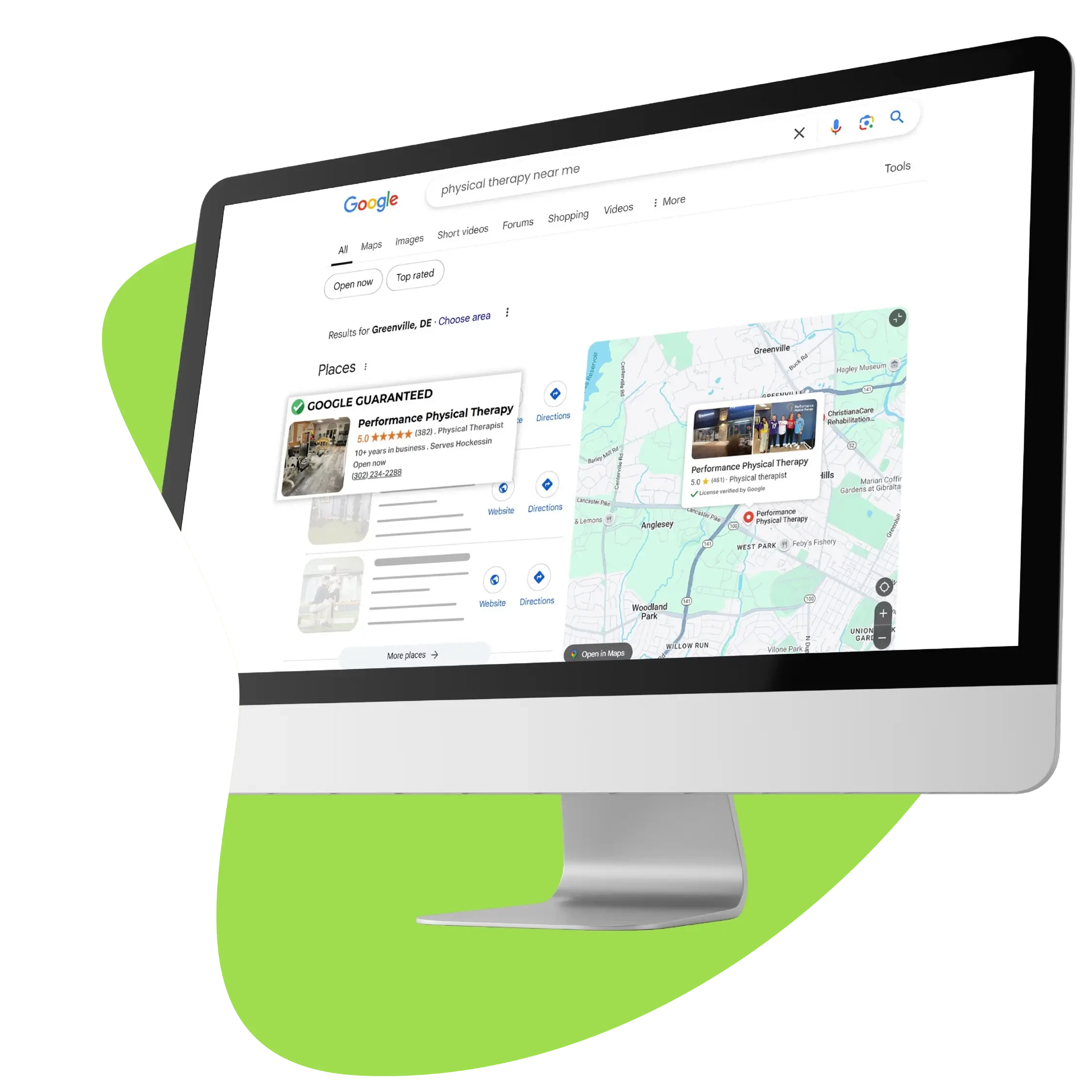

Want to Skyrocket Revenue? Get a Free Audit Today!
Want to Skyrocket Revenue? Get a Free Audit Today!



4.9/5 Ratings!


Don’t miss our revenue growth tips!
Get expert marketing tips—straight to your inbox, like thousands of happy clients.
Don’t miss our revenue growth tips!
Get expert marketing tips—straight to your inbox, like thousands of happy clients.
Don’t miss our revenue growth tips!
Don’t miss our revenue growth tips!
Get expert marketing tips—straight to your inbox, like thousands of happy clients.
Relevant Blogs on Organic SEO
Relevant Blogs on Organic SEO
Unlock data-driven insights in Organic SEO—explore our featured blogs and skyrocket your revenue before your competitors do.
Unlock data-driven insights in Organic SEO—explore our featured blogs and skyrocket your revenue before your competitors do.

SEO
Sep 21, 2026
5 Min Read
Audience-First SEO: How to Rank by Putting Readers First
SEO
Sep 21, 2026
5 Min Read
Audience-First SEO: How to Rank by Putting Readers First
SEO
Sep 21, 2026
5 Min Read
Audience-First SEO: How to Rank by Putting Readers First

SEO
Sep 19, 2026
5 Min Read
How to Add SEO Keywords to Your Website: Where and How
SEO
Sep 19, 2026
5 Min Read
How to Add SEO Keywords to Your Website: Where and How
SEO
Sep 19, 2026
5 Min Read
How to Add SEO Keywords to Your Website: Where and How

SEO
Sep 18, 2026
5 Min Read
How XML Sitemaps Help Search Engines Discover New Pages
SEO
Sep 18, 2026
5 Min Read
How XML Sitemaps Help Search Engines Discover New Pages
SEO
Sep 18, 2026
5 Min Read
How XML Sitemaps Help Search Engines Discover New Pages






























Ready to speak with an expert?
Data-Driven Marketing Agency That Elevates ROI
1100+
Websites Designed & Optimized to Convert
$280M+
Client Revenue Driven & Growing Strong
Discover how to skyrocket
your revenue today!
Trusted by 1000+ Owners!
Ready to speak with an expert?
Data-Driven Marketing Agency That Elevates ROI
1100+
Websites Designed & Optimized to Convert
$280M+
Client Revenue Driven & Growing Strong
Discover how to skyrocket
your revenue today!
Trusted by 1000+ Owners!
Want to skyrocket revenue?
4.9/5 Ratings!
Ready to speak with an expert?
Data-Driven Marketing Agency That Elevates ROI
1100+
Websites Designed & Optimized to Convert
$280M+
Client Revenue Driven & Growing Strong
Discover how to skyrocket
your revenue today!
Trusted by 1000+ Owners!
Call
Meet