Why Being Mentioned by AI Isn't the Same as Being Recommended
Why Being Mentioned by AI Isn't the Same as Being Recommended
Last Updated:
Table of Content
Case Studies
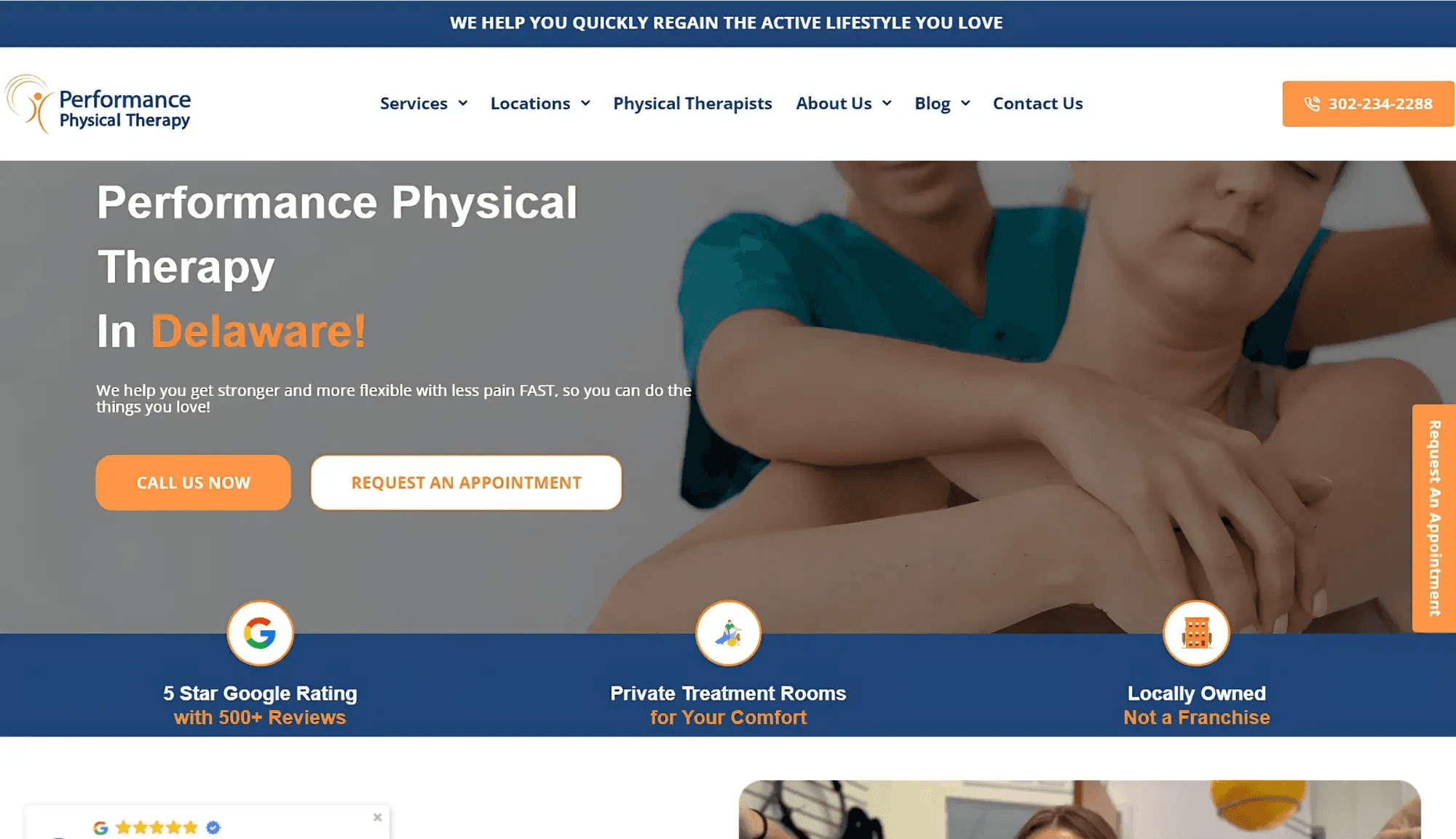


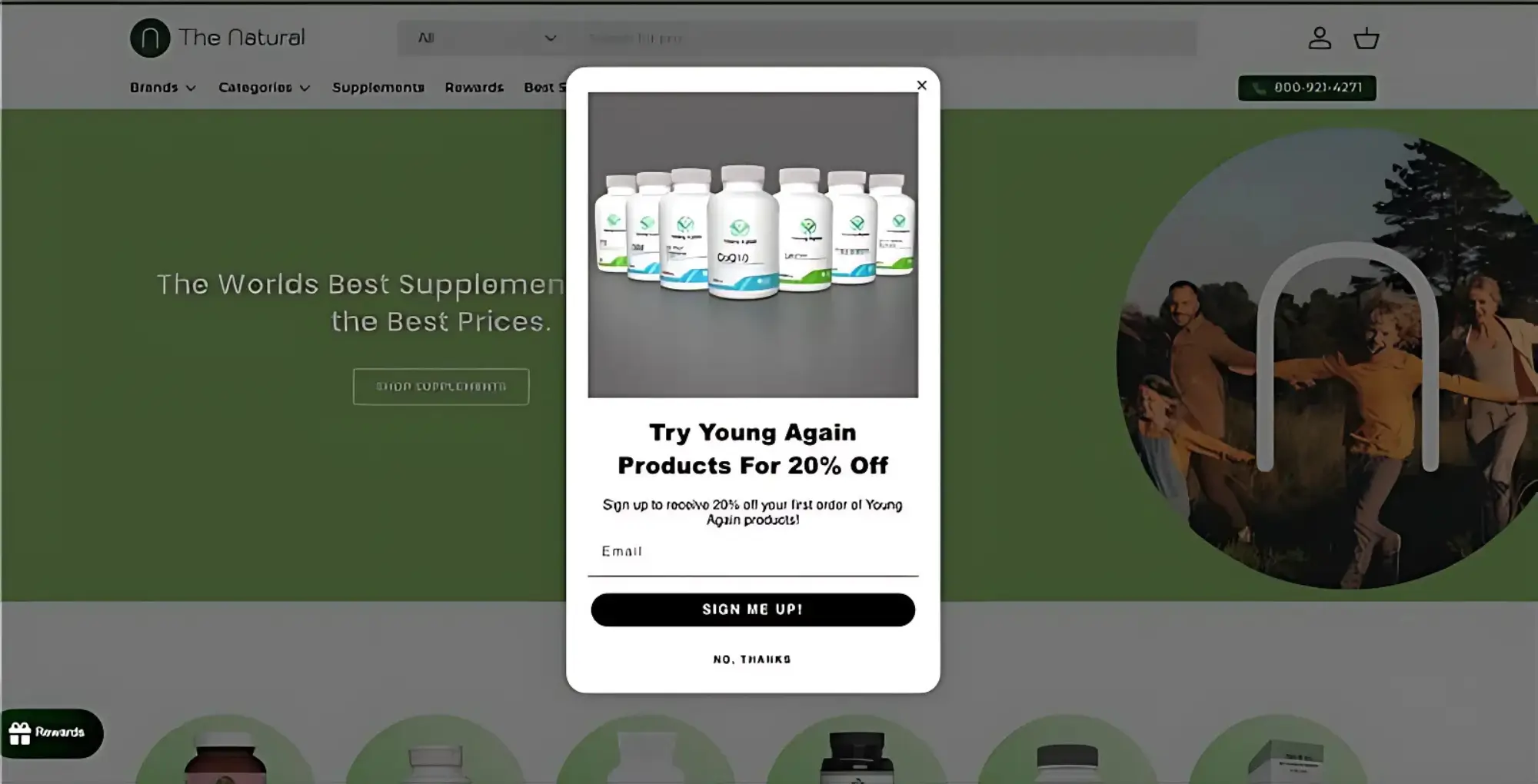
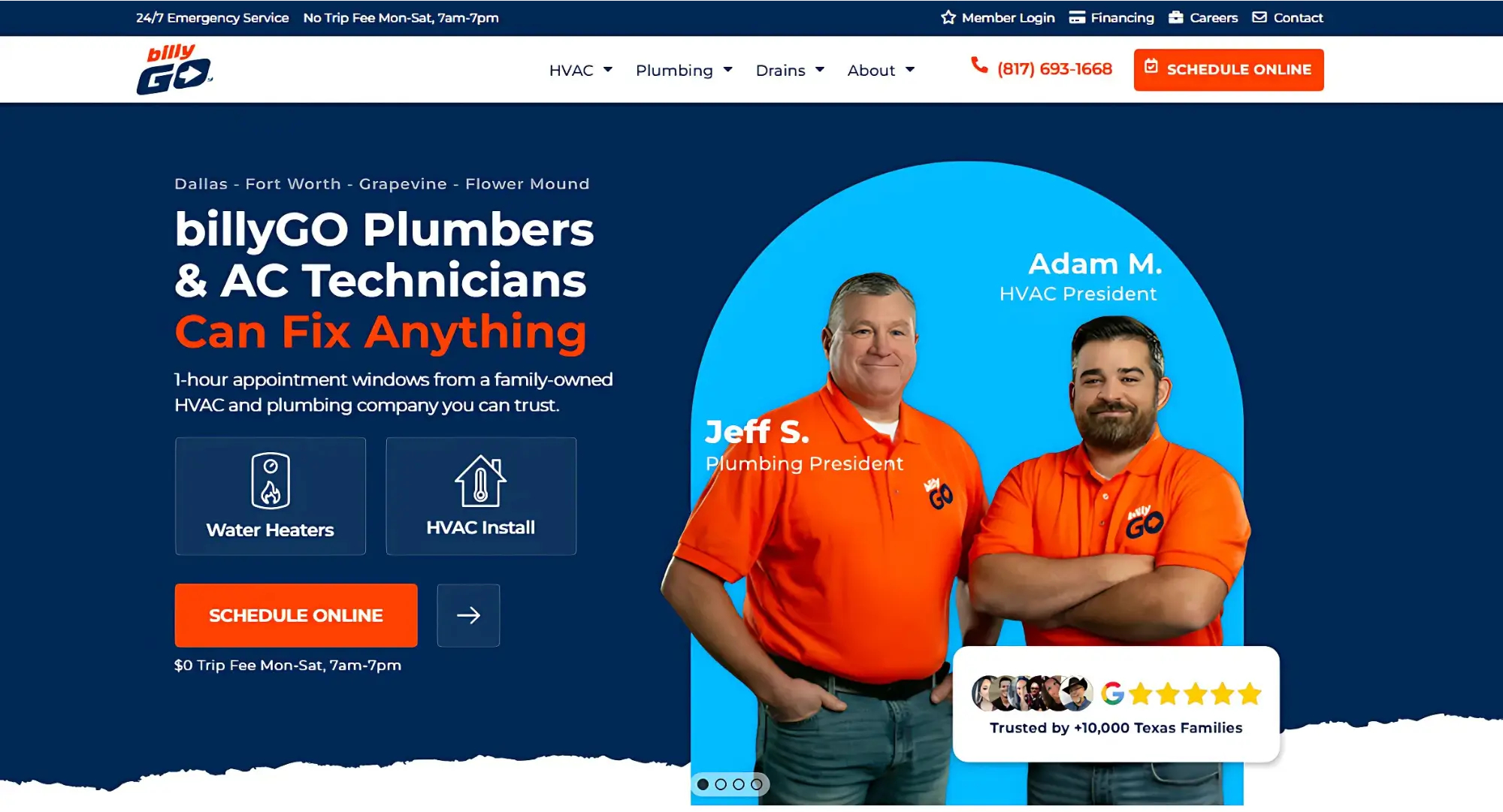
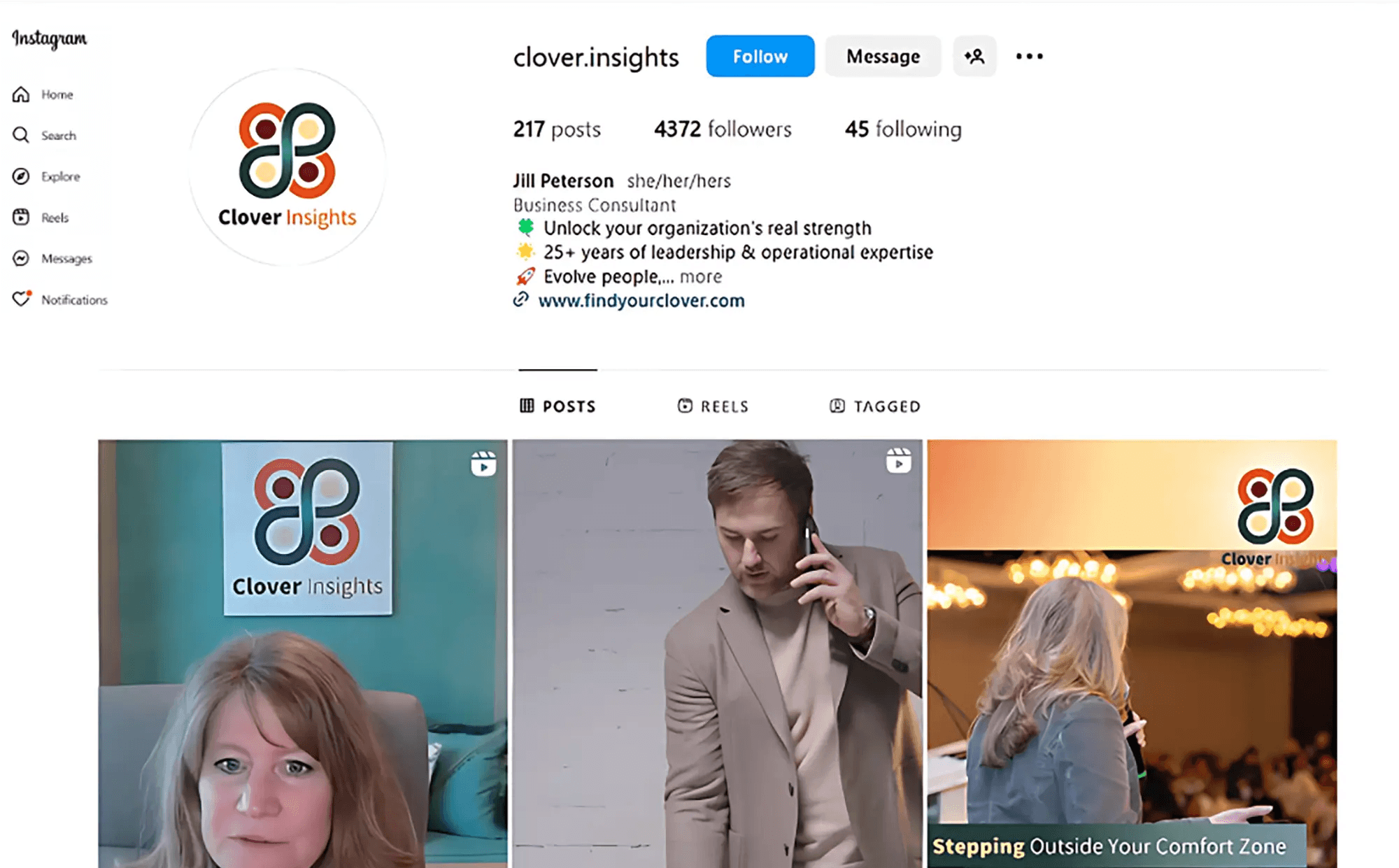



Being referenced by an AI program isn't always the same as receiving a recommendation.
While it's exciting to see your business name mentioned by ChatGPT, Gemini, or Perplexity in a response, this doesn't necessarily mean users will be directed toward your company. AI programs provide layered responses to questions. Where your company name falls within that layering structure is much more important than whether your company name was included anywhere in the response at all.
Below we'll explain what we mean when we talk about an "AI mention" of your company, why it matters, and what actions you can take to increase potential leads.
What Does an AI Mention of My Business Actually Mean?
An AI mention of your business means your company name has been included within the text of an AI-generated response. This may occur because your business website has been crawled by AI crawling tools, your company name is contained within third-party sources the AI learned from, or your company name came up during a user inquiry into a topic related to your business.
As described above, having your business name included in an AI-generated response provides limited insight regarding customer preferences, product or service quality, or fit. In some instances an AI program may include your business name while stating a competitor is superior, referencing a poor review of your company, or referencing outdated information concerning your company's offerings.
Therefore, being included in an AI-generated response does not equate to being referred to as the go-to professional or organization.
What Does a True AI Recommendation Look Like?
True AI recommendations occur when an AI system identifies and promotes your business as a preferred solution in response to a user intent or decision-making query. Consider examples such as:
What is the best [product] for [use case]?
Which [service] providers are worth trying?
Who should I hire for [specific need]?
In each of the above scenarios, the AI system is not merely listing company names. Rather, the AI is rendering a judgment on which companies best match the criteria defined by the user. To make this determination, AI systems rely on several signals:
Entity authority. Does the AI system clearly understand who the company is and what its purpose is? Is there clarity around who the company serves?
Third-party corroboration. Are there outside, independent sources that confirm what the company states about itself?
Content relevance. Does the company produce content that directly addresses a problem the user wants solved?
Consistency across authoritative sources. Does the company demonstrate a consistent message everywhere it is represented online?
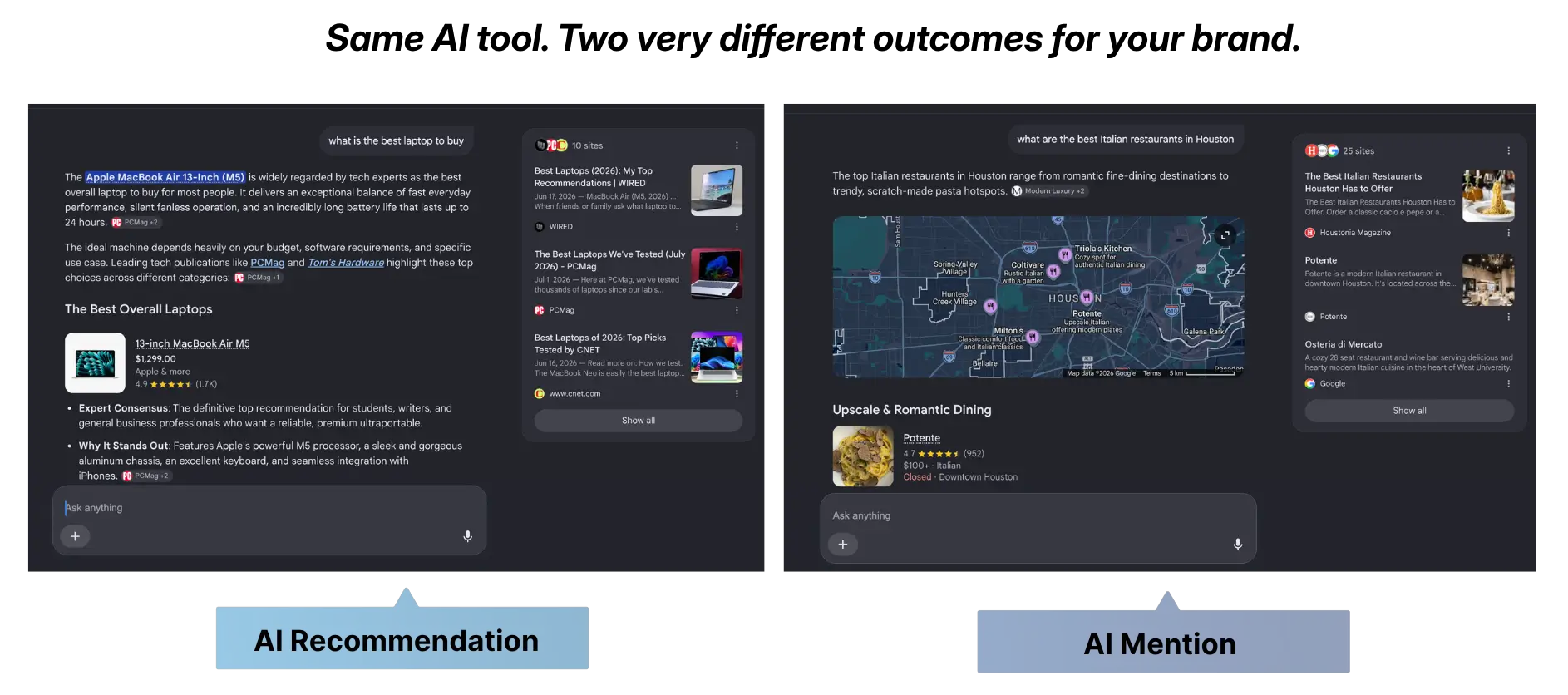
If the AI recommends your company with positive framing and cites credible evidence, that is a recommendation. If your company is listed as an example, a footnote, or an afterthought, that is a mention. The disparity between these two outcomes is what AI search optimization services are designed to bridge.
Why the Gap Exists Between an AI Mention and an AI Recommendation
AI systems do not randomly recommend companies. The brands that consistently show up as recommended choices in AI-generated responses share several traits.
Strong Entity Authority. The AI system knows exactly which company this is, what they do, and for whom, without confusion. Consistent descriptions of the business (including company name and year founded) and its primary service offering appear across its website, schema markup, and all places where the business can be found in external directories or profiles.
Corroborated by third parties. While a single company can state it is the best option available, an ecosystem of third-party sources corroborating that statement carries significantly more credibility. Industry publications, consumer reviews, and community discussion boards all create corroborative evidence that supports what a company says about itself.
Content designed to be extracted. AI engines not only rank websites but also extract information from them. Companies whose content is structured with clear, direct answers in the first paragraph, self-evident factual statements, and concrete data points are far more likely to be pulled into an AI response than companies that write vaguely and generally.
Authentic presence where AI looks. Most AI platforms, such as Perplexity, rely upon sources other than just websites. As such, most credible brands' true authenticity lies in the communities on Reddit, community forums, and/or Q&A sites. Therefore, a brand that provides quality, reliable assistance in those areas will have credibility that AI systems can rely upon.
For a deeper look at building the foundation that makes AI systems take notice, Coozmoo's guide to building brand entity authority for AI search visibility walks through exactly how to do it.
Closing the Gap from Mentions to Recommendations
The good news is that this gap can be closed; however, it requires a concerted effort. At present, companies doing this type of work are positioning themselves well ahead of their competitors.
Moving From Mentioned To Recommended: One of the most important factors to consider when closing the gap between mentioned and recommended is what AI says about you today. Before improving or optimizing any aspect of your business model, find out where you are starting. Ask ChatGPT, Perplexity, Google's AI overview, and other available tools about your brand name, your category, and the problem(s) you solve. Do you show up? Are your competitors recommended over you? Is the information presented accurate? The initial audit provides you with the baseline needed to improve upon.
Consistent Entity Signals: Your brand name, company description, date of founding, and main products/offerings must match across your website, schema markup, Google My Business profile, LinkedIn account, Crunchbase listing, and any relevant industry-specific listings. Any inconsistency in the entity signals conveyed by your branding will cause an AI system to view you as untrustworthy, making it much less likely to suggest/recommend you.
Structured Content for Extraction: Each webpage on your website should directly answer a legitimate user inquiry within the first 40-60 words. In addition to structured content, create an FAQs section with clear headings and incorporate statistical data points throughout your content. An AI system can easily extract and use structured content. Typically, a writer creates content intended to impress users (and thus bury the actual answer), which makes it difficult for the AI engine to extract and present the true answer.
Third Party Validation: Earned media mentions, press releases, industry directory listings, and engagement with local communities all serve as independent verification that external sources validate your company's claims. Third-party validation demonstrates that your brand is credible.
AI Search Strategy Development: Traditional SEO and Generative Engine Optimization (GEO) share similarities; however, they also differ. As AI continues to advance and expand its influence over search queries, establishing a development strategy that addresses how AI engines determine relevance and evaluate information will support your brand's transition from background noise to preferred answer. Coozmoo developed our generative search optimization services with this goal in mind.
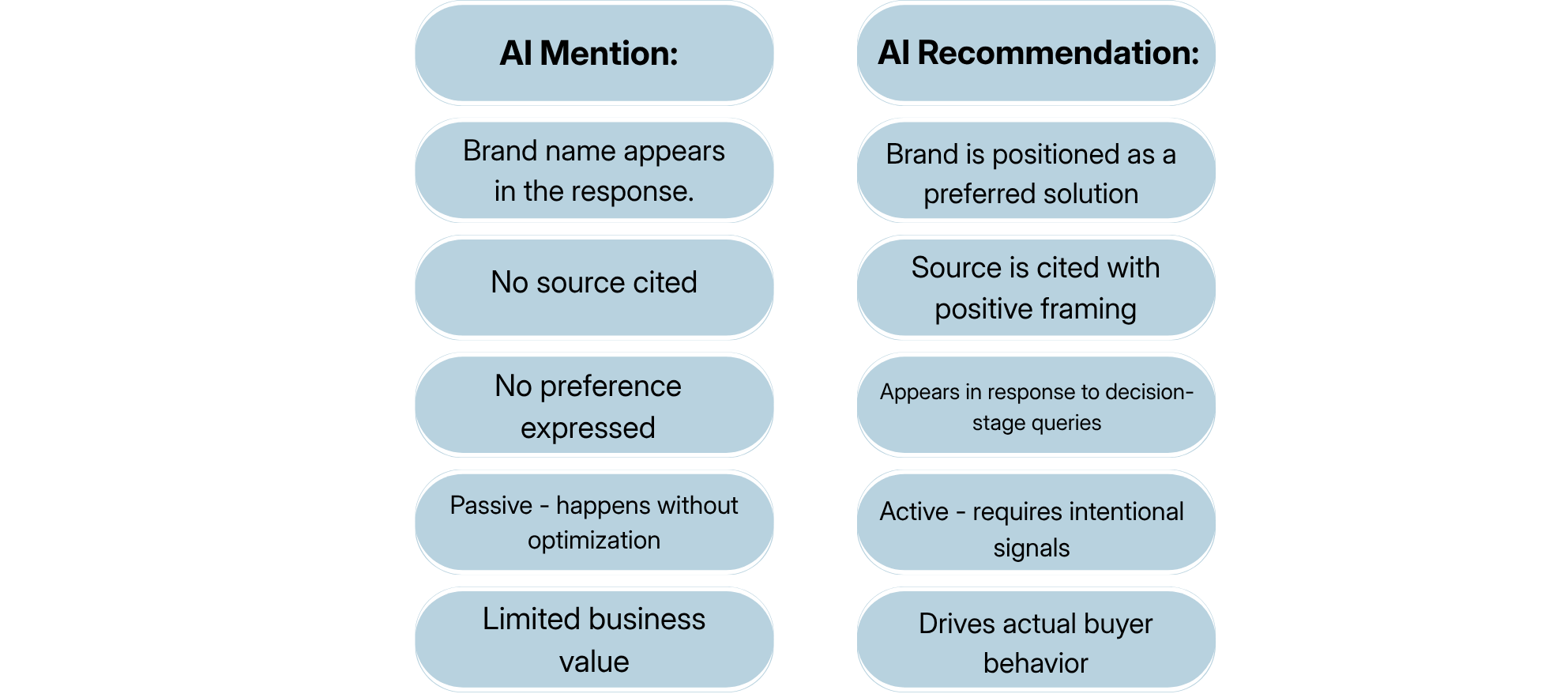
What's the Difference? AI Mention vs. AI Recommendation
Final Thoughts
When brands see their name come up in AI responses, they often assume their work is done. However, receiving a mention without receiving a recommendation creates a false sense of security that can cause brands to stop optimizing altogether.
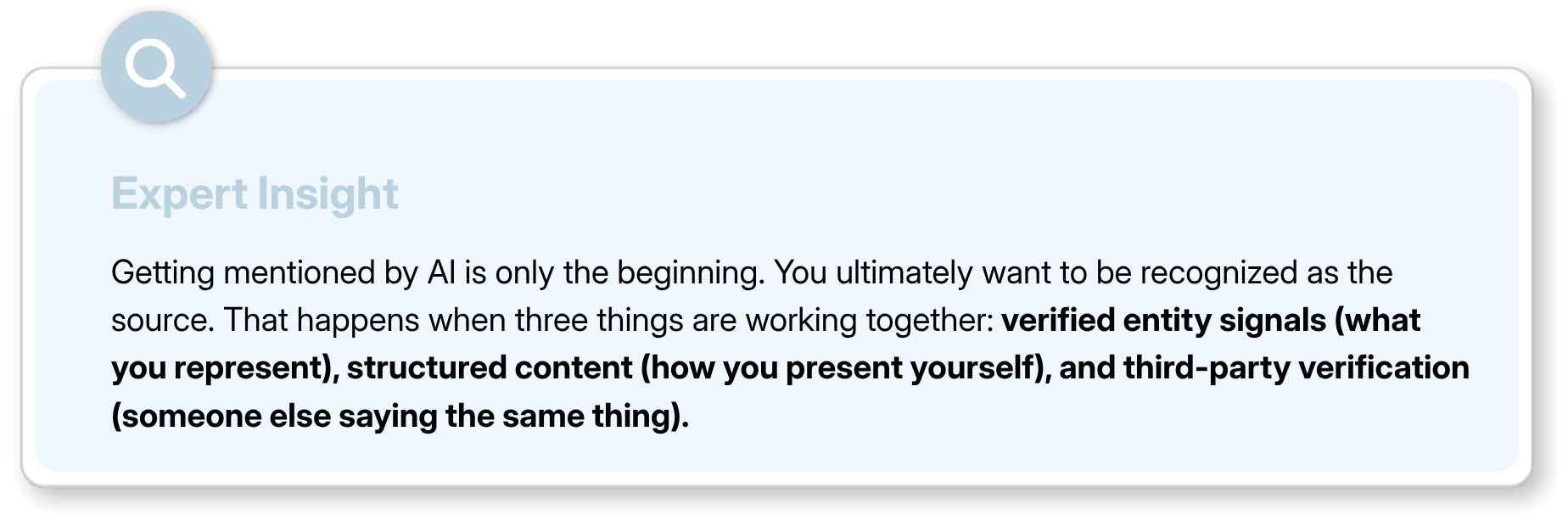
A competitor with better-verified entity signals, more structured content, and stronger third-party verification will be suggested first when buyers ask AI for the best option in your category. That competitor gets the click, the inquiry, and eventually the sale.
AI-generated answers now appear at the top of search results for a significant number of queries, and most users do not go beyond those answers to visit any website. If you are not cited within the answer as the source, you simply are not in the conversation at the moment it matters most.
The brands winning in AI search are not necessarily the most well-known or the ones with the highest domain authority. They are the ones that have made it easy for AI systems to understand who they are, trust what they say, and recommend them confidently.
FAQs
What is the difference between an AI mention and an AI recommendation?

An AI mention occurs when your brand name shows up in some form in a generated response. An AI recommendation occurs when the AI positions your brand as a recommended solution within a generated response to a decision-stage question. Mentions can occur without you doing anything. Recommendations take deliberate action by creating better signals on behalf of your brand.
Why does it matter – AI visibility vs. Recommendation?
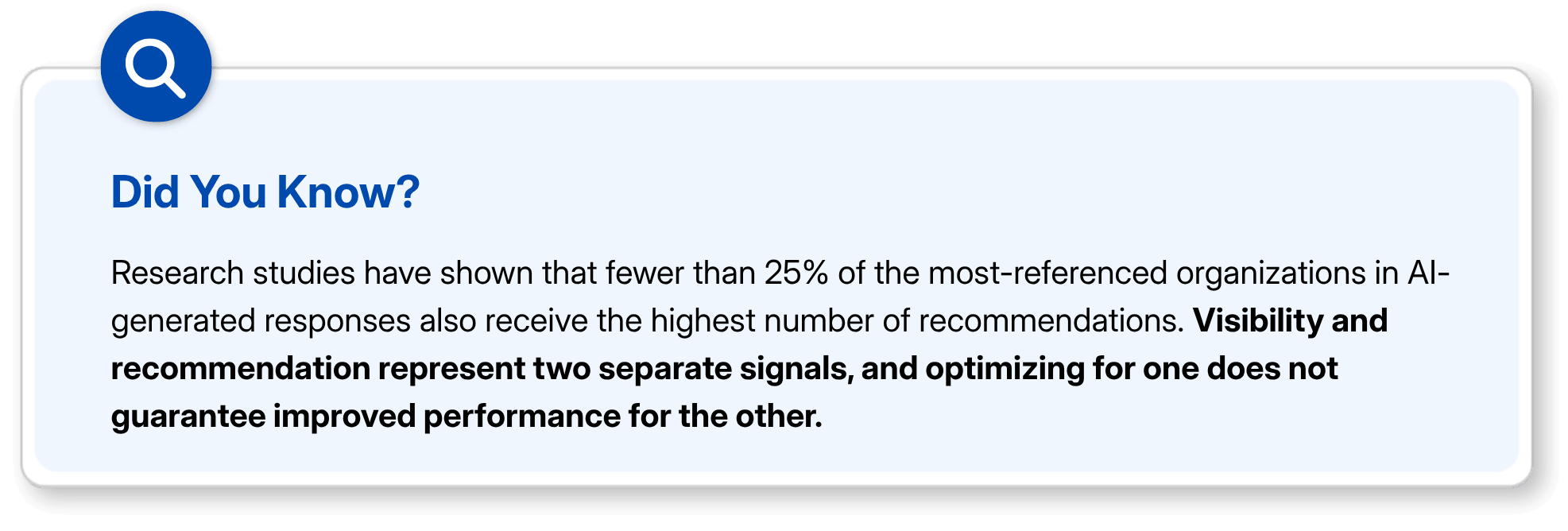
AI visibility simply indicates if your brand will be seen anywhere in an AI-generated response. A recommendation surfaces your brand as a trusted, preferred option. Visibility is relatively easy to get; however, it has minimal business impact. A recommendation is where real buying behavior happens, ultimately driving revenue.
What is AI brand mention tracking?
AI brand mention tracking is the process of consistently checking major AI platforms like ChatGPT, Gemini, Google AI Overview, and Perplexity to identify how your brand is referenced in generated responses and whether it is referenced at all. This provides insight into whether your brand is being mentioned, recommended, misrepresented, or ignored, and gives you a foundation for improving your AI search presence.
What are AI search optimization services?
These services typically fall under the umbrella of GEO (generative engine optimization) and assist companies with their performance in AI-generated search results. GEO assists companies by establishing entity authority, creating optimized content for extraction, using schema markup, enhancing third-party validation, and ensuring AI systems have accurate references to your company and positive references.
How do I improve my brand’s visibility in the AI search results?
First, perform an AI citation audit to see your current standings. Then create consistent entity signals throughout your website and external profiles. Next, optimize your content to answer questions directly. Additionally, earn third-party coverage and directory listings. Work with a GEO specialist to build the full framework.
Being referenced by an AI program isn't always the same as receiving a recommendation.
While it's exciting to see your business name mentioned by ChatGPT, Gemini, or Perplexity in a response, this doesn't necessarily mean users will be directed toward your company. AI programs provide layered responses to questions. Where your company name falls within that layering structure is much more important than whether your company name was included anywhere in the response at all.
Below we'll explain what we mean when we talk about an "AI mention" of your company, why it matters, and what actions you can take to increase potential leads.
What Does an AI Mention of My Business Actually Mean?
An AI mention of your business means your company name has been included within the text of an AI-generated response. This may occur because your business website has been crawled by AI crawling tools, your company name is contained within third-party sources the AI learned from, or your company name came up during a user inquiry into a topic related to your business.
As described above, having your business name included in an AI-generated response provides limited insight regarding customer preferences, product or service quality, or fit. In some instances an AI program may include your business name while stating a competitor is superior, referencing a poor review of your company, or referencing outdated information concerning your company's offerings.
Therefore, being included in an AI-generated response does not equate to being referred to as the go-to professional or organization.
What Does a True AI Recommendation Look Like?
True AI recommendations occur when an AI system identifies and promotes your business as a preferred solution in response to a user intent or decision-making query. Consider examples such as:
What is the best [product] for [use case]?
Which [service] providers are worth trying?
Who should I hire for [specific need]?
In each of the above scenarios, the AI system is not merely listing company names. Rather, the AI is rendering a judgment on which companies best match the criteria defined by the user. To make this determination, AI systems rely on several signals:
Entity authority. Does the AI system clearly understand who the company is and what its purpose is? Is there clarity around who the company serves?
Third-party corroboration. Are there outside, independent sources that confirm what the company states about itself?
Content relevance. Does the company produce content that directly addresses a problem the user wants solved?
Consistency across authoritative sources. Does the company demonstrate a consistent message everywhere it is represented online?
If the AI recommends your company with positive framing and cites credible evidence, that is a recommendation. If your company is listed as an example, a footnote, or an afterthought, that is a mention. The disparity between these two outcomes is what AI search optimization services are designed to bridge.
Why the Gap Exists Between an AI Mention and an AI Recommendation
AI systems do not randomly recommend companies. The brands that consistently show up as recommended choices in AI-generated responses share several traits.
Strong Entity Authority. The AI system knows exactly which company this is, what they do, and for whom, without confusion. Consistent descriptions of the business (including company name and year founded) and its primary service offering appear across its website, schema markup, and all places where the business can be found in external directories or profiles.
Corroborated by third parties. While a single company can state it is the best option available, an ecosystem of third-party sources corroborating that statement carries significantly more credibility. Industry publications, consumer reviews, and community discussion boards all create corroborative evidence that supports what a company says about itself.
Content designed to be extracted. AI engines not only rank websites but also extract information from them. Companies whose content is structured with clear, direct answers in the first paragraph, self-evident factual statements, and concrete data points are far more likely to be pulled into an AI response than companies that write vaguely and generally.
Authentic presence where AI looks. Most AI platforms, such as Perplexity, rely upon sources other than just websites. As such, most credible brands' true authenticity lies in the communities on Reddit, community forums, and/or Q&A sites. Therefore, a brand that provides quality, reliable assistance in those areas will have credibility that AI systems can rely upon.
For a deeper look at building the foundation that makes AI systems take notice, Coozmoo's guide to building brand entity authority for AI search visibility walks through exactly how to do it.
Closing the Gap from Mentions to Recommendations
The good news is that this gap can be closed; however, it requires a concerted effort. At present, companies doing this type of work are positioning themselves well ahead of their competitors.
Moving From Mentioned To Recommended: One of the most important factors to consider when closing the gap between mentioned and recommended is what AI says about you today. Before improving or optimizing any aspect of your business model, find out where you are starting. Ask ChatGPT, Perplexity, Google's AI overview, and other available tools about your brand name, your category, and the problem(s) you solve. Do you show up? Are your competitors recommended over you? Is the information presented accurate? The initial audit provides you with the baseline needed to improve upon.
Consistent Entity Signals: Your brand name, company description, date of founding, and main products/offerings must match across your website, schema markup, Google My Business profile, LinkedIn account, Crunchbase listing, and any relevant industry-specific listings. Any inconsistency in the entity signals conveyed by your branding will cause an AI system to view you as untrustworthy, making it much less likely to suggest/recommend you.
Structured Content for Extraction: Each webpage on your website should directly answer a legitimate user inquiry within the first 40-60 words. In addition to structured content, create an FAQs section with clear headings and incorporate statistical data points throughout your content. An AI system can easily extract and use structured content. Typically, a writer creates content intended to impress users (and thus bury the actual answer), which makes it difficult for the AI engine to extract and present the true answer.
Third Party Validation: Earned media mentions, press releases, industry directory listings, and engagement with local communities all serve as independent verification that external sources validate your company's claims. Third-party validation demonstrates that your brand is credible.
AI Search Strategy Development: Traditional SEO and Generative Engine Optimization (GEO) share similarities; however, they also differ. As AI continues to advance and expand its influence over search queries, establishing a development strategy that addresses how AI engines determine relevance and evaluate information will support your brand's transition from background noise to preferred answer. Coozmoo developed our generative search optimization services with this goal in mind.
What's the Difference? AI Mention vs. AI Recommendation
Final Thoughts
When brands see their name come up in AI responses, they often assume their work is done. However, receiving a mention without receiving a recommendation creates a false sense of security that can cause brands to stop optimizing altogether.
A competitor with better-verified entity signals, more structured content, and stronger third-party verification will be suggested first when buyers ask AI for the best option in your category. That competitor gets the click, the inquiry, and eventually the sale.
AI-generated answers now appear at the top of search results for a significant number of queries, and most users do not go beyond those answers to visit any website. If you are not cited within the answer as the source, you simply are not in the conversation at the moment it matters most.
The brands winning in AI search are not necessarily the most well-known or the ones with the highest domain authority. They are the ones that have made it easy for AI systems to understand who they are, trust what they say, and recommend them confidently.
FAQs
What is the difference between an AI mention and an AI recommendation?
An AI mention occurs when your brand name shows up in some form in a generated response. An AI recommendation occurs when the AI positions your brand as a recommended solution within a generated response to a decision-stage question. Mentions can occur without you doing anything. Recommendations take deliberate action by creating better signals on behalf of your brand.
Why does it matter – AI visibility vs. Recommendation?
AI visibility simply indicates if your brand will be seen anywhere in an AI-generated response. A recommendation surfaces your brand as a trusted, preferred option. Visibility is relatively easy to get; however, it has minimal business impact. A recommendation is where real buying behavior happens, ultimately driving revenue.
What is AI brand mention tracking?
AI brand mention tracking is the process of consistently checking major AI platforms like ChatGPT, Gemini, Google AI Overview, and Perplexity to identify how your brand is referenced in generated responses and whether it is referenced at all. This provides insight into whether your brand is being mentioned, recommended, misrepresented, or ignored, and gives you a foundation for improving your AI search presence.
What are AI search optimization services?
These services typically fall under the umbrella of GEO (generative engine optimization) and assist companies with their performance in AI-generated search results. GEO assists companies by establishing entity authority, creating optimized content for extraction, using schema markup, enhancing third-party validation, and ensuring AI systems have accurate references to your company and positive references.
How do I improve my brand’s visibility in the AI search results?
First, perform an AI citation audit to see your current standings. Then create consistent entity signals throughout your website and external profiles. Next, optimize your content to answer questions directly. Additionally, earn third-party coverage and directory listings. Work with a GEO specialist to build the full framework.



Summarize with AI


Want to be seen everywhere?
Get a free AI-search audit Today!



4.9/5 Ratings!


Don’t miss our revenue growth tips!
Get expert marketing tips—straight to your inbox, like thousands of happy clients.
Don’t miss our revenue growth tips!
Get expert marketing tips—straight to your inbox, like thousands of happy clients.
Don’t miss our revenue growth tips!
Don’t miss our revenue growth tips!
Get expert marketing tips—straight to your inbox, like thousands of happy clients.
Relevant Blogs on Generative AI SEO
Relevant Blogs on Generative AI SEO
Unlock data-driven insights in AI-powered SEO—explore our featured blogs and skyrocket your revenue before your competitors do.
Unlock data-driven insights in AI-powered SEO—explore our featured blogs and skyrocket your revenue before your competitors do.

GEO
Sep 22, 2026
15 Min Read
AI Search Runs on More SEO Than You Think
GEO
Sep 22, 2026
15 Min Read
AI Search Runs on More SEO Than You Think
GEO
Sep 22, 2026
15 Min Read
AI Search Runs on More SEO Than You Think

GEO
Sep 7, 2026
8 Min Read
How to Optimize Content for AI Search Engines: Best Practices
GEO
Sep 7, 2026
8 Min Read
How to Optimize Content for AI Search Engines: Best Practices
GEO
Sep 7, 2026
8 Min Read
How to Optimize Content for AI Search Engines: Best Practices

GEO
Sep 4, 2026
12 Min Read
How Ecommerce Brands Can Advertise in Google AI Mode?
GEO
Sep 4, 2026
12 Min Read
How Ecommerce Brands Can Advertise in Google AI Mode?
GEO
Sep 4, 2026
12 Min Read
How Ecommerce Brands Can Advertise in Google AI Mode?












Ready to speak with an expert?
Data-Driven Marketing Agency That Elevates ROI
1100+
Websites Designed & Optimized to Convert
$280M+
Client Revenue Driven & Growing Strong
Discover how to skyrocket
your revenue today!
Trusted by 1000+ Owners!
Ready to speak with an expert?
Data-Driven Marketing Agency That Elevates ROI
1100+
Websites Designed & Optimized to Convert
$280M+
Client Revenue Driven & Growing Strong
Discover how to skyrocket
your revenue today!
Trusted by 1000+ Owners!
Want to skyrocket revenue?
4.9/5 Ratings!
Ready to speak with an expert?
Data-Driven Marketing Agency That Elevates ROI
1100+
Websites Designed & Optimized to Convert
$280M+
Client Revenue Driven & Growing Strong
Discover how to skyrocket
your revenue today!
Trusted by 1000+ Owners!
Call
Meet