7 Things Every Medical Practice Must Have to Show Up in AI Search Recommendations in 2026
7 Things Every Medical Practice Must Have to Show Up in AI Search Recommendations in 2026
Last Updated:
Table of Content
Case Studies






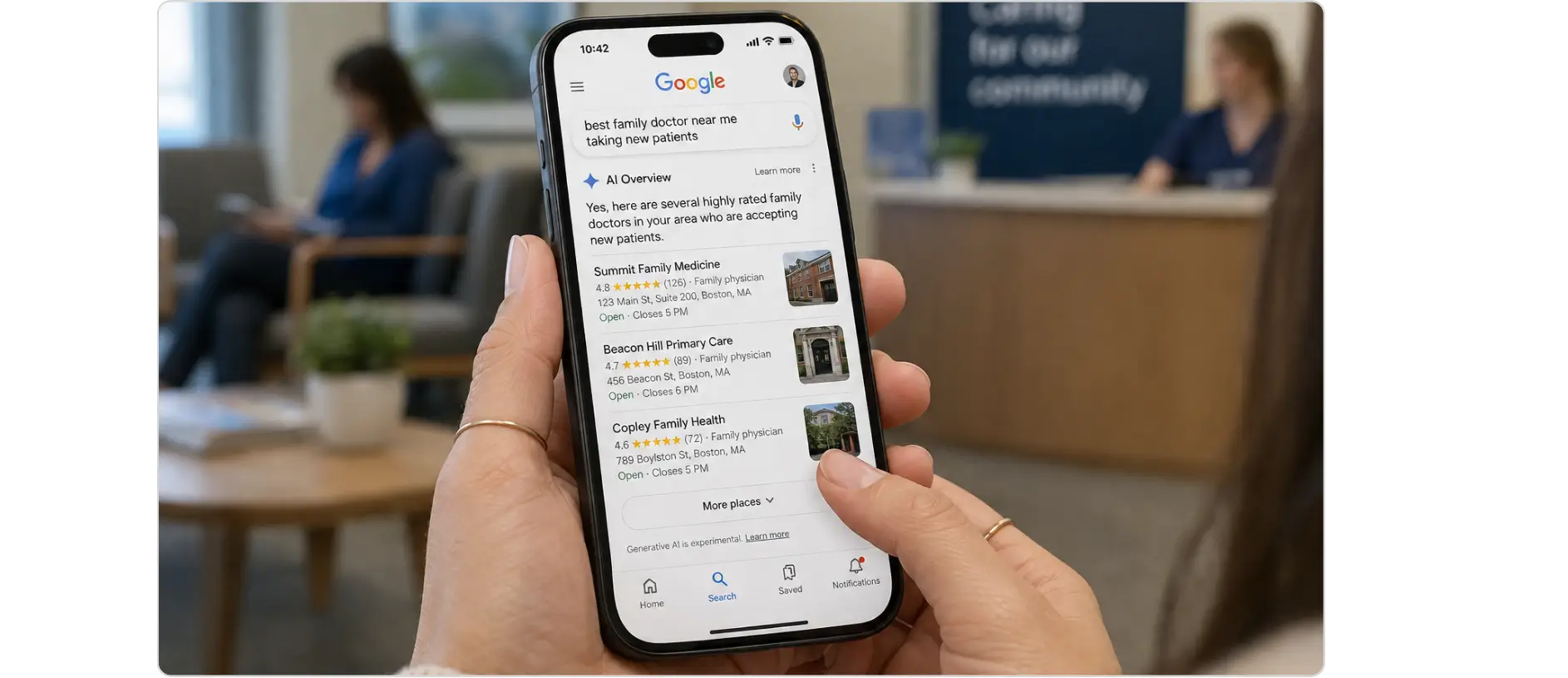
A patient looking for a new dermatologist doesn't open ten browser tabs anymore. They ask ChatGPT, Gemini, or Google's AI Overview one question and expect a short, confident answer with two or three real recommendations attached. If your practice isn't one of them, you don't lose a click. You lose the patient before they ever see your website.
That's the shift practices need to understand. AI models act less like search engines and more like digital healthcare advisors. They pull from structured data, review signals, and conversational content to decide who gets recommended and who gets skipped. Ranking on page one of Google alone doesn't guarantee any of that anymore.
To appear in AI search recommendations, your medical practice needs structured data, EEAT-rich content that answers real patient questions, a fully optimized Google Business Profile, consistent citations across medical directories, a fast and accessible website, a strong review base, and content built around specific, high-intent questions.
Here are the seven things that actually move the needle.
1. Implement Structured Data and Schema Markup
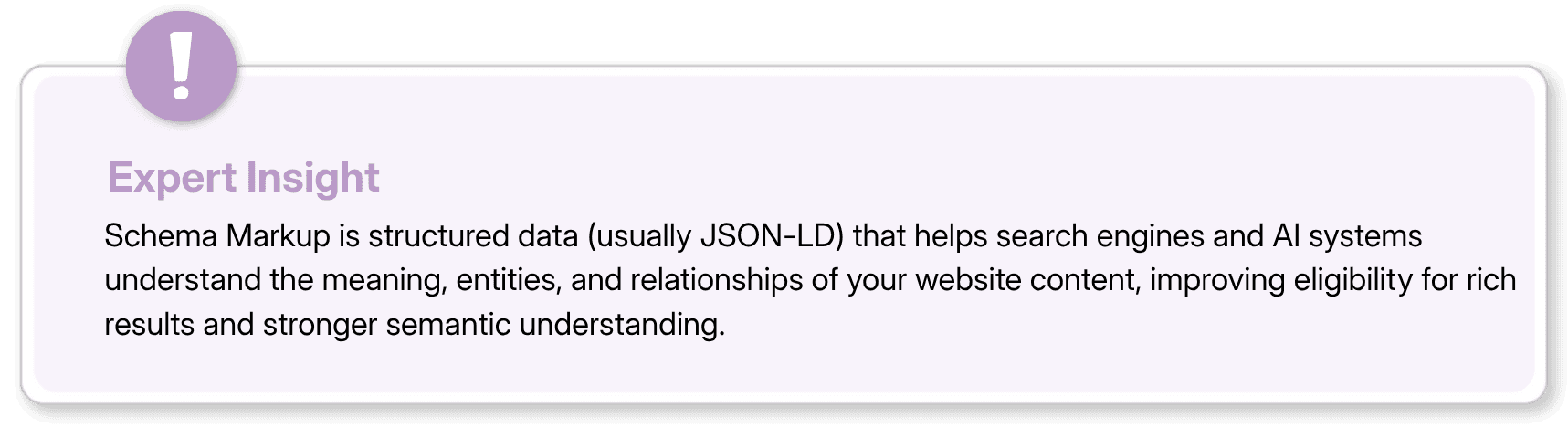
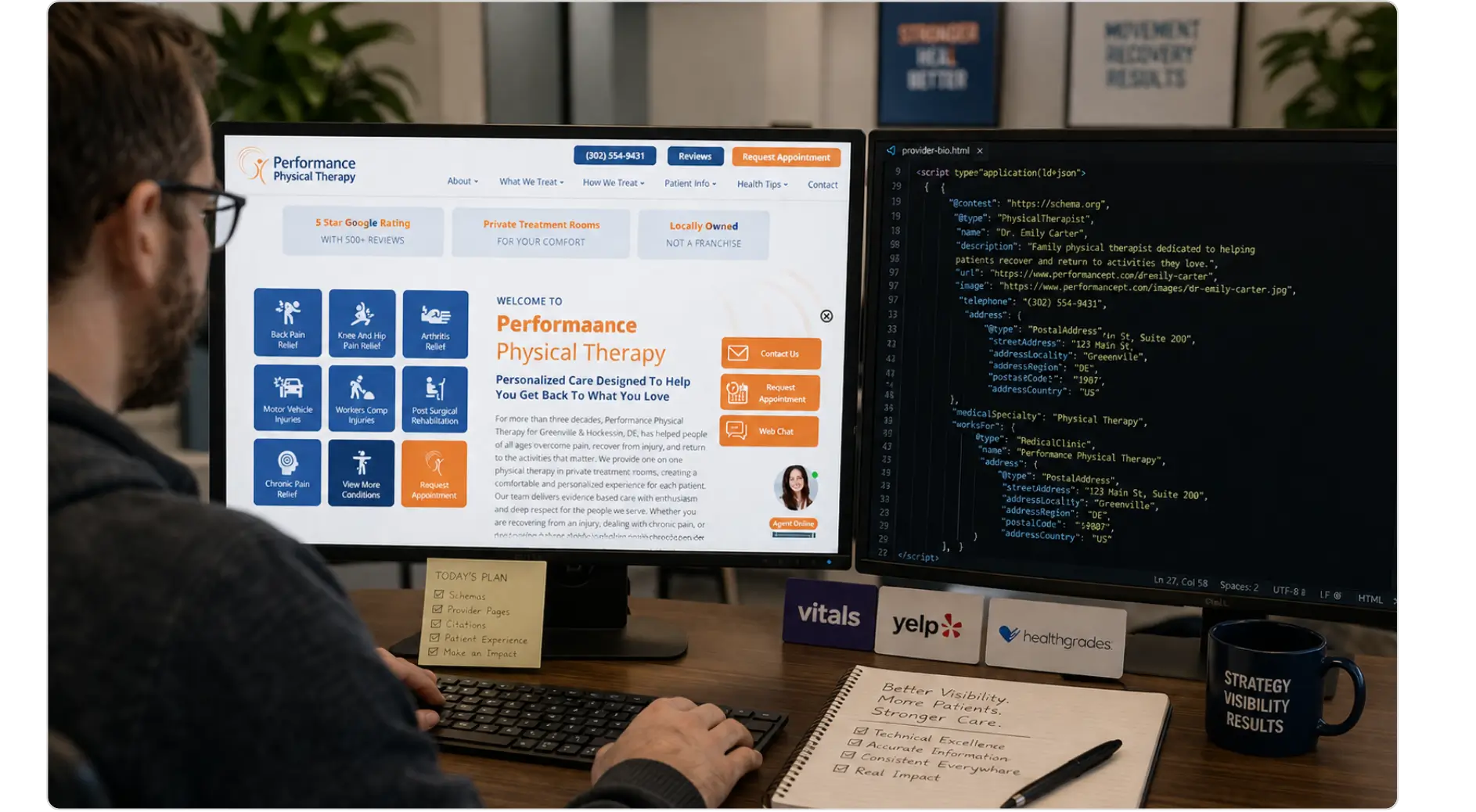
AI systems don't read your website the way a human does. They rely on structured data to understand what your practice actually offers, and without it, an AI model is left guessing at things a person would pick up in seconds.
Schema markup removes the guesswork. It tells AI crawlers exactly which specialties you treat, who your providers are, what insurance you accept, and where your locations sit.
Schema Type | What It Tells AI |
|---|---|
MedicalBusiness | Practice type, specialties, accepted insurance |
Physician | Provider credentials, specialties, affiliations |
FAQ Schema | Direct answers to common patient questions |
LocalBusiness | Hours, address, phone, service area |
Organization | Practice name, logo, official identity |
Review | Aggregate rating and patient feedback |
Breadcrumb | Site structure and page hierarchy |
If your website is missing even three or four of these, you're handing competitors an easy edge. A practical starting point: audit every service page and provider bio, then add Physician and FAQ schema first, since those two directly feed the question-and-answer format AI tools favor.
2. Build EEAT With Conversational, Question-Based Content
Experience, Expertise, Authoritativeness, and Trustworthiness aren't abstract ideas to Google or to AI models. They're the filter AI uses to decide whose advice is safe to repeat to a patient.
AI prefer content that reads like an answer, not a sales page. A page titled "Our Services" tells an AI model nothing. A page that asks "How much does Invisalign cost without insurance?" and answers it clearly gives the model something it can actually use.
This is where FAQ pages, condition pages, treatment pages, and detailed doctor bios earn their keep. A bio that lists a doctor's residency, board certifications, and years treating a specific condition does more for EEAT than any tagline. Case studies and patient outcome summaries (written without violating privacy) add another layer that AI models weigh heavily.
Write for conversational search. Patients don't type "pediatric dentist Houston." They ask "which pediatric dentist in Houston takes walk-ins on weekends? " Your content should address that exact phrasing.
3. Fully Optimize Your Google Business Profile
Your Google Business Profile is one of the strongest trust signals AI models pull from, because it's verified, frequently updated, and tied directly to your physical location.
A profile stuck at 70% complete is a missed opportunity. Fill in every field:
Accurate categories (family practice, urgent care, orthodontist, etc.)
A real service list instead of a two-line generic description
A booking link that actually works (worth testing yourself once a month)
Current hours, including holiday exceptions
Recent, real photos of the office and team
Weekly Google Posts announcing hours changes, new providers, or services
Timely responses to every review, good or bad
Consistency matters more than perfection here. A GBP that hasn't been touched in eight months signals to both Google and AI models that the business might not be reliable anymore, even if nothing has actually changed.
4. Strengthen Local Medical Citations
AI models rarely trust a single source. Before recommending a practice, they cross-reference your name, address, and phone number (NAP) across multiple directories to confirm you're real, active, and legitimate.
That means your listings need to match exactly on:
Healthgrades
Vitals
WebMD
Yelp
Bing Places
Apple Maps
Local chamber of commerce directories
Relevant medical association listings
One mismatched suite number or an old phone number sitting on Vitals can quietly undercut everything else you've built. Citation consistency is unglamorous work, but it's exactly the kind of signal AI models use to validate a business before recommending it to someone searching for care.
5. Optimize Website Performance and User Experience
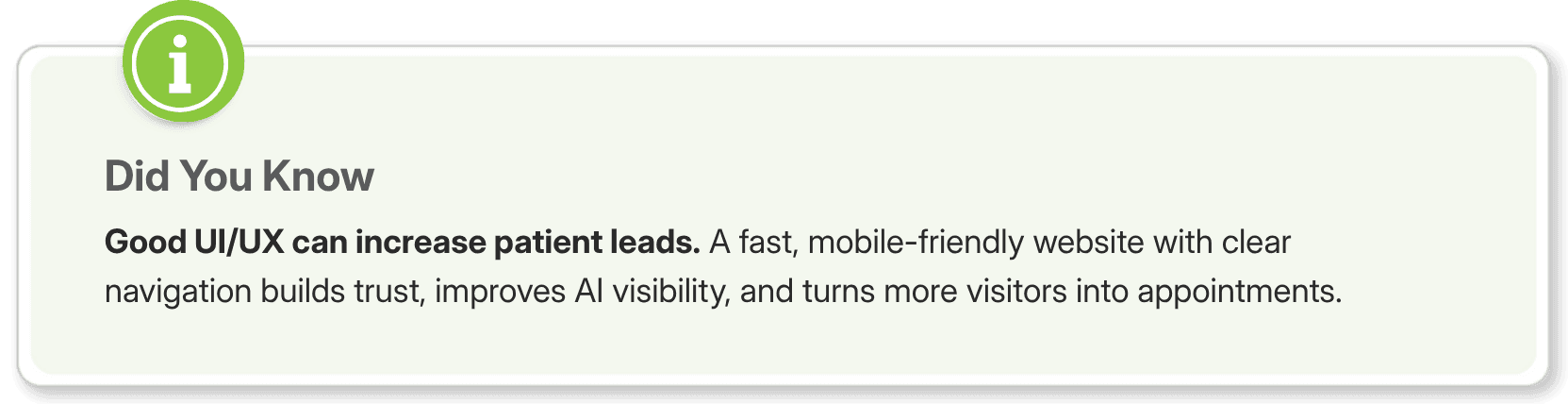
A slow, cluttered website loses patients before they read a word. It trips up the AI crawlers trying to pull clean information off the page too, so a bad site can cost you visibility even with people who never click through.
A few things worth checking:
Mobile-first design, since most patients are searching from their phone
Core Web Vitals sitting in "good," not "needs improvement."
Load times under three seconds. Past that, people start bailing
HTTPS across the whole site, no exceptions
Real accessibility: alt text, readable contrast, a site that still works if someone's only using a keyboard
Navigation simple enough that nobody needs a sitemap to find the contact page
Internal links tying service pages, location pages, and blog posts together
AI tools favor sites that deliver information cleanly because that's easier to summarize accurately. A site built around genuinely helpful, well-organized content gives an AI model less room to misrepresent what you offer.
6. Build a Strong Online Reputation and Reviews
A strong star rating used to be about winning over patients scrolling through search results. Now it's also part of how an AI model decides whether your practice is trustworthy enough to recommend at all.
Google Reviews still matter most, but don't ignore Healthgrades or Facebook. AI models tend to check more than one platform before deciding a practice is legitimate, so a great Google rating sitting next to a neglected Healthgrades profile can work against you. Beyond the star rating itself, AI tools pick up on:
Review velocity (are you getting new reviews regularly, or did they stop two years ago?)
How you respond to negative feedback
Whether reviews mention specific providers or services by name
Skip anything resembling fake or incentivized reviews. Beyond being against most platforms' policies, AI models are increasingly good at spotting unnatural review patterns, and getting flagged does more damage than a handful of average reviews ever would.

7. Target Long-Tail and High-Intent AI-Based Queries
Short keywords like "dentist Houston" are fading in importance. AI models are designed to answer complete questions, so the content that is surfaced is specifically written to match those questions.
Think about what a real patient actually types into ChatGPT or asks Google's AI Overview:
"Best pediatrician near me accepting new patients"
"Dermatologist for acne treatment in Dallas"
"Urgent care open on weekends near downtown."
"Orthodontist offering free Invisalign consultations"
"Pediatric dentist accepting Medicaid"
Every one of those is a page opportunity. Build service pages, location pages, and blog posts around this exact phrasing, and make sure the answer appears in the first few sentences instead of buried three paragraphs down.
How Generative AI Search Engine Optimization Services Help
Handling all seven of these areas in-house, on top of running a practice, is a lot to ask of any clinic manager.
Professional generative AI search engine optimization services exist to close that gap. An experienced team audits and builds out schema across every page, restructures content around EEAT and conversational search patterns, and cleans up citation inconsistencies that have likely been sitting unnoticed for years.
They optimize and maintain your Google Business Profile on a real schedule instead of a one-time setup, build a sustainable review generation process, and monitor how your practice actually shows up across ChatGPT, Gemini, Google AI Overviews, and Perplexity over time.
For practices that want to compete for patient attention without hiring a full internal marketing team, working with medical practice marketing services that specialize in this exact shift is often the faster, more reliable path to visibility.
Final Thoughts
Ranking on Google used to be the finish line. Now it's the starting point. AI models are already answering patient questions before a website ever gets clicked, and the practices that show up in those answers are the ones that invested early in structured data, genuine EEAT signals, local authority, and a website built around real patient questions.
None of this happens overnight, and none of it works as a one-time project. The practices that treat GEO as an ongoing part of their marketing, the same way they treat their GBP or their reviews, will be the ones patients actually find in 2026 and beyond.
FAQs
What is Generative Engine Optimization (GEO)?

GEO is the practice of optimizing content and technical site elements so AI tools like ChatGPT, Gemini, and Google AI Overviews can accurately find, understand, and recommend a business in their answers.
Is traditional SEO still necessary if I focus on GEO?
Yes. GEO builds on top of solid SEO fundamentals like site speed, schema, and quality content. The two work together rather than replacing each other.
How long does it take to show up in AI search recommendations?
Most practices see initial movement within two to four months, though full results depend on how much schema, content, and citation work is needed at the start.
Do reviews really affect AI search visibility?
Yes. AI models treat review volume, recency, and response patterns as trust signals when deciding which providers to recommend.
What's the fastest first step for a practice just getting started with GEO?
Start with schema markup and Google Business Profile optimization. Both are foundational trust signals AI models rely on, and both can typically be improved within a few weeks.
A patient looking for a new dermatologist doesn't open ten browser tabs anymore. They ask ChatGPT, Gemini, or Google's AI Overview one question and expect a short, confident answer with two or three real recommendations attached. If your practice isn't one of them, you don't lose a click. You lose the patient before they ever see your website.
That's the shift practices need to understand. AI models act less like search engines and more like digital healthcare advisors. They pull from structured data, review signals, and conversational content to decide who gets recommended and who gets skipped. Ranking on page one of Google alone doesn't guarantee any of that anymore.
To appear in AI search recommendations, your medical practice needs structured data, EEAT-rich content that answers real patient questions, a fully optimized Google Business Profile, consistent citations across medical directories, a fast and accessible website, a strong review base, and content built around specific, high-intent questions.
Here are the seven things that actually move the needle.
1. Implement Structured Data and Schema Markup
AI systems don't read your website the way a human does. They rely on structured data to understand what your practice actually offers, and without it, an AI model is left guessing at things a person would pick up in seconds.
Schema markup removes the guesswork. It tells AI crawlers exactly which specialties you treat, who your providers are, what insurance you accept, and where your locations sit.
Schema Type | What It Tells AI |
|---|---|
MedicalBusiness | Practice type, specialties, accepted insurance |
Physician | Provider credentials, specialties, affiliations |
FAQ Schema | Direct answers to common patient questions |
LocalBusiness | Hours, address, phone, service area |
Organization | Practice name, logo, official identity |
Review | Aggregate rating and patient feedback |
Breadcrumb | Site structure and page hierarchy |
If your website is missing even three or four of these, you're handing competitors an easy edge. A practical starting point: audit every service page and provider bio, then add Physician and FAQ schema first, since those two directly feed the question-and-answer format AI tools favor.
2. Build EEAT With Conversational, Question-Based Content
Experience, Expertise, Authoritativeness, and Trustworthiness aren't abstract ideas to Google or to AI models. They're the filter AI uses to decide whose advice is safe to repeat to a patient.
AI prefer content that reads like an answer, not a sales page. A page titled "Our Services" tells an AI model nothing. A page that asks "How much does Invisalign cost without insurance?" and answers it clearly gives the model something it can actually use.
This is where FAQ pages, condition pages, treatment pages, and detailed doctor bios earn their keep. A bio that lists a doctor's residency, board certifications, and years treating a specific condition does more for EEAT than any tagline. Case studies and patient outcome summaries (written without violating privacy) add another layer that AI models weigh heavily.
Write for conversational search. Patients don't type "pediatric dentist Houston." They ask "which pediatric dentist in Houston takes walk-ins on weekends? " Your content should address that exact phrasing.
3. Fully Optimize Your Google Business Profile
Your Google Business Profile is one of the strongest trust signals AI models pull from, because it's verified, frequently updated, and tied directly to your physical location.
A profile stuck at 70% complete is a missed opportunity. Fill in every field:
Accurate categories (family practice, urgent care, orthodontist, etc.)
A real service list instead of a two-line generic description
A booking link that actually works (worth testing yourself once a month)
Current hours, including holiday exceptions
Recent, real photos of the office and team
Weekly Google Posts announcing hours changes, new providers, or services
Timely responses to every review, good or bad
Consistency matters more than perfection here. A GBP that hasn't been touched in eight months signals to both Google and AI models that the business might not be reliable anymore, even if nothing has actually changed.
4. Strengthen Local Medical Citations
AI models rarely trust a single source. Before recommending a practice, they cross-reference your name, address, and phone number (NAP) across multiple directories to confirm you're real, active, and legitimate.
That means your listings need to match exactly on:
Healthgrades
Vitals
WebMD
Yelp
Bing Places
Apple Maps
Local chamber of commerce directories
Relevant medical association listings
One mismatched suite number or an old phone number sitting on Vitals can quietly undercut everything else you've built. Citation consistency is unglamorous work, but it's exactly the kind of signal AI models use to validate a business before recommending it to someone searching for care.
5. Optimize Website Performance and User Experience
A slow, cluttered website loses patients before they read a word. It trips up the AI crawlers trying to pull clean information off the page too, so a bad site can cost you visibility even with people who never click through.
A few things worth checking:
Mobile-first design, since most patients are searching from their phone
Core Web Vitals sitting in "good," not "needs improvement."
Load times under three seconds. Past that, people start bailing
HTTPS across the whole site, no exceptions
Real accessibility: alt text, readable contrast, a site that still works if someone's only using a keyboard
Navigation simple enough that nobody needs a sitemap to find the contact page
Internal links tying service pages, location pages, and blog posts together
AI tools favor sites that deliver information cleanly because that's easier to summarize accurately. A site built around genuinely helpful, well-organized content gives an AI model less room to misrepresent what you offer.
6. Build a Strong Online Reputation and Reviews
A strong star rating used to be about winning over patients scrolling through search results. Now it's also part of how an AI model decides whether your practice is trustworthy enough to recommend at all.
Google Reviews still matter most, but don't ignore Healthgrades or Facebook. AI models tend to check more than one platform before deciding a practice is legitimate, so a great Google rating sitting next to a neglected Healthgrades profile can work against you. Beyond the star rating itself, AI tools pick up on:
Review velocity (are you getting new reviews regularly, or did they stop two years ago?)
How you respond to negative feedback
Whether reviews mention specific providers or services by name
Skip anything resembling fake or incentivized reviews. Beyond being against most platforms' policies, AI models are increasingly good at spotting unnatural review patterns, and getting flagged does more damage than a handful of average reviews ever would.
7. Target Long-Tail and High-Intent AI-Based Queries
Short keywords like "dentist Houston" are fading in importance. AI models are designed to answer complete questions, so the content that is surfaced is specifically written to match those questions.
Think about what a real patient actually types into ChatGPT or asks Google's AI Overview:
"Best pediatrician near me accepting new patients"
"Dermatologist for acne treatment in Dallas"
"Urgent care open on weekends near downtown."
"Orthodontist offering free Invisalign consultations"
"Pediatric dentist accepting Medicaid"
Every one of those is a page opportunity. Build service pages, location pages, and blog posts around this exact phrasing, and make sure the answer appears in the first few sentences instead of buried three paragraphs down.
How Generative AI Search Engine Optimization Services Help
Handling all seven of these areas in-house, on top of running a practice, is a lot to ask of any clinic manager.
Professional generative AI search engine optimization services exist to close that gap. An experienced team audits and builds out schema across every page, restructures content around EEAT and conversational search patterns, and cleans up citation inconsistencies that have likely been sitting unnoticed for years.
They optimize and maintain your Google Business Profile on a real schedule instead of a one-time setup, build a sustainable review generation process, and monitor how your practice actually shows up across ChatGPT, Gemini, Google AI Overviews, and Perplexity over time.
For practices that want to compete for patient attention without hiring a full internal marketing team, working with medical practice marketing services that specialize in this exact shift is often the faster, more reliable path to visibility.
Final Thoughts
Ranking on Google used to be the finish line. Now it's the starting point. AI models are already answering patient questions before a website ever gets clicked, and the practices that show up in those answers are the ones that invested early in structured data, genuine EEAT signals, local authority, and a website built around real patient questions.
None of this happens overnight, and none of it works as a one-time project. The practices that treat GEO as an ongoing part of their marketing, the same way they treat their GBP or their reviews, will be the ones patients actually find in 2026 and beyond.
FAQs
What is Generative Engine Optimization (GEO)?
GEO is the practice of optimizing content and technical site elements so AI tools like ChatGPT, Gemini, and Google AI Overviews can accurately find, understand, and recommend a business in their answers.
Is traditional SEO still necessary if I focus on GEO?
Yes. GEO builds on top of solid SEO fundamentals like site speed, schema, and quality content. The two work together rather than replacing each other.
How long does it take to show up in AI search recommendations?
Most practices see initial movement within two to four months, though full results depend on how much schema, content, and citation work is needed at the start.
Do reviews really affect AI search visibility?
Yes. AI models treat review volume, recency, and response patterns as trust signals when deciding which providers to recommend.
What's the fastest first step for a practice just getting started with GEO?
Start with schema markup and Google Business Profile optimization. Both are foundational trust signals AI models rely on, and both can typically be improved within a few weeks.



Summarize with AI


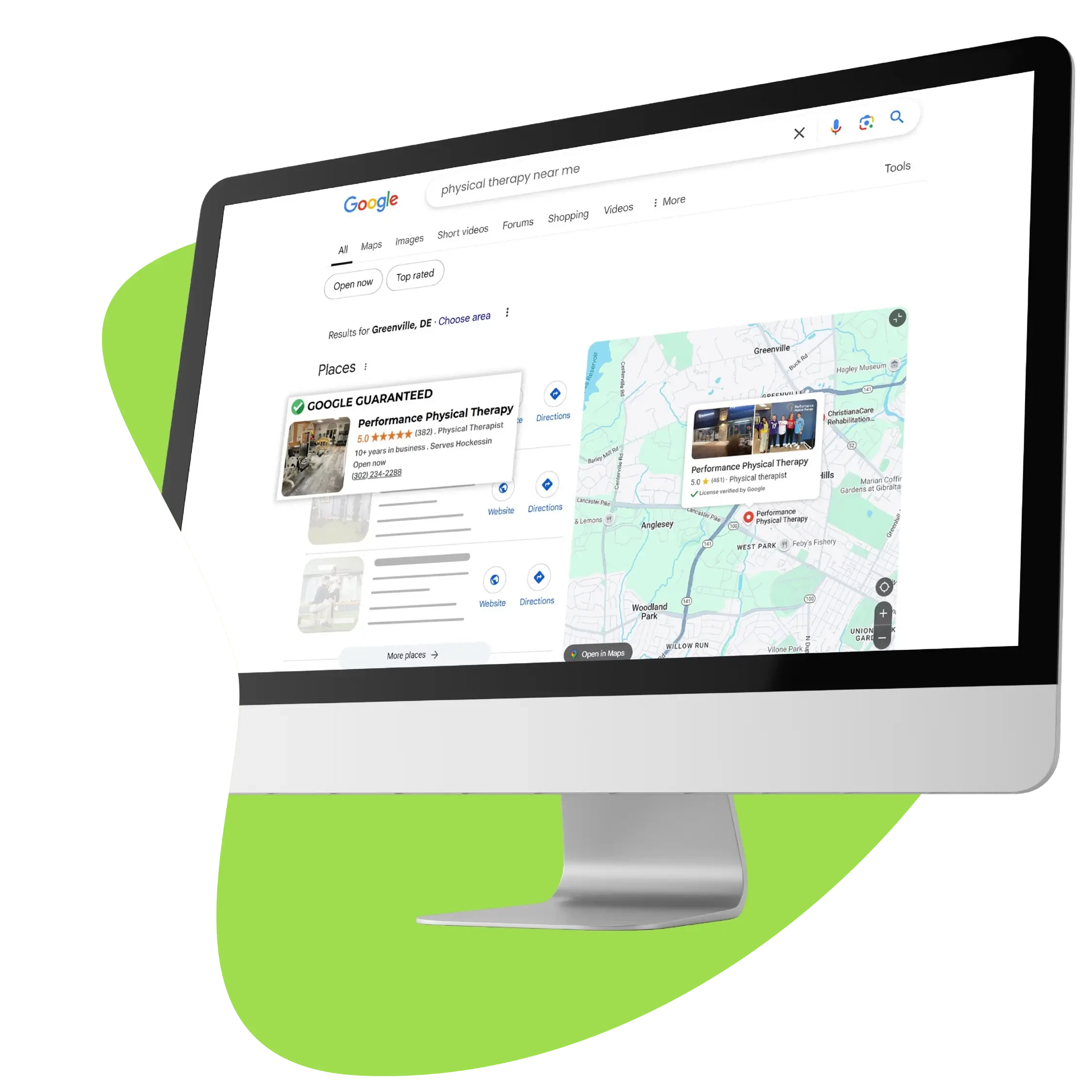

Want to be seen everywhere?
Get a free AI-search audit Today!



4.9/5 Ratings!


Don’t miss our revenue growth tips!
Get expert marketing tips—straight to your inbox, like thousands of happy clients.
Don’t miss our revenue growth tips!
Get expert marketing tips—straight to your inbox, like thousands of happy clients.
Don’t miss our revenue growth tips!
Don’t miss our revenue growth tips!
Get expert marketing tips—straight to your inbox, like thousands of happy clients.
Relevant Blogs on Generative AI SEO
Relevant Blogs on Generative AI SEO
Unlock data-driven insights in AI-powered SEO—explore our featured blogs and skyrocket your revenue before your competitors do.
Unlock data-driven insights in AI-powered SEO—explore our featured blogs and skyrocket your revenue before your competitors do.

GEO
Sep 22, 2026
15 Min Read
AI Search Runs on More SEO Than You Think
GEO
Sep 22, 2026
15 Min Read
AI Search Runs on More SEO Than You Think
GEO
Sep 22, 2026
15 Min Read
AI Search Runs on More SEO Than You Think

GEO
Sep 7, 2026
8 Min Read
How to Optimize Content for AI Search Engines: Best Practices
GEO
Sep 7, 2026
8 Min Read
How to Optimize Content for AI Search Engines: Best Practices
GEO
Sep 7, 2026
8 Min Read
How to Optimize Content for AI Search Engines: Best Practices

GEO
Sep 4, 2026
12 Min Read
How Ecommerce Brands Can Advertise in Google AI Mode?
GEO
Sep 4, 2026
12 Min Read
How Ecommerce Brands Can Advertise in Google AI Mode?
GEO
Sep 4, 2026
12 Min Read
How Ecommerce Brands Can Advertise in Google AI Mode?
























Ready to speak with an expert?
Data-Driven Marketing Agency That Elevates ROI
1100+
Websites Designed & Optimized to Convert
$280M+
Client Revenue Driven & Growing Strong
Discover how to skyrocket
your revenue today!
Trusted by 1000+ Owners!
Ready to speak with an expert?
Data-Driven Marketing Agency That Elevates ROI
1100+
Websites Designed & Optimized to Convert
$280M+
Client Revenue Driven & Growing Strong
Discover how to skyrocket
your revenue today!
Trusted by 1000+ Owners!
Want to skyrocket revenue?
4.9/5 Ratings!
Ready to speak with an expert?
Data-Driven Marketing Agency That Elevates ROI
1100+
Websites Designed & Optimized to Convert
$280M+
Client Revenue Driven & Growing Strong
Discover how to skyrocket
your revenue today!
Trusted by 1000+ Owners!
Call
Meet