Google Just Rewrote the Rules of Search — And Most Marketers Aren't Ready
Last Updated:
Table of Content
Case Studies




Aashi Katariya
Aashi Katariya
Google Updates
Google Updates
8 Min Read
8 Min
Google I/O 2026 didn't just announce new features. It declared the end of search as we knew it.
At Google I/O 2026, held on May 19 in Mountain View, Sundar Pichai walked onto the stage and did something no one quite expected: he quietly confirmed what forward-thinking marketers had been whispering about for two years. GEO (Generative Engine Optimization) is no longer a buzzword. It's now the core of how Google works.
And if you're still thinking about SEO the old way, you're already a lap behind.
The Biggest Search Box Upgrade in 25 Years
Let's start with the headline that didn't get enough attention.
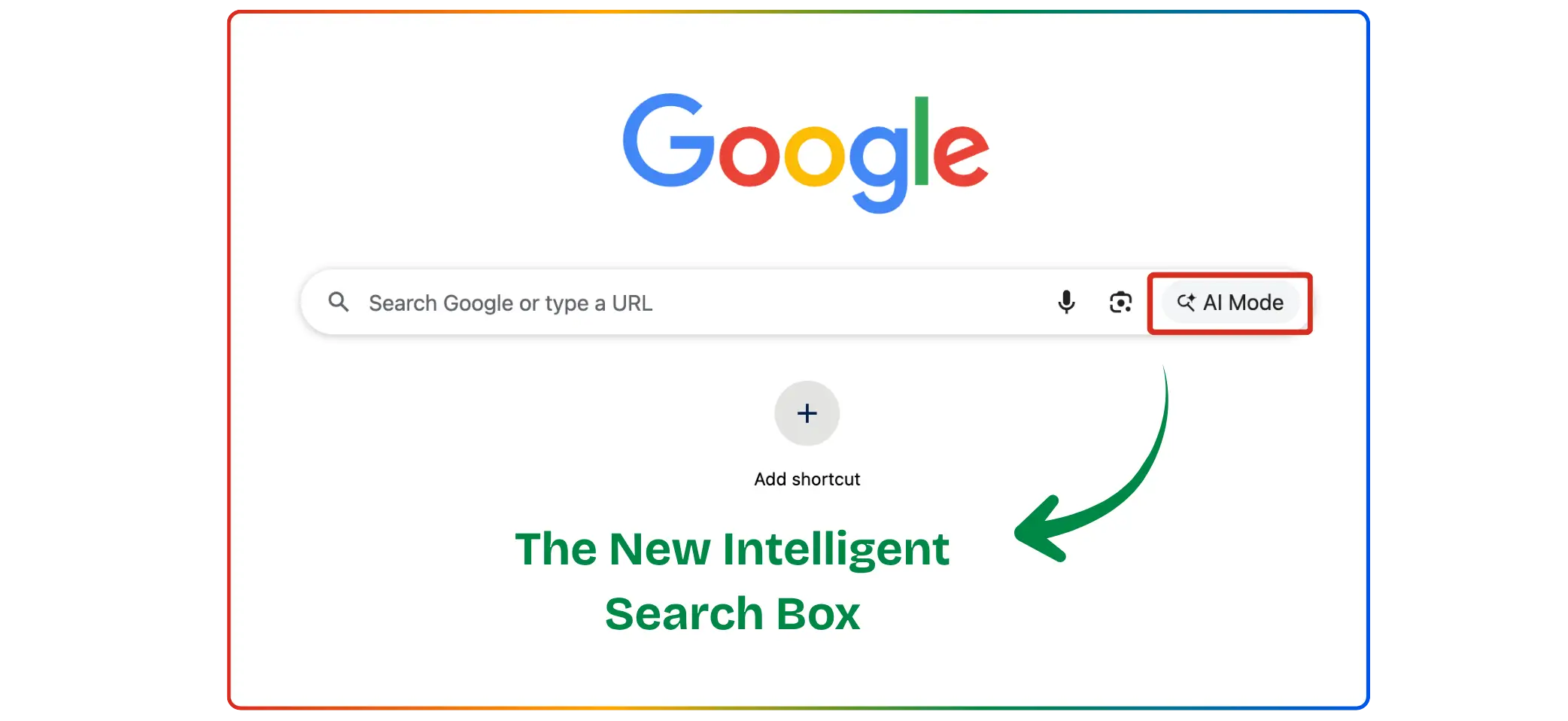
Google announced what it calls the biggest upgrade to its Search box in over 25 years. The new intelligent Search box can now accept text, images, files, videos, and even open Chrome tabs and reason across all of them simultaneously. That's not a small tweak. That's a philosophical overhaul of what "searching" even means.
But here's the part that changes everything for content creators and marketers: Google has merged AI Overviews and AI Mode into one seamless experience. You ask a question, you get an AI-generated overview, and you can immediately dive deeper into AI Mode — all in one continuous flow, without ever leaving the page. This is live today across desktop and mobile, worldwide.
AI Mode has now crossed 1 billion monthly users. And the numbers don't lie — AI Mode queries have been more than doubling every quarter since launch. Search queries overall hit an all-time high last quarter. AI isn't killing search. It's supercharging it. But the game of who gets found has completely changed.
Search Agents: Your Content Now Competes Against Bots Working 24/7
This is the announcement that should keep every content marketer up at night.
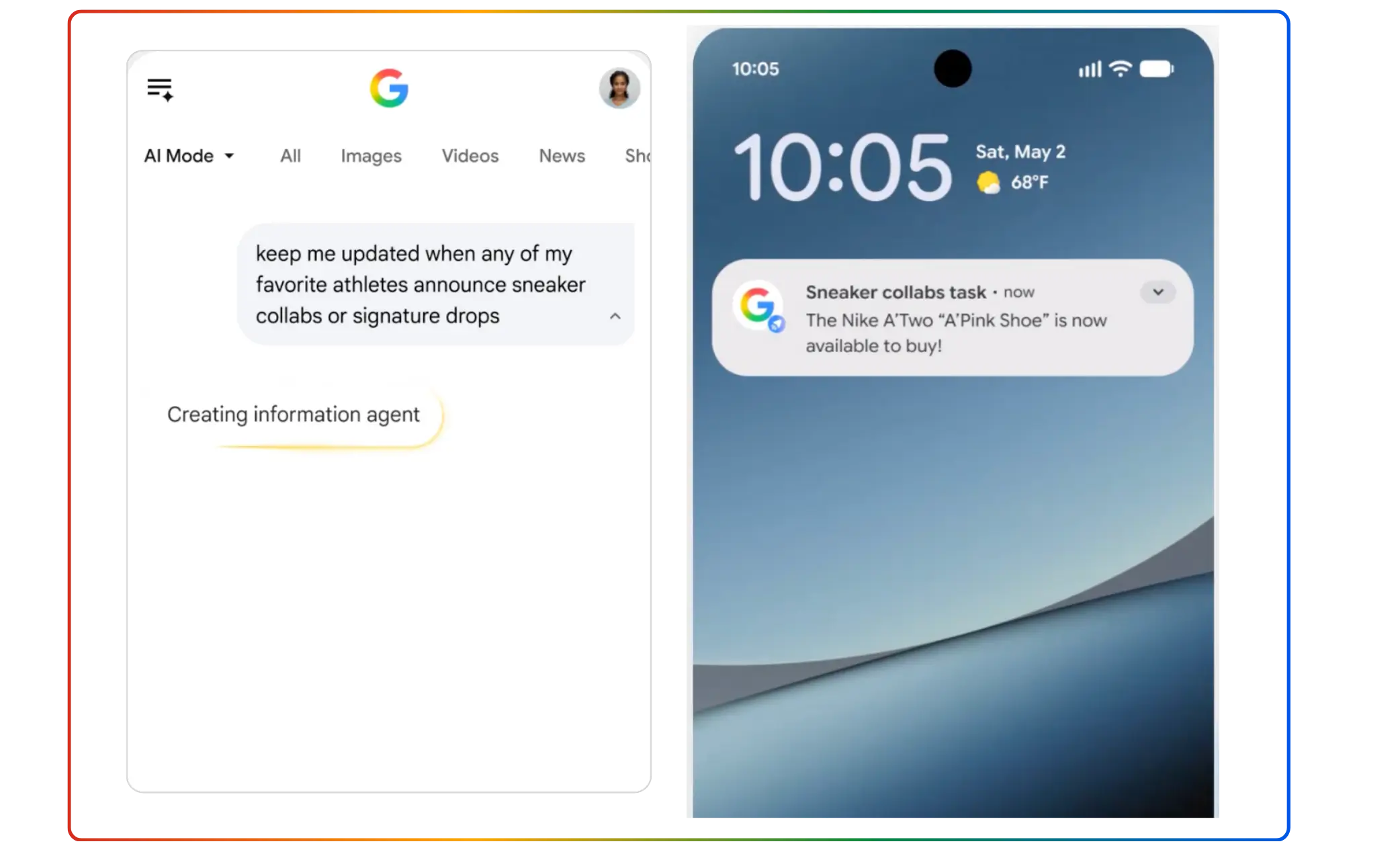
Google is launching Information Agents — AI agents you can spin up directly inside Search that work around the clock to monitor topics, track developments, and send you synthesized updates.
These aren't just news alerts. These agents intelligently browse blogs, news sites, social posts, case studies, real-time finance data, sports scores, and more, synthesizing everything into a coherent, actionable briefing.
Think about what that means for a brand. When a consumer wants to know which laptop to buy, which restaurant to visit, or which service provider to trust, an AI agent may now be the one doing the research, not the human. Your content doesn't just need to rank for people anymore. It needs to be readable, citable, and trustworthy enough to be pulled by an AI working on someone else's behalf.
Information agents start rolling out this summer, initially to Google AI Pro and Ultra subscribers.
GEO Is Real Now: What the Convergence of SEO, AEO, and GEO Actually Means
For years, marketers drew neat boxes around three disciplines:
SEO (rank for a keyword),
AEO (win the featured snippet), and
GEO (get cited inside AI-generated answers)
These were treated like separate strategies, different teams, different KPIs.
Google just collapsed those boxes into one.
Consider the data that's already emerging: AI Overviews now appear on roughly half of all Google searches, and on informational queries, nearly 90% trigger an AI-generated answer.
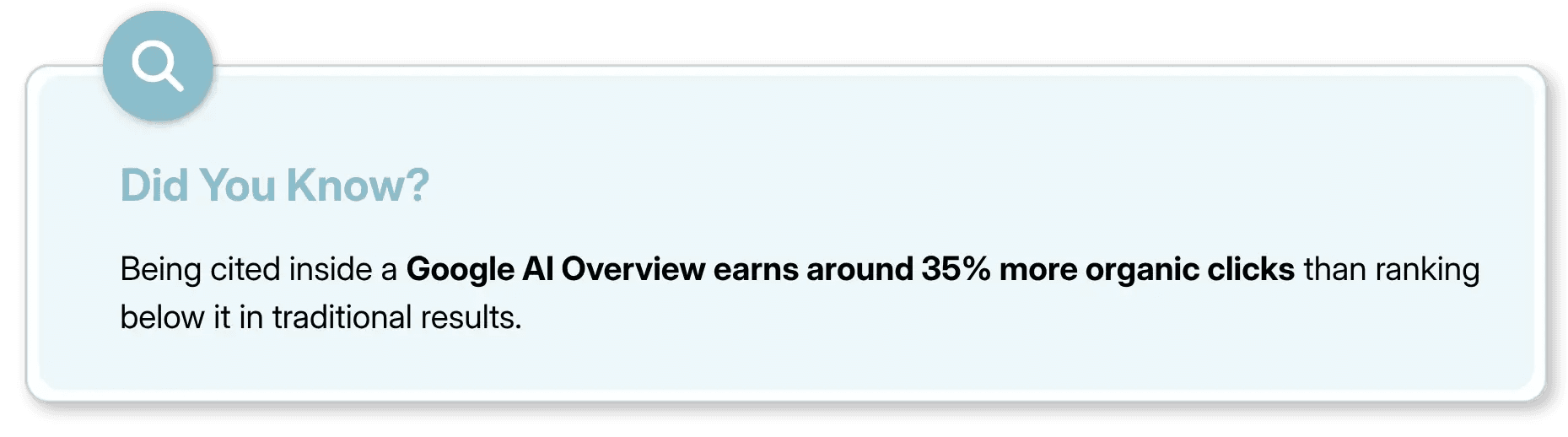
Being cited inside an AI Overview, rather than just ranking below it, reportedly earns around 35% more organic clicks. The old rank-and-click model is giving way to a cite-and-trust model.
What does this mean practically? Your content needs to be structured so an AI reasoning engine can extract a clean, direct claim from it. Not buried in paragraph six. Not hedged into vagueness.
The answer — the actual, useful, specific answer — needs to be upfront, clearly attributed, and trustworthy enough for Google's systems to stake their credibility on it.
Generative UI: The "10 Blue Links" Page Is Dying
Google announced Generative UI powered by Google Antigravity and Gemini 3.5 Flash — and this one is genuinely wild.
Search can now build a completely custom interface for your query on the fly. Ask about a scientific concept and Search might generate an interactive simulation. Ask about planning an event and Search may scaffold an entire dashboard you can return to over time — functioning like a mini app built just for you.
Generative UI is rolling out to Search for everyone, free of charge, this summer. Custom experiences (the "mini app" functionality) will arrive in the coming months, starting with subscribers.
This has a concrete implication: a significant chunk of informational queries will increasingly be answered withoutsending users to a website at all. The traffic model that the entire content industry was built on — write good content, rank well, get clicks — has a shrinking shelf life for certain query types.
Universal Cart: Commerce Is Moving Inside the AI
Google's Universal Cart is arguably the most underreported announcement of I/O 2026.
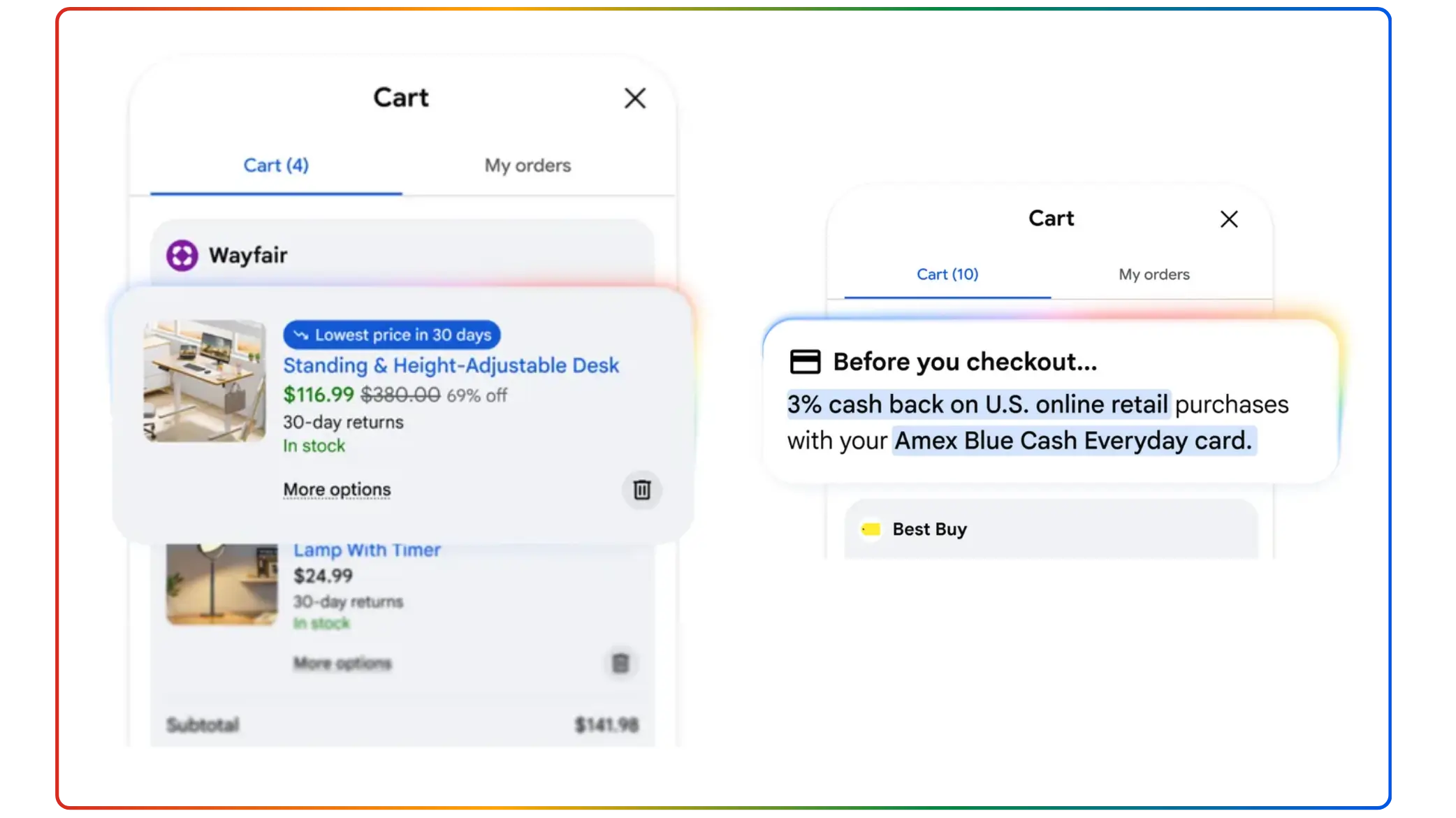
Here's the idea: a single cart that lives across Search, Gemini, YouTube, and Gmail. You can add products while browsing Search results, chatting with Gemini, watching a YouTube video, or reading an email. The cart then works in the background — finding deals, tracking price drops, flagging product incompatibilities, and intelligently surfacing your payment method perks and loyalty rewards.
It's powered by Gemini models, which means it gets smarter over time. And it's built on Google Wallet, so it can enable checkout directly on Google via Google Pay for many brands, without the user ever visiting the retailer's site.
For e-commerce brands, this is both an opportunity and a threat. Get integrated into this ecosystem and you capture impulse purchases before users even visit your store. Get left out, and you lose the sale before they see your homepage.
Personal Intelligence: Your Data Is Now Part of the Algorithm
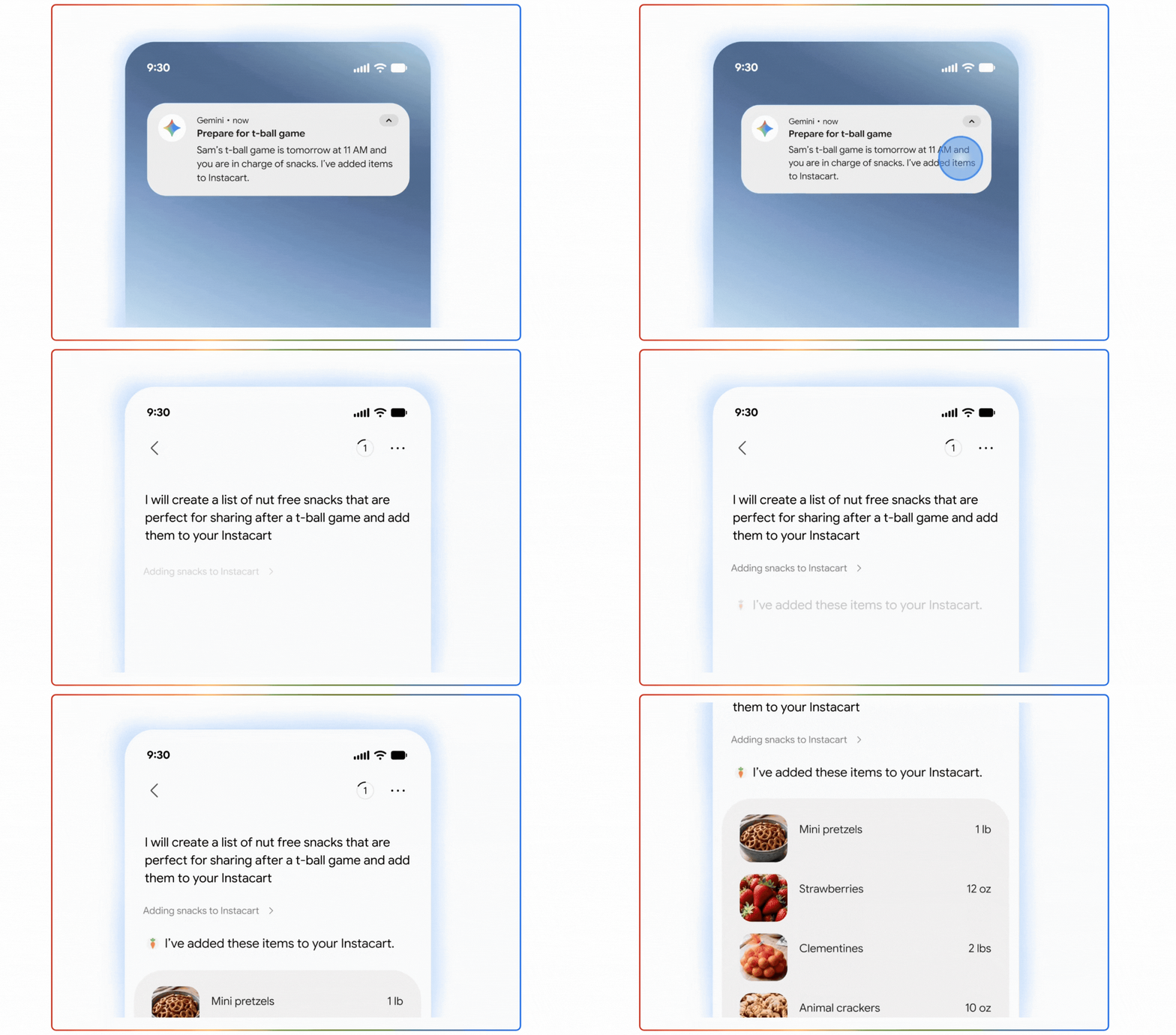
With Personal Intelligence expanding to nearly 200 countries in 98 languages, Google is making it standard, not premium, for AI Mode to reason across your Gmail, Google Photos, and soon Google Calendar when generating answers.
This is a fundamental shift in what "search results" means. The answer to "what should I do this weekend" is no longer the same for everyone. It's personalized to your inbox, your photos, your prior searches, your habits.
For brands, this means the path to visibility runs not just through the open web, but through whether your brand earns enough trust signals that AI systems surface you when they're synthesizing a personalized answer for an individual user.
What You Should Actually Do Right Now
If you run a business, manage a brand, or create content for a living, here's the uncomfortable truth from I/O 2026:
Structure content for retrieval, not just ranking. Every important claim should be in the first sentence of a section, not the last. AI systems extract, they don't read like humans.
Build entity authority, not just keyword authority. Consistent author attribution, organization schema, verified business information, and topical depth are the signals AI systems use to decide who's credible enough to cite.
Think about the agent layer. Your next "visitor" might be an AI agent researching on someone's behalf. Is your content clear enough, factual enough, and well-attributed enough to survive that scrutiny?
Don't ignore commerce signals. If you sell products, understanding how Google's Universal Cart and Universal Commerce Protocol work — and how to integrate with them — is a genuine competitive advantage in the next 12 months.
This Is Where RankRabbit.ai Fits In
Most teams understand the shift but have no practical way to execute against it. SEO platforms were built for rankings. AEO platforms were built for snippets. GEO solutions are mostly scattered and siloed. You end up with three dashboards and no unified picture of how your brand is actually showing up across AI systems.
That's the gap RankRabbit.ai was built to close.
RankRabbit treats SEO, AEO, and GEO as one unified problem because after I/O 2026, they are. It gives businesses a single view of how their brand is being represented across traditional search, AI Overviews, ChatGPT, Perplexity, Gemini, and the agent layer underneath all of them.
For multi-location businesses, local service brands, franchises, retail chains, this is especially critical. Consistency across listings, reviews, and citations is no longer housekeeping. AI systems are reading every one of those signals to decide who gets cited and who gets buried.
The old playbook had a runway. That runway is gone.
Final Thoughts
Google I/O 2026 wasn't just a product launch event. It was a declaration that the web is being restructured around AI reasoning systems — and the rules of visibility are changing with it.
AI Mode at 1 billion users. AI Overviews merged into the default experience. Information agents running 24/7. Generative UI replacing static results. Universal Cart enabling commerce inside the AI layer. Personal Intelligence personalizing every answer.
The search engine that billions of people use every day is, right now, mid-transformation into something that looks and behaves more like an intelligent assistant than a directory. The marketers and businesses that adapt their content, their structure, and their strategy to this new reality will gain outsized visibility. Those that don't will quietly disappear from the conversation — not penalized, just invisible.
GEO is no longer a buzzword. It's the new terrain. The question is whether your strategy is built for it.
FAQs
What are Google's Information Agents and how will they affect my business?

This is the next big shift to prepare for. An information agent is a small program users configure once inside Google Search to monitor a topic — a flight price, a product's availability, a health update, a stock movement. The agent keeps running in the background, searches on the user's behalf, and notifies them via push or email when it finds something relevant. These agents continuously search and synthesize updates, raising the critical question of wheher your content is cited or simply overlooked in those summaries.
How should I adapt my content strategy after Google I/O 2026?
Focus on being quotable, not just rankable. Restructure content into self-contained, citable blocks where each section answers one question completely so an AI can lift it cleanly into a synthesis. Publish original data and first-hand expertise — generic summaries an AI can write itself earn zero citation value. SEO content optimized for short keyword queries is increasingly out of alignment with how users actually search — queries are getting longer, more conversational, and more multimodal.
Is GEO (Generative Engine Optimization) now a separate strategy from SEO after Google I/O 2026?
No — Google has made this official. SEO is not dead. Blue links are still on the page, but they have been demoted from the headline act to the opening band. Being cited matters more than being ranked. The new goal is to be the source the AI quotes when it answers a question. GEO and SEO are the same discipline, just across a wider set of surfaces.
How has Google's new Search box changed the way people search?
It fundamentally changes search behavior. AI Mode encourages longer, more conversational searches. Business owners now need content that answers detailed questions, supports follow-up searches, and helps AI understand services, locations, products, and trust signals. SEO strategy should account for conversational, multimodal, and prompt-based discovery.
Are Google's I/O 2026 AI search features available globally or only in the US?
They are rolling out globally at significant scale. What changed on May 19 is that all of these capabilities were tied together under a faster model, connected to background monitoring agents, and extended to a global audience numbering close to 200 countries. Most features require no subscription. The new intelligent Search box is rolling out now in every country and language where AI Mode is available.
Google I/O 2026 didn't just announce new features. It declared the end of search as we knew it.
At Google I/O 2026, held on May 19 in Mountain View, Sundar Pichai walked onto the stage and did something no one quite expected: he quietly confirmed what forward-thinking marketers had been whispering about for two years. GEO (Generative Engine Optimization) is no longer a buzzword. It's now the core of how Google works.
And if you're still thinking about SEO the old way, you're already a lap behind.
The Biggest Search Box Upgrade in 25 Years
Let's start with the headline that didn't get enough attention.
Google announced what it calls the biggest upgrade to its Search box in over 25 years. The new intelligent Search box can now accept text, images, files, videos, and even open Chrome tabs and reason across all of them simultaneously. That's not a small tweak. That's a philosophical overhaul of what "searching" even means.
But here's the part that changes everything for content creators and marketers: Google has merged AI Overviews and AI Mode into one seamless experience. You ask a question, you get an AI-generated overview, and you can immediately dive deeper into AI Mode — all in one continuous flow, without ever leaving the page. This is live today across desktop and mobile, worldwide.
AI Mode has now crossed 1 billion monthly users. And the numbers don't lie — AI Mode queries have been more than doubling every quarter since launch. Search queries overall hit an all-time high last quarter. AI isn't killing search. It's supercharging it. But the game of who gets found has completely changed.
Search Agents: Your Content Now Competes Against Bots Working 24/7
This is the announcement that should keep every content marketer up at night.
Google is launching Information Agents — AI agents you can spin up directly inside Search that work around the clock to monitor topics, track developments, and send you synthesized updates.
These aren't just news alerts. These agents intelligently browse blogs, news sites, social posts, case studies, real-time finance data, sports scores, and more, synthesizing everything into a coherent, actionable briefing.
Think about what that means for a brand. When a consumer wants to know which laptop to buy, which restaurant to visit, or which service provider to trust, an AI agent may now be the one doing the research, not the human. Your content doesn't just need to rank for people anymore. It needs to be readable, citable, and trustworthy enough to be pulled by an AI working on someone else's behalf.
Information agents start rolling out this summer, initially to Google AI Pro and Ultra subscribers.
GEO Is Real Now: What the Convergence of SEO, AEO, and GEO Actually Means
For years, marketers drew neat boxes around three disciplines:
SEO (rank for a keyword),
AEO (win the featured snippet), and
GEO (get cited inside AI-generated answers)
These were treated like separate strategies, different teams, different KPIs.
Google just collapsed those boxes into one.
Consider the data that's already emerging: AI Overviews now appear on roughly half of all Google searches, and on informational queries, nearly 90% trigger an AI-generated answer.
Being cited inside an AI Overview, rather than just ranking below it, reportedly earns around 35% more organic clicks. The old rank-and-click model is giving way to a cite-and-trust model.
What does this mean practically? Your content needs to be structured so an AI reasoning engine can extract a clean, direct claim from it. Not buried in paragraph six. Not hedged into vagueness.
The answer — the actual, useful, specific answer — needs to be upfront, clearly attributed, and trustworthy enough for Google's systems to stake their credibility on it.
Generative UI: The "10 Blue Links" Page Is Dying
Google announced Generative UI powered by Google Antigravity and Gemini 3.5 Flash — and this one is genuinely wild.
Search can now build a completely custom interface for your query on the fly. Ask about a scientific concept and Search might generate an interactive simulation. Ask about planning an event and Search may scaffold an entire dashboard you can return to over time — functioning like a mini app built just for you.
Generative UI is rolling out to Search for everyone, free of charge, this summer. Custom experiences (the "mini app" functionality) will arrive in the coming months, starting with subscribers.
This has a concrete implication: a significant chunk of informational queries will increasingly be answered withoutsending users to a website at all. The traffic model that the entire content industry was built on — write good content, rank well, get clicks — has a shrinking shelf life for certain query types.
Universal Cart: Commerce Is Moving Inside the AI
Google's Universal Cart is arguably the most underreported announcement of I/O 2026.
Here's the idea: a single cart that lives across Search, Gemini, YouTube, and Gmail. You can add products while browsing Search results, chatting with Gemini, watching a YouTube video, or reading an email. The cart then works in the background — finding deals, tracking price drops, flagging product incompatibilities, and intelligently surfacing your payment method perks and loyalty rewards.
It's powered by Gemini models, which means it gets smarter over time. And it's built on Google Wallet, so it can enable checkout directly on Google via Google Pay for many brands, without the user ever visiting the retailer's site.
For e-commerce brands, this is both an opportunity and a threat. Get integrated into this ecosystem and you capture impulse purchases before users even visit your store. Get left out, and you lose the sale before they see your homepage.
Personal Intelligence: Your Data Is Now Part of the Algorithm
With Personal Intelligence expanding to nearly 200 countries in 98 languages, Google is making it standard, not premium, for AI Mode to reason across your Gmail, Google Photos, and soon Google Calendar when generating answers.
This is a fundamental shift in what "search results" means. The answer to "what should I do this weekend" is no longer the same for everyone. It's personalized to your inbox, your photos, your prior searches, your habits.
For brands, this means the path to visibility runs not just through the open web, but through whether your brand earns enough trust signals that AI systems surface you when they're synthesizing a personalized answer for an individual user.
What You Should Actually Do Right Now
If you run a business, manage a brand, or create content for a living, here's the uncomfortable truth from I/O 2026:
Structure content for retrieval, not just ranking. Every important claim should be in the first sentence of a section, not the last. AI systems extract, they don't read like humans.
Build entity authority, not just keyword authority. Consistent author attribution, organization schema, verified business information, and topical depth are the signals AI systems use to decide who's credible enough to cite.
Think about the agent layer. Your next "visitor" might be an AI agent researching on someone's behalf. Is your content clear enough, factual enough, and well-attributed enough to survive that scrutiny?
Don't ignore commerce signals. If you sell products, understanding how Google's Universal Cart and Universal Commerce Protocol work — and how to integrate with them — is a genuine competitive advantage in the next 12 months.
This Is Where RankRabbit.ai Fits In
Most teams understand the shift but have no practical way to execute against it. SEO platforms were built for rankings. AEO platforms were built for snippets. GEO solutions are mostly scattered and siloed. You end up with three dashboards and no unified picture of how your brand is actually showing up across AI systems.
That's the gap RankRabbit.ai was built to close.
RankRabbit treats SEO, AEO, and GEO as one unified problem because after I/O 2026, they are. It gives businesses a single view of how their brand is being represented across traditional search, AI Overviews, ChatGPT, Perplexity, Gemini, and the agent layer underneath all of them.
For multi-location businesses, local service brands, franchises, retail chains, this is especially critical. Consistency across listings, reviews, and citations is no longer housekeeping. AI systems are reading every one of those signals to decide who gets cited and who gets buried.
The old playbook had a runway. That runway is gone.
Final Thoughts
Google I/O 2026 wasn't just a product launch event. It was a declaration that the web is being restructured around AI reasoning systems — and the rules of visibility are changing with it.
AI Mode at 1 billion users. AI Overviews merged into the default experience. Information agents running 24/7. Generative UI replacing static results. Universal Cart enabling commerce inside the AI layer. Personal Intelligence personalizing every answer.
The search engine that billions of people use every day is, right now, mid-transformation into something that looks and behaves more like an intelligent assistant than a directory. The marketers and businesses that adapt their content, their structure, and their strategy to this new reality will gain outsized visibility. Those that don't will quietly disappear from the conversation — not penalized, just invisible.
GEO is no longer a buzzword. It's the new terrain. The question is whether your strategy is built for it.
FAQs
What are Google's Information Agents and how will they affect my business?
This is the next big shift to prepare for. An information agent is a small program users configure once inside Google Search to monitor a topic — a flight price, a product's availability, a health update, a stock movement. The agent keeps running in the background, searches on the user's behalf, and notifies them via push or email when it finds something relevant. These agents continuously search and synthesize updates, raising the critical question of wheher your content is cited or simply overlooked in those summaries.
How should I adapt my content strategy after Google I/O 2026?
Focus on being quotable, not just rankable. Restructure content into self-contained, citable blocks where each section answers one question completely so an AI can lift it cleanly into a synthesis. Publish original data and first-hand expertise — generic summaries an AI can write itself earn zero citation value. SEO content optimized for short keyword queries is increasingly out of alignment with how users actually search — queries are getting longer, more conversational, and more multimodal.
Is GEO (Generative Engine Optimization) now a separate strategy from SEO after Google I/O 2026?
No — Google has made this official. SEO is not dead. Blue links are still on the page, but they have been demoted from the headline act to the opening band. Being cited matters more than being ranked. The new goal is to be the source the AI quotes when it answers a question. GEO and SEO are the same discipline, just across a wider set of surfaces.
How has Google's new Search box changed the way people search?
It fundamentally changes search behavior. AI Mode encourages longer, more conversational searches. Business owners now need content that answers detailed questions, supports follow-up searches, and helps AI understand services, locations, products, and trust signals. SEO strategy should account for conversational, multimodal, and prompt-based discovery.
Are Google's I/O 2026 AI search features available globally or only in the US?
They are rolling out globally at significant scale. What changed on May 19 is that all of these capabilities were tied together under a faster model, connected to background monitoring agents, and extended to a global audience numbering close to 200 countries. Most features require no subscription. The new intelligent Search box is rolling out now in every country and language where AI Mode is available.



Summarize with AI

Latest Blogs




Want to be seen everywhere?
Get a free AI-search audit Today!



4.9/5 Ratings!


Don’t miss our revenue growth tips!
Get expert marketing tips—straight to your inbox, like thousands of happy clients.
Don’t miss our revenue growth tips!
Get expert marketing tips—straight to your inbox, like thousands of happy clients.
Don’t miss our revenue growth tips!
Don’t miss our revenue growth tips!
Get expert marketing tips—straight to your inbox, like thousands of happy clients.
Explore News, Updates & Strategies
Explore News, Updates & Strategies
Explore the latest industry updates, marketing trends, Google changes, expert insights, success stories, eCommerce strategies, AEO innovations, and lead generation techniques — all in one place.
Explore the latest industry updates, marketing trends, Google changes, expert insights, success stories, eCommerce strategies, AEO innovations, and lead generation techniques — all in one place.

Google Updates
Sep 26, 2026
3 Min Read
Google Search Console Adds Multimodal Search Performance Reporting
Google Updates
Sep 26, 2026
3 Min Read
Google Search Console Adds Multimodal Search Performance Reporting
Google Updates
Sep 26, 2026
3 Min Read
Google Search Console Adds Multimodal Search Performance Reporting
Google Updates
Sep 2, 2026
5 Min Read
Google Search Console's Generative AI Performance Report Goes Fully Global
Google Updates
Sep 2, 2026
5 Min Read
Google Search Console's Generative AI Performance Report Goes Fully Global
Google Updates
Sep 2, 2026
5 Min Read
Google Search Console's Generative AI Performance Report Goes Fully Global
Google Updates
Aug 18, 2026
5 Min Read
Google’s August 2026 Spam Update: Who Won, Who Lost & Why?
Google Updates
Aug 18, 2026
5 Min Read
Google’s August 2026 Spam Update: Who Won, Who Lost & Why?
Google Updates
Aug 18, 2026
5 Min Read
Google’s August 2026 Spam Update: Who Won, Who Lost & Why?


























Ready to speak with an expert?
Data-Driven Marketing Agency That Elevates ROI
1100+
Websites Designed & Optimized to Convert
$280M+
Client Revenue Driven & Growing Strong
Discover how to skyrocket
your revenue today!
Trusted by 1000+ Owners!
Ready to speak with an expert?
Data-Driven Marketing Agency That Elevates ROI
1100+
Websites Designed & Optimized to Convert
$280M+
Client Revenue Driven & Growing Strong
Discover how to skyrocket
your revenue today!
Trusted by 1000+ Owners!
Want to skyrocket revenue?
4.9/5 Ratings!
Ready to speak with an expert?
Data-Driven Marketing Agency That Elevates ROI
1100+
Websites Designed & Optimized to Convert
$280M+
Client Revenue Driven & Growing Strong
Discover how to skyrocket
your revenue today!
Trusted by 1000+ Owners!
Call
Meet