What is On-Page SEO? Key Factors for Rankings.
What is On-Page SEO? Key Factors for Rankings.
On-Page SEO
On-Page SEO
On-Page SEO
On-page SEO focuses on optimizing individual web pages to enhance their search engine visibility and rankings, ensuring the content is both user-friendly and relevant for visitors as well as search engine crawlers.
On-page SEO focuses on optimizing individual web pages to enhance their search engine visibility and rankings, ensuring the content is both user-friendly and relevant for visitors as well as search engine crawlers.

Table of Content

Optimize Every Page to Rank Higher and Attract More Traffic



4.9/5 Ratings!
4.9/5 Ratings!

Megha Sharma
Megha Sharma
6 Min Read
6 Min Read
Sep 30, 2025
Sep 30, 2025
What is On-Page SEO?
SEO, which stands for "Search Engine Optimization," is the practice of making a website easier to find in search engine results pages (SERPs) so that it gets more organic (unpaid) traffic. It means making the content and structure of your website better so that search engines can comprehend and rank it. This makes it easier for people to locate your material when they search for related phrases. The idea is to get more qualified visitors to your site by making it more relevant and trustworthy in the eyes of search engines like Google.
In the ever-changing world of digital marketing, search engine optimization (SEO) is very important for getting more people to see your site and bringing in organic traffic. On-page SEO is an important part of this process because it means making changes to individual web pages so that they rank higher in search engines and bring in more relevant traffic
SEO, which stands for "Search Engine Optimization," is the practice of making a website easier to find in search engine results pages (SERPs) so that it gets more organic (unpaid) traffic. It means making the content and structure of your website better so that search engines can comprehend and rank it. This makes it easier for people to locate your material when they search for related phrases. The idea is to get more qualified visitors to your site by making it more relevant and trustworthy in the eyes of search engines like Google.
In the ever-changing world of digital marketing, search engine optimization (SEO) is very important for getting more people to see your site and bringing in organic traffic. On-page SEO is an important part of this process because it means making changes to individual web pages so that they rank higher in search engines and bring in more relevant traffic
On-page SEO focuses on things you can control, such your site's content, structure, and HTML. On the other hand, off-page SEO looks at backlinks and other signals that come from outside your site. The purpose of this blog is to tell you what on-page SEO is, why it's important, and how to do it right.
On-page SEO focuses on things you can control, such your site's content, structure, and HTML. On the other hand, off-page SEO looks at backlinks and other signals that come from outside your site. The purpose of this blog is to tell you what on-page SEO is, why it's important, and how to do it right.
Why on-page SEO is important?
On-page SEO enables search engines to grasp your content and assess its relevance to a user's search. Google and other search engines employ algorithms to examine your page and evaluate factors such as keyword usage, readability, user experience, and structure. A page with good optimization can:
On-page SEO enables search engines to grasp your content and assess its relevance to a user's search. Google and other search engines employ algorithms to examine your page and evaluate factors such as keyword usage, readability, user experience, and structure. A page with good optimization can:
•
•
Secure a higher position in search results.
Secure a higher position in search results.
•
•
Attract specific visitors.
Attract specific visitors.
•
•
Boost the number of people who click.
Boost the number of people who click.
•
•
Give users a more enjoyable time.
Give users a more enjoyable time.
Essential Components of On-Page SEO
While search intent is about the why behind a query, traffic refers to how many people visit a site (or page), often after ranking in search results. Here’s how they compare:
While search intent is about the why behind a query, traffic refers to how many people visit a site (or page), often after ranking in search results. Here’s how they compare:
1. Title Tags
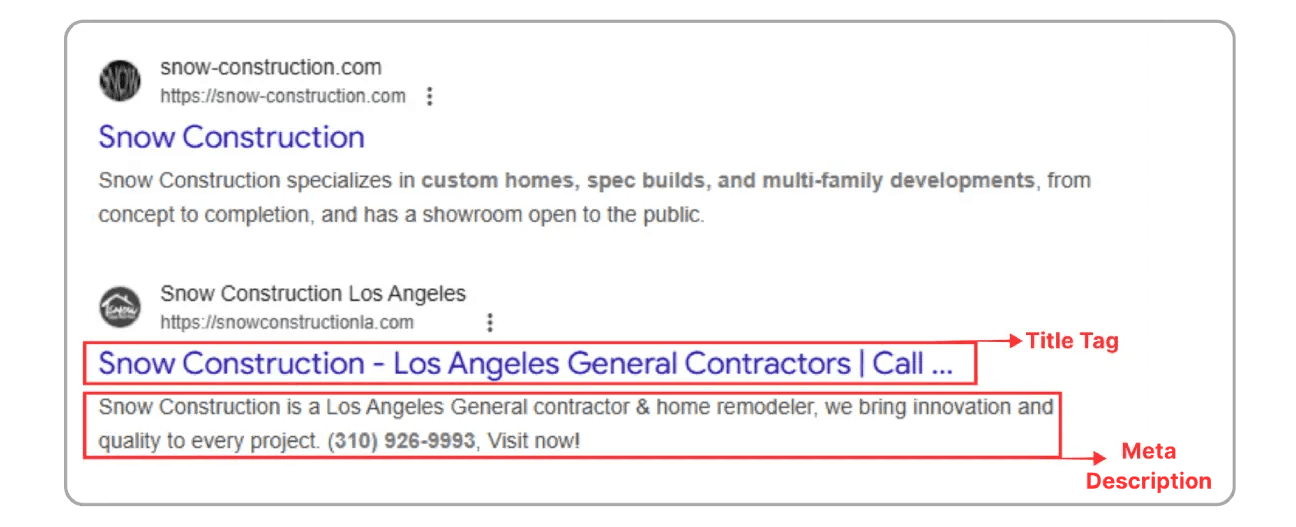
Your title tag shows up as the clickable headline in search results. It needs to:
Your title tag shows up as the clickable headline in search results. It needs to:
•
•
Have your main keyword.
Have your main keyword.
•
•
Stay under 60 characters.
Stay under 60 characters.
•
•
Give an accurate picture of what's on the page.
Give an accurate picture of what's on the page.
For example: Don't use "Home," go for "Custom T-Shirts That Won't Break the Bank – We Ship Free | Your Brand".
For example: Don't use "Home," go for "Custom T-Shirts That Won't Break the Bank – We Ship Free | Your Brand".
2. Meta Descriptions
The meta description sits below your title when people search. While it doesn't affect rankings, it has a big impact on how often people click. Make sure it's:
The meta description sits below your title when people search. While it doesn't affect rankings, it has a big impact on how often people click. Make sure it's:
•
•
No more than 160 characters.
No more than 160 characters.
•
•
Interesting and full of keywords.
Interesting and full of keywords.
•
•
In line with what's on the page.
In line with what's on the page.
3. Header Tags (H1, H2 H3...)
Use headers to give your content a clear structure. Put your main keyword in the H1 and use it once. H2 and H3 are great for subtopics and organizing your ideas.
Use headers to give your content a clear structure. Put your main keyword in the H1 and use it once. H2 and H3 are great for subtopics and organizing your ideas.
4. URL Structure
Your URLs should be neat, short, and have keywords in them.
Your URLs should be neat, short, and have keywords in them.
•
•
Good: yourwebsite.com/on-page-seo-guide.
Good: yourwebsite.com/on-page-seo-guide.
•
•
Bad: yourwebsite.com/page?id=12345.
Bad: yourwebsite.com/page?id=12345.
5. Keyword Optimization
Put your main keywords in these spots without overdoing it:
Put your main keywords in these spots without overdoing it:
•
•
Title tag.
Title tag.
•
•
Headers.
Headers.
•
•
First paragraph.
First paragraph.
•
•
All through the article.
All through the article.
Don't cram in too many keywords! Google likes content that reads and makes sense.
Don't cram in too many keywords! Google likes content that reads and makes sense.
6. Internal Linking
Connecting to other relevant pages on your site helps visitors navigate and improves site structure. It also allows search engines to crawl your site more.
Connecting to other relevant pages on your site helps visitors navigate and improves site structure. It also allows search engines to crawl your site more.
7. Image Optimization
Use pictures to split up content and back up your message. Remember to:
Use pictures to split up content and back up your message. Remember to:
8. Mobile-Friendliness
Google now uses mobile-first indexing so your site needs to look good and work well on mobile devices. Use responsive design and check your site on various screen sizes.
Google now uses mobile-first indexing so your site needs to look good and work well on mobile devices. Use responsive design and check your site on various screen sizes.
9. Page Speed
A website that loads hurts rankings and user experience. Use tools like Google Page Speed Insights to spot and fix problems.
A website that loads hurts rankings and user experience. Use tools like Google Page Speed Insights to spot and fix problems.
10. Content Quality
High-quality content sits at the core of on-page SEO. Make sure your content is:
High-quality content sits at the core of on-page SEO. Make sure your content is:
•
•
Helpful and informative.
Helpful and informative.
•
•
Fresh and interesting.
Fresh and interesting.
•
•
Simple to read (use short paragraphs, bullet points visuals).
Simple to read (use short paragraphs, bullet points visuals).
SEO Task Priority Table
Priority
SEO Task
Why It Matters
High
Optimize title & H1
Direct impact on rankings & CTR
High
Improve page speed
User experience + ranking factor
Medium
Internal linking
Spreads link equity & helps navigation
Medium
Image optimization
Improves load time & accessibility
Low
Schema markup
Adds rich results but not a direct ranking factor
On-page SEO involves optimizing various elements on your website to improve visibility and user experience. This table highlights essential SEO tasks, prioritized by their impact on rankings, site performance, and navigation.
On-page SEO involves optimizing various elements on your website to improve visibility and user experience. This table highlights essential SEO tasks, prioritized by their impact on rankings, site performance, and navigation.
Final Thoughts
On-page SEO is not a once-and-done job it's a process that continues to evolve. But when executed properly, it sets the foundation for sustainable success in search rankings.
By concentrating on technical aspects as well as the quality of your content, you're not only enhancing your SEO but also providing a higher quality experience for your users. Whether you have a blog, eCommerce site, or business website, a key to success is learning on-page SEO.
On-page SEO is not a once-and-done job it's a process that continues to evolve. But when executed properly, it sets the foundation for sustainable success in search rankings.
By concentrating on technical aspects as well as the quality of your content, you're not only enhancing your SEO but also providing a higher quality experience for your users. Whether you have a blog, eCommerce site, or business website, a key to success is learning on-page SEO.
Frequently Asked Questions (FAQs)
Frequently Asked Questions
What are the most important components of on-page SEO for a beginner?

The most crucial components to start with are Title Tags, Meta Descriptions, and Header Tags (H1, H2). These elements help search engines immediately understand the core topic and structure of your page.
How is on-page SEO different from off-page and technical SEO?
On-page SEO: Optimizing content and HTML elements on your site
Off-page SEO: Earning external signals like backlinks, mentions, and reviews
Technical SEO: Improving crawlability, indexing, site architecture, speed, and security
All three work together to improve visibility.
How does improving on-page SEO contribute to conversions and sales?
Optimized pages load faster, read more clearly, offer smoother navigation, and match user intent more closely. This improves trust, reduces friction, and guides users toward taking actions—like purchasing, subscribing, or contacting your business.
Is on-page SEO a one-time task, or should it be repeated regularly?
On-page SEO is ongoing. Search algorithms change, user behavior evolves, and content becomes outdated over time. Regular updates keep your pages relevant, accurate, and better positioned for long-term ranking success.
What is search intent, and why is it crucial for on-page SEO?
Search intent is the purpose behind a user’s search. Google ranks pages that best satisfy intent—whether users are looking for information, comparisons, or products. Optimizing content to match intent improves both user satisfaction and rankings.
How can I write a meta description that improves click-through rates?
Use a clear summary, include target keywords, address user intent, highlight benefits, and end with a call-to-action. Even though meta descriptions don’t directly impact rankings, they can significantly boost organic traffic by attracting more clicks.
Why is my website's mobile-friendliness considered part of On-Page SEO?
Mobile-friendliness is a core on-page factor because Google uses mobile-first indexing. This means Google primarily uses the mobile version of your content for indexing and ranking. A site that looks and works well on mobile is essential for good rankings and user experience.
What are the most important components of on-page SEO for a beginner?
The most crucial components to start with are Title Tags, Meta Descriptions, and Header Tags (H1, H2). These elements help search engines immediately understand the core topic and structure of your page.
How is on-page SEO different from off-page and technical SEO?
On-page SEO: Optimizing content and HTML elements on your site
Off-page SEO: Earning external signals like backlinks, mentions, and reviews
Technical SEO: Improving crawlability, indexing, site architecture, speed, and security
All three work together to improve visibility.
How does improving on-page SEO contribute to conversions and sales?
Optimized pages load faster, read more clearly, offer smoother navigation, and match user intent more closely. This improves trust, reduces friction, and guides users toward taking actions—like purchasing, subscribing, or contacting your business.
Is on-page SEO a one-time task, or should it be repeated regularly?
On-page SEO is ongoing. Search algorithms change, user behavior evolves, and content becomes outdated over time. Regular updates keep your pages relevant, accurate, and better positioned for long-term ranking success.
What is search intent, and why is it crucial for on-page SEO?
Search intent is the purpose behind a user’s search. Google ranks pages that best satisfy intent—whether users are looking for information, comparisons, or products. Optimizing content to match intent improves both user satisfaction and rankings.
How can I write a meta description that improves click-through rates?
Use a clear summary, include target keywords, address user intent, highlight benefits, and end with a call-to-action. Even though meta descriptions don’t directly impact rankings, they can significantly boost organic traffic by attracting more clicks.
Why is my website's mobile-friendliness considered part of On-Page SEO?
Mobile-friendliness is a core on-page factor because Google uses mobile-first indexing. This means Google primarily uses the mobile version of your content for indexing and ranking. A site that looks and works well on mobile is essential for good rankings and user experience.
Optimize Every Page to Rank Higher and Attract More Traffic
Optimize Every Page to Rank Higher and Attract More Traffic
Optimize titles, content, images, and technical elements to enhance visibility and attract more organic traffic.
Optimize titles, content, images, and technical elements to enhance visibility and attract more organic traffic.
4.9/5 Ratings!
Share this article
Share this article

Related Resources






Don’t miss our revenue growth tips!
Don’t miss our revenue growth tips!
Don’t miss our revenue growth tips!
Get expert marketing tips—straight to your inbox, like thousands of happy clients.
Get expert marketing tips—straight to your inbox, like thousands of happy clients.











Ready to speak with an expert?
Data-Driven Marketing Agency That Elevates ROI
1100+
Websites Designed & Optimized to Convert
$280M+
Client Revenue Driven & Growing Strong
Discover how to skyrocket
your revenue today!
Trusted by 1000+ Owners!
Ready to speak with an expert?
Data-Driven Marketing Agency That Elevates ROI
1100+
Websites Designed & Optimized to Convert
$280M+
Client Revenue Driven & Growing Strong
Discover how to skyrocket
your revenue today!
Trusted by 1000+ Owners!
Want to skyrocket revenue?
4.9/5 Ratings!
Ready to speak with an expert?
Data-Driven Marketing Agency That Elevates ROI
1100+
Websites Designed & Optimized to Convert
$280M+
Client Revenue Driven & Growing Strong
Discover how to skyrocket
your revenue today!
Trusted by 1000+ Owners!
Call
Meet