How To Remove Negative Content From Google Before AI Search Finds It?
How To Remove Negative Content From Google Before AI Search Finds It?
Last Updated:
Table of Content
Case Studies









Tanya Singh
Tanya Singh
Tanya Singh
SEO
SEO
SEO
8 Min Read
10 Min
8 Min Read
If someone searches your name or your business today, they might get an answer written by Google's own AI before they ever click a single link. That is the short version of why learning how to remove negative content from Google matters more than ever, whether the goal is to remove unwanted results from Google search for a business or simply figure out how to remove something from Google search tied to your own name. The process usually comes down to three things working together to remove negative content for good: getting the source content taken down or corrected, pushing down whatever cannot be removed with stronger and more relevant content, and doing this quickly, because AI Overviews and AI Mode now summarize a person's or brand's reputation without sending anyone to the original page at all. Here is a full breakdown of the problem, the real cost it creates, and what actually works to fix it.
What Counts As Negative Content You Should Remove From Google?
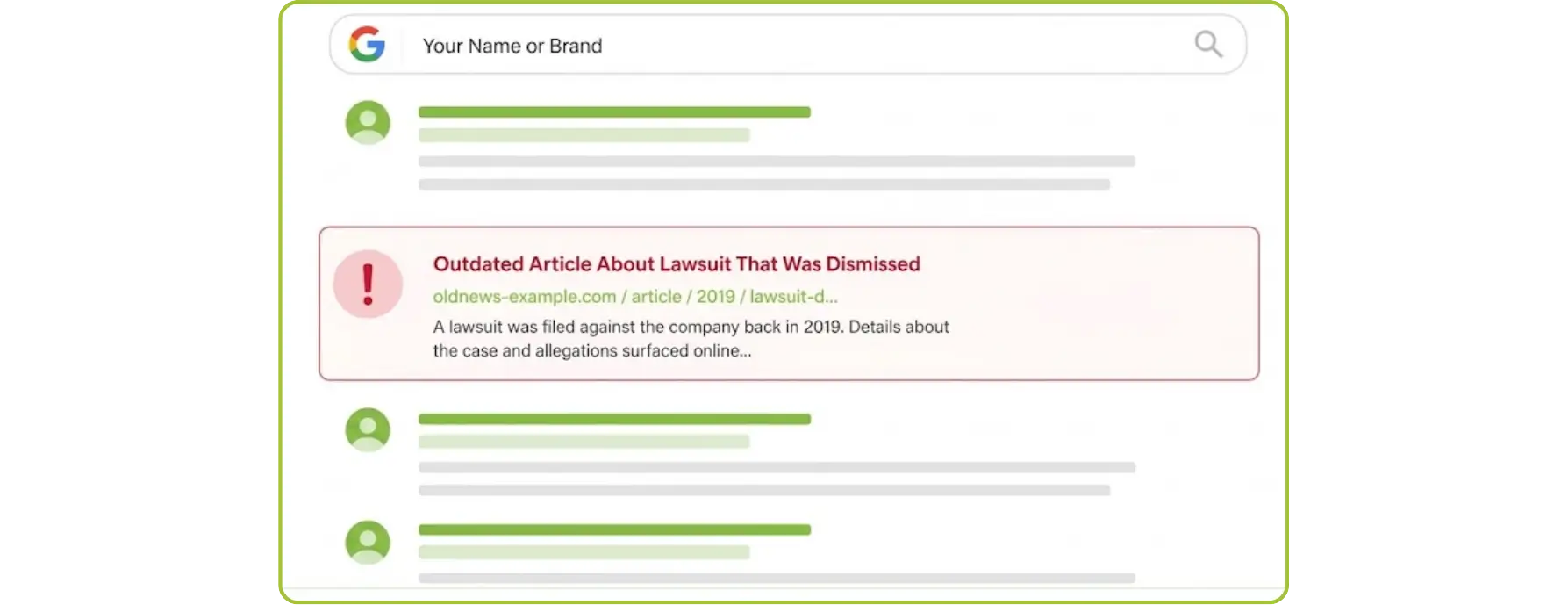
Negative content is any indexed page, review, article, forum thread, outdated news story, or old mugshot listing that shows up when someone searches your name or brand and paints a picture that is unfair, inaccurate, or simply out of date. It does not have to be defamatory content to cause damage. A three-year-old complaint that was resolved months ago, a resignation letter taken out of context, a competitor leaving fake one star ratings, or a news article about a lawsuit that was later dismissed can all sit on page one and quietly shape how people judge you. Over time, this is what builds your digitalfootprint, the composite picture Google, and now AI systems, hold about you.
This is the core challenge of online reputation management: the internet rarely forgets, and Google rewards content that is old, well linked, and frequently visited, which means a cluster of bad reviews or one lingering story can easily outrank years of good work.
What Is Online Reputation Management (ORM)?
Online reputation management (ORM) is the ongoing practice of monitoring what appears about you or your brand online, addressing harmful content, and consistently building a presence that reflects reality, rather than only reacting once something has already gone wrong. At its core, it exists to protect your online reputation before a single bad story defines it.
Why Is ORM Essential?
You likely need it if any of these sound familiar:
Recurring negative reviews or an old news story that keeps resurfacing
A competitor or bad actor running a negative campaign against you
Little to no positive presence online to compete with a bad result
AI Overviews or AI Mode summarizing outdated or one sided content without you even knowing
Fixing existing damage is usually called online reputation repair, while the everyday monitoring and prevention work is what keeps a reputation strong long after the fix, and both together increase customer trust in a way a single good week never can. Some businesses turn to reputation management software for monitoring and alerts, while others prefer working with a reputation management agency that can run outreach, content, and legal steps together.
If this feels like too much to manage alongside everything else, this is exactly the kind of work handled through Coozmoo's online reputation management service, and it usually connects to broader visibility work like content and search optimization under Coozmoo's digital services.
Why Does One Bad Search Result Hurt So Much?
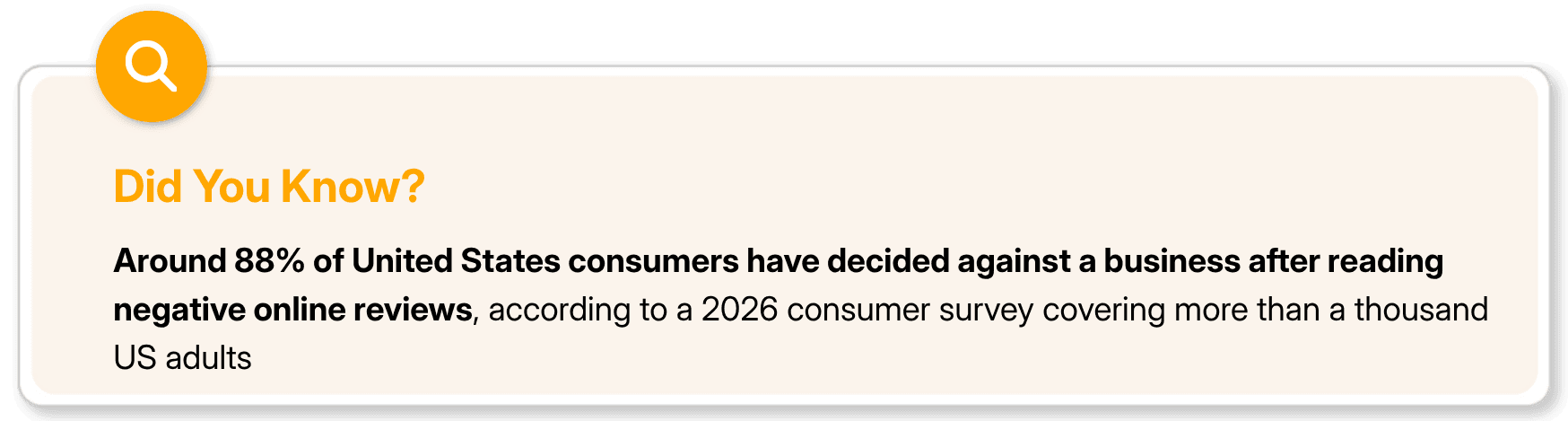
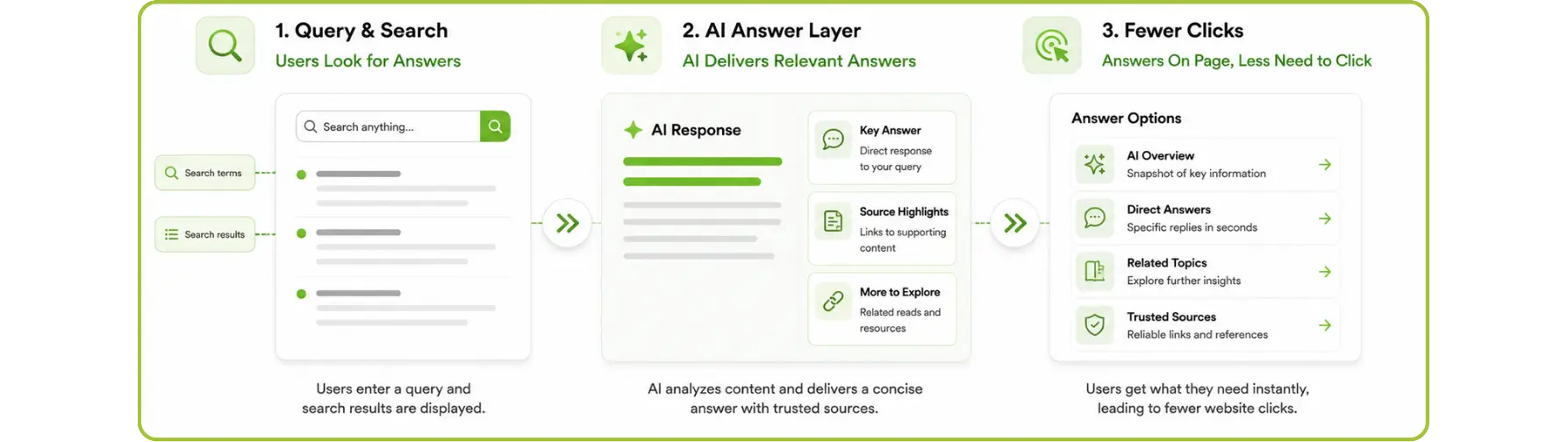
One negative search result hurts because most people never scroll past the first page, and increasingly they do not even read a full page at all. They read a short AI-generated summary and move on, often without ever confirming whether the underlying story, or the negative reviews behind it, is accurate or still relevant. The damage compounds because negative experiences are simply more motivating than positive ones. Data from a 2026 review industry report shows that customers are 21% more likely to leave a review after a bad experience than after a good one, and it can take roughly 40 positive experiences to offset the damage of a single negative one. Here is where that damage actually shows up:
Lost customers who never reach out because a review or article made the decision for them
Lost job offers or partnerships when a hiring manager or investor searches your name before a call
Lower conversion rates on your own website, even when your product or service is genuinely good
Higher cost per acquisition because you are now paying to overcome doubt that a search result created
Slower growth, since word of mouth and referrals dry up when the first thing people find is negative
Did You Know AI Overviews Are Changing Search Behavior?
When Google shows an AI Overview, the search often ends without a click to any website at all? Research aggregating SparkToro, Bain and Company, and Similarweb data found that roughly 83% of searches with an AI Overview present end in zero clicks, compared with around 60% when no AI Overview appears. As AI Overviews and AI search results become more common across everyday queries, whatever the AI decides to say about you may be the only impression a person ever gets.
How To Remove Negative Content From Google?
The most reliable way to remove negative content from Google is to work through three real paths in order: contact the website owner directly, use Google's own removal tools when content violates a policy, and only then move on to suppression if removal genuinely is not possible.
Contact The Source Directly
Most negative content lives on a website Google does not own, which means Google usually cannot remove it even if it wanted to. The fastest fix is almost always reaching out to the site owner, the reviewer, or the publication with a clear content takedown request, asking for a correction, an update, or a full removal. This works surprisingly often, especially for outdated stories, resolved complaints, or content that was published without proper verification. Reviews deserve their own approach too, and knowing how to remove a Google review usually starts with flagging it as fake or policy-violating directly through your Google Business Profile before escalating further.
Use Google's Removal Tools And Policies
Google will remove certain categories of content directly from search results when you go through the right channel, and there are several tools built for different situations:
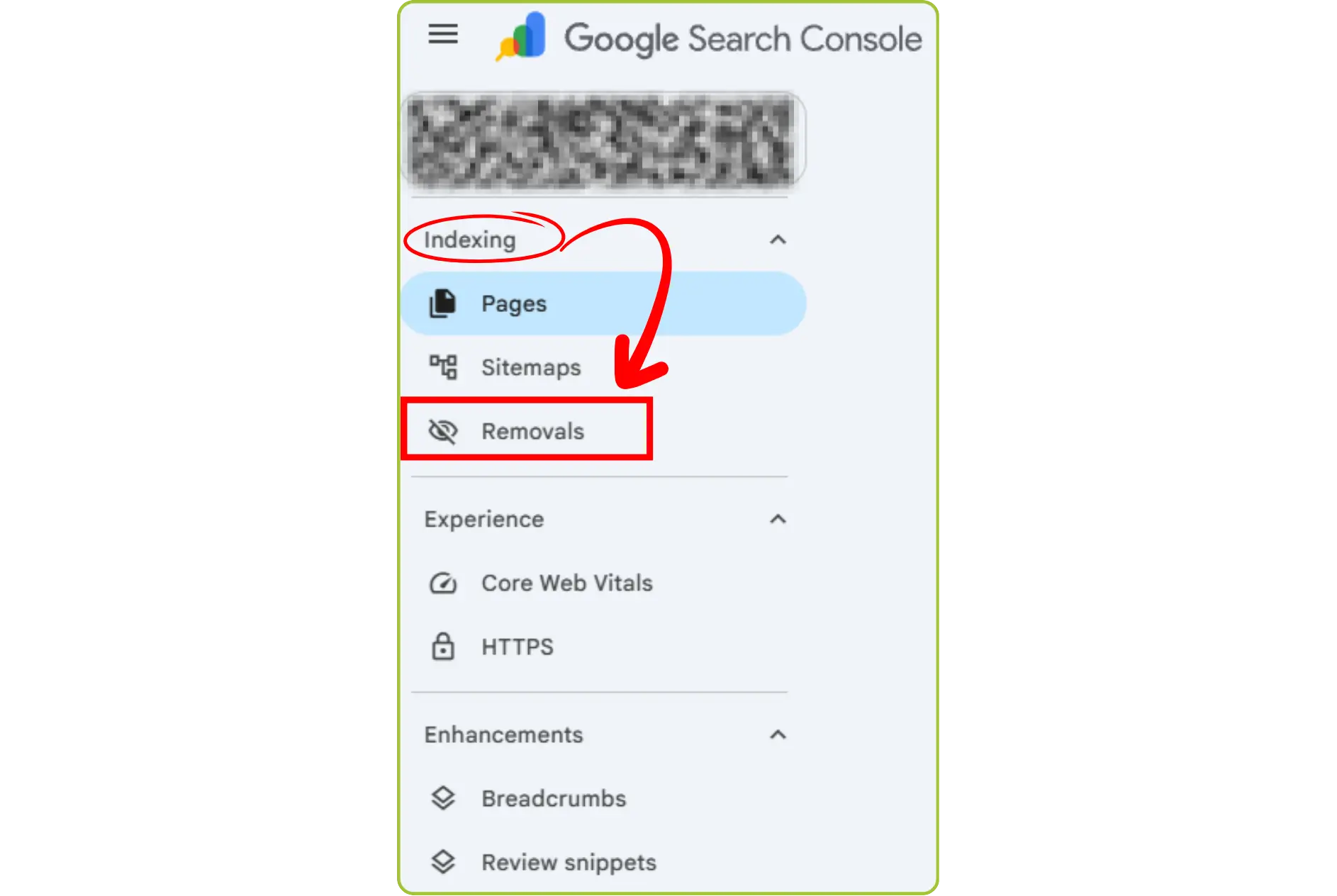
The Google Removals tool, accessed through Google Search Console, lets you request a temporary removal (180 days) for a URL you control while a permanent fix is underway
Google Search Console removals also cover outdated cached snippets that still show old information even after a live page has already been updated
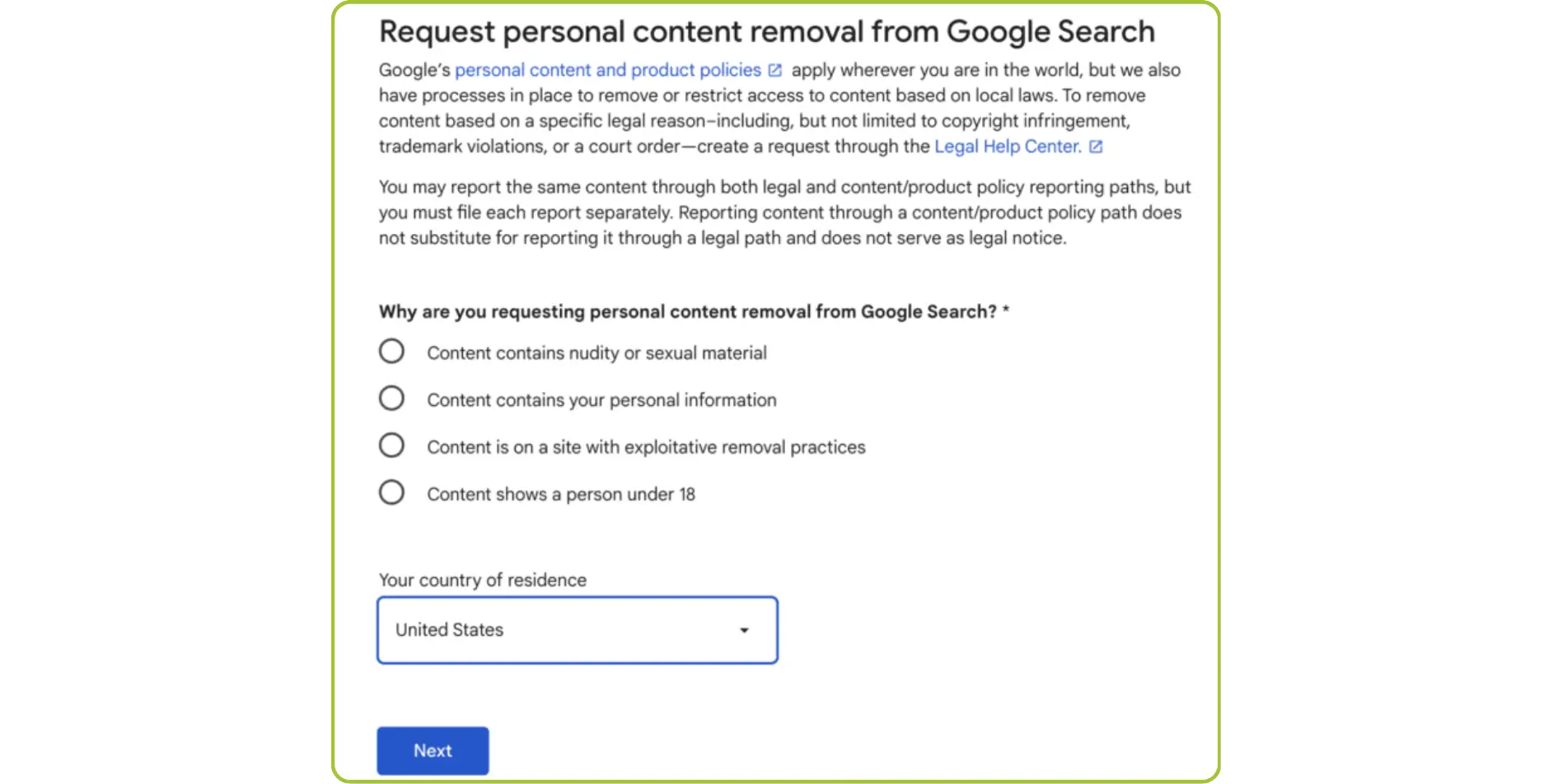
A Google content removal form exists specifically for personally identifying information (PII) such as home addresses, ID numbers, or financial details, and for highly personal content like explicit imagery shared without consent
A separate legal removal request (Google) process handles copyright infringement removal and other legal compliance (content removal) matters, including content tied to a completed court case
For pages you own, adding a noindex tag stops Google from showing that page in results without deleting it outright, useful for old landing pages or press mentions you no longer want surfaced
If a result looks clearly wrong or broken, you can also send feedback to Google directly from the search results page to flag it for review
Google also accepts requests covering outdated information removal and inappropriate content removal, generally for content that no longer reflects reality or violates community standards
Pursue A Legal Route When Content Is Genuinely False
If content is factually false and damaging, a cease and desist letter or a formal defamation claim can sometimes force a takedown at the source, which then allows the search result to disappear naturally once the page is gone. This path takes longer and usually needs legal counsel, but it is the strongest option when the content is untrue rather than simply unflattering.
Removal Method | Best Used For | Typical Timeline |
|---|---|---|
Direct outreach to publisher | Outdated, resolved, or minor negative content | Days to a few weeks |
Google policy removal request | Personal data, explicit imagery, doxxing content | Weeks |
Legal or defamation route | Factually false, damaging statements | Months |
Suppression by new content | Content that cannot legally be removed | Ongoing, several months |
How Do You Remove Unwanted Results From Google Search As An Individual?
Individuals face this same problem outside of a business context too, whether it is an old photo, a public record, or a post from years ago. If you are wondering how to delete search results about yourself, the approach is largely the same as for a business, just smaller in scale.
Common goals people search for include how to remove Google search results tied to their name, ways to hide unwanted results of Google search on the first page, and simply learning to delete Google search results that surface an old address or a job they left years ago. In some cases, this even means learning how to remove a website from Google search results entirely, usually by asking the site owner to take the page down or de index it themselves, since Google rarely removes third party pages on personal request alone.
Whatever the number of results involved, keeping this current is part of a wider habit of learning to manage online presence, checking every few months for anything new that could use a correction or an update.
How To Push Down Negative Search Results That Won't Come Down?
When content cannot be removed, the practical answer is to push down negative search results by out ranking them with pages that are more relevant, more authoritative, and more frequently updated than the negative page. This is where basic search engine optimization (SEO) matters just as much for reputation as it does for traffic, since the same signals that improve SEO rankings for a keyword also work to bury an unwanted page. Google's ranking system rewards fresh, well-linked, engaging content, so a steady stream of positive signals can move an old negative page from position two to position twelve on the search engine results pages (SERPs), where far fewer people ever see it.
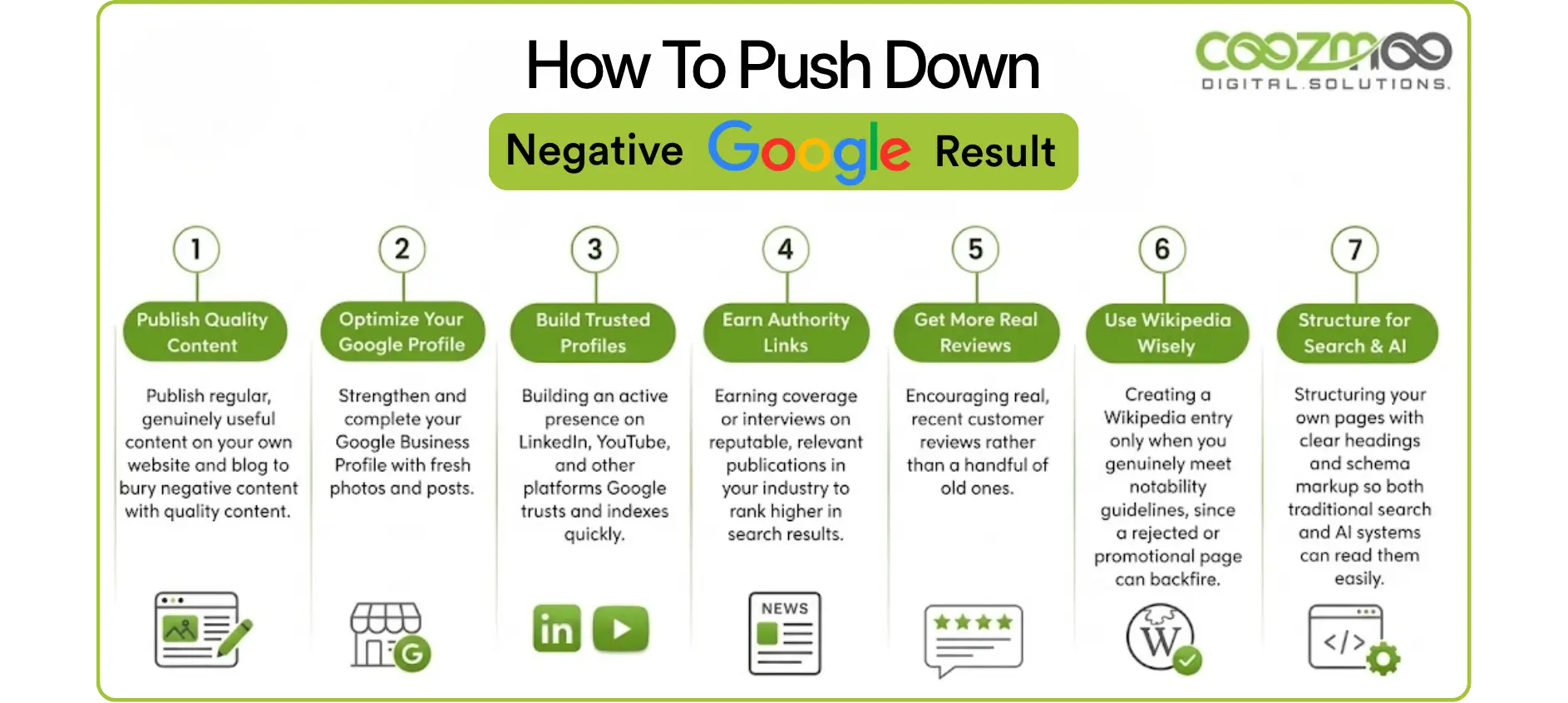
Tactics that consistently work for this include:
Publishing regular, genuinely useful content on your own website and blog to bury negative content with quality content
Strengthening and completing your Google Business Profile with fresh photos and posts
Building an active presence on LinkedIn, YouTube, and other platforms Google trusts and indexes quickly
Earning coverage or interviews on reputable, relevant publications in your industry to rank higher in search results
Encouraging real, recent customer reviews rather than a handful of old ones
Creating a Wikipedia entry only when you genuinely meet notability guidelines, since a rejected or promotional page can backfire
Structuring your own pages with clear headings and schema markup so both traditional search and AI systems can read them easily
This is not a one time project. Search rankings shift as new content is published, so remove negative search results efforts need consistent upkeep, not a single burst of activity.
Why Does AI Search Make This More Urgent Than Ever?
AI search makes this urgent because AI systems are trained to summarize whatever ranks well, which means unresolved negative content does not just sit quietly on page two anymore, it can get quoted directly inside an AI answer with no click required to verify it. A brand showing up negatively in AI Overviews loses control of its own narrative in a way that a buried page ten result never did, because the AI answer often reads as neutral fact rather than one opinion among many. A widely cited 2026 industry analysis found that AI Overviews now appear on more than 20% of Google searches and that number continues to grow, while Google's own AI Mode has already passed one billion monthly users just months after wider rollout.
That shift changes the priority. It is no longer enough to rank on page one. Content needs to be clear, current, and structured well enough that an AI system chooses to summarize the accurate version of your story rather than the outdated or negative one. This is compounded by fake reviews and brand risk, since AI systems trained on scraped review data do not always distinguish a genuine complaint from a coordinated fake review campaign, which can quietly damage brand reputation before anyone notices the pattern.
There is also a wider misinformation problem sitting underneath all of this, and it makes acting early even more important:
Media reported AI content incidents have climbed to nearly 500 per month, reflecting a sharp rise in harmful or negative AI generated material affecting people worldwide.
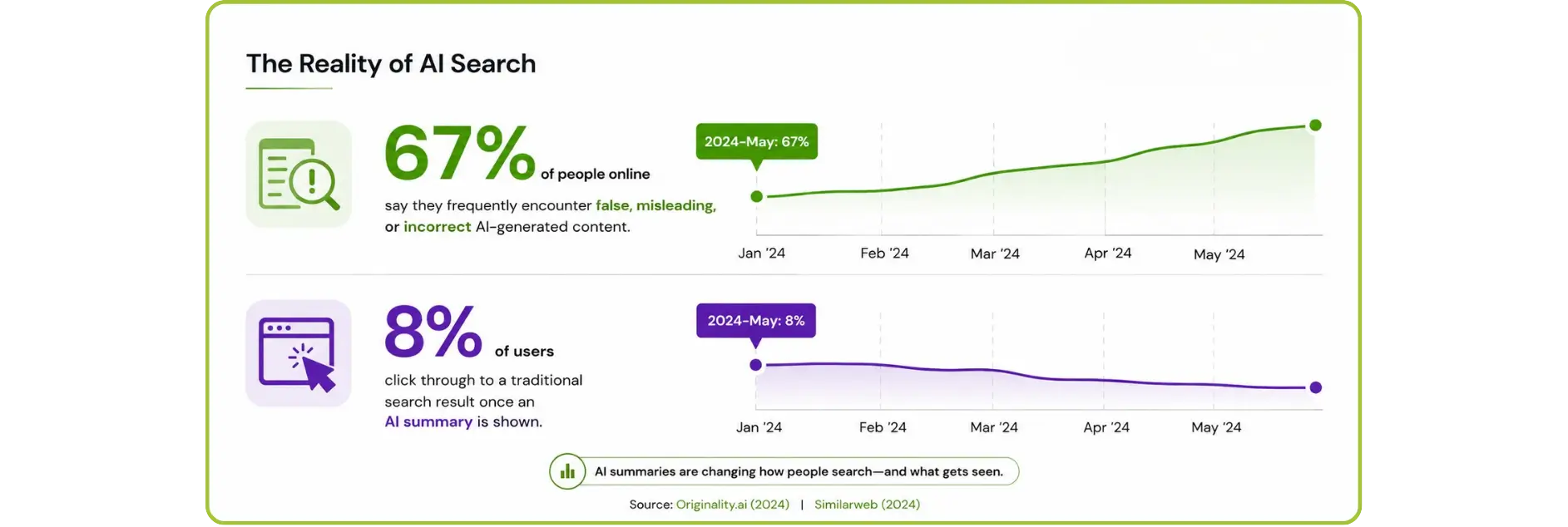
67% of people online say they frequently encounter false, misleading, or incorrect AI generated content, which means an inaccurate summary about you is far more common than most people assume.
Just 8% of users click through to a traditional search result once an AI summary is shown, so an unverified or outdated claim inside that summary can go largely unchallenged.
Final Thoughts
Negative content does not disappear on its own, and waiting rarely makes the fix easier, especially now that AI search can repeat a bad story to thousands of people without a single click ever confirming it. Treat this as ongoing crisis management (reputation) work when something breaks, but also build the daily habit of learning to monitor and respond to online reviews before a small issue turns into a bigger one. The businesses and individuals who come out ahead are the ones who work to remove negative content consistently, not just once, treating reputation as something they actively build rather than something they only notice when it breaks. Your search results are your first impression now, make sure they are the one you would actually choose.
Own the story before an algorithm writes it for you.
FAQs
How long does it take to remove negative content from Google?

It depends on the method. Direct outreach to a publisher can resolve things in days to a few weeks, a Google removal request usually takes a few weeks to review, and a legal route can take several months. Suppression through fresh content is the slowest option and typically needs ongoing work over months rather than a single fix.
Can I pay Google to remove a negative search result?
No. Google does not accept payment to remove or suppress a search result under any circumstance, and any service claiming otherwise should be treated as a red flag. Legitimate removal only happens through policy-compliant requests, source takedowns, or legal action.
How is AI Overview content different from a normal search result?
A normal search result links to a page you can evaluate yourself, while an AI Overview gives a summarized answer directly on the results page, often without the person ever clicking through to verify it. This makes accuracy and freshness even more important, since the AI generated summary may be the only version of a story someone ever sees.
What is the fastest way to push down a negative search result?
Publishing fresh, relevant content on channels Google already trusts, such as your own website, LinkedIn, and your Google Business Profile, tends to move fastest since these domains typically get indexed and ranked more quickly than a brand new site.
Does online reputation management really work?
Yes, when it combines monitoring, source outreach, and consistent content over time rather than a single quick fix. Reputation work is ongoing rather than a one time project, since new content and reviews keep appearing and search rankings shift as a result.
If someone searches your name or your business today, they might get an answer written by Google's own AI before they ever click a single link. That is the short version of why learning how to remove negative content from Google matters more than ever, whether the goal is to remove unwanted results from Google search for a business or simply figure out how to remove something from Google search tied to your own name. The process usually comes down to three things working together to remove negative content for good: getting the source content taken down or corrected, pushing down whatever cannot be removed with stronger and more relevant content, and doing this quickly, because AI Overviews and AI Mode now summarize a person's or brand's reputation without sending anyone to the original page at all. Here is a full breakdown of the problem, the real cost it creates, and what actually works to fix it.
What Counts As Negative Content You Should Remove From Google?
Negative content is any indexed page, review, article, forum thread, outdated news story, or old mugshot listing that shows up when someone searches your name or brand and paints a picture that is unfair, inaccurate, or simply out of date. It does not have to be defamatory content to cause damage. A three-year-old complaint that was resolved months ago, a resignation letter taken out of context, a competitor leaving fake one star ratings, or a news article about a lawsuit that was later dismissed can all sit on page one and quietly shape how people judge you. Over time, this is what builds your digitalfootprint, the composite picture Google, and now AI systems, hold about you.
This is the core challenge of online reputation management: the internet rarely forgets, and Google rewards content that is old, well linked, and frequently visited, which means a cluster of bad reviews or one lingering story can easily outrank years of good work.
What Is Online Reputation Management (ORM)?
Online reputation management (ORM) is the ongoing practice of monitoring what appears about you or your brand online, addressing harmful content, and consistently building a presence that reflects reality, rather than only reacting once something has already gone wrong. At its core, it exists to protect your online reputation before a single bad story defines it.
Why Is ORM Essential?
You likely need it if any of these sound familiar:
Recurring negative reviews or an old news story that keeps resurfacing
A competitor or bad actor running a negative campaign against you
Little to no positive presence online to compete with a bad result
AI Overviews or AI Mode summarizing outdated or one sided content without you even knowing
Fixing existing damage is usually called online reputation repair, while the everyday monitoring and prevention work is what keeps a reputation strong long after the fix, and both together increase customer trust in a way a single good week never can. Some businesses turn to reputation management software for monitoring and alerts, while others prefer working with a reputation management agency that can run outreach, content, and legal steps together.
If this feels like too much to manage alongside everything else, this is exactly the kind of work handled through Coozmoo's online reputation management service, and it usually connects to broader visibility work like content and search optimization under Coozmoo's digital services.
Why Does One Bad Search Result Hurt So Much?
One negative search result hurts because most people never scroll past the first page, and increasingly they do not even read a full page at all. They read a short AI-generated summary and move on, often without ever confirming whether the underlying story, or the negative reviews behind it, is accurate or still relevant. The damage compounds because negative experiences are simply more motivating than positive ones. Data from a 2026 review industry report shows that customers are 21% more likely to leave a review after a bad experience than after a good one, and it can take roughly 40 positive experiences to offset the damage of a single negative one. Here is where that damage actually shows up:
Lost customers who never reach out because a review or article made the decision for them
Lost job offers or partnerships when a hiring manager or investor searches your name before a call
Lower conversion rates on your own website, even when your product or service is genuinely good
Higher cost per acquisition because you are now paying to overcome doubt that a search result created
Slower growth, since word of mouth and referrals dry up when the first thing people find is negative
Did You Know AI Overviews Are Changing Search Behavior?
When Google shows an AI Overview, the search often ends without a click to any website at all? Research aggregating SparkToro, Bain and Company, and Similarweb data found that roughly 83% of searches with an AI Overview present end in zero clicks, compared with around 60% when no AI Overview appears. As AI Overviews and AI search results become more common across everyday queries, whatever the AI decides to say about you may be the only impression a person ever gets.
How To Remove Negative Content From Google?
The most reliable way to remove negative content from Google is to work through three real paths in order: contact the website owner directly, use Google's own removal tools when content violates a policy, and only then move on to suppression if removal genuinely is not possible.
Contact The Source Directly
Most negative content lives on a website Google does not own, which means Google usually cannot remove it even if it wanted to. The fastest fix is almost always reaching out to the site owner, the reviewer, or the publication with a clear content takedown request, asking for a correction, an update, or a full removal. This works surprisingly often, especially for outdated stories, resolved complaints, or content that was published without proper verification. Reviews deserve their own approach too, and knowing how to remove a Google review usually starts with flagging it as fake or policy-violating directly through your Google Business Profile before escalating further.
Use Google's Removal Tools And Policies
Google will remove certain categories of content directly from search results when you go through the right channel, and there are several tools built for different situations:
The Google Removals tool, accessed through Google Search Console, lets you request a temporary removal (180 days) for a URL you control while a permanent fix is underway
Google Search Console removals also cover outdated cached snippets that still show old information even after a live page has already been updated
A Google content removal form exists specifically for personally identifying information (PII) such as home addresses, ID numbers, or financial details, and for highly personal content like explicit imagery shared without consent
A separate legal removal request (Google) process handles copyright infringement removal and other legal compliance (content removal) matters, including content tied to a completed court case
For pages you own, adding a noindex tag stops Google from showing that page in results without deleting it outright, useful for old landing pages or press mentions you no longer want surfaced
If a result looks clearly wrong or broken, you can also send feedback to Google directly from the search results page to flag it for review
Google also accepts requests covering outdated information removal and inappropriate content removal, generally for content that no longer reflects reality or violates community standards
Pursue A Legal Route When Content Is Genuinely False
If content is factually false and damaging, a cease and desist letter or a formal defamation claim can sometimes force a takedown at the source, which then allows the search result to disappear naturally once the page is gone. This path takes longer and usually needs legal counsel, but it is the strongest option when the content is untrue rather than simply unflattering.
Removal Method | Best Used For | Typical Timeline |
|---|---|---|
Direct outreach to publisher | Outdated, resolved, or minor negative content | Days to a few weeks |
Google policy removal request | Personal data, explicit imagery, doxxing content | Weeks |
Legal or defamation route | Factually false, damaging statements | Months |
Suppression by new content | Content that cannot legally be removed | Ongoing, several months |
How Do You Remove Unwanted Results From Google Search As An Individual?
Individuals face this same problem outside of a business context too, whether it is an old photo, a public record, or a post from years ago. If you are wondering how to delete search results about yourself, the approach is largely the same as for a business, just smaller in scale.
Common goals people search for include how to remove Google search results tied to their name, ways to hide unwanted results of Google search on the first page, and simply learning to delete Google search results that surface an old address or a job they left years ago. In some cases, this even means learning how to remove a website from Google search results entirely, usually by asking the site owner to take the page down or de index it themselves, since Google rarely removes third party pages on personal request alone.
Whatever the number of results involved, keeping this current is part of a wider habit of learning to manage online presence, checking every few months for anything new that could use a correction or an update.
How To Push Down Negative Search Results That Won't Come Down?
When content cannot be removed, the practical answer is to push down negative search results by out ranking them with pages that are more relevant, more authoritative, and more frequently updated than the negative page. This is where basic search engine optimization (SEO) matters just as much for reputation as it does for traffic, since the same signals that improve SEO rankings for a keyword also work to bury an unwanted page. Google's ranking system rewards fresh, well-linked, engaging content, so a steady stream of positive signals can move an old negative page from position two to position twelve on the search engine results pages (SERPs), where far fewer people ever see it.
Tactics that consistently work for this include:
Publishing regular, genuinely useful content on your own website and blog to bury negative content with quality content
Strengthening and completing your Google Business Profile with fresh photos and posts
Building an active presence on LinkedIn, YouTube, and other platforms Google trusts and indexes quickly
Earning coverage or interviews on reputable, relevant publications in your industry to rank higher in search results
Encouraging real, recent customer reviews rather than a handful of old ones
Creating a Wikipedia entry only when you genuinely meet notability guidelines, since a rejected or promotional page can backfire
Structuring your own pages with clear headings and schema markup so both traditional search and AI systems can read them easily
This is not a one time project. Search rankings shift as new content is published, so remove negative search results efforts need consistent upkeep, not a single burst of activity.
Why Does AI Search Make This More Urgent Than Ever?
AI search makes this urgent because AI systems are trained to summarize whatever ranks well, which means unresolved negative content does not just sit quietly on page two anymore, it can get quoted directly inside an AI answer with no click required to verify it. A brand showing up negatively in AI Overviews loses control of its own narrative in a way that a buried page ten result never did, because the AI answer often reads as neutral fact rather than one opinion among many. A widely cited 2026 industry analysis found that AI Overviews now appear on more than 20% of Google searches and that number continues to grow, while Google's own AI Mode has already passed one billion monthly users just months after wider rollout.
That shift changes the priority. It is no longer enough to rank on page one. Content needs to be clear, current, and structured well enough that an AI system chooses to summarize the accurate version of your story rather than the outdated or negative one. This is compounded by fake reviews and brand risk, since AI systems trained on scraped review data do not always distinguish a genuine complaint from a coordinated fake review campaign, which can quietly damage brand reputation before anyone notices the pattern.
There is also a wider misinformation problem sitting underneath all of this, and it makes acting early even more important:
Media reported AI content incidents have climbed to nearly 500 per month, reflecting a sharp rise in harmful or negative AI generated material affecting people worldwide.
67% of people online say they frequently encounter false, misleading, or incorrect AI generated content, which means an inaccurate summary about you is far more common than most people assume.
Just 8% of users click through to a traditional search result once an AI summary is shown, so an unverified or outdated claim inside that summary can go largely unchallenged.
Final Thoughts
Negative content does not disappear on its own, and waiting rarely makes the fix easier, especially now that AI search can repeat a bad story to thousands of people without a single click ever confirming it. Treat this as ongoing crisis management (reputation) work when something breaks, but also build the daily habit of learning to monitor and respond to online reviews before a small issue turns into a bigger one. The businesses and individuals who come out ahead are the ones who work to remove negative content consistently, not just once, treating reputation as something they actively build rather than something they only notice when it breaks. Your search results are your first impression now, make sure they are the one you would actually choose.
Own the story before an algorithm writes it for you.
FAQs
How long does it take to remove negative content from Google?
It depends on the method. Direct outreach to a publisher can resolve things in days to a few weeks, a Google removal request usually takes a few weeks to review, and a legal route can take several months. Suppression through fresh content is the slowest option and typically needs ongoing work over months rather than a single fix.
Can I pay Google to remove a negative search result?
No. Google does not accept payment to remove or suppress a search result under any circumstance, and any service claiming otherwise should be treated as a red flag. Legitimate removal only happens through policy-compliant requests, source takedowns, or legal action.
How is AI Overview content different from a normal search result?
A normal search result links to a page you can evaluate yourself, while an AI Overview gives a summarized answer directly on the results page, often without the person ever clicking through to verify it. This makes accuracy and freshness even more important, since the AI generated summary may be the only version of a story someone ever sees.
What is the fastest way to push down a negative search result?
Publishing fresh, relevant content on channels Google already trusts, such as your own website, LinkedIn, and your Google Business Profile, tends to move fastest since these domains typically get indexed and ranked more quickly than a brand new site.
Does online reputation management really work?
Yes, when it combines monitoring, source outreach, and consistent content over time rather than a single quick fix. Reputation work is ongoing rather than a one time project, since new content and reviews keep appearing and search rankings shift as a result.



Summarize with AI



Want to Skyrocket Revenue? Get a Free Audit Today!
Want to Skyrocket Revenue? Get a Free Audit Today!



4.9/5 Ratings!


Don’t miss our revenue growth tips!
Get expert marketing tips—straight to your inbox, like thousands of happy clients.
Don’t miss our revenue growth tips!
Get expert marketing tips—straight to your inbox, like thousands of happy clients.
Don’t miss our revenue growth tips!
Don’t miss our revenue growth tips!
Get expert marketing tips—straight to your inbox, like thousands of happy clients.
Relevant Blogs on Organic SEO
Relevant Blogs on Organic SEO
Unlock data-driven insights in Organic SEO—explore our featured blogs and skyrocket your revenue before your competitors do.
Unlock data-driven insights in Organic SEO—explore our featured blogs and skyrocket your revenue before your competitors do.

SEO
Sep 21, 2026
5 Min Read
Audience-First SEO: How to Rank by Putting Readers First
SEO
Sep 21, 2026
5 Min Read
Audience-First SEO: How to Rank by Putting Readers First
SEO
Sep 21, 2026
5 Min Read
Audience-First SEO: How to Rank by Putting Readers First

SEO
Sep 19, 2026
5 Min Read
How to Add SEO Keywords to Your Website: Where and How
SEO
Sep 19, 2026
5 Min Read
How to Add SEO Keywords to Your Website: Where and How
SEO
Sep 19, 2026
5 Min Read
How to Add SEO Keywords to Your Website: Where and How

SEO
Sep 18, 2026
5 Min Read
How XML Sitemaps Help Search Engines Discover New Pages
SEO
Sep 18, 2026
5 Min Read
How XML Sitemaps Help Search Engines Discover New Pages
SEO
Sep 18, 2026
5 Min Read
How XML Sitemaps Help Search Engines Discover New Pages




































Ready to speak with an expert?
Data-Driven Marketing Agency That Elevates ROI
1100+
Websites Designed & Optimized to Convert
$280M+
Client Revenue Driven & Growing Strong
Discover how to skyrocket
your revenue today!
Trusted by 1000+ Owners!
Ready to speak with an expert?
Data-Driven Marketing Agency That Elevates ROI
1100+
Websites Designed & Optimized to Convert
$280M+
Client Revenue Driven & Growing Strong
Discover how to skyrocket
your revenue today!
Trusted by 1000+ Owners!
Want to skyrocket revenue?
4.9/5 Ratings!
Ready to speak with an expert?
Data-Driven Marketing Agency That Elevates ROI
1100+
Websites Designed & Optimized to Convert
$280M+
Client Revenue Driven & Growing Strong
Discover how to skyrocket
your revenue today!
Trusted by 1000+ Owners!
Call
Meet