Schema Markup Explained: Types, Benefits & Best Practices
Schema Markup Explained: Types, Benefits & Best Practices
Last Updated:
Table of Content
Case Studies









Tanya Singh
Tanya Singh
Tanya Singh
SEO
SEO
SEO
8 Min Read
5 Min
8 Min Read
Schema markup is a code vocabulary you add to your website so search engines can understand your content more precisely, not just crawl it. In short, it is the difference between a search engine guessing what a page is about and actually knowing it. This guide breaks down what schema markup is, the different types of schema markup you can use, the real benefits it brings, and how to use schema markup for search engine optimization (SEO) the right way, without the technical overwhelm.
What Is Schema Markup?
Schema markup is a standardized set of tags, built on a shared vocabulary called Schema.org, that you place in a page's code to describe its content in a language search engines can read directly. A product page, for example, can tell Google exactly what the price is, whether the item is in stock, and what customers rated it, instead of leaving the engine to infer that from surrounding text.
This vocabulary was created jointly by Google, Bing, Yahoo, and Yandex in 2011, which is one reason it is so widely supported across search platforms today. Think of it like a museum label next to a painting. Visitors can look at the artwork and form their own impression, but the label tells them the artist, the year, and the medium with zero ambiguity. Schema markup plays that same role for search engines browsing your site.
JSON LD, Microdata, or RDFa: Which One Should You Use?
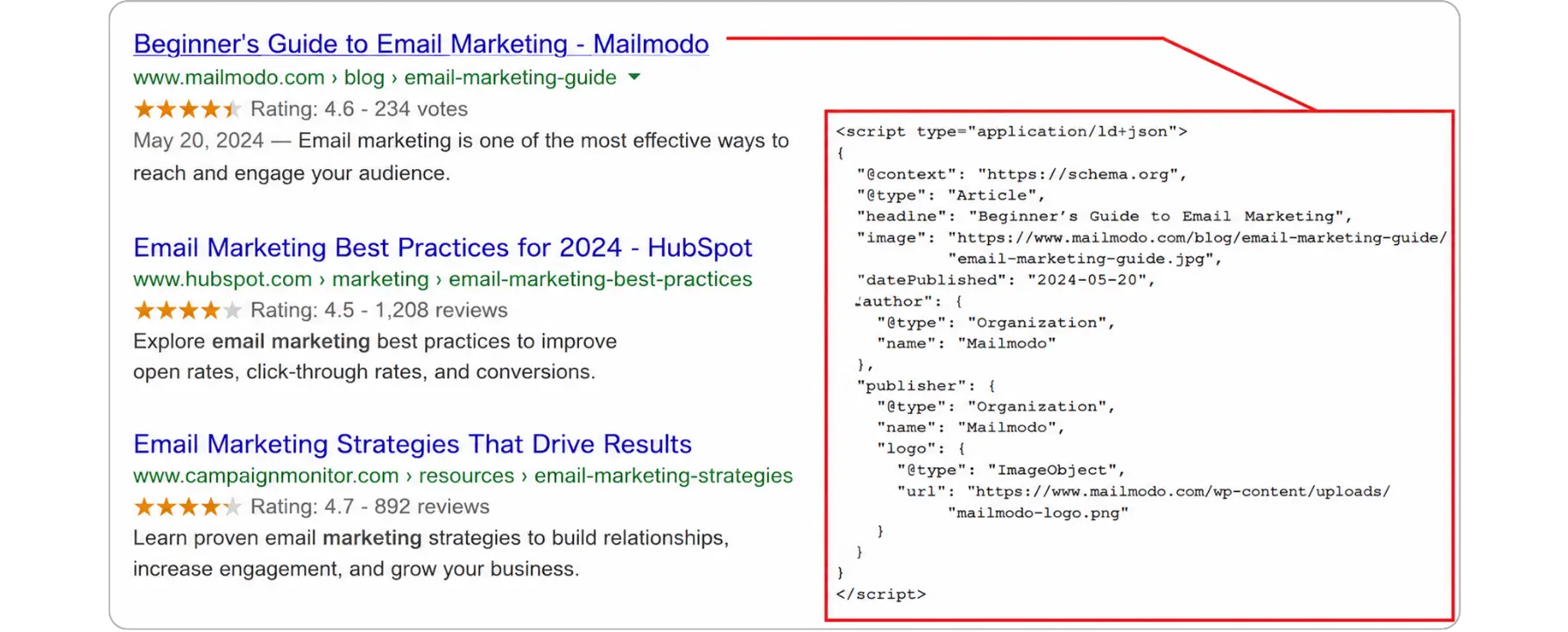
There are technically three formats for writing schema, JSON LD, Microdata, and RDFa, but they are not equally practical. Microdata and RDFa require weaving attributes directly into your visible HTML, so one careless design edit can silently break the markup. JSON LD sits apart, as a self contained script placed in the page header, letting your team redesign the entire web page without touching the structured data at all. Google has publicly recommended JSON LD for this reason, and it is now the default choice for most modern websites and content management systems.

Why Is Schema Markup Important Right Now?
Search itself is changing from a list of links into an answer engine, and structured data is how you feed that engine reliable facts. Search results today are not just ten blue links. They include star ratings, FAQ dropdowns, recipe cook times, product prices, and increasingly, AI-generated overviews that summarize an answer before a user even clicks anything.
This matters more with the rise of AI mode and AI overviews. When someone types a long, conversational search, the system often breaks it into dozens of smaller sub queries behind the scenes to gather context, a process sometimes called query fan out. Clearly marked up content makes it easier for that process to pull accurate, citable facts from your page rather than skip it for a competitor with cleaner data. This is also where optimizing specifically for AI answer engines becomes worth a dedicated strategy rather than an afterthought.

There is also a trust dimension. Search engines build what is called a knowledge graph, an internal map of entities such as people, places, organizations, and products, along with how they relate to each other. Clear schema markup helps your business, author, or product get correctly linked inside that graph, which strengthens how confidently a search engine can recommend you. This connects to the ideas search professionals now group under E-E-A-T, experience, expertise, authority, and trust. Author schema tied to a real person, review schema tied to genuine ratings, and organization schema tied to verifiable contact details all give search engines concrete signals AI systems use to trust your brand, instead of taking your credibility on faith.
What Are the Different Types of Schema Markup?
There are hundreds of schema types listed on Schema.org, but most websites only need a handful. Understanding the different types of schema markup helps you prioritize the ones that actually match your content instead of adding markup for the sake of it. Schema.org data shows only about a dozen types, including WebSite, WebPage, Organization, Person, and ImageObject, are deployed at massive scale across the web, meaning most sites succeed with a focused set rather than an exhaustive one.
Organization Schema
Tells search engines who you are as a business, so your name, logo, and social profiles get linked correctly to your brand entity. This is usually the very first schema type worth adding, since it sits at the foundation of your knowledge graph presence and feeds into how confidently search engines display your brand name, logo, and social profiles when someone searches for you directly.

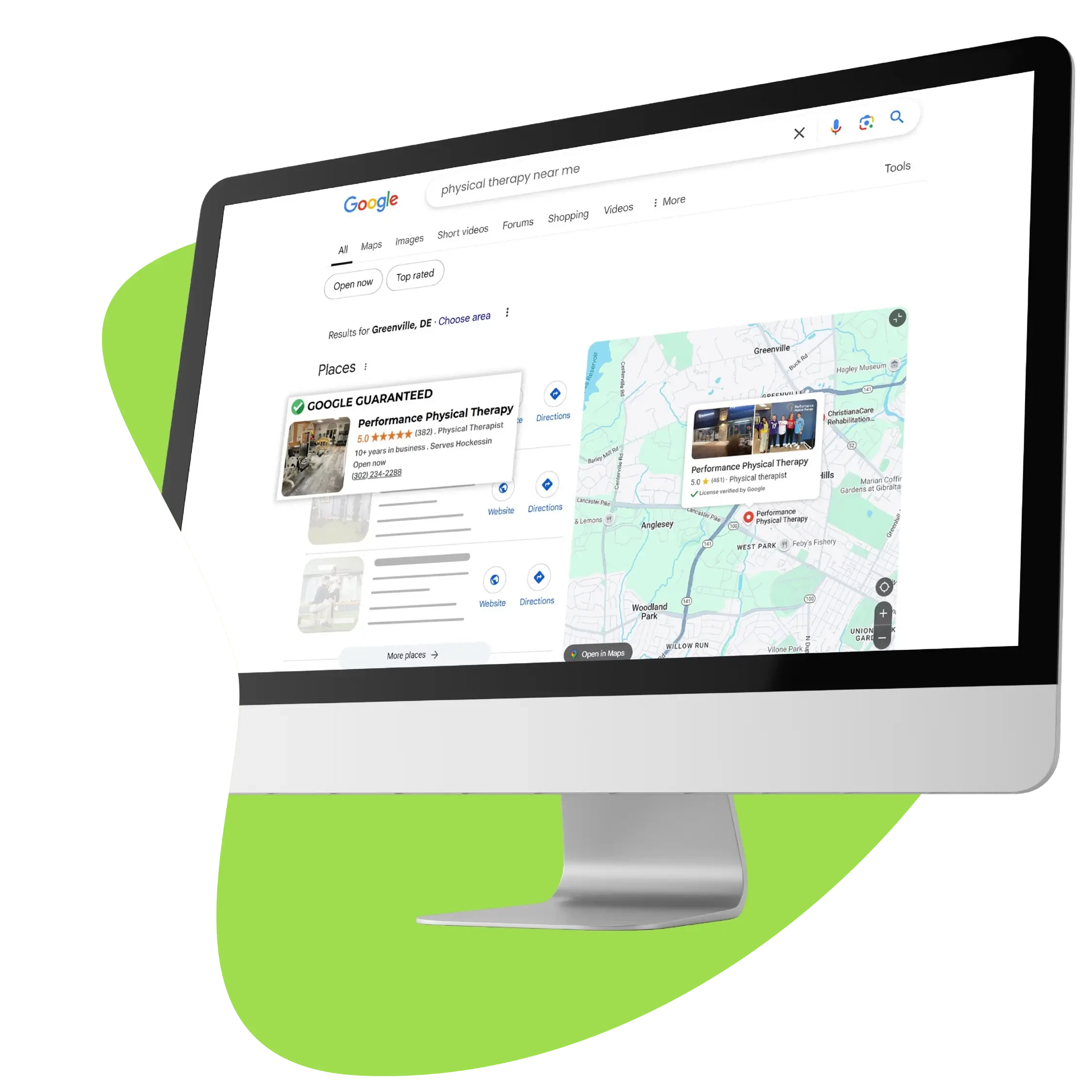
Local Business Schema
Used by shops, clinics, salons, and any business with a physical location. Powers map listings, hours, and local pack results. It extends Organization schema with the details that matter most for near me searches, address, phone number, opening hours, and service area, so search engines can confidently surface you when someone is searching with local intent rather than just informational intent. This only works, though, alongside keeping your business listings consistent across every directory your business appears on, since mismatched details elsewhere undercut what the schema is telling search engines.

Article or Blog Posting Schema
Marks up blog posts and news content so search engines know the headline, author, and publish date, which is often what powers the byline and date shown under a search result. It also plays a direct role in freshness signals, since a clearly marked dateModified field helps search engines recognize when a piece has been genuinely updated rather than just republished with a new timestamp.

Product with Offer Schema
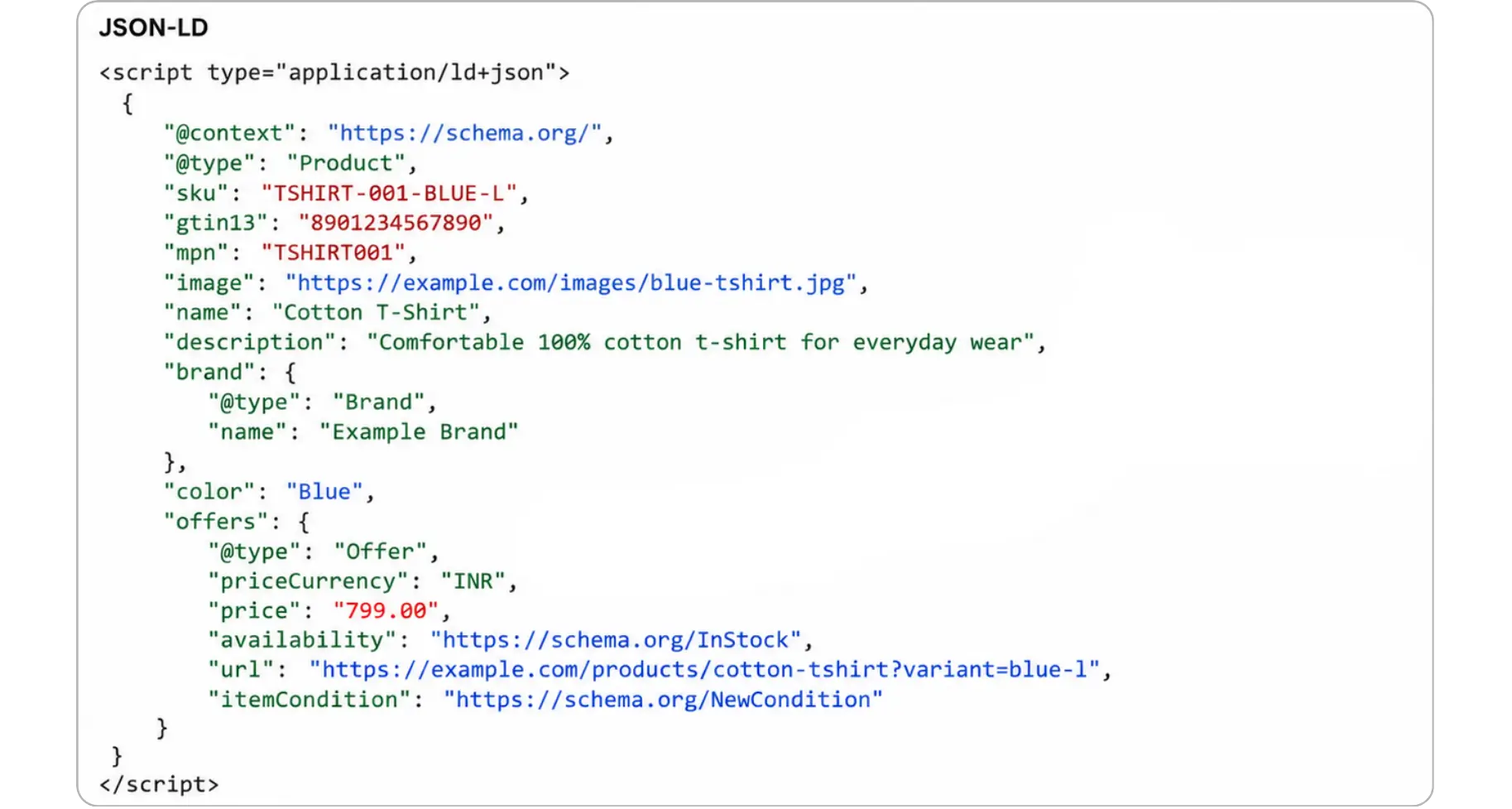
Used on ecommerce pages to show price, availability, and brand directly in search results. The Offer block almost always lives nested inside Product rather than standing alone. This pairing is one of the highest value implementations for online stores, since it is what makes a listing eligible to appear in shopping style results with a visible price and stock status, rather than a plain text link a shopper has to click just to check availability.
Review and Aggregate Rating Schema
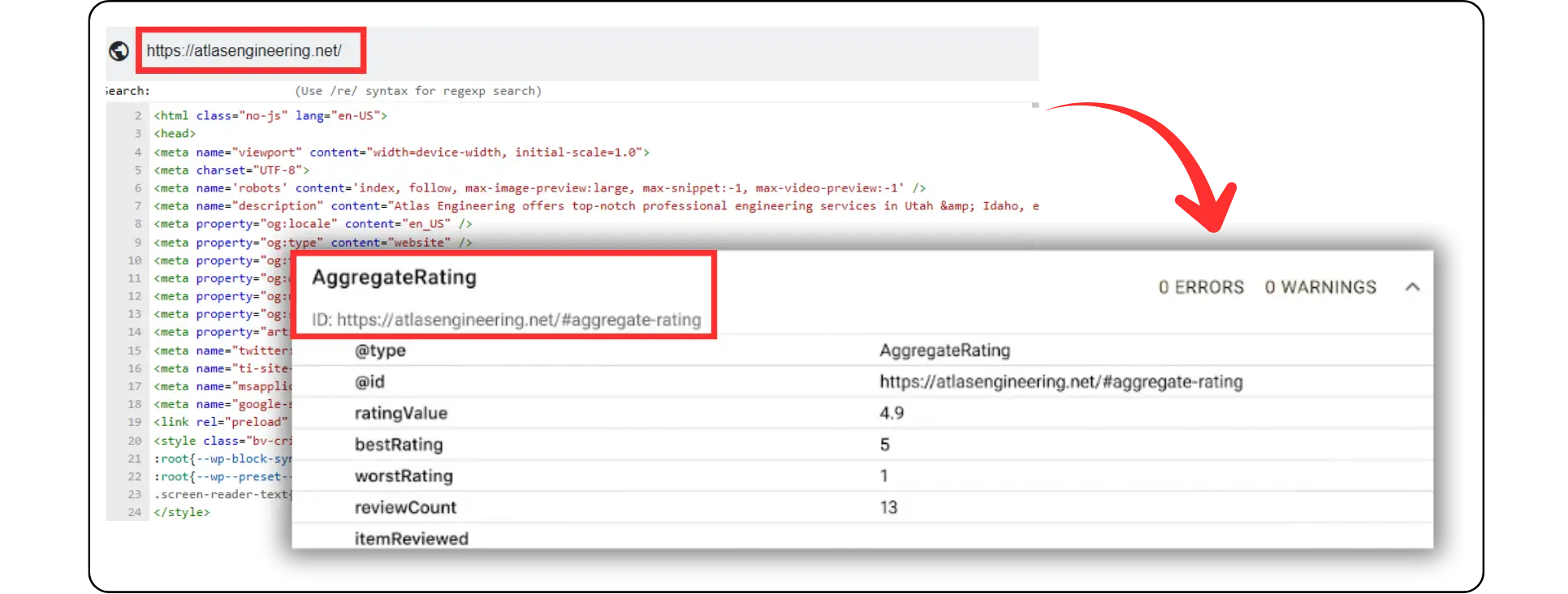
Displays star ratings and review counts next to a listing. This only works if genuine reviews are visible on the page itself, not just in the code. Because rating stars are one of the more eye catching elements in a plain results page, this type carries real weight for click-through rate, but it is also one of the more heavily monitored types, so the reviewCount and ratingValue need to reflect real, checkable feedback rather than an estimate.
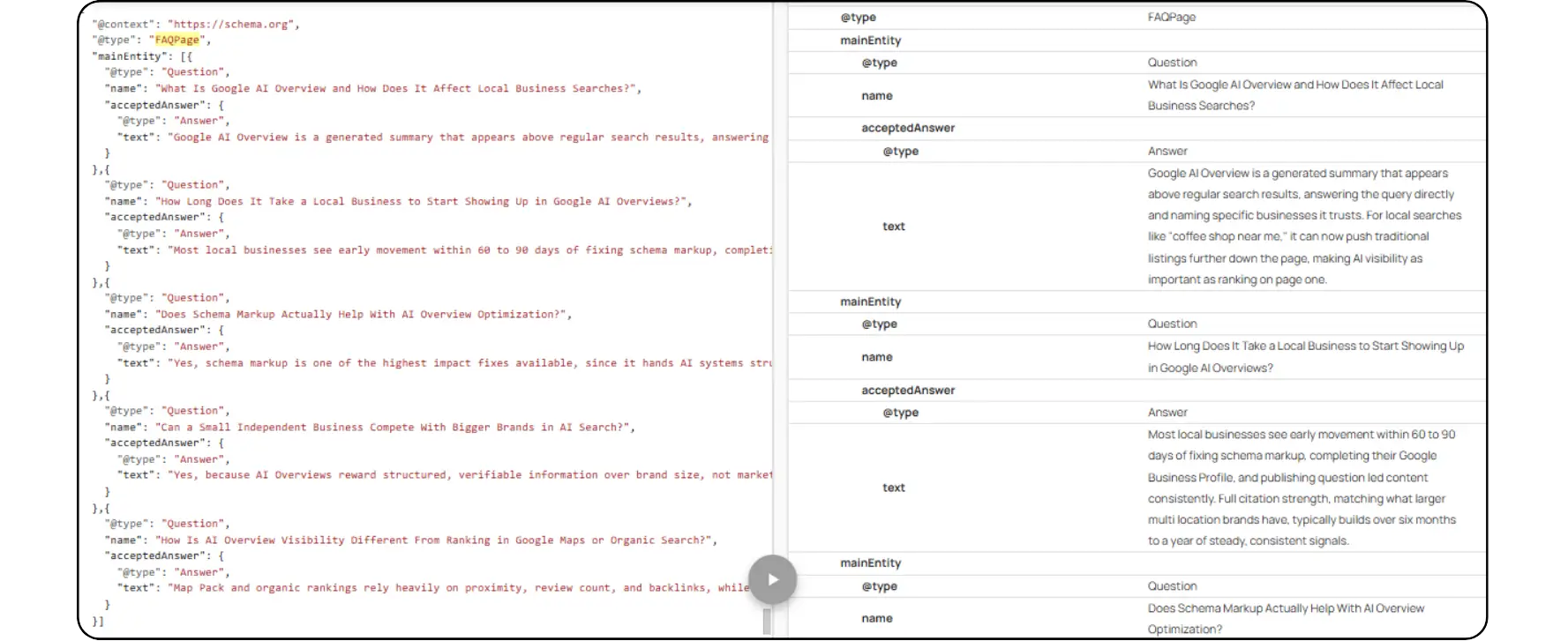
FAQ Page Schema
Turns question and answer content into expandable dropdowns in the search result. The answers need to be genuinely visible on the page, not hidden behind a click that never expands. This type is particularly useful for capturing the longer, conversational queries that AI powered search now handles, since a clean question and answer pair is close to the exact format an AI overview tends to lift and cite.
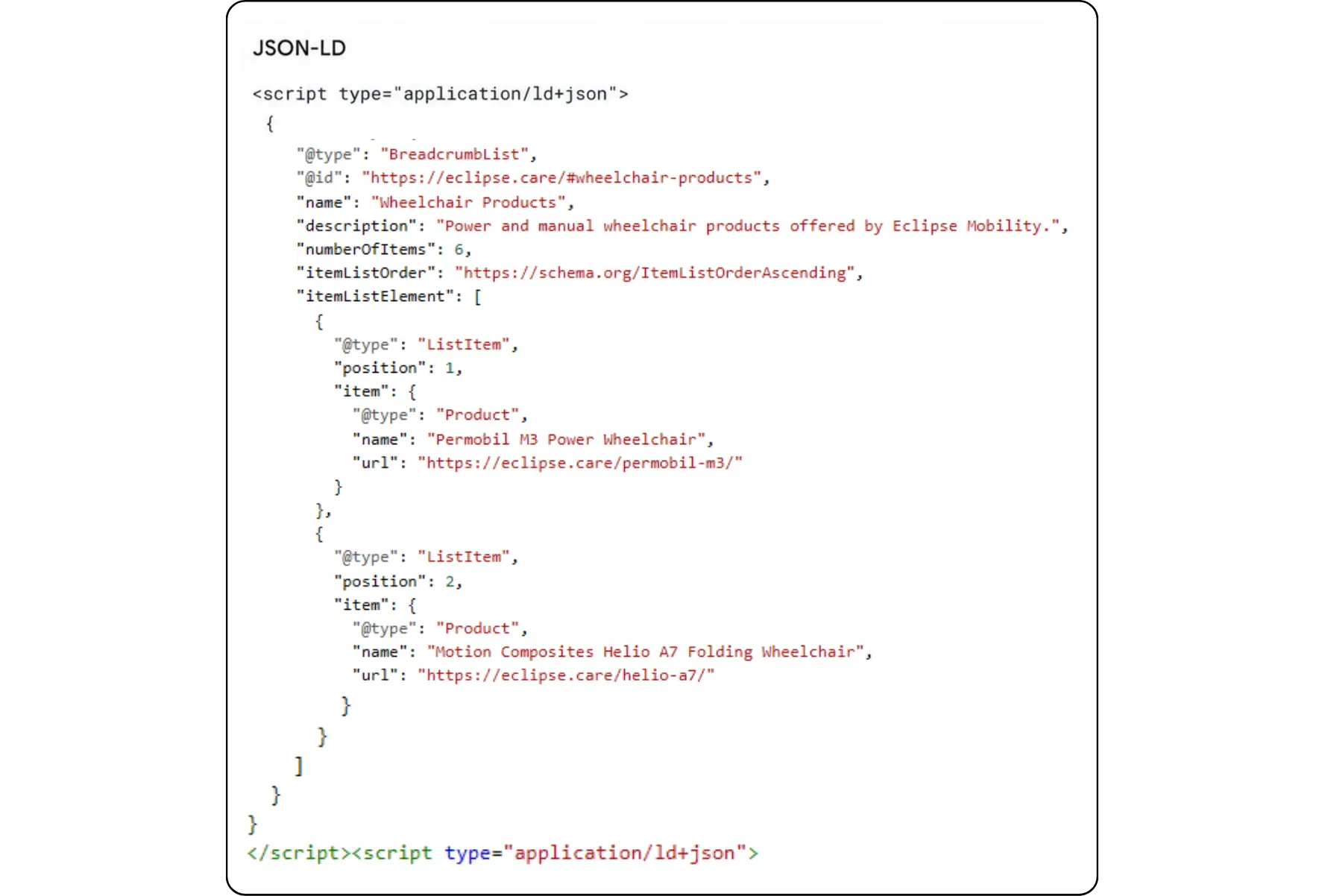
Breadcrumb List Schema
Shows your site's page hierarchy inside the search snippet instead of a raw URL, which makes results look cleaner and easier to navigate. It is less about earning a rich result and more about clarity and trust, since a visible path like Home, Blog, Guide reassures a searcher about where a page sits on your site before they even click, which is especially useful for larger sites with several levels of categories.
How To Schema
Breaks a process into numbered steps that can appear directly in search results. Each step needs its own text, and ideally its own image, to qualify for the rich step layout. It works best for genuinely procedural content, assembly instructions, setup guides, or recipes, where a reader benefits from seeing the sequence at a glance rather than scrolling through a wall of paragraphs to find step four.

A general rule worth remembering: keep every value here matched to what is genuinely visible and true on the live page, and validate each block with Google's Rich Results Test before publishing, since a small syntax error can quietly disqualify the whole snippet. Many of these types can also be nested together on a single page, which is how a single search result ends up showing a photo, a star rating, and a price all in the same snippet.
What Are the Benefits of Schema Markup?
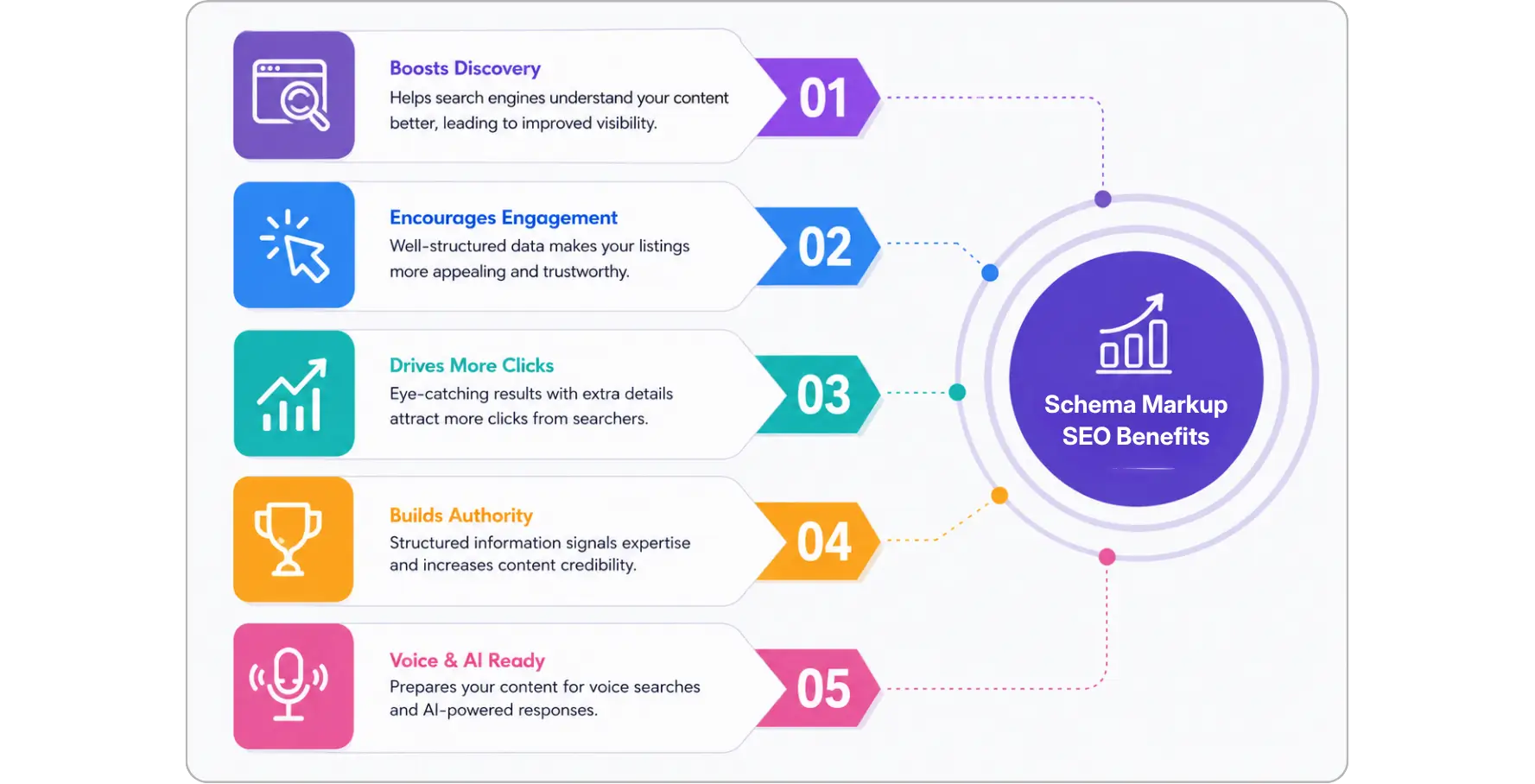
The core benefits of schema markup show up in three areas: visibility, trust, and how well your content performs in newer AI driven search experiences.
Higher click through potential, since pages that qualify for rich results such as star ratings or prices tend to stand out visually against plain text listings
Better content classification, which reduces the chance search engines misread your page and rank it for the wrong intent
Voice and AI assistant readiness, because structured answers are easier for assistants to lift and read aloud or summarize
Stronger local visibility for businesses using LocalBusiness schema, especially in map based and near me searches
Improved internal clarity for large sites, since breadcrumb and sitelink schema helps search engines understand site structure
It is worth being honest here too. Schema markup is not a guaranteed rankings hack, and Google has been clear that it is not a direct ranking factor on its own. What it does is remove friction between your content and how search engines interpret it, which indirectly supports everything else your SEO strategy is trying to do. Separate research analyzing schema adoption also found that pages with FAQ schema saw roughly 9% more organic traffic after adding well matched question and answer pairs, a smaller but still meaningful lift that compounds across a large site.

How to Use Schema Markup for SEO?
The most reliable way to learn how to use schema markup for SEO is to start with the page types that already drive your traffic or revenue, not every page at once. Trying to mark up an entire site on day one usually leads to errors that undo the benefit.
Identify your priority pages, such as top selling products, cornerstone blog posts, or your services page
Choose the schema type that genuinely matches that page's content, referencing Schema.org's official vocabulary
Generate the JSON LD code using a schema generator tool or a CMS plugin built for this purpose
Test the markup using Google's Rich Results Test before publishing anything live
Add the code to the page header, or use a plugin if you are on a platform like WordPress or Shopify
Monitor performance through the Enhancements reports inside Google Search Console
Update the markup whenever the underlying page content changes, such as a new price or an updated rating
A quick technique worth borrowing from paid search teams is mining your own search query data. If you have access to a search query report from any ad platform, filter for long, conversational phrases, seven words or more is a useful cutoff, and see what people are actually asking. That list often reveals FAQ or HowTo schema opportunities you would not have thought to prioritize otherwise.

Mistakes That Quietly Undo Your Schema Markup
Even accurate markup can fail to deliver results if a few common mistakes slip through. Marking up content users cannot actually see on the page is one of the fastest ways to trigger a manual action from Google. Letting prices or availability drift out of sync with the live page is another, since stale structured data damages trust once a user clicks through and finds something different. Copying a generic schema template across many pages without adjusting the details is equally risky, since duplicate or placeholder values, like a five star rating on every single product, read as manipulative rather than helpful.
What Problems Does Schema Markup Actually Solve?
The core problem schema markup solves is ambiguity. Without it, search engines rely on pattern matching and guesswork to figure out whether a number on your page is a price, a phone number, or a rating, and guesswork produces inconsistent results. Sites without schema often show up with plain, unremarkable listings even when their content is genuinely strong, simply because nothing on the page tells search engines what to highlight. The fix is not complicated, but it does require discipline. Mark up your most valuable pages accurately, keep the data synced with what users actually see, and check for errors regularly rather than treating implementation as a one-time task. Structured data that goes stale, showing an old price or a removed product, can do more harm than having no markup at all.
Final Thoughts
Schema markup will not fix a weak page, but it will stop a strong one from being overlooked. Start small, get the details right on the pages that matter most, and keep the data honest as your content evolves. In a search landscape that increasingly reads before it ranks, being understandable is becoming just as important as being relevant. Clear content earns clicks.
Clearly labeled content earns understanding, and that is the real edge.
FAQs
Is schema markup a direct Google ranking factor?

No. Google has said structured data itself does not directly boost rankings. This helps the search engines to properly understand your content and qualify for rich results which indirectly improves click through rate and visibility.
Will adding schema markup guarantee rich results in search?
No, it only makes you eligible. Google still decides whether to actually display a rich result based on content quality, page relevance, and whether the markup accurately reflects what is on the page. It's also worth knowing that Google can retire a rich result feature entirely, as it has done before, so eligibility today doesn't guarantee eligibility next year.
Can schema markup hurt my SEO if I get it wrong?
Yes, in a few ways. Markup that misrepresents visible content, like inflated ratings or fake availability, can trigger a manual action. Broken or invalid JSON-LD can also simply be ignored, wasting the effort without any downside protection.
Does schema markup work the same way for AI overviews as it does for regular search results?
The underlying data is the same, but AI Overviews and AI mode tend to pull from clearly structured, well-labeled content more readily since they're synthesizing an answer rather than just displaying a snippet. Clean schema improves your odds of being one of the sources used.
How do I check if my schema markup is actually working?
Use Google's Rich Results Test to validate the code before publishing, and check the Enhancements reports in Google Search Console afterward to see if Google is reading it correctly and whether any errors or warnings appear over time.
Schema markup is a code vocabulary you add to your website so search engines can understand your content more precisely, not just crawl it. In short, it is the difference between a search engine guessing what a page is about and actually knowing it. This guide breaks down what schema markup is, the different types of schema markup you can use, the real benefits it brings, and how to use schema markup for search engine optimization (SEO) the right way, without the technical overwhelm.
What Is Schema Markup?
Schema markup is a standardized set of tags, built on a shared vocabulary called Schema.org, that you place in a page's code to describe its content in a language search engines can read directly. A product page, for example, can tell Google exactly what the price is, whether the item is in stock, and what customers rated it, instead of leaving the engine to infer that from surrounding text.
This vocabulary was created jointly by Google, Bing, Yahoo, and Yandex in 2011, which is one reason it is so widely supported across search platforms today. Think of it like a museum label next to a painting. Visitors can look at the artwork and form their own impression, but the label tells them the artist, the year, and the medium with zero ambiguity. Schema markup plays that same role for search engines browsing your site.
JSON LD, Microdata, or RDFa: Which One Should You Use?
There are technically three formats for writing schema, JSON LD, Microdata, and RDFa, but they are not equally practical. Microdata and RDFa require weaving attributes directly into your visible HTML, so one careless design edit can silently break the markup. JSON LD sits apart, as a self contained script placed in the page header, letting your team redesign the entire web page without touching the structured data at all. Google has publicly recommended JSON LD for this reason, and it is now the default choice for most modern websites and content management systems.
Why Is Schema Markup Important Right Now?
Search itself is changing from a list of links into an answer engine, and structured data is how you feed that engine reliable facts. Search results today are not just ten blue links. They include star ratings, FAQ dropdowns, recipe cook times, product prices, and increasingly, AI-generated overviews that summarize an answer before a user even clicks anything.
This matters more with the rise of AI mode and AI overviews. When someone types a long, conversational search, the system often breaks it into dozens of smaller sub queries behind the scenes to gather context, a process sometimes called query fan out. Clearly marked up content makes it easier for that process to pull accurate, citable facts from your page rather than skip it for a competitor with cleaner data. This is also where optimizing specifically for AI answer engines becomes worth a dedicated strategy rather than an afterthought.
There is also a trust dimension. Search engines build what is called a knowledge graph, an internal map of entities such as people, places, organizations, and products, along with how they relate to each other. Clear schema markup helps your business, author, or product get correctly linked inside that graph, which strengthens how confidently a search engine can recommend you. This connects to the ideas search professionals now group under E-E-A-T, experience, expertise, authority, and trust. Author schema tied to a real person, review schema tied to genuine ratings, and organization schema tied to verifiable contact details all give search engines concrete signals AI systems use to trust your brand, instead of taking your credibility on faith.
What Are the Different Types of Schema Markup?
There are hundreds of schema types listed on Schema.org, but most websites only need a handful. Understanding the different types of schema markup helps you prioritize the ones that actually match your content instead of adding markup for the sake of it. Schema.org data shows only about a dozen types, including WebSite, WebPage, Organization, Person, and ImageObject, are deployed at massive scale across the web, meaning most sites succeed with a focused set rather than an exhaustive one.
Organization Schema
Tells search engines who you are as a business, so your name, logo, and social profiles get linked correctly to your brand entity. This is usually the very first schema type worth adding, since it sits at the foundation of your knowledge graph presence and feeds into how confidently search engines display your brand name, logo, and social profiles when someone searches for you directly.
Local Business Schema
Used by shops, clinics, salons, and any business with a physical location. Powers map listings, hours, and local pack results. It extends Organization schema with the details that matter most for near me searches, address, phone number, opening hours, and service area, so search engines can confidently surface you when someone is searching with local intent rather than just informational intent. This only works, though, alongside keeping your business listings consistent across every directory your business appears on, since mismatched details elsewhere undercut what the schema is telling search engines.
Article or Blog Posting Schema
Marks up blog posts and news content so search engines know the headline, author, and publish date, which is often what powers the byline and date shown under a search result. It also plays a direct role in freshness signals, since a clearly marked dateModified field helps search engines recognize when a piece has been genuinely updated rather than just republished with a new timestamp.
Product with Offer Schema
Used on ecommerce pages to show price, availability, and brand directly in search results. The Offer block almost always lives nested inside Product rather than standing alone. This pairing is one of the highest value implementations for online stores, since it is what makes a listing eligible to appear in shopping style results with a visible price and stock status, rather than a plain text link a shopper has to click just to check availability.
Review and Aggregate Rating Schema
Displays star ratings and review counts next to a listing. This only works if genuine reviews are visible on the page itself, not just in the code. Because rating stars are one of the more eye catching elements in a plain results page, this type carries real weight for click-through rate, but it is also one of the more heavily monitored types, so the reviewCount and ratingValue need to reflect real, checkable feedback rather than an estimate.
FAQ Page Schema
Turns question and answer content into expandable dropdowns in the search result. The answers need to be genuinely visible on the page, not hidden behind a click that never expands. This type is particularly useful for capturing the longer, conversational queries that AI powered search now handles, since a clean question and answer pair is close to the exact format an AI overview tends to lift and cite.
Breadcrumb List Schema
Shows your site's page hierarchy inside the search snippet instead of a raw URL, which makes results look cleaner and easier to navigate. It is less about earning a rich result and more about clarity and trust, since a visible path like Home, Blog, Guide reassures a searcher about where a page sits on your site before they even click, which is especially useful for larger sites with several levels of categories.
How To Schema
Breaks a process into numbered steps that can appear directly in search results. Each step needs its own text, and ideally its own image, to qualify for the rich step layout. It works best for genuinely procedural content, assembly instructions, setup guides, or recipes, where a reader benefits from seeing the sequence at a glance rather than scrolling through a wall of paragraphs to find step four.
A general rule worth remembering: keep every value here matched to what is genuinely visible and true on the live page, and validate each block with Google's Rich Results Test before publishing, since a small syntax error can quietly disqualify the whole snippet. Many of these types can also be nested together on a single page, which is how a single search result ends up showing a photo, a star rating, and a price all in the same snippet.
What Are the Benefits of Schema Markup?
The core benefits of schema markup show up in three areas: visibility, trust, and how well your content performs in newer AI driven search experiences.
Higher click through potential, since pages that qualify for rich results such as star ratings or prices tend to stand out visually against plain text listings
Better content classification, which reduces the chance search engines misread your page and rank it for the wrong intent
Voice and AI assistant readiness, because structured answers are easier for assistants to lift and read aloud or summarize
Stronger local visibility for businesses using LocalBusiness schema, especially in map based and near me searches
Improved internal clarity for large sites, since breadcrumb and sitelink schema helps search engines understand site structure
It is worth being honest here too. Schema markup is not a guaranteed rankings hack, and Google has been clear that it is not a direct ranking factor on its own. What it does is remove friction between your content and how search engines interpret it, which indirectly supports everything else your SEO strategy is trying to do. Separate research analyzing schema adoption also found that pages with FAQ schema saw roughly 9% more organic traffic after adding well matched question and answer pairs, a smaller but still meaningful lift that compounds across a large site.
How to Use Schema Markup for SEO?
The most reliable way to learn how to use schema markup for SEO is to start with the page types that already drive your traffic or revenue, not every page at once. Trying to mark up an entire site on day one usually leads to errors that undo the benefit.
Identify your priority pages, such as top selling products, cornerstone blog posts, or your services page
Choose the schema type that genuinely matches that page's content, referencing Schema.org's official vocabulary
Generate the JSON LD code using a schema generator tool or a CMS plugin built for this purpose
Test the markup using Google's Rich Results Test before publishing anything live
Add the code to the page header, or use a plugin if you are on a platform like WordPress or Shopify
Monitor performance through the Enhancements reports inside Google Search Console
Update the markup whenever the underlying page content changes, such as a new price or an updated rating
A quick technique worth borrowing from paid search teams is mining your own search query data. If you have access to a search query report from any ad platform, filter for long, conversational phrases, seven words or more is a useful cutoff, and see what people are actually asking. That list often reveals FAQ or HowTo schema opportunities you would not have thought to prioritize otherwise.
Mistakes That Quietly Undo Your Schema Markup
Even accurate markup can fail to deliver results if a few common mistakes slip through. Marking up content users cannot actually see on the page is one of the fastest ways to trigger a manual action from Google. Letting prices or availability drift out of sync with the live page is another, since stale structured data damages trust once a user clicks through and finds something different. Copying a generic schema template across many pages without adjusting the details is equally risky, since duplicate or placeholder values, like a five star rating on every single product, read as manipulative rather than helpful.
What Problems Does Schema Markup Actually Solve?
The core problem schema markup solves is ambiguity. Without it, search engines rely on pattern matching and guesswork to figure out whether a number on your page is a price, a phone number, or a rating, and guesswork produces inconsistent results. Sites without schema often show up with plain, unremarkable listings even when their content is genuinely strong, simply because nothing on the page tells search engines what to highlight. The fix is not complicated, but it does require discipline. Mark up your most valuable pages accurately, keep the data synced with what users actually see, and check for errors regularly rather than treating implementation as a one-time task. Structured data that goes stale, showing an old price or a removed product, can do more harm than having no markup at all.
Final Thoughts
Schema markup will not fix a weak page, but it will stop a strong one from being overlooked. Start small, get the details right on the pages that matter most, and keep the data honest as your content evolves. In a search landscape that increasingly reads before it ranks, being understandable is becoming just as important as being relevant. Clear content earns clicks.
Clearly labeled content earns understanding, and that is the real edge.
FAQs
Is schema markup a direct Google ranking factor?
No. Google has said structured data itself does not directly boost rankings. This helps the search engines to properly understand your content and qualify for rich results which indirectly improves click through rate and visibility.
Will adding schema markup guarantee rich results in search?
No, it only makes you eligible. Google still decides whether to actually display a rich result based on content quality, page relevance, and whether the markup accurately reflects what is on the page. It's also worth knowing that Google can retire a rich result feature entirely, as it has done before, so eligibility today doesn't guarantee eligibility next year.
Can schema markup hurt my SEO if I get it wrong?
Yes, in a few ways. Markup that misrepresents visible content, like inflated ratings or fake availability, can trigger a manual action. Broken or invalid JSON-LD can also simply be ignored, wasting the effort without any downside protection.
Does schema markup work the same way for AI overviews as it does for regular search results?
The underlying data is the same, but AI Overviews and AI mode tend to pull from clearly structured, well-labeled content more readily since they're synthesizing an answer rather than just displaying a snippet. Clean schema improves your odds of being one of the sources used.
How do I check if my schema markup is actually working?
Use Google's Rich Results Test to validate the code before publishing, and check the Enhancements reports in Google Search Console afterward to see if Google is reading it correctly and whether any errors or warnings appear over time.



Summarize with AI



Want to Skyrocket Revenue? Get a Free Audit Today!
Want to Skyrocket Revenue? Get a Free Audit Today!



4.9/5 Ratings!


Don’t miss our revenue growth tips!
Get expert marketing tips—straight to your inbox, like thousands of happy clients.
Don’t miss our revenue growth tips!
Get expert marketing tips—straight to your inbox, like thousands of happy clients.
Don’t miss our revenue growth tips!
Don’t miss our revenue growth tips!
Get expert marketing tips—straight to your inbox, like thousands of happy clients.
Relevant Blogs on Organic SEO
Relevant Blogs on Organic SEO
Unlock data-driven insights in Organic SEO—explore our featured blogs and skyrocket your revenue before your competitors do.
Unlock data-driven insights in Organic SEO—explore our featured blogs and skyrocket your revenue before your competitors do.

SEO
Sep 21, 2026
5 Min Read
Audience-First SEO: How to Rank by Putting Readers First
SEO
Sep 21, 2026
5 Min Read
Audience-First SEO: How to Rank by Putting Readers First
SEO
Sep 21, 2026
5 Min Read
Audience-First SEO: How to Rank by Putting Readers First

SEO
Sep 19, 2026
5 Min Read
How to Add SEO Keywords to Your Website: Where and How
SEO
Sep 19, 2026
5 Min Read
How to Add SEO Keywords to Your Website: Where and How
SEO
Sep 19, 2026
5 Min Read
How to Add SEO Keywords to Your Website: Where and How

SEO
Sep 18, 2026
5 Min Read
How XML Sitemaps Help Search Engines Discover New Pages
SEO
Sep 18, 2026
5 Min Read
How XML Sitemaps Help Search Engines Discover New Pages
SEO
Sep 18, 2026
5 Min Read
How XML Sitemaps Help Search Engines Discover New Pages



































Ready to speak with an expert?
Data-Driven Marketing Agency That Elevates ROI
1100+
Websites Designed & Optimized to Convert
$280M+
Client Revenue Driven & Growing Strong
Discover how to skyrocket
your revenue today!
Trusted by 1000+ Owners!
Ready to speak with an expert?
Data-Driven Marketing Agency That Elevates ROI
1100+
Websites Designed & Optimized to Convert
$280M+
Client Revenue Driven & Growing Strong
Discover how to skyrocket
your revenue today!
Trusted by 1000+ Owners!
Want to skyrocket revenue?
4.9/5 Ratings!
Ready to speak with an expert?
Data-Driven Marketing Agency That Elevates ROI
1100+
Websites Designed & Optimized to Convert
$280M+
Client Revenue Driven & Growing Strong
Discover how to skyrocket
your revenue today!
Trusted by 1000+ Owners!
Call
Meet