More Than Half Your Website Traffic Isn't Human Anymore
Last Updated:

Table of Content
Case Studies








Tanya Singh
Tanya Singh
AI Search
AI Search
8 Min Read
8 Min
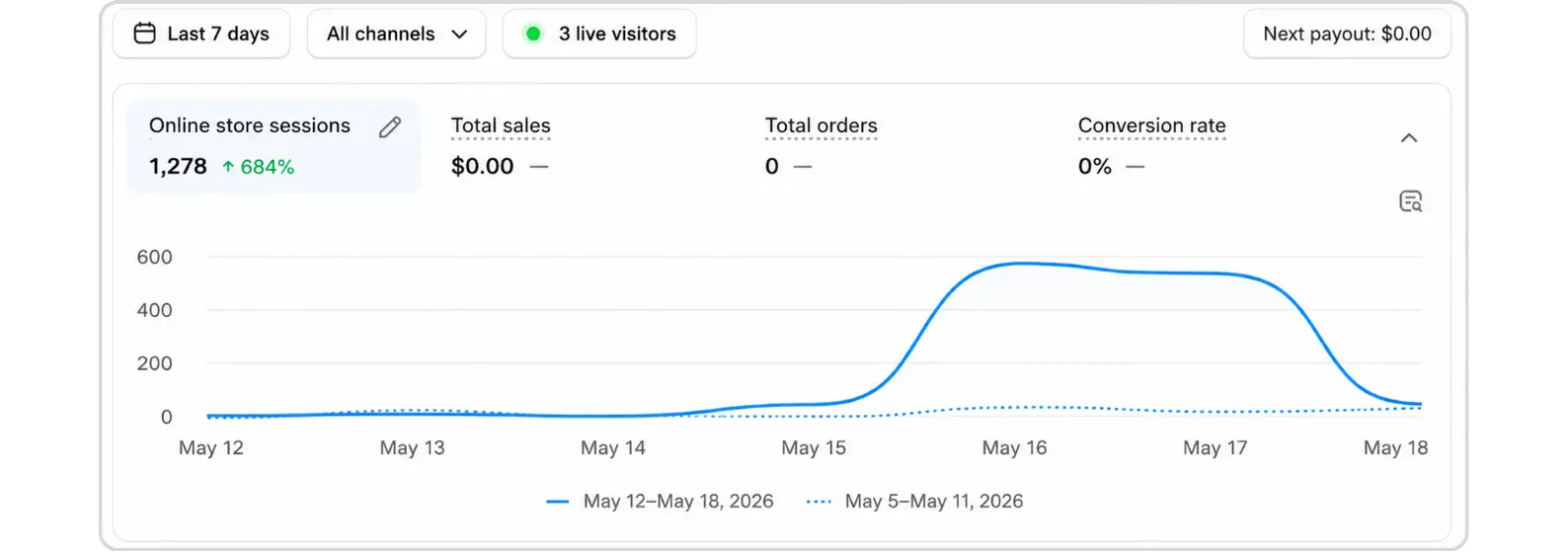
You check your analytics, see a nice traffic spike, and feel good about it. But here's the catch: there's a good chance most of those "visitors" were never people at all. Bots have quietly become the biggest source of traffic on the internet, and that changes how you should be reading your numbers.
Is more than half of website traffic really not human?
Yes, and chances are this affects your site too. Cloudflare's own numbers show that bots now make up about 57% of all web page visits on its network, leaving humans with just 43%. Cloudflare's CEO Matthew Prince said on June 3, 2026, that bots had officially overtaken human traffic for the first time, based on data covering bot versus human requests on Cloudflare's network. (Cloudflare)
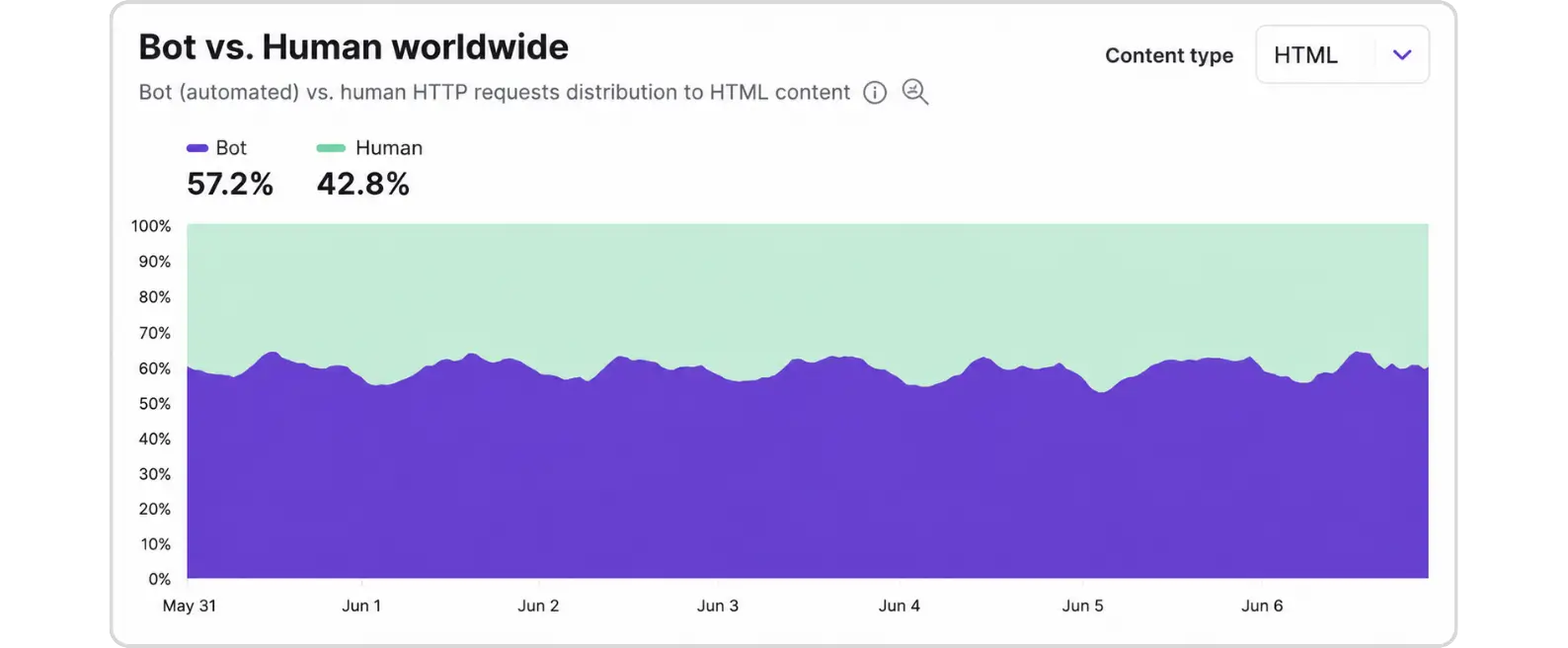
If that sounds like a one-off claim, it isn't. Imperva's 2025 Bad Bot Report found that automated traffic crossed over human traffic for the first time in ten years, hitting 51% of all internet traffic in 2024, with "bad" bots alone making up more than a third (37%) of all web traffic, up from just over 30% the year before. So two separate companies, using two different ways of counting, landed on the same conclusion: on a lot of websites today, real people are the minority.
Why did bots suddenly take over the internet?
Mostly because of AI. For years, bot traffic mainly meant search engines like Google crawling pages to add them to search results, plus the usual spam and security bots in the background. That's changed quickly. Now there are two new types of bots flooding the web: ones that scrape content to train AI models, and ones that act like little assistants, browsing sites on behalf of a person using a chatbot or AI tool.
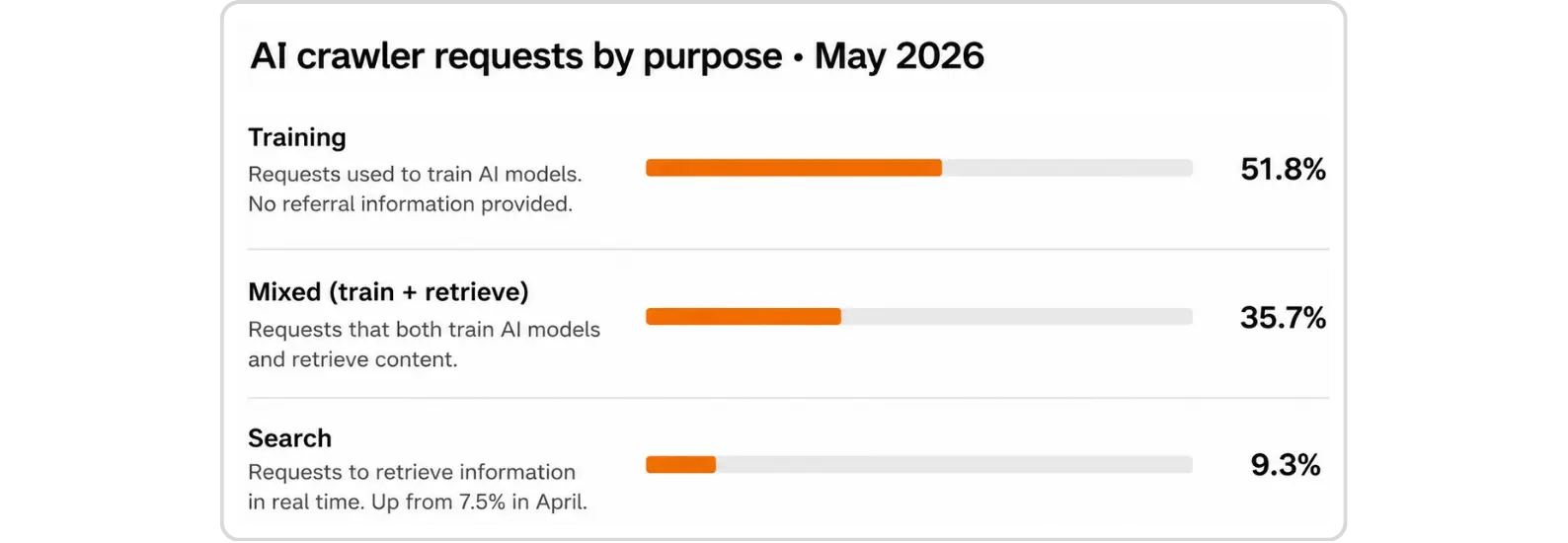
Cloudflare pointed to this exact shift, saying the recent jump comes from AI agents, not the old-school crawlers, describing it as bots scraping content for model training along with agentic systems acting for people using AI assistants and chatbots. And it's not a one-time spike either. Cloudflare's data shows bot traffic moving between 52% and 62% throughout the day, with humans staying in the minority the whole time.
So how fast is this AI bot traffic growing?
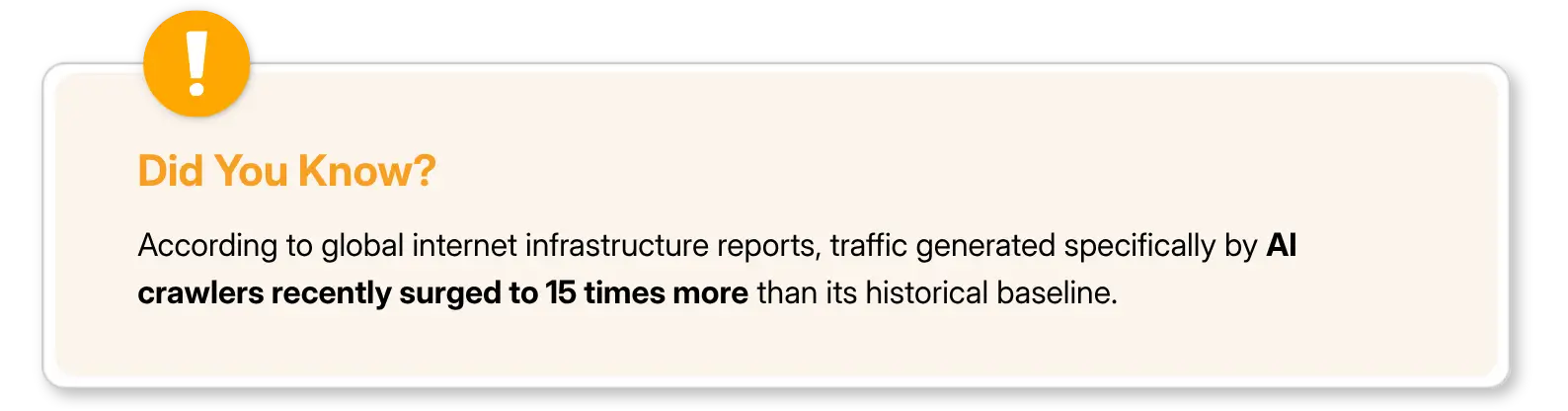
Fast enough to catch most businesses off guard. HUMAN Security's 2026 State of AI Traffic report found that AI agent traffic grew by roughly 7,851% in just one year, growing about eight times faster than human traffic, with bots run by OpenAI making up a big chunk of that AI traffic. When one type of traffic grows that fast, it doesn't take long for it to start out-numbering everything else, even if it started out small.
Why does my website traffic look higher than my actual sales?
It means those numbers are only telling you part of the story. If your analytics setup doesn't filter out bots properly, things like page views, total visits, and even some "engagement" stats can be padded by bots and AI tools that were never going to read your blog, browse your products, or click anything.
This matters because bots aren't just pinging your server anymore, they're loading your whole page and "reading" it, almost like a person would. The catch is they don't buy anything, click ads, or watch your videos. More visitors doesn't mean more sales. So a traffic spike that looks exciting could just be an AI crawler stopping by your site again for the tenth time this month.
How can you tell if your visitors are real people or bots?
There's no single switch you can flip, but a few simple checks can help.
Look at how visitors behave, not just how many there are. If a session has zero scrolling, leaves in a second, or somehow visits 20 pages in 10 seconds, that's not a person. That's a bot.
Peek at your raw server logs too, not just your analytics tool. A lot of bots skip over the tracking code that tools like Google Analytics rely on, so your server logs often show way more bot activity than your dashboard does.
Check what "user agent" is making the request. This is basically the bot's name tag. It helps you tell the difference between known crawlers (like Google or AI companies) and random scrapers you don't recognize.
Focus on actions, not just visits. Logins, sign-ups, and purchases are still a much better sign of real interest than raw traffic numbers, especially now that those numbers are harder to trust on their own.
Final Thoughts
This isn't really bad news, it's just a reality check. Page views and visitor counts were useful when almost everyone visiting your site was a real person. That's not true anymore for a lot of websites. So next time your website traffic dips or jumps, it's worth asking a simple question: who, or what, is actually behind that number? Right now, more often than not, the answer isn't a person.
The next time your traffic graph spikes, ask yourself: was that a visitor, or a visitor's robot?
FAQs
How do I know if my marketing agency is helping my business?

Bot traffic now makes up around 57% of all web page requests according to Cloudflare, while Imperva found automated traffic crossed 51% of total internet traffic in 2024. Both figures point to bots overtaking human traffic for the first time.
How do I check if my website traffic is bots or real visitors?
Look at your raw server logs alongside your analytics dashboard, since many bots skip tracking scripts entirely. Sessions with zero scrolling, instant exits, or dozens of page visits within seconds are strong signs of bot traffic rather than human traffic.
Why is bot traffic higher than human traffic on websites now?
The rise is mainly driven by AI crawlers that scrape content to train AI models and AI agents that browse websites on behalf of chatbot users. This new wave of bot traffic has grown far faster than human traffic over the past year.
Does Google Analytics show bot traffic separately from human traffic?
Not always. Many bots get grouped under Direct traffic because analytics tools cannot always tell a real person typing a URL apart from a bot doing the same. This is why a sudden spike in Direct traffic can sometimes signal bot activity rather than real visitors.
Can high bot traffic hurt my website rankings?
Yes, it can. When bots load a page and leave instantly, it can show up as a quick exit, and too many of these can send weak signals to search engines about page quality. Focusing on real engagement, like logins and purchases, is a better way to judge how your website traffic is actually performing.
You check your analytics, see a nice traffic spike, and feel good about it. But here's the catch: there's a good chance most of those "visitors" were never people at all. Bots have quietly become the biggest source of traffic on the internet, and that changes how you should be reading your numbers.
Is more than half of website traffic really not human?
Yes, and chances are this affects your site too. Cloudflare's own numbers show that bots now make up about 57% of all web page visits on its network, leaving humans with just 43%. Cloudflare's CEO Matthew Prince said on June 3, 2026, that bots had officially overtaken human traffic for the first time, based on data covering bot versus human requests on Cloudflare's network. (Cloudflare)
If that sounds like a one-off claim, it isn't. Imperva's 2025 Bad Bot Report found that automated traffic crossed over human traffic for the first time in ten years, hitting 51% of all internet traffic in 2024, with "bad" bots alone making up more than a third (37%) of all web traffic, up from just over 30% the year before. So two separate companies, using two different ways of counting, landed on the same conclusion: on a lot of websites today, real people are the minority.
Why did bots suddenly take over the internet?
Mostly because of AI. For years, bot traffic mainly meant search engines like Google crawling pages to add them to search results, plus the usual spam and security bots in the background. That's changed quickly. Now there are two new types of bots flooding the web: ones that scrape content to train AI models, and ones that act like little assistants, browsing sites on behalf of a person using a chatbot or AI tool.
Cloudflare pointed to this exact shift, saying the recent jump comes from AI agents, not the old-school crawlers, describing it as bots scraping content for model training along with agentic systems acting for people using AI assistants and chatbots. And it's not a one-time spike either. Cloudflare's data shows bot traffic moving between 52% and 62% throughout the day, with humans staying in the minority the whole time.
So how fast is this AI bot traffic growing?
Fast enough to catch most businesses off guard. HUMAN Security's 2026 State of AI Traffic report found that AI agent traffic grew by roughly 7,851% in just one year, growing about eight times faster than human traffic, with bots run by OpenAI making up a big chunk of that AI traffic. When one type of traffic grows that fast, it doesn't take long for it to start out-numbering everything else, even if it started out small.
Why does my website traffic look higher than my actual sales?
It means those numbers are only telling you part of the story. If your analytics setup doesn't filter out bots properly, things like page views, total visits, and even some "engagement" stats can be padded by bots and AI tools that were never going to read your blog, browse your products, or click anything.
This matters because bots aren't just pinging your server anymore, they're loading your whole page and "reading" it, almost like a person would. The catch is they don't buy anything, click ads, or watch your videos. More visitors doesn't mean more sales. So a traffic spike that looks exciting could just be an AI crawler stopping by your site again for the tenth time this month.
How can you tell if your visitors are real people or bots?
There's no single switch you can flip, but a few simple checks can help.
Look at how visitors behave, not just how many there are. If a session has zero scrolling, leaves in a second, or somehow visits 20 pages in 10 seconds, that's not a person. That's a bot.
Peek at your raw server logs too, not just your analytics tool. A lot of bots skip over the tracking code that tools like Google Analytics rely on, so your server logs often show way more bot activity than your dashboard does.
Check what "user agent" is making the request. This is basically the bot's name tag. It helps you tell the difference between known crawlers (like Google or AI companies) and random scrapers you don't recognize.
Focus on actions, not just visits. Logins, sign-ups, and purchases are still a much better sign of real interest than raw traffic numbers, especially now that those numbers are harder to trust on their own.
Final Thoughts
This isn't really bad news, it's just a reality check. Page views and visitor counts were useful when almost everyone visiting your site was a real person. That's not true anymore for a lot of websites. So next time your website traffic dips or jumps, it's worth asking a simple question: who, or what, is actually behind that number? Right now, more often than not, the answer isn't a person.
The next time your traffic graph spikes, ask yourself: was that a visitor, or a visitor's robot?
FAQs
How do I know if my marketing agency is helping my business?
Bot traffic now makes up around 57% of all web page requests according to Cloudflare, while Imperva found automated traffic crossed 51% of total internet traffic in 2024. Both figures point to bots overtaking human traffic for the first time.
How do I check if my website traffic is bots or real visitors?
Look at your raw server logs alongside your analytics dashboard, since many bots skip tracking scripts entirely. Sessions with zero scrolling, instant exits, or dozens of page visits within seconds are strong signs of bot traffic rather than human traffic.
Why is bot traffic higher than human traffic on websites now?
The rise is mainly driven by AI crawlers that scrape content to train AI models and AI agents that browse websites on behalf of chatbot users. This new wave of bot traffic has grown far faster than human traffic over the past year.
Does Google Analytics show bot traffic separately from human traffic?
Not always. Many bots get grouped under Direct traffic because analytics tools cannot always tell a real person typing a URL apart from a bot doing the same. This is why a sudden spike in Direct traffic can sometimes signal bot activity rather than real visitors.
Can high bot traffic hurt my website rankings?
Yes, it can. When bots load a page and leave instantly, it can show up as a quick exit, and too many of these can send weak signals to search engines about page quality. Focusing on real engagement, like logins and purchases, is a better way to judge how your website traffic is actually performing.



Summarize with AI

Latest Blogs






Want to be seen everywhere?
Get a free AI-search audit Today!



4.9/5 Ratings!


Don’t miss our revenue growth tips!
Get expert marketing tips—straight to your inbox, like thousands of happy clients.
Don’t miss our revenue growth tips!
Get expert marketing tips—straight to your inbox, like thousands of happy clients.
Don’t miss our revenue growth tips!
Don’t miss our revenue growth tips!
Get expert marketing tips—straight to your inbox, like thousands of happy clients.
Explore News, Updates & Strategies
Explore News, Updates & Strategies
Explore the latest industry updates, marketing trends, Google changes, expert insights, success stories, eCommerce strategies, AEO innovations, and lead generation techniques — all in one place.
Explore the latest industry updates, marketing trends, Google changes, expert insights, success stories, eCommerce strategies, AEO innovations, and lead generation techniques — all in one place.

Google Updates
Sep 26, 2026
3 Min Read
Google Search Console Adds Multimodal Search Performance Reporting
Google Updates
Sep 26, 2026
3 Min Read
Google Search Console Adds Multimodal Search Performance Reporting
Google Updates
Sep 26, 2026
3 Min Read
Google Search Console Adds Multimodal Search Performance Reporting
Google Updates
Sep 2, 2026
5 Min Read
Google Search Console's Generative AI Performance Report Goes Fully Global
Google Updates
Sep 2, 2026
5 Min Read
Google Search Console's Generative AI Performance Report Goes Fully Global
Google Updates
Sep 2, 2026
5 Min Read
Google Search Console's Generative AI Performance Report Goes Fully Global
Google Updates
Aug 18, 2026
5 Min Read
Google’s August 2026 Spam Update: Who Won, Who Lost & Why?
Google Updates
Aug 18, 2026
5 Min Read
Google’s August 2026 Spam Update: Who Won, Who Lost & Why?
Google Updates
Aug 18, 2026
5 Min Read
Google’s August 2026 Spam Update: Who Won, Who Lost & Why?



































Ready to speak with an expert?
Data-Driven Marketing Agency That Elevates ROI
1100+
Websites Designed & Optimized to Convert
$280M+
Client Revenue Driven & Growing Strong
Discover how to skyrocket
your revenue today!
Trusted by 1000+ Owners!
Ready to speak with an expert?
Data-Driven Marketing Agency That Elevates ROI
1100+
Websites Designed & Optimized to Convert
$280M+
Client Revenue Driven & Growing Strong
Discover how to skyrocket
your revenue today!
Trusted by 1000+ Owners!
Want to skyrocket revenue?
4.9/5 Ratings!
Ready to speak with an expert?
Data-Driven Marketing Agency That Elevates ROI
1100+
Websites Designed & Optimized to Convert
$280M+
Client Revenue Driven & Growing Strong
Discover how to skyrocket
your revenue today!
Trusted by 1000+ Owners!
Call
Meet