Google’s August 2026 Spam Update: Who Won, Who Lost & Why?
Last Updated:
Table of Content
Case Studies







Tanya Singh
Tanya Singh
Google Updates
Google Updates
5 Min Read
8 Min
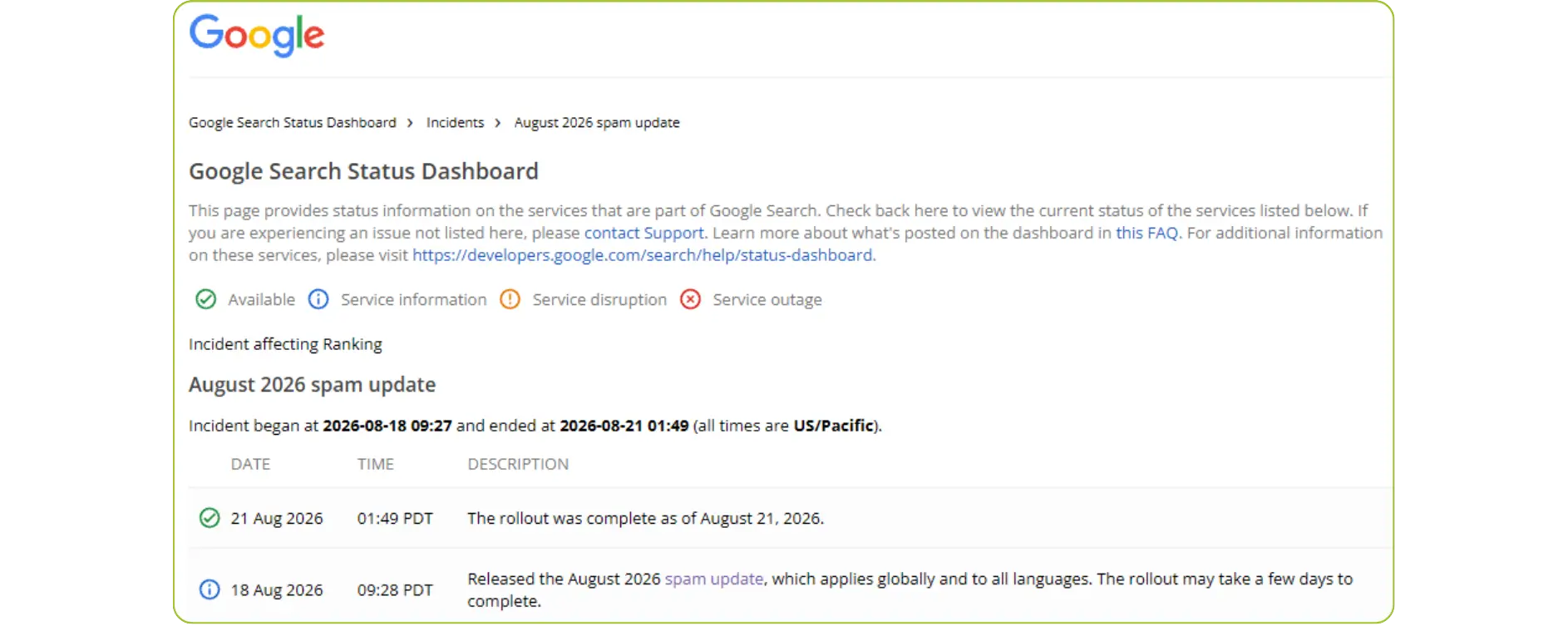
Google released the August 2026 spam update on August 18, 2026, becoming the third confirmed spam update of the year after March and June. Google marked the rollout complete on August 21, 2026, meaning the full update took just under three days to roll out across all regions and languages. It added no new rules. It sharpened detection inside SpamBrain, Google's AI based spam system, pushing scaled AI content, thin affiliate pages, and manipulative link spam further down search rankings while quietly rewarding sites that were already following Google's spam policies. Here is what actually moved, who it moved for, and what to check before you touch a single page.
What Is the Google August 2026 Spam Update?
The Google August 2026 spam update is a scheduled refresh of Google's spam detection systems, not a new policy or a new set of rules. Google's Search Status Dashboard confirms the update was released at 9:27 a.m. Pacific on August 18, 2026, and applies globally across every indexed language. The rollout was marked complete at 1:49 a.m. Pacific on August 21, 2026, putting the full turnaround at just under three days. No new spam category was announced, so the update leans on the same rules Google has enforced since 2024: scaled content abuse, site reputation abuse, thin affiliation, doorway pages, and link spam.
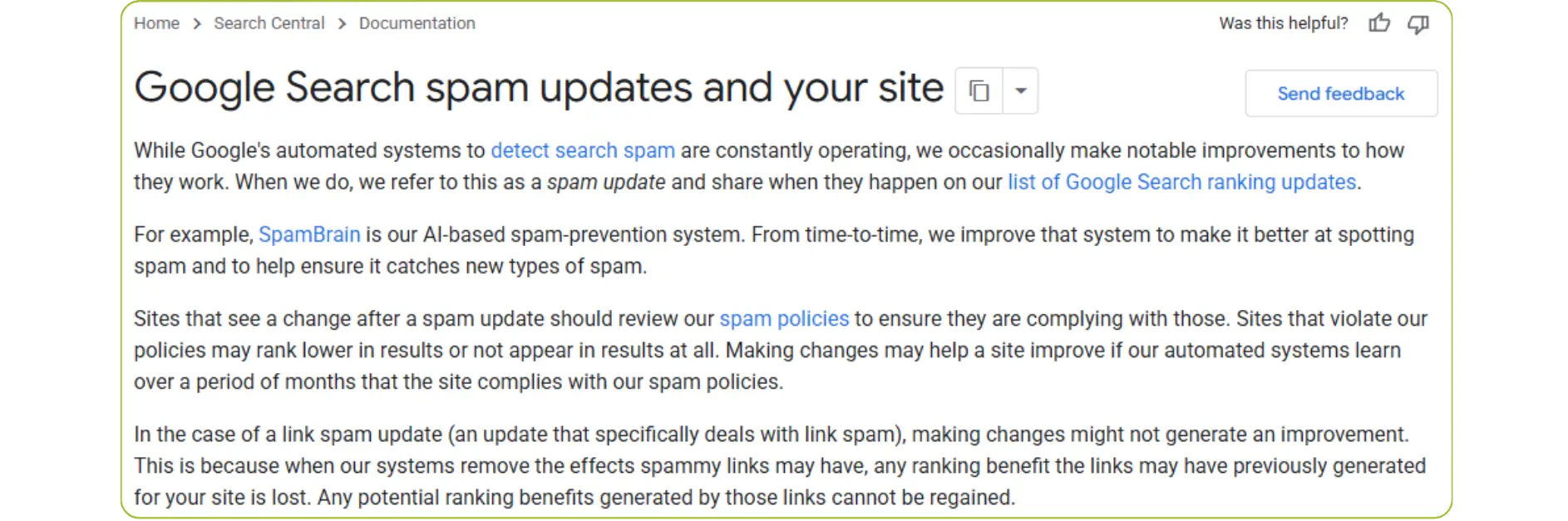
This is Google's third spam update of 2026, following one in March that completed in roughly 19 hours, the fastest confirmed spam rollout on record, and another in June that took just over two days. That pace matters, because it means SpamBrain is now being retrained far more often than in previous years, and site owners have far less runway between cycles to fix problems before the next one lands.
Which Websites Lost Rankings in the August 2026 Spam Update?
Websites leaning on the tactics named in Google's own spam policies took the hit, and the scale of the problem is larger than most site owners assume. Independent trackers including AccuRanker, Mozcast, and Semrush recorded sharp volatility during the rollout window.
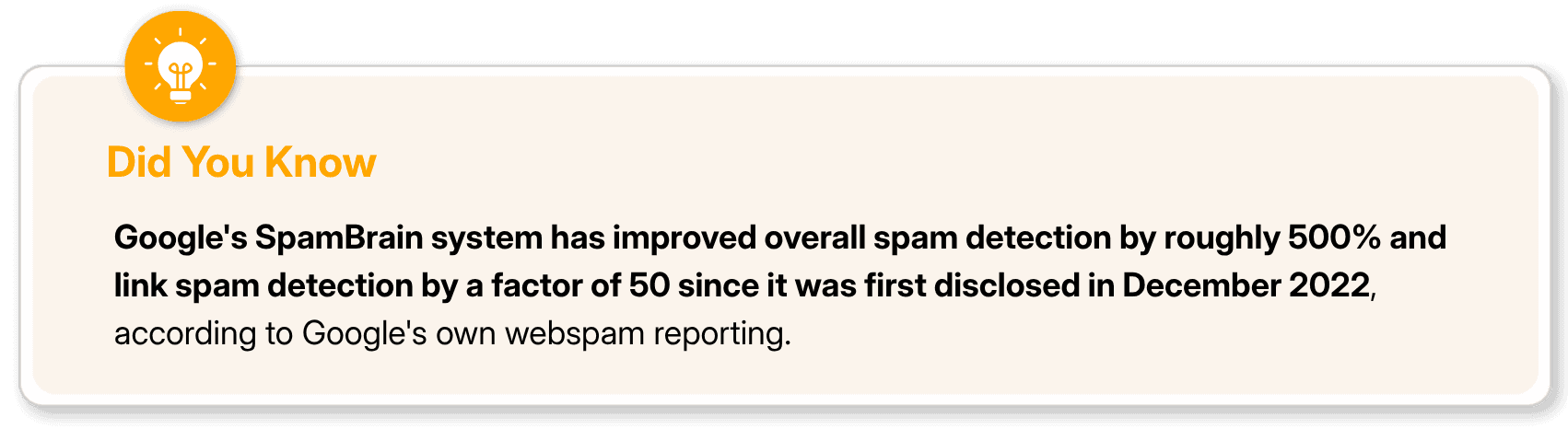
Google groups the behaviors it penalizes into named categories, and knowing which one applies to your site makes recovery far more targeted than guessing.
Cloaking: Showing search engines different content than what a human visitor sees, used to sneak keywords or pages past Google's crawlers.
Doorway Abuse: Multiple near duplicate pages or domains built to capture slightly different queries and funnel every visitor to the same destination.
Scaled Content Abuse: Mass produced, often AI generated pages published to occupy keyword territory in bulk rather than to genuinely help a reader.
Thin Affiliation: Affiliate pages that copy merchant product descriptions with no original testing, pricing context, or comparison added.
Hidden Text and Link Abuse: Text or links stuffed with keywords but hidden from users through white on white text, zero opacity, or off screen CSS.
Link Spam: Paid links, link exchanges, and keyword rich widget links placed across sites purely to pass ranking credit rather than to inform readers.
Site Reputation Abuse: Third party content hosted on an established site mainly to borrow that site's existing ranking strength.
Sneaky Redirects: Sending users to a completely different page than the one search engines indexed, in order to deceive rather than genuinely relocate content.
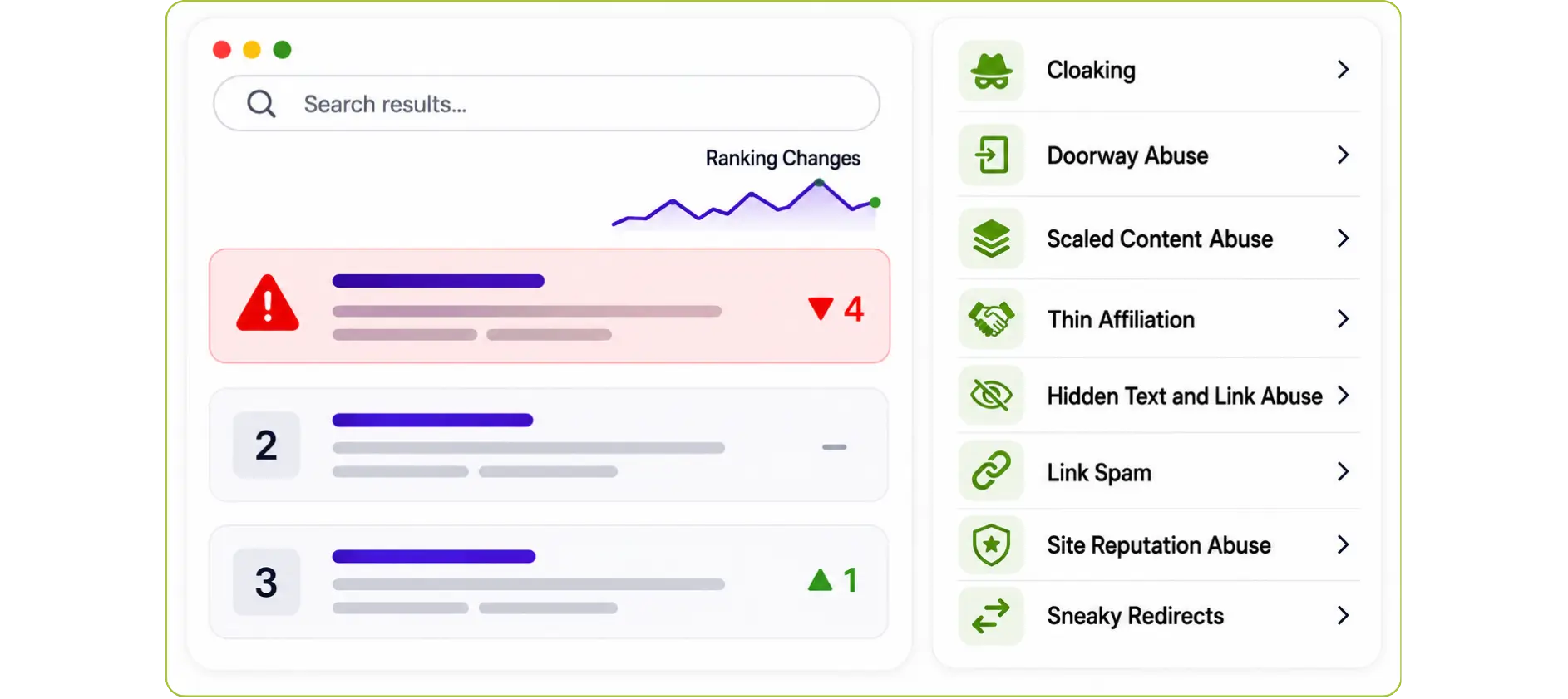
Taken together, these categories explain most of what moved during the rollout. A site rarely trips just one; the pattern Google's systems flag most often is two or three of them stacked on the same domain. A separate 2025 industry review of sites that lost their entire index footprint found that all of them carried visible signs of low value, AI generated publishing, and roughly half were running scaled content operations at the time they were removed. Not every site on the losing side is running a spam operation on purpose; some inherit the problem from an old redesign, a scraped feed nobody removed, or a plugin auto generating thin pages without review.
Which Websites Gained Rankings After the Spam Update?
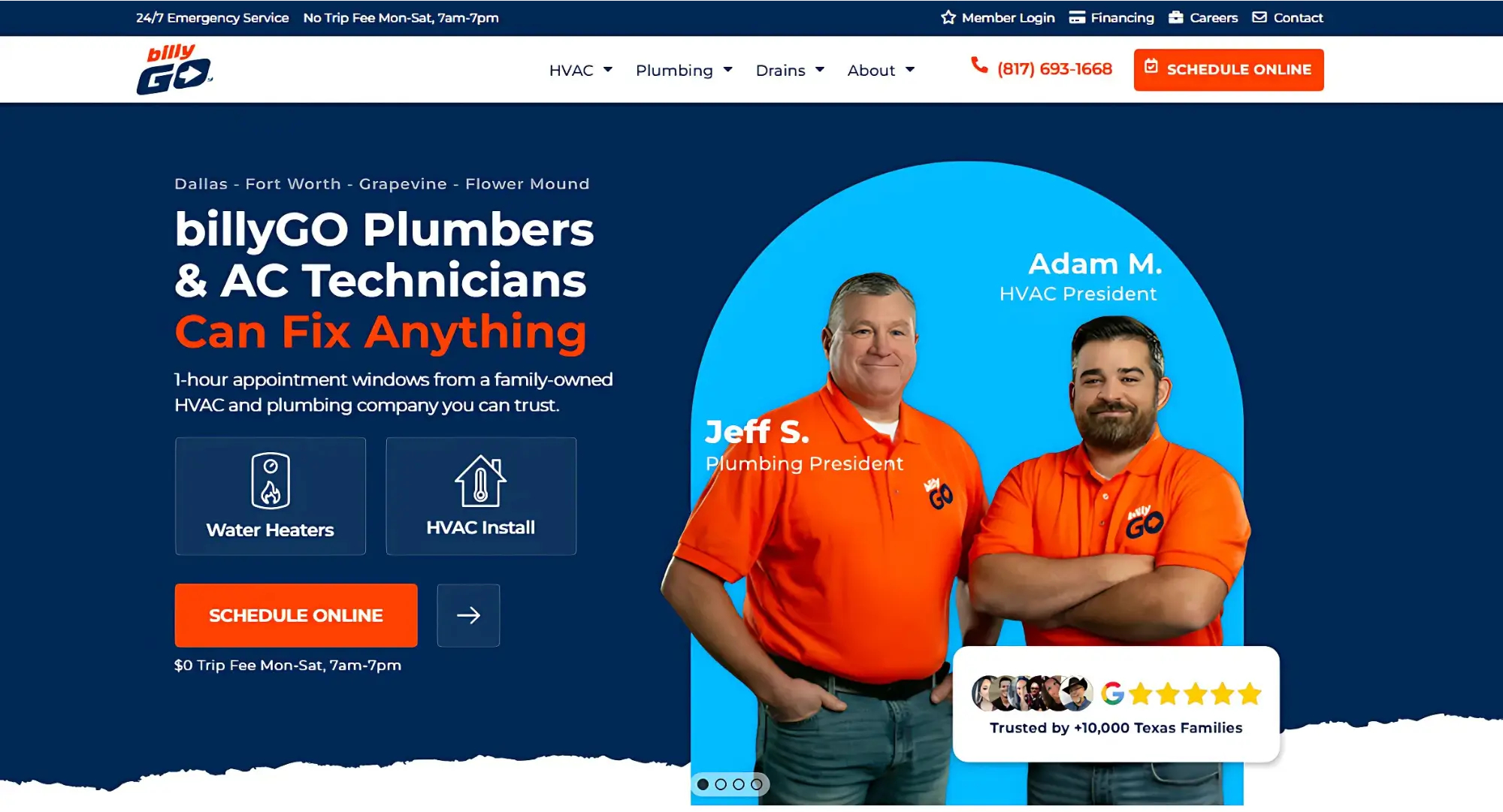
Websites built on original reporting, tested expertise, and content that fully answers the query keep gaining share every time SpamBrain tightens. Nothing about their content changed; the field just got cleaner once weaker competitors dropped.
Websites built on original reporting, tested expertise, and content that fully answers the query keep gaining share every time SpamBrain tightens. Nothing about their content changed; the field just got cleaner once weaker competitors dropped.
Original research, testing, or data competitors cannot copy
Clear authorship with real credentials or first hand experience
Earned links and mentions rather than purchased ones
None of this is new advice, but it explains why some sites barely notice these updates at all.
Does the August 2026 Spam Update Target AI Generated Content?
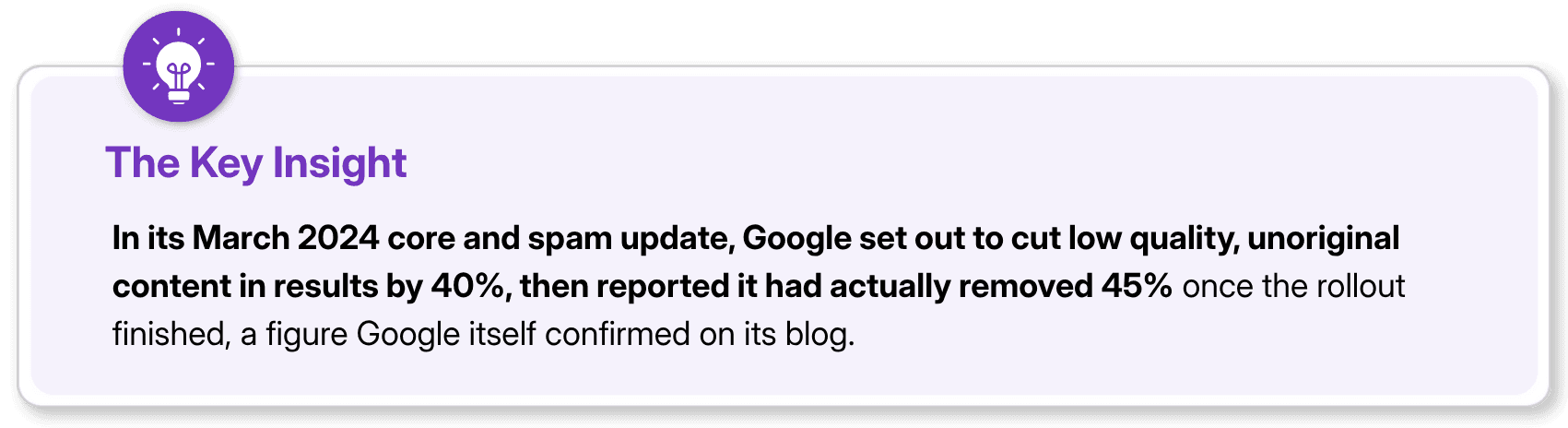
Not officially, and treating "AI written" as a synonym for "spam" misreads the policy. The rule that matters is scaled content abuse, which applies to any method, human or automated, used to publish large volumes of low value pages purely to manipulate rankings.

What Is the Difference Between a Spam Update and a Core Update?
A spam update targets manipulative tactics named in Google's spam policies, while a core update reassesses overall relevance and quality signals across nearly every type of query.
Factor | Spam Update | Core Update |
|---|---|---|
Target | Manipulative tactics named in spam policies | Overall relevance and quality signals |
Scope | Narrow | Broad, affects nearly every query type |
Recovery | Remove the violation, wait for reprocessing | Improve overall content usefulness |
What Should You Do If Your Rankings Dropped?
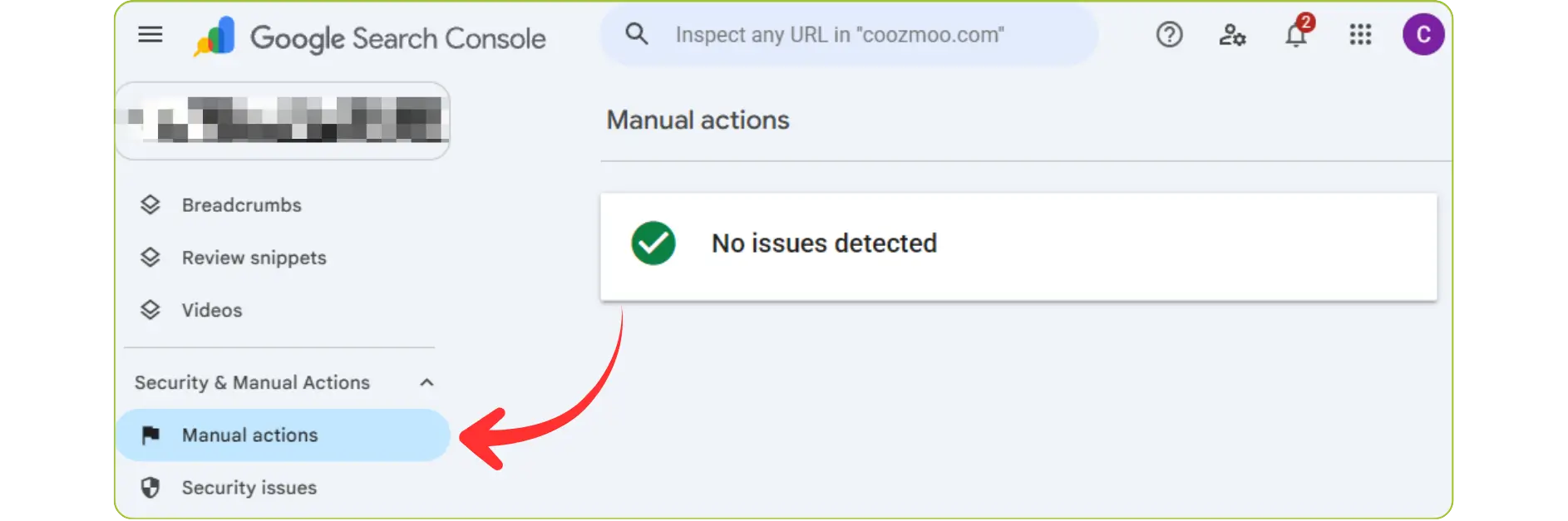
Check Search Console clicks and impressions for the week before August 18 against the days after August 21, once the rollout was fully complete, before assuming a spam hit. If the drop lines up with any of the categories above, fix the root cause, then wait. Google has said recovery from a spam related demotion can take months because its systems need repeated evidence of compliance, and for link spam specifically, any ranking benefit those links once provided cannot be regained even after cleanup. If nothing matches a listed violation, keep monitoring rather than rewriting pages that were never the problem.
Final Thoughts
Every Google spam update rewards the same thing: content built for a reader first and a ranking second. Sites treating visibility as something earned keep surviving each cycle. Sites treating it as something to game keep losing ground.
The web does not need more content. It needs content worth finding.
FAQs
When was the August 2026 Google spam update released?

Google announced the update on August 18, 2026 at 9:27 a.m. Pacific and completed the rollout at 1:49 a.m. on August 21, 2026. Pacific, a turnaround of just under three days.
Is the spam update in August 2026 a core update?
No. A spam update only targets tactics listed in Google’s spam policies, like cloaking or scaled content abuse, but a core update reevaluates relevance and quality signals across just about every query type.
Did this update specifically penalize AI generated content?
Not this update is not basically about AI generated content or generative search. Google's rule is scaled content abuse, which covers any method, human or automated, used to publish large volumes of low value pages purely to manipulate rankings.
What is the safest response if my rankings dropped but nothing looks like spam?
Keep monitoring instead of rewriting pages. If a drop doesn’t correspond to a listed violation, it’s more likely related to a core update or technical issue and unnecessary rewrites can be a waste of time if they don’t address the real problem.
How can I tell if my site was hit by this update or something else?
Compare Search Console clicks and impressions from before August 18 against the period after August 21, then check whether the affected pages match a specific spam policy rather than assuming a site wide penalty.
Google released the August 2026 spam update on August 18, 2026, becoming the third confirmed spam update of the year after March and June. Google marked the rollout complete on August 21, 2026, meaning the full update took just under three days to roll out across all regions and languages. It added no new rules. It sharpened detection inside SpamBrain, Google's AI based spam system, pushing scaled AI content, thin affiliate pages, and manipulative link spam further down search rankings while quietly rewarding sites that were already following Google's spam policies. Here is what actually moved, who it moved for, and what to check before you touch a single page.
What Is the Google August 2026 Spam Update?
The Google August 2026 spam update is a scheduled refresh of Google's spam detection systems, not a new policy or a new set of rules. Google's Search Status Dashboard confirms the update was released at 9:27 a.m. Pacific on August 18, 2026, and applies globally across every indexed language. The rollout was marked complete at 1:49 a.m. Pacific on August 21, 2026, putting the full turnaround at just under three days. No new spam category was announced, so the update leans on the same rules Google has enforced since 2024: scaled content abuse, site reputation abuse, thin affiliation, doorway pages, and link spam.
This is Google's third spam update of 2026, following one in March that completed in roughly 19 hours, the fastest confirmed spam rollout on record, and another in June that took just over two days. That pace matters, because it means SpamBrain is now being retrained far more often than in previous years, and site owners have far less runway between cycles to fix problems before the next one lands.
Which Websites Lost Rankings in the August 2026 Spam Update?
Websites leaning on the tactics named in Google's own spam policies took the hit, and the scale of the problem is larger than most site owners assume. Independent trackers including AccuRanker, Mozcast, and Semrush recorded sharp volatility during the rollout window.
Google groups the behaviors it penalizes into named categories, and knowing which one applies to your site makes recovery far more targeted than guessing.
Cloaking: Showing search engines different content than what a human visitor sees, used to sneak keywords or pages past Google's crawlers.
Doorway Abuse: Multiple near duplicate pages or domains built to capture slightly different queries and funnel every visitor to the same destination.
Scaled Content Abuse: Mass produced, often AI generated pages published to occupy keyword territory in bulk rather than to genuinely help a reader.
Thin Affiliation: Affiliate pages that copy merchant product descriptions with no original testing, pricing context, or comparison added.
Hidden Text and Link Abuse: Text or links stuffed with keywords but hidden from users through white on white text, zero opacity, or off screen CSS.
Link Spam: Paid links, link exchanges, and keyword rich widget links placed across sites purely to pass ranking credit rather than to inform readers.
Site Reputation Abuse: Third party content hosted on an established site mainly to borrow that site's existing ranking strength.
Sneaky Redirects: Sending users to a completely different page than the one search engines indexed, in order to deceive rather than genuinely relocate content.
Taken together, these categories explain most of what moved during the rollout. A site rarely trips just one; the pattern Google's systems flag most often is two or three of them stacked on the same domain. A separate 2025 industry review of sites that lost their entire index footprint found that all of them carried visible signs of low value, AI generated publishing, and roughly half were running scaled content operations at the time they were removed. Not every site on the losing side is running a spam operation on purpose; some inherit the problem from an old redesign, a scraped feed nobody removed, or a plugin auto generating thin pages without review.
Which Websites Gained Rankings After the Spam Update?
Websites built on original reporting, tested expertise, and content that fully answers the query keep gaining share every time SpamBrain tightens. Nothing about their content changed; the field just got cleaner once weaker competitors dropped.
Websites built on original reporting, tested expertise, and content that fully answers the query keep gaining share every time SpamBrain tightens. Nothing about their content changed; the field just got cleaner once weaker competitors dropped.
Original research, testing, or data competitors cannot copy
Clear authorship with real credentials or first hand experience
Earned links and mentions rather than purchased ones
None of this is new advice, but it explains why some sites barely notice these updates at all.
Does the August 2026 Spam Update Target AI Generated Content?
Not officially, and treating "AI written" as a synonym for "spam" misreads the policy. The rule that matters is scaled content abuse, which applies to any method, human or automated, used to publish large volumes of low value pages purely to manipulate rankings.
What Is the Difference Between a Spam Update and a Core Update?
A spam update targets manipulative tactics named in Google's spam policies, while a core update reassesses overall relevance and quality signals across nearly every type of query.
Factor | Spam Update | Core Update |
|---|---|---|
Target | Manipulative tactics named in spam policies | Overall relevance and quality signals |
Scope | Narrow | Broad, affects nearly every query type |
Recovery | Remove the violation, wait for reprocessing | Improve overall content usefulness |
What Should You Do If Your Rankings Dropped?
Check Search Console clicks and impressions for the week before August 18 against the days after August 21, once the rollout was fully complete, before assuming a spam hit. If the drop lines up with any of the categories above, fix the root cause, then wait. Google has said recovery from a spam related demotion can take months because its systems need repeated evidence of compliance, and for link spam specifically, any ranking benefit those links once provided cannot be regained even after cleanup. If nothing matches a listed violation, keep monitoring rather than rewriting pages that were never the problem.
Final Thoughts
Every Google spam update rewards the same thing: content built for a reader first and a ranking second. Sites treating visibility as something earned keep surviving each cycle. Sites treating it as something to game keep losing ground.
The web does not need more content. It needs content worth finding.
FAQs
When was the August 2026 Google spam update released?
Google announced the update on August 18, 2026 at 9:27 a.m. Pacific and completed the rollout at 1:49 a.m. on August 21, 2026. Pacific, a turnaround of just under three days.
Is the spam update in August 2026 a core update?
No. A spam update only targets tactics listed in Google’s spam policies, like cloaking or scaled content abuse, but a core update reevaluates relevance and quality signals across just about every query type.
Did this update specifically penalize AI generated content?
Not this update is not basically about AI generated content or generative search. Google's rule is scaled content abuse, which covers any method, human or automated, used to publish large volumes of low value pages purely to manipulate rankings.
What is the safest response if my rankings dropped but nothing looks like spam?
Keep monitoring instead of rewriting pages. If a drop doesn’t correspond to a listed violation, it’s more likely related to a core update or technical issue and unnecessary rewrites can be a waste of time if they don’t address the real problem.
How can I tell if my site was hit by this update or something else?
Compare Search Console clicks and impressions from before August 18 against the period after August 21, then check whether the affected pages match a specific spam policy rather than assuming a site wide penalty.



Summarize with AI
Latest Blogs







Want to be seen everywhere?
Get a free AI-search audit Today!



4.9/5 Ratings!


Don’t miss our revenue growth tips!
Get expert marketing tips—straight to your inbox, like thousands of happy clients.
Don’t miss our revenue growth tips!
Get expert marketing tips—straight to your inbox, like thousands of happy clients.
Don’t miss our revenue growth tips!
Don’t miss our revenue growth tips!
Get expert marketing tips—straight to your inbox, like thousands of happy clients.
Explore News, Updates & Strategies
Explore News, Updates & Strategies
Explore the latest industry updates, marketing trends, Google changes, expert insights, success stories, eCommerce strategies, AEO innovations, and lead generation techniques — all in one place.
Explore the latest industry updates, marketing trends, Google changes, expert insights, success stories, eCommerce strategies, AEO innovations, and lead generation techniques — all in one place.

Google Updates
Sep 26, 2026
3 Min Read
Google Search Console Adds Multimodal Search Performance Reporting
Google Updates
Sep 26, 2026
3 Min Read
Google Search Console Adds Multimodal Search Performance Reporting
Google Updates
Sep 26, 2026
3 Min Read
Google Search Console Adds Multimodal Search Performance Reporting

Google Updates
Sep 2, 2026
5 Min Read
Google Search Console's Generative AI Performance Report Goes Fully Global
Google Updates
Sep 2, 2026
5 Min Read
Google Search Console's Generative AI Performance Report Goes Fully Global
Google Updates
Sep 2, 2026
5 Min Read
Google Search Console's Generative AI Performance Report Goes Fully Global

Marketing Trends
Aug 14, 2026
5 Min Read
Google Gemini Reaches 1 Billion Users, With 63% Using Voice
Marketing Trends
Aug 14, 2026
5 Min Read
Google Gemini Reaches 1 Billion Users, With 63% Using Voice
Marketing Trends
Aug 14, 2026
5 Min Read
Google Gemini Reaches 1 Billion Users, With 63% Using Voice




































Ready to speak with an expert?
Data-Driven Marketing Agency That Elevates ROI
1100+
Websites Designed & Optimized to Convert
$280M+
Client Revenue Driven & Growing Strong
Discover how to skyrocket
your revenue today!
Trusted by 1000+ Owners!
Ready to speak with an expert?
Data-Driven Marketing Agency That Elevates ROI
1100+
Websites Designed & Optimized to Convert
$280M+
Client Revenue Driven & Growing Strong
Discover how to skyrocket
your revenue today!
Trusted by 1000+ Owners!
Want to skyrocket revenue?
4.9/5 Ratings!
Ready to speak with an expert?
Data-Driven Marketing Agency That Elevates ROI
1100+
Websites Designed & Optimized to Convert
$280M+
Client Revenue Driven & Growing Strong
Discover how to skyrocket
your revenue today!
Trusted by 1000+ Owners!
Call
Meet