How Google's March 2026 Core Update Changed Search Rankings: What Brands Won & Who Lost
How Google's March 2026 Core Update Changed Search Rankings: What Brands Won & Who Lost
Table of Content
Title
Case Studies





Lucky Soni
Lucky Soni
Lucky Soni
SEO
SEO
SEO
10 Min Read
8 Min
10 Min Read
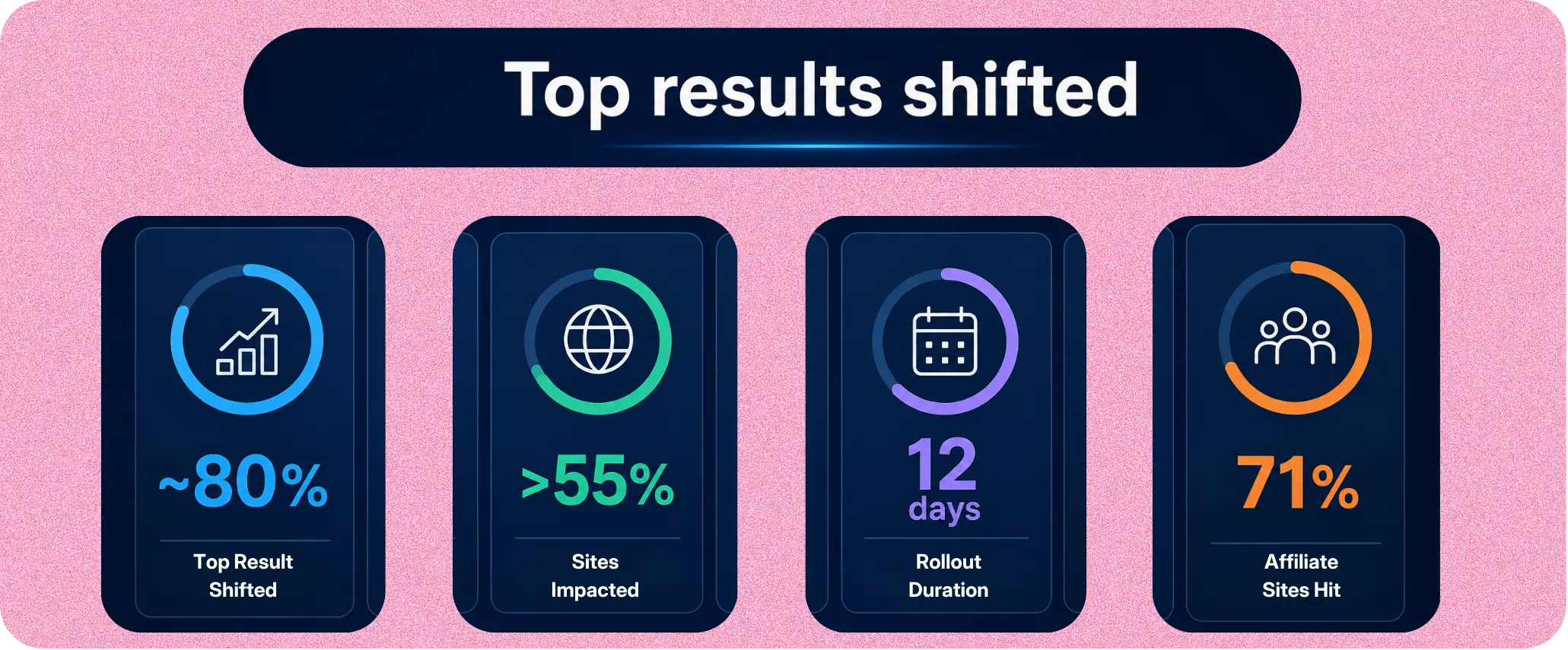
The Google Core Update of March 2026 is one of the largest algorithm changes in the recent years, which has impacted search results and ranking across the world across various industries. The update caused significant ranking fluctuations, affecting many businesses as they struggled to regain traffic that had fallen off.There has been a lot of ranking variance with the update, from major publishers to SaaS companies, affiliate websites to AI-generated content farms, it is almost certain that a lot of businesses were hit, hit hard, and were struggling to get their traffic back. There, multiple SEO tracking websites noted that almost 80% of the highest ranked search results saw some activity throughout the rollout.
Unlike previous updates which emphasized certain technical aspects of website optimization or backlinks quality, the March 2026 update seems to focus on a larger premise - credibility, originality, topical authority, and real value to the customer.
Brands that already had content and first-party data that were relevant and trustworthy experienced a notable increase in visibility, while those that resorted to AI-generated content gained lesser results.
In this blog, we’ll explore:
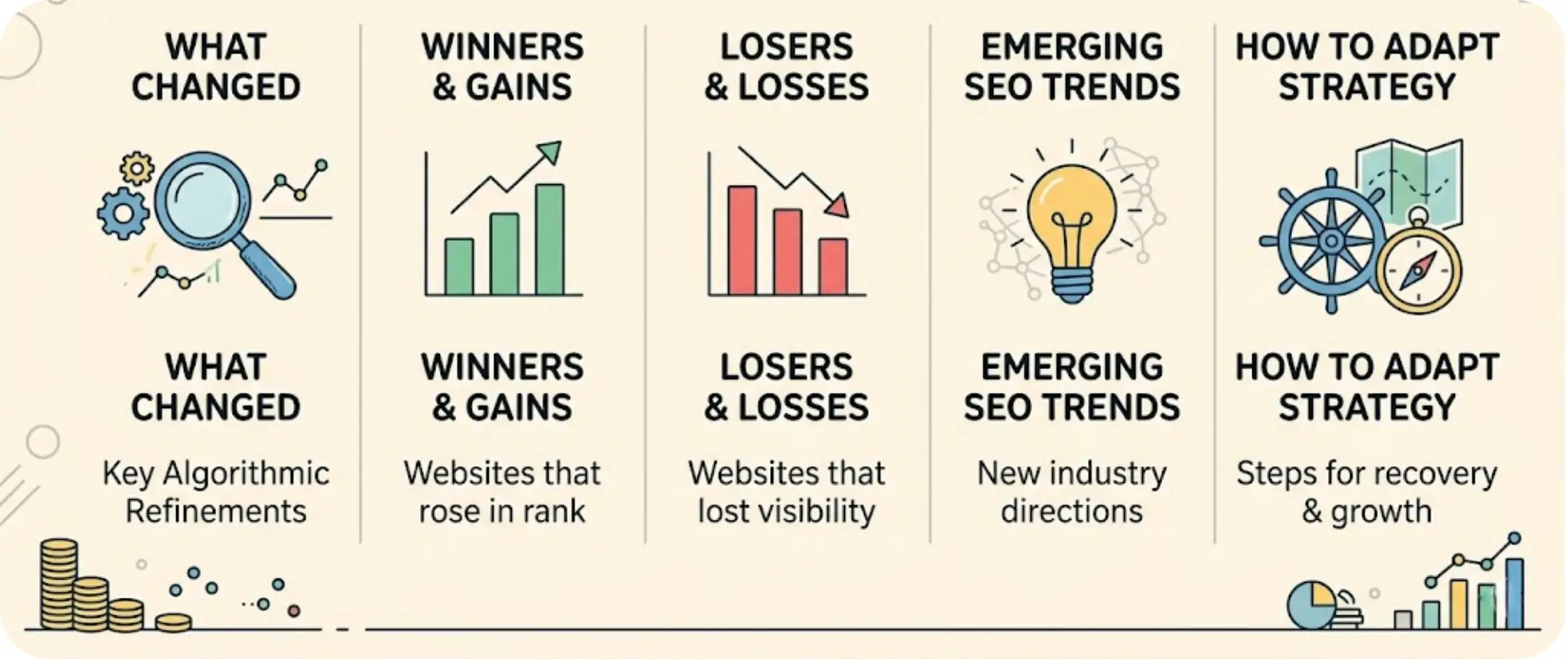
What Was the Google March 2026 Core Update?
The Clearest Trend: Google Is Rewarding Closeness to the Source
Who Won: Brands, Official Sources, and Original Research
Who Lost: Aggregators, Affiliate Sites, and AI Content Farms
The Information Gain Signal Is Real, and It's Getting Stronger
What To Do If Rankings Dropped?
What To Do If Ranking Improved?
What Was The Google’s March 2026 Core Update?
On March 13, 2026, Google rolled out the March 2026 core update. A complete rollout took about 12 days. Google dubs it a “regular” update, the same wording it used to four years ago to indicate that it was working on surfacing more helpful and relevant content and will continue to do so in the future, rather than simply specific actions against individual content categories.
It is an understatement that this is what really happened. Volatility trackers around the third party verified the almost quarter of the top results changed over the rollout period. As we've heard, that is not a standard reshuffle.
It's a relevant shift in Google's fundamental policies on measuring quality signals spread throughout the Internet.Instead of December 2025, which was a period when a bunch of analysts read as a correction in e-commerce, March 2026 had a different fingerprint – towards first party, authoritative and brand ownership and towards homogeneous pullback from intermediaries' content.
The Clearest Trend: Google Is Rewarding Closeness to the Source
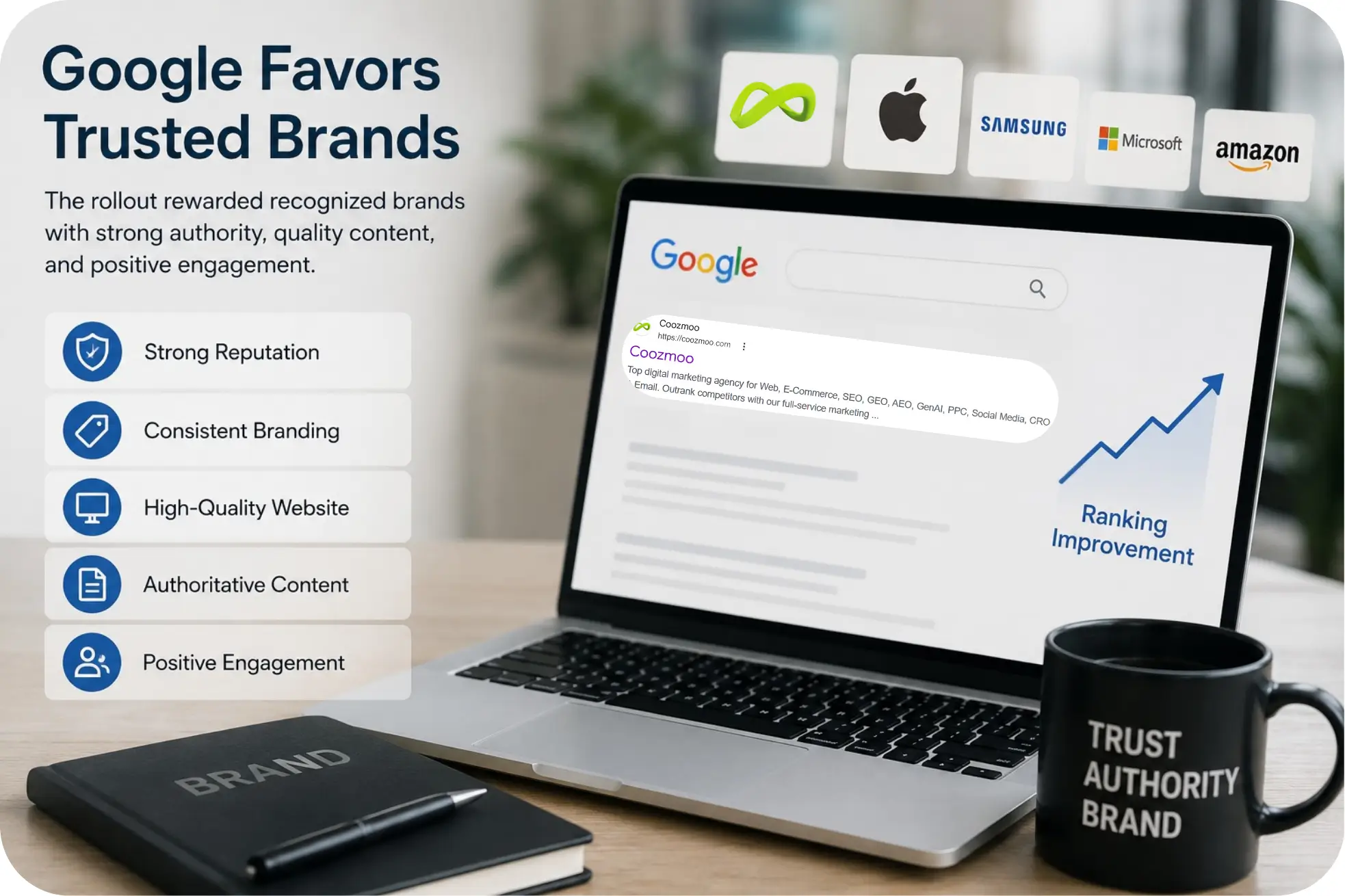
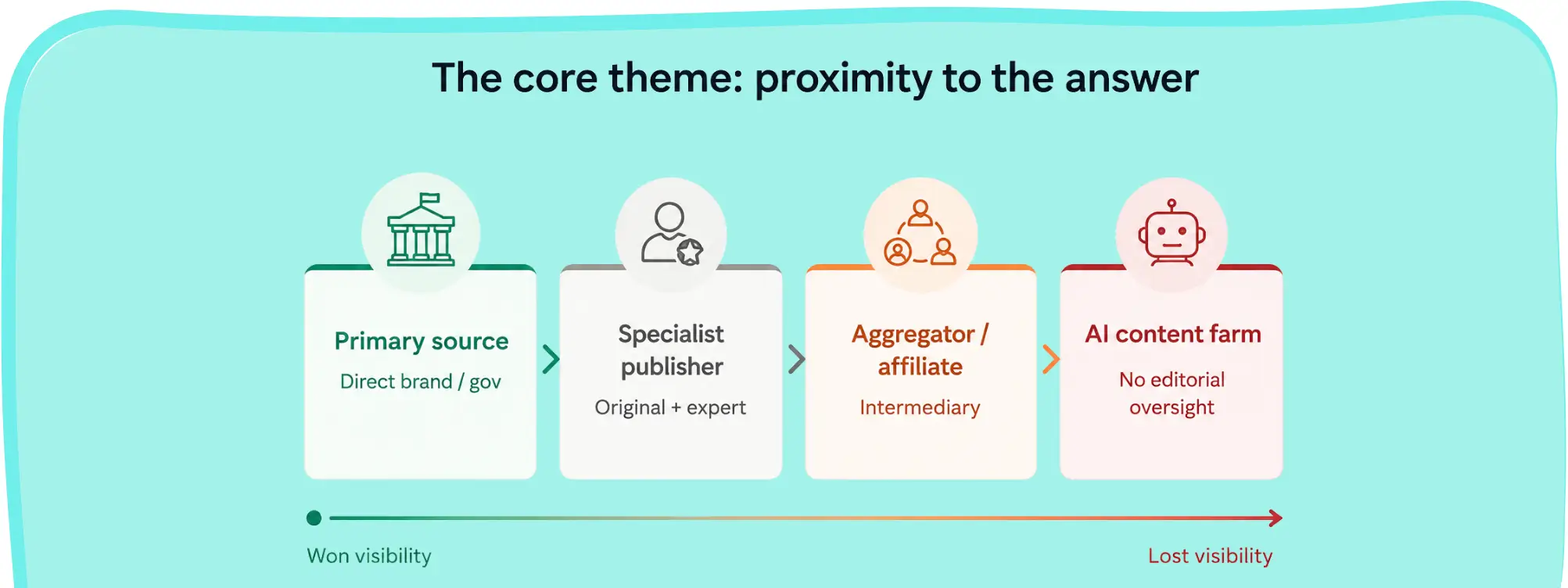
The trend in March 2026 can't be missed once it's spotted. There seems to be a common characteristic among the sites that gained visibility across different industries and verticals: they were the closest to the original source of information or transaction.
These included government domains, direct brand websites, official institutions, recognized organizations, and specialist publishers with documented expertise and credibility. On the other hand, websites sitting between users and the actual source, such as aggregators, comparison platforms, and content built primarily to satisfy search algorithms instead of genuinely helping readers, often experienced a decline in visibility.
This pattern suggests that Google is continuing to place stronger emphasis on trust, authority, and direct value. Rather than rewarding pages that simply summarize or repackage information already available elsewhere, search results appear to favor content creators and businesses that provide unique insights, first-hand expertise, or direct access to the information users are seeking.
Think of it as Google making the distance between a user's question and the answer much smaller. If your content acted as a meaningful shortcut that guided users toward useful, reliable information, there was a good chance you benefited from the update.
If your page simply added another layer between the user and the real answer, then it likely became a weaker choice in search rankings and may have experienced a loss in visibility.

Who Won: Brands, Official Sources, and Original Research
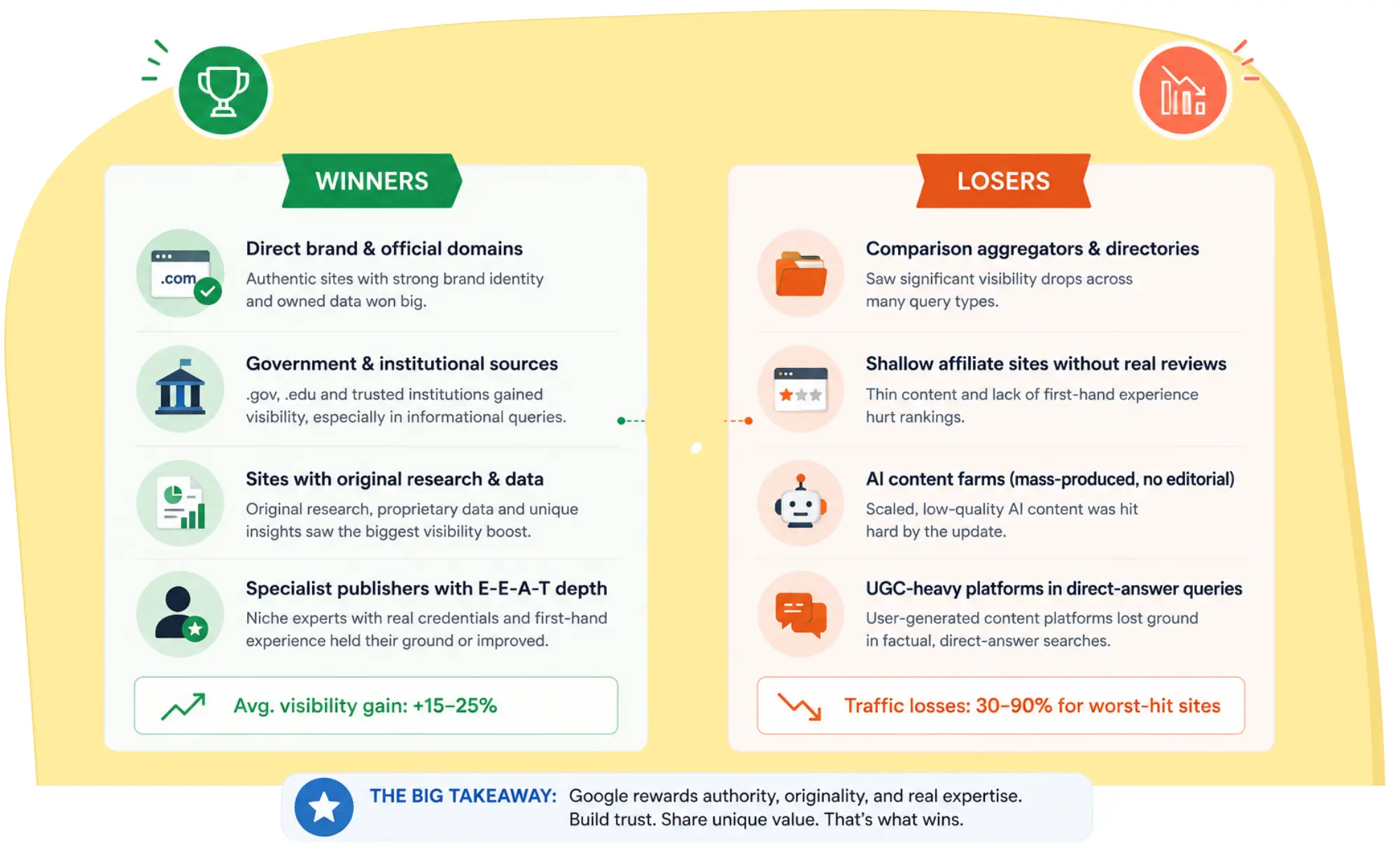
In an obvious way, in the March 2026 update some clear winners emerged:
1) Owned brands and official domain:
Companies with owned data, authentic product pages and brand identity demonstrated good results. Google seems to give weight to the clarity of an entity, the more confident it is that it can clearly understand what it is your site is the best place to go to, the better.
2) Government and institutional sources:
Official .gov and .edu domain and institutions, as well as other authoritative nonprofit sources and institutions, achieved visibility in informational verticals. Google is now more forcefully bringing up the most direct source, when accuracy is at stake.
3) Information gain:
The best indicator of update data is with regards to information gain, where sites with original research and proprietary data that are of particular interest to readers may be more welcome to change their behavior. Google has made headlines for being more stringent with Google’s rankings. On average, pages with original data, first-hand case studies and unique analytical perspectives increased their organic visibility by 15 – 25%. One original idea is now worth more than a highly-crafted pitch reel summarizing the same content.
4) Specialist publishers with E-E-A-T depth:
Niche sites with genuine credentials stood their ground or improved, as did their named authors who said they had real expertise and whose content material included validated knowledge from first-hand experience. The update was an affirmation that domain-level as a whole knowledge signals are gaining relevance, not singularly page-level.
Who Lost: Aggregators, Affiliate Sites, and AI Content Farms
The losses were just as apparent as the gains, and fell into well-known patterns.
1) Comparisons great and small:
Web sites that contained listings and comparisons but did not contribute any data of their own or proprietary analysis were among the hardest hits. Over five-fifths of the sites monitored experienced improvements in their rankings in the first two weeks, yet there were undue numbers of “aggregator” type domains on the “faller” list.
2) Affiliate sites lacking actual depth in the reviews:
Affiliate sites that feature Reviews with only superficial product descriptions, or that plug in a bunch of keywords and have a generic review format suffered from significant declines. The 71% of affiliate sites tracked exhibited negative effects. There was one characteristic common to all the ones that stood firm, and that was either free product tries, certified knowledge, or exclusive tools that took this piece of content and made it uniquely different from the rest of the competition.
3) AI content farms and scaled, low oversight publishing:
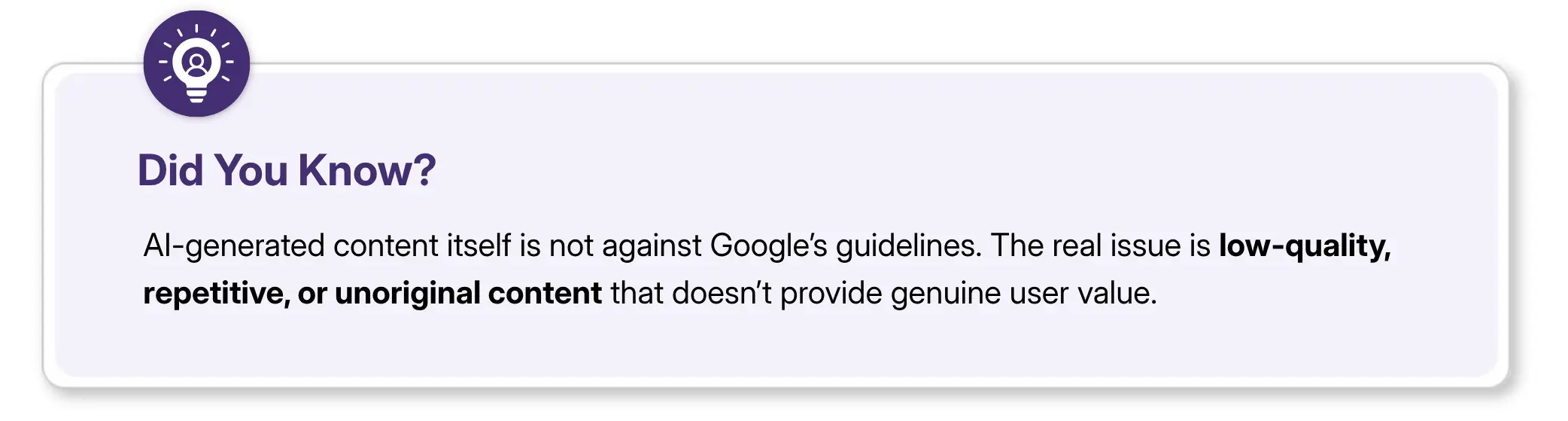
Sites that used to rely on mass-produced AI-driven content and were put up, at scale, without any meaningful editorial input or human ingenuity added in experienced some of the biggest declines ranging from 60% to as much as 70% in some large content set analyses. This wasn't an across-the-board ban on AI-generated content, but rather more of an ability to recognize the absence of editorial intent when a piece was generated by AI.
4) YouTube and UGC-heavy sites in certain niches:
Some studies showed that YouTube was an obvious winner of visibility, not for its disappearance of video content, but because Google seems cautious about using it as the best option answer vs. a straight, text-answering weightlifter. Likewise, the likelihood of a forum or community-generated answers dominating the queries where a more authoritative answer was present decreased.
What This Update Signals About Google's Direction
This Update shows future directions for Google. The core update was not a solitary event in March 2026; it was attended by several other enhancements. Previously in 2026, a February update highlighted AI-generated content quality and topics authority signals.
When thinking about the data together there are a couple of things that come to mind:
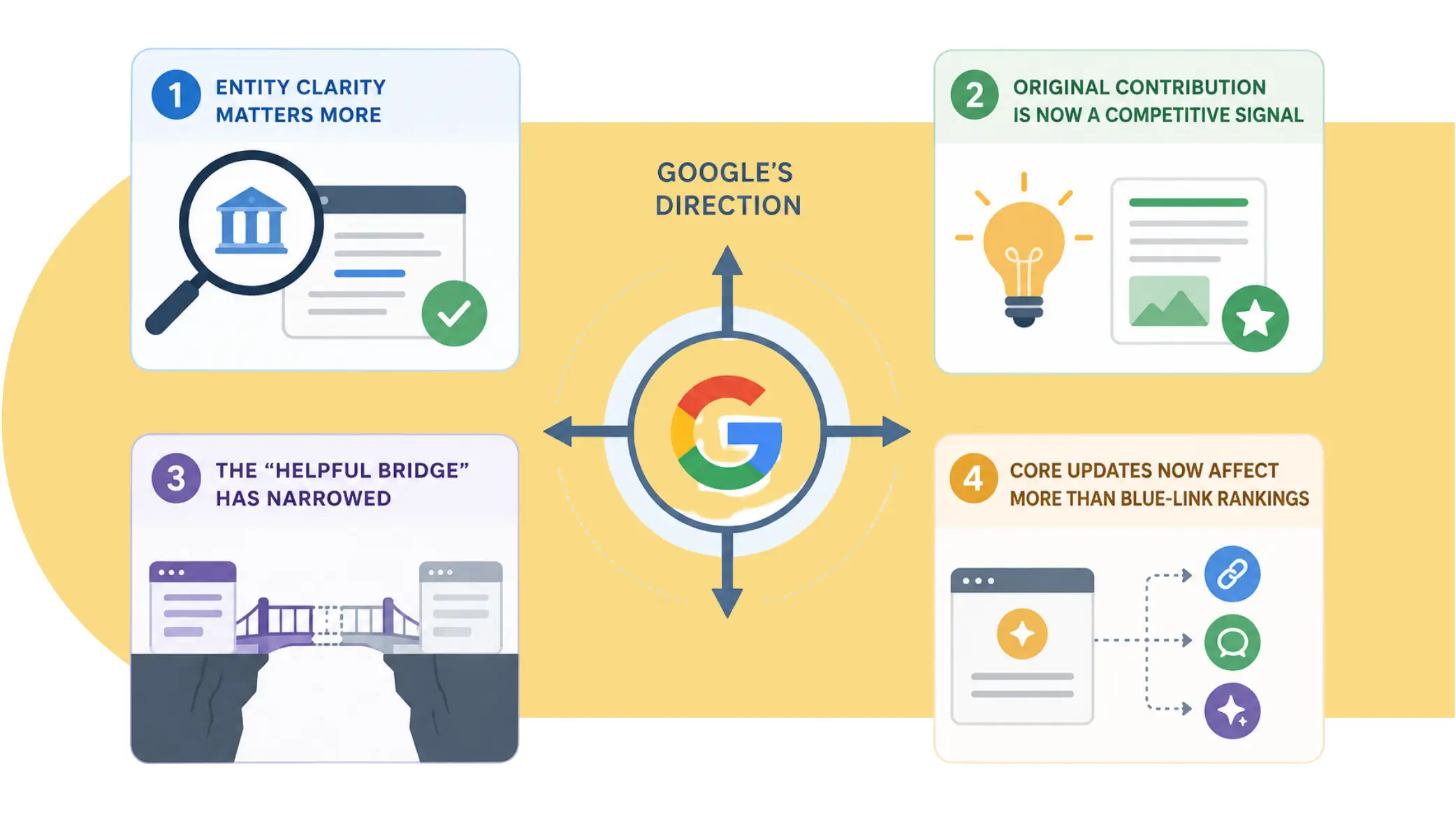
Entity clarity is more important than ever - Even if individual pages are set up optimally, if Google can't figure out what your site is the ultimate hub for you will be invisible.
The rules for the more competitive signal have been changed - Compiling what is already known is not good enough. A page that earns a ranking will be different from a page that merely competes for a ranking, either because of analysis or because it has actually been experienced, or because it is more organized, or for something entirely different.
The concept of a "helpful bridge" became restricted - The model was good ranking sites could provide good rankings through providing good organization and targeting of 3rd party information for years. Which way does this go in some respects is still effective, but there's clearly been a significant realignment with generic intermediary content.
More than just blue-link rankings are affected by core updates – The exact same elements that impact natural search impact the chances that your content will appear in AI Overviews, be cited in conversational search, or come up in AI-driven discovery tools. Content Quality is no longer a one channel issue.
What To Do If Your Rankings Dropped?
A few grounded steps are worth taking before making any major changes.
Wait Before reacting : Google explicitly recommends letting rankings stabilize, at least one full week after the rollout completes, before drawing conclusions or making significant site changes. Knee-jerk rewrites often cause more confusion than clarity.
Diagnose First : Use Google Search Console to compare performance from March 27 onward against the same period four weeks prior. If your drop predates March 27, the spam update or another factor may have been the cause. Separate the two events before deciding on a response.
Audit for thin content : Look at which pages lost visibility. If they share characteristics, templated structure, low original value, anonymous authorship, weak intent match that's a meaningful signal about what to address.
Strengthen E-E-A-T signals : Add verifiable author credentials, first-hand experience, and original insights to pages that are supposed to demonstrate expertise. A product review from someone who visibly used the product ranks above an encyclopedic summary from a generalist writer.
Ask the honest question : For each page that dropped: is this the page a knowledgeable person would want to find for this query? Or is it the page “You” built to rank for it?
What To Do If Your Rankings Improved?
Don't assume the work is done.
Study what gained. If certain pages climbed significantly, identify what they have in common and reinforce those qualities across the rest of your site. Early gains from a core update can stabilize or fade depending on how competitors respond and how Google's systems continue to calibrate. Treat gains as evidence, not permission to coast !!
The Google Core Update of March 2026 is one of the largest algorithm changes in the recent years, which has impacted search results and ranking across the world across various industries. The update caused significant ranking fluctuations, affecting many businesses as they struggled to regain traffic that had fallen off.There has been a lot of ranking variance with the update, from major publishers to SaaS companies, affiliate websites to AI-generated content farms, it is almost certain that a lot of businesses were hit, hit hard, and were struggling to get their traffic back. There, multiple SEO tracking websites noted that almost 80% of the highest ranked search results saw some activity throughout the rollout.
Unlike previous updates which emphasized certain technical aspects of website optimization or backlinks quality, the March 2026 update seems to focus on a larger premise - credibility, originality, topical authority, and real value to the customer.
Brands that already had content and first-party data that were relevant and trustworthy experienced a notable increase in visibility, while those that resorted to AI-generated content gained lesser results.
In this blog, we’ll explore:
What Was the Google March 2026 Core Update?
The Clearest Trend: Google Is Rewarding Closeness to the Source
Who Won: Brands, Official Sources, and Original Research
Who Lost: Aggregators, Affiliate Sites, and AI Content Farms
The Information Gain Signal Is Real, and It's Getting Stronger
What To Do If Rankings Dropped?
What To Do If Ranking Improved?
What Was The Google’s March 2026 Core Update?
On March 13, 2026, Google rolled out the March 2026 core update. A complete rollout took about 12 days. Google dubs it a “regular” update, the same wording it used to four years ago to indicate that it was working on surfacing more helpful and relevant content and will continue to do so in the future, rather than simply specific actions against individual content categories.
It is an understatement that this is what really happened. Volatility trackers around the third party verified the almost quarter of the top results changed over the rollout period. As we've heard, that is not a standard reshuffle.
It's a relevant shift in Google's fundamental policies on measuring quality signals spread throughout the Internet.Instead of December 2025, which was a period when a bunch of analysts read as a correction in e-commerce, March 2026 had a different fingerprint – towards first party, authoritative and brand ownership and towards homogeneous pullback from intermediaries' content.
The Clearest Trend: Google Is Rewarding Closeness to the Source
The trend in March 2026 can't be missed once it's spotted. There seems to be a common characteristic among the sites that gained visibility across different industries and verticals: they were the closest to the original source of information or transaction.
These included government domains, direct brand websites, official institutions, recognized organizations, and specialist publishers with documented expertise and credibility. On the other hand, websites sitting between users and the actual source, such as aggregators, comparison platforms, and content built primarily to satisfy search algorithms instead of genuinely helping readers, often experienced a decline in visibility.
This pattern suggests that Google is continuing to place stronger emphasis on trust, authority, and direct value. Rather than rewarding pages that simply summarize or repackage information already available elsewhere, search results appear to favor content creators and businesses that provide unique insights, first-hand expertise, or direct access to the information users are seeking.
Think of it as Google making the distance between a user's question and the answer much smaller. If your content acted as a meaningful shortcut that guided users toward useful, reliable information, there was a good chance you benefited from the update.
If your page simply added another layer between the user and the real answer, then it likely became a weaker choice in search rankings and may have experienced a loss in visibility.
Who Won: Brands, Official Sources, and Original Research
In an obvious way, in the March 2026 update some clear winners emerged:
1) Owned brands and official domain:
Companies with owned data, authentic product pages and brand identity demonstrated good results. Google seems to give weight to the clarity of an entity, the more confident it is that it can clearly understand what it is your site is the best place to go to, the better.
2) Government and institutional sources:
Official .gov and .edu domain and institutions, as well as other authoritative nonprofit sources and institutions, achieved visibility in informational verticals. Google is now more forcefully bringing up the most direct source, when accuracy is at stake.
3) Information gain:
The best indicator of update data is with regards to information gain, where sites with original research and proprietary data that are of particular interest to readers may be more welcome to change their behavior. Google has made headlines for being more stringent with Google’s rankings. On average, pages with original data, first-hand case studies and unique analytical perspectives increased their organic visibility by 15 – 25%. One original idea is now worth more than a highly-crafted pitch reel summarizing the same content.
4) Specialist publishers with E-E-A-T depth:
Niche sites with genuine credentials stood their ground or improved, as did their named authors who said they had real expertise and whose content material included validated knowledge from first-hand experience. The update was an affirmation that domain-level as a whole knowledge signals are gaining relevance, not singularly page-level.
Who Lost: Aggregators, Affiliate Sites, and AI Content Farms
The losses were just as apparent as the gains, and fell into well-known patterns.
1) Comparisons great and small:
Web sites that contained listings and comparisons but did not contribute any data of their own or proprietary analysis were among the hardest hits. Over five-fifths of the sites monitored experienced improvements in their rankings in the first two weeks, yet there were undue numbers of “aggregator” type domains on the “faller” list.
2) Affiliate sites lacking actual depth in the reviews:
Affiliate sites that feature Reviews with only superficial product descriptions, or that plug in a bunch of keywords and have a generic review format suffered from significant declines. The 71% of affiliate sites tracked exhibited negative effects. There was one characteristic common to all the ones that stood firm, and that was either free product tries, certified knowledge, or exclusive tools that took this piece of content and made it uniquely different from the rest of the competition.
3) AI content farms and scaled, low oversight publishing:
Sites that used to rely on mass-produced AI-driven content and were put up, at scale, without any meaningful editorial input or human ingenuity added in experienced some of the biggest declines ranging from 60% to as much as 70% in some large content set analyses. This wasn't an across-the-board ban on AI-generated content, but rather more of an ability to recognize the absence of editorial intent when a piece was generated by AI.
4) YouTube and UGC-heavy sites in certain niches:
Some studies showed that YouTube was an obvious winner of visibility, not for its disappearance of video content, but because Google seems cautious about using it as the best option answer vs. a straight, text-answering weightlifter. Likewise, the likelihood of a forum or community-generated answers dominating the queries where a more authoritative answer was present decreased.
What This Update Signals About Google's Direction
This Update shows future directions for Google. The core update was not a solitary event in March 2026; it was attended by several other enhancements. Previously in 2026, a February update highlighted AI-generated content quality and topics authority signals.
When thinking about the data together there are a couple of things that come to mind:
Entity clarity is more important than ever - Even if individual pages are set up optimally, if Google can't figure out what your site is the ultimate hub for you will be invisible.
The rules for the more competitive signal have been changed - Compiling what is already known is not good enough. A page that earns a ranking will be different from a page that merely competes for a ranking, either because of analysis or because it has actually been experienced, or because it is more organized, or for something entirely different.
The concept of a "helpful bridge" became restricted - The model was good ranking sites could provide good rankings through providing good organization and targeting of 3rd party information for years. Which way does this go in some respects is still effective, but there's clearly been a significant realignment with generic intermediary content.
More than just blue-link rankings are affected by core updates – The exact same elements that impact natural search impact the chances that your content will appear in AI Overviews, be cited in conversational search, or come up in AI-driven discovery tools. Content Quality is no longer a one channel issue.
What To Do If Your Rankings Dropped?
A few grounded steps are worth taking before making any major changes.
Wait Before reacting : Google explicitly recommends letting rankings stabilize, at least one full week after the rollout completes, before drawing conclusions or making significant site changes. Knee-jerk rewrites often cause more confusion than clarity.
Diagnose First : Use Google Search Console to compare performance from March 27 onward against the same period four weeks prior. If your drop predates March 27, the spam update or another factor may have been the cause. Separate the two events before deciding on a response.
Audit for thin content : Look at which pages lost visibility. If they share characteristics, templated structure, low original value, anonymous authorship, weak intent match that's a meaningful signal about what to address.
Strengthen E-E-A-T signals : Add verifiable author credentials, first-hand experience, and original insights to pages that are supposed to demonstrate expertise. A product review from someone who visibly used the product ranks above an encyclopedic summary from a generalist writer.
Ask the honest question : For each page that dropped: is this the page a knowledgeable person would want to find for this query? Or is it the page “You” built to rank for it?
What To Do If Your Rankings Improved?
Don't assume the work is done.
Study what gained. If certain pages climbed significantly, identify what they have in common and reinforce those qualities across the rest of your site. Early gains from a core update can stabilize or fade depending on how competitors respond and how Google's systems continue to calibrate. Treat gains as evidence, not permission to coast !!




Want to Skyrocket Revenue? Get a Free Audit Today!
Want to Skyrocket Revenue? Get a Free Audit Today!


4.9/5 Ratings!


Don’t miss our revenue growth tips!
Get expert marketing tips—straight to your inbox, like thousands of happy clients.
Don’t miss our revenue growth tips!
Get expert marketing tips—straight to your inbox, like thousands of happy clients.
Don’t miss our revenue growth tips!
Don’t miss our revenue growth tips!
Get expert marketing tips—straight to your inbox, like thousands of happy clients.
Relevant Blogs on Organic SEO
Relevant Blogs on Organic SEO
Unlock data-driven insights in Organic SEO—explore our featured blogs and skyrocket your revenue before your competitors do.
Unlock data-driven insights in Organic SEO—explore our featured blogs and skyrocket your revenue before your competitors do.


































Ready to speak with an expert?
Data-Driven Marketing Agency That Elevates ROI
1100+
Websites Designed & Optimized to Convert
$280M+
Client Revenue Driven & Growing Strong
Discover how to skyrocket
your revenue today!
Trusted by 1000+ Owners!
Ready to speak with an expert?
Data-Driven Marketing Agency That Elevates ROI
1100+
Websites Designed & Optimized to Convert
$280M+
Client Revenue Driven & Growing Strong
Discover how to skyrocket
your revenue today!
Trusted by 1000+ Owners!
Want to skyrocket revenue?
4.9/5 Ratings!
Ready to speak with an expert?
Data-Driven Marketing Agency That Elevates ROI
1100+
Websites Designed & Optimized to Convert
$280M+
Client Revenue Driven & Growing Strong
Want to skyrocket
revenue?
Trusted by 1000+ Owners!
Call
Meet