AI Search Sends You a Different Visitor — Is Your Website Built for Them?
AI Search Sends You a Different Visitor — Is Your Website Built for Them?
Last Updated:
Table of Content
Client Testimonials



Tanya Singh
Tanya Singh
Tanya Singh
Web Design
Web Design
Web Design
10 Min Read
12 Min
10 Min Read
Here is a scenario that is playing out on thousands of websites right now. Someone opens ChatGPT or Google's AI Mode, types a detailed question about exactly what they need, gets a thorough answer, compares a few options inside the AI itself, and then clicks through to your website.
They know what they want. They have already done the research. They are not browsing. They are ready to act. And then they land on your homepage. The one with the hero banner that says "Welcome." The one that starts explaining what your product does. The one that was built for a completely different type of visitor.
That mismatch is quietly costing businesses conversions right now. And most teams have not even noticed it yet.
What Makes AI Search Traffic Different From Traditional Search Traffic?
Visitors arriving from AI search traffic have already gone through a research and comparison process inside the AI before they ever click on your link.
The numbers behind AI Mode growth tell you just how fast this shift is happening. Google AI Mode reached 1 billion monthly users in just 12 months from launch. Queries more than doubled every quarter since launch, with strong, consistent growth every month (Google, May 2026). That is not a gradual trend. It is a new default behaviour forming at speed.
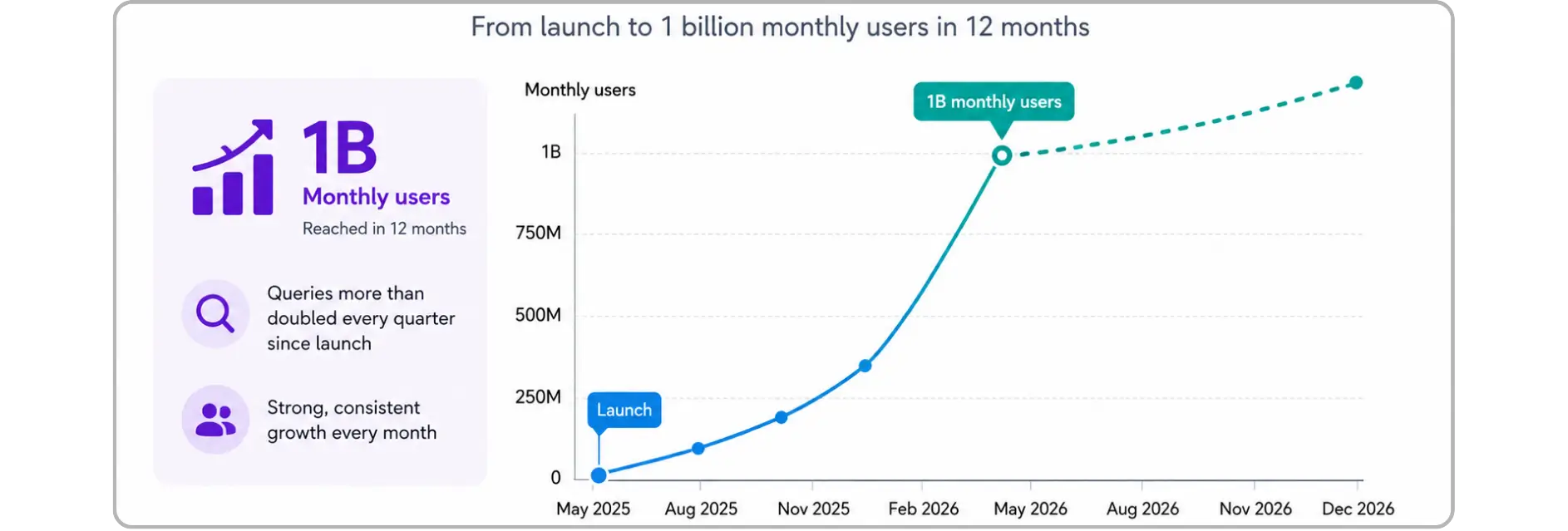
Google published its first AI Mode usage data in May 2026, one billion monthly active users, with queries running triple the length of a traditional search. Planning-related queries grew 80% faster than AI Mode queries overall. That length is not noise. It is a signal about intent.
A three-word Google query from five years ago meant someone was at the top of a funnel. An AI Mode query three times that length, like "which project management tool works best for remote teams under 20 people with a limited budget and Slack integration" means someone has already narrowed their options. They are not asking what exists. They are asking where to go and complete a decision they have basically already made.
By the time that visitor clicks through to your site, they have compared you against alternatives inside the AI, read the trade-offs, and refined their constraints across multiple follow-up queries. They chose to click on you. Your job now is to not get in their way.
Is Your Website Actually Built for AI Search Visitors?
Most websites are designed to persuade someone who has not decided yet. That design actively creates friction for the visitor who has already decided.
Think about the architecture of a typical website. The homepage has a big hero section explaining what you do. The service or product page lists features and benefits. The pricing is buried a few scrolls down. The call to action comes after the social proof, the testimonials, the FAQ section. That architecture made sense when visitors arrived cold from a three-word keyword search. It makes no sense for someone who has already spent time inside an AI getting their question answered and comparing options.
Here is what the two visitor types actually look like side by side:
Factor | Traditional Search Visitor | AI Mode Traffic Visitor |
|---|---|---|
Arrival state | Uninformed, exploring | Pre-researched, decided |
Query length | 2–4 words | 8–15+ words |
Page intent | Wants to learn about options | Wants to complete a task |
Funnel stage | Top of funnel | Bottom of funnel |
What they need | Persuasion content | Fast access to action |
Friction tolerance | High | Low |
When your website forces a bottom-of-funnel visitor through a top-of-funnel journey, they leave. Not because they changed their mind. Because you wasted their time.
How Does AI Search Optimization Change Your Website Strategy?
AI search optimization is not just about getting cited in AI answers. It is about what happens after the click, and whether your website can serve a visitor who already knows what they want.
There are two parts to this. The first is getting surfaced in AI answers. The second, which most guides skip entirely, is being ready for the visitor that surfaces creates. Getting cited is about brand entity authority, structured content, schema markup, and third-party credibility signals. Those matter. But the conversion opportunity lives in the second part: does your landing page match the intent of someone who arrived pre-sold?
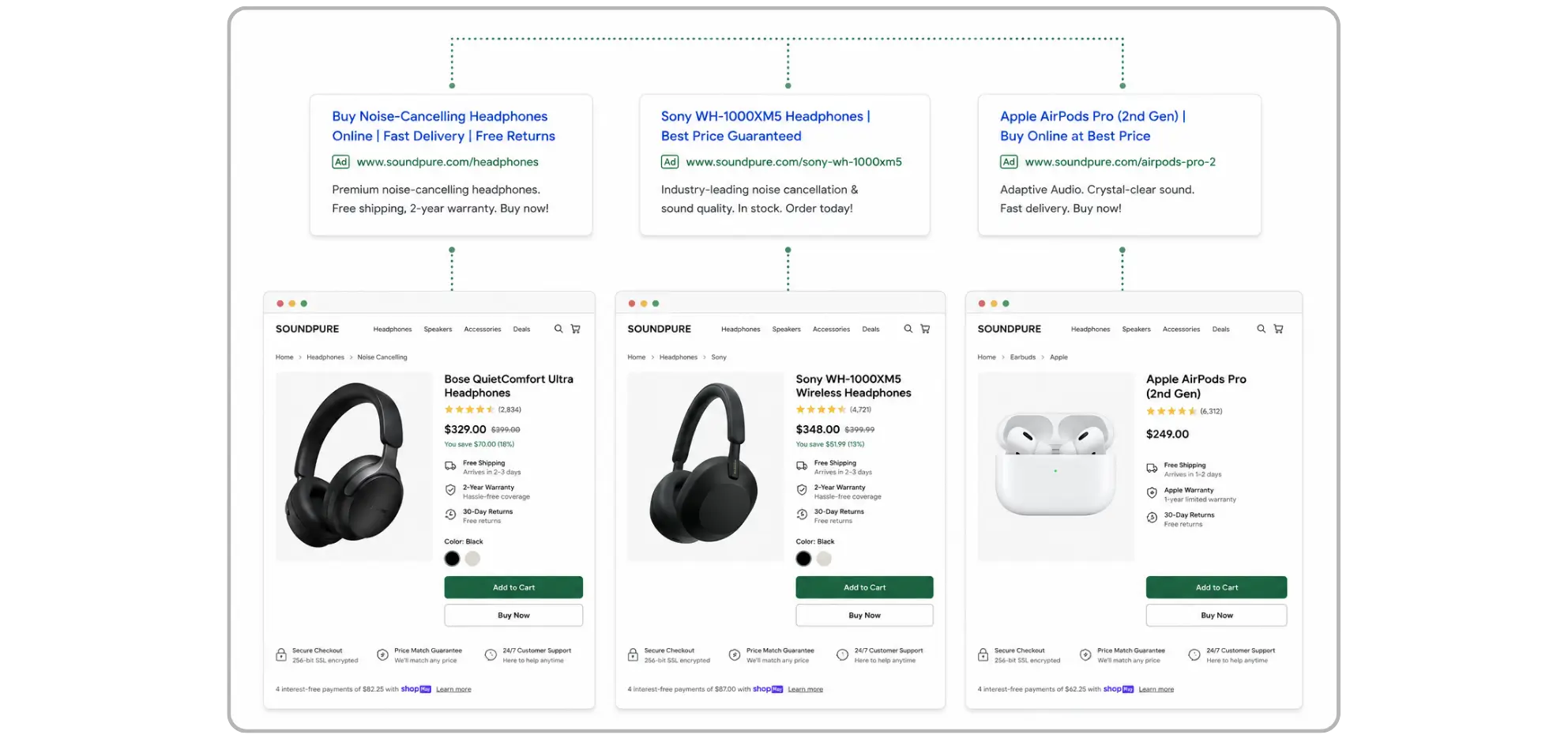
At Coozmoo, a data-driven digital marketing agency, this gap between AI visitor website readiness and actual website architecture is one of the most common conversion leaks they identify in client audits. The issue is not that businesses are failing to get AI Mode traffic. Many are already receiving it. The issue is that their pages are not built to convert a visitor who skipped the awareness stage entirely.
What Should an AI-Ready Landing Page Actually Look Like?
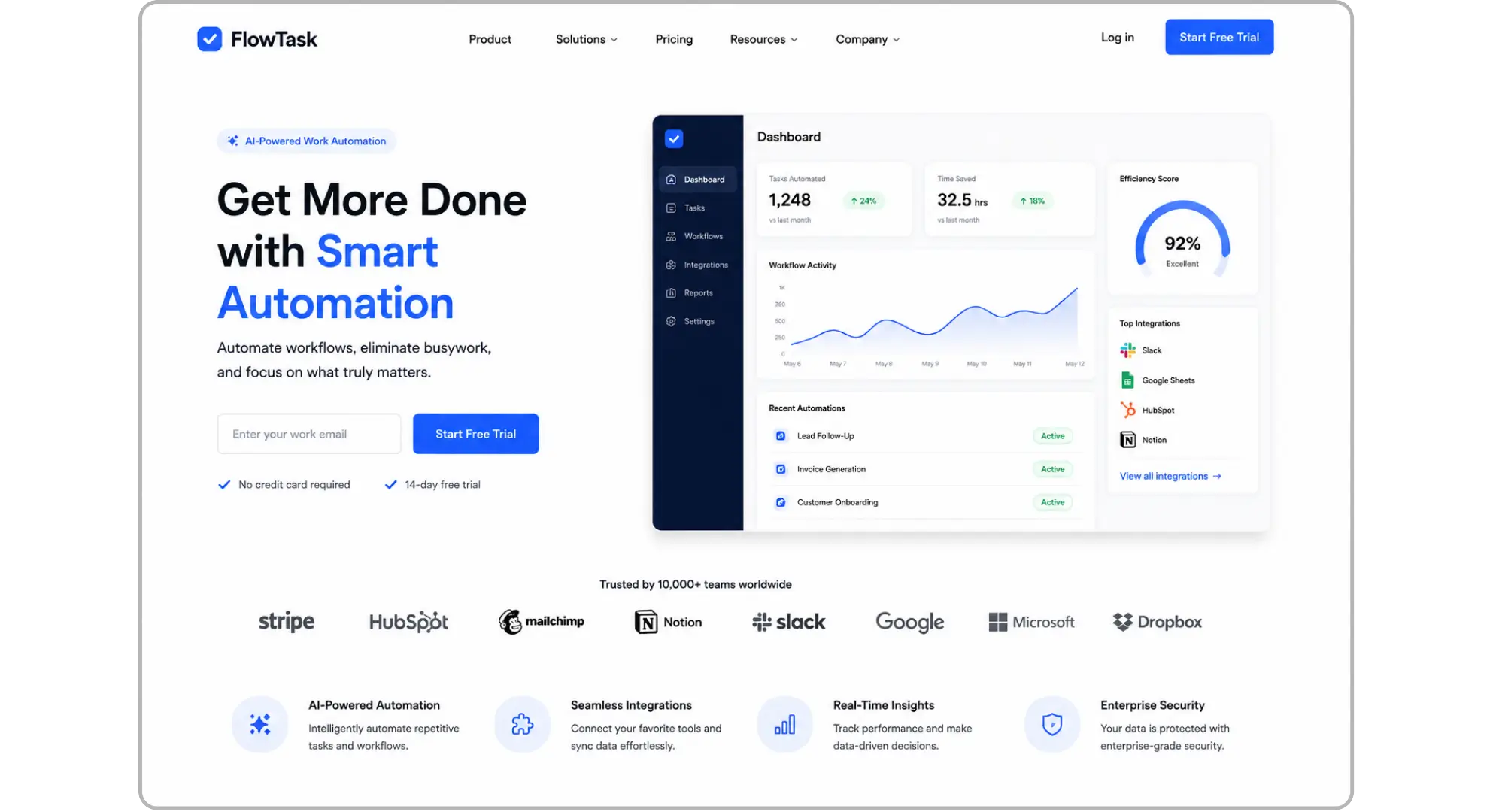
An AI search visitor arrives ready to act. Your page needs to meet them there. Practically, this means:
Move the primary action to the top. The booking form, the pricing, the "get started" button. Do not make someone scroll past three sections of persuasion to find it.
Lead with specificity, not category education. They already know what your category is. Skip the "what is X" intro. Get straight to what makes your offer the right choice.
Make the decision pathway obvious within 10 seconds. If someone cannot see how to do what they came to do in the first viewport, your page is not built for this visitor.
Trim the trust-building preamble. A few sharp trust signals (a rating, a relevant client result, a clear guarantee) work better than four paragraphs of social proof for a visitor who already chose you.
Ensure mobile speed is non-negotiable. AI Mode is heavily used on mobile. A slow, image-heavy page kills intent that the AI spent time building.
How to Audit Your Website for AI Search Traffic Readiness?
Auditing your website AI bot traffic and AI-referred visitor behavior starts with one question: can someone who already decided complete their task in under 30 seconds of landing?
Here is a practical way to approach it:
Step 1: Identify which pages are receiving AI-referred traffic. Google Analytics 4 tracks referrals from chat.openai.com and gemini.google.com directly. Pull your top landing pages from those sources. These are the pages your AI Mode traffic is actually hitting.
Step 2: Apply the 30-second test. For each page, ask: if someone arrived already knowing they want this product or service, can they start the checkout, booking, or contact process within 30 seconds of landing? If they have to navigate to another page first, the page is misaligned with this visitor class.
Step 3: Audit the page hierarchy. Is the call to action above the fold? Is pricing visible without scrolling? Does the first section of copy assume the visitor needs to be educated about what you do, or does it speak to someone already in the decision phase?
Coozmoo reports that 92% of their clients experienced a 65% increase in website conversion rates after a website redesign focused on user experience and buyer journey alignment. Matching page architecture to visitor intent is not a nice-to have. It directly moves conversion numbers.
Step 4: Check your schema and structured data. AI search engine bot traffic also includes crawlers from AI platforms that index your content for future responses. Pages without proper schema markup, clear headings, and machine-readable structure are harder forAI systems to parse and represent accurately. This affects both your citation rate and the accuracy of howAI describes your offer.
Step 5: Run the page against actual AI queries. Search for the specific problems your product solves in ChatGPT and Perplexity. Look at the query language being used. Then look at your landing page. Is it written to match the specificity of those queries? Or is it written for the shorter, vaguer queries of traditional search?
What Are the Most Common Website Readiness Mistakes for AI Search Visitors?
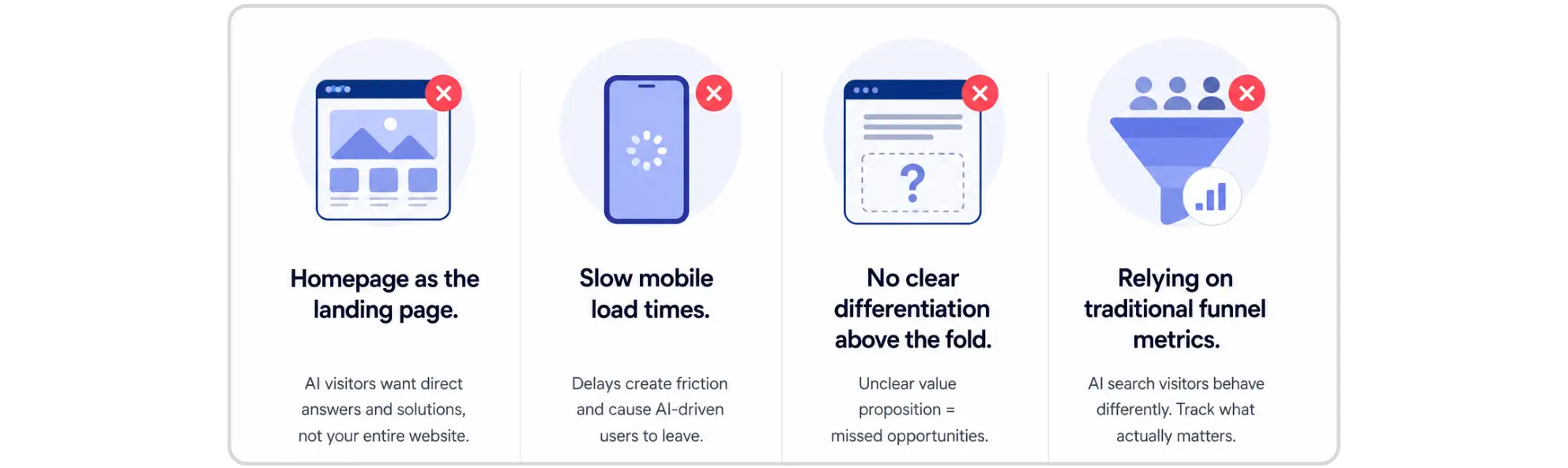
Most websites fail AI visitor website readiness not because of technical gaps but because of an intent mismatch baked into their information architecture. The most common patterns:
Homepage as the landing page. AI search often drives visitors directly to interior pages. If your homepage is the only page optimised for conversion, you are missing the actual landing points.
Feature-first copy. AI visitors already understand the category. Leading with feature lists before value misses where they are in the decision journey.
Slow mobile load times. AI Mode is heavily mobile. Page speed is not just a technical SEO signal. It is a direct conversion variable for this visitor class.
No clear differentiation above the fold. The AI told them you are a good option. Your page still needs to confirm why you specifically are the right choice in the first few seconds.
Relying on traditional funnel metrics. If you are measuring AI-referred traffic the same way as organic keyword traffic, your data is misleading you. These visitor groups behave differently and need separate analysis.
Final Thoughts
The visitor arriving from AI search is not a harder customer to convert. They are actually easier. The AI already did the persuasion work. All you have to do is get out of your own way.
The question is not whether AI Mode traffic is coming to your site. It already is. The question is whether your website is built to close it.
FAQs
What is AI search traffic and how is it different from organic traffic?

AI search traffic comes from visitors who clicked a link inside an AI-generated answer on ChatGPT, Gemini, or Perplexity. Unlike organic visitors, they have already researched and compared options before clicking. They arrive pre-decided, not browsing.
Why does AI Mode traffic convert better than traditional search traffic?
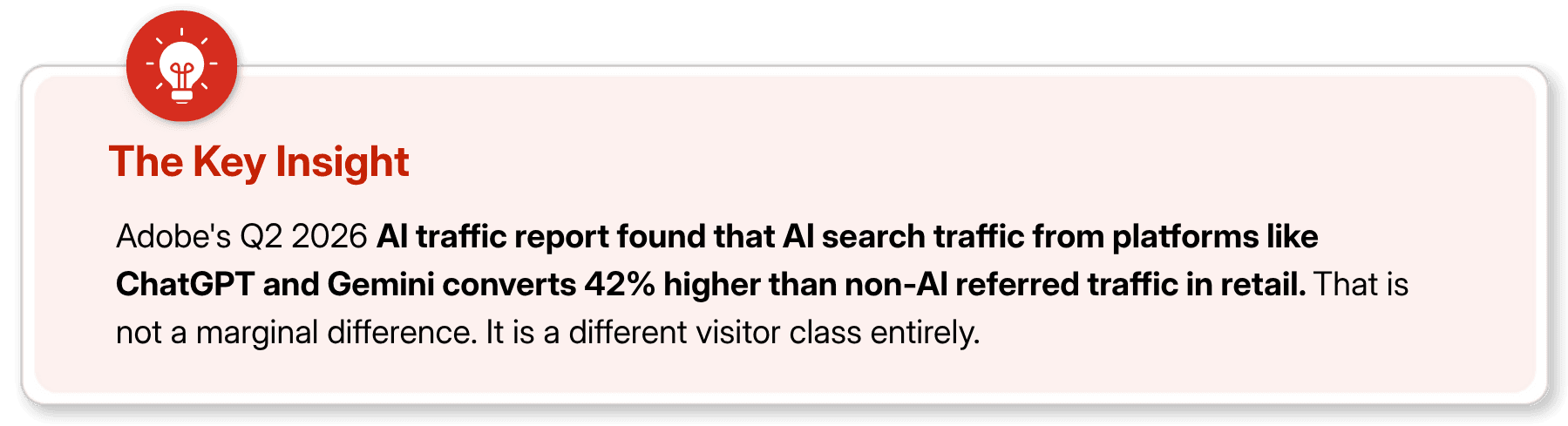
Because the AI qualifies the visitor before the click. They have already narrowed their choices inside the AI. Adobe's 2026 data shows this visitor class converts 42% higher than non-AI referred traffic. The challenge is not losing that intent on your landing page.
How do I check if my website is ready for AI search visitors?
Pull AI-referred traffic in Google Analytics 4 using referral sources like chat.openai.com and gemini.google.com. Then apply the 30-second test: can a pre-decided visitor complete their goal within 30 seconds of landing? If not, your page has an intent mismatch.
What changes should I make to optimize my website for AI search traffic?
Move your primary call to action higher, cut persuasion-heavy content built for uninformed visitors, and add schema markup so AI bots can index your pages accurately. Match your copy to the high-intent, specific queries AI users are actually asking.
Does traditional SEO still matter for AI search optimization?
Yes. Brands on Google's first page appear in ChatGPT answers 62% of the time. Strong SEO still supports AI visibility. The added layer is making sure your website can convert the visitor the AI sends once they arrive.
Here is a scenario that is playing out on thousands of websites right now. Someone opens ChatGPT or Google's AI Mode, types a detailed question about exactly what they need, gets a thorough answer, compares a few options inside the AI itself, and then clicks through to your website.
They know what they want. They have already done the research. They are not browsing. They are ready to act. And then they land on your homepage. The one with the hero banner that says "Welcome." The one that starts explaining what your product does. The one that was built for a completely different type of visitor.
That mismatch is quietly costing businesses conversions right now. And most teams have not even noticed it yet.
What Makes AI Search Traffic Different From Traditional Search Traffic?
Visitors arriving from AI search traffic have already gone through a research and comparison process inside the AI before they ever click on your link.
The numbers behind AI Mode growth tell you just how fast this shift is happening. Google AI Mode reached 1 billion monthly users in just 12 months from launch. Queries more than doubled every quarter since launch, with strong, consistent growth every month (Google, May 2026). That is not a gradual trend. It is a new default behaviour forming at speed.
Google published its first AI Mode usage data in May 2026, one billion monthly active users, with queries running triple the length of a traditional search. Planning-related queries grew 80% faster than AI Mode queries overall. That length is not noise. It is a signal about intent.
A three-word Google query from five years ago meant someone was at the top of a funnel. An AI Mode query three times that length, like "which project management tool works best for remote teams under 20 people with a limited budget and Slack integration" means someone has already narrowed their options. They are not asking what exists. They are asking where to go and complete a decision they have basically already made.
By the time that visitor clicks through to your site, they have compared you against alternatives inside the AI, read the trade-offs, and refined their constraints across multiple follow-up queries. They chose to click on you. Your job now is to not get in their way.
Is Your Website Actually Built for AI Search Visitors?
Most websites are designed to persuade someone who has not decided yet. That design actively creates friction for the visitor who has already decided.
Think about the architecture of a typical website. The homepage has a big hero section explaining what you do. The service or product page lists features and benefits. The pricing is buried a few scrolls down. The call to action comes after the social proof, the testimonials, the FAQ section. That architecture made sense when visitors arrived cold from a three-word keyword search. It makes no sense for someone who has already spent time inside an AI getting their question answered and comparing options.
Here is what the two visitor types actually look like side by side:
Factor | Traditional Search Visitor | AI Mode Traffic Visitor |
|---|---|---|
Arrival state | Uninformed, exploring | Pre-researched, decided |
Query length | 2–4 words | 8–15+ words |
Page intent | Wants to learn about options | Wants to complete a task |
Funnel stage | Top of funnel | Bottom of funnel |
What they need | Persuasion content | Fast access to action |
Friction tolerance | High | Low |
When your website forces a bottom-of-funnel visitor through a top-of-funnel journey, they leave. Not because they changed their mind. Because you wasted their time.
How Does AI Search Optimization Change Your Website Strategy?
AI search optimization is not just about getting cited in AI answers. It is about what happens after the click, and whether your website can serve a visitor who already knows what they want.
There are two parts to this. The first is getting surfaced in AI answers. The second, which most guides skip entirely, is being ready for the visitor that surfaces creates. Getting cited is about brand entity authority, structured content, schema markup, and third-party credibility signals. Those matter. But the conversion opportunity lives in the second part: does your landing page match the intent of someone who arrived pre-sold?
At Coozmoo, a data-driven digital marketing agency, this gap between AI visitor website readiness and actual website architecture is one of the most common conversion leaks they identify in client audits. The issue is not that businesses are failing to get AI Mode traffic. Many are already receiving it. The issue is that their pages are not built to convert a visitor who skipped the awareness stage entirely.
What Should an AI-Ready Landing Page Actually Look Like?
An AI search visitor arrives ready to act. Your page needs to meet them there. Practically, this means:
Move the primary action to the top. The booking form, the pricing, the "get started" button. Do not make someone scroll past three sections of persuasion to find it.
Lead with specificity, not category education. They already know what your category is. Skip the "what is X" intro. Get straight to what makes your offer the right choice.
Make the decision pathway obvious within 10 seconds. If someone cannot see how to do what they came to do in the first viewport, your page is not built for this visitor.
Trim the trust-building preamble. A few sharp trust signals (a rating, a relevant client result, a clear guarantee) work better than four paragraphs of social proof for a visitor who already chose you.
Ensure mobile speed is non-negotiable. AI Mode is heavily used on mobile. A slow, image-heavy page kills intent that the AI spent time building.
How to Audit Your Website for AI Search Traffic Readiness?
Auditing your website AI bot traffic and AI-referred visitor behavior starts with one question: can someone who already decided complete their task in under 30 seconds of landing?
Here is a practical way to approach it:
Step 1: Identify which pages are receiving AI-referred traffic. Google Analytics 4 tracks referrals from chat.openai.com and gemini.google.com directly. Pull your top landing pages from those sources. These are the pages your AI Mode traffic is actually hitting.
Step 2: Apply the 30-second test. For each page, ask: if someone arrived already knowing they want this product or service, can they start the checkout, booking, or contact process within 30 seconds of landing? If they have to navigate to another page first, the page is misaligned with this visitor class.
Step 3: Audit the page hierarchy. Is the call to action above the fold? Is pricing visible without scrolling? Does the first section of copy assume the visitor needs to be educated about what you do, or does it speak to someone already in the decision phase?
Coozmoo reports that 92% of their clients experienced a 65% increase in website conversion rates after a website redesign focused on user experience and buyer journey alignment. Matching page architecture to visitor intent is not a nice-to have. It directly moves conversion numbers.
Step 4: Check your schema and structured data. AI search engine bot traffic also includes crawlers from AI platforms that index your content for future responses. Pages without proper schema markup, clear headings, and machine-readable structure are harder forAI systems to parse and represent accurately. This affects both your citation rate and the accuracy of howAI describes your offer.
Step 5: Run the page against actual AI queries. Search for the specific problems your product solves in ChatGPT and Perplexity. Look at the query language being used. Then look at your landing page. Is it written to match the specificity of those queries? Or is it written for the shorter, vaguer queries of traditional search?
What Are the Most Common Website Readiness Mistakes for AI Search Visitors?
Most websites fail AI visitor website readiness not because of technical gaps but because of an intent mismatch baked into their information architecture. The most common patterns:
Homepage as the landing page. AI search often drives visitors directly to interior pages. If your homepage is the only page optimised for conversion, you are missing the actual landing points.
Feature-first copy. AI visitors already understand the category. Leading with feature lists before value misses where they are in the decision journey.
Slow mobile load times. AI Mode is heavily mobile. Page speed is not just a technical SEO signal. It is a direct conversion variable for this visitor class.
No clear differentiation above the fold. The AI told them you are a good option. Your page still needs to confirm why you specifically are the right choice in the first few seconds.
Relying on traditional funnel metrics. If you are measuring AI-referred traffic the same way as organic keyword traffic, your data is misleading you. These visitor groups behave differently and need separate analysis.
Final Thoughts
The visitor arriving from AI search is not a harder customer to convert. They are actually easier. The AI already did the persuasion work. All you have to do is get out of your own way.
The question is not whether AI Mode traffic is coming to your site. It already is. The question is whether your website is built to close it.
FAQs
What is AI search traffic and how is it different from organic traffic?
AI search traffic comes from visitors who clicked a link inside an AI-generated answer on ChatGPT, Gemini, or Perplexity. Unlike organic visitors, they have already researched and compared options before clicking. They arrive pre-decided, not browsing.
Why does AI Mode traffic convert better than traditional search traffic?
Because the AI qualifies the visitor before the click. They have already narrowed their choices inside the AI. Adobe's 2026 data shows this visitor class converts 42% higher than non-AI referred traffic. The challenge is not losing that intent on your landing page.
How do I check if my website is ready for AI search visitors?
Pull AI-referred traffic in Google Analytics 4 using referral sources like chat.openai.com and gemini.google.com. Then apply the 30-second test: can a pre-decided visitor complete their goal within 30 seconds of landing? If not, your page has an intent mismatch.
What changes should I make to optimize my website for AI search traffic?
Move your primary call to action higher, cut persuasion-heavy content built for uninformed visitors, and add schema markup so AI bots can index your pages accurately. Match your copy to the high-intent, specific queries AI users are actually asking.
Does traditional SEO still matter for AI search optimization?
Yes. Brands on Google's first page appear in ChatGPT answers 62% of the time. Strong SEO still supports AI visibility. The added layer is making sure your website can convert the visitor the AI sends once they arrive.

Tanya Singh
,
Tanya Singh


Summarize with AI









Don’t miss our revenue growth tips!
Get expert marketing tips—straight to your inbox, like thousands of happy clients.
Don’t miss our revenue growth tips!
Don’t miss our revenue growth tips!
Get expert marketing tips—straight to your inbox, like thousands of happy clients.
Don’t miss our revenue growth tips!
Get expert marketing tips—straight to your inbox, like thousands of happy clients.
Relevant Blogs on Web Design
Relevant Blogs on Web Design
Unlock data-driven insights in Web Design—explore our featured blogs and skyrocket your revenue before your competitors do.
Unlock data-driven insights in Web Design—explore our featured blogs and skyrocket your revenue before your competitors do.

Web Design
Sep 9, 2026
10 Min Read
Is Your Website Too Slow? Here's How to Fix It
Web Design
Sep 9, 2026
10 Min Read
Is Your Website Too Slow? Here's How to Fix It
Web Design
Sep 9, 2026
10 Min Read
Is Your Website Too Slow? Here's How to Fix It

Web Design
Jul 23, 2026
8 Min Read
Top 5 AI Web Design Agencies for High-Converting Websites in Houston
Web Design
Jul 23, 2026
8 Min Read
Top 5 AI Web Design Agencies for High-Converting Websites in Houston
Web Design
Jul 23, 2026
8 Min Read
Top 5 AI Web Design Agencies for High-Converting Websites in Houston

Web Design
Jul 21, 2026
10 Min Read
Shopify's New AI Marketing Tool: Should Small Businesses Use It?
Web Design
Jul 21, 2026
10 Min Read
Shopify's New AI Marketing Tool: Should Small Businesses Use It?
Web Design
Jul 21, 2026
10 Min Read
Shopify's New AI Marketing Tool: Should Small Businesses Use It?








Ready to speak with an expert?
Data-Driven Marketing Agency That Elevates ROI
1100+
Websites Designed & Optimized to Convert
$280M+
Client Revenue Driven & Growing Strong
Discover how to skyrocket
your revenue today!



Trusted by 1000+ Owners!
Ready to speak with an expert?
Data-Driven Marketing Agency That Elevates ROI
1100+
Websites Designed & Optimized to Convert
$280M+
Client Revenue Driven & Growing Strong
Discover how to skyrocket
your revenue today!
Trusted by 1000+ Owners!
Want to skyrocket revenue?
4.9/5 Ratings!
Ready to speak with an expert?
Data-Driven Marketing Agency That Elevates ROI
1100+
Websites Designed & Optimized to Convert
$280M+
Client Revenue Driven & Growing Strong
Discover how to skyrocket
your revenue today!
Trusted by 1000+ Owners!
Call
Meet