Top 10 AI Marketing Campaigns That Are Winning in 2026
Top 10 AI Marketing Campaigns That Are Winning in 2026
Last Updated:
Table of Content
How We
Skyrocket
Boost
Maximize
Accelerate
Amplify
Elevate
Optimize
Enhance
Your Revenue?

Deepak Prajapat
Deepak Prajapat
Deepak Prajapat
Social Media
Social Media
Social Media
8 Min Read
10 Min
8 Min Read
AI isn't a buzzword anymore. It's the engine running quietly behind some of the most effective marketing we've seen this year. In 2026, the brands pulling ahead in attention, trust, and revenue aren't the ones spending the most. They're the ones using AI with more intention than everyone else.
Hyper-personalized video ads, campaigns that optimize themselves in real time, creative that ships in days instead of weeks this is what the top AI marketing campaigns of 2026 actually look like. None of this is a list of concepts that sounded clever in a press release and fell apart on contact with real customers. Every campaign here moved the needle, and each one leaves behind a lesson worth stealing.
That distinction matters more than it sounds. The brands leading right now aren't running AI as a side project bolted onto their "real" marketing. It's shaping creative production, sharpening audience targeting, fixing campaign timing, and scaling assets across channels without quietly burning out the team responsible for all of it.
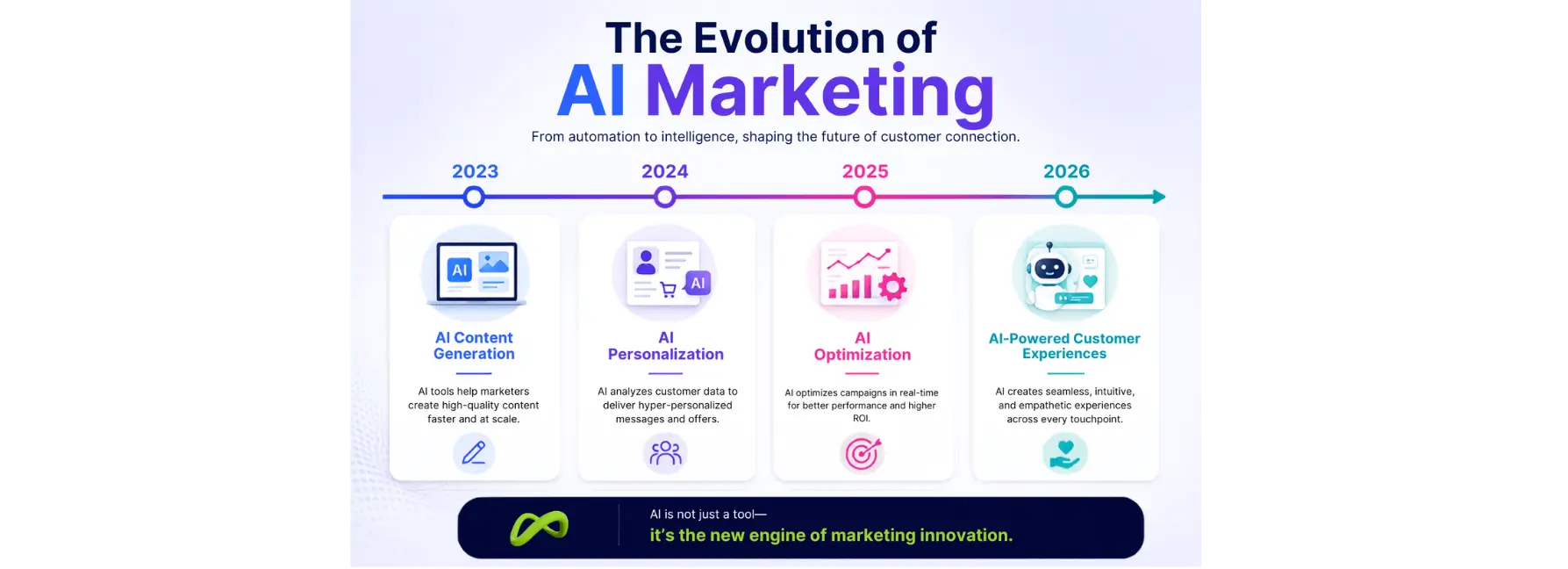
Consumer expectations keep climbing, and attention keeps getting harder to hold onto. Against that backdrop, AI is changing what "effective marketing" even means. The brands gaining ground are showing, in practical terms, how technology can sharpen creativity instead of replacing it, lift performance, and deepen customer relationships — setting a new bar for how campaigns get planned, built, and tuned over time.
Why AI Marketing Campaigns Perform Differently in 2026
The move from traditional digital marketing to AI-powered campaigns isn't just a tooling upgrade. It's a different way of working. AI lets brands react to data as it happens, personalize at a scale no team could pull off manually, and spin up creative variations faster than any human group ever could.
So what actually separates the brands winning with this from the ones just experimenting? Three things, really: a sharp objective, data they can actually act on, and enough discipline to let AI optimize without anyone's ego getting in the way.
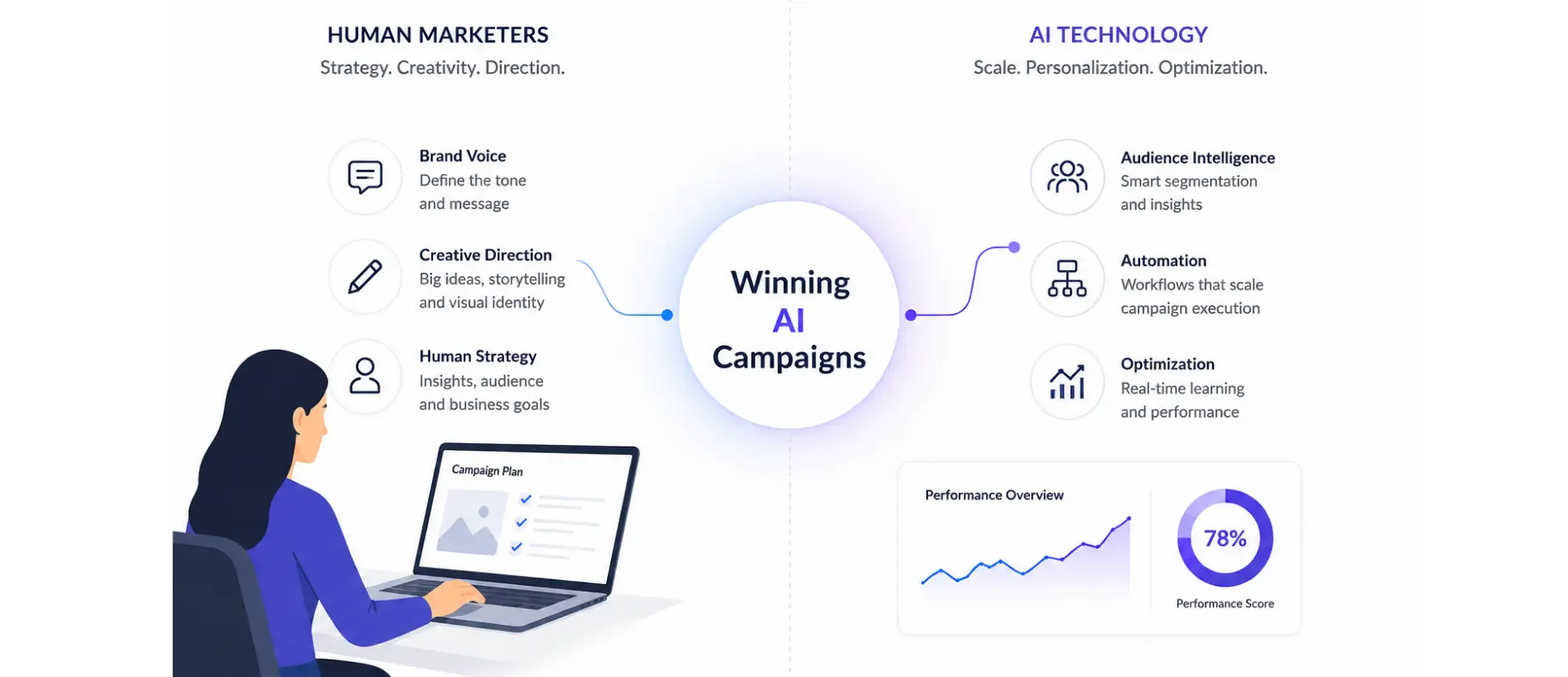
The campaigns that work best never hand strategy over to a machine. AI amplifies a human idea; it doesn't replace one.
In practice, that tends to mean three things are true:
Humans set the direction first. The brand decides the message, tone, audience, and business goal. AI then helps execute faster inside those boundaries not the other way around.
Personalization is built in, not bolted on. Instead of one message blasted to everyone, brands lean on behavioral signals, purchase history, and content interaction to make each experience feel like it was actually built for the person seeing it.
Creative production is built for speed. The strongest teams use generative AI tools to produce variations, test concepts, localize assets, and adapt campaigns without rebuilding from scratch every single time.
That's really the shift worth paying attention to. These campaigns aren't just "automated." They're designed from day one around dynamic creative optimization, predictive analytics, and real-time personalization.
The Top 10 AI Marketing Campaigns of 2026
1. Coca-Cola's AI-Generated Personalized Ads
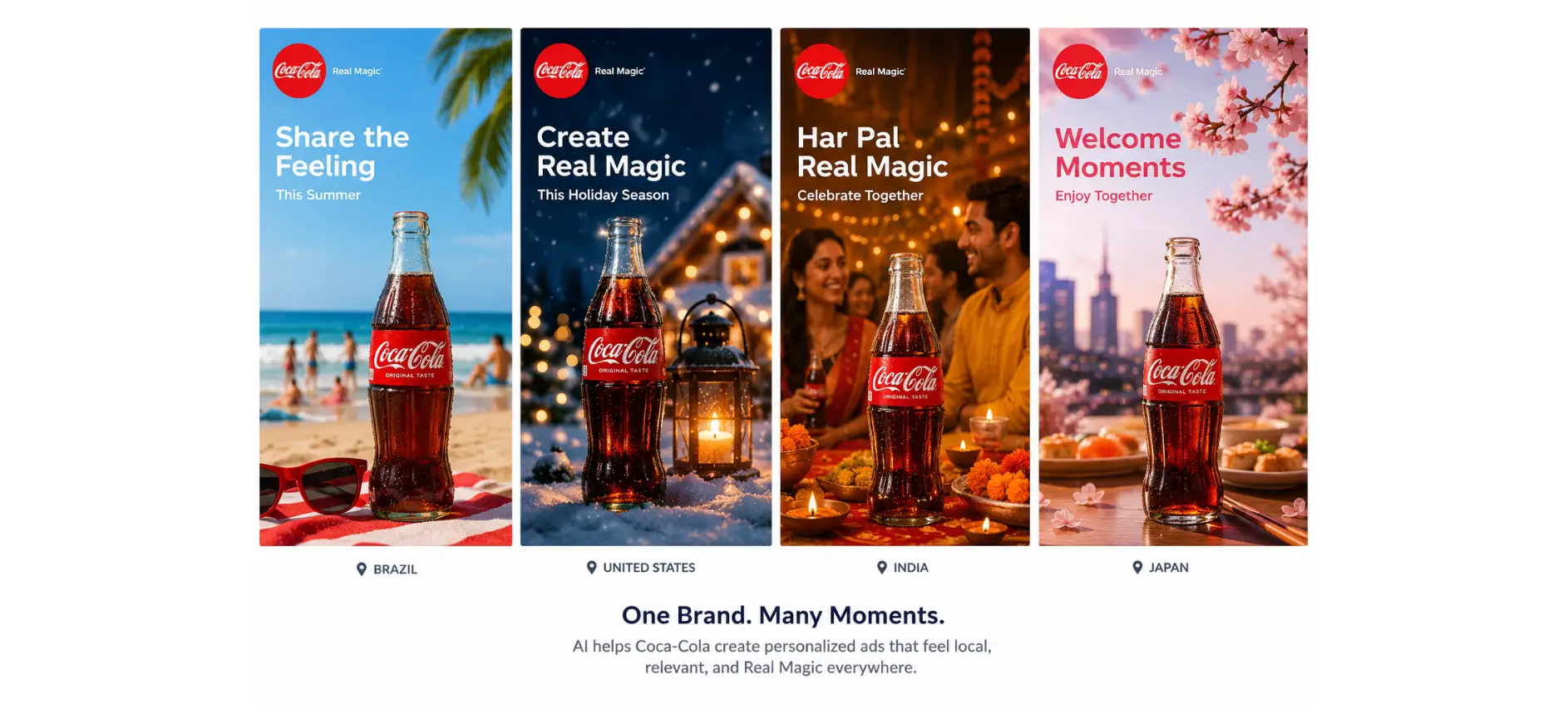
Coca-Cola leaned into AI to make its advertising feel more relevant without losing the brand consistency that's taken decades to build. Rather than running one global campaign and hoping it lands everywhere, the company used AI to generate multiple ad versions built around different regions, seasons, cultural moments, and consumer interests.
The payoff was timing. A customer in one market might see creative tied to a local event happening that week, while someone in a different market sees something built around an entirely different seasonal moment. Same brand, different relevance.
What this campaign really shows is that global brands don't have to choose between personalization and scale. Coca-Cola didn't throw more people at the problem of producing thousands of asset variations; it used AI for that part and kept its human teams focused on strategy and storytelling, where they're actually needed.
Key takeaway: Personalization lands best when it feels relevant without diluting the brand. AI makes both possible at once, which used to be the trade-off nobody could avoid.
2. Nike's Predictive Performance Marketing
Nike has gone past standard audience targeting and started anticipating what customers want before it's obvious — even to the customer. By pulling first-party data from its apps, browsing patterns, purchase history, and engagement signals, the brand can flag which products someone's likely to want and serve relevant content at the right moment, not just the next available one.
Instead of waiting around for a customer to go searching, Nike's AI-driven setup surfaces recommendations, launches, and offers based on where that customer's intent is heading next.
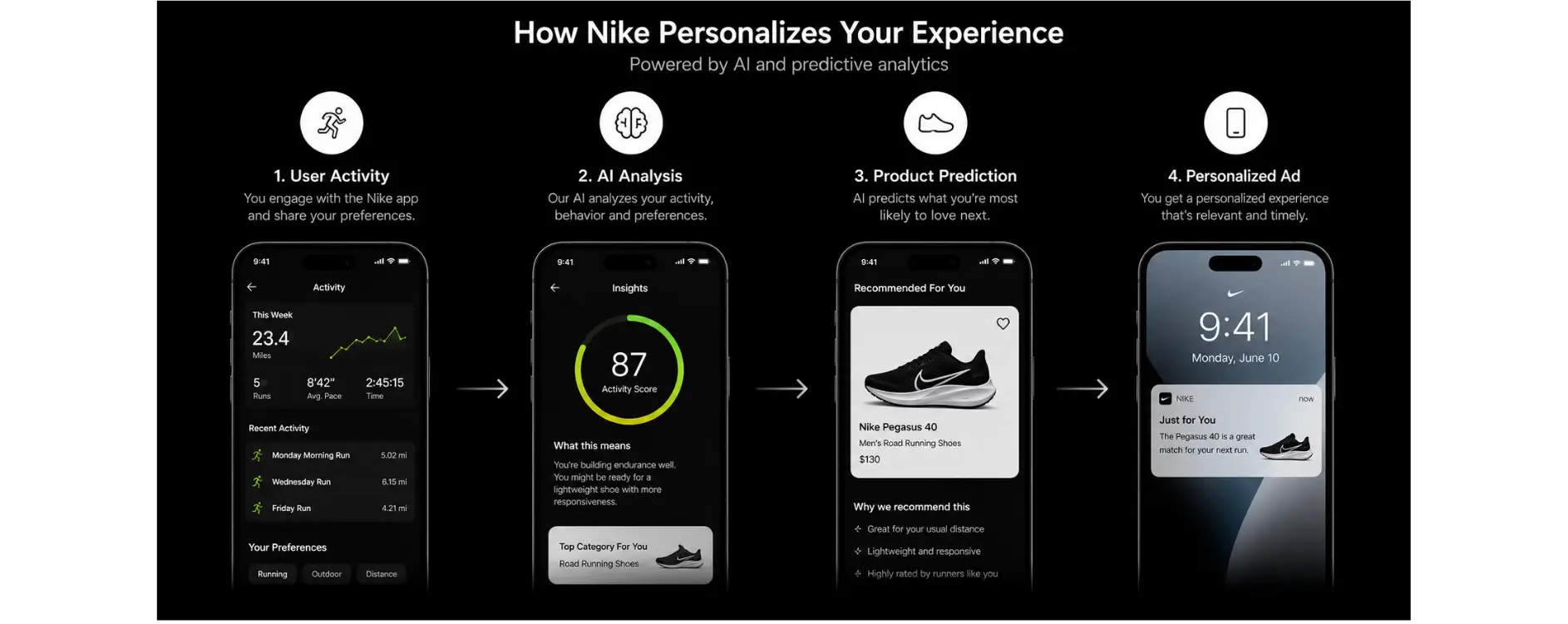
The strategy highlights the growing role of predictive analytics in modern marketing. Instead of reacting to customer actions, brands can use AI to recognize patterns, identify opportunities, and connect with consumers before competitors do.
Key takeaway: The strongest AI campaigns don't just react to behavior. They get ahead of it.
3. Spotify's AI DJ and Personalized Listening Campaigns
Spotify did more than add AI to its product. It turned AI into the heart of its marketing. The AI DJ feature became the campaign itself, showing users that personalization was not just a feature buried inside the app but the main experience. By giving listeners a soundtrack that felt individually curated, Spotify made the product feel personal, useful, and worth sharing.
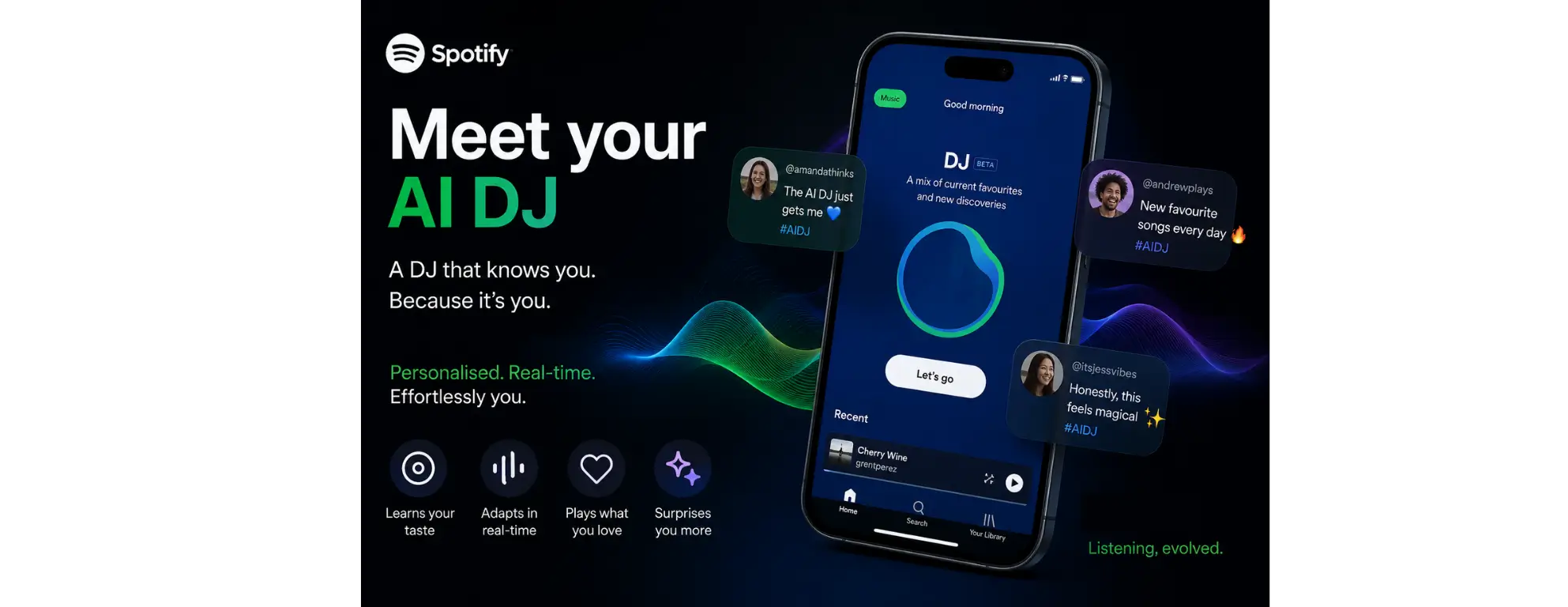
Spotify did something smarter than just bolting AI onto its product — it made AI the campaign. The AI DJ feature wasn't a footnote buried in a changelog; it became the centerpiece of the marketing story, proof that personalization wasn't a feature, it was the experience. Users started sharing their AI DJ moments on social media without being asked to. That's the part worth noticing: Spotify didn't need paid media to carry all the reach. The product did a chunk of that work on its own.
The campaign shows one of the strongest lessons in modern AI marketing: when the product is helpful enough, users naturally become part of the distribution engine. AI does not just improve marketing efficiency here. It gives people something worth talking about.
Key takeaway: When AI genuinely improves the product experience, the marketing tends to take care of itself.
4. Sephora's AI-Powered Beauty Advisor Campaign
Sephora's virtual try-on and AI beauty advisor went from "handy app feature" to full campaign centerpiece in 2026. The ads were built around the experience itself — showing real-time matching of products to skin tone, lifestyle, and preference, rather than just claiming the tech existed.
It worked on both fronts: app downloads climbed, and so did in-store visits. That's the part retail marketers should pay attention to AI tools can actually bridge the gap between digital discovery and physical purchase, instead of living in two separate silos.
5. BMW's Hyper-Personalized Video Ads
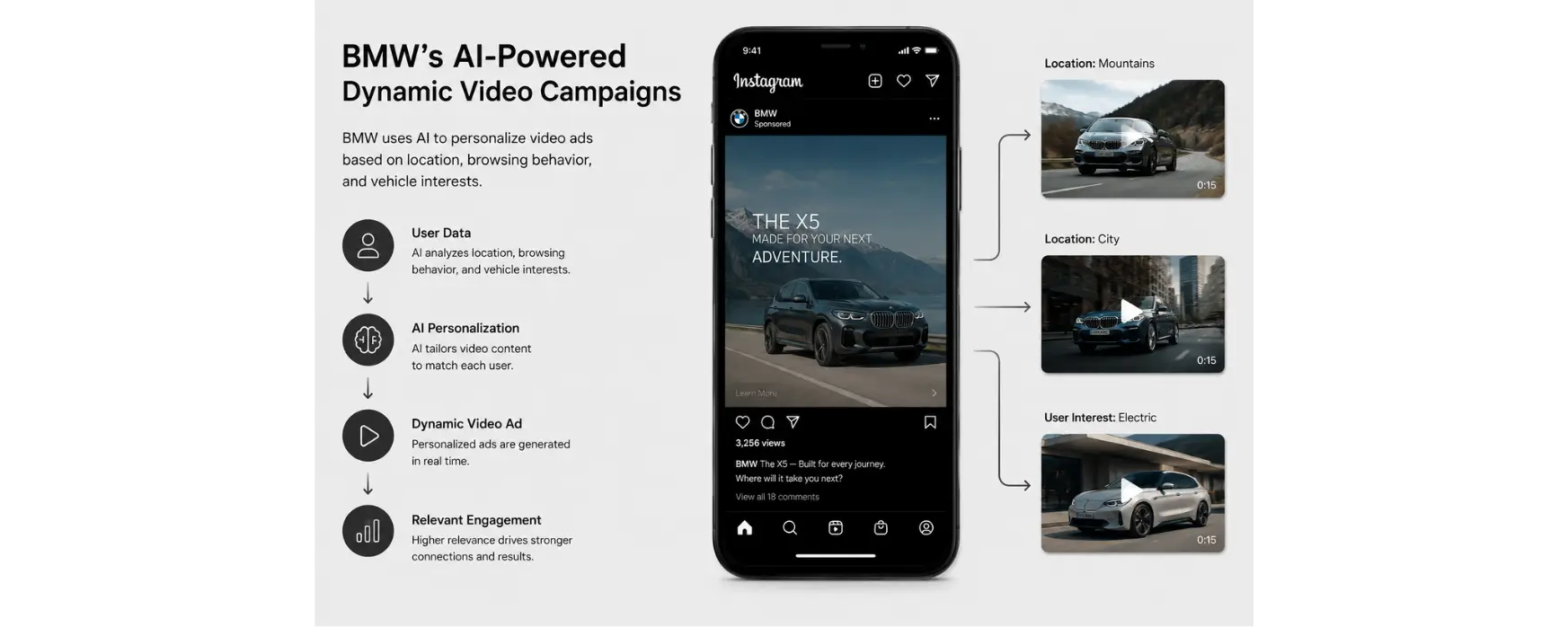
BMW used AI to build personalized video ads shaped by each viewer's location, browsing history, and vehicle interest. Instead of one ad serving everyone, the messaging and visuals adjusted based on what a given user had already engaged with online.
This made the content feel more relevant and timelier, helping BMW connect with potential buyers at different stages of their journey. By combining AI-generated creative with customer data, the brand was able to deliver personalized experiences at scale while maintaining a consistent brand message.
Key takeaway: AI lets brands move past one-size-fits-all advertising and deliver something that feels like it was made for the person watching it.
6. Heinz's AI Creative Collaboration Campaign
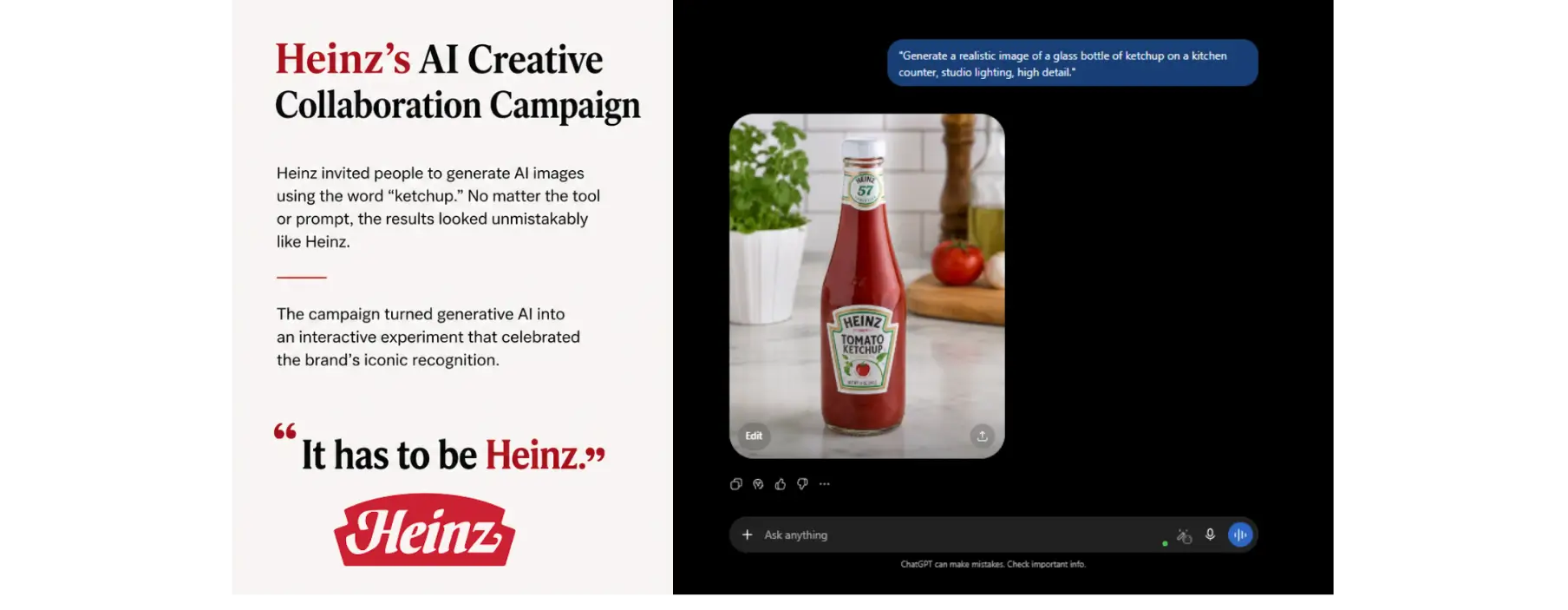
Heinz turned generative AI into the campaign itself by inviting people to create AI-generated images using the word "ketchup." The interesting part was that, regardless of the AI tool or prompt variation, many of the results looked remarkably similar to a Heinz bottle even when the brand wasn't explicitly mentioned.
Rather than using AI simply to create ads, Heinz used the technology to demonstrate the strength of its brand recognition in a fun and interactive way. The campaign sparked widespread social sharing and conversation because it allowed consumers to participate directly in the experiment and see the results for themselves.
Key takeaway: The most creative AI marketing campaigns use technology to reinforce a brand's identity, not just automate content creation.
7. Amazon's Real-Time Campaign Optimization
Amazon continued to showcase the power of AI-driven advertising by helping brands optimize campaigns automatically in real time. Using machine learning, the platform continuously adjusted bids, audience targeting, and ad delivery based on live performance data, reducing the need for constant manual intervention.
Rather than relying on fixed settings, campaigns evolved as customer behavior changed, helping advertisers improve efficiency and reach the right audience at the right moment. Brands that trusted the system's recommendations often saw stronger results than those making frequent manual adjustments.
Key takeaway: AI performs best when it can learn and optimize continuously. Sometimes the smartest move is giving the technology room to do what it was designed to do.
8. L'Oréal's Personalized Skincare Journey Campaign
L'Oréal used AI to create highly personalized skincare journeys that guided customers from product discovery to purchase. By analyzing factors such as skin type, climate conditions, previous purchases, and user preferences, the brand was able to recommend products and content tailored to each individual's needs.
Rather than offering the same experience to every visitor, AI helped shape a unique path for each customer, making recommendations more relevant and useful. This personalized approach improved customer engagement, increased conversions, and encouraged repeat purchases across key product categories
Key takeaway: Personalization is most effective when it extends beyond a single recommendation. AI helps brands create entire customer journeys that feel tailored from start to finish.
9. Starbucks' AI Loyalty and Engagement Campaign
Starbucks expanded its AI-powered loyalty strategy by using predictive analytics to anticipate what customers were most likely to order next. Based on purchase history, preferences, location, and ordering patterns, the brand delivered personalized rewards, offers, and recommendations designed to encourage repeat visits.
Rather than sending the same promotions to every customer, Starbucks tailored its email and push notification campaigns to individual behaviors, making messages feel more relevant and timely. This helped increase engagement while strengthening customer loyalty across its digital ecosystem.
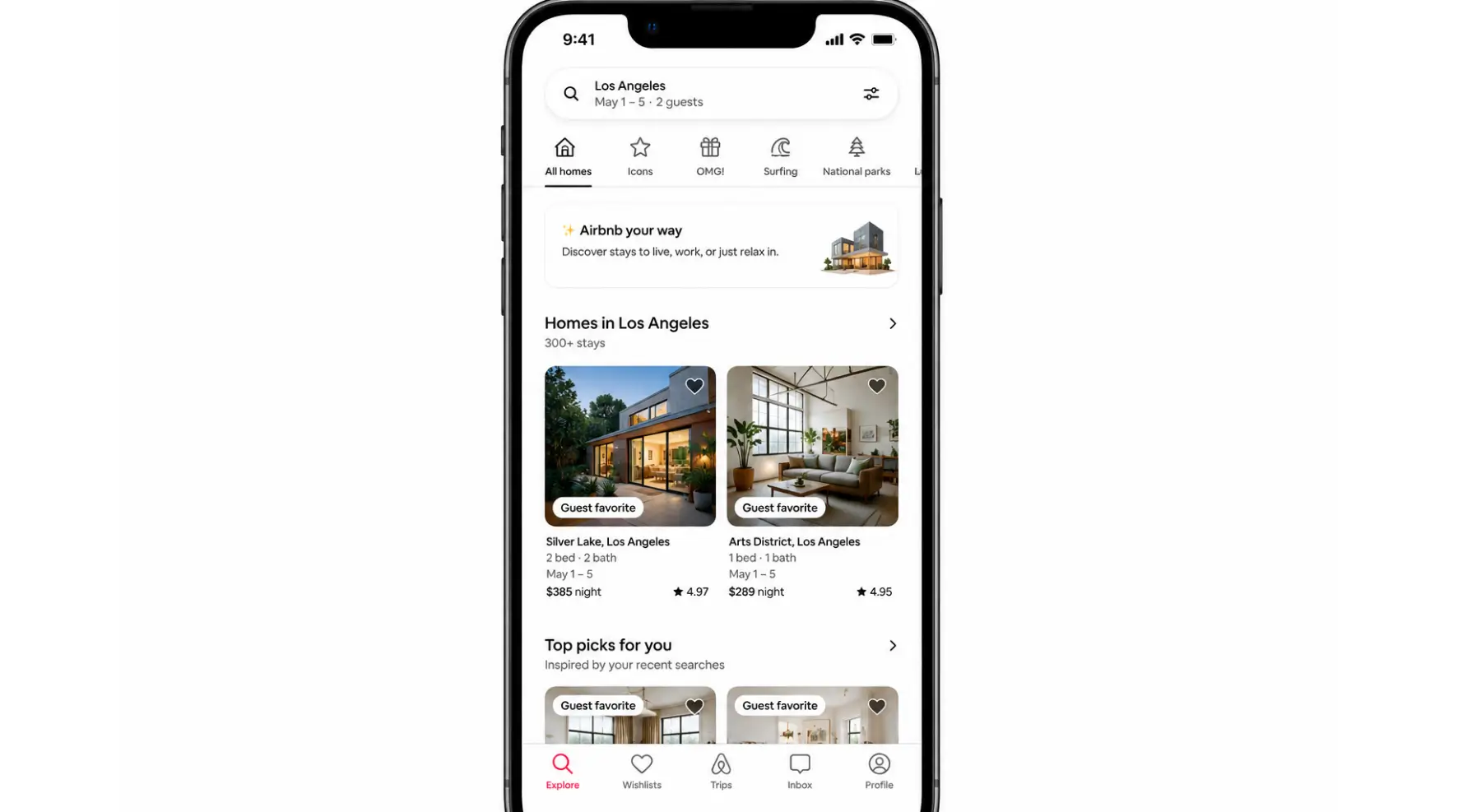
10. Airbnb's AI-Powered Search and Discovery Campaign
Airbnb built a campaign around one of its most powerful AI features: helping travelers discover places they might never have searched for on their own. Using AI-powered search and recommendation technology, the platform matched users with unique stays based on their interests, travel preferences, and browsing behavior.
Rather than focusing solely on destinations, the campaign highlighted surprising and distinctive properties that were surfaced through AI-driven recommendations. This turned the discovery experience itself into a marketing message, showing travelers how AI could help them uncover more personalized and unexpected travel options.
Key takeaway: AI is most powerful when it helps customers discover possibilities they didn't know existed. Sometimes the best marketing isn't showing people what they want it's helping them find something even better.
What the Best AI Marketing Campaigns Have in Common
Looking across these 10 examples, a few clear patterns emerge that separate successful AI marketing campaigns from experiments that never scale:
They started from a real business problem, not a desire to "use AI" for its own sake.
They used first-party data responsibly and transparently — not as a workaround.
They paired AI's efficiency with actual creative thinking, instead of treating it as a replacement for one or the other.
They tracked conversions, retention, and lifetime value — not likes and impressions.
They kept improving based on what the performance data actually said, not what the original plan assumed.
The most successful brands aren't using AI simply because it's the latest trend. They're using it to create better customer experiences, deliver more relevant content, and make smarter marketing decisions at scale. Whether it's personalized recommendations from Starbucks, AI-powered discovery from Airbnb, or dynamic creative from BMW, the common thread is clear: AI works best when it helps brands become more useful, more relevant, and more responsive to customer needs.
As AI technology continues to evolve, the competitive advantage won't come from having access to the tools. It will come from knowing how to combine those tools with strong strategy, quality data, and a deep understanding of your audience. That's where the real opportunity lies for marketers in 2026 and beyond.
What Smaller Brands Can Take Away Right Now
You don't need Coca-Cola's infrastructure to run an effective AI-powered marketing campaign.The tools available in 2026 from AI-driven email platforms to generative content tools and predictive ad systems are accessible at almost every budget level.
Here's where to start:
Personalize your email and push campaigns with AI segmentation
Tools like Klaviyo or Braze offer AI-driven send-time optimization and behavioral targeting that most brands still underuse. Start there before building anything custom.
Use generative AI for creative testing
Instead of running one version of an ad, generate five variations and let performance data pick the winner. This alone can meaningfully improve ROAS without extra spend.
Build a first-party data strategy before you need it
The brands winning with AI all have clean, consented data to work with. Start collecting it with purpose now it's your competitive moat in a cookieless world.
Measure smarter, not just more
AI can surface the metrics that actually predict revenue, not just the ones that are easy to track. Vanity metrics are a distraction; build towards what actually moves the business.
Final Thoughts
The best AI marketing campaigns of 2026 aren't impressive because they used cutting-edge technology. They're impressive because they used it with purpose. AI was the engine, but a clear strategy, genuine creativity, and real consumer empathy were the fuel.
The brands in this list proved that AI-driven marketing campaigns work best when they serve the customer's interests, not just the marketer's KPIs. Relevance, trust, and timing will always matter more than automation for its own sake.
AI gives you the capability. What you do with it is still entirely up to you.
FAQs
What is an AI marketing campaign?

AI marketing campaign uses machine learning or generative AI to improve targeting, creativity, personalization, or optimization. The goal is to make campaigns more relevant and efficient, not just automated.
Why are AI marketing campaigns effective?
They work because they can process data faster, personalize at scale, and adjust in real time based on performance signals. That usually leads to better engagement and stronger results.
Do AI marketing campaigns work for smaller brands too?
Yes. Smaller brands can use AI tools for email segmentation, ad creative testing, content generation, and audience targeting without needing enterprise-level budgets.
What makes an AI campaign different from a traditional campaign?
Traditional campaigns are usually fixed before launch. AI campaigns can learn and adapt while they run, which makes them more flexible and responsive.
What data do AI marketing campaigns need?
The best campaigns rely on first-party data such as website behavior, purchase history, email engagement, and customer preferences. Clean, consented data matters most.
AI isn't a buzzword anymore. It's the engine running quietly behind some of the most effective marketing we've seen this year. In 2026, the brands pulling ahead in attention, trust, and revenue aren't the ones spending the most. They're the ones using AI with more intention than everyone else.
Hyper-personalized video ads, campaigns that optimize themselves in real time, creative that ships in days instead of weeks this is what the top AI marketing campaigns of 2026 actually look like. None of this is a list of concepts that sounded clever in a press release and fell apart on contact with real customers. Every campaign here moved the needle, and each one leaves behind a lesson worth stealing.
That distinction matters more than it sounds. The brands leading right now aren't running AI as a side project bolted onto their "real" marketing. It's shaping creative production, sharpening audience targeting, fixing campaign timing, and scaling assets across channels without quietly burning out the team responsible for all of it.
Consumer expectations keep climbing, and attention keeps getting harder to hold onto. Against that backdrop, AI is changing what "effective marketing" even means. The brands gaining ground are showing, in practical terms, how technology can sharpen creativity instead of replacing it, lift performance, and deepen customer relationships — setting a new bar for how campaigns get planned, built, and tuned over time.
Why AI Marketing Campaigns Perform Differently in 2026
The move from traditional digital marketing to AI-powered campaigns isn't just a tooling upgrade. It's a different way of working. AI lets brands react to data as it happens, personalize at a scale no team could pull off manually, and spin up creative variations faster than any human group ever could.
So what actually separates the brands winning with this from the ones just experimenting? Three things, really: a sharp objective, data they can actually act on, and enough discipline to let AI optimize without anyone's ego getting in the way.
The campaigns that work best never hand strategy over to a machine. AI amplifies a human idea; it doesn't replace one.
In practice, that tends to mean three things are true:
Humans set the direction first. The brand decides the message, tone, audience, and business goal. AI then helps execute faster inside those boundaries not the other way around.
Personalization is built in, not bolted on. Instead of one message blasted to everyone, brands lean on behavioral signals, purchase history, and content interaction to make each experience feel like it was actually built for the person seeing it.
Creative production is built for speed. The strongest teams use generative AI tools to produce variations, test concepts, localize assets, and adapt campaigns without rebuilding from scratch every single time.
That's really the shift worth paying attention to. These campaigns aren't just "automated." They're designed from day one around dynamic creative optimization, predictive analytics, and real-time personalization.
The Top 10 AI Marketing Campaigns of 2026
1. Coca-Cola's AI-Generated Personalized Ads
Coca-Cola leaned into AI to make its advertising feel more relevant without losing the brand consistency that's taken decades to build. Rather than running one global campaign and hoping it lands everywhere, the company used AI to generate multiple ad versions built around different regions, seasons, cultural moments, and consumer interests.
The payoff was timing. A customer in one market might see creative tied to a local event happening that week, while someone in a different market sees something built around an entirely different seasonal moment. Same brand, different relevance.
What this campaign really shows is that global brands don't have to choose between personalization and scale. Coca-Cola didn't throw more people at the problem of producing thousands of asset variations; it used AI for that part and kept its human teams focused on strategy and storytelling, where they're actually needed.
Key takeaway: Personalization lands best when it feels relevant without diluting the brand. AI makes both possible at once, which used to be the trade-off nobody could avoid.
2. Nike's Predictive Performance Marketing
Nike has gone past standard audience targeting and started anticipating what customers want before it's obvious — even to the customer. By pulling first-party data from its apps, browsing patterns, purchase history, and engagement signals, the brand can flag which products someone's likely to want and serve relevant content at the right moment, not just the next available one.
Instead of waiting around for a customer to go searching, Nike's AI-driven setup surfaces recommendations, launches, and offers based on where that customer's intent is heading next.
The strategy highlights the growing role of predictive analytics in modern marketing. Instead of reacting to customer actions, brands can use AI to recognize patterns, identify opportunities, and connect with consumers before competitors do.
Key takeaway: The strongest AI campaigns don't just react to behavior. They get ahead of it.
3. Spotify's AI DJ and Personalized Listening Campaigns
Spotify did more than add AI to its product. It turned AI into the heart of its marketing. The AI DJ feature became the campaign itself, showing users that personalization was not just a feature buried inside the app but the main experience. By giving listeners a soundtrack that felt individually curated, Spotify made the product feel personal, useful, and worth sharing.
Spotify did something smarter than just bolting AI onto its product — it made AI the campaign. The AI DJ feature wasn't a footnote buried in a changelog; it became the centerpiece of the marketing story, proof that personalization wasn't a feature, it was the experience. Users started sharing their AI DJ moments on social media without being asked to. That's the part worth noticing: Spotify didn't need paid media to carry all the reach. The product did a chunk of that work on its own.
The campaign shows one of the strongest lessons in modern AI marketing: when the product is helpful enough, users naturally become part of the distribution engine. AI does not just improve marketing efficiency here. It gives people something worth talking about.
Key takeaway: When AI genuinely improves the product experience, the marketing tends to take care of itself.
4. Sephora's AI-Powered Beauty Advisor Campaign
Sephora's virtual try-on and AI beauty advisor went from "handy app feature" to full campaign centerpiece in 2026. The ads were built around the experience itself — showing real-time matching of products to skin tone, lifestyle, and preference, rather than just claiming the tech existed.
It worked on both fronts: app downloads climbed, and so did in-store visits. That's the part retail marketers should pay attention to AI tools can actually bridge the gap between digital discovery and physical purchase, instead of living in two separate silos.
5. BMW's Hyper-Personalized Video Ads
BMW used AI to build personalized video ads shaped by each viewer's location, browsing history, and vehicle interest. Instead of one ad serving everyone, the messaging and visuals adjusted based on what a given user had already engaged with online.
This made the content feel more relevant and timelier, helping BMW connect with potential buyers at different stages of their journey. By combining AI-generated creative with customer data, the brand was able to deliver personalized experiences at scale while maintaining a consistent brand message.
Key takeaway: AI lets brands move past one-size-fits-all advertising and deliver something that feels like it was made for the person watching it.
6. Heinz's AI Creative Collaboration Campaign
Heinz turned generative AI into the campaign itself by inviting people to create AI-generated images using the word "ketchup." The interesting part was that, regardless of the AI tool or prompt variation, many of the results looked remarkably similar to a Heinz bottle even when the brand wasn't explicitly mentioned.
Rather than using AI simply to create ads, Heinz used the technology to demonstrate the strength of its brand recognition in a fun and interactive way. The campaign sparked widespread social sharing and conversation because it allowed consumers to participate directly in the experiment and see the results for themselves.
Key takeaway: The most creative AI marketing campaigns use technology to reinforce a brand's identity, not just automate content creation.
7. Amazon's Real-Time Campaign Optimization
Amazon continued to showcase the power of AI-driven advertising by helping brands optimize campaigns automatically in real time. Using machine learning, the platform continuously adjusted bids, audience targeting, and ad delivery based on live performance data, reducing the need for constant manual intervention.
Rather than relying on fixed settings, campaigns evolved as customer behavior changed, helping advertisers improve efficiency and reach the right audience at the right moment. Brands that trusted the system's recommendations often saw stronger results than those making frequent manual adjustments.
Key takeaway: AI performs best when it can learn and optimize continuously. Sometimes the smartest move is giving the technology room to do what it was designed to do.
8. L'Oréal's Personalized Skincare Journey Campaign
L'Oréal used AI to create highly personalized skincare journeys that guided customers from product discovery to purchase. By analyzing factors such as skin type, climate conditions, previous purchases, and user preferences, the brand was able to recommend products and content tailored to each individual's needs.
Rather than offering the same experience to every visitor, AI helped shape a unique path for each customer, making recommendations more relevant and useful. This personalized approach improved customer engagement, increased conversions, and encouraged repeat purchases across key product categories
Key takeaway: Personalization is most effective when it extends beyond a single recommendation. AI helps brands create entire customer journeys that feel tailored from start to finish.
9. Starbucks' AI Loyalty and Engagement Campaign
Starbucks expanded its AI-powered loyalty strategy by using predictive analytics to anticipate what customers were most likely to order next. Based on purchase history, preferences, location, and ordering patterns, the brand delivered personalized rewards, offers, and recommendations designed to encourage repeat visits.
Rather than sending the same promotions to every customer, Starbucks tailored its email and push notification campaigns to individual behaviors, making messages feel more relevant and timely. This helped increase engagement while strengthening customer loyalty across its digital ecosystem.
10. Airbnb's AI-Powered Search and Discovery Campaign
Airbnb built a campaign around one of its most powerful AI features: helping travelers discover places they might never have searched for on their own. Using AI-powered search and recommendation technology, the platform matched users with unique stays based on their interests, travel preferences, and browsing behavior.
Rather than focusing solely on destinations, the campaign highlighted surprising and distinctive properties that were surfaced through AI-driven recommendations. This turned the discovery experience itself into a marketing message, showing travelers how AI could help them uncover more personalized and unexpected travel options.
Key takeaway: AI is most powerful when it helps customers discover possibilities they didn't know existed. Sometimes the best marketing isn't showing people what they want it's helping them find something even better.
What the Best AI Marketing Campaigns Have in Common
Looking across these 10 examples, a few clear patterns emerge that separate successful AI marketing campaigns from experiments that never scale:
They started from a real business problem, not a desire to "use AI" for its own sake.
They used first-party data responsibly and transparently — not as a workaround.
They paired AI's efficiency with actual creative thinking, instead of treating it as a replacement for one or the other.
They tracked conversions, retention, and lifetime value — not likes and impressions.
They kept improving based on what the performance data actually said, not what the original plan assumed.
The most successful brands aren't using AI simply because it's the latest trend. They're using it to create better customer experiences, deliver more relevant content, and make smarter marketing decisions at scale. Whether it's personalized recommendations from Starbucks, AI-powered discovery from Airbnb, or dynamic creative from BMW, the common thread is clear: AI works best when it helps brands become more useful, more relevant, and more responsive to customer needs.
As AI technology continues to evolve, the competitive advantage won't come from having access to the tools. It will come from knowing how to combine those tools with strong strategy, quality data, and a deep understanding of your audience. That's where the real opportunity lies for marketers in 2026 and beyond.
What Smaller Brands Can Take Away Right Now
You don't need Coca-Cola's infrastructure to run an effective AI-powered marketing campaign.The tools available in 2026 from AI-driven email platforms to generative content tools and predictive ad systems are accessible at almost every budget level.
Here's where to start:
Personalize your email and push campaigns with AI segmentation
Tools like Klaviyo or Braze offer AI-driven send-time optimization and behavioral targeting that most brands still underuse. Start there before building anything custom.
Use generative AI for creative testing
Instead of running one version of an ad, generate five variations and let performance data pick the winner. This alone can meaningfully improve ROAS without extra spend.
Build a first-party data strategy before you need it
The brands winning with AI all have clean, consented data to work with. Start collecting it with purpose now it's your competitive moat in a cookieless world.
Measure smarter, not just more
AI can surface the metrics that actually predict revenue, not just the ones that are easy to track. Vanity metrics are a distraction; build towards what actually moves the business.
Final Thoughts
The best AI marketing campaigns of 2026 aren't impressive because they used cutting-edge technology. They're impressive because they used it with purpose. AI was the engine, but a clear strategy, genuine creativity, and real consumer empathy were the fuel.
The brands in this list proved that AI-driven marketing campaigns work best when they serve the customer's interests, not just the marketer's KPIs. Relevance, trust, and timing will always matter more than automation for its own sake.
AI gives you the capability. What you do with it is still entirely up to you.
FAQs
What is an AI marketing campaign?
AI marketing campaign uses machine learning or generative AI to improve targeting, creativity, personalization, or optimization. The goal is to make campaigns more relevant and efficient, not just automated.
Why are AI marketing campaigns effective?
They work because they can process data faster, personalize at scale, and adjust in real time based on performance signals. That usually leads to better engagement and stronger results.
Do AI marketing campaigns work for smaller brands too?
Yes. Smaller brands can use AI tools for email segmentation, ad creative testing, content generation, and audience targeting without needing enterprise-level budgets.
What makes an AI campaign different from a traditional campaign?
Traditional campaigns are usually fixed before launch. AI campaigns can learn and adapt while they run, which makes them more flexible and responsive.
What data do AI marketing campaigns need?
The best campaigns rely on first-party data such as website behavior, purchase history, email engagement, and customer preferences. Clean, consented data matters most.



Summarize with AI



Want to Grow Social Accounts? Get a Free Audit Today!
Want to Grow Social Accounts? Get a Free Audit Today!


1k+ Reviews!


Don’t miss our revenue growth tips!
Get expert marketing tips—straight to your inbox, like thousands of happy clients.
Don’t miss our revenue growth tips!
Don’t miss our revenue growth tips!
Get expert marketing tips—straight to your inbox, like thousands of happy clients.
Don’t miss our revenue growth tips!
Get expert marketing tips—straight to your inbox, like thousands of happy clients.
Relevant Blogs on Social Media
Relevant Blogs on Social Media
Unlock data-driven insights in Social Media Marketing—explore our featured blogs and skyrocket your revenue before your competitors do.
Unlock data-driven insights in Social Media Marketing—explore our featured blogs and skyrocket your revenue before your competitors do.

Social Media
Aug 28, 2026
10 Min Read
Social Search Optimization: How to Optimize Your Brand for Social Search
Social Media
Aug 28, 2026
10 Min Read
Social Search Optimization: How to Optimize Your Brand for Social Search
Social Media
Aug 28, 2026
10 Min Read
Social Search Optimization: How to Optimize Your Brand for Social Search
Social Media
Aug 13, 2026
5 Min Read
TikTok SEO: How Keywords and Metadata Impact Your Visibility
Social Media
Aug 13, 2026
5 Min Read
TikTok SEO: How Keywords and Metadata Impact Your Visibility
Social Media
Aug 13, 2026
5 Min Read
TikTok SEO: How Keywords and Metadata Impact Your Visibility
Social Media
Aug 3, 2026
10 Min Read
Why Social Media Matters for Al Recommendations and Brand Discovery
Social Media
Aug 3, 2026
10 Min Read
Why Social Media Matters for Al Recommendations and Brand Discovery
Social Media
Aug 3, 2026
10 Min Read
Why Social Media Matters for Al Recommendations and Brand Discovery














Ready to speak with an expert?
Data-Driven Marketing Agency That Elevates ROI
1100+
Websites Designed & Optimized to Convert
$280M+
Client Revenue Driven & Growing Strong
Discover how to skyrocket
your revenue today!



Trusted by 1000+ Owners!
Ready to speak with an expert?
Data-Driven Marketing Agency That Elevates ROI
1100+
Websites Designed & Optimized to Convert
$280M+
Client Revenue Driven & Growing Strong
Discover how to skyrocket
your revenue today!
Trusted by 1000+ Owners!
Want to skyrocket revenue?
4.9/5 Ratings!
Ready to speak with an expert?
Data-Driven Marketing Agency That Elevates ROI
1100+
Websites Designed & Optimized to Convert
$280M+
Client Revenue Driven & Growing Strong
Discover how to skyrocket
your revenue today!
Trusted by 1000+ Owners!
Call
Meet