ChatGPT Ad Dismissals Drop 50%: What It Means for Your Digital Marketing Strategy
ChatGPT Ad Dismissals Drop 50%: What It Means for Your Digital Marketing Strategy
Last Updated:
Table of Content
Explore Free Tools

Satish Suthar
Satish Suthar
Satish Suthar
PPC
PPC
PPC
12 Min Read
12 Min Read
10 Min
OpenAI just released a number that every marketer should pay attention to.
Since launching its advertising business in February 2026, ChatGPT ad dismissal rates have dropped by 50%.
That's not a rounding error - it's a signal that AI-powered digital marketing is shifting faster than most expected. And if you're not rethinking your digital strategy right now, your competitors almost certainly are.
Highlights
ChatGPT ad dismissals dropped 50% since February 2026, confirmed by OpenAI CRO Denise Dresser
OpenAI treats dismissal rate as a direct measure of ChatGPT ads relevance
Conversational AI advertising 2026 rewards usefulness, not reach or impressions
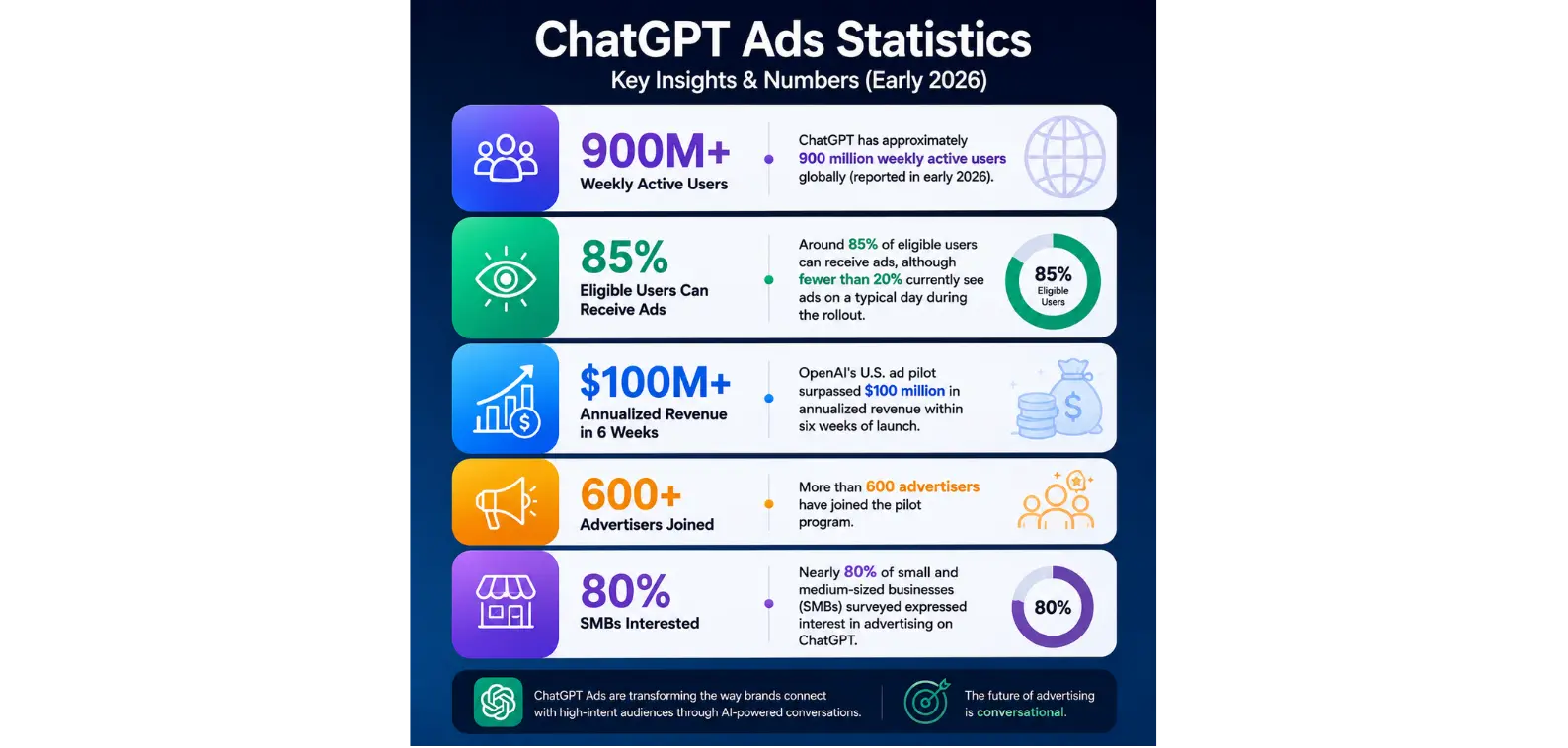
ChatGPT hit $100M in ad revenue and opened self-serve access in April 2026
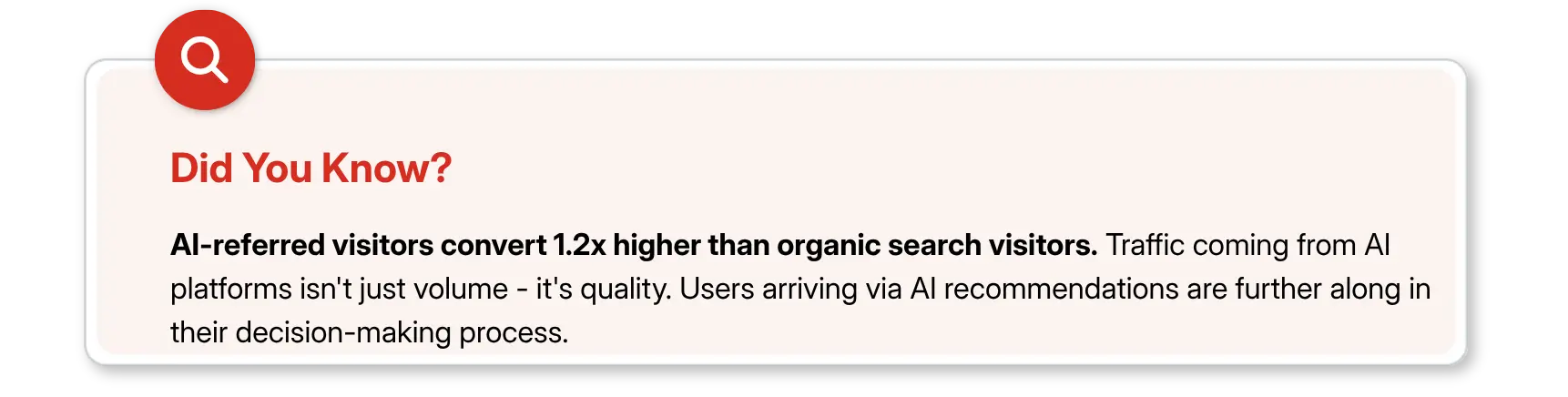
87.4% of all AI referral traffic comes from ChatGPT right now
What Is an Ad Dismissal Rate and Why Does It Matter?
Before we get into the numbers, it's worth understanding what dismissal rate actually means.
When an ad appears inside ChatGPT, the user has two choices. They can engage with it - click, read, or take action. Or they can dismiss it - close it, skip it, or mark it as not relevant.
The ad dismissal rate is simply the percentage of people who choose to get rid of the ad rather than engage with it.
A high dismissal rate means the ad felt out of place. It didn't connect with what the user was doing. It was either irrelevant, poorly timed, or just not useful enough to keep around.
A low dismissal rate - or a falling one, like we're seeing now means the opposite. Users are seeing ads that actually feel relevant to their conversation. They're not dismissing them because they don't feel the need to.
OpenAI treats dismissal rate as their primary measure of ad quality. Not impressions. Not reach. Not clicks. Whether users found the ad relevant enough to keep.
That's a very different way of measuring advertising success and it tells you a lot about where AI advertising is heading.
What OpenAI Actually Said
OpenAI's Chief Revenue Officer Denise Dresser shared the news herself. Her words were simple: "This form factor is about usefulness. That's great for the consumer, great for the user."
That says everything about where this is going.
OpenAI isn't counting impressions. They're not celebrating reach. They're measuring whether the ad was actually useful to the person who saw it. A dismissed ad is a failure. A kept ad is proof of relevance.
According to Search Engine Land, OpenAI views ad dismissals as a proxy for relevance - making the 50% decline an indication that users are finding the ads they encounter more useful and aligned with what they're doing.
Why ChatGPT Ads Relevance Is a Completely Different Challenge
Think about how regular ads work. You're watching something, reading something and an ad pops up. You expect it. You scroll past it. The bar is low.
ChatGPT works differently. People go there to get something done, answer a question, make a decision, solve a problem. An ad that doesn't fit that moment doesn't just get ignored. It breaks the flow. It feels wrong. And on a platform people use because they trust it, that's a real problem.
This is why ChatGPT ads relevance matters so much. The ads that work here aren't the loudest or the biggest budget ones. They're the ones that genuinely fit what the user is already trying to do.
That requires a different way of thinking compared to traditional PPC marketing. The creative, the offer, the targeting all of it needs to be built around intent, not demographics.
What Conversational AI Advertising 2026 Actually Looks Like
Three things are changing and they affect every marketer running ads today.
Interruption is out. Integration is in.
The best ChatGPT ads don't feel like ads. They feel like the obvious next step for whatever the user is doing. That's a completely different creative challenge.
You're not targeting people anymore. You're matching moments.
The user has already told ChatGPT what they need. Your ad either fits that need or it doesn't. There's no middle ground.
Clicks aren't the only metric.
In a conversation, success might look like a follow-up question, a recommendation accepted, or a task completed with your brand involved. Rethinking what "conversion" means here isn't optional.
What This Means for Your AI Search Intent Marketing Strategy
The 50% drop in dismissals is a signal that users in AI environments are warming up to ads but only when those ads feel relevant and helpful.
For businesses running paid search campaigns, this opens real opportunity. ChatGPT rewards relevance over budget. A well-targeted, intent-matched ad from a smaller brand can outperform a bigger brand running generic creative.
The challenge is that Google Ads copy doesn't just paste over into ChatGPT. The mindset is different. The format is different. The user is different. Your AI search intent marketing strategy needs its own thinking.
And here's something worth noting: organic AI citations and paid AI ads are starting to pull from the same signals. Authority, helpfulness, relevance - these are what make a brand worth recommending in an AI response and worth showing as an ad. Building your generative AI search visibility and running AI ads aren't separate strategies. They reinforce each other.
Final Thoughts
The 50% drop is small data with a big message: users in AI environments are ready to hear from brands as long as those brands show up in a way that actually helps.
The question isn't whether AI advertising is coming. It's already here. The question is whether your brand is in it or not.
Not sure where you stand? Talk to our team - we'll show you exactly where your brand shows up in AI search and what to do about it.
FAQs
What does the 50% drop in ChatGPT ad dismissals mean for marketers?

It means ChatGPT is becoming a real advertising channel. Users are finding the ads more relevant which means the platform is starting to work for brands that get the context right. It's an early sign that conversational AI advertising is maturing fast.
Is ChatGPT advertising different from Google Ads?
Very different. Google Ads targets keywords and audiences. ChatGPT advertising sits inside a conversation where the user has already expressed a specific need. The bar for relevance is much higher but so is the reward when you get it right.
Should smaller businesses run ads on ChatGPT now?
ChatGPT opened self-serve access in April 2026, so it's no longer just for big brands. Whether it fits your business depends on your audience but at minimum, start monitoring your organic brand presence in ChatGPT. Our PPC team can help figure out if paid makes sense for you.
What is AI search intent marketing?
It's the practice of showing up... paid or organic at the exact moment a user is trying to solve something in an AI tool. Instead of targeting who someone is, you're matching what they're actively trying to do right now.
How do organic AI citations and paid AI ads work together?
They draw from the same trust signals - authority, relevance, helpfulness. Brands that build strong generative AI search visibility are also better candidates for their ads being surfaced rather than dismissed. The two strategies compound each other.
OpenAI just released a number that every marketer should pay attention to.
Since launching its advertising business in February 2026, ChatGPT ad dismissal rates have dropped by 50%.
That's not a rounding error - it's a signal that AI-powered digital marketing is shifting faster than most expected. And if you're not rethinking your digital strategy right now, your competitors almost certainly are.
Highlights
ChatGPT ad dismissals dropped 50% since February 2026, confirmed by OpenAI CRO Denise Dresser
OpenAI treats dismissal rate as a direct measure of ChatGPT ads relevance
Conversational AI advertising 2026 rewards usefulness, not reach or impressions
ChatGPT hit $100M in ad revenue and opened self-serve access in April 2026
87.4% of all AI referral traffic comes from ChatGPT right now
What Is an Ad Dismissal Rate and Why Does It Matter?
Before we get into the numbers, it's worth understanding what dismissal rate actually means.
When an ad appears inside ChatGPT, the user has two choices. They can engage with it - click, read, or take action. Or they can dismiss it - close it, skip it, or mark it as not relevant.
The ad dismissal rate is simply the percentage of people who choose to get rid of the ad rather than engage with it.
A high dismissal rate means the ad felt out of place. It didn't connect with what the user was doing. It was either irrelevant, poorly timed, or just not useful enough to keep around.
A low dismissal rate - or a falling one, like we're seeing now means the opposite. Users are seeing ads that actually feel relevant to their conversation. They're not dismissing them because they don't feel the need to.
OpenAI treats dismissal rate as their primary measure of ad quality. Not impressions. Not reach. Not clicks. Whether users found the ad relevant enough to keep.
That's a very different way of measuring advertising success and it tells you a lot about where AI advertising is heading.
What OpenAI Actually Said
OpenAI's Chief Revenue Officer Denise Dresser shared the news herself. Her words were simple: "This form factor is about usefulness. That's great for the consumer, great for the user."
That says everything about where this is going.
OpenAI isn't counting impressions. They're not celebrating reach. They're measuring whether the ad was actually useful to the person who saw it. A dismissed ad is a failure. A kept ad is proof of relevance.
According to Search Engine Land, OpenAI views ad dismissals as a proxy for relevance - making the 50% decline an indication that users are finding the ads they encounter more useful and aligned with what they're doing.
Why ChatGPT Ads Relevance Is a Completely Different Challenge
Think about how regular ads work. You're watching something, reading something and an ad pops up. You expect it. You scroll past it. The bar is low.
ChatGPT works differently. People go there to get something done, answer a question, make a decision, solve a problem. An ad that doesn't fit that moment doesn't just get ignored. It breaks the flow. It feels wrong. And on a platform people use because they trust it, that's a real problem.
This is why ChatGPT ads relevance matters so much. The ads that work here aren't the loudest or the biggest budget ones. They're the ones that genuinely fit what the user is already trying to do.
That requires a different way of thinking compared to traditional PPC marketing. The creative, the offer, the targeting all of it needs to be built around intent, not demographics.
What Conversational AI Advertising 2026 Actually Looks Like
Three things are changing and they affect every marketer running ads today.
Interruption is out. Integration is in.
The best ChatGPT ads don't feel like ads. They feel like the obvious next step for whatever the user is doing. That's a completely different creative challenge.
You're not targeting people anymore. You're matching moments.
The user has already told ChatGPT what they need. Your ad either fits that need or it doesn't. There's no middle ground.
Clicks aren't the only metric.
In a conversation, success might look like a follow-up question, a recommendation accepted, or a task completed with your brand involved. Rethinking what "conversion" means here isn't optional.
What This Means for Your AI Search Intent Marketing Strategy
The 50% drop in dismissals is a signal that users in AI environments are warming up to ads but only when those ads feel relevant and helpful.
For businesses running paid search campaigns, this opens real opportunity. ChatGPT rewards relevance over budget. A well-targeted, intent-matched ad from a smaller brand can outperform a bigger brand running generic creative.
The challenge is that Google Ads copy doesn't just paste over into ChatGPT. The mindset is different. The format is different. The user is different. Your AI search intent marketing strategy needs its own thinking.
And here's something worth noting: organic AI citations and paid AI ads are starting to pull from the same signals. Authority, helpfulness, relevance - these are what make a brand worth recommending in an AI response and worth showing as an ad. Building your generative AI search visibility and running AI ads aren't separate strategies. They reinforce each other.
Final Thoughts
The 50% drop is small data with a big message: users in AI environments are ready to hear from brands as long as those brands show up in a way that actually helps.
The question isn't whether AI advertising is coming. It's already here. The question is whether your brand is in it or not.
Not sure where you stand? Talk to our team - we'll show you exactly where your brand shows up in AI search and what to do about it.
FAQs
What does the 50% drop in ChatGPT ad dismissals mean for marketers?
It means ChatGPT is becoming a real advertising channel. Users are finding the ads more relevant which means the platform is starting to work for brands that get the context right. It's an early sign that conversational AI advertising is maturing fast.
Is ChatGPT advertising different from Google Ads?
Very different. Google Ads targets keywords and audiences. ChatGPT advertising sits inside a conversation where the user has already expressed a specific need. The bar for relevance is much higher but so is the reward when you get it right.
Should smaller businesses run ads on ChatGPT now?
ChatGPT opened self-serve access in April 2026, so it's no longer just for big brands. Whether it fits your business depends on your audience but at minimum, start monitoring your organic brand presence in ChatGPT. Our PPC team can help figure out if paid makes sense for you.
What is AI search intent marketing?
It's the practice of showing up... paid or organic at the exact moment a user is trying to solve something in an AI tool. Instead of targeting who someone is, you're matching what they're actively trying to do right now.
How do organic AI citations and paid AI ads work together?
They draw from the same trust signals - authority, relevance, helpfulness. Brands that build strong generative AI search visibility are also better candidates for their ads being surfaced rather than dismissed. The two strategies compound each other.



Summarize with AI


Have a Google Ads account?
Get a free audit Today!
Have a Google Ads account?
Get a free audit Today!



4.9/5 Ratings!
4.9/5 Ratings!


Don’t miss our revenue growth tips!
Get expert marketing tips—straight to your inbox, like thousands of happy clients.
Don’t miss our revenue growth tips!
Get expert marketing tips—straight to your inbox, like thousands of happy clients.
Don’t miss our revenue growth tips!
Get expert marketing tips—straight to your inbox, like thousands of happy clients.
Don’t miss our revenue growth tips!
Relevant Blogs on PPC Marketing
Relevant Blogs on PPC Marketing
Unlock data-driven insights in PPC marketing—explore our featured blogs and skyrocket your revenue before your competitors do.
Unlock data-driven insights in PPC marketing—explore our featured blogs and skyrocket your revenue before your competitors do.
PPC
Sep 1, 2026
8 Min Read
Google Is Removing Manual Language Targeting From Search Campaigns: What Advertisers Need to Know
PPC
Sep 1, 2026
8 Min Read
Google Is Removing Manual Language Targeting From Search Campaigns: What Advertisers Need to Know
PPC
Sep 1, 2026
8 Min Read
Google Is Removing Manual Language Targeting From Search Campaigns: What Advertisers Need to Know

PPC
Aug 6, 2026
10 Min Read
What Are Display Ads & How Do They Work?
PPC
Aug 6, 2026
10 Min Read
What Are Display Ads & How Do They Work?
PPC
Aug 6, 2026
10 Min Read
What Are Display Ads & How Do They Work?

PPC
Aug 2, 2026
10 Min Read
12 Best Practices to Improve Google Ads CTR
PPC
Aug 2, 2026
10 Min Read
12 Best Practices to Improve Google Ads CTR
PPC
Aug 2, 2026
10 Min Read
12 Best Practices to Improve Google Ads CTR












Ready to speak with an expert?
Data-Driven Marketing Agency That Elevates ROI
1100+
Websites Designed & Optimized to Convert
$280M+
Client Revenue Driven & Growing Strong
Discover how to skyrocket
your revenue today!
Trusted by 1000+ Owners!
Ready to speak with an expert?
Data-Driven Marketing Agency That Elevates ROI
1100+
Websites Designed & Optimized to Convert
$280M+
Client Revenue Driven & Growing Strong
Discover how to skyrocket
your revenue today!
Trusted by 1000+ Owners!
Want to skyrocket revenue?
4.9/5 Ratings!
Ready to speak with an expert?
Data-Driven Marketing Agency That Elevates ROI
1100+
Websites Designed & Optimized to Convert
$280M+
Client Revenue Driven & Growing Strong
Discover how to skyrocket
your revenue today!
Trusted by 1000+ Owners!
Call
Meet