Google Search Console Adds Platform Properties to Track Social & Video Performance
Last Updated:
Table of Content
Case Studies


Tanya Singh
Tanya Singh
Google Updates
Google Updates
8 Min Read
8 Min
Search behaviour has quietly changed shape over the past few years. People no longer type every question into a browser tab. They ask it on TikTok, look for a demo on YouTube, or scroll Instagram for a quick answer. Google has finally built a tool around that reality, and it is called platform properties.
What Are Platform Properties in Google Search Console?
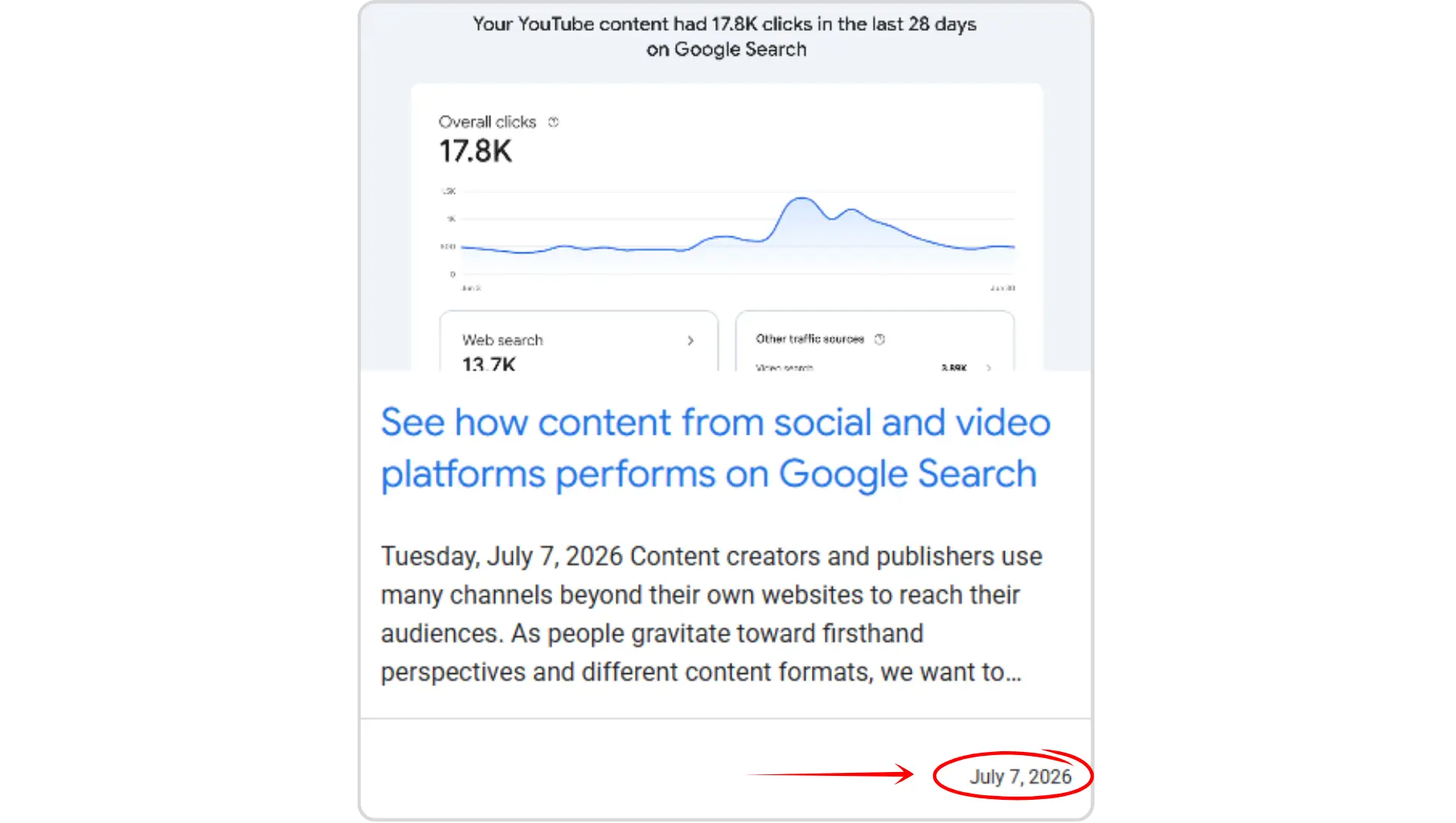
Platform properties are a new property type inside Google Search Console that let creators and brands measure how their social and video content performs on Google Search and Discover, without needing a website at all. Google announced the feature on July 7, 2026, through a Search Central blog post written by Moshe Samet, product manager lead for Search Console.
Until now, Search Console only understood websites. A domain, a set of URLs, a sitemap. If your content lived on Instagram or TikTok instead of your own site, you had no way to see whether Google Search was sending anyone your way. Platform properties close that gap. They give a TikTok account or a YouTube channel the same kind of measurement treatment that a website has enjoyed for over a decade.
Which Platforms Does Google Search Console Support Right Now?
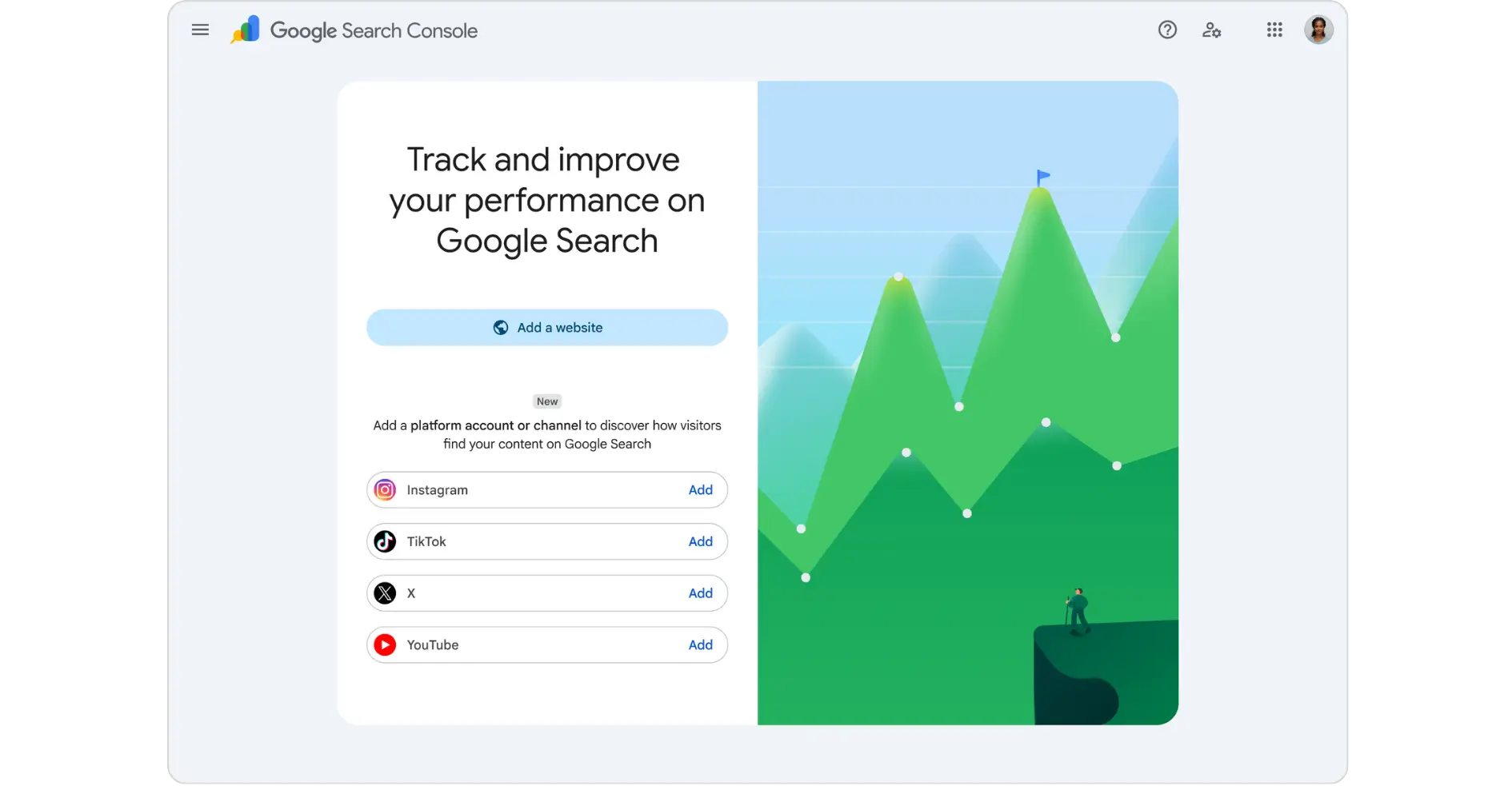
Google is starting with four platforms at launch: Instagram, TikTok, Twitter (X) and YouTube. That is a deliberate choice. These four cover the bulk of short-form video and social discovery traffic that shows up in Search and Discover results today. Facebook and LinkedIn are not part of the initial rollout, and Google has not committed to a timeline for adding them.
If you manage accounts across several of these platforms, you will need to set up and verify each one separately, since every platform property is its own distinct entry in Search Console rather than one combined dashboard.

How Do You Track Social and Video Performance in Search Console?
You track it through three familiar report types, applied to a social or video account instead of a website.
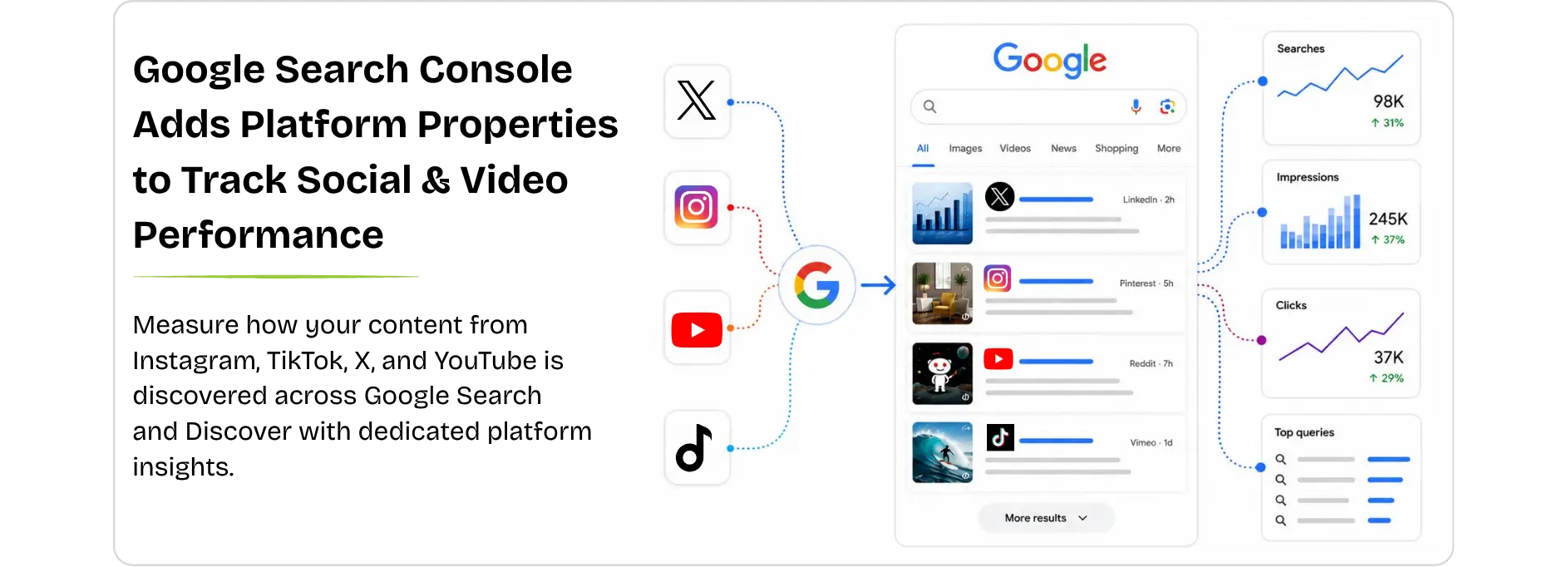
Performance report: shows total clicks and impressions, and lets you filter by individual post or by search query, so you can see exactly which content and which terms are driving traffic. Data can also be exported for use in other tools.
Insights report: gives a high level view of recent traffic trends, your top performing posts, and how people are discovering your account through Google.
Achievements: tracks growth milestones, such as crossing a new threshold of clicks from Google Search over the last 28 days.
Setup itself is simple. Open Search Console, go to the property selector, choose Add property, and select one of the four supported platforms. You then follow an on screen verification flow to securely link the account. Google says the rollout is happening gradually over the coming weeks, so the option may not appear in every account immediately.
Do You Need a Website to Use Platform Properties?
No, and this is arguably the most meaningful part of the update. A platform property does not require a verified domain or any website ownership at all. A creator whose entire presence lives on YouTube or Instagram can now get search performance data that was previously reserved for site owners. That opens Search Console up to an audience it was never built for: influencers, podcasters, small video creators, and social-first brands that never bothered building a traditional website.
How Is This Different From the December 2025 Social Channels Feature?
Google actually tested a lighter version of this idea before. In December 2025, it introduced social channels inside Search Console Insights, which automatically detected social accounts already linked to a verified website and surfaced their data there. It was useful but limited: it only worked if you already owned a site, and the data lived inside Insights rather than as a standalone property. Platform properties go further. You add and verify the account yourself, ownership of a website is not required, and the data flows into a full set of dedicated reports rather than a single summary tab.
Feature | Social Channels (Dec 2025) | Platform Properties (Jul 2026) |
|---|---|---|
Requires a website | Yes | No |
Setup | Auto detected | Manually added and verified |
Reports available | Insights only | Performance, Insights, Achievements |
Data export | Limited | Yes |
Platforms covered | Linked to site only | Instagram, TikTok, X, YouTube |
Why Does This Update Matter for Creators and Brands?
For years, social and SEO teams have worked from separate dashboards that rarely agreed with each other. A social media manager could see likes and shares inside a platform's native analytics, while an SEO stared at Search Console data that only covered the company's website. Nobody had a clean answer to a simple question: Is Google Search actually sending people to our social content, and for what queries?
Platform properties do not solve attribution completely, but they remove a real blind spot. A few practical points worth considering:
Query level data means you can finally see the exact phrases people search before landing on a Reel, a Short, or a TikTok video, which can shape future titles and captions.
Brands running multiple accounts on the same platform should double check which profile they are authorising, since connecting the wrong one is an easy mistake in agency setups.
Combining platform property data with website Search Console data gives a fuller picture of a brand's total footprint in Search, something small teams like the ones behind sites could use to see whether a recipe video on YouTube is pulling more search traffic than the matching blog post.
Because there is no back-fill, setting up the property early matters more than waiting for a perfect workflow.
Final Thoughts
This launch does not stand alone. Over the past several months, Google has steadily rebuilt Search Console around how people actually discover content today rather than just how websites are structured. Recent additions include weekly and monthly performance views, a branded queries filter, custom chart annotations, an AI-powered configuration tool, and Search Generative AI performance reports in June 2026. Platform properties are the latest piece of that pattern, and they suggest Google sees social and video discovery as a permanent part of Search, not a side channel. Search stopped living only on websites a long time ago, and Google just admitted it in the one tool that matters most for measuring visibility.
Your videos were already being searched. Now you can prove it.
FAQs
What is a platform property in Google Search Console?

A platform property is a new Search Console property type that lets you track how a social media performs in Google Search and Discover, without owning or verifying a website.
Which social media platforms does Google Search Console support?
Google Search Console currently supports Instagram, TikTok, X, and YouTube as platform properties, with no confirmed timeline yet for adding Facebook or LinkedIn.
Do I need a website to use Google Search Console for social media?
No, platform properties do not require a website. You can add and verify a social or video account directly, which makes this feature usable by creators who have no site at all.
How do I add a social or video account to Search Console?
Open Search Console, click Add property, choose one of the supported platforms (Instagram, TikTok, X, or YouTube), and complete the on-screen verification steps to link your account.
Does Search Console show historical data for social accounts?
No, platform properties do not backfill past performance. Tracking starts only from the date the account is connected and verified, so earlier activity will not appear in reports.
Search behaviour has quietly changed shape over the past few years. People no longer type every question into a browser tab. They ask it on TikTok, look for a demo on YouTube, or scroll Instagram for a quick answer. Google has finally built a tool around that reality, and it is called platform properties.
What Are Platform Properties in Google Search Console?
Platform properties are a new property type inside Google Search Console that let creators and brands measure how their social and video content performs on Google Search and Discover, without needing a website at all. Google announced the feature on July 7, 2026, through a Search Central blog post written by Moshe Samet, product manager lead for Search Console.
Until now, Search Console only understood websites. A domain, a set of URLs, a sitemap. If your content lived on Instagram or TikTok instead of your own site, you had no way to see whether Google Search was sending anyone your way. Platform properties close that gap. They give a TikTok account or a YouTube channel the same kind of measurement treatment that a website has enjoyed for over a decade.
Which Platforms Does Google Search Console Support Right Now?
Google is starting with four platforms at launch: Instagram, TikTok, Twitter (X) and YouTube. That is a deliberate choice. These four cover the bulk of short-form video and social discovery traffic that shows up in Search and Discover results today. Facebook and LinkedIn are not part of the initial rollout, and Google has not committed to a timeline for adding them.
If you manage accounts across several of these platforms, you will need to set up and verify each one separately, since every platform property is its own distinct entry in Search Console rather than one combined dashboard.
How Do You Track Social and Video Performance in Search Console?
You track it through three familiar report types, applied to a social or video account instead of a website.
Performance report: shows total clicks and impressions, and lets you filter by individual post or by search query, so you can see exactly which content and which terms are driving traffic. Data can also be exported for use in other tools.
Insights report: gives a high level view of recent traffic trends, your top performing posts, and how people are discovering your account through Google.
Achievements: tracks growth milestones, such as crossing a new threshold of clicks from Google Search over the last 28 days.
Setup itself is simple. Open Search Console, go to the property selector, choose Add property, and select one of the four supported platforms. You then follow an on screen verification flow to securely link the account. Google says the rollout is happening gradually over the coming weeks, so the option may not appear in every account immediately.
Do You Need a Website to Use Platform Properties?
No, and this is arguably the most meaningful part of the update. A platform property does not require a verified domain or any website ownership at all. A creator whose entire presence lives on YouTube or Instagram can now get search performance data that was previously reserved for site owners. That opens Search Console up to an audience it was never built for: influencers, podcasters, small video creators, and social-first brands that never bothered building a traditional website.
How Is This Different From the December 2025 Social Channels Feature?
Google actually tested a lighter version of this idea before. In December 2025, it introduced social channels inside Search Console Insights, which automatically detected social accounts already linked to a verified website and surfaced their data there. It was useful but limited: it only worked if you already owned a site, and the data lived inside Insights rather than as a standalone property. Platform properties go further. You add and verify the account yourself, ownership of a website is not required, and the data flows into a full set of dedicated reports rather than a single summary tab.
Feature | Social Channels (Dec 2025) | Platform Properties (Jul 2026) |
|---|---|---|
Requires a website | Yes | No |
Setup | Auto detected | Manually added and verified |
Reports available | Insights only | Performance, Insights, Achievements |
Data export | Limited | Yes |
Platforms covered | Linked to site only | Instagram, TikTok, X, YouTube |
Why Does This Update Matter for Creators and Brands?
For years, social and SEO teams have worked from separate dashboards that rarely agreed with each other. A social media manager could see likes and shares inside a platform's native analytics, while an SEO stared at Search Console data that only covered the company's website. Nobody had a clean answer to a simple question: Is Google Search actually sending people to our social content, and for what queries?
Platform properties do not solve attribution completely, but they remove a real blind spot. A few practical points worth considering:
Query level data means you can finally see the exact phrases people search before landing on a Reel, a Short, or a TikTok video, which can shape future titles and captions.
Brands running multiple accounts on the same platform should double check which profile they are authorising, since connecting the wrong one is an easy mistake in agency setups.
Combining platform property data with website Search Console data gives a fuller picture of a brand's total footprint in Search, something small teams like the ones behind sites could use to see whether a recipe video on YouTube is pulling more search traffic than the matching blog post.
Because there is no back-fill, setting up the property early matters more than waiting for a perfect workflow.
Final Thoughts
This launch does not stand alone. Over the past several months, Google has steadily rebuilt Search Console around how people actually discover content today rather than just how websites are structured. Recent additions include weekly and monthly performance views, a branded queries filter, custom chart annotations, an AI-powered configuration tool, and Search Generative AI performance reports in June 2026. Platform properties are the latest piece of that pattern, and they suggest Google sees social and video discovery as a permanent part of Search, not a side channel. Search stopped living only on websites a long time ago, and Google just admitted it in the one tool that matters most for measuring visibility.
Your videos were already being searched. Now you can prove it.
FAQs
What is a platform property in Google Search Console?
A platform property is a new Search Console property type that lets you track how a social media performs in Google Search and Discover, without owning or verifying a website.
Which social media platforms does Google Search Console support?
Google Search Console currently supports Instagram, TikTok, X, and YouTube as platform properties, with no confirmed timeline yet for adding Facebook or LinkedIn.
Do I need a website to use Google Search Console for social media?
No, platform properties do not require a website. You can add and verify a social or video account directly, which makes this feature usable by creators who have no site at all.
How do I add a social or video account to Search Console?
Open Search Console, click Add property, choose one of the supported platforms (Instagram, TikTok, X, or YouTube), and complete the on-screen verification steps to link your account.
Does Search Console show historical data for social accounts?
No, platform properties do not backfill past performance. Tracking starts only from the date the account is connected and verified, so earlier activity will not appear in reports.



Summarize with AI

Latest Blogs






Want to be seen everywhere?
Get a free AI-search audit Today!



4.9/5 Ratings!


Don’t miss our revenue growth tips!
Get expert marketing tips—straight to your inbox, like thousands of happy clients.
Don’t miss our revenue growth tips!
Get expert marketing tips—straight to your inbox, like thousands of happy clients.
Don’t miss our revenue growth tips!
Don’t miss our revenue growth tips!
Get expert marketing tips—straight to your inbox, like thousands of happy clients.
Explore News, Updates & Strategies
Explore News, Updates & Strategies
Explore the latest industry updates, marketing trends, Google changes, expert insights, success stories, eCommerce strategies, AEO innovations, and lead generation techniques — all in one place.
Explore the latest industry updates, marketing trends, Google changes, expert insights, success stories, eCommerce strategies, AEO innovations, and lead generation techniques — all in one place.

Google Updates
Sep 26, 2026
3 Min Read
Google Search Console Adds Multimodal Search Performance Reporting
Google Updates
Sep 26, 2026
3 Min Read
Google Search Console Adds Multimodal Search Performance Reporting
Google Updates
Sep 26, 2026
3 Min Read
Google Search Console Adds Multimodal Search Performance Reporting
Google Updates
Sep 2, 2026
5 Min Read
Google Search Console's Generative AI Performance Report Goes Fully Global
Google Updates
Sep 2, 2026
5 Min Read
Google Search Console's Generative AI Performance Report Goes Fully Global
Google Updates
Sep 2, 2026
5 Min Read
Google Search Console's Generative AI Performance Report Goes Fully Global
Google Updates
Aug 18, 2026
5 Min Read
Google’s August 2026 Spam Update: Who Won, Who Lost & Why?
Google Updates
Aug 18, 2026
5 Min Read
Google’s August 2026 Spam Update: Who Won, Who Lost & Why?
Google Updates
Aug 18, 2026
5 Min Read
Google’s August 2026 Spam Update: Who Won, Who Lost & Why?
























Ready to speak with an expert?
Data-Driven Marketing Agency That Elevates ROI
1100+
Websites Designed & Optimized to Convert
$280M+
Client Revenue Driven & Growing Strong
Discover how to skyrocket
your revenue today!
Trusted by 1000+ Owners!
Ready to speak with an expert?
Data-Driven Marketing Agency That Elevates ROI
1100+
Websites Designed & Optimized to Convert
$280M+
Client Revenue Driven & Growing Strong
Discover how to skyrocket
your revenue today!
Trusted by 1000+ Owners!
Want to skyrocket revenue?
4.9/5 Ratings!
Ready to speak with an expert?
Data-Driven Marketing Agency That Elevates ROI
1100+
Websites Designed & Optimized to Convert
$280M+
Client Revenue Driven & Growing Strong
Discover how to skyrocket
your revenue today!
Trusted by 1000+ Owners!
Call
Meet