




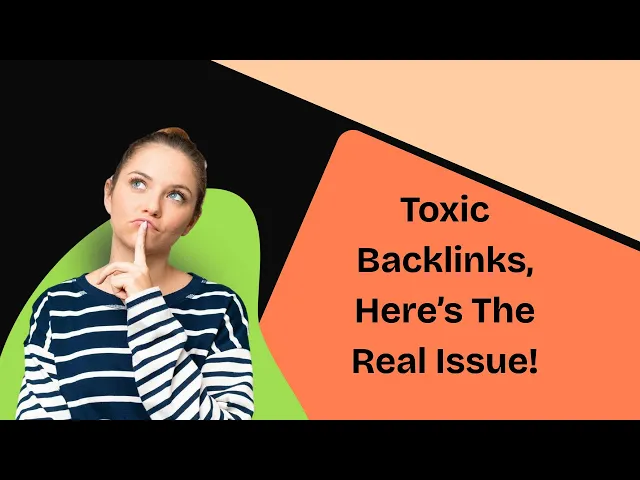
Toxic Backlinks: What They Are & How to Find Them?
Toxic Backlinks: What They Are & How to Find Them?
Last Updated:
Table of Content
Case Studies


Mansi Kalla
Mansi Kalla
Mansi Kalla
SEO
SEO
SEO
12 Min Read
12 Min
12 Min Read
While working on websites, we often come across the term, backlinks, which are important for improving the website’s rankings. In simple words, backlinks are links from other websites that point to yours.
Backlinks are great for SEO, but here’s the catch; some can hurt your site instead of helping it. Those are what we call toxic backlinks.
What are Toxic Backlinks?
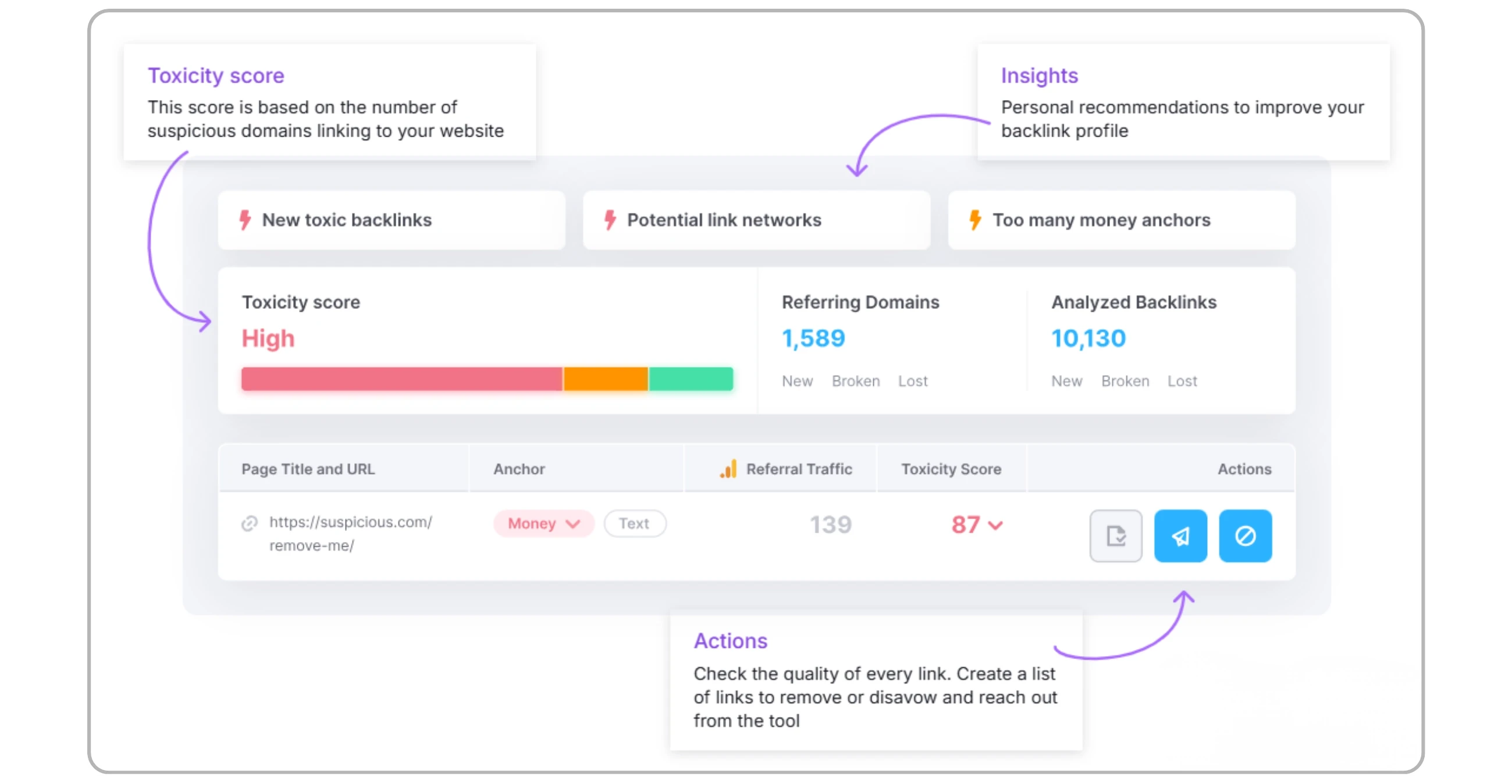
In simple terms, toxic backlinks are links from spammy, irrelevant, or low-quality websites that point to your site. Instead of helping with your SEO, these links can actually hurt your Google rankings.
For example, if your website about healthy recipes is linked from a shady gambling site, that’s a toxic backlink. Google sees it as unnatural and may think you’re trying to manipulate search rankings.
Why Toxic Backlinks Are Bad for SEO?
Toxic backlinks can present various SEO challenges that diminish your website’s overall performance and trustworthiness. Here’s how they may impact your site:
Reduced Search Rankings: Google's algorithms are built to flag unnatural or manipulative link patterns. If your backlink profile has too many low-quality links, Google may consider an attempt to manipulate rankings, and ultimately, your website may drop down more slowly or quickly in search results, making it more difficult for user searches to find you.
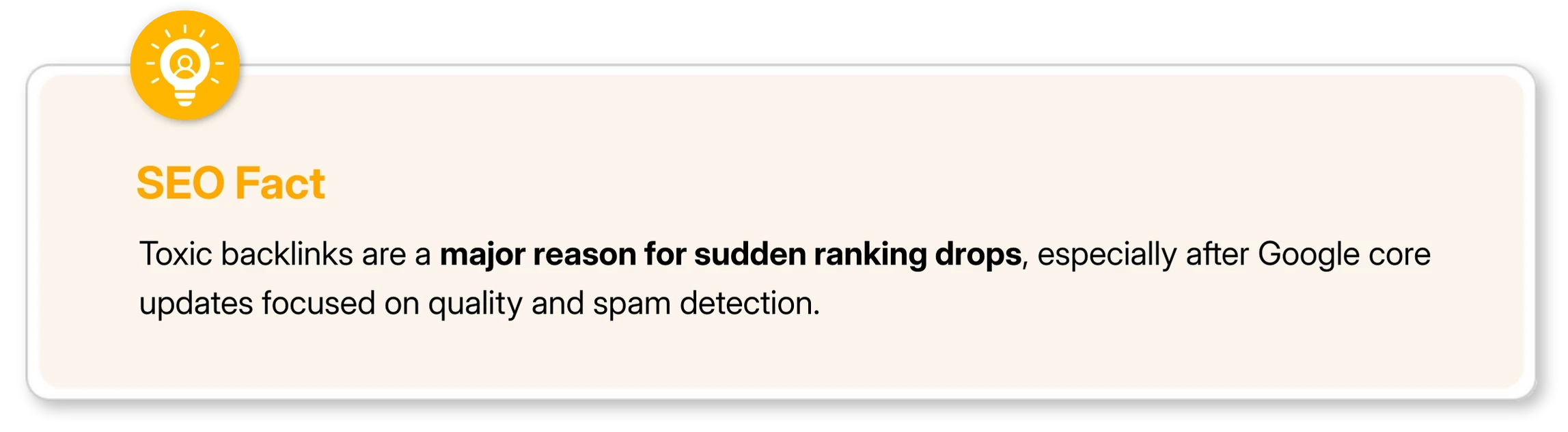
Risk of Google Penalties: In more severe cases, Google may implement manual action against your site. This is direct punishment by a human reviewer at Google when they see clear violations of Google’s guidelines. After manual action, it may take weeks or months to recover, and often you will require a bit of cleanup and may be even required to complete a reconsideration request.
Drop in Domain Authority & Trust: Low-quality or spammy backlinks watermark the authority and trustworthiness of your entire link profile. When your site links or is associated with untrustworthy domains, search engines may view your site as less credible. This weakness in your authority ultimately hinders your ability to rank effectively for competitive keywords.
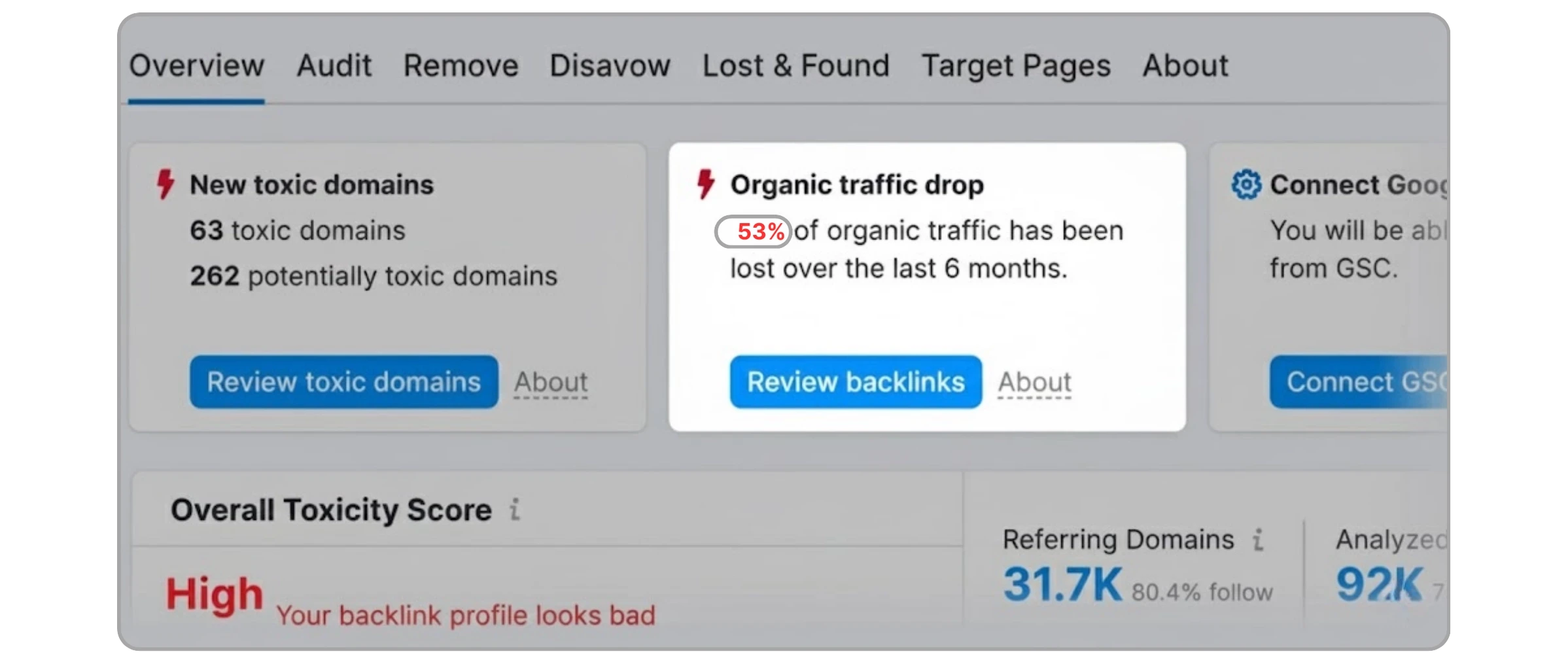
Loss of Organic Traffic: As rankings decrease due to toxic links, your organic presence decreases concomitantly. Your website's traffic, leads, sales, and brand trust also suffer. The longer your toxic backlinks are ignored and unchanged, the more significant the loss of organic performance will be.
How Do Toxic Backlinks Happen?
Toxic backlinks can develop organically, even when following the best SEO practices. Here are a few examples:
Scraper websites are stealing your content and simply adding a link back to your site with no context.
Competitors are doing negative SEO, meaning they are purposely creating spammy links to hurt your site.
Old SEO vendors that are using black-hat strategies as far back as several years ago.
Past link-building strategies that met Google's historical guidelines have since changed.
Automated bots or spammy networks of links generating thousands of low-quality links to your site.
Many of these happen outside of your control; therefore, it is important to audit your backlinks regularly. Doing so helps catch harmful links before they hurt your long-term SEO performance.
How to Identify Toxic Backlinks?
Identifying toxic backlinks may feel a little overwhelming off the bat; however, it is fairly simple once you know what to look for.
In essence, you will want to review your backlink profile and separate the harmful backlinks from the beneficial ones. This is how you identify a toxic backlink:
1. Using SEO Tools for analyzing the backlinks.
The first step is to use reliable SEO tools to get data about websites that link to you. For this reason, it will be best to start by using reliable SEO tools like Ahrefs, SEMrush, Moz, and/or Google Search Console. These tools will provide specific reports on what websites are linking to yours. During the process of analyzing the backlinks, you will want to be on the lookout for the following: -
Low DA or DR- Getting links from websites with low DA or DR means it is very likely that those links come from spammy sites or low-quality websites. Example: Let’s say your website is about fashion. If you obtain backlinks from websites that are not related to fashion (i.e. casinos or gambling), these would be harmful to backlinks.
Foreign or Irrelevant Websites: Links from websites written in a different language or from websites that don’t have anything to do with your audience can appear weird to search engines.
High Spam Score: Certain systems, such as Moz, assign each domain with a spam score. A high spam score indicates a risky or spammy site.
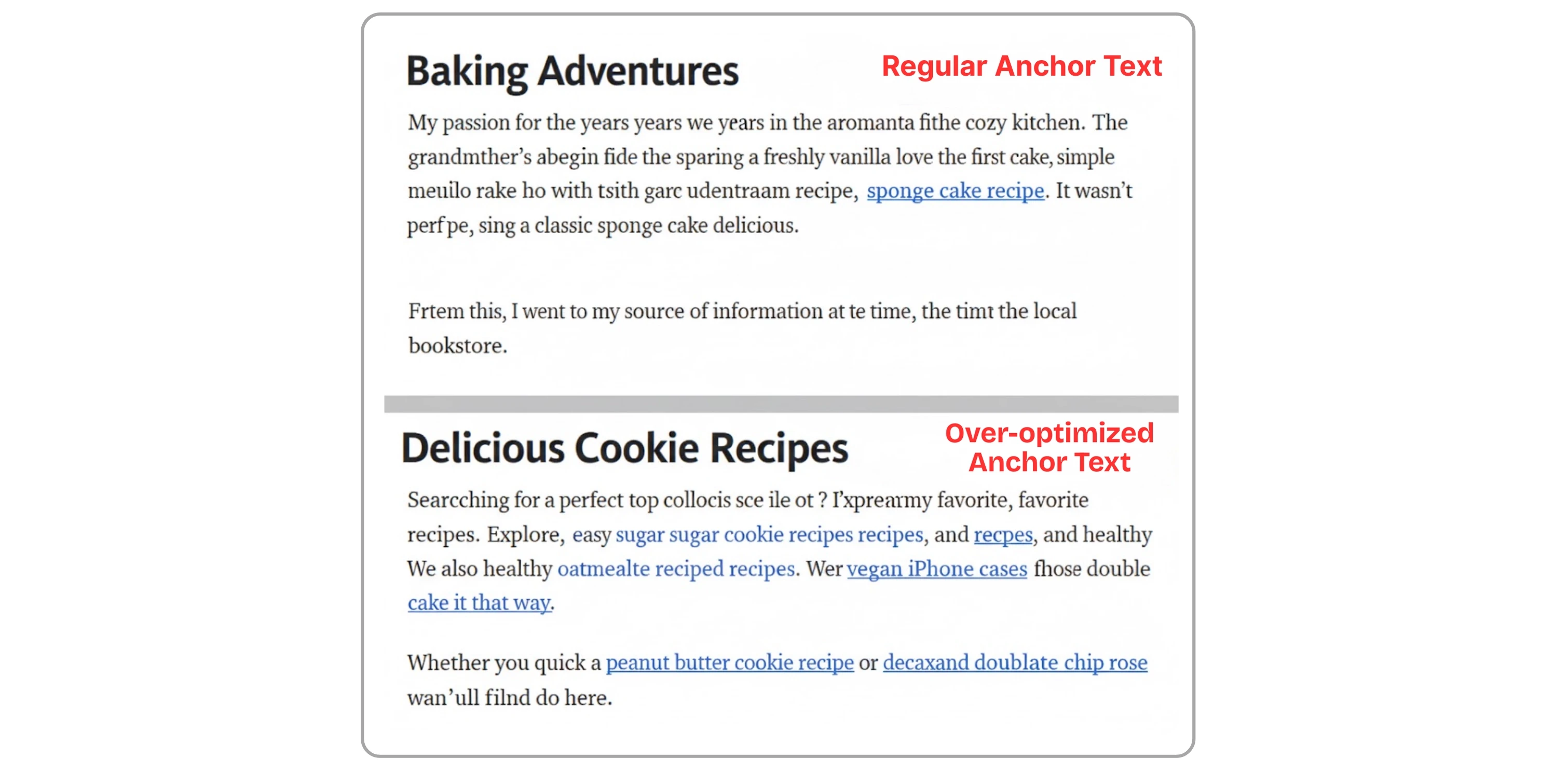
Over-optimized Anchor text: If many backlinks are using the exact same keyword in place of natural text, it can also be an indication of manipulation.
One low-quality link often isn't a problem by itself, but when you see several of these patterns at once, you may want to investigate further.
2. Look for unnatural linking patterns:
At times, the concern is not so much with a handful of individual backlinks as it is with the pattern of your link building. Search engines can tell if a site is experiencing exponential growth that does not feel natural. They do not want to see sudden spikes in the total numbers of backlinks or repeated linking patterns. Take precaution for the following:
Sudden spikes in backlinks: If there are just a few backlinks gained within a short timeframe, and particularly if the sites are unrelated, there may be a spam issue.
Links from sites with little to no traffic: If a site does not receive organic visitors every month and still provides backlinks, that site is likely part of a link farm.
Repetitive use of the same anchor text: If the same terms are repeated over and over as anchor text, then the site could be showing behavior related to manipulating search results.
Site-wide links (footers or sidebars): Site-wide links on a website often provide minimal SEO value and can pose a risk in ranking.
Keeping a close watch on your link profile on a regular basis will allow you to catch these patterns before they impact your rankings.
3. Manually Review Suspicious Backlinks:
SEO tools are great for collecting data; these can’t always judge the context or content quality. Therefore, a manual review is important.
You can do this by:
Checking the Linking Sites: Look at a few sites linking to you. Does it look like a legitimate site, containing solid, real content, or does it look like a site full of posts of poor quality?
Checking Link Placement: Where does your link show up? If it’s located in-between an unrelated link, or buried in unrelated content that appears spammy, that’s a reason for concern.
Checking relevance: Consider whether your target market would even visit this linking site. If not, your backlink is probably irrelevant or could even be harmful.
Making a list of the suspect links: Write down all the suspect links that you discover. You'll want this list if you ask for removals or use Google’s disavow feature down the road.
In Summary, use SEO tools to seek out spam or low-quality domains in order to uncover harmful backlinks. Watch for that recurring anchor text, or sudden spikes in your links. Manually vet linking sites that look suspicious for relevance and quality.
If you continually monitor your links, you can dowse your link profile, safeguard against a potential penalty, and improve the overall performance of your SEO.

How to Fix Toxic Backlinks?
After identifying your toxic, or negative, backlinks representing a danger to your site, here are the most effective approaches for addressing them:
Ask for Removal from the Website Owner: Ideally, you will want to reach out to the site owner or webmaster and politely request removal of the link. They may not reply, but some will comply with you when it is professionally requested. This is the safest method of proceeding, as it removes the toxic links altogether rather than requesting Google to merely ignore it.
Use Google’s Disavow Tool: In the case you have been unable to have the link removed, until you do, you will need to disavow it. Together, these tell Google to ignore those spammy or harmful links when evaluating your site.
Important things to remember when disavowing:
Create a .txt document with links to URLs or entire websites you'd like to disavow to send to Google.
Then you can upload that document in Google's Disavow Tool found in their Search Console.
Fortify Your Backlink Profile: The most effective long-term solution is to strengthen the quality of your backlink profile overall. By building additional strong, authoritative links, it lessens the impact of those few toxic links.
You can strengthen your profile by:
Developing and sharing high-quality and valuable content that earns links naturally
Building relationships and partnerships within your industry
The healthier your backlink profile becomes, the less influence toxic links will have on your site’s SEO.
Final Thoughts
While a toxic backlink may not be visible at present, unaddressed, it could degrade your SEO efforts without notice. Ensuring you complete regular backlink audits, using reputable tools, and taking measured steps to clean links, will also support a healthy backlink profile for future search performance and authority.
Takeaways
Toxic backlinks usually stem from low-quality, spammy, or manipulative websites that have no real value and can be considered unnatural by search engines.
Toxic backlinks can harm your rankings, organic traffic, and overall domain authority and can make competing more difficult.
Therefore, regular backlink audits and monitoring are required to identify suspicious or toxic links before they cause irreversible damage. If you discover a toxic backlink, you may request removal or use Google's Disavow Tool to do the work for yourself.
Active vigilance away from monitoring and investing in high-quality link building can also help improve or restore your site's authority, so your publication moves ahead while backlash efforts tend to.
FAQs
What are toxic backlinks and why are they bad for SEO?

Toxic backlinks are basically links that come from spammy irrelevant, or really low-quality web sites, that then point over to your site. Instead of actually boosting your rankings, they might end up doing the opposite, like triggering Google penalties, lowering your domain authority, and making organic traffic drop. Google often looks at these unnatural links as if someone is trying to game or manipulate the search results, and then it may penalize your website because of that. Also, it helps to understand a bit more about how backlinks work, and when they genuinely support you versus when they start to hurt, bit by bit over time.
How do toxic backlinks happen?
This stuff can basically show up without you doing anything on your end. Usual reasons are scraper sites that take your content and then link back, competitors who run some kind of negativity SEO campaigns against you, old SEO providers who used darker tactics like paid link schemes, plus automated bot networks generating thousands of low quality backlinks. And because a lot of toxic links happen outside of your control, doing regular backlink checkups is kinda essential. Try a free SEO audit to look at where your link profile stands right now.
How do I identify toxic backlinks?
Try using tools like Ahrefs, SEMrush, Moz, or Google Search Console to peek into your backlink profile. You want to catch the odd red flags, such as links coming from pages with low domain authority, foreign or just plain irrelevant websites, high spam scores, and anchor text that feels over-optimized, like the same keyword shows up again and again. Also keep an eye out for sudden spikes in backlinks, or the kind of sitewide footer / sidebar linking that seems, a bit too broad. Before you go flagging anything, do a quick manual check of the linking sites, look at the content quality and relevance first, then decide if it's really suspicious.
How do I remove or disavow toxic backlinks?
First try to get in touch with the website owner, and politely ask for the link removal. This feels like the safest approach because the link is gone entirely. If they don't respond, or they refuse, then go ahead with Google's Disavow Tool from Search Console. Make a .txt file that lists the URLs or domains (use the "domain:" prefix for domains) that you want Google to ignore, after that upload it. Google will process the file across several weeks, kinda gradually. As a rule, always attempt manual removal first before disavowing. Also, take a moment to learn about proper link building practices so you don't get stuck with similar headaches later.
Can toxic backlinks cause a Google manual action penalty?
Yes. If a human reviewer at Google spots clear breaches in their link guidelines, they can issue a manual action against your site. That can really drop your rankings, or even make certain pages vanish from search results, totally. To get back on track, you have to remove or disavow those toxic links, then send a reconsideration request via Search Console. This recovery process can take weeks, or sometimes months. Afterward, you'll want to strengthen your profile, by earning quality backlinks through organic search services and digital PR campaigns, kind of like building a better reputation over time.
While working on websites, we often come across the term, backlinks, which are important for improving the website’s rankings. In simple words, backlinks are links from other websites that point to yours.
Backlinks are great for SEO, but here’s the catch; some can hurt your site instead of helping it. Those are what we call toxic backlinks.
What are Toxic Backlinks?
In simple terms, toxic backlinks are links from spammy, irrelevant, or low-quality websites that point to your site. Instead of helping with your SEO, these links can actually hurt your Google rankings.
For example, if your website about healthy recipes is linked from a shady gambling site, that’s a toxic backlink. Google sees it as unnatural and may think you’re trying to manipulate search rankings.
Why Toxic Backlinks Are Bad for SEO?
Toxic backlinks can present various SEO challenges that diminish your website’s overall performance and trustworthiness. Here’s how they may impact your site:
Reduced Search Rankings: Google's algorithms are built to flag unnatural or manipulative link patterns. If your backlink profile has too many low-quality links, Google may consider an attempt to manipulate rankings, and ultimately, your website may drop down more slowly or quickly in search results, making it more difficult for user searches to find you.
Risk of Google Penalties: In more severe cases, Google may implement manual action against your site. This is direct punishment by a human reviewer at Google when they see clear violations of Google’s guidelines. After manual action, it may take weeks or months to recover, and often you will require a bit of cleanup and may be even required to complete a reconsideration request.
Drop in Domain Authority & Trust: Low-quality or spammy backlinks watermark the authority and trustworthiness of your entire link profile. When your site links or is associated with untrustworthy domains, search engines may view your site as less credible. This weakness in your authority ultimately hinders your ability to rank effectively for competitive keywords.
Loss of Organic Traffic: As rankings decrease due to toxic links, your organic presence decreases concomitantly. Your website's traffic, leads, sales, and brand trust also suffer. The longer your toxic backlinks are ignored and unchanged, the more significant the loss of organic performance will be.
How Do Toxic Backlinks Happen?
Toxic backlinks can develop organically, even when following the best SEO practices. Here are a few examples:
Scraper websites are stealing your content and simply adding a link back to your site with no context.
Competitors are doing negative SEO, meaning they are purposely creating spammy links to hurt your site.
Old SEO vendors that are using black-hat strategies as far back as several years ago.
Past link-building strategies that met Google's historical guidelines have since changed.
Automated bots or spammy networks of links generating thousands of low-quality links to your site.
Many of these happen outside of your control; therefore, it is important to audit your backlinks regularly. Doing so helps catch harmful links before they hurt your long-term SEO performance.
How to Identify Toxic Backlinks?
Identifying toxic backlinks may feel a little overwhelming off the bat; however, it is fairly simple once you know what to look for.
In essence, you will want to review your backlink profile and separate the harmful backlinks from the beneficial ones. This is how you identify a toxic backlink:
1. Using SEO Tools for analyzing the backlinks.
The first step is to use reliable SEO tools to get data about websites that link to you. For this reason, it will be best to start by using reliable SEO tools like Ahrefs, SEMrush, Moz, and/or Google Search Console. These tools will provide specific reports on what websites are linking to yours. During the process of analyzing the backlinks, you will want to be on the lookout for the following: -
Low DA or DR- Getting links from websites with low DA or DR means it is very likely that those links come from spammy sites or low-quality websites. Example: Let’s say your website is about fashion. If you obtain backlinks from websites that are not related to fashion (i.e. casinos or gambling), these would be harmful to backlinks.
Foreign or Irrelevant Websites: Links from websites written in a different language or from websites that don’t have anything to do with your audience can appear weird to search engines.
High Spam Score: Certain systems, such as Moz, assign each domain with a spam score. A high spam score indicates a risky or spammy site.
Over-optimized Anchor text: If many backlinks are using the exact same keyword in place of natural text, it can also be an indication of manipulation.
One low-quality link often isn't a problem by itself, but when you see several of these patterns at once, you may want to investigate further.
2. Look for unnatural linking patterns:
At times, the concern is not so much with a handful of individual backlinks as it is with the pattern of your link building. Search engines can tell if a site is experiencing exponential growth that does not feel natural. They do not want to see sudden spikes in the total numbers of backlinks or repeated linking patterns. Take precaution for the following:
Sudden spikes in backlinks: If there are just a few backlinks gained within a short timeframe, and particularly if the sites are unrelated, there may be a spam issue.
Links from sites with little to no traffic: If a site does not receive organic visitors every month and still provides backlinks, that site is likely part of a link farm.
Repetitive use of the same anchor text: If the same terms are repeated over and over as anchor text, then the site could be showing behavior related to manipulating search results.
Site-wide links (footers or sidebars): Site-wide links on a website often provide minimal SEO value and can pose a risk in ranking.
Keeping a close watch on your link profile on a regular basis will allow you to catch these patterns before they impact your rankings.
3. Manually Review Suspicious Backlinks:
SEO tools are great for collecting data; these can’t always judge the context or content quality. Therefore, a manual review is important.
You can do this by:
Checking the Linking Sites: Look at a few sites linking to you. Does it look like a legitimate site, containing solid, real content, or does it look like a site full of posts of poor quality?
Checking Link Placement: Where does your link show up? If it’s located in-between an unrelated link, or buried in unrelated content that appears spammy, that’s a reason for concern.
Checking relevance: Consider whether your target market would even visit this linking site. If not, your backlink is probably irrelevant or could even be harmful.
Making a list of the suspect links: Write down all the suspect links that you discover. You'll want this list if you ask for removals or use Google’s disavow feature down the road.
In Summary, use SEO tools to seek out spam or low-quality domains in order to uncover harmful backlinks. Watch for that recurring anchor text, or sudden spikes in your links. Manually vet linking sites that look suspicious for relevance and quality.
If you continually monitor your links, you can dowse your link profile, safeguard against a potential penalty, and improve the overall performance of your SEO.
How to Fix Toxic Backlinks?
After identifying your toxic, or negative, backlinks representing a danger to your site, here are the most effective approaches for addressing them:
Ask for Removal from the Website Owner: Ideally, you will want to reach out to the site owner or webmaster and politely request removal of the link. They may not reply, but some will comply with you when it is professionally requested. This is the safest method of proceeding, as it removes the toxic links altogether rather than requesting Google to merely ignore it.
Use Google’s Disavow Tool: In the case you have been unable to have the link removed, until you do, you will need to disavow it. Together, these tell Google to ignore those spammy or harmful links when evaluating your site.
Important things to remember when disavowing:
Create a .txt document with links to URLs or entire websites you'd like to disavow to send to Google.
Then you can upload that document in Google's Disavow Tool found in their Search Console.
Fortify Your Backlink Profile: The most effective long-term solution is to strengthen the quality of your backlink profile overall. By building additional strong, authoritative links, it lessens the impact of those few toxic links.
You can strengthen your profile by:
Developing and sharing high-quality and valuable content that earns links naturally
Building relationships and partnerships within your industry
The healthier your backlink profile becomes, the less influence toxic links will have on your site’s SEO.
Final Thoughts
While a toxic backlink may not be visible at present, unaddressed, it could degrade your SEO efforts without notice. Ensuring you complete regular backlink audits, using reputable tools, and taking measured steps to clean links, will also support a healthy backlink profile for future search performance and authority.
Takeaways
Toxic backlinks usually stem from low-quality, spammy, or manipulative websites that have no real value and can be considered unnatural by search engines.
Toxic backlinks can harm your rankings, organic traffic, and overall domain authority and can make competing more difficult.
Therefore, regular backlink audits and monitoring are required to identify suspicious or toxic links before they cause irreversible damage. If you discover a toxic backlink, you may request removal or use Google's Disavow Tool to do the work for yourself.
Active vigilance away from monitoring and investing in high-quality link building can also help improve or restore your site's authority, so your publication moves ahead while backlash efforts tend to.
FAQs
What are toxic backlinks and why are they bad for SEO?
Toxic backlinks are basically links that come from spammy irrelevant, or really low-quality web sites, that then point over to your site. Instead of actually boosting your rankings, they might end up doing the opposite, like triggering Google penalties, lowering your domain authority, and making organic traffic drop. Google often looks at these unnatural links as if someone is trying to game or manipulate the search results, and then it may penalize your website because of that. Also, it helps to understand a bit more about how backlinks work, and when they genuinely support you versus when they start to hurt, bit by bit over time.
How do toxic backlinks happen?
This stuff can basically show up without you doing anything on your end. Usual reasons are scraper sites that take your content and then link back, competitors who run some kind of negativity SEO campaigns against you, old SEO providers who used darker tactics like paid link schemes, plus automated bot networks generating thousands of low quality backlinks. And because a lot of toxic links happen outside of your control, doing regular backlink checkups is kinda essential. Try a free SEO audit to look at where your link profile stands right now.
How do I identify toxic backlinks?
Try using tools like Ahrefs, SEMrush, Moz, or Google Search Console to peek into your backlink profile. You want to catch the odd red flags, such as links coming from pages with low domain authority, foreign or just plain irrelevant websites, high spam scores, and anchor text that feels over-optimized, like the same keyword shows up again and again. Also keep an eye out for sudden spikes in backlinks, or the kind of sitewide footer / sidebar linking that seems, a bit too broad. Before you go flagging anything, do a quick manual check of the linking sites, look at the content quality and relevance first, then decide if it's really suspicious.
How do I remove or disavow toxic backlinks?
First try to get in touch with the website owner, and politely ask for the link removal. This feels like the safest approach because the link is gone entirely. If they don't respond, or they refuse, then go ahead with Google's Disavow Tool from Search Console. Make a .txt file that lists the URLs or domains (use the "domain:" prefix for domains) that you want Google to ignore, after that upload it. Google will process the file across several weeks, kinda gradually. As a rule, always attempt manual removal first before disavowing. Also, take a moment to learn about proper link building practices so you don't get stuck with similar headaches later.
Can toxic backlinks cause a Google manual action penalty?
Yes. If a human reviewer at Google spots clear breaches in their link guidelines, they can issue a manual action against your site. That can really drop your rankings, or even make certain pages vanish from search results, totally. To get back on track, you have to remove or disavow those toxic links, then send a reconsideration request via Search Console. This recovery process can take weeks, or sometimes months. Afterward, you'll want to strengthen your profile, by earning quality backlinks through organic search services and digital PR campaigns, kind of like building a better reputation over time.



Summarize with AI



Want to Skyrocket Revenue? Get a Free Audit Today!
Want to Skyrocket Revenue? Get a Free Audit Today!



4.9/5 Ratings!


Don’t miss our revenue growth tips!
Get expert marketing tips—straight to your inbox, like thousands of happy clients.
Don’t miss our revenue growth tips!
Get expert marketing tips—straight to your inbox, like thousands of happy clients.
Don’t miss our revenue growth tips!
Don’t miss our revenue growth tips!
Get expert marketing tips—straight to your inbox, like thousands of happy clients.
Relevant Blogs on Organic SEO
Relevant Blogs on Organic SEO
Unlock data-driven insights in Organic SEO—explore our featured blogs and skyrocket your revenue before your competitors do.
Unlock data-driven insights in Organic SEO—explore our featured blogs and skyrocket your revenue before your competitors do.

SEO
Sep 21, 2026
5 Min Read
Audience-First SEO: How to Rank by Putting Readers First
SEO
Sep 21, 2026
5 Min Read
Audience-First SEO: How to Rank by Putting Readers First
SEO
Sep 21, 2026
5 Min Read
Audience-First SEO: How to Rank by Putting Readers First

SEO
Sep 19, 2026
5 Min Read
How to Add SEO Keywords to Your Website: Where and How
SEO
Sep 19, 2026
5 Min Read
How to Add SEO Keywords to Your Website: Where and How
SEO
Sep 19, 2026
5 Min Read
How to Add SEO Keywords to Your Website: Where and How

SEO
Sep 18, 2026
5 Min Read
How XML Sitemaps Help Search Engines Discover New Pages
SEO
Sep 18, 2026
5 Min Read
How XML Sitemaps Help Search Engines Discover New Pages
SEO
Sep 18, 2026
5 Min Read
How XML Sitemaps Help Search Engines Discover New Pages


































Ready to speak with an expert?
Data-Driven Marketing Agency That Elevates ROI
1100+
Websites Designed & Optimized to Convert
$280M+
Client Revenue Driven & Growing Strong
Discover how to skyrocket
your revenue today!
Trusted by 1000+ Owners!
Ready to speak with an expert?
Data-Driven Marketing Agency That Elevates ROI
1100+
Websites Designed & Optimized to Convert
$280M+
Client Revenue Driven & Growing Strong
Discover how to skyrocket
your revenue today!
Trusted by 1000+ Owners!
Want to skyrocket revenue?
4.9/5 Ratings!
Ready to speak with an expert?
Data-Driven Marketing Agency That Elevates ROI
1100+
Websites Designed & Optimized to Convert
$280M+
Client Revenue Driven & Growing Strong
Discover how to skyrocket
your revenue today!
Trusted by 1000+ Owners!
Call
Meet