Walmart vs. Amazon: Differences , Profitability and Why We Shouldn't Ignore
Walmart vs. Amazon: Differences , Profitability and Why We Shouldn't Ignore
Last Updated:
Table of Content
Client Testimonials










Kamlesh Deora
Kamlesh Deora
Kamlesh Deora
Web Design
Web Design
Web Design
10 Min Read
10 Min
10 Min Read
Selling online today means choosing the right marketplace as much as choosing the right product. For many sellers, the decision often comes down to two giants: Amazon and Walmart. Both platforms offer massive reach, established trust, and powerful infrastructure—but they operate very differently and suit different types of businesses.
Amazon is known for its global scale, advanced fulfillment network, and intense competition, while Walmart is growing fast with a more selective marketplace, lower competition in many categories, and strong omnichannel presence. Choosing the wrong platform can impact your margins, visibility, and long-term growth.
In this blog, we’ll break down the key differences between Amazon and Walmart from a seller’s perspective, including fees, competition, fulfillment options, audience behavior, and growth potential. By the end, you’ll have a clear understanding of which marketplace aligns best with your business goals and selling strategy.
At a Glance: Main Differences
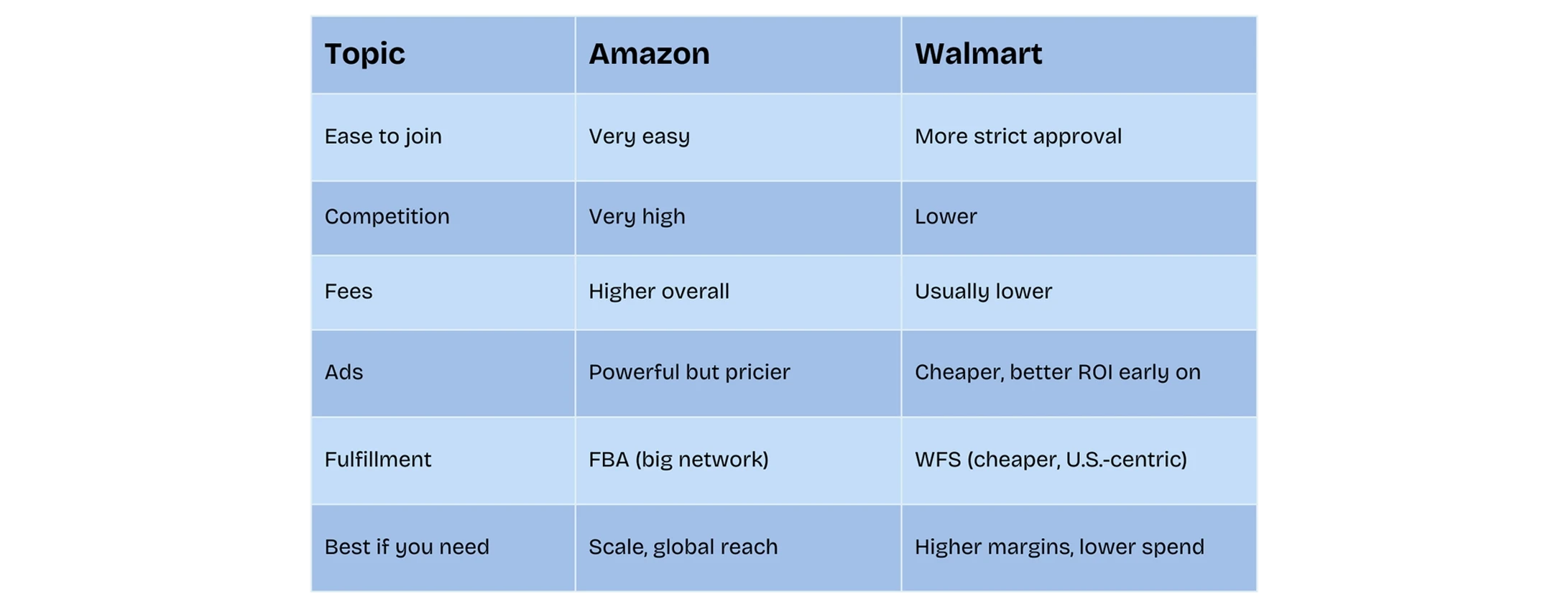
What Sellers Care About?
Fees & profit
Sellers want to know how much they keep after fees. Walmart usually charges lower referral fees and doesn’t force a monthly subscription, while Amazon has multiple fees (referral + FBA (Fulfillment by Amazon) + storage + subscription). That affects your profit from day one.
In many fee breakdowns for sellers, even a $100–$200 difference per order can completely change profitability. In several cases, sellers who were losing money on Amazon became profitable after moving the same SKU to Walmart, largely because Walmart Fulfillment Services (WFS) fees were lower.
Competition & visibility
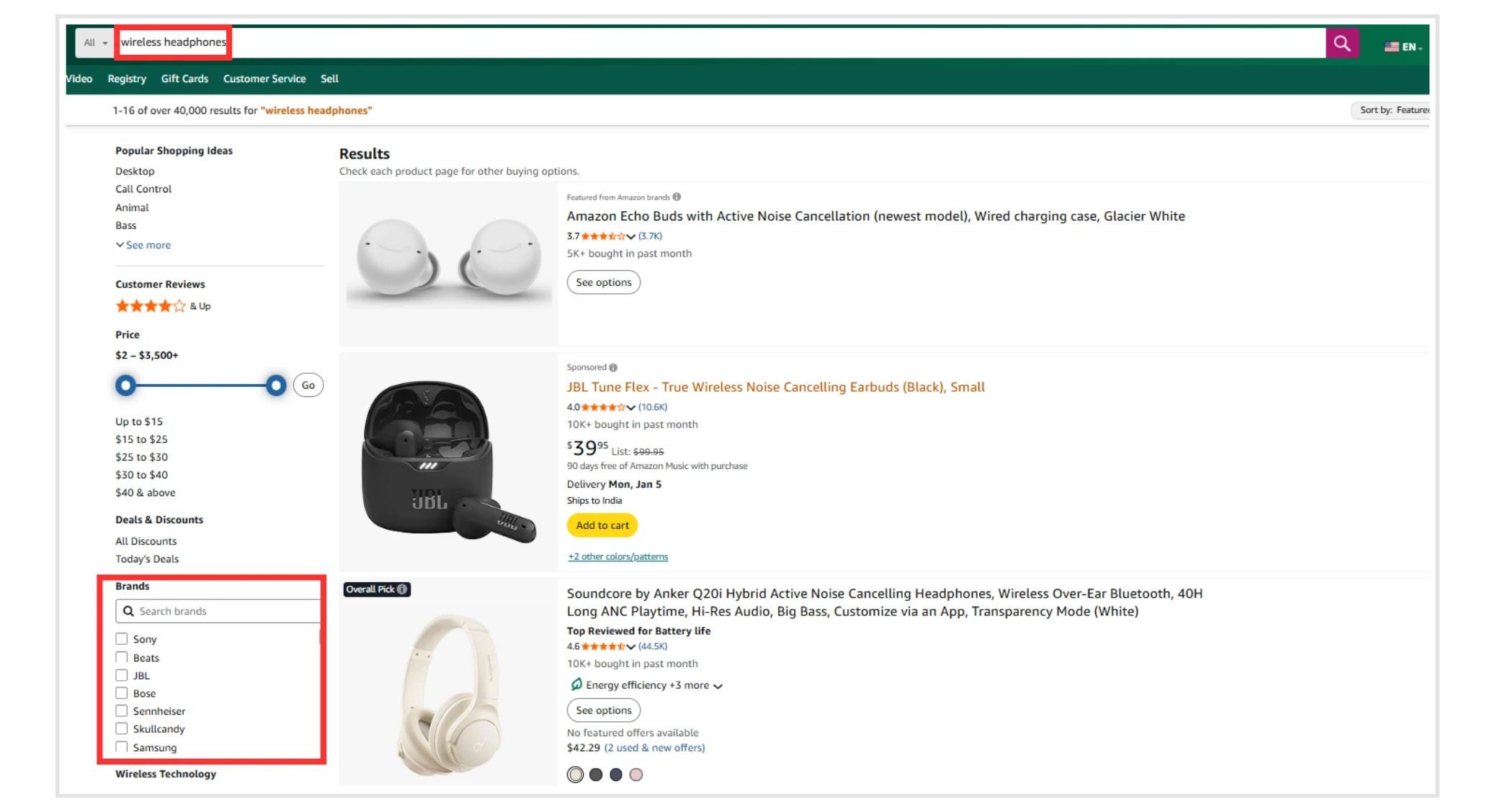
Amazon has many sellers fighting for the same keywords. That means you may need to spend on ads to rank. Walmart has fewer sellers in many categories, so you can get visibility faster without burning your ad budget.
How the Marketplaces Show Products?
Amazon’s search system
Amazon’s search is built to sell — it looks at keywords, how well your product converts, recent sales, price, fulfillment method (FBA helps), reviews, and stock. If your product doesn’t sell, it won’t rank. That’s why ads are often needed to kickstart sales. Learn more about how Amazon’s ranking works here.
Walmart’s ranking
Walmart focuses on price, product availability, fast shipping, and seller performance. Because there are fewer sellers, good listings with right price + WFS can move up quickly.
Buy Box basics
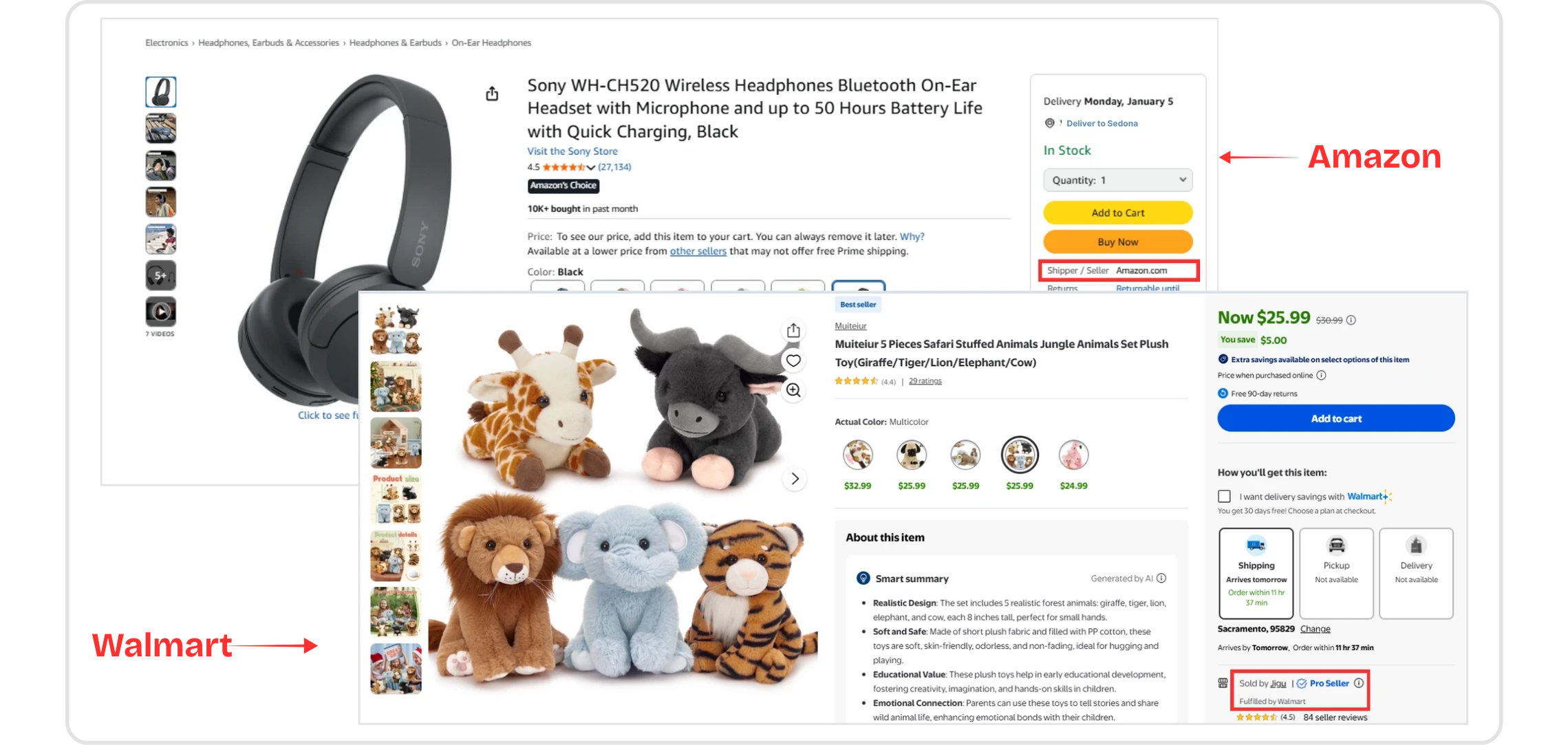
Buy Box = where shoppers click Add to cart. Amazon’s Buy Box is fiercely competitive and depends on price, fulfillment, and seller health. Walmart’s Buy Box is easier to capture because fewer sellers compete on each SKU (Stock Keeping Unit).
Fulfillment: FBA vs WFS
FBA (Fulfillment by Amazon): Great reach and customer trust. More fees and more rules (storage/surcharges).
WFS (Walmart Fulfillment Services): Cheaper per unit in many cases, good 2-day delivery benefits, and fewer extra fees.
If your product is low margin, WFS often keeps profits healthier. If you want international scale and won’t mind costs, FBA helps you scale faster.
Advertising
Amazon Ads give big reach through formats like Sponsored Products and DSP (Demand-Side Platform), but CPCs (Cost Per Click) is higher because many sellers bid on the same keywords. You must watch your ACoS (Advertising Cost of Sales) and profit margins closely.
Walmart Connect has lower CPCs and can give higher ROI (Return on Investment) early on, especially for sellers who don’t have a huge ad budget.
Listing & conversion basics sellers must do
5 product bullets that answer “Why buy?”
5–7 high-quality images + 1 short demo video.
Backend search terms (Amazon) and complete attribute fields (Walmart).
Stay competitive with pricing, but safeguard your margins. Any automated pricing should have a firm minimum limit so your price never goes too low.
Get early reviews the right way—request them through Amazon’s or Walmart’s official tools only. Never incentivize or influence reviews. Follow each platform’s review guidelines to avoid penalties.
Risks every seller must know
Account suspensions and listing suppression (both platforms).
Return abuse and refunds.
Inventory limits (FBA) if you don’t manage IPI/stock.
Strict onboarding or documentation requests (Walmart).
Quick seller scenarios
Low-margin, fast-moving goods (e.g., household consumables) → Start with Walmart for better margins.
Niche products with high perceived value → Amazon can reach more relevant buyers.
Small budget for ads → Walmart gives better ROI early.
Brand that plans global expansion → Amazon has more options to scale.
Final Thoughts
Choosing between Amazon and Walmart isn’t about which marketplace is “better”; it’s about which one fits your product, margins, and growth stage.
If you want healthier margins and lower ad spend, starting with Walmart Marketplace often makes sense. If your goal is high volume, international reach, and stronger brand-building tools, Amazon remains the better option.
The safest approach is to begin where your product performs best based on category fit and unit economics, then expand to the other marketplace once you have a proven SKU, stable operations, and predictable demand.
No matter which platform you choose, focus first on the fundamentals: listing quality, inventory planning, and clear unit economics. These consistently outperform shortcuts, hacks, or quick-win tactics.
To stay profitable and in control, track these metrics weekly:
Sessions
Buy Box percentage
Ad spend (ACoS)
Margin per order
Strong data, not assumptions, is what turns marketplace selling into a scalable business.
FAQs
What is the key difference between selling on Walmart marketplace and Amazon?

The fundamental difference boils down to competition and cost. Amazon is a huge, crowded marketplace where you’re always competing with other sellers for attention and paying tons of money for ads to get noticed. Walmart has less sellers in most categories so you can get organic search visibility faster and without burning your ad budget. They are both powerful but suited to very different business situations and stages of growth.
Which platform has lower fees - Amazon or Walmart?
Walmart generally wins on fees. Amazon stacks up multiple charges, referral fees, FBA fees, storage fees, and a monthly subscription, which quietly eat into your margins. Walmart's referral fees are lower and there's no forced subscription. For low-margin products especially, that difference can be the gap between losing money and actually turning a profit. Many sellers who struggled on Amazon found the same product became profitable just by switching to Walmart Fulfillment Services.
How does advertising work differently on Amazon vs Walmart?
Amazon Ads give you massive reach but cost per click is high because hundreds of sellers are bidding on the same keywords. Your ad spend can spiral fast if you're not watching it closely. Walmart Connect on the other hand has lower CPCs and tends to deliver better early ROI, especially if you're working with a smaller budget. If you're just starting out and want to test paid ads without heavy investment, Walmart is honestly the smarter place to begin.
What is the Buy Box and why does it matter for sellers?
The Buy Box is that "Add to Cart" button shoppers click, whoever wins it gets the sale. On Amazon it's incredibly competitive, influenced by price, fulfillment method, seller health, and reviews. On Walmart it's much easier to capture simply because fewer sellers compete on each product. For new sellers especially, winning the Buy Box on Walmart is far more achievable and can drive consistent sales without the intense pressure Amazon creates.
What is better for new sellers to sell on, Amazon or Walmart?
It really depends on your product and budget. If you’re working with low margins and can’t slash heavy PPC spend right away, Walmart is generally the smarter place to start with lower fees, less competition and more promising early ROI on ads. If you are selling a niche product with a strong perceived value and you have the budget for advertising, then Amazon’s larger audience can work in your favor. The safest move is to begin with where your unit economics make the most sense and then scale from there once you have a proven product.
Selling online today means choosing the right marketplace as much as choosing the right product. For many sellers, the decision often comes down to two giants: Amazon and Walmart. Both platforms offer massive reach, established trust, and powerful infrastructure—but they operate very differently and suit different types of businesses.
Amazon is known for its global scale, advanced fulfillment network, and intense competition, while Walmart is growing fast with a more selective marketplace, lower competition in many categories, and strong omnichannel presence. Choosing the wrong platform can impact your margins, visibility, and long-term growth.
In this blog, we’ll break down the key differences between Amazon and Walmart from a seller’s perspective, including fees, competition, fulfillment options, audience behavior, and growth potential. By the end, you’ll have a clear understanding of which marketplace aligns best with your business goals and selling strategy.
At a Glance: Main Differences
What Sellers Care About?
Fees & profit
Sellers want to know how much they keep after fees. Walmart usually charges lower referral fees and doesn’t force a monthly subscription, while Amazon has multiple fees (referral + FBA (Fulfillment by Amazon) + storage + subscription). That affects your profit from day one.
In many fee breakdowns for sellers, even a $100–$200 difference per order can completely change profitability. In several cases, sellers who were losing money on Amazon became profitable after moving the same SKU to Walmart, largely because Walmart Fulfillment Services (WFS) fees were lower.
Competition & visibility
Amazon has many sellers fighting for the same keywords. That means you may need to spend on ads to rank. Walmart has fewer sellers in many categories, so you can get visibility faster without burning your ad budget.
How the Marketplaces Show Products?
Amazon’s search system
Amazon’s search is built to sell — it looks at keywords, how well your product converts, recent sales, price, fulfillment method (FBA helps), reviews, and stock. If your product doesn’t sell, it won’t rank. That’s why ads are often needed to kickstart sales. Learn more about how Amazon’s ranking works here.
Walmart’s ranking
Walmart focuses on price, product availability, fast shipping, and seller performance. Because there are fewer sellers, good listings with right price + WFS can move up quickly.
Buy Box basics
Buy Box = where shoppers click Add to cart. Amazon’s Buy Box is fiercely competitive and depends on price, fulfillment, and seller health. Walmart’s Buy Box is easier to capture because fewer sellers compete on each SKU (Stock Keeping Unit).
Fulfillment: FBA vs WFS
FBA (Fulfillment by Amazon): Great reach and customer trust. More fees and more rules (storage/surcharges).
WFS (Walmart Fulfillment Services): Cheaper per unit in many cases, good 2-day delivery benefits, and fewer extra fees.
If your product is low margin, WFS often keeps profits healthier. If you want international scale and won’t mind costs, FBA helps you scale faster.
Advertising
Amazon Ads give big reach through formats like Sponsored Products and DSP (Demand-Side Platform), but CPCs (Cost Per Click) is higher because many sellers bid on the same keywords. You must watch your ACoS (Advertising Cost of Sales) and profit margins closely.
Walmart Connect has lower CPCs and can give higher ROI (Return on Investment) early on, especially for sellers who don’t have a huge ad budget.
Listing & conversion basics sellers must do
5 product bullets that answer “Why buy?”
5–7 high-quality images + 1 short demo video.
Backend search terms (Amazon) and complete attribute fields (Walmart).
Stay competitive with pricing, but safeguard your margins. Any automated pricing should have a firm minimum limit so your price never goes too low.
Get early reviews the right way—request them through Amazon’s or Walmart’s official tools only. Never incentivize or influence reviews. Follow each platform’s review guidelines to avoid penalties.
Risks every seller must know
Account suspensions and listing suppression (both platforms).
Return abuse and refunds.
Inventory limits (FBA) if you don’t manage IPI/stock.
Strict onboarding or documentation requests (Walmart).
Quick seller scenarios
Low-margin, fast-moving goods (e.g., household consumables) → Start with Walmart for better margins.
Niche products with high perceived value → Amazon can reach more relevant buyers.
Small budget for ads → Walmart gives better ROI early.
Brand that plans global expansion → Amazon has more options to scale.
Final Thoughts
Choosing between Amazon and Walmart isn’t about which marketplace is “better”; it’s about which one fits your product, margins, and growth stage.
If you want healthier margins and lower ad spend, starting with Walmart Marketplace often makes sense. If your goal is high volume, international reach, and stronger brand-building tools, Amazon remains the better option.
The safest approach is to begin where your product performs best based on category fit and unit economics, then expand to the other marketplace once you have a proven SKU, stable operations, and predictable demand.
No matter which platform you choose, focus first on the fundamentals: listing quality, inventory planning, and clear unit economics. These consistently outperform shortcuts, hacks, or quick-win tactics.
To stay profitable and in control, track these metrics weekly:
Sessions
Buy Box percentage
Ad spend (ACoS)
Margin per order
Strong data, not assumptions, is what turns marketplace selling into a scalable business.
FAQs
What is the key difference between selling on Walmart marketplace and Amazon?
The fundamental difference boils down to competition and cost. Amazon is a huge, crowded marketplace where you’re always competing with other sellers for attention and paying tons of money for ads to get noticed. Walmart has less sellers in most categories so you can get organic search visibility faster and without burning your ad budget. They are both powerful but suited to very different business situations and stages of growth.
Which platform has lower fees - Amazon or Walmart?
Walmart generally wins on fees. Amazon stacks up multiple charges, referral fees, FBA fees, storage fees, and a monthly subscription, which quietly eat into your margins. Walmart's referral fees are lower and there's no forced subscription. For low-margin products especially, that difference can be the gap between losing money and actually turning a profit. Many sellers who struggled on Amazon found the same product became profitable just by switching to Walmart Fulfillment Services.
How does advertising work differently on Amazon vs Walmart?
Amazon Ads give you massive reach but cost per click is high because hundreds of sellers are bidding on the same keywords. Your ad spend can spiral fast if you're not watching it closely. Walmart Connect on the other hand has lower CPCs and tends to deliver better early ROI, especially if you're working with a smaller budget. If you're just starting out and want to test paid ads without heavy investment, Walmart is honestly the smarter place to begin.
What is the Buy Box and why does it matter for sellers?
The Buy Box is that "Add to Cart" button shoppers click, whoever wins it gets the sale. On Amazon it's incredibly competitive, influenced by price, fulfillment method, seller health, and reviews. On Walmart it's much easier to capture simply because fewer sellers compete on each product. For new sellers especially, winning the Buy Box on Walmart is far more achievable and can drive consistent sales without the intense pressure Amazon creates.
What is better for new sellers to sell on, Amazon or Walmart?
It really depends on your product and budget. If you’re working with low margins and can’t slash heavy PPC spend right away, Walmart is generally the smarter place to start with lower fees, less competition and more promising early ROI on ads. If you are selling a niche product with a strong perceived value and you have the budget for advertising, then Amazon’s larger audience can work in your favor. The safest move is to begin with where your unit economics make the most sense and then scale from there once you have a proven product.

Kamlesh Deora
, Chief Executive Officer
Kamlesh is a digital marketer and web expert who specializes in turning ideas into real, working online businesses. He has spent years helping brands grow through smart design, SEO, and practical digital strategies. He partners with businesses to make smarter digital decisions, streamline their online presence, and build strong foundations that support sustainable, long-term growth.


Summarize with AI









Don’t miss our revenue growth tips!
Get expert marketing tips—straight to your inbox, like thousands of happy clients.
Don’t miss our revenue growth tips!
Don’t miss our revenue growth tips!
Get expert marketing tips—straight to your inbox, like thousands of happy clients.
Don’t miss our revenue growth tips!
Get expert marketing tips—straight to your inbox, like thousands of happy clients.
Relevant Blogs on Web Design
Relevant Blogs on Web Design
Unlock data-driven insights in Web Design—explore our featured blogs and skyrocket your revenue before your competitors do.
Unlock data-driven insights in Web Design—explore our featured blogs and skyrocket your revenue before your competitors do.

Web Design
Sep 9, 2026
10 Min Read
Is Your Website Too Slow? Here's How to Fix It
Web Design
Sep 9, 2026
10 Min Read
Is Your Website Too Slow? Here's How to Fix It
Web Design
Sep 9, 2026
10 Min Read
Is Your Website Too Slow? Here's How to Fix It

Web Design
Jul 23, 2026
8 Min Read
Top 5 AI Web Design Agencies for High-Converting Websites in Houston
Web Design
Jul 23, 2026
8 Min Read
Top 5 AI Web Design Agencies for High-Converting Websites in Houston
Web Design
Jul 23, 2026
8 Min Read
Top 5 AI Web Design Agencies for High-Converting Websites in Houston

Web Design
Jul 21, 2026
10 Min Read
Shopify's New AI Marketing Tool: Should Small Businesses Use It?
Web Design
Jul 21, 2026
10 Min Read
Shopify's New AI Marketing Tool: Should Small Businesses Use It?
Web Design
Jul 21, 2026
10 Min Read
Shopify's New AI Marketing Tool: Should Small Businesses Use It?






























Ready to speak with an expert?
Data-Driven Marketing Agency That Elevates ROI
1100+
Websites Designed & Optimized to Convert
$280M+
Client Revenue Driven & Growing Strong
Discover how to skyrocket
your revenue today!



Trusted by 1000+ Owners!
Ready to speak with an expert?
Data-Driven Marketing Agency That Elevates ROI
1100+
Websites Designed & Optimized to Convert
$280M+
Client Revenue Driven & Growing Strong
Discover how to skyrocket
your revenue today!
Trusted by 1000+ Owners!
Want to skyrocket revenue?
4.9/5 Ratings!
Ready to speak with an expert?
Data-Driven Marketing Agency That Elevates ROI
1100+
Websites Designed & Optimized to Convert
$280M+
Client Revenue Driven & Growing Strong
Discover how to skyrocket
your revenue today!
Trusted by 1000+ Owners!
Call
Meet