Google’s Latest Shift: Are Paid Search Results Being Hidden? Why Google Ads Feels Broken in 2026
Google’s Latest Shift: Are Paid Search Results Being Hidden? Why Google Ads Feels Broken in 2026
Table of Content
Title
Case Studies




Aashi Katariya
Aashi Katariya
GEO
GEO
10 Min Read
12 Min
For nearly two decades, Google Ads (formerly AdWords) has been the backbone of digital advertising. Businesses paid, Google displayed ads at the top, users clicked, conversions happened. Simple.
But in 2026, something feels… off.
Marketers are noticing reduced visibility, lower click-through rates, rising costs, and—most importantly—shrinking user trust. At the same time, Google is quietly reshaping how search results appear, giving more space to AI-generated answers, organic listings, and contextual experiences—while paid results are increasingly blended, pushed down, or visually de-emphasized.
This raises a critical question:
Is Google hiding paid search results—and is PPC slowly losing relevance?
Let’s unpack what’s happening, why Google Ads feels less effective in 2026, and why Organic Search, AI Search, and GEO (Generative Engine Optimization) are becoming the real drivers of sustainable growth.
What Changed? Google’s “Quiet” Shift in Search Experience
Google didn’t announce a dramatic press release saying “We’re hiding ads now.” Instead, the shift has been gradual, strategic, and UX-driven.
Here’s what’s clearly different in 2026:
AI Overviews and generative answers dominate above-the-fold
Organic results are more visually rich (FAQs, videos, snippets)
Ads are visually compressed or blended into layouts
Paid placements feel less distinguishable—but also less clickable
Search is no longer just “10 blue links”
Google’s priority has shifted from monetization-first to experience-first—at least on the surface. And that has massive implications for advertisers.
Are Paid Search Results Being Hidden?
Short answer: Not hidden—but de-prioritized.
Long answer: Google is intentionally reducing the perceived dominance of ads to protect user trust and search quality for advertisers.
Why Google Had to Act?
Over the years, users became increasingly skeptical of ads:
“This brand is only here because they paid”
“Ads don’t answer my question”
“Sponsored ≠ trustworthy”
With AI tools, voice search, and zero-click results on the rise, Google faced a dilemma:
Push ads aggressively and lose user trust—or rebalance search to keep users loyal.
Google chose loyalty.
How Ads Are Being Softened?
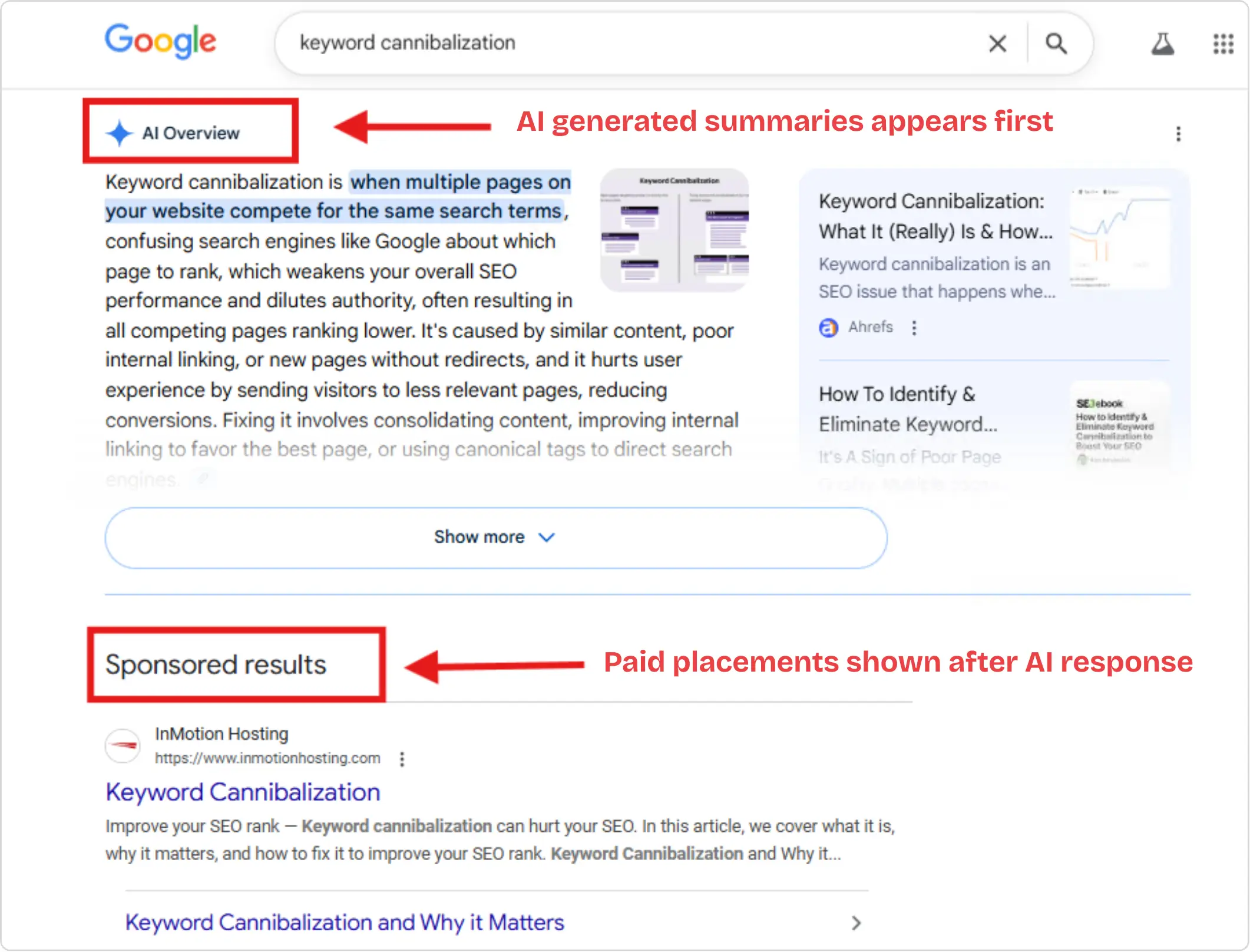
Ads appear after AI summaries
Ads are visually less prominent
Fewer ads show for informational queries
Transactional search intent is more narrowly defined
Trust-based content outranks bids
In effect, Google Ads hasn’t disappeared—but its influence has weakened.
Why Google Ads Feels Worse in 2026?
Let’s address the uncomfortable truth many marketers feel but hesitate to say out loud:
Google Ads doesn’t suck because it’s broken—it sucks because the ecosystem changed.
1. Rising Costs, Shrinking Returns
CPCs are higher than ever
Competition is global, not local
Automation favors big budgets
Margins are being squeezed
You pay more to show up, but users trust you less.
2. Automation Took Control Away
Smart bidding, Performance Max, AI creatives—on paper, it sounds efficient.
In reality:
Less transparency
Less control
Less predictability
Advertisers are feeding the machine, not steering it.
3. Ads Don’t Answer Intent—AI Does
Users no longer search like this:
“Buy running shoes online”
They search like this:
“Best running shoes for knee pain and long-distance training”
AI-generated answers, expert content, and organic listings solve the problem before ads even load.
The Trust Problem: Why Users Prefer Organic & AI Results
Trust is the real currency of 2026.
Paid Results = Sponsored Bias
No matter how relevant the ad:
Users know someone paid for it
Users assume bias
Users scroll past instinctively
Organic Results = Earned Authority
Expertise
Relevance
Credibility
Peer validation
AI systems amplify this further by prioritizing:
Expert-backed insights
Consistent brand signals
Trust compounds organically—paid ads don’t.
AI Search Is Rewriting the Funnel
AI search doesn’t just change rankings—it collapses the funnel.
From Clicks to Answers
Traditional funnel: Search → Click → Read → Decide → Convert
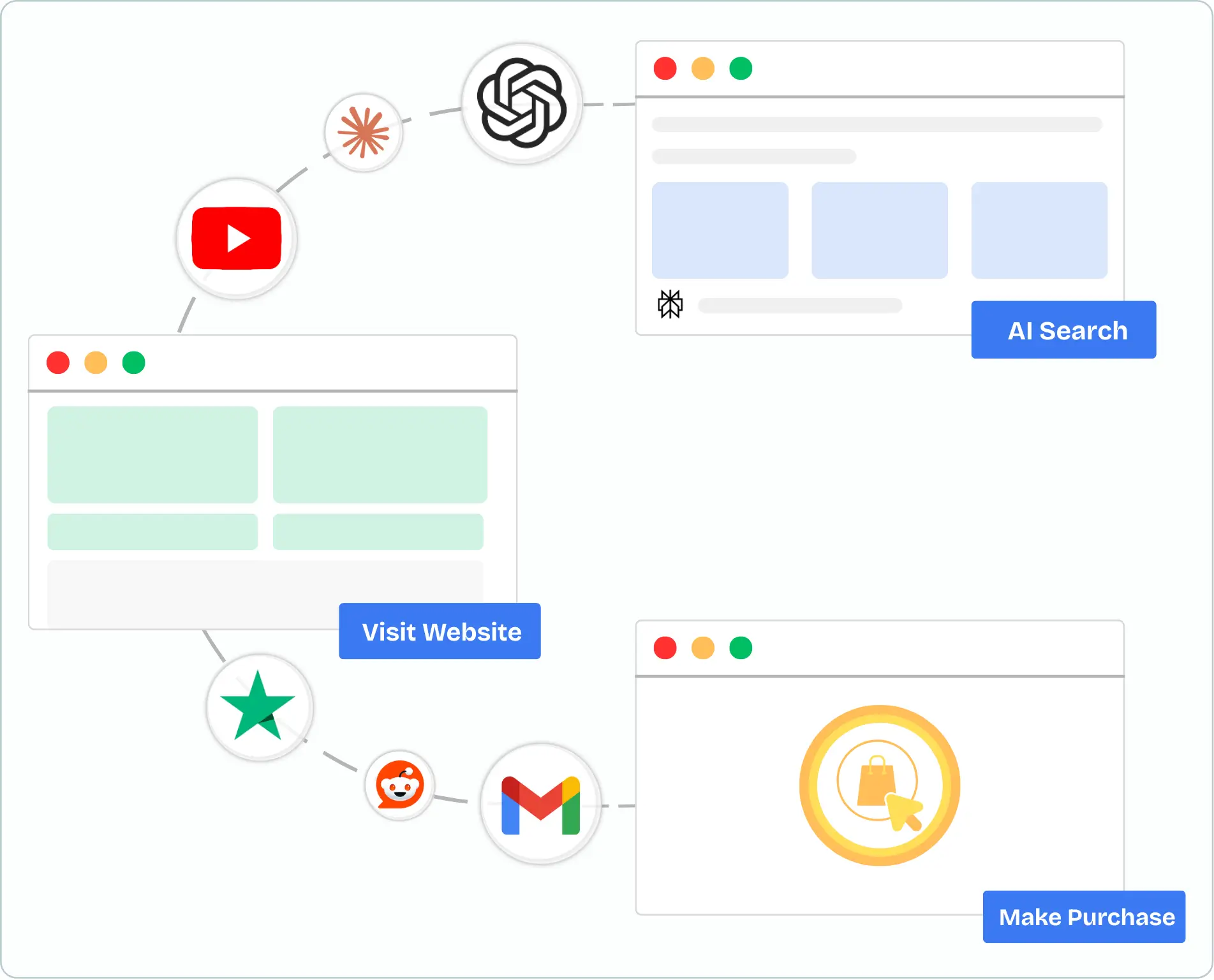
AI-driven funnel: Search → Answer → Trust → Action
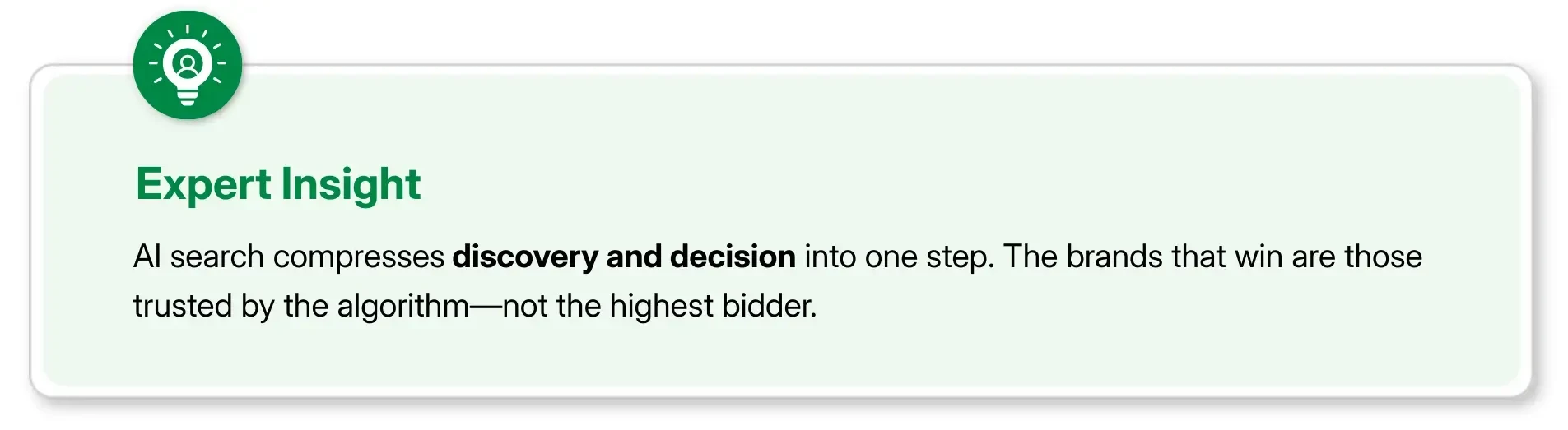
If your brand isn’t part of the answer, ads won’t save you.
Zero-Click Is the New Normal
AI overviews
Voice responses
Knowledge panels
Visibility matters more than traffic.
GEO (Generative Engine Optimization): The New SEO
SEO in 2026 isn’t just about ranking—it’s about being cited by AI.
What GEO Focuses On:
Entity authority
Topical depth
Structured data
Brand consistency
Real-world signals
AI engines don’t rank pages—they reference trusted sources. If Google Ads buys attention, GEO earns influence.
Why Organic Search Still Wins (and Always Will)
Organic search isn’t dying—it’s evolving.
Organic Delivers:
Long-term ROI
Trust signals
AI visibility
Compounding growth
Paid search stops when budgets stop. Organic keeps working.
What Smart Brands Are Doing Differently in 2026
Forward-thinking businesses aren’t abandoning ads—they’re rebalancing.
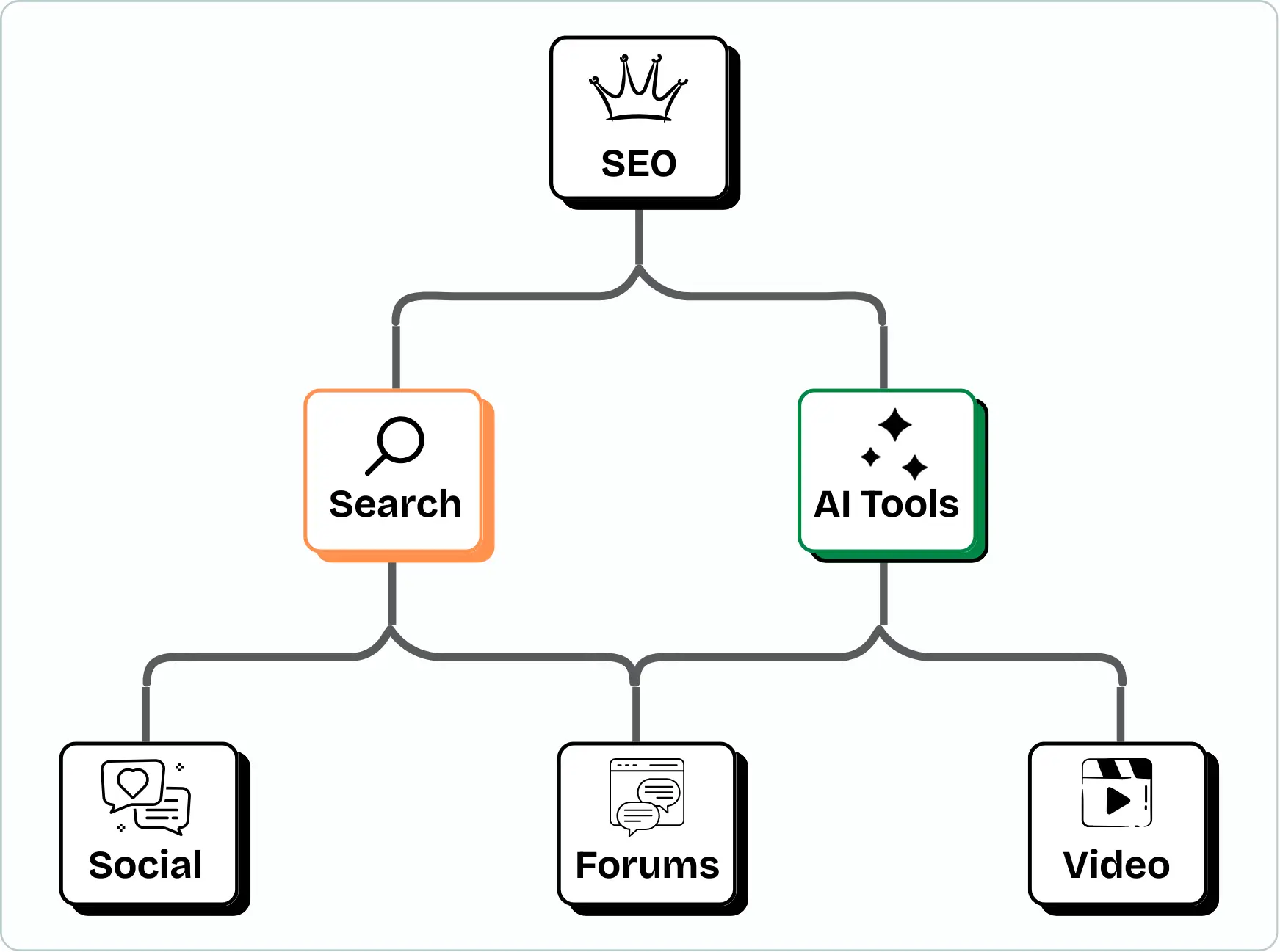
The New Priority Stack
Content-led UX
Community & brand trust
PPC as support—not strategy
Ads now amplify success—they no longer create it.
Does This Mean PPC Is Dead?
No. But it is demoted. PPC works best when:
Supporting branded searches
Retargeting warm audiences
Promoting proven offers
Accelerating—not replacing—organic trust
If PPC is your only growth channel, 2026 will be painful.
Final Thoughts: The Future Is Earned, Not Bought
Google isn’t killing ads. It’s protecting users. And users trust:
Organic results
Expert content
AI-generated insights
Brands that show up consistently
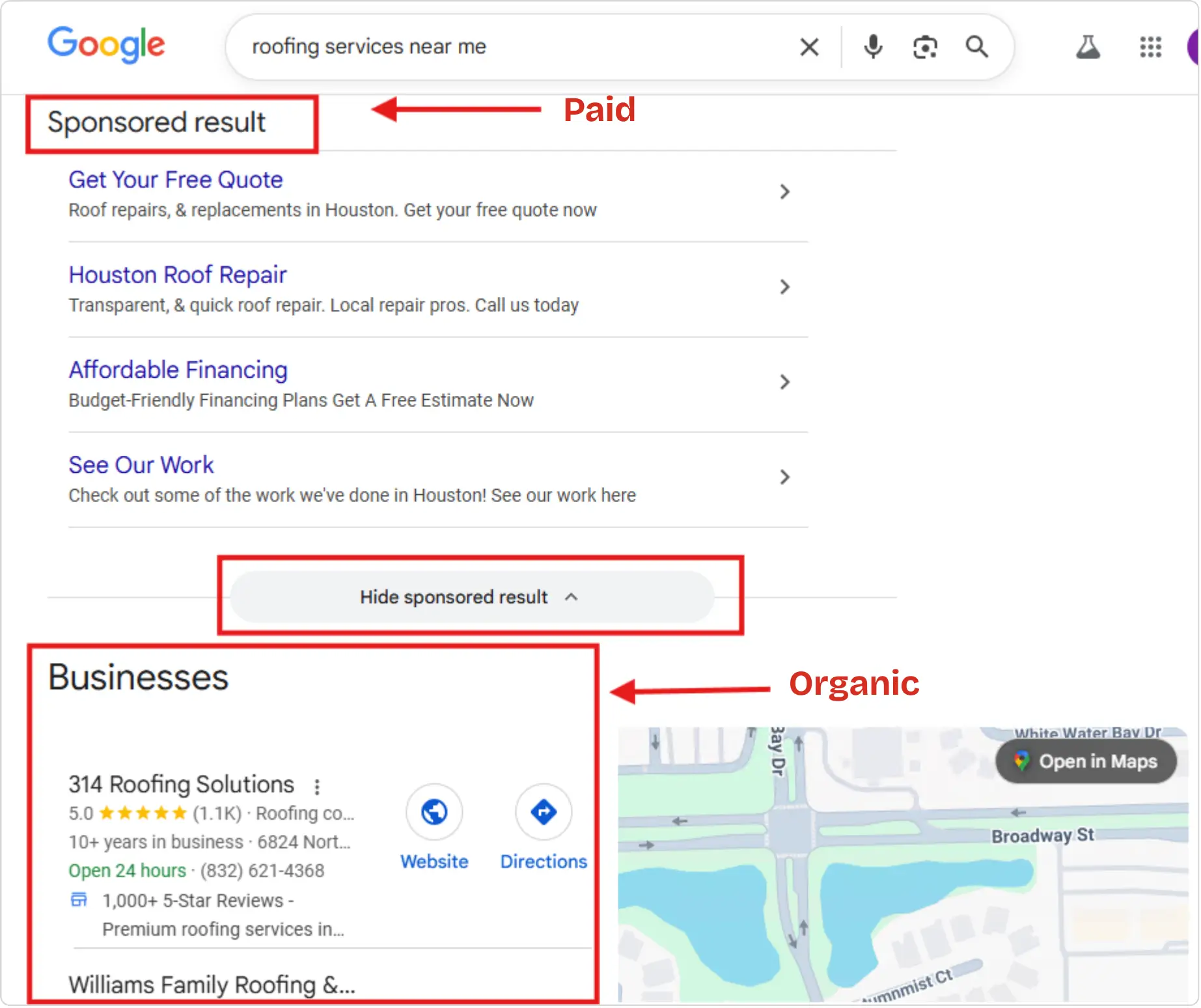
The ability for users to hide sponsored results is not a minor UX feature—it is a signal that trust now outweighs bids.
The winners in 2026 won’t be the biggest spenders. They’ll be the most credible, visible, and helpful. If Google Ads feels like it’s failing, it’s not a bug. It’s a signal. And the signal is clear:
Earn attention. Don’t rent it.
For nearly two decades, Google Ads (formerly AdWords) has been the backbone of digital advertising. Businesses paid, Google displayed ads at the top, users clicked, conversions happened. Simple.
But in 2026, something feels… off.
Marketers are noticing reduced visibility, lower click-through rates, rising costs, and—most importantly—shrinking user trust. At the same time, Google is quietly reshaping how search results appear, giving more space to AI-generated answers, organic listings, and contextual experiences—while paid results are increasingly blended, pushed down, or visually de-emphasized.
This raises a critical question:
Is Google hiding paid search results—and is PPC slowly losing relevance?
Let’s unpack what’s happening, why Google Ads feels less effective in 2026, and why Organic Search, AI Search, and GEO (Generative Engine Optimization) are becoming the real drivers of sustainable growth.
What Changed? Google’s “Quiet” Shift in Search Experience
Google didn’t announce a dramatic press release saying “We’re hiding ads now.” Instead, the shift has been gradual, strategic, and UX-driven.
Here’s what’s clearly different in 2026:
AI Overviews and generative answers dominate above-the-fold
Organic results are more visually rich (FAQs, videos, snippets)
Ads are visually compressed or blended into layouts
Paid placements feel less distinguishable—but also less clickable
Search is no longer just “10 blue links”
Google’s priority has shifted from monetization-first to experience-first—at least on the surface. And that has massive implications for advertisers.
Are Paid Search Results Being Hidden?
Short answer: Not hidden—but de-prioritized.
Long answer: Google is intentionally reducing the perceived dominance of ads to protect user trust and search quality for advertisers.
Why Google Had to Act?
Over the years, users became increasingly skeptical of ads:
“This brand is only here because they paid”
“Ads don’t answer my question”
“Sponsored ≠ trustworthy”
With AI tools, voice search, and zero-click results on the rise, Google faced a dilemma:
Push ads aggressively and lose user trust—or rebalance search to keep users loyal.
Google chose loyalty.
How Ads Are Being Softened?
Ads appear after AI summaries
Ads are visually less prominent
Fewer ads show for informational queries
Transactional search intent is more narrowly defined
Trust-based content outranks bids
In effect, Google Ads hasn’t disappeared—but its influence has weakened.
Why Google Ads Feels Worse in 2026?
Let’s address the uncomfortable truth many marketers feel but hesitate to say out loud:
Google Ads doesn’t suck because it’s broken—it sucks because the ecosystem changed.
1. Rising Costs, Shrinking Returns
CPCs are higher than ever
Competition is global, not local
Automation favors big budgets
Margins are being squeezed
You pay more to show up, but users trust you less.
2. Automation Took Control Away
Smart bidding, Performance Max, AI creatives—on paper, it sounds efficient.
In reality:
Less transparency
Less control
Less predictability
Advertisers are feeding the machine, not steering it.
3. Ads Don’t Answer Intent—AI Does
Users no longer search like this:
“Buy running shoes online”
They search like this:
“Best running shoes for knee pain and long-distance training”
AI-generated answers, expert content, and organic listings solve the problem before ads even load.
The Trust Problem: Why Users Prefer Organic & AI Results
Trust is the real currency of 2026.
Paid Results = Sponsored Bias
No matter how relevant the ad:
Users know someone paid for it
Users assume bias
Users scroll past instinctively
Organic Results = Earned Authority
Expertise
Relevance
Credibility
Peer validation
AI systems amplify this further by prioritizing:
Expert-backed insights
Consistent brand signals
Trust compounds organically—paid ads don’t.
AI Search Is Rewriting the Funnel
AI search doesn’t just change rankings—it collapses the funnel.
From Clicks to Answers
Traditional funnel: Search → Click → Read → Decide → Convert
AI-driven funnel: Search → Answer → Trust → Action
If your brand isn’t part of the answer, ads won’t save you.
Zero-Click Is the New Normal
AI overviews
Voice responses
Knowledge panels
Visibility matters more than traffic.
GEO (Generative Engine Optimization): The New SEO
SEO in 2026 isn’t just about ranking—it’s about being cited by AI.
What GEO Focuses On:
Entity authority
Topical depth
Structured data
Brand consistency
Real-world signals
AI engines don’t rank pages—they reference trusted sources. If Google Ads buys attention, GEO earns influence.
Why Organic Search Still Wins (and Always Will)
Organic search isn’t dying—it’s evolving.
Organic Delivers:
Long-term ROI
Trust signals
AI visibility
Compounding growth
Paid search stops when budgets stop. Organic keeps working.
What Smart Brands Are Doing Differently in 2026
Forward-thinking businesses aren’t abandoning ads—they’re rebalancing.
The New Priority Stack
Content-led UX
Community & brand trust
PPC as support—not strategy
Ads now amplify success—they no longer create it.
Does This Mean PPC Is Dead?
No. But it is demoted. PPC works best when:
Supporting branded searches
Retargeting warm audiences
Promoting proven offers
Accelerating—not replacing—organic trust
If PPC is your only growth channel, 2026 will be painful.
Final Thoughts: The Future Is Earned, Not Bought
Google isn’t killing ads. It’s protecting users. And users trust:
Organic results
Expert content
AI-generated insights
Brands that show up consistently
The ability for users to hide sponsored results is not a minor UX feature—it is a signal that trust now outweighs bids.
The winners in 2026 won’t be the biggest spenders. They’ll be the most credible, visible, and helpful. If Google Ads feels like it’s failing, it’s not a bug. It’s a signal. And the signal is clear:
Earn attention. Don’t rent it.




Want to be seen everywhere?
Get a free AI-search audit Today!


4.9/5 Ratings!


Don’t miss our revenue growth tips!
Get expert marketing tips—straight to your inbox, like thousands of happy clients.
Don’t miss our revenue growth tips!
Get expert marketing tips—straight to your inbox, like thousands of happy clients.
Don’t miss our revenue growth tips!
Don’t miss our revenue growth tips!
Get expert marketing tips—straight to your inbox, like thousands of happy clients.
Relevant Blogs on Generative AI SEO
Relevant Blogs on Generative AI SEO
Unlock data-driven insights in AI-powered SEO—explore our featured blogs and skyrocket your revenue before your competitors do.
Unlock data-driven insights in AI-powered SEO—explore our featured blogs and skyrocket your revenue before your competitors do.
GEO
GEO
8 Min Read
8 Min Read
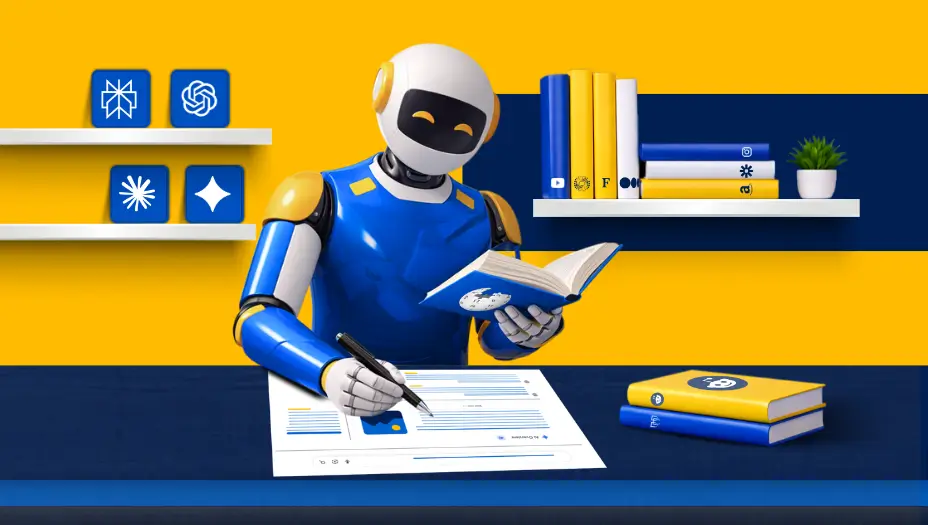
10 Most-Cited Domains Across ChatGPT, Perplexity, Gemini, AI Overviews, and Claude
GEO
GEO
10 Min Read
10 Min Read
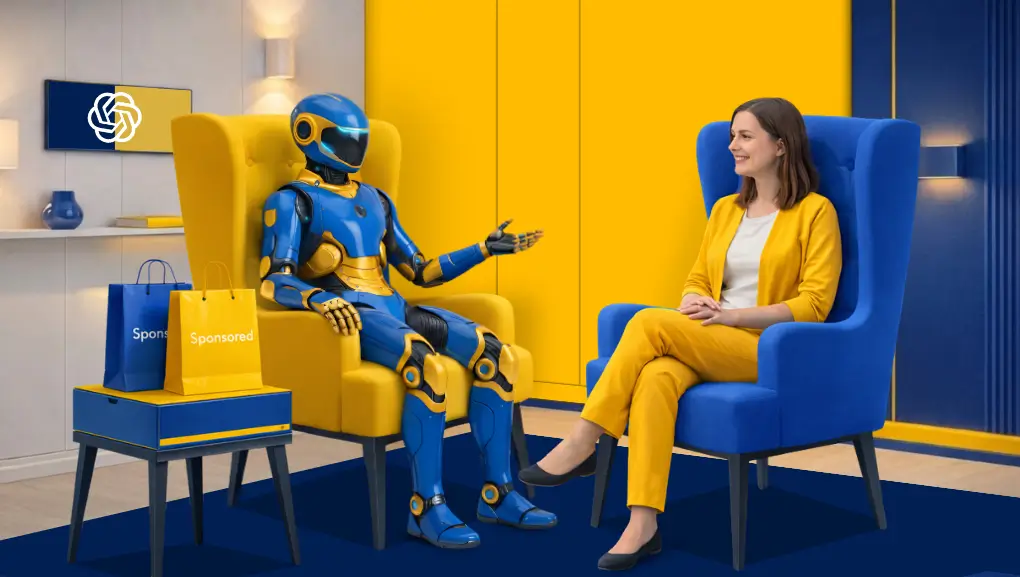
OpenAI Begins Testing Ads in ChatGPT: What This Means for Users, Businesses, and the Future of Search
GEO
GEO
12 Min Read
12 Min Read
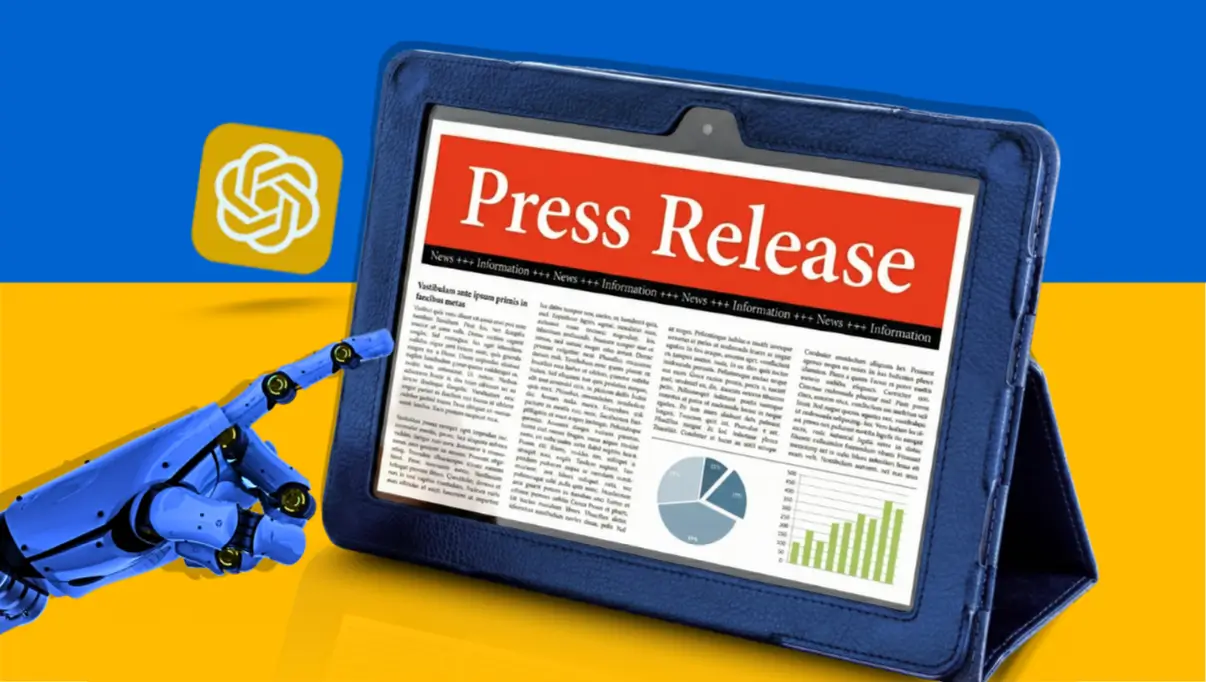
How Online Press Releases and Media Distribution Make Your Business Discoverable in AI Search











Ready to speak with an expert?
Data-Driven Marketing Agency That Elevates ROI
1100+
Websites Designed & Optimized to Convert
$280M+
Client Revenue Driven & Growing Strong
Discover how to skyrocket
your revenue today!
Trusted by 1000+ Owners!
Ready to speak with an expert?
Data-Driven Marketing Agency That Elevates ROI
1100+
Websites Designed & Optimized to Convert
$280M+
Client Revenue Driven & Growing Strong
Discover how to skyrocket
your revenue today!
Trusted by 1000+ Owners!
Want to skyrocket revenue?
4.9/5 Ratings!
Ready to speak with an expert?
Data-Driven Marketing Agency That Elevates ROI
1100+
Websites Designed & Optimized to Convert
$280M+
Client Revenue Driven & Growing Strong
Want to skyrocket
revenue?
Trusted by 1000+ Owners!
Call
Meet