Mobile-First Design: Why it’s Essential for Modern Web Success?
Mobile-First Design: Why it’s Essential for Modern Web Success?
Mobile-First Design: Why it’s Essential for Modern Web Success?
Mobile-First Design: Why it’s Essential for Modern Web Success?
Mobile-First Design: Why it’s Essential for Modern Web Success?
Mobile-First Design
Mobile-First Design
Mobile-First Design
Mobile-First Design
Mobile-first design is a web development and UX approach that focuses on creating an optimal experience for mobile devices first, before scaling it for larger screens.
Mobile-first design is a web development and UX approach that focuses on creating an optimal experience for mobile devices first, before scaling it for larger screens.
Mobile-first design is a web development and UX approach that focuses on creating an optimal experience for mobile devices first, before scaling it for larger screens.
Mobile-first design is a web development and UX approach that focuses on creating an optimal experience for mobile devices first, before scaling it for larger screens.


Table of Content

Mobile-first Design Upgrades UX and Improves SEO Rankings.







4.9/5 Ratings!
4.9/5 Ratings!

Megha Gehlot
Megha Gehlot
Megha Gehlot
8 Min Read
8 Min Read
8 Min Read
Oct 8, 2025
Oct 8, 2025
Oct 8, 2025
What is Mobile-First Design?
What is Mobile-First Design?
What is Mobile-First Design?
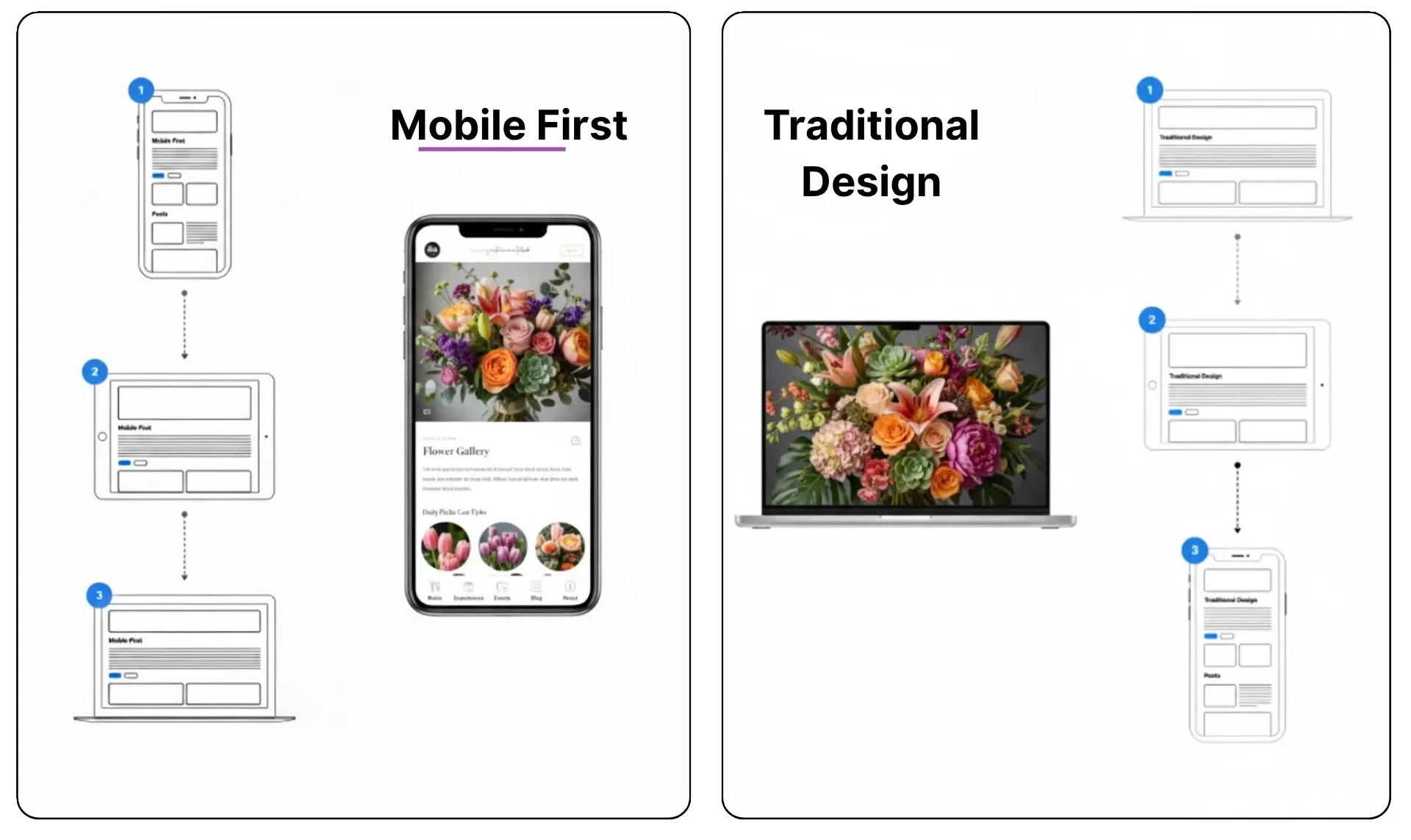
Mobile-first approach is a process where web designers and developers start designing with the smallest screen in mind, i.e., smartphones, and then scale up to larger screens like tablets and desktops. This process enables basic content and functionality to be implemented for mobile users first and then have additions for larger screens.
Mobile-first approach is a process where web designers and developers start designing with the smallest screen in mind, i.e., smartphones, and then scale up to larger screens like tablets and desktops. This process enables basic content and functionality to be implemented for mobile users first and then have additions for larger screens.
Mobile-first approach is a process where web designers and developers start designing with the smallest screen in mind, i.e., smartphones, and then scale up to larger screens like tablets and desktops. This process enables basic content and functionality to be implemented for mobile users first and then have additions for larger screens.
Why Mobile-First Matters?
Why Mobile-First Matters?
Why Mobile-First Matters?
•
•
•
User Behavior: Most users browse, buy, and interact with sites on mobile.
User Behavior: Most users browse, buy, and interact with sites on mobile.
User Behavior: Most users browse, buy, and interact with sites on mobile.
•
•
•
Benefits of SEO: Google is using mobile-first indexing, thus it indexes and ranks predominantly from the mobile version of your website.
Benefits of SEO: Google is using mobile-first indexing, thus it indexes and ranks predominantly from the mobile version of your website.
Benefits of SEO: Google is using mobile-first indexing, thus it indexes and ranks predominantly from the mobile version of your website.
•
•
•
Performance: Mobile-first sites are faster and more efficient, optimizing user experience and reducing bounce rates.
Performance: Mobile-first sites are faster and more efficient, optimizing user experience and reducing bounce rates.
Performance: Mobile-first sites are faster and more efficient, optimizing user experience and reducing bounce rates.
Key Principles of Mobile-First Design
Key Principles of Mobile-First Design
Key Principles of Mobile-First Design
Strategy
Strategy
Strategy
Strategy
Strategy
Description
Description
Description
Description
Description
Prioritize Content
Prioritize Content
Prioritize Content
Prioritize Content
Start by identifying the most critical content and functionality customers need on mobile. Eliminate everything extraneous and focus on clarity and usability.
Start by identifying the most critical content and functionality customers need on mobile. Eliminate everything extraneous and focus on clarity and usability.
Start by identifying the most critical content and functionality customers need on mobile. Eliminate everything extraneous and focus on clarity and usability.
Start by identifying the most critical content and functionality customers need on mobile. Eliminate everything extraneous and focus on clarity and usability.
Responsive Layouts
Responsive Layouts
Responsive Layouts
Responsive Layouts
Use fluid grids and media queries to enable your design to adapt automatically on devices.
Use fluid grids and media queries to enable your design to adapt automatically on devices.
Use fluid grids and media queries to enable your design to adapt automatically on devices.
Use fluid grids and media queries to enable your design to adapt automatically on devices.
Touch-Friendly UI
Touch-Friendly UI
Touch-Friendly UI
Touch-Friendly UI
Design buttons, menus, and interactive elements with touch in mind.
Design buttons, menus, and interactive elements with touch in mind.
Design buttons, menus, and interactive elements with touch in mind.
Design buttons, menus, and interactive elements with touch in mind.
Optimize Performance
Optimize Performance
Optimize Performance
Optimize Performance
Use small file sizes, compressed images, and cut scripts to enable fast loading.
Use small file sizes, compressed images, and cut scripts to enable fast loading.
Use small file sizes, compressed images, and cut scripts to enable fast loading.
Use small file sizes, compressed images, and cut scripts to enable fast loading.
Progressive Enhancement
Progressive Enhancement
Progressive Enhancement
Progressive Enhancement
Once the mobile one is stable, enhance the layout for larger screens.
Once the mobile one is stable, enhance the layout for larger screens.
Once the mobile one is stable, enhance the layout for larger screens.
Once the mobile one is stable, enhance the layout for larger screens.
Common Mistakes to Avoid
Common Mistakes to Avoid
Common Mistakes to Avoid
•
•
•
Overloading Mobile Pages: Too much content or too much media can slow down mobile performance.
Overloading Mobile Pages: Too much content or too much media can slow down mobile performance.
Overloading Mobile Pages: Too much content or too much media can slow down mobile performance.
•
•
•
Ignoring Testing: Test always on a variety of devices and screen sizes to catch usability issues.
Ignoring Testing: Test always on a variety of devices and screen sizes to catch usability issues.
Ignoring Testing: Test always on a variety of devices and screen sizes to catch usability issues.
•
•
•
Ignoring Accessibility: Make your mobile design accessible to everyone, not just individuals with disabilities.
Ignoring Accessibility: Make your mobile design accessible to everyone, not just individuals with disabilities.
Ignoring Accessibility: Make your mobile design accessible to everyone, not just individuals with disabilities.
Real-World Example
Real-World Example
Real-World Example
Think about how Airbnb uses mobile-first design. Its mobile site loads quickly, is easy to navigate, and prioritizes required information like search and booking. The desktop site continues this with added images and features.
Think about how Airbnb uses mobile-first design. Its mobile site loads quickly, is easy to navigate, and prioritizes required information like search and booking. The desktop site continues this with added images and features.
Think about how Airbnb uses mobile-first design. Its mobile site loads quickly, is easy to navigate, and prioritizes required information like search and booking. The desktop site continues this with added images and features.
Mobile-First Indexing and SEO
Mobile-First Indexing and SEO
Mobile-First Indexing and SEO
Google's mobile-first indexing ensures that your mobile website is the main version utilized for ranking and indexing. Poorly optimized mobile site can affect your visibility in search results negatively. With a mobile-first design, your site will comply with what Google expects and increase your rank probability.
In addition, mobile-friendly websites also have lower bounce rates and higher engagement that benefit search engines. Quick load times, readable text, and navigable menus on hand-held devices make a positive impression on SEO performance.
Google's mobile-first indexing ensures that your mobile website is the main version utilized for ranking and indexing. Poorly optimized mobile site can affect your visibility in search results negatively. With a mobile-first design, your site will comply with what Google expects and increase your rank probability.
In addition, mobile-friendly websites also have lower bounce rates and higher engagement that benefit search engines. Quick load times, readable text, and navigable menus on hand-held devices make a positive impression on SEO performance.
Google's mobile-first indexing ensures that your mobile website is the main version utilized for ranking and indexing. Poorly optimized mobile site can affect your visibility in search results negatively. With a mobile-first design, your site will comply with what Google expects and increase your rank probability.
In addition, mobile-friendly websites also have lower bounce rates and higher engagement that benefit search engines. Quick load times, readable text, and navigable menus on hand-held devices make a positive impression on SEO performance.

Companies like Spotify and Amazon have embraced mobile-first design to improve user experience. Amazon's mobile site is designed for immediate purchases, and Spotify's app-like experience on mobile browsers allows for seamless navigation and media playback. These examples demonstrate how mobile-first design has a direct impact on user satisfaction and business success
Companies like Spotify and Amazon have embraced mobile-first design to improve user experience. Amazon's mobile site is designed for immediate purchases, and Spotify's app-like experience on mobile browsers allows for seamless navigation and media playback. These examples demonstrate how mobile-first design has a direct impact on user satisfaction and business success
Companies like Spotify and Amazon have embraced mobile-first design to improve user experience. Amazon's mobile site is designed for immediate purchases, and Spotify's app-like experience on mobile browsers allows for seamless navigation and media playback. These examples demonstrate how mobile-first design has a direct impact on user satisfaction and business success
Tools and Frameworks for Mobile-First Design
Tools and Frameworks for Mobile-First Design
Tools and Frameworks for Mobile-First Design
Numerous tools and frameworks enable mobile-first design. Bootstrap is a widely used front-end framework that incorporates a mobile-first grid system and responsive utilities. Figma and Adobe XD enable designers to prototype mobile-first interfaces with ease. Google's Lighthouse tool can test your site's mobile performance and give actionable recommendations.
Numerous tools and frameworks enable mobile-first design. Bootstrap is a widely used front-end framework that incorporates a mobile-first grid system and responsive utilities. Figma and Adobe XD enable designers to prototype mobile-first interfaces with ease. Google's Lighthouse tool can test your site's mobile performance and give actionable recommendations.
Numerous tools and frameworks enable mobile-first design. Bootstrap is a widely used front-end framework that incorporates a mobile-first grid system and responsive utilities. Figma and Adobe XD enable designers to prototype mobile-first interfaces with ease. Google's Lighthouse tool can test your site's mobile performance and give actionable recommendations.
Final Thoughts
Final Thoughts
Final Thoughts
Mobile-first design isn't just about making your site work on smaller displays; it's about completely changing how people use your site. In today's world, where most people use their phones, designing for mobile first makes sure that most of your visitors have quick, easy, and fun experiences on your site.
Starting with mobile puts clarity, performance, and accessibility first, all of which make users happier and lead to more conversions. It also fits with Google's mobile-first indexing, which means that your mobile site has a direct effect on your search engine rankings. A mobile experience that is well-optimized will have reduced bounce rates, more engagement, and better SEO results.
If you want to be ready for the future, you need to think about mobile-first design when you're establishing a new site or updating an old one. When designing a website, you should always think about how it will look and work on mobile devices first, and then make it better for larger screens.
Mobile-first design isn't just about making your site work on smaller displays; it's about completely changing how people use your site. In today's world, where most people use their phones, designing for mobile first makes sure that most of your visitors have quick, easy, and fun experiences on your site.
Starting with mobile puts clarity, performance, and accessibility first, all of which make users happier and lead to more conversions. It also fits with Google's mobile-first indexing, which means that your mobile site has a direct effect on your search engine rankings. A mobile experience that is well-optimized will have reduced bounce rates, more engagement, and better SEO results.
If you want to be ready for the future, you need to think about mobile-first design when you're establishing a new site or updating an old one. When designing a website, you should always think about how it will look and work on mobile devices first, and then make it better for larger screens.
Mobile-first design isn't just about making your site work on smaller displays; it's about completely changing how people use your site. In today's world, where most people use their phones, designing for mobile first makes sure that most of your visitors have quick, easy, and fun experiences on your site.
Starting with mobile puts clarity, performance, and accessibility first, all of which make users happier and lead to more conversions. It also fits with Google's mobile-first indexing, which means that your mobile site has a direct effect on your search engine rankings. A mobile experience that is well-optimized will have reduced bounce rates, more engagement, and better SEO results.
If you want to be ready for the future, you need to think about mobile-first design when you're establishing a new site or updating an old one. When designing a website, you should always think about how it will look and work on mobile devices first, and then make it better for larger screens.
Frequently Asked Questions (FAQs)
Frequently Asked Questions
Frequently Asked Questions
How does mobile-first design impact conversion rates and sales?
Mobile-first websites reduce friction in the user journey, meaning customers can easily scroll, click, and complete actions such as purchasing or filling out forms. Faster load times and cleaner layouts significantly boost conversion rates. Many brands report up to two to three times higher conversions after optimizing for mobile-first.
How does mobile-first design reduce bounce rates?
You should expect a structured process that includes onboarding, goal setting, strategy development, regular communication, execution of campaigns, and performance reporting. A good agency will act as a partner collaborating with you to understand your business, crafting a custom plan, and keeping you informed about progress and results.
How does mobile-first design help improve SEO performance?
Vanity metrics are data points that look impressive but don’t directly impact your bottom line, such as social media likes, page views, or email open rates. While they can indicate visibility, they’re not strong indicators of business success. What’s more important are actionable metrics like lead quality, conversion rate, and return on investment (ROI). Looking for more details? Contact us today before your competitors do.
What tools are most helpful when building mobile-first websites?
High traffic without conversions often points to deeper issues such as: Poor targeting (the wrong audience is visiting), weak calls-to-action or unclear messaging, website usability issues or slow load times, lack of trust signals (like reviews or security).
Your marketing should not just drive visits; it should drive the right visitors and guide them to act.
Can a mobile-first design improve customer retention?
You’ll know it’s working when you see measurable progress toward your business goals, more qualified leads, better engagement, increased sales, or stronger ROI. Regular reports, clear KPIs, and consistent communication from your agency are key to evaluating success.
How does designing for mobile first help highlight essential website features?
Organic marketing (like SEO, blogging, and social media engagement) often takes 3 to 6 months to start showing results and may take 6–12 months for significant impact. It builds trust and authority over time, and while slower than paid marketing, it often yields more sustainable growth.
How does mobile-first design affect website analytics and tracking?
A good marketing report should cover: Key performance indicators (KPIs) tied to your goals, traffic and conversion data, campaign performance summaries, ROI or cost-per-lead/acquisition, insights and recommendations for improvement, clear next steps or action items.
It should be easy to understand, jargon-free, and focus on outcomes. Learn more—how we drive revenue?
How does mobile-first design impact conversion rates and sales?
Mobile-first websites reduce friction in the user journey, meaning customers can easily scroll, click, and complete actions such as purchasing or filling out forms. Faster load times and cleaner layouts significantly boost conversion rates. Many brands report up to two to three times higher conversions after optimizing for mobile-first.
How does mobile-first design reduce bounce rates?
You should expect a structured process that includes onboarding, goal setting, strategy development, regular communication, execution of campaigns, and performance reporting. A good agency will act as a partner collaborating with you to understand your business, crafting a custom plan, and keeping you informed about progress and results.
How does mobile-first design help improve SEO performance?
Vanity metrics are data points that look impressive but don’t directly impact your bottom line, such as social media likes, page views, or email open rates. While they can indicate visibility, they’re not strong indicators of business success. What’s more important are actionable metrics like lead quality, conversion rate, and return on investment (ROI). Looking for more details? Contact us today before your competitors do.
What tools are most helpful when building mobile-first websites?
High traffic without conversions often points to deeper issues such as: Poor targeting (the wrong audience is visiting), weak calls-to-action or unclear messaging, website usability issues or slow load times, lack of trust signals (like reviews or security).
Your marketing should not just drive visits; it should drive the right visitors and guide them to act.
Can a mobile-first design improve customer retention?
You’ll know it’s working when you see measurable progress toward your business goals, more qualified leads, better engagement, increased sales, or stronger ROI. Regular reports, clear KPIs, and consistent communication from your agency are key to evaluating success.
How does designing for mobile first help highlight essential website features?
Organic marketing (like SEO, blogging, and social media engagement) often takes 3 to 6 months to start showing results and may take 6–12 months for significant impact. It builds trust and authority over time, and while slower than paid marketing, it often yields more sustainable growth.
How does mobile-first design affect website analytics and tracking?
A good marketing report should cover: Key performance indicators (KPIs) tied to your goals, traffic and conversion data, campaign performance summaries, ROI or cost-per-lead/acquisition, insights and recommendations for improvement, clear next steps or action items.
It should be easy to understand, jargon-free, and focus on outcomes. Learn more—how we drive revenue?
How does mobile-first design impact conversion rates and sales?
Mobile-first websites reduce friction in the user journey, meaning customers can easily scroll, click, and complete actions such as purchasing or filling out forms. Faster load times and cleaner layouts significantly boost conversion rates. Many brands report up to two to three times higher conversions after optimizing for mobile-first.
How does mobile-first design reduce bounce rates?
You should expect a structured process that includes onboarding, goal setting, strategy development, regular communication, execution of campaigns, and performance reporting. A good agency will act as a partner collaborating with you to understand your business, crafting a custom plan, and keeping you informed about progress and results.
How does mobile-first design help improve SEO performance?
Vanity metrics are data points that look impressive but don’t directly impact your bottom line, such as social media likes, page views, or email open rates. While they can indicate visibility, they’re not strong indicators of business success. What’s more important are actionable metrics like lead quality, conversion rate, and return on investment (ROI). Looking for more details? Contact us today before your competitors do.
What tools are most helpful when building mobile-first websites?
High traffic without conversions often points to deeper issues such as: Poor targeting (the wrong audience is visiting), weak calls-to-action or unclear messaging, website usability issues or slow load times, lack of trust signals (like reviews or security).
Your marketing should not just drive visits; it should drive the right visitors and guide them to act.
Can a mobile-first design improve customer retention?
You’ll know it’s working when you see measurable progress toward your business goals, more qualified leads, better engagement, increased sales, or stronger ROI. Regular reports, clear KPIs, and consistent communication from your agency are key to evaluating success.
How does designing for mobile first help highlight essential website features?
Organic marketing (like SEO, blogging, and social media engagement) often takes 3 to 6 months to start showing results and may take 6–12 months for significant impact. It builds trust and authority over time, and while slower than paid marketing, it often yields more sustainable growth.
How does mobile-first design affect website analytics and tracking?
A good marketing report should cover: Key performance indicators (KPIs) tied to your goals, traffic and conversion data, campaign performance summaries, ROI or cost-per-lead/acquisition, insights and recommendations for improvement, clear next steps or action items.
It should be easy to understand, jargon-free, and focus on outcomes. Learn more—how we drive revenue?
How does mobile-first design impact conversion rates and sales?
Mobile-first websites reduce friction in the user journey, meaning customers can easily scroll, click, and complete actions such as purchasing or filling out forms. Faster load times and cleaner layouts significantly boost conversion rates. Many brands report up to two to three times higher conversions after optimizing for mobile-first.
How does mobile-first design reduce bounce rates?
You should expect a structured process that includes onboarding, goal setting, strategy development, regular communication, execution of campaigns, and performance reporting. A good agency will act as a partner collaborating with you to understand your business, crafting a custom plan, and keeping you informed about progress and results.
How does mobile-first design help improve SEO performance?
Vanity metrics are data points that look impressive but don’t directly impact your bottom line, such as social media likes, page views, or email open rates. While they can indicate visibility, they’re not strong indicators of business success. What’s more important are actionable metrics like lead quality, conversion rate, and return on investment (ROI). Looking for more details? Contact us today before your competitors do.
What tools are most helpful when building mobile-first websites?
High traffic without conversions often points to deeper issues such as: Poor targeting (the wrong audience is visiting), weak calls-to-action or unclear messaging, website usability issues or slow load times, lack of trust signals (like reviews or security).
Your marketing should not just drive visits; it should drive the right visitors and guide them to act.
Can a mobile-first design improve customer retention?
You’ll know it’s working when you see measurable progress toward your business goals, more qualified leads, better engagement, increased sales, or stronger ROI. Regular reports, clear KPIs, and consistent communication from your agency are key to evaluating success.
How does designing for mobile first help highlight essential website features?
Organic marketing (like SEO, blogging, and social media engagement) often takes 3 to 6 months to start showing results and may take 6–12 months for significant impact. It builds trust and authority over time, and while slower than paid marketing, it often yields more sustainable growth.
How does mobile-first design affect website analytics and tracking?
A good marketing report should cover: Key performance indicators (KPIs) tied to your goals, traffic and conversion data, campaign performance summaries, ROI or cost-per-lead/acquisition, insights and recommendations for improvement, clear next steps or action items.
It should be easy to understand, jargon-free, and focus on outcomes. Learn more—how we drive revenue?
How does mobile-first design impact conversion rates and sales?
Mobile-first websites reduce friction in the user journey, meaning customers can easily scroll, click, and complete actions such as purchasing or filling out forms. Faster load times and cleaner layouts significantly boost conversion rates. Many brands report up to two to three times higher conversions after optimizing for mobile-first.
How does mobile-first design reduce bounce rates?
You should expect a structured process that includes onboarding, goal setting, strategy development, regular communication, execution of campaigns, and performance reporting. A good agency will act as a partner collaborating with you to understand your business, crafting a custom plan, and keeping you informed about progress and results.
How does mobile-first design help improve SEO performance?
Vanity metrics are data points that look impressive but don’t directly impact your bottom line, such as social media likes, page views, or email open rates. While they can indicate visibility, they’re not strong indicators of business success. What’s more important are actionable metrics like lead quality, conversion rate, and return on investment (ROI). Looking for more details? Contact us today before your competitors do.
What tools are most helpful when building mobile-first websites?
High traffic without conversions often points to deeper issues such as: Poor targeting (the wrong audience is visiting), weak calls-to-action or unclear messaging, website usability issues or slow load times, lack of trust signals (like reviews or security).
Your marketing should not just drive visits; it should drive the right visitors and guide them to act.
Can a mobile-first design improve customer retention?
You’ll know it’s working when you see measurable progress toward your business goals, more qualified leads, better engagement, increased sales, or stronger ROI. Regular reports, clear KPIs, and consistent communication from your agency are key to evaluating success.
How does designing for mobile first help highlight essential website features?
Organic marketing (like SEO, blogging, and social media engagement) often takes 3 to 6 months to start showing results and may take 6–12 months for significant impact. It builds trust and authority over time, and while slower than paid marketing, it often yields more sustainable growth.
How does mobile-first design affect website analytics and tracking?
A good marketing report should cover: Key performance indicators (KPIs) tied to your goals, traffic and conversion data, campaign performance summaries, ROI or cost-per-lead/acquisition, insights and recommendations for improvement, clear next steps or action items.
It should be easy to understand, jargon-free, and focus on outcomes. Learn more—how we drive revenue?
Mobile-first Design Upgrades UX & Improves SEO Rankings.
Mobile-first Design Upgrades UX & Improves SEO Rankings.
Mobile-first Design Upgrades UX & Improves SEO Rankings.
Ensure your website loads fast, looks great & functions smoothly on mobile to improve UX.
Ensure your website loads fast, looks great & functions smoothly on mobile to improve UX.
Ensure your website loads fast, looks great & functions smoothly on mobile to improve UX.
Ensure your website loads fast, looks great & functions smoothly on mobile to improve UX.
4.9/5 Ratings!
4.9/5 Ratings!
4.9/5 Ratings!
4.9/5 Ratings!
4.9/5 Ratings!
Share this article

Related Resources






Don’t miss our revenue growth tips!
Don’t miss our revenue growth tips!
Don’t miss our revenue growth tips!
Get expert marketing tips—straight to your inbox, like thousands of happy clients.
Get expert marketing tips—straight to your inbox, like thousands of happy clients.




































Ready to speak with an expert?
Data-Driven Marketing Agency That Elevates ROI
Websites Designed & Optimized to Convert
$280M+
Client Revenue Driven & Growing Strong
Discover how to skyrocket
your revenue today!


Trusted by 1000+ Owners!
Want to skyrocket revenue?
4.9/5 Ratings!
Want to skyrocket revenue?
4.9/5 Ratings!
Ready to speak with an expert?
Data-Driven Marketing Agency That Elevates ROI
Websites Designed & Optimized to Convert
$280M+
Client Revenue Driven & Growing Strong
Want to skyrocket
revenue?
Trusted by 1000+ Owners!
Ready to speak with an expert?
Data-Driven Marketing Agency That Elevates ROI
Websites Designed & Optimized to Convert
$280M+
Client Revenue Driven & Growing Strong
Discover how to skyrocket
your revenue today!
Trusted by 1000+ Owners!