What is Click-Through Rate (CTR) and Tips to Improve CTR?
What is Click-Through Rate (CTR) and Tips to Improve CTR?
What is Click-Through Rate (CTR) and Tips to Improve CTR?
What is Click-Through Rate (CTR) and Tips to Improve CTR?
What is Click-Through Rate (CTR) and Tips to Improve CTR?
Click-Through Rate
Click-Through Rate
Click-Through Rate
Click-Through Rate
Click-Through Rate (CTR) is a key metric in digital marketing and SEO that shows the percentage of people who click on a link, ad, or search result after seeing it. It helps measure how effective your titles, descriptions, or ads are at attracting visitors.
Click-Through Rate (CTR) is a key metric in digital marketing and SEO that shows the percentage of people who click on a link, ad, or search result after seeing it. It helps measure how effective your titles, descriptions, or ads are at attracting visitors.
Click-Through Rate (CTR) is a key metric in digital marketing and SEO that shows the percentage of people who click on a link, ad, or search result after seeing it. It helps measure how effective your titles, descriptions, or ads are at attracting visitors.
Click-Through Rate (CTR) is a key metric in digital marketing and SEO that shows the percentage of people who click on a link, ad, or search result after seeing it. It helps measure how effective your titles, descriptions, or ads are at attracting visitors.


Table of Content

Higher CTRs Indicate Better Ad Relevance & Attract User Clicks.







4.9/5 Ratings!
4.9/5 Ratings!

Tanya Singh
Tanya Singh
Tanya Singh
8 Min Read
8 Min Read
8 Min Read
Sep 18, 2025
Sep 18, 2025
Sep 18, 2025
What is Click-Through Rate (CTR)?
What is Click-Through Rate (CTR)?
What is Click-Through Rate (CTR)?
Click-Through Rate (CTR) is the percentage of people who click on your link, ad, or search result after seeing it. In other words, it shows how desirable your title, meta description, or ad is for an audience who finds it interesting to visit your page.
Click-Through Rate (CTR) is the percentage of people who click on your link, ad, or search result after seeing it. In other words, it shows how desirable your title, meta description, or ad is for an audience who finds it interesting to visit your page.
Click-Through Rate (CTR) is the percentage of people who click on your link, ad, or search result after seeing it. In other words, it shows how desirable your title, meta description, or ad is for an audience who finds it interesting to visit your page.
i.e., a page in the search results 1,000 times with 100 clicks. Would it be:
(100 ÷ 1,000) × 100 = 10%
Tracking your CTR ensures you understand which content or campaigns do well.
i.e., a page in the search results 1,000 times with 100 clicks. Would it be:
(100 ÷ 1,000) × 100 = 10%
Tracking your CTR ensures you understand which content or campaigns do well.
i.e., a page in the search results 1,000 times with 100 clicks. Would it be:
(100 ÷ 1,000) × 100 = 10%
Tracking your CTR ensures you understand which content or campaigns do well.
Why CTR Matters for SEO?
Why CTR Matters for SEO?
Why CTR Matters for SEO?
CTR truly is much more than a number or statistic. Having an enhanced CTR:
Makes search engines believe your content is relevant.
Moves you up in the ranks of organic search listings.
And therefore, it leads to more traffic/inquiries.
CTR truly is much more than a number or statistic. Having an enhanced CTR:
Makes search engines believe your content is relevant.
Moves you up in the ranks of organic search listings.
And therefore, it leads to more traffic/inquiries.
CTR truly is much more than a number or statistic. Having an enhanced CTR:
Makes search engines believe your content is relevant.
Moves you up in the ranks of organic search listings.
And therefore, it leads to more traffic/inquiries.
Search engines, such as Google, consider CTR as a quality signal. The more people that click your link may indicate your page aligns with their search intent, which may cause Google to reward you with better rankings.
Search engines, such as Google, consider CTR as a quality signal. The more people that click your link may indicate your page aligns with their search intent, which may cause Google to reward you with better rankings.
Search engines, such as Google, consider CTR as a quality signal. The more people that click your link may indicate your page aligns with their search intent, which may cause Google to reward you with better rankings.
What is Average CTR?
What is Average CTR?
What is Average CTR?
Average CTR is the average click through rate you can expect based on an industry, platform, or ranking position overall. Average CTR is pretty much a benchmark for the company or industry, so you know if it's average, below average, or great for your industry.
Average CTR is the average click through rate you can expect based on an industry, platform, or ranking position overall. Average CTR is pretty much a benchmark for the company or industry, so you know if it's average, below average, or great for your industry.
Average CTR is the average click through rate you can expect based on an industry, platform, or ranking position overall. Average CTR is pretty much a benchmark for the company or industry, so you know if it's average, below average, or great for your industry.
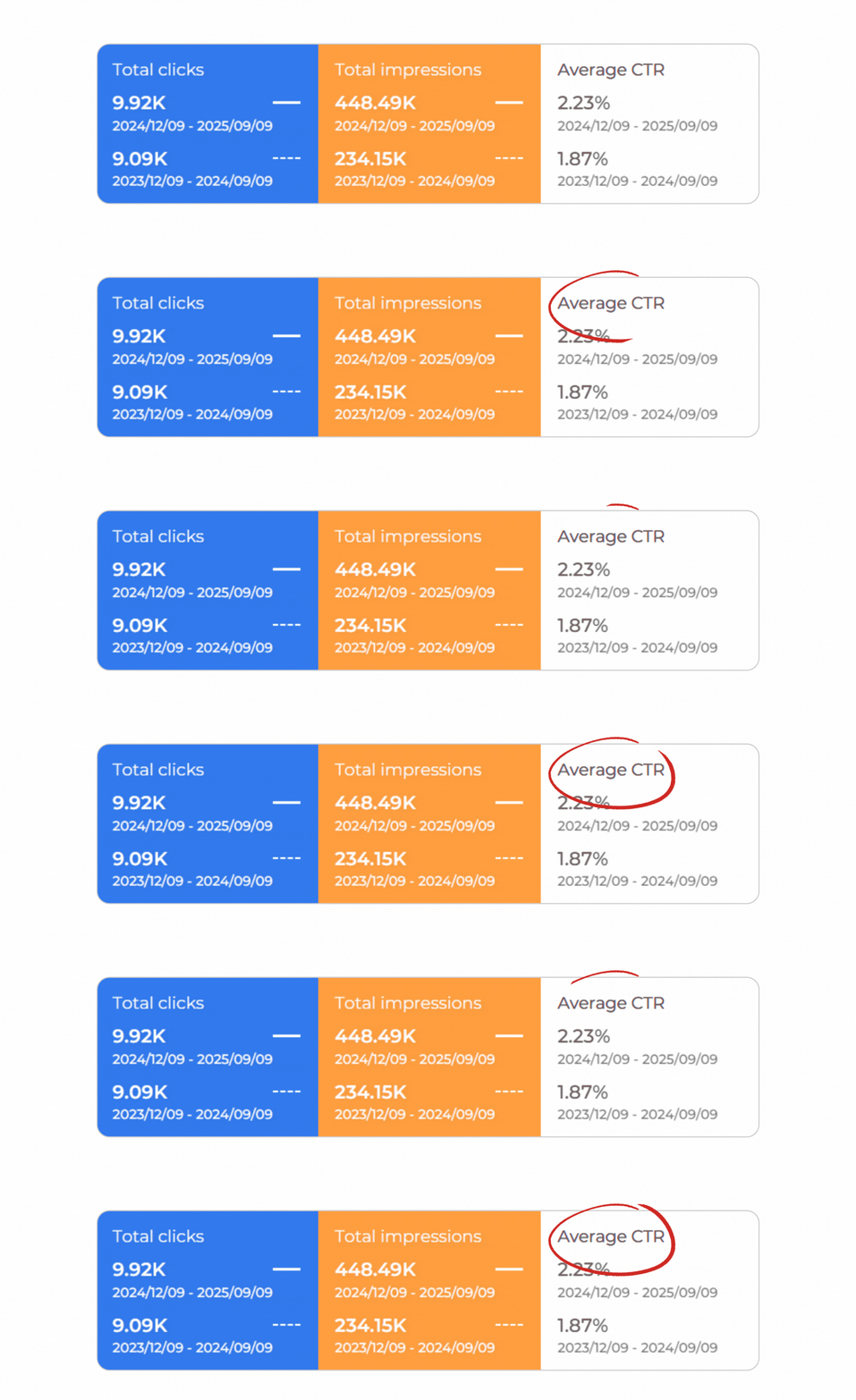
However, CTR is not just a number that is universally fixed. CTR depends on many factors:
Position in the search results: Generally, the higher the rank, the higher the CTR. For example, the first organic result in Google usually will see a CTR of about 27-30%, the second usually about 15%, and the third usually about 10%.
Industry or niche: Highly competitive industries (such as finance or legal) may have lower average CTR than niche industries with far fewer options.
The type of device: CTR can vary quite a bit between mobile results and desktop results depending on the size of the screen as well as the behavior of the user.
Ad vs. organic: Paid ads (Google Ads) generally see lower CTRs than organic listings because users tend to trust organic results more. On Google Search, the average CTR for ads is around 1.5–2%, while the Display Network sees about 0.5%.
However, CTR is not just a number that is universally fixed. CTR depends on many factors:
Position in the search results: Generally, the higher the rank, the higher the CTR. For example, the first organic result in Google usually will see a CTR of about 27-30%, the second usually about 15%, and the third usually about 10%.
Industry or niche: Highly competitive industries (such as finance or legal) may have lower average CTR than niche industries with far fewer options.
The type of device: CTR can vary quite a bit between mobile results and desktop results depending on the size of the screen as well as the behavior of the user.
Ad vs. organic: Paid ads (Google Ads) generally see lower CTRs than organic listings because users tend to trust organic results more. On Google Search, the average CTR for ads is around 1.5–2%, while the Display Network sees about 0.5%.
However, CTR is not just a number that is universally fixed. CTR depends on many factors:
Position in the search results: Generally, the higher the rank, the higher the CTR. For example, the first organic result in Google usually will see a CTR of about 27-30%, the second usually about 15%, and the third usually about 10%.
Industry or niche: Highly competitive industries (such as finance or legal) may have lower average CTR than niche industries with far fewer options.
The type of device: CTR can vary quite a bit between mobile results and desktop results depending on the size of the screen as well as the behavior of the user.
Ad vs. organic: Paid ads (Google Ads) generally see lower CTRs than organic listings because users tend to trust organic results more. On Google Search, the average CTR for ads is around 1.5–2%, while the Display Network sees about 0.5%.
How to Find Which Pages to Optimize for CTR?
How to Find Which Pages to Optimize for CTR?
How to Find Which Pages to Optimize for CTR?
Before you start improving CTR, you need to identify which pages have potential. Here’s how:
Use Google Search Console: Google Search Console (GSC) is the best free tool to track CTR. Go to Performance → Search Results. There you can see impressions, clicks, and CTR for each page.
Before you start improving CTR, you need to identify which pages have potential. Here’s how:
Use Google Search Console: Google Search Console (GSC) is the best free tool to track CTR. Go to Performance → Search Results. There you can see impressions, clicks, and CTR for each page.
Before you start improving CTR, you need to identify which pages have potential. Here’s how:
Use Google Search Console: Google Search Console (GSC) is the best free tool to track CTR. Go to Performance → Search Results. There you can see impressions, clicks, and CTR for each page.
Look for pages with:
High impressions but low CTR
Rankings between positions 1–10 but fewer clicks
These pages are prime candidates for optimization because they already get visibility but aren’t getting enough clicks.
Analyze Google Analytics: Check your landing pages and traffic sources using google analytics. If any landing page has a lot of impressions but bounce rate is high and have low engagement, then it may require a better headline, meta data or other content optimization.
Evaluate Pages That Have Conversions: To optimize the CTR of pages that are converting sign-ups, sales, or leads, even the slightest increment in CTR will equally add revenue.
Look for pages with:
High impressions but low CTR
Rankings between positions 1–10 but fewer clicks
These pages are prime candidates for optimization because they already get visibility but aren’t getting enough clicks.
Analyze Google Analytics: Check your landing pages and traffic sources using google analytics. If any landing page has a lot of impressions but bounce rate is high and have low engagement, then it may require a better headline, meta data or other content optimization.
Evaluate Pages That Have Conversions: To optimize the CTR of pages that are converting sign-ups, sales, or leads, even the slightest increment in CTR will equally add revenue.
Look for pages with:
High impressions but low CTR
Rankings between positions 1–10 but fewer clicks
These pages are prime candidates for optimization because they already get visibility but aren’t getting enough clicks.
Analyze Google Analytics: Check your landing pages and traffic sources using google analytics. If any landing page has a lot of impressions but bounce rate is high and have low engagement, then it may require a better headline, meta data or other content optimization.
Evaluate Pages That Have Conversions: To optimize the CTR of pages that are converting sign-ups, sales, or leads, even the slightest increment in CTR will equally add revenue.
How to Improve CTR?
How to Improve CTR?
How to Improve CTR?
Once these pages are identified, apply these tested methods:
Write Compelling Title Tags
Optimize Meta Descriptions
Use Structured Data & Rich Snippets
Match the Intent of Search
A/B Test Headlines & Calls to Action
Once these pages are identified, apply these tested methods:
Write Compelling Title Tags
Optimize Meta Descriptions
Use Structured Data & Rich Snippets
Match the Intent of Search
A/B Test Headlines & Calls to Action
Once these pages are identified, apply these tested methods:
Write Compelling Title Tags
Optimize Meta Descriptions
Use Structured Data & Rich Snippets
Match the Intent of Search
A/B Test Headlines & Calls to Action
Final Thoughts
Final Thoughts
Final Thoughts
The Click-Through Rate (CTR) is a key performance indicator in SEO and marketing. Your first step is to find a few pages that have high impressions and low CTR in tools like Google Search Console. After identifying the pages, check and enhance the metadata and content to improve the chances of visitors to clicking on your listing on the search engine result page (SERP).
Making slight improvements to your CTR can have a striking impact on organic traffic and conversions.
If you want to convert your visitors into loyal customers, then you are at the right place. Our expert team will enhance your landing pages, simplify your user experience, and implement tried-and-true strategies to boost your conversions. Contact us now, and let's discuss how we can help to elevate your business and increase those conversion rates!
The Click-Through Rate (CTR) is a key performance indicator in SEO and marketing. Your first step is to find a few pages that have high impressions and low CTR in tools like Google Search Console. After identifying the pages, check and enhance the metadata and content to improve the chances of visitors to clicking on your listing on the search engine result page (SERP).
Making slight improvements to your CTR can have a striking impact on organic traffic and conversions.
If you want to convert your visitors into loyal customers, then you are at the right place. Our expert team will enhance your landing pages, simplify your user experience, and implement tried-and-true strategies to boost your conversions. Contact us now, and let's discuss how we can help to elevate your business and increase those conversion rates!
The Click-Through Rate (CTR) is a key performance indicator in SEO and marketing. Your first step is to find a few pages that have high impressions and low CTR in tools like Google Search Console. After identifying the pages, check and enhance the metadata and content to improve the chances of visitors to clicking on your listing on the search engine result page (SERP).
Making slight improvements to your CTR can have a striking impact on organic traffic and conversions.
If you want to convert your visitors into loyal customers, then you are at the right place. Our expert team will enhance your landing pages, simplify your user experience, and implement tried-and-true strategies to boost your conversions. Contact us now, and let's discuss how we can help to elevate your business and increase those conversion rates!
Frequently Asked Questions (FAQs)
Frequently Asked Questions
Frequently Asked Questions
Is a higher CTR always better for SEO?
Not necessarily. A high CTR is beneficial only if users remain engaged after clicking. If visitors leave quickly or bounce, Google may interpret that as a sign of poor relevance. CTR must work hand-in-hand with dwell time, user satisfaction, and content quality. A balanced combination is what boosts SEO results.
Can negative keywords impact CTR on paid campaigns?
You should expect a structured process that includes onboarding, goal setting, strategy development, regular communication, execution of campaigns, and performance reporting. A good agency will act as a partner collaborating with you to understand your business, crafting a custom plan, and keeping you informed about progress and results.
How quickly can CTR improvements impact search rankings?
Vanity metrics are data points that look impressive but don’t directly impact your bottom line, such as social media likes, page views, or email open rates. While they can indicate visibility, they’re not strong indicators of business success. What’s more important are actionable metrics like lead quality, conversion rate, and return on investment (ROI). Looking for more details? Contact us today before your competitors do.
Should I focus on CTR even if my keywords have low search volume?
High traffic without conversions often points to deeper issues such as: Poor targeting (the wrong audience is visiting), weak calls-to-action or unclear messaging, website usability issues or slow load times, lack of trust signals (like reviews or security).
Your marketing should not just drive visits; it should drive the right visitors and guide them to act.
Does improving website branding help increase CTR?
You’ll know it’s working when you see measurable progress toward your business goals, more qualified leads, better engagement, increased sales, or stronger ROI. Regular reports, clear KPIs, and consistent communication from your agency are key to evaluating success.
Do SERP features like featured snippets and knowledge panels affect CTR?
Organic marketing (like SEO, blogging, and social media engagement) often takes 3 to 6 months to start showing results and may take 6–12 months for significant impact. It builds trust and authority over time, and while slower than paid marketing, it often yields more sustainable growth.
Can CTR influence paid ad quality scores on Google Ads?
A good marketing report should cover: Key performance indicators (KPIs) tied to your goals, traffic and conversion data, campaign performance summaries, ROI or cost-per-lead/acquisition, insights and recommendations for improvement, clear next steps or action items.
It should be easy to understand, jargon-free, and focus on outcomes. Learn more—how we drive revenue?
Is a higher CTR always better for SEO?
Not necessarily. A high CTR is beneficial only if users remain engaged after clicking. If visitors leave quickly or bounce, Google may interpret that as a sign of poor relevance. CTR must work hand-in-hand with dwell time, user satisfaction, and content quality. A balanced combination is what boosts SEO results.
Can negative keywords impact CTR on paid campaigns?
You should expect a structured process that includes onboarding, goal setting, strategy development, regular communication, execution of campaigns, and performance reporting. A good agency will act as a partner collaborating with you to understand your business, crafting a custom plan, and keeping you informed about progress and results.
How quickly can CTR improvements impact search rankings?
Vanity metrics are data points that look impressive but don’t directly impact your bottom line, such as social media likes, page views, or email open rates. While they can indicate visibility, they’re not strong indicators of business success. What’s more important are actionable metrics like lead quality, conversion rate, and return on investment (ROI). Looking for more details? Contact us today before your competitors do.
Should I focus on CTR even if my keywords have low search volume?
High traffic without conversions often points to deeper issues such as: Poor targeting (the wrong audience is visiting), weak calls-to-action or unclear messaging, website usability issues or slow load times, lack of trust signals (like reviews or security).
Your marketing should not just drive visits; it should drive the right visitors and guide them to act.
Does improving website branding help increase CTR?
You’ll know it’s working when you see measurable progress toward your business goals, more qualified leads, better engagement, increased sales, or stronger ROI. Regular reports, clear KPIs, and consistent communication from your agency are key to evaluating success.
Do SERP features like featured snippets and knowledge panels affect CTR?
Organic marketing (like SEO, blogging, and social media engagement) often takes 3 to 6 months to start showing results and may take 6–12 months for significant impact. It builds trust and authority over time, and while slower than paid marketing, it often yields more sustainable growth.
Can CTR influence paid ad quality scores on Google Ads?
A good marketing report should cover: Key performance indicators (KPIs) tied to your goals, traffic and conversion data, campaign performance summaries, ROI or cost-per-lead/acquisition, insights and recommendations for improvement, clear next steps or action items.
It should be easy to understand, jargon-free, and focus on outcomes. Learn more—how we drive revenue?
Is a higher CTR always better for SEO?
Not necessarily. A high CTR is beneficial only if users remain engaged after clicking. If visitors leave quickly or bounce, Google may interpret that as a sign of poor relevance. CTR must work hand-in-hand with dwell time, user satisfaction, and content quality. A balanced combination is what boosts SEO results.
Can negative keywords impact CTR on paid campaigns?
You should expect a structured process that includes onboarding, goal setting, strategy development, regular communication, execution of campaigns, and performance reporting. A good agency will act as a partner collaborating with you to understand your business, crafting a custom plan, and keeping you informed about progress and results.
How quickly can CTR improvements impact search rankings?
Vanity metrics are data points that look impressive but don’t directly impact your bottom line, such as social media likes, page views, or email open rates. While they can indicate visibility, they’re not strong indicators of business success. What’s more important are actionable metrics like lead quality, conversion rate, and return on investment (ROI). Looking for more details? Contact us today before your competitors do.
Should I focus on CTR even if my keywords have low search volume?
High traffic without conversions often points to deeper issues such as: Poor targeting (the wrong audience is visiting), weak calls-to-action or unclear messaging, website usability issues or slow load times, lack of trust signals (like reviews or security).
Your marketing should not just drive visits; it should drive the right visitors and guide them to act.
Does improving website branding help increase CTR?
You’ll know it’s working when you see measurable progress toward your business goals, more qualified leads, better engagement, increased sales, or stronger ROI. Regular reports, clear KPIs, and consistent communication from your agency are key to evaluating success.
Do SERP features like featured snippets and knowledge panels affect CTR?
Organic marketing (like SEO, blogging, and social media engagement) often takes 3 to 6 months to start showing results and may take 6–12 months for significant impact. It builds trust and authority over time, and while slower than paid marketing, it often yields more sustainable growth.
Can CTR influence paid ad quality scores on Google Ads?
A good marketing report should cover: Key performance indicators (KPIs) tied to your goals, traffic and conversion data, campaign performance summaries, ROI or cost-per-lead/acquisition, insights and recommendations for improvement, clear next steps or action items.
It should be easy to understand, jargon-free, and focus on outcomes. Learn more—how we drive revenue?
Is a higher CTR always better for SEO?
Not necessarily. A high CTR is beneficial only if users remain engaged after clicking. If visitors leave quickly or bounce, Google may interpret that as a sign of poor relevance. CTR must work hand-in-hand with dwell time, user satisfaction, and content quality. A balanced combination is what boosts SEO results.
Can negative keywords impact CTR on paid campaigns?
You should expect a structured process that includes onboarding, goal setting, strategy development, regular communication, execution of campaigns, and performance reporting. A good agency will act as a partner collaborating with you to understand your business, crafting a custom plan, and keeping you informed about progress and results.
How quickly can CTR improvements impact search rankings?
Vanity metrics are data points that look impressive but don’t directly impact your bottom line, such as social media likes, page views, or email open rates. While they can indicate visibility, they’re not strong indicators of business success. What’s more important are actionable metrics like lead quality, conversion rate, and return on investment (ROI). Looking for more details? Contact us today before your competitors do.
Should I focus on CTR even if my keywords have low search volume?
High traffic without conversions often points to deeper issues such as: Poor targeting (the wrong audience is visiting), weak calls-to-action or unclear messaging, website usability issues or slow load times, lack of trust signals (like reviews or security).
Your marketing should not just drive visits; it should drive the right visitors and guide them to act.
Does improving website branding help increase CTR?
You’ll know it’s working when you see measurable progress toward your business goals, more qualified leads, better engagement, increased sales, or stronger ROI. Regular reports, clear KPIs, and consistent communication from your agency are key to evaluating success.
Do SERP features like featured snippets and knowledge panels affect CTR?
Organic marketing (like SEO, blogging, and social media engagement) often takes 3 to 6 months to start showing results and may take 6–12 months for significant impact. It builds trust and authority over time, and while slower than paid marketing, it often yields more sustainable growth.
Can CTR influence paid ad quality scores on Google Ads?
A good marketing report should cover: Key performance indicators (KPIs) tied to your goals, traffic and conversion data, campaign performance summaries, ROI or cost-per-lead/acquisition, insights and recommendations for improvement, clear next steps or action items.
It should be easy to understand, jargon-free, and focus on outcomes. Learn more—how we drive revenue?
Is a higher CTR always better for SEO?
Not necessarily. A high CTR is beneficial only if users remain engaged after clicking. If visitors leave quickly or bounce, Google may interpret that as a sign of poor relevance. CTR must work hand-in-hand with dwell time, user satisfaction, and content quality. A balanced combination is what boosts SEO results.
Can negative keywords impact CTR on paid campaigns?
You should expect a structured process that includes onboarding, goal setting, strategy development, regular communication, execution of campaigns, and performance reporting. A good agency will act as a partner collaborating with you to understand your business, crafting a custom plan, and keeping you informed about progress and results.
How quickly can CTR improvements impact search rankings?
Vanity metrics are data points that look impressive but don’t directly impact your bottom line, such as social media likes, page views, or email open rates. While they can indicate visibility, they’re not strong indicators of business success. What’s more important are actionable metrics like lead quality, conversion rate, and return on investment (ROI). Looking for more details? Contact us today before your competitors do.
Should I focus on CTR even if my keywords have low search volume?
High traffic without conversions often points to deeper issues such as: Poor targeting (the wrong audience is visiting), weak calls-to-action or unclear messaging, website usability issues or slow load times, lack of trust signals (like reviews or security).
Your marketing should not just drive visits; it should drive the right visitors and guide them to act.
Does improving website branding help increase CTR?
You’ll know it’s working when you see measurable progress toward your business goals, more qualified leads, better engagement, increased sales, or stronger ROI. Regular reports, clear KPIs, and consistent communication from your agency are key to evaluating success.
Do SERP features like featured snippets and knowledge panels affect CTR?
Organic marketing (like SEO, blogging, and social media engagement) often takes 3 to 6 months to start showing results and may take 6–12 months for significant impact. It builds trust and authority over time, and while slower than paid marketing, it often yields more sustainable growth.
Can CTR influence paid ad quality scores on Google Ads?
A good marketing report should cover: Key performance indicators (KPIs) tied to your goals, traffic and conversion data, campaign performance summaries, ROI or cost-per-lead/acquisition, insights and recommendations for improvement, clear next steps or action items.
It should be easy to understand, jargon-free, and focus on outcomes. Learn more—how we drive revenue?



Higher CTRs Indicate Better Ad Relevance & Attract User Clicks.
Higher CTRs Indicate Better Ad Relevance & Attract User Clicks.
Higher CTRs Indicate Better Ad Relevance & Attract User Clicks.
Find how improving your CTR boosts visibility, enhances engage, & strengthens results across your marketing efforts.
Find how improving your CTR boosts visibility, enhances engage, & strengthens results across your marketing efforts.
Find how improving your CTR boosts visibility, enhances engage, & strengthens results across your marketing efforts.
4.9/5 Ratings!
4.9/5 Ratings!
4.9/5 Ratings!
4.9/5 Ratings!
4.9/5 Ratings!
Share this article

Related Resources
Latest Blogs






Don’t miss our revenue growth tips!
Don’t miss our revenue growth tips!
Don’t miss our revenue growth tips!
Get expert marketing tips—straight to your inbox, like thousands of happy clients.
Get expert marketing tips—straight to your inbox, like thousands of happy clients.
Latest Blogs



















Ready to speak with an expert?
Data-Driven Marketing Agency That Elevates ROI
Websites Designed & Optimized to Convert
$280M+
Client Revenue Driven & Growing Strong
Discover how to skyrocket
your revenue today!


Trusted by 1000+ Owners!
Want to skyrocket revenue?
4.9/5 Ratings!
Want to skyrocket revenue?
4.9/5 Ratings!
Ready to speak with an expert?
Data-Driven Marketing Agency That Elevates ROI
Websites Designed & Optimized to Convert
$280M+
Client Revenue Driven & Growing Strong
Discover how to skyrocket
your revenue today!
Trusted by 1000+ Owners!
Ready to speak with an expert?
Data-Driven Marketing Agency That Elevates ROI
Websites Designed & Optimized to Convert
$280M+
Client Revenue Driven & Growing Strong
Want to skyrocket
revenue?
Trusted by 1000+ Owners!