Google Penalties: What They are & How to Bounce Back?
Google Penalties: What They are & How to Bounce Back?
Google Penalties: What They are & How to Bounce Back?
Google Penalties: What They are & How to Bounce Back?
Google Penalties: What They are & How to Bounce Back?
Google Penalties
Google Penalties
Google Penalties
Google Penalties
A Google penalty is an action taken when a website violates Google’s guidelines, leading to a drop in rankings and traffic. It can be manual (by a reviewer) or algorithmic (automatically applied by Google’s systems).
A Google penalty is an action taken when a website violates Google’s guidelines, leading to a drop in rankings and traffic. It can be manual (by a reviewer) or algorithmic (automatically applied by Google’s systems).
A Google penalty is an action taken when a website violates Google’s guidelines, leading to a drop in rankings and traffic. It can be manual (by a reviewer) or algorithmic (automatically applied by Google’s systems).
A Google penalty is an action taken when a website violates Google’s guidelines, leading to a drop in rankings and traffic. It can be manual (by a reviewer) or algorithmic (automatically applied by Google’s systems).


Table of Content
Case Studies







Google Penalties Damage Rankings and Reduce Site Traffic.






4.9/5 Ratings!
4.9/5 Ratings!

Ratandeep Singh
Ratandeep Singh
Ratandeep Singh
6 Min Read
6 Min Read
6 Min Read
Oct 25, 2025
Oct 25, 2025
Oct 25, 2025
What is Google Penalty?
What is Google Penalty?
What is Google Penalty?
A Google Penalty is like when Google flags your website for violating its Webmaster Guidelines. This could be anything from using shady link schemes to hiding text or publishing spammy content.
There are actually two main types:
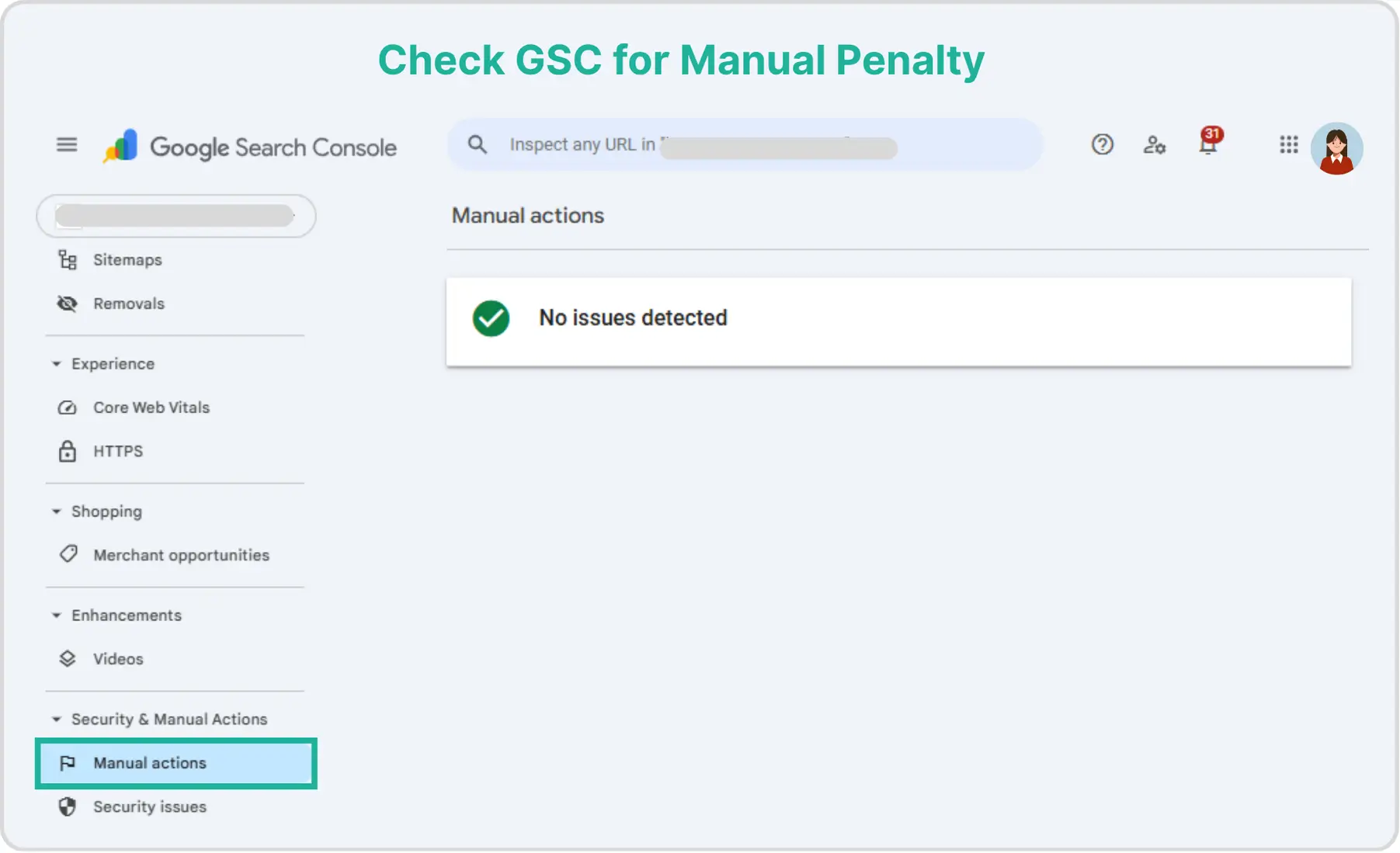
Manual penalties: Someone at Google manually reviews your site and applies a penalty. It usually shows up in your Google Search Console under “Manual Actions.”
Algorithmic penalties: These are triggered automatically when Google’s algorithms detect suspicious patterns (like keyword stuffing or unnatural links). Panda, Penguin, helpful content updates, all of these have caused headaches for website owners at some point.
And let’s be honest, sometimes these penalties hit even when you didn’t mean to break any rules. Maybe a past SEO agency built some questionable links years ago, or maybe you repurposed content thinking it was safe. It happens.
A Google Penalty is like when Google flags your website for violating its Webmaster Guidelines. This could be anything from using shady link schemes to hiding text or publishing spammy content.
There are actually two main types:
Manual penalties: Someone at Google manually reviews your site and applies a penalty. It usually shows up in your Google Search Console under “Manual Actions.”
Algorithmic penalties: These are triggered automatically when Google’s algorithms detect suspicious patterns (like keyword stuffing or unnatural links). Panda, Penguin, helpful content updates, all of these have caused headaches for website owners at some point.
And let’s be honest, sometimes these penalties hit even when you didn’t mean to break any rules. Maybe a past SEO agency built some questionable links years ago, or maybe you repurposed content thinking it was safe. It happens.
A Google Penalty is like when Google flags your website for violating its Webmaster Guidelines. This could be anything from using shady link schemes to hiding text or publishing spammy content.
There are actually two main types:
Manual penalties: Someone at Google manually reviews your site and applies a penalty. It usually shows up in your Google Search Console under “Manual Actions.”
Algorithmic penalties: These are triggered automatically when Google’s algorithms detect suspicious patterns (like keyword stuffing or unnatural links). Panda, Penguin, helpful content updates, all of these have caused headaches for website owners at some point.
And let’s be honest, sometimes these penalties hit even when you didn’t mean to break any rules. Maybe a past SEO agency built some questionable links years ago, or maybe you repurposed content thinking it was safe. It happens.

Common Reasons for Getting Penalized
Common Reasons for Getting Penalized
Common Reasons for Getting Penalized
Google’s pretty upfront about what it considers risky, but here are a few real-world examples:
Google’s pretty upfront about what it considers risky, but here are a few real-world examples:
Google’s pretty upfront about what it considers risky, but here are a few real-world examples:
•
•
•
Unnatural backlinks: Buying links or joining private blog networks (PBNs) just to manipulate rankings. It worked years ago, not so much now.
Unnatural backlinks: Buying links or joining private blog networks (PBNs) just to manipulate rankings. It worked years ago, not so much now.
Unnatural backlinks: Buying links or joining private blog networks (PBNs) just to manipulate rankings. It worked years ago, not so much now.
•
•
•
Thin or duplicate content: Pages with little original value. Think 200-word articles copied across 30 URLs.
Thin or duplicate content: Pages with little original value. Think 200-word articles copied across 30 URLs.
Thin or duplicate content: Pages with little original value. Think 200-word articles copied across 30 URLs.
•
•
•
Keyword stuffing: You know, repeating “best coffee shop in Texas” twenty times in one paragraph.
Keyword stuffing: You know, repeating “best coffee shop in Texas” twenty times in one paragraph.
Keyword stuffing: You know, repeating “best coffee shop in Texas” twenty times in one paragraph.
•
•
•
Cloaking and sneaky redirects: Showing one thing to users and another to Google.
Cloaking and sneaky redirects: Showing one thing to users and another to Google.
Cloaking and sneaky redirects: Showing one thing to users and another to Google.
•
•
•
User-generated spam: Spammy comments or low-quality forum content published on your domain.
User-generated spam: Spammy comments or low-quality forum content published on your domain.
User-generated spam: Spammy comments or low-quality forum content published on your domain.
When Google catches something like that, your rankings drop or worse, your site disappears from search results altogether.
When Google catches something like that, your rankings drop or worse, your site disappears from search results altogether.
When Google catches something like that, your rankings drop or worse, your site disappears from search results altogether.
How to Figure Out if You’ve Been Hit?
How to Figure Out if You’ve Been Hit?
How to Figure Out if You’ve Been Hit?
Head straight to Google Search Console. If it’s a manual penalty, Google tells you exactly what the issue is. It’ll say something like “Unnatural links to your site” or “Thin content with little or no added value.”
If nothing appears there but traffic still tanked overnight, you might be dealing with an algorithmic hit. Tools like Ahrefs, SEMrush, or Moz can help you compare ranking drops against known Google updates. If your traffic dropped on the same date a known algorithm rolled out… well, there’s your clue.
Head straight to Google Search Console. If it’s a manual penalty, Google tells you exactly what the issue is. It’ll say something like “Unnatural links to your site” or “Thin content with little or no added value.”
If nothing appears there but traffic still tanked overnight, you might be dealing with an algorithmic hit. Tools like Ahrefs, SEMrush, or Moz can help you compare ranking drops against known Google updates. If your traffic dropped on the same date a known algorithm rolled out… well, there’s your clue.
Head straight to Google Search Console. If it’s a manual penalty, Google tells you exactly what the issue is. It’ll say something like “Unnatural links to your site” or “Thin content with little or no added value.”
If nothing appears there but traffic still tanked overnight, you might be dealing with an algorithmic hit. Tools like Ahrefs, SEMrush, or Moz can help you compare ranking drops against known Google updates. If your traffic dropped on the same date a known algorithm rolled out… well, there’s your clue.
How to Recover From a Penalty?
How to Recover From a Penalty?
How to Recover From a Penalty?
Step
Step
Step
Step
Step
Action
Action
Action
Action
Action
Description
Description
Description
Description
Description
Identify the Type of Penalty
Identify the Type of Penalty
Identify the Type of Penalty
Identify the Type of Penalty
Check Google Search Console
Check Google Search Console
Check Google Search Console
Check Google Search Console
Determine whether the penalty is manual or algorithmic to plan the right recovery approach.
Determine whether the penalty is manual or algorithmic to plan the right recovery approach.
Determine whether the penalty is manual or algorithmic to plan the right recovery approach.
Determine whether the penalty is manual or algorithmic to plan the right recovery approach.
Diagnose the Issue
Diagnose the Issue
Diagnose the Issue
Diagnose the Issue
Analyze your website
Analyze your website
Analyze your website
Analyze your website
Look for issues such as spammy backlinks, duplicate content, keyword stuffing, or thin content.
Look for issues such as spammy backlinks, duplicate content, keyword stuffing, or thin content.
Look for issues such as spammy backlinks, duplicate content, keyword stuffing, or thin content.
Look for issues such as spammy backlinks, duplicate content, keyword stuffing, or thin content.
Fix the Problems
Fix the Problems
Fix the Problems
Fix the Problems
Resolve violations
Resolve violations
Resolve violations
Resolve violations
Remove or update low-quality content, clean up backlinks, and ensure compliance with Google’s Webmaster Guidelines.
Remove or update low-quality content, clean up backlinks, and ensure compliance with Google’s Webmaster Guidelines.
Remove or update low-quality content, clean up backlinks, and ensure compliance with Google’s Webmaster Guidelines.
Remove or update low-quality content, clean up backlinks, and ensure compliance with Google’s Webmaster Guidelines.
Submit a Reconsideration Request
Submit a Reconsideration Request
Submit a Reconsideration Request
Submit a Reconsideration Request
For manual penalties
For manual penalties
For manual penalties
For manual penalties
Once fixes are done, submit a request to Google explaining the actions taken to correct the issues.
Once fixes are done, submit a request to Google explaining the actions taken to correct the issues.
Once fixes are done, submit a request to Google explaining the actions taken to correct the issues.
Once fixes are done, submit a request to Google explaining the actions taken to correct the issues.
Monitor Recovery
Monitor Recovery
Monitor Recovery
Monitor Recovery
Track performance
Track performance
Track performance
Track performance
Regularly check rankings, traffic, and Search Console for updates to confirm recovery progress.
Regularly check rankings, traffic, and Search Console for updates to confirm recovery progress.
Regularly check rankings, traffic, and Search Console for updates to confirm recovery progress.
Regularly check rankings, traffic, and Search Console for updates to confirm recovery progress.
Maintain Best Practices
Maintain Best Practices
Maintain Best Practices
Maintain Best Practices
Stay compliant
Stay compliant
Stay compliant
Stay compliant
Continue following SEO best practices to avoid future penalties and maintain stable performance.
Continue following SEO best practices to avoid future penalties and maintain stable performance.
Continue following SEO best practices to avoid future penalties and maintain stable performance.
Continue following SEO best practices to avoid future penalties and maintain stable performance.
If it’s a manual penalty, submit a reconsideration request once you’ve fixed everything. Explain what went wrong and what steps you took to correct it, Google appreciates honesty and effort.
For algorithmic penalties, you’ll have to wait for Google to re-crawl and re-evaluate your site. It can take weeks, sometimes months, but consistent cleanup pays off.
If it’s a manual penalty, submit a reconsideration request once you’ve fixed everything. Explain what went wrong and what steps you took to correct it, Google appreciates honesty and effort.
For algorithmic penalties, you’ll have to wait for Google to re-crawl and re-evaluate your site. It can take weeks, sometimes months, but consistent cleanup pays off.
If it’s a manual penalty, submit a reconsideration request once you’ve fixed everything. Explain what went wrong and what steps you took to correct it, Google appreciates honesty and effort.
For algorithmic penalties, you’ll have to wait for Google to re-crawl and re-evaluate your site. It can take weeks, sometimes months, but consistent cleanup pays off.
Avoiding penalties in the first place
Avoiding penalties in the first place
Avoiding penalties in the first place
This part’s simple in theory: play fair.
Good SEO is about building for users, not gaming the system. Focus on:
Earning real, relevant backlinks, not buying them.
Publishing original, quality content.
Staying consistent with technical SEO hygiene.
Monitoring your Search Console regularly.
And maybe most importantly, don’t take shortcuts. Shortcuts often turn into roadblocks when Google updates roll out.
This part’s simple in theory: play fair.
Good SEO is about building for users, not gaming the system. Focus on:
Earning real, relevant backlinks, not buying them.
Publishing original, quality content.
Staying consistent with technical SEO hygiene.
Monitoring your Search Console regularly.
And maybe most importantly, don’t take shortcuts. Shortcuts often turn into roadblocks when Google updates roll out.
This part’s simple in theory: play fair.
Good SEO is about building for users, not gaming the system. Focus on:
Earning real, relevant backlinks, not buying them.
Publishing original, quality content.
Staying consistent with technical SEO hygiene.
Monitoring your Search Console regularly.
And maybe most importantly, don’t take shortcuts. Shortcuts often turn into roadblocks when Google updates roll out.
Final Thoughts
Final Thoughts
Final Thoughts
Google Penalties sound scary, but they’re really just checkpoints to make sure your site’s doing things the right way. With the right approach like regular audits, ethical SEO practices, and good content, you’ll not only recover but come out stronger.
If your site’s been hit with a Google Penalty and rankings have taken a dip, it might be time to get expert eyes on it.
Google Penalties sound scary, but they’re really just checkpoints to make sure your site’s doing things the right way. With the right approach like regular audits, ethical SEO practices, and good content, you’ll not only recover but come out stronger.
If your site’s been hit with a Google Penalty and rankings have taken a dip, it might be time to get expert eyes on it.
Google Penalties sound scary, but they’re really just checkpoints to make sure your site’s doing things the right way. With the right approach like regular audits, ethical SEO practices, and good content, you’ll not only recover but come out stronger.
If your site’s been hit with a Google Penalty & rankings have taken a dip, it might be time to get expert eyes on it.
Frequently Asked Questions (FAQs)
Frequently Asked Questions
Frequently Asked Questions
What are the most common reasons websites receive Google Penalties?
Websites typically get penalized for: unnatural backlinks, keyword stuffing, duplicate or thin content, cloaking, sneaky redirects, and spammy user-generated content. These practices violate Google’s guidelines and signal attempts to manipulate search rankings.
Can I be penalized even if I didn’t intentionally break Google’s rules?
You should expect a structured process that includes onboarding, goal setting, strategy development, regular communication, execution of campaigns, and performance reporting. A good agency will act as a partner collaborating with you to understand your business, crafting a custom plan, and keeping you informed about progress and results.
How long does it take to recover from a Google Penalty?
Vanity metrics are data points that look impressive but don’t directly impact your bottom line, such as social media likes, page views, or email open rates. While they can indicate visibility, they’re not strong indicators of business success. What’s more important are actionable metrics like lead quality, conversion rate, and return on investment (ROI). Looking for more details? Contact us today before your competitors do.
How do I identify if a drop in traffic is caused by a Google Penalty or something else?
High traffic without conversions often points to deeper issues such as: Poor targeting (the wrong audience is visiting), weak calls-to-action or unclear messaging, website usability issues or slow load times, lack of trust signals (like reviews or security).
Your marketing should not just drive visits; it should drive the right visitors and guide them to act.
What role does thin content play in Google Penalties?
You’ll know it’s working when you see measurable progress toward your business goals, more qualified leads, better engagement, increased sales, or stronger ROI. Regular reports, clear KPIs, and consistent communication from your agency are key to evaluating success.
How can I prevent future Google Penalties?
Organic marketing (like SEO, blogging, and social media engagement) often takes 3 to 6 months to start showing results and may take 6–12 months for significant impact. It builds trust and authority over time, and while slower than paid marketing, it often yields more sustainable growth.
Why is ethical SEO considered the best long-term strategy for avoiding penalties?
A good marketing report should cover: Key performance indicators (KPIs) tied to your goals, traffic and conversion data, campaign performance summaries, ROI or cost-per-lead/acquisition, insights and recommendations for improvement, clear next steps or action items.
It should be easy to understand, jargon-free, and focus on outcomes. Learn more—how we drive revenue?
What are the most common reasons websites receive Google Penalties?
Websites typically get penalized for: unnatural backlinks, keyword stuffing, duplicate or thin content, cloaking, sneaky redirects, and spammy user-generated content. These practices violate Google’s guidelines and signal attempts to manipulate search rankings.
Can I be penalized even if I didn’t intentionally break Google’s rules?
You should expect a structured process that includes onboarding, goal setting, strategy development, regular communication, execution of campaigns, and performance reporting. A good agency will act as a partner collaborating with you to understand your business, crafting a custom plan, and keeping you informed about progress and results.
How long does it take to recover from a Google Penalty?
Vanity metrics are data points that look impressive but don’t directly impact your bottom line, such as social media likes, page views, or email open rates. While they can indicate visibility, they’re not strong indicators of business success. What’s more important are actionable metrics like lead quality, conversion rate, and return on investment (ROI). Looking for more details? Contact us today before your competitors do.
How do I identify if a drop in traffic is caused by a Google Penalty or something else?
High traffic without conversions often points to deeper issues such as: Poor targeting (the wrong audience is visiting), weak calls-to-action or unclear messaging, website usability issues or slow load times, lack of trust signals (like reviews or security).
Your marketing should not just drive visits; it should drive the right visitors and guide them to act.
What role does thin content play in Google Penalties?
You’ll know it’s working when you see measurable progress toward your business goals, more qualified leads, better engagement, increased sales, or stronger ROI. Regular reports, clear KPIs, and consistent communication from your agency are key to evaluating success.
How can I prevent future Google Penalties?
Organic marketing (like SEO, blogging, and social media engagement) often takes 3 to 6 months to start showing results and may take 6–12 months for significant impact. It builds trust and authority over time, and while slower than paid marketing, it often yields more sustainable growth.
Why is ethical SEO considered the best long-term strategy for avoiding penalties?
A good marketing report should cover: Key performance indicators (KPIs) tied to your goals, traffic and conversion data, campaign performance summaries, ROI or cost-per-lead/acquisition, insights and recommendations for improvement, clear next steps or action items.
It should be easy to understand, jargon-free, and focus on outcomes. Learn more—how we drive revenue?
What are the most common reasons websites receive Google Penalties?
Websites typically get penalized for: unnatural backlinks, keyword stuffing, duplicate or thin content, cloaking, sneaky redirects, and spammy user-generated content. These practices violate Google’s guidelines and signal attempts to manipulate search rankings.
Can I be penalized even if I didn’t intentionally break Google’s rules?
You should expect a structured process that includes onboarding, goal setting, strategy development, regular communication, execution of campaigns, and performance reporting. A good agency will act as a partner collaborating with you to understand your business, crafting a custom plan, and keeping you informed about progress and results.
How long does it take to recover from a Google Penalty?
Vanity metrics are data points that look impressive but don’t directly impact your bottom line, such as social media likes, page views, or email open rates. While they can indicate visibility, they’re not strong indicators of business success. What’s more important are actionable metrics like lead quality, conversion rate, and return on investment (ROI). Looking for more details? Contact us today before your competitors do.
How do I identify if a drop in traffic is caused by a Google Penalty or something else?
High traffic without conversions often points to deeper issues such as: Poor targeting (the wrong audience is visiting), weak calls-to-action or unclear messaging, website usability issues or slow load times, lack of trust signals (like reviews or security).
Your marketing should not just drive visits; it should drive the right visitors and guide them to act.
What role does thin content play in Google Penalties?
You’ll know it’s working when you see measurable progress toward your business goals, more qualified leads, better engagement, increased sales, or stronger ROI. Regular reports, clear KPIs, and consistent communication from your agency are key to evaluating success.
How can I prevent future Google Penalties?
Organic marketing (like SEO, blogging, and social media engagement) often takes 3 to 6 months to start showing results and may take 6–12 months for significant impact. It builds trust and authority over time, and while slower than paid marketing, it often yields more sustainable growth.
Why is ethical SEO considered the best long-term strategy for avoiding penalties?
A good marketing report should cover: Key performance indicators (KPIs) tied to your goals, traffic and conversion data, campaign performance summaries, ROI or cost-per-lead/acquisition, insights and recommendations for improvement, clear next steps or action items.
It should be easy to understand, jargon-free, and focus on outcomes. Learn more—how we drive revenue?
What are the most common reasons websites receive Google Penalties?
Websites typically get penalized for: unnatural backlinks, keyword stuffing, duplicate or thin content, cloaking, sneaky redirects, and spammy user-generated content. These practices violate Google’s guidelines and signal attempts to manipulate search rankings.
Can I be penalized even if I didn’t intentionally break Google’s rules?
You should expect a structured process that includes onboarding, goal setting, strategy development, regular communication, execution of campaigns, and performance reporting. A good agency will act as a partner collaborating with you to understand your business, crafting a custom plan, and keeping you informed about progress and results.
How long does it take to recover from a Google Penalty?
Vanity metrics are data points that look impressive but don’t directly impact your bottom line, such as social media likes, page views, or email open rates. While they can indicate visibility, they’re not strong indicators of business success. What’s more important are actionable metrics like lead quality, conversion rate, and return on investment (ROI). Looking for more details? Contact us today before your competitors do.
How do I identify if a drop in traffic is caused by a Google Penalty or something else?
High traffic without conversions often points to deeper issues such as: Poor targeting (the wrong audience is visiting), weak calls-to-action or unclear messaging, website usability issues or slow load times, lack of trust signals (like reviews or security).
Your marketing should not just drive visits; it should drive the right visitors and guide them to act.
What role does thin content play in Google Penalties?
You’ll know it’s working when you see measurable progress toward your business goals, more qualified leads, better engagement, increased sales, or stronger ROI. Regular reports, clear KPIs, and consistent communication from your agency are key to evaluating success.
How can I prevent future Google Penalties?
Organic marketing (like SEO, blogging, and social media engagement) often takes 3 to 6 months to start showing results and may take 6–12 months for significant impact. It builds trust and authority over time, and while slower than paid marketing, it often yields more sustainable growth.
Why is ethical SEO considered the best long-term strategy for avoiding penalties?
A good marketing report should cover: Key performance indicators (KPIs) tied to your goals, traffic and conversion data, campaign performance summaries, ROI or cost-per-lead/acquisition, insights and recommendations for improvement, clear next steps or action items.
It should be easy to understand, jargon-free, and focus on outcomes. Learn more—how we drive revenue?
What are the most common reasons websites receive Google Penalties?
Websites typically get penalized for: unnatural backlinks, keyword stuffing, duplicate or thin content, cloaking, sneaky redirects, and spammy user-generated content. These practices violate Google’s guidelines and signal attempts to manipulate search rankings.
Can I be penalized even if I didn’t intentionally break Google’s rules?
You should expect a structured process that includes onboarding, goal setting, strategy development, regular communication, execution of campaigns, and performance reporting. A good agency will act as a partner collaborating with you to understand your business, crafting a custom plan, and keeping you informed about progress and results.
How long does it take to recover from a Google Penalty?
Vanity metrics are data points that look impressive but don’t directly impact your bottom line, such as social media likes, page views, or email open rates. While they can indicate visibility, they’re not strong indicators of business success. What’s more important are actionable metrics like lead quality, conversion rate, and return on investment (ROI). Looking for more details? Contact us today before your competitors do.
How do I identify if a drop in traffic is caused by a Google Penalty or something else?
High traffic without conversions often points to deeper issues such as: Poor targeting (the wrong audience is visiting), weak calls-to-action or unclear messaging, website usability issues or slow load times, lack of trust signals (like reviews or security).
Your marketing should not just drive visits; it should drive the right visitors and guide them to act.
What role does thin content play in Google Penalties?
You’ll know it’s working when you see measurable progress toward your business goals, more qualified leads, better engagement, increased sales, or stronger ROI. Regular reports, clear KPIs, and consistent communication from your agency are key to evaluating success.
How can I prevent future Google Penalties?
Organic marketing (like SEO, blogging, and social media engagement) often takes 3 to 6 months to start showing results and may take 6–12 months for significant impact. It builds trust and authority over time, and while slower than paid marketing, it often yields more sustainable growth.
Why is ethical SEO considered the best long-term strategy for avoiding penalties?
A good marketing report should cover: Key performance indicators (KPIs) tied to your goals, traffic and conversion data, campaign performance summaries, ROI or cost-per-lead/acquisition, insights and recommendations for improvement, clear next steps or action items.
It should be easy to understand, jargon-free, and focus on outcomes. Learn more—how we drive revenue?



Google Penalties Damage Rankings and Reduce Site Traffic.
Google Penalties Damage Rankings and Reduce Site Traffic.
Google Penalties Damage Rankings and Reduce Site Traffic.
Identify, fix, and recover from penalties to restore search visibility, regain traffic, and maintain SEO health.
Identify, fix, and recover from penalties to restore search visibility, regain traffic, and maintain SEO health.
Identify, fix, and recover from penalties to restore search visibility, regain traffic, and maintain SEO health.
4.9/5 Ratings!
4.9/5 Ratings!
4.9/5 Ratings!
4.9/5 Ratings!
4.9/5 Ratings!
Share this article

Related Resources
Latest Blogs






Don’t miss our revenue growth tips!
Don’t miss our revenue growth tips!
Don’t miss our revenue growth tips!
Get expert marketing tips—straight to your inbox, like thousands of happy clients.
Get expert marketing tips—straight to your inbox, like thousands of happy clients.
Latest Blogs







































Ready to speak with an expert?
Data-Driven Marketing Agency That Elevates ROI
Websites Designed & Optimized to Convert
$280M+
Client Revenue Driven & Growing Strong
Discover how to skyrocket
your revenue today!


Trusted by 1000+ Owners!
Want to skyrocket revenue?
4.9/5 Ratings!
Ready to speak with an expert?
Data-Driven Marketing Agency That Elevates ROI
Websites Designed & Optimized to Convert
$280M+
Client Revenue Driven & Growing Strong
Want to skyrocket
revenue?
Trusted by 1000+ Owners!
Ready to speak with an expert?
Data-Driven Marketing Agency That Elevates ROI
Websites Designed & Optimized to Convert
$280M+
Client Revenue Driven & Growing Strong
Discover how to skyrocket
your revenue today!
Trusted by 1000+ Owners!
Want to skyrocket revenue?
4.9/5 Ratings!